
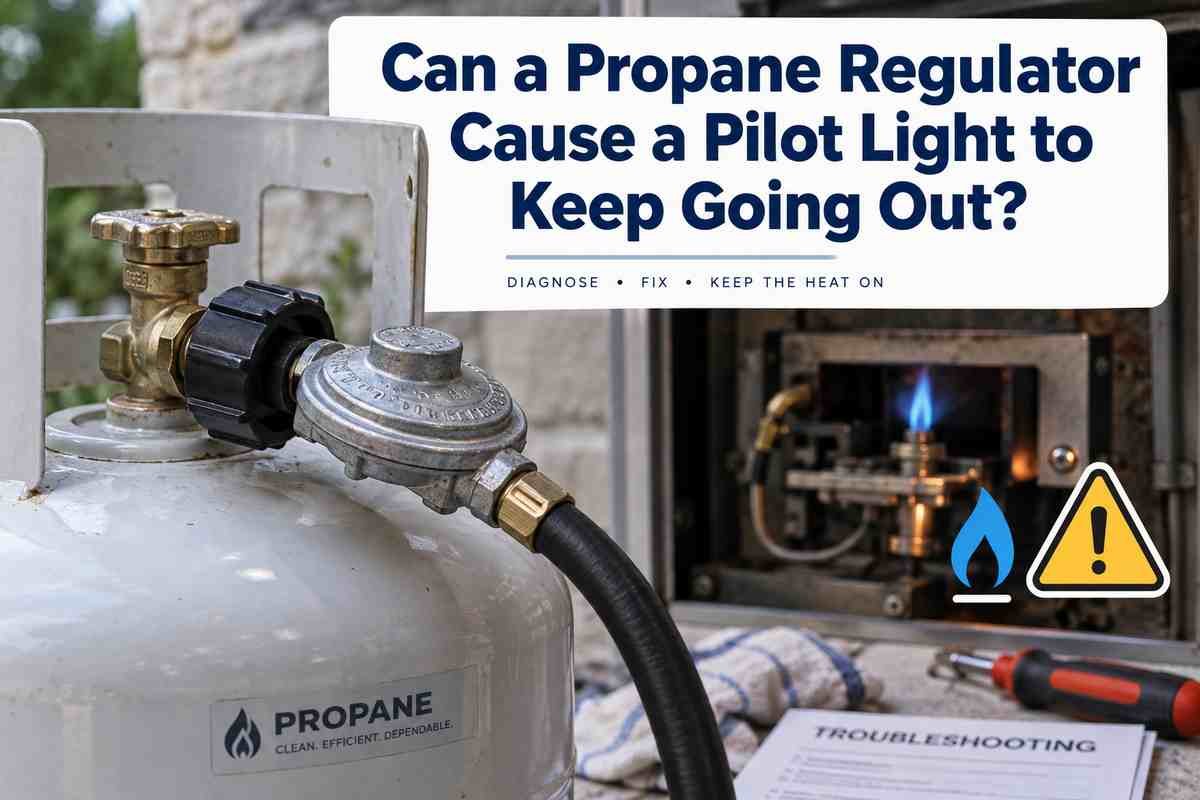
Yes. A propane regulator can make a pilot light unreliable if it cannot maintain the pressure the appliance needs. A standing pilot uses a very small amount of gas, but that small flame still has to be strong and correctly positioned. If the regulator delivers too little pressure, the flame can become short, unstable, or pull away from the thermocouple or thermopile. Once that safety sensor cools, the appliance gas valve closes.
What I would pay attention to is the pattern. If only one appliance has a pilot problem while every other propane appliance works normally, I would look at the appliance first. If several appliances have weak flames, slow ignition, or changing flame height at the same time, I would look much harder at the regulator, piping, tank supply, or overall system capacity.
Fisher’s LP-gas regulator instructions specifically tell customers to close the container valve and call for service if appliance pilot lights fail to stay on or appear unusually high. That does not mean the regulator is always the cause, but it shows that repeated pilot trouble can be a sign of an abnormal propane-system condition.
Quick Troubleshooting Table
| What You Notice | Possible Cause | What I Would Check Next |
|---|---|---|
| Pilot is weak on more than one appliance | Low supply pressure or regulator problem | Have system pressure checked under load |
| Only one pilot goes out | Dirty pilot, thermocouple, draft, appliance control | Inspect that appliance first |
| Pilot goes out when another appliance starts | Pressure drop under load | Check regulator capacity, piping, and tank vaporization |
| Pilot stays on only while the control knob is held | Thermocouple/thermopile or gas-control issue | Professional appliance diagnosis |
| Pilot fails mainly in wind or when an exhaust fan runs | Draft or venting problem | Check appliance venting and air movement |
| Pilot outage comes with propane odor | Possible leak or abnormal regulator condition | Stop use and follow propane leak procedures |
How Low Regulator Pressure Can Affect a Pilot Light
A pilot burner needs enough gas pressure to produce a stable flame that properly heats the flame-safety sensor. If the supply pressure is below the appliance manufacturer’s requirement, the pilot can become too small to keep that sensor hot.
Many domestic LP-gas systems use a second-stage outlet pressure around 11 inches of water column, which is roughly 0.4 psi. Fisher lists 11 inches w.c. as a usual setting for many low-pressure vapor-service regulators. That is a common industry value, not a universal setting for every appliance or every regulator. The appliance rating plate and manufacturer instructions are the specifications that matter for diagnosis.
If you already suspect a supply problem, my guide on how to check propane regulator pressure explains why pressure has to be evaluated correctly rather than guessed from flame appearance alone.
Pressure Can Look Fine Until the Main Burner Starts
One of the most useful clues is a pilot that stays lit until the main burner or another propane appliance starts. That pattern can indicate a pressure drop under load.


A regulator may appear to provide normal static pressure while almost no gas is being used. Then a furnace, water heater, range, or other large appliance starts and demand increases sharply. If the regulator is undersized, worn, restricted, or receiving inadequate upstream pressure, outlet pressure can fall.
The same symptom can also come from undersized piping, a partially closed valve, a restricted pigtail, cold-weather vaporization limits, or a propane tank that is too small for the connected load. This is why I would not replace a regulator based on the pilot flame alone.
If your entire system seems to lose gas rather than just the pilot, compare the symptoms with my article on a propane regulator that keeps shutting off.
A Weak Thermocouple Can Look Like a Regulator Problem
The thermocouple or thermopile is one of the first appliance components I would consider if the pilot itself looks normal but will not stay on. On many standing-pilot appliances, the sensor sits directly in the pilot flame and generates the signal that keeps the safety gas valve open.
Resideo’s pilot-burner guidance shows that the thermocouple or thermopile tip must be positioned in the pilot flame. If the flame is too weak, poorly shaped, or not reaching the sensor, the safety control may close. The same thing can happen if the sensor itself is failing or its connection to the gas control is poor.
A common clue is this: the pilot lights while you hold the control knob down, but it goes out shortly after you release the knob. That does not automatically prove the regulator is bad. The pilot flame, thermocouple/thermopile, and gas control all deserve inspection.
A Dirty Pilot Orifice Can Make the Flame Too Small
Pilot orifices are tiny. Dust, rust, lint, corrosion, insects, or debris can reduce the gas flow enough to make the flame weak or misshapen.
If only one appliance is affected and the rest of your propane equipment has strong, normal-looking flames, a dirty pilot assembly becomes more likely than a house regulator problem.
I would not recommend pushing a needle, drill bit, or wire through the pilot orifice. Enlarging that opening can change the designed gas flow. Cleaning or replacing pilot components should follow the appliance manufacturer’s instructions.
Drafts Can Blow Out a Perfectly Good Pilot
A regulator can deliver the correct pressure and the pilot can still go out because of air movement. Wind, an open door, a strong exhaust fan, a damaged burner shield, or a venting problem can disturb a small pilot flame.
Resideo’s pilot-service guidance specifically includes drafts among the conditions to investigate when a properly adjusted pilot continues to go out.
What I would not do is block required combustion-air openings or modify the venting simply to protect the pilot. If the appliance depends on proper draft or combustion air, changing that airflow can create a carbon monoxide hazard.
Why the Pilot May Go Out When the Main Burner Ignites
If the pilot is stable until the main burner comes on, there are several possibilities:
- Supply pressure drops when the main burner demands more gas.
- Main-burner ignition disturbs the pilot flame because of burner condition or flame carryover.
- The pilot flame is already marginal and the main burner changes local airflow enough to extinguish it.
- The appliance gas control is faulty even though supply pressure is correct.
This is where a pressure test under operating load becomes much more useful than simply changing the regulator.
Could a Nearly Empty Propane Tank Be Involved?
Yes, but usually indirectly. Propane has to vaporize inside the tank before the regulator can deliver vapor to the appliance. In cold weather or under heavy demand, a small or nearly empty cylinder may not vaporize propane fast enough.
The result can be falling pressure, weak burner flames, or a pilot that becomes unstable when other appliances start. If several appliances get weak at the same time and the problem is worse during cold weather, I would consider tank vaporization and system capacity along with the regulator.
How I Would Separate a Regulator Problem From an Appliance Problem
I would use the symptoms to narrow the diagnosis before replacing anything.
| Clue | More Likely Regulator/Supply | More Likely Appliance |
|---|---|---|
| Several appliances affected | Yes | Less likely |
| Only one pilot affected | Less likely | Yes |
| Flames shrink when another appliance starts | Yes | Less likely |
| Pilot flame is strong but gas valve will not hold | Less likely | Yes |
| Regulator is leaking, frozen, damaged, or venting gas | Yes | No |
| Pilot fails only during wind or exhaust-fan operation | Less likely | Draft/venting issue |
If the regulator itself looks questionable, see my guide on how to tell whether a propane regulator is working properly.
What You Can Check Without Adjusting the Gas System
There are a few observations you can make without changing pressure settings or bypassing safety devices:
- Check whether the propane supply is low or empty.
- Observe whether other propane appliances have weak flames.
- Notice whether the pilot changes when another appliance starts.
- Look for obvious blockage, ice, mud, or insect debris at the regulator vent.
- Notice whether wind, doors, or exhaust fans affect the pilot.
- Stop immediately if you smell propane or hear unusual gas leakage.
I would not adjust the regulator spring, enlarge a pilot orifice, bypass a thermocouple, wedge a gas valve open, or attempt to defeat any flame-safety control.
When a Propane Regulator Becomes the Stronger Suspect
I would put the regulator higher on the list if several of these are happening at the same time:
- Multiple appliances have weak or unstable flames.
- Pilot flames change noticeably when another appliance starts.
- Outlet pressure measures low or drops below specification under load.
- The regulator is heavily corroded, physically damaged, frozen, or contaminated.
- The regulator is leaking or venting gas.
- The system has a history of low-pressure or flow problems.
If you smell gas around the regulator, do not treat that as a normal pilot-light problem. My broader article on propane regulator leaks explains some of the possible leak locations, but an active propane odor should be handled using proper leak-safety procedures.
When to Stop Troubleshooting and Call a Professional
PERC advises that if a pilot light is difficult to light or repeatedly goes out, you should not keep troubleshooting it yourself. A qualified professional can evaluate the appliance and propane system safely.
Stop using the appliance and get professional help if:
- The pilot repeatedly goes out after being relit according to the manufacturer instructions.
- You smell propane.
- You hear hissing or suspect a leak.
- The regulator is venting gas.
- The flame is unusually high, weak, yellow, or unstable on several appliances.
- A carbon monoxide alarm activates.
- The appliance shows soot or signs of poor combustion.
If you smell propane strongly, keep flames and ignition sources away, leave the area, shut off the propane supply only if it is safe to do so, and contact your propane supplier or emergency services from a safe location.
Frequently Asked Questions
Can low propane pressure make a pilot light go out?
Yes. Low inlet pressure can make the pilot flame too small or unstable to keep the thermocouple or thermopile hot enough to hold the safety gas valve open.
Why does my pilot go out when another propane appliance starts?
That pattern can point to pressure drop under load. The regulator, piping, tank vaporization, or total system capacity may not be keeping up with demand.
Can a bad thermocouple look like a bad propane regulator?
Yes. A weak thermocouple can cause the safety valve to close even when gas pressure is correct. If only one appliance has the problem, I would investigate the pilot and thermocouple before assuming the main regulator has failed.
Should I turn up the propane regulator to make the pilot bigger?
No. Regulator pressure must match the appliance and regulator specifications. Increasing pressure by guesswork can overfire the appliance and create unsafe combustion.
Can wind make a propane pilot light keep going out?
Yes. Drafts can disturb or extinguish a small pilot flame. The solution is not to block required combustion air; the appliance installation and venting should be checked.
Can a dirty pilot orifice cause the same symptom?
Yes. A partially blocked pilot orifice can create a weak or distorted flame that does not properly heat the flame-safety sensor.
Does a regulator need replacement if the pilot keeps going out?
Not automatically. I would want pressure tested under load and the appliance pilot, thermocouple, gas control, and venting checked before replacing the regulator.
Bottom Line
Yes, a propane regulator can cause a pilot light to keep going out, but I would not replace the regulator based on that symptom alone. If several appliances are affected or pressure drops when demand increases, the regulator or supply system deserves testing. If only one pilot fails, the pilot assembly, thermocouple, gas valve, draft, and venting are usually just as important to check. Repeated pilot outages are a safety issue, so if the problem continues, I would have a qualified propane or gas-appliance professional diagnose it before putting the appliance back into normal service.
Authoritative references: Fisher LP-Gas Regulator Instructions; Propane Education & Research Council Safety Guide; Resideo Pilot Burner Instructions.

Mike is an experienced propane technician with over 15 years of professional experience in the field. He has dedicated his career to helping customers with their propane needs, from installation to maintenance and repair. Together with Jeremy, he co-founded this website to provide useful information and guidance to customers seeking reliable propane services.


