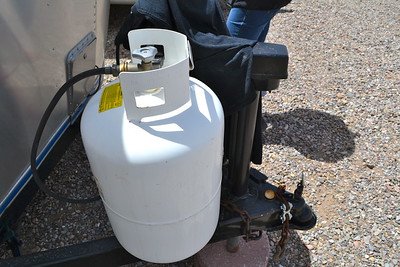
Quick Answer: In the United States, a standard 30 lb propane tank generally costs $70–$120 empty, while premium, gauge-equipped, or horizontal designs can cost $140–$220 or more. A full refill takes roughly 7 gallons, so at $3–$5 per gallon you would pay approximately $21–$35 for the propane. For a conventional $90 empty cylinder filled at $4.29 per gallon, I calculate a first-day total of about $120.03 before tax. Prices and refill availability depend on your location.


U.S. price guide · Retail listings reviewed November 9, 2026 · All dollar amounts are U.S. dollars
When I compare 30 lb propane tank prices, I always separate two expenses: the metal cylinder you buy once and the propane you buy again and again. That distinction sounds obvious, but it explains why one online listing says $85 and another quote from a refill station is only $30. They are pricing different things.
I also look past the sticker price. A larger cylinder means fewer refill trips, but it is heavier to carry, taller to store, and not necessarily cheaper per gallon of gas. I’ll show you actual retail examples, practical calculations, and a decision guide so you can judge whether 30 pounds is the right size for your setup.
How Much Is a 30 lb Propane Tank in 2026?
For a basic new steel cylinder with an overfilling prevention device (OPD), my realistic shopping budget is $70 to $120 for the empty tank. I would expect to pay more for a factory-installed fuel gauge, a horizontal model, or a specialty configuration for an RV or trailer. Retail sales, membership prices, and shipping costs can change that range substantially.


| Type of tank | Estimated empty price | What I would check |
|---|---|---|
| Standard vertical steel, OPD valve | $70–$120 | Best everyday value for compatible RVs and appliances |
| Vertical steel with gauge | $100–$175 | Whether gauge and valve are factory-fitted |
| Low-profile horizontal specialty cylinder | $140–$220+ | Approved orientation, mounts, and appliance instructions |
| Used standard steel cylinder | $25–$75 (illustrative) | Date, valve condition, corrosion, and requalification |
Those are budget ranges rather than a promise of what every store charges. To anchor the estimate, here are several recently displayed listings for empty 30 lb cylinders. They are shopping examples, not guaranteed local quotations.
| Retailer / model | Displayed price | What is included |
|---|---|---|
| Costco, Flame King 30 lb steel | $72.99 | Empty pre-purged cylinder; availability and membership conditions vary |
| Home Depot, Worthington Pro Grade 30 lb | $83.11 | Empty steel cylinder |
| Tractor Supply, Worthington 30 lb | $99.99 | Empty steel cylinder with OPD valve |
| Ace Hardware, Flame King 30 lb | $99.99 | Empty steel cylinder with Type 1 valve |
| Specialty supplier, Flame King horizontal 30 lb | $145.00 | Special-design horizontal cylinder with gauge |
My interpretation is simple: if you can buy a standard compliant new cylinder around $80–$100 without expensive shipping, that is competitive with the examples above. Before comparing two prices, check whether one merchant is selling a filled cylinder and the other is selling it empty. Most new tanks advertised online arrive empty.
Is $100 too much for a 30 lb propane tank?
Not automatically. Around $100 is within the price range for a new standard steel 30-pounder. I would inspect the manufacture date, brand and valve specifications, included fittings, return policy, and any shipping charge before deciding. A cheap cylinder that needs an extra $35 in freight is not necessarily cheaper than a $100 tank available locally.
If I were buying the first tank for an RV, I would prioritize a fresh manufacturing date, an undamaged OPD valve, and the dimensions that fit the cylinder compartment ahead of a $10 difference in sticker price.
30 lb Propane Tank Specifications: Size, Weight and Capacity
The number “30 lb” refers to the nominal weight of propane the cylinder is designed to hold when properly filled—not the empty metal tank’s weight. A representative Flame King YSN301 steel cylinder weighs about 25 lb empty, so its full transport weight is roughly 55 lb. Different brands, valves, and accessories will change the exact tare weight.
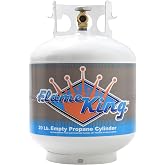

| Specification | Typical figure | Why it matters |
|---|---|---|
| Nominal propane capacity | 30 lb | Amount of fuel when properly filled |
| Liquid propane volume | About 7.0–7.1 U.S. gal | Used to estimate refill cost |
| Empty tank / tare weight | About 25 lb for YSN301 | Look for the stamped TW on your cylinder |
| Approximate full weight | 55 lb | Important for lifting and securing |
| Representative dimensions | 12.3 in diameter × 23.7 in tall | Check RV compartment and restraints |
| Valve | Type 1/QCC1, OPD on common models | Verify fitting compatibility |
| Approximate fuel energy | 647,000 BTU | Basis for runtime estimates |
| Normal position | Upright for a vertical cylinder | Never turn a vertical model onto its side for use |
I use a propane density of approximately 4.24 lb per liquid U.S. gallon at 60°F. That gives the following useful conversion:
30 lb ÷ 4.24 lb per gallon = 7.08 gallons of propane
Some sellers round that figure to 7 gallons, while another listing may describe a slightly different usable volume. For cost planning I use 7.0 gallons. The cylinder’s required liquid expansion space is already taken into account in its rated propane capacity. You do not subtract another 20% from 30 lb when calculating a proper fill.
For a closer look at weight conversions, I recommend my related guide, How Much Does 1 Gallon of Propane Weigh?. It helps when you are reading a scale or comparing propane sold by pounds and gallons.


Is a 30 lb propane tank the same as a 30-gallon tank?
No. A 30 lb propane cylinder holds only about seven gallons of liquid propane. A tank described as “30 gallons” would be a much larger vessel with a different capacity and cost. I would always verify the label before ordering, because confusing pounds with gallons can lead to a serious storage or budgeting mistake.
How Much Does It Cost to Fill a 30 lb Propane Tank?
Once you own the empty cylinder, the main recurring expense is the refill. If a station charges by the gallon, the arithmetic is straightforward: multiply the gallons dispensed by its price per gallon. A 30 lb tank filled from essentially empty typically takes about seven gallons, although the actual amount varies with its remaining fuel and the filler’s required procedures.
| Price per gallon | 30 lb refill cost | How I classify it |
|---|---|---|
| $2.50 | $17.50 | Low-price example |
| $3.00 | $21.00 | Budget scenario |
| $3.50 | $24.50 | Middle scenario |
| $4.29 | $30.03 | Example based on a displayed refill listing |
| $4.50 | $31.50 | Higher-price scenario |
| $5.00 | $35.00 | Higher-price scenario |
| $5.50 | $38.50 | Very high-price example |
One Tractor Supply refill listing displayed $4.29 per gallon during my research, while explicitly noting that its refill price changes by store. I would never assume that quoted price applies nationwide. Call your chosen station and ask whether it fills 30 lb cylinders, what its gallon price is, and whether it has a minimum charge.
My worked example: buying a $90 tank and filling it
Suppose you find a new empty cylinder for $90 and a propane station charges $4.29 per gallon. Using the rounded seven-gallon capacity gives:
- Cost of empty tank: $90.00.
- First refill: 7 × $4.29 = $30.03.
- Initial outlay: $90.00 + $30.03 = $120.03, before tax, transport, or service fees.
- Future full refills at the same rate: approximately $30.03 each, assuming the tank is essentially empty.
This is why I distinguish initial purchase cost from ongoing fuel cost. You do not buy the tank again at each refill. If a vendor quotes $120 for a new tank already filled, that may be a reasonable comparison against this $120.03 example—but verify the actual fuel quantity included.
| Empty cylinder price | Approx. first fill | First-day total |
|---|---|---|
| $75.00 | $30.03 | $105.03 |
| $90.00 | $30.03 | $120.03 |
| $100.00 | $30.03 | $130.03 |
| $150.00 | $30.03 | $180.03 |
What if my 30 lb tank is only half empty?
Then I would expect to pay only for the fuel delivered at a per-gallon refill station. If you used about 15 lb, you consumed approximately 3.54 gallons. At $4.29 per gallon, topping it back up would cost about $15.19, not $30.03. Actual dispensers and cylinder fill limits govern the final quantity.
Be careful with stations charging a flat amount for “a tank,” regardless of how much is left. That pricing can make an early top-off poor value. If you’re unsure whether it’s time to refill, use my guide to telling when you need propane before making the trip.
Where Can You Buy a 30 lb Propane Tank?
I would start with a warehouse club, a farm-and-ranch supplier, a large hardware retailer, or a dedicated propane dealer. RV parts stores may carry 30 lb cylinders because these sizes are common on travel trailers. Prices at physical locations can differ from prices displayed online, and a store that sells the cylinders might not refill them.
- Warehouse clubs: a competitive choice if membership pricing is available and the cylinder is in stock.
- Farm and hardware stores: convenient for common vertical OPD cylinders and sometimes on-site refills.
- RV dealerships: useful when you need to match fit, bottle height, and compartment clearances.
- Propane suppliers: worth asking about a filled cylinder, valve compatibility, and inspection questions.
- Online retailers: useful for comparing specialty horizontal models, but check shipping and return costs.
I would make one phone call before driving to a refill station: “Do you refill customer-owned 30 lb DOT cylinders, charge by the gallon, and inspect the manufacture date there?” It prevents a common inconvenience—arriving with a larger cylinder at a location that only exchanges standard barbecue tanks.
Can I exchange a 30 lb propane tank instead of refilling it?
Sometimes a propane dealer or RV-oriented program may offer a suitable service, but the common grocery-store and gas-station exchange cages generally focus on 20 lb barbecue cylinders. I would not plan around a 30 lb exchange until the provider explicitly confirms it accepts that size. Refilling your own 30-pounder is often the more predictable approach.
Also, an advertised “20 lb exchange” may contain less than 20 lb of propane. Before comparing an exchange price with a measured 30 lb refill, calculate the actual price per pound of fuel received. A big, brightly marked price is not enough information by itself.
30 lb vs. 20 lb vs. 40 lb Propane Tank: Which Costs Less?
For an appliance that can safely use any of these sizes, the real decision is a combination of capacity, tank price, lifting weight, and space. The price you pay for each gallon of propane at the same refill station typically does not magically decline just because you bought a larger portable cylinder.
| Measure | 20 lb | 30 lb | 40 lb |
|---|---|---|---|
| Propane carried | 20 lb | 30 lb | 40 lb |
| Approx. liquid gallons | 4.7 | 7.0 | 9.4 |
| Illustrative new cylinder budget | $55–$80 | $70–$120 | $110–$160 |
| Fuel cost at $4.29/gal | $20.16 | $30.03 | $40.33 |
| Capacity compared with 20 lb | 1.0× | 1.5× | 2.0× |
| Typical use I would consider | Grill and occasional outings | RV and longer outdoor use | Longer use where weight/space permit |
The standout feature of a 30 lb tank is a 50% increase in fuel capacity compared with a 20 lb cylinder. It is not that the propane itself burns more efficiently; the larger tank simply stores more. It can mean three refill trips instead of roughly four and a half over an equivalent consumption period, but real trip counts depend on when you refill.
Would I buy one 30 lb tank or two 20 lb tanks?
Two 20 lb tanks provide a combined 40 lb of fuel and a convenient spare. A single 30 lb cylinder is one container to connect and manage, but it provides less total fuel and weighs more than one full 20-pounder. I would choose two smaller tanks when easy lifting and backup fuel matter. I would choose the 30-pounder where a properly designed RV holder already fits it and I want to reduce changeovers.
Neither arrangement is universally cheaper. Compare the purchase cost of all containers, the amount of propane you actually receive, and any separate regulator or hose requirements. Never improvise an unapproved manifold to connect cylinders together.
How Long Will a 30 lb Propane Tank Last?
One reason to pay extra for a 30 lb tank is runtime. To estimate it, I take its approximate 647,000 BTU of stored fuel energy and divide by the appliance’s consumption in BTU per hour. I am assuming the appliance runs continuously at its stated input and the tank can supply the needed vapor flow.
Estimated running hours = 647,000 BTU ÷ appliance input (BTU per hour)
| Appliance input | Approx. runtime | Equivalent use at 3 h/day |
|---|---|---|
| 10,000 BTU/h | 64.7 hours | 21.6 days |
| 15,000 BTU/h | 43.1 hours | 14.4 days |
| 20,000 BTU/h | 32.4 hours | 10.8 days |
| 30,000 BTU/h | 21.6 hours | 7.2 days |
| 40,000 BTU/h | 16.2 hours | 5.4 days |
| 50,000 BTU/h | 12.9 hours | 4.3 days |
| 60,000 BTU/h | 10.8 hours | 3.6 days |
These are theoretical energy-based estimates, not promises of uninterrupted operation. Cold weather, low remaining liquid, a regulator or hose that is undersized, and an appliance’s actual firing rate can reduce usable output. For high-BTU appliances in freezing conditions, cylinder vaporization ability may become the limiting factor before the fuel is physically gone. I would follow the appliance and cylinder manufacturer’s limits rather than relying on a runtime table alone.
My second worked example: evening use
Imagine an outdoor propane appliance with an input of 15,000 BTU/h. You use it three hours each evening for 12 evenings. Your total estimated consumption is 15,000 × 3 × 12 = 540,000 BTU. At approximately 91,500 BTU per gallon, that uses about 5.90 gallons—roughly 25 lb of propane.
At a refill price of $4.29 per gallon, that twelve-evening period costs around $25.32 in propane, excluding your original cylinder purchase. In ideal conditions, a full 30 lb tank would cover those twelve evenings with some fuel remaining. If your appliance has a variable flame, the actual burn rate will vary, so use its real input setting when available.
What Is the Real Cost per Use of a 30 lb Tank?
I like to calculate more than the cost per full refill. A cylinder is a reusable asset, and the convenience of one extra gallon may matter more than small price differences. My practical rule is to separate the fixed purchase from the marginal fuel expense.
Suppose a 30 lb cylinder costs $35 more than the smaller tank you would otherwise buy. Over 50 completed refills, that upfront premium averages only $0.70 per refill. But you still pay for each gallon you burn. The larger tank saves inconvenience, not fuel energy. This is an example calculation rather than a guarantee that a 30 lb tank is a better deal.
| Number of full refills | Premium per refill | My takeaway |
|---|---|---|
| 5 | $7.00 | High premium for very occasional use |
| 10 | $3.50 | Noticeable upfront difference |
| 25 | $1.40 | Convenience may justify it |
| 50 | $0.70 | Small cost across frequent use |
| 100 | $0.35 | Tank longevity and safety still matter |
There is a second hidden cost: refill trips. If driving to a supplier takes 30 minutes and costs a few dollars in vehicle fuel, fewer trips may have real value to you. I do not assign a universal dollar amount to your time. Instead, I suggest writing down your own round-trip distance, travel expense, and number of refills per year. This is often more useful than a generic claim that “bigger is cheaper.”
If you are comparing the economics of different propane arrangements, read Is Propane Gas Economical? and Is Propane Cheaper If You Own the Tank? for the broader ownership-cost questions.
Seven Additional Costs I Would Check Before Buying
- Sales tax: the online headline price may not be your checkout total.
- Shipping: specialty cylinders can have substantial delivery charges.
- First filling or purging service: a new pre-purged tank may be ready for its first authorized fill, but confirm the seller’s actual preparation and any station fee.
- Fuel remaining on refill day: paying a flat tank rate for a partial fill can increase your effective price per gallon.
- Hoses and regulators: your appliance may require specific approved components not included with the cylinder.
- Securing hardware: RV compartments and vehicle transport may need approved mounts, straps, or stabilizers.
- Inspection or eventual requalification: an older used cylinder can erase its low purchase price when service is required.
Of these, I think the most easily missed is the fill method. A seller can advertise a bargain cylinder while a nearby supplier charges a high flat refill fee. The true cost comes from combining the equipment price, local fuel price, and how often you’ll need the service.
Do new 30 lb propane tanks come with propane?
Usually not when sold as ordinary retail cylinders. Product listings often say “empty,” “pre-purged,” or “ready for filling.” Those phrases do not mean the tank contains 30 lb of propane. If a store advertises a filled package, ask how many pounds or gallons of propane are included and whether any deposit applies.
Is it cheaper to buy a 30 lb propane tank during summer?
The fuel price may move seasonally, but the price of the empty steel tank follows its own retail promotions, inventory, and shipping costs. I would compare local cylinder offers throughout the year rather than assume that propane’s seasonal pattern directly controls hardware prices. For fuel timing, see What Time of Year Is Propane the Cheapest?.
My Decision Guide: Should You Buy a 30 lb Propane Tank?
Here is how I would make the choice. First I check the equipment manual, mounting arrangement, and refill access. Only after compatibility and safety are settled do I compare the price against 20 lb and 40 lb alternatives.
| Your situation | My recommendation | Reason |
|---|---|---|
| Occasional backyard grilling | Consider 20 lb | Less weight; common refill and exchange options |
| Travel trailer built for 30 lb cylinders | 30 lb is a strong fit | Good capacity without changing the designed mount |
| Frequent RV trips with fewer service stops | Compare 30 lb | 50% more fuel than a 20 lb cylinder |
| Need easy lifting or a spare cylinder | Consider two smaller units | Manageable loads and backup fuel |
| High-BTU use in very cold weather | Consult supplier | Vaporization and regulator sizing matter |
| Compartment or mounting space is tight | Measure first | Height, diameter, and retention must fit |
| Only a low-priced used tank is available | Inspect before buying | Age and condition can outweigh the savings |
The buying checklist I would use at the store
- Confirm the cylinder is actually rated for 30 lb of propane.
- Confirm the appliance and regulator can use the tank’s valve and fuel withdrawal arrangement.
- Inspect the collar stamp for the manufacturer’s date and the tare weight (TW).
- Check for intact protective collar, base ring, finish, and valve assembly.
- Reject visible deep rust, bulges, serious dents, or suspected damage.
- Ask whether the cylinder is pre-purged and whether the price includes fuel.
- Measure your storage compartment and verify all clearances and restraints.
- Confirm that an accessible licensed refill provider can serve this exact cylinder.
- Calculate the first purchase plus fill, not merely the empty-tank price.
Are Used 30 lb Propane Tanks Worth Buying?
A used cylinder can be a bargain, but only if it is structurally sound, properly marked, in date for filling, and accepted by your propane supplier. I would never buy an old tank solely because its seller says it “held gas last summer.” A valid cylinder still needs inspection before every fill, and visible condition matters even when the date appears acceptable.
For many common U.S. DOT propane cylinders, the initial requalification is required within 12 years of manufacture; later intervals vary by the approved method, often five years for an external visual requalification, ten years for proof-pressure testing, or twelve years for volumetric expansion testing. The cylinder’s specification and current regulations control the requirement, so ask an authorized requalifier or propane filler if you are uncertain. Do not treat the printed date as permission to use damaged equipment.
Here is a simple resale example. If a used cylinder costs $45 but requires $35 of approved requalification-related service before it can be filled, your equipment cost is already $80, excluding transport or a possible valve repair. If you can buy new for $85, the used deal might not be worth the uncertainty. Those service figures are illustrative—not a standard requalification fee.
I especially avoid used cylinders with unreadable collar stamps, a compromised base ring, unexplained paint covering deep corrosion, or a leaking valve. A propane professional should decide whether a questionable cylinder can be requalified; never attempt a do-it-yourself valve repair or pressure test.
How to Transport and Store a 30 lb Propane Tank Safely
At roughly 55 lb when full for a common steel model, a 30 lb tank deserves careful handling. Secure an ordinary upright-design cylinder upright for transport and use. Close the valve, prevent it from falling or rolling, keep it away from ignition sources, and follow the supplier’s and applicable transport rules. Do not leave a cylinder in a parked vehicle.
Important safety reminder: Store portable propane cylinders outdoors in a secure, well-ventilated location, never in a basement, enclosed garage, living area, or other enclosed space. Do not use a propane appliance indoors unless it is specifically listed for that use and installed according to its instructions. If you suspect a leak, avoid switches or ignition sources, leave the area, and contact the propane supplier or emergency services from a safe location.
One point I often emphasize is cylinder orientation. A vertical 30 lb vapor-service cylinder is not made safe for horizontal use merely by lying it on its side. Purpose-built horizontal cylinders are separate products with their own approved positioning and mounting requirements. They can cost more, which explains why the cheapest cylinder online may be the wrong one for a low-profile RV compartment.
Always use the proper valve, regulator, and appliance connections. Do not improvise adapters to defeat an OPD or another safety component. After connection, follow the appliance manufacturer’s leak-check instructions before lighting. A pressure setting that works for one appliance is not automatically correct for another.
How to Save Money on a 30 lb Propane Tank Without Cutting Corners
My approach is to save on purchasing and refilling, not on safety. A legitimate price comparison takes a few minutes and can remove several avoidable expenses over the life of the cylinder.
- Shop the empty cylinder separately from the propane: you can then see exactly what each part costs.
- Compare total pickup cost: factor in membership requirements, tax, travel, and shipping.
- Prefer measured per-gallon fills when practical: especially if you top up before completely empty.
- Call before the trip: confirm the station fills 30 lb cylinders rather than offering only 20 lb exchanges.
- Choose the size that matches your usage: paying more for unused capacity is not a savings.
- Protect the cylinder: secure it, avoid damaging the coating, and inspect regularly for corrosion.
- Keep records: note purchase date, manufacture stamp, refill gallons, and price per gallon to spot your true cost trend.
A price record is particularly useful because it answers questions the store sign cannot. If you refilled 6.1 gallons for $24.40, your actual fuel cost was $4.00 per gallon. If a flat-rate fill cost $30 for only 4 gallons, you effectively paid $7.50 per gallon. I would compare the effective price, not the advertised tank-size label.
Frequently Asked Questions About 30 lb Propane Tank Costs
How much is a full 30 lb propane tank?
For a new standard cylinder plus approximately seven gallons of fuel, my planning range is around $91–$155 before taxes and additional fees, using an empty-tank price of $70–$120 and fuel at $3–$5 per gallon. Special models or delivery can cost more.
How many gallons of propane are in a 30 lb tank?
About 7.0–7.1 U.S. gallons when properly filled. I use seven gallons for practical budgeting and the actual marked tare weight and scale reading for checking a particular cylinder.
How much does a 30 lb propane tank weigh when full?
Approximately 55 lb for a model with a 25 lb empty weight. The precise answer is its stamped tare weight plus the actual propane load, up to its rated capacity.
Can I use a 30 lb tank instead of a 20 lb tank?
Often, if the appliance, regulator, valve connection, mounting system, hose arrangement, and manufacturer’s instructions allow it. The gas is the same propane; the larger cylinder does not automatically change the appliance’s rated BTU consumption. Never assume that a larger bottle fits an enclosed compartment safely.
Will a 30 lb propane tank last twice as long as a 20 lb tank?
No. At the same actual consumption rate, its 30 lb fuel load gives roughly 1.5 times the runtime of a 20 lb fuel load. That is 50% more, not 100% more. Conditions and usable vapor flow can affect real runtime.
Why are some 30 lb propane tanks over $150?
A built-in gauge, special horizontal construction, different mounting hardware, retailer markup, low-volume inventory, or shipping can increase the price. I would compare the exact cylinder specification rather than assume the most expensive model holds more fuel.
Is propane cheaper by the gallon if I buy a 30 lb tank?
Not inherently. At a station selling propane by the measured gallon, the same per-gallon rate generally applies regardless of whether you fill a 20, 30, or 40 lb cylinder. Savings may come from fewer trips or avoiding unfavorable flat fees.
What happens if my cylinder is too old to refill?
A propane filler should refuse an out-of-date or unsafe cylinder. A properly authorized facility may requalify an eligible cylinder, or you may have to replace it. Check both the manufacture or requalification markings and the physical condition.
Can I refill a 30 lb propane tank before it is completely empty?
Yes, an authorized refill station can generally top up a suitable, serviceable cylinder using its approved filling procedure. When propane is billed by the measured gallon, you normally pay for the amount added rather than a full seven gallons.
My Bottom Line: Is a 30 lb Propane Tank Worth the Price?
I think a standard 30 lb propane cylinder is a sensible middle-ground choice when your equipment is designed to accept it and you value fewer refill trips. I would budget $70–$120 for a new empty steel tank, then add about $21–$35 for seven gallons at the illustrative $3–$5 per-gallon range. A typical $90 tank with a $4.29 refill works out to $120.03 on day one, before additional charges.
I would not buy the 30 lb size solely to save money on propane itself. Its advantage is having more usable fuel in one container; its disadvantages include additional weight, space requirements, and less common exchange options. If you check compatibility, refill access, total first-fill price, and ongoing usage, you can make a better choice than shopping by sticker price alone.
To keep exploring the cost and value of propane, the next questions I recommend are how much a gallon weighs, when propane tends to be cheapest, and when you actually need a refill.

Mike is an experienced propane technician with over 15 years of professional experience in the field. He has dedicated his career to helping customers with their propane needs, from installation to maintenance and repair. Together with Jeremy, he co-founded this website to provide useful information and guidance to customers seeking reliable propane services.