
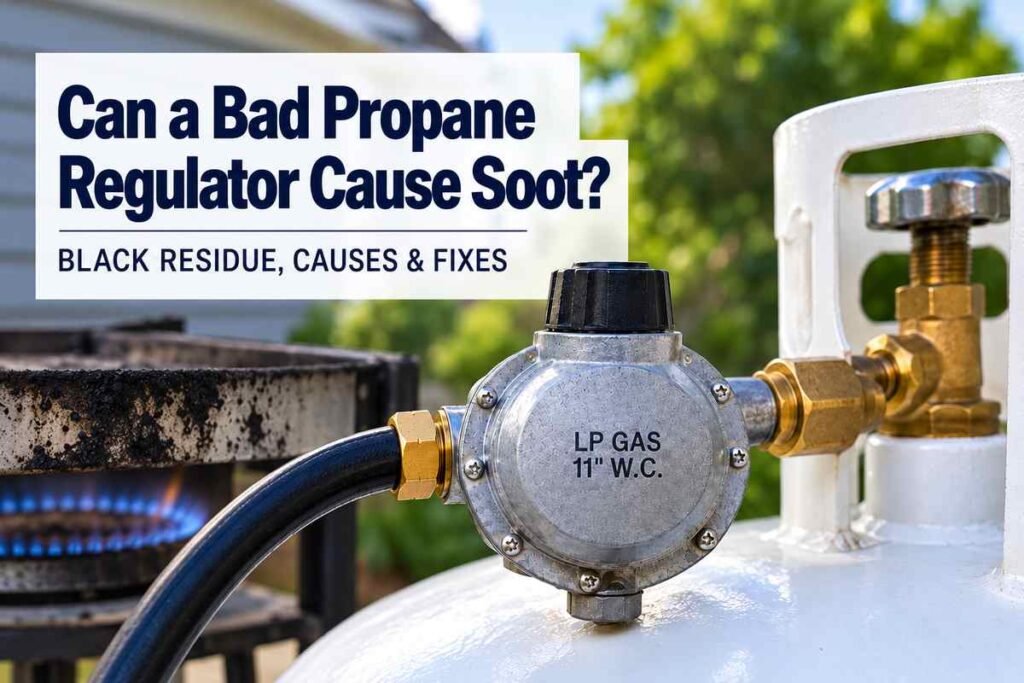
Yes, an incorrectly operating propane regulator can contribute to soot by causing improper gas pressure, but soot more directly indicates incomplete combustion and can also result from blocked burners, insufficient combustion air, incorrect orifices, or poor appliance adjustment. Persistent soot should be corrected promptly, particularly on indoor equipment.
Common Causes of Propane Soot
If soot is accompanied by a large yellow flame, also review whether a bad propane regulator can contribute to a yellow flame. If the pilot is unstable at the same time, see whether a propane regulator can cause a pilot light to keep going out.
| Cause | What Happens | Clue |
|---|---|---|
| Incorrect gas pressure | Fuel flow no longer matches burner design | Abnormal flame plus pressure reading |
| Blocked air inlet | Mixture becomes fuel rich | Lazy yellow flame |
| Dirty burner | Poor gas distribution | Uneven flame |
| Wrong orifice | Incorrect gas flow | Problem after conversion/repair |
| Poor venting | Combustion products not handled correctly | Indoor appliance symptoms |
How a Regulator Can Contribute
A regulator controls the pressure delivered to downstream appliances. If outlet pressure is outside the appliance’s required range, burner gas flow and air mixing can be affected. A pressure test with a manometer can determine whether the regulator is actually involved.
Soot Means Combustion Is Incomplete
If the soot problem also comes with weak appliance performance, compare it with low propane regulator pressure. If the problem appears when another appliance starts, see why propane pressure can drop under added appliance load.
Soot consists largely of carbon particles produced when fuel does not burn completely. It is a symptom, not a diagnosis. Cleaning soot without correcting the cause allows it to return.
Check the Burner and Air Path
Burner ports, venturis, air shutters, combustion-air openings, and flues should be free of debris and configured according to the appliance manufacturer. Outdoor equipment can attract spiders and insects; indoor equipment can accumulate dust and lint.
Fuel Conversion Problems
If the combustion problem started after replacing the cylinder, compare it with an appliance that will not stay lit after changing tanks.


Using natural-gas components on propane or an incorrect conversion kit can create serious combustion problems. Propane generally requires different metering because its characteristics and supply pressure differ from natural gas.
Carbon Monoxide Concern
Sooting can accompany conditions that also produce carbon monoxide. If an indoor propane appliance is sooting, shut it down and arrange qualified service. Maintain carbon-monoxide alarms according to their manufacturer instructions and local requirements.
FAQ
Can too much propane pressure cause soot?
Excessive pressure can contribute to improper combustion, but pressure should be measured rather than guessed.
Can low pressure cause soot?
Low pressure can also disturb burner performance in some appliances. The correct pressure range is appliance-specific.
Is soot normal on propane cookware?
Heavy black soot is not a normal sign of properly adjusted propane combustion.
How a Bad Regulator Can Lead to Soot
A bad propane regulator can contribute to soot if it causes incorrect gas pressure, but soot is ultimately a combustion problem and the burner, air supply, or orifice may be the real cause. Soot forms when propane does not burn completely. Instead of producing mainly carbon dioxide and water vapor, incomplete combustion can leave black carbon deposits on burners, cookware, heat exchangers, walls, or appliance vents.
If soot appears on an appliance that normally burns cleanly, stop treating it as a cosmetic issue. Soot can be a warning that the fuel-air mixture is wrong or that the appliance is producing elevated carbon monoxide.
| Symptom | Possible Cause | Why It Matters |
|---|---|---|
| Black soot above burner | Too much fuel or too little air | Incomplete combustion and possible carbon monoxide |
| Soot on several appliances | Supply pressure or regulator problem | System-wide issue is more likely |
| Soot on one burner only | Dirty burner, wrong orifice, blocked air inlet | Problem may be appliance-specific |
| Large yellow flame with soot | Rich combustion | Stop use and diagnose before operating again |
| Soot after fuel conversion | Incorrect propane conversion parts or setup | Appliance may be overfired |
Too Much Gas Pressure Can Create a Rich Flame
If a regulator delivers higher pressure than the appliance is designed to receive, the burner can get more propane than the available air can burn cleanly. Depending on the burner, this can produce yellow flames, flame lifting, noise, overheating, or black soot.
For many low-pressure propane appliances, gas pressure is measured in inches of water column. A technician checks pressure with a manometer at the proper test port rather than relying on the regulator label or flame appearance. The appliance manufacturer’s inlet and manifold pressure specifications are the values that matter.
Low Pressure Can Also Affect Combustion
Very low pressure can also create poor combustion by reducing gas velocity and changing how the burner pulls in air. The result may be a weak, unstable, or partially yellow flame. That means both excessive and insufficient regulator pressure can create problems.
If pressure falls only when another appliance starts, the regulator may be undersized or the piping and tank may not be able to supply the combined load. A pressure test under operating conditions can reveal this.
Dirty Burners and Blocked Air Openings
Burner contamination is one of the most common causes of soot and should be checked before blaming the regulator. Grease, rust, lint, dust, spider webs, and insect nests can reduce combustion air or distort the flame pattern.
Outdoor grills often develop blockages in venturi tubes. Furnaces, dryers, and water heaters can accumulate dust or lint around burners and air inlets. Clean only according to the appliance manufacturer’s instructions, and never enlarge burner ports or gas orifices.
Incorrect Orifice or Fuel Conversion
An appliance using the wrong propane orifice can produce severe soot even with a perfectly functioning regulator. Propane typically uses a smaller orifice than natural gas because propane contains more energy per unit volume and often operates at a different supply pressure.
If an appliance was recently converted from natural gas, verify that the correct manufacturer-approved conversion kit, regulator setting, burner orifices, and labels were used. Improvised conversions can cause dangerous overfiring.
Why Soot and Carbon Monoxide Are Related
Soot is evidence that combustion is not fully complete, which means carbon monoxide may also be present. Carbon monoxide cannot be seen or smelled. A CO alarm is essential in occupied buildings with fuel-burning appliances, but an alarm should not be used as permission to continue running an appliance that is visibly sooting.
If a furnace, water heater, fireplace, or indoor heater begins producing soot, turn it off and arrange inspection. Headaches, dizziness, nausea, or confusion in a building with fuel-burning equipment should be treated as a possible carbon monoxide emergency.
How to Tell Whether the Regulator Is Involved
The regulator is more likely to be involved when abnormal combustion appears on multiple propane appliances at the same time. A single sooting burner usually points toward that appliance, while several appliances changing together suggests a system pressure issue.
- Multiple appliances develop yellow or unstable flames.
- Soot began after a regulator replacement or pressure adjustment.
- Pressure changes when another appliance turns on.
- The regulator vent is blocked, damaged, or leaking gas.
- The system has had freezing or contamination problems.
What a Technician Will Check
A qualified technician will usually inspect both the gas supply and the appliance combustion system. Tests can include regulator outlet pressure, appliance inlet pressure, manifold pressure, burner condition, orifice size, combustion air, venting, and sometimes combustion analysis.
On vented appliances, the technician may also inspect the flue or heat exchanger because soot can indicate poor draft or restricted exhaust. Replacing the regulator alone will not correct a blocked vent or damaged burner.
Do Not Clean the Soot and Keep Using the Appliance
Cleaning black residue without correcting the cause only hides the warning sign. If an appliance has produced soot, identify why before putting it back into normal service. Continued rich combustion can damage heat exchangers, cookware, walls, and vent systems.
How to Prevent Soot Problems
Keep burners clean, maintain proper combustion air, and have regulator pressure checked when appliance behavior changes. Protect outdoor regulators from weather, keep vents unobstructed, and use only hoses, regulators, and conversion parts approved for the appliance.
When adding a high-BTU appliance, make sure the propane supplier reviews regulator and piping capacity. A system that is undersized can create pressure fluctuations that affect combustion throughout the home.
Frequently Asked Questions
Can a propane appliance make soot with a blue flame?
It is less common, but localized burner problems can still create soot even when much of the flame appears blue. Inspect the entire burner pattern and appliance condition.
Will replacing the regulator always stop soot?
No. The regulator should be replaced only if testing shows incorrect or unstable pressure or physical failure. Burner, air, orifice, and venting problems can cause soot independently.
Is soot from a propane fireplace normal?
Some decorative appliances can produce small deposits over time, but heavy or rapidly increasing soot is not normal. Follow the fireplace manufacturer’s maintenance guidance and have abnormal deposits inspected.
Where the Soot Appears Can Help Diagnose the Problem
The location of soot can provide useful clues. Black residue directly above one burner often points to a local burner or air-mixing problem, while soot appearing on several propane appliances can suggest a wider pressure or supply issue. Soot around a vent hood, draft opening, or heat exchanger can also indicate poor venting or combustion-air problems.
Take photos before cleaning heavy deposits so a technician can see the original pattern. Do not keep operating the appliance simply because wiping the soot away makes it look normal again.
After the Cause Is Repaired
Clean and inspect the appliance before returning it to normal service. Heavy soot can block burner ports, coat heat-transfer surfaces, and contaminate vent passages. The technician should confirm proper flame pattern and gas pressure after repairs so the same condition does not return.
Practical tip: If soot returns soon after cleaning, stop using the appliance until the combustion problem is corrected. Repeated deposits are evidence that the underlying fuel-air, pressure, burner, or venting issue is still present.
Bottom Line
A bad regulator can be part of a soot problem, but the entire combustion system must be evaluated. Correct gas pressure, burner condition, air supply, orifice size, and venting are all important to clean propane combustion.

Mike is an experienced propane technician with over 15 years of professional experience in the field. He has dedicated his career to helping customers with their propane needs, from installation to maintenance and repair. Together with Jeremy, he co-founded this website to provide useful information and guidance to customers seeking reliable propane services.


