
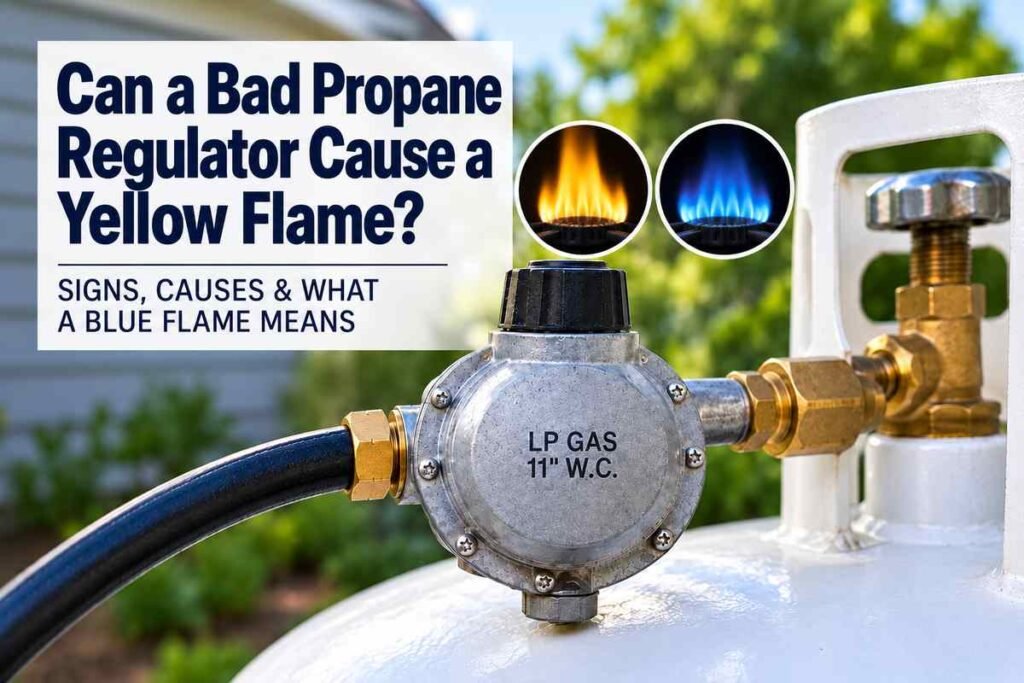
Yes, a faulty propane regulator can contribute to a yellow flame if it supplies incorrect pressure, but yellow flames are also commonly caused by dirty burners, blocked air openings, incorrect orifices, poor air-to-fuel mixture, or appliance problems. A yellow flame should therefore be diagnosed at the appliance and fuel-supply system rather than blamed on the regulator automatically.
What Flame Color Can Tell You
If yellow flames are leaving black deposits, also review whether a bad propane regulator can contribute to soot. If the flame is weak rather than simply yellow, compare it with low propane regulator pressure.
| Flame Appearance | Possible Cause |
|---|---|
| Mostly blue, stable | Often normal for many propane burners |
| Yellow tips only | May be normal on some appliances; check manual |
| Large lazy yellow flame | Incomplete combustion/air-fuel problem |
| Flame lifting off burner | Possible excessive pressure or too much primary air |
| Weak small flame | Possible low pressure or restriction |
How Regulator Pressure Affects Combustion
The regulator helps deliver gas at the pressure for which the appliance was designed. Too little or too much pressure can change gas flow through the burner orifice and upset combustion.


Dirty Burner Ports
If flame color worsens when other appliances start, see why propane pressure can drop under added appliance load. If the pilot is also unstable, review whether a propane regulator can cause a pilot light to keep going out.
Grease, rust, insects, and debris can interfere with burner gas distribution and air mixing. This is particularly common in outdoor grills and appliances stored for long periods.
Blocked Air Shutter or Venturi
Propane needs the correct amount of primary air before combustion. Spider webs or debris in burner venturis can create a fuel-rich mixture and yellow, sooty flames.
Wrong Orifice or Fuel Conversion
Natural-gas and propane appliances use different fuel pressures and often different orifice sizes. An incorrect conversion can produce unsafe combustion. Use only manufacturer-approved conversion components and procedures.


If the flame problem appeared immediately after a cylinder change, compare it with an appliance that will not stay lit after changing tanks.
Why Soot Matters
Black soot together with a persistent yellow flame indicates incomplete combustion and deserves prompt attention. Combustion problems can also create carbon monoxide, so indoor appliances should be serviced rather than repeatedly adjusted by trial and error.
How Pressure Is Checked
A technician can use a manometer to compare actual inlet pressure with the appliance specification. Many low-pressure propane systems operate near 11 inches W.C., but the appliance nameplate/manual is the authority for its required range.
FAQ
Should every propane flame be completely blue?
No. Flame characteristics vary by burner design, and decorative appliances may intentionally have yellow flames.
Can low propane cause a yellow flame?
Low supply can affect combustion, but burner contamination and air-mixing problems are often equally important possibilities.

Should I adjust the regulator?
Do not adjust pressure without the correct specification and measuring equipment.
Can the Regulator Really Cause a Yellow Flame?
Yes, a bad propane regulator can contribute to a yellow flame if it delivers gas at the wrong pressure, but burner airflow, dirt, incorrect orifices, and appliance problems are often more common causes. A normal blue flame on many propane burners indicates that fuel and air are mixing well. A large lazy yellow flame can mean incomplete combustion, which may produce soot and carbon monoxide.
Some decorative gas fireplaces and log sets are designed to produce yellow-tipped flames, so always compare flame appearance with the appliance manufacturer’s description before assuming there is a problem.
| Flame Appearance | Possible Cause | What to Check |
|---|---|---|
| Mostly blue, steady flame | Normal combustion on many appliances | Compare with manufacturer specifications |
| Large lazy yellow flame | Too much gas or too little combustion air | Regulator pressure, air shutter, burner cleanliness |
| Yellow flame with black soot | Incomplete combustion | Stop use and inspect burner, orifice, venting, regulator |
| Small weak yellow flame | Low pressure or restricted gas flow | Tank, regulator, hose, excess-flow device |
| Flame changes when another appliance starts | Supply pressure instability | Regulator capacity, pipe sizing, tank vaporization |
How Incorrect Regulator Pressure Changes Combustion
The regulator controls how much pressure reaches the appliance gas valve and burner. If pressure is too high, the burner can receive more fuel than it is designed to mix with available air. That can create large yellow flames, lifting, noise, or soot depending on the burner design.


If pressure is too low, the flame may become weak, unstable, or partially yellow because gas velocity and air entrainment are reduced. The correct pressure must be measured at the proper appliance test point with a manometer. Visual flame appearance alone cannot tell you whether the regulator setting is correct.
Dirty Burners Are a Very Common Cause
Blocked burner ports can create yellow flames even when the regulator is working perfectly. Grease, rust, insects, dust, and food debris can interfere with the way propane and air mix. Outdoor grills are especially prone to spider webs or insect nests in burner venturi tubes.
Cleaning procedures vary by appliance. Turn off the propane supply and follow the manufacturer’s maintenance instructions. Do not enlarge burner holes with drills or sharp tools because changing the port size can alter gas flow and combustion.
Check the Air Supply and Air Shutter
A propane flame can turn yellow when the burner does not receive enough primary or secondary combustion air. Some appliances use an adjustable air shutter near the burner venturi. Others rely on fixed openings and room ventilation.
A blocked air inlet, dirty blower, closed combustion-air opening, or incorrectly adjusted shutter can produce a fuel-rich flame. On furnaces, water heaters, and enclosed appliances, air and venting problems can also create dangerous carbon monoxide conditions, so professional service is appropriate.
Wrong Orifice or Fuel Conversion
An appliance fitted with the wrong gas orifice can burn yellow even when regulator pressure is correct. Natural gas and propane use different pressures and typically different orifice sizes. An appliance converted from natural gas to propane must use the exact parts and procedure approved by the manufacturer.
Never drill an orifice or substitute a generic jet to make an appliance burn differently. Incorrect conversion can cause overfiring, soot, carbon monoxide, and fire.
How to Tell if the Regulator Is the Likely Cause
The regulator becomes more likely when several propane appliances show abnormal flames at the same time. If only one burner is yellow while other appliances are normal, the problem is probably local to that appliance.
- Several appliances develop weak or yellow flames together.
- Flame quality changes as other appliances turn on.
- The regulator is heavily iced or its vent is blocked.
- Pressure problems began after regulator replacement or system changes.
- There is gas odor, hissing, or abnormal pressure behavior.
Why Yellow Flames and Soot Should Not Be Ignored
Persistent yellow flames can indicate incomplete combustion and possible carbon monoxide production. Carbon monoxide is colorless and odorless. A carbon monoxide alarm is an important layer of protection, but it does not replace proper appliance maintenance.
If a normally blue appliance suddenly produces yellow flames, soot, eye irritation, headaches, or unusual odors, turn it off and have it inspected. Do not keep using it while attempting repeated regulator adjustments.
Safe Troubleshooting Steps
You can narrow the problem without opening the regulator or changing gas pressure. First compare other burners and appliances. Confirm that the propane supply is adequate, check for obvious burner debris, and make sure vents and air openings are not blocked.
If the yellow flame remains after basic manufacturer-approved cleaning, have a technician test inlet pressure, manifold pressure, burner condition, orifice size, combustion air, and venting. These measurements are more reliable than guessing from flame color.
When the Regulator Should Be Replaced
A regulator should be replaced when testing shows it cannot maintain the specified pressure, leaks through the vent, is physically damaged, or has internal contamination. Replacement must match the required stage, inlet pressure, outlet pressure, capacity, and connection type.
Do not install an adjustable high-pressure regulator on an appliance designed for low pressure unless the appliance manufacturer specifically requires that arrangement.
Frequently Asked Questions
Is any yellow in a propane flame dangerous?
Not always. Small yellow tips can occur on some burners, and decorative appliances may intentionally produce yellow flames. A sudden change, lazy flame, or soot is more concerning.
Can low propane pressure make the flame yellow?
Yes. Very low pressure can reduce gas velocity and disturb the intended fuel-air mixture, producing a weak or unstable flame.
Should I turn the regulator screw until the flame turns blue?
No. Regulator adjustment requires the correct pressure specification and a manometer. Guessing can create an unsafe overpressure condition.
Flame Color Can Vary by Appliance Type
Not every propane appliance is supposed to show the same flame pattern. Open burners on ranges and many heaters normally burn mostly blue, while decorative fireplaces and gas logs may be designed to produce yellow or orange portions for appearance. The correct reference is always the appliance manufacturer’s description of a normal flame.
What matters most is a change from normal behavior. A burner that was consistently blue and suddenly becomes large, lazy, yellow, or sooty deserves attention even if another type of propane appliance normally shows yellow flame.
Carbon Monoxide Precautions
A persistent yellow flame on an appliance that should burn blue can be a carbon monoxide warning sign. Keep working carbon monoxide alarms installed according to local requirements and the alarm manufacturer’s instructions. If an indoor appliance is producing soot, unusually yellow flames, or symptoms such as headache, dizziness, or nausea, shut it down and have the appliance inspected before further use.
Watch for Changes, Not Just Color
A sudden change in flame behavior is often more useful than color alone. If a burner that has always operated normally begins producing a taller yellow flame, starts making soot, or changes whenever another appliance runs, that points to a new combustion or pressure problem. Record when the change happens and which appliances are operating at the time; that information can help a technician diagnose the system faster.
Bottom Line
A bad regulator can cause or contribute to a yellow propane flame, but it is only one possible cause. Check pressure, burner cleanliness, primary air, orifice selection, and appliance condition before deciding which component is responsible.

Mike is an experienced propane technician with over 15 years of professional experience in the field. He has dedicated his career to helping customers with their propane needs, from installation to maintenance and repair. Together with Jeremy, he co-founded this website to provide useful information and guidance to customers seeking reliable propane services.


