

Installing a propane tank in Tennessee can provide a reliable energy source for home heating, cooking, water heating, backup generators, and other household appliances. Whether you live near Nashville, Knoxville, Memphis, Chattanooga, or in a rural mountain community, choosing the right propane system can make a considerable difference in your household expenses.
In this guide, I’ll explain how much you should budget, what installation requirements you need to consider, and how to avoid unnecessary expenses when purchasing or leasing a tank.
Installing a residential propane tank in Tennessee can cost approximately $800 to $4,000 for a typical above-ground system and $2,000 to $7,500 or more for an underground system, depending on tank capacity, ownership arrangements, excavation, and site conditions.


- A 500-gallon tank is a practical choice for many homes that use propane for heating and multiple appliances.
- Tennessee regulates LP-gas installations through state laws, fire safety regulations, and applicable local codes.
- Local permits and inspections may be required.
- Most residential storage tanks are filled to approximately 80% of their rated capacity.
- Leasing a tank can reduce your initial expenses, while purchasing provides greater flexibility when choosing fuel suppliers.
Prices are approximate budgeting estimates rather than verified statewide contractor quotations. Larger tanks and complex installations may cost considerably more.
How Much Does It Cost to Install a Propane Tank?
The amount you spend on installation depends largely on how you intend to use propane. Installing a small tank for a fireplace is considerably different from installing a large storage system for whole-house heating.
I recommend separating the cost of the tank from installation expenses. Some suppliers advertise affordable tanks, but their prices may not include transportation, regulators, gas piping, excavation, or the initial fuel delivery.
Installation Cost by Tank Size
| Tank Capacity | Above-Ground Installation | Underground Installation |
|---|---|---|
| 120 gallons | $800–$1,800 | Generally uncommon |
| 250 gallons | $1,200–$2,500 | $2,000–$4,000 |
| 325 gallons | $1,500–$3,000 | $2,500–$4,500 |
| 500 gallons | $2,000–$4,000 | $3,000–$6,500 |
| 1,000 gallons | $3,000–$6,500 | $4,500–$10,000+ |
Estimated purchase and installation budgets for customer-owned systems. Initial fuel delivery is excluded.


A large part of your installation budget will be determined by the equipment itself. Steel prices, transportation charges, labor expenses, and equipment availability can all influence the final quotation.
If you are working with a limited budget, I suggest requesting separate quotations for purchasing and leasing before making your decision.
You can also read my guide on how much a 500-gallon propane tank costs to understand the expenses associated with owning this popular residential tank size.
Breaking Down Your Installation Expenses
When you receive a quotation, you may notice that several charges are associated with preparing your property and connecting your propane appliances.
| Installation Component | Estimated Budget |
|---|---|
| Tank transportation and positioning | $150–$500 |
| Concrete supports or foundation | $100–$400 |
| Regulators and fittings | $100–$350 |
| Gas line installation | $300–$1,500+ |
| Excavation and backfilling | $800–$3,000+ |
| Corrosion protection for buried tanks | $150–$500 |
| Permits and inspections, where required | $50–$300+ |
| Initial system testing | $100–$250 |
These are illustrative allowances. Contractors may combine several services into one installation package.



One expense that homeowners sometimes overlook is the distance between the tank and the house.
A tank installed relatively close to an approved service connection may require less piping and trenching. Moving the tank farther away could significantly increase your expenses, particularly when the contractor encounters rocky soil, existing utilities, concrete surfaces, or landscaping that needs restoration.
State Regulations and Installation Requirements
Tennessee regulates liquefied petroleum gas through Tennessee Code Annotated, Title 68, Chapter 135, and the administrative rules under Chapter 0780-02-17.
The state’s LP-gas regulations reference NFPA 58, also known as the Liquefied Petroleum Gas Code. Other applicable building, fire, and fuel gas codes may impose additional requirements. Confirm the currently applicable code editions with the Tennessee State Fire Marshal’s Office or your local authority before installation.


These regulations address important safety considerations associated with storing, handling, distributing, and installing LP-gas equipment.
As a homeowner, you should pay attention to the following:
- Appropriate tank placement and separation distances.
- Approved propane containers and accessories.
- Protection against accidental vehicle impacts.
- Properly installed regulators, valves, and gas piping.
- Underground tank corrosion protection.
- Applicable permits and inspections.
- Safe access for propane delivery vehicles.
- Installation by appropriately qualified professionals.
State-level licensing requirements for propane businesses are administered through the Tennessee State Fire Marshal’s Office.
However, a propane business license is different from a residential installation permit. You should not assume that a supplier’s license automatically satisfies every local requirement affecting your property.
I recommend contacting your local building department or fire marshal before purchasing a tank, especially if you intend to install a large underground system.
Do You Need a Permit to Install a Propane Tank?
Permit requirements depend on your municipality, county, tank capacity, and the nature of your installation.
For example, Knoxville has an LP-gas installation permitting process administered through its Fire Prevention Bureau. You should contact the relevant office to confirm the current application requirements and fees before beginning your project.
| Type of Approval | When It May Be Required |
|---|---|
| LP-gas installation permit | Installation of permanent storage equipment |
| Mechanical permit | Installation of propane appliances |
| Fuel gas piping permit | Installation or modification of gas lines |
| Fire safety inspection | Verification of tank placement and safety compliance |
| Building permit | Associated construction or structural modifications |
| Zoning approval | Properties subject to special land-use restrictions |
Your propane contractor may handle some or all of these requirements. However, you should confirm who is responsible for obtaining permits and arranging inspections before signing the installation agreement.
Even if you live outside city limits, do not assume that your property is exempt from propane safety regulations.
How Far Should the Tank Be From Your House?
Tank placement is one of the most important considerations when planning an installation.
Propane storage containers must maintain appropriate separation from buildings, neighboring buildable property lines, ignition sources, and other potential hazards.
The following table provides general NFPA-based residential planning distances.
| Rated Capacity | Above Ground | Underground |
|---|---|---|
| Under 125 gallons | Special conditions apply | 10 feet |
| 125–250 gallons | 10 feet | 10 feet |
| 251–500 gallons | 10 feet | 10 feet |
| 501–1,000 gallons | 25 feet* | 10 feet |
| 1,001–2,000 gallons | 25 feet* | 10 feet |
*Certain qualifying single-container installations of up to 1,200 gallons may be eligible for reduced separation distances. Smaller containers have specific requirements involving openings, valves, filling connections, and ignition sources. Additional restrictions may apply.
I recommend allowing additional space when your property permits it. This gives delivery personnel more room to work and provides flexibility if you later decide to build a garage, install a generator, or expand your house.
Avoid selecting a tank location simply because it is hidden behind a fence or conveniently close to your appliances.
What Size Tank Do You Need?
Choosing the correct capacity involves balancing your fuel consumption, available property space, installation budget, and delivery frequency.
A larger tank does not necessarily mean that you will consume more propane. Your appliances determine your consumption. The tank simply determines how much fuel you can store between deliveries.
Residential Tank Capacity Comparison
Approximate liquid propane capacity at an 80% fill level.
| Tank Size | Typical Residential Application |
|---|---|
| 120 gallons | Cooking, fireplaces, and limited appliance use |
| 250 gallons | Water heating, cooking, and supplemental heating |
| 325 gallons | Moderate household consumption |
| 500 gallons | Central heating and multiple propane appliances |
| 1,000 gallons | Large homes, high consumption, and extended fuel storage |
120-Gallon Tanks
A 120-gallon tank is suitable if you primarily use propane for cooking, occasional fireplace operation, or a small number of appliances.
Its smaller footprint can make installation easier on properties with limited outdoor space.
However, I would carefully evaluate its suitability before connecting it to a large standby generator or using it as the primary heating source during winter.
250-Gallon Tanks
A 250-gallon tank offers a reasonable compromise between installation expense and fuel storage.
It may work well for smaller homes, cabins, and households using propane for water heating, cooking, clothes drying, or supplemental heating.
500-Gallon Tanks
For many homeowners, I consider this capacity a sensible starting point when evaluating whole-house propane systems.
It provides approximately 400 gallons of liquid propane when filled to the typical 80% level.
This capacity can support several appliances and reduce the frequency of delivery appointments compared with smaller containers.
1,000-Gallon Tanks
Larger households, agricultural properties, and homes with substantial heating requirements may benefit from this capacity.
A larger storage system can also provide additional reserves for remote properties where deliveries become difficult during severe weather.
However, larger tanks require more space, greater initial investment, and potentially more expensive fuel deliveries.
Above-Ground vs. Underground Installation
One of the decisions you will need to make is whether to install your tank above the surface or bury it.
Both options can provide dependable fuel storage when professionally installed and maintained.
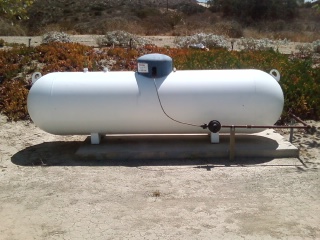
Above-Ground Tank
Typical planning budget
- Lower installation expenses.
- Easier visual inspections.
- Less excavation.
- Simpler removal or replacement.
Underground Tank
Typical planning budget
- Preserves landscaping.
- Less visible equipment.
- More stable surrounding temperatures.
- Additional corrosion protection requirements.
Advantages of Above-Ground Systems
Above-ground installation is generally the more economical option. It eliminates the need for a large excavation and makes much of the container accessible for visual inspection.
It also simplifies future removal or replacement.
If you have sufficient property space and do not mind seeing the tank in your yard, this is often the option I would investigate first.
Advantages of Underground Systems
Underground tanks are particularly attractive to homeowners who want to preserve the appearance of their landscaping.
Most of the container remains below the surface, although the service dome must remain accessible.
Buried tanks also experience more stable surrounding temperatures.
The disadvantages include excavation costs, corrosion protection requirements, groundwater considerations, and potentially expensive removal.
Read my detailed guide on the cost of installing a buried propane tank before committing to this type of system.
Regional Factors That Affect Installation Costs
Tennessee has diverse terrain, and your geographical location can influence the complexity of installing a propane system.
| Region | Potential Installation Challenges |
|---|---|
| East Tennessee | Mountainous terrain, slopes, and rocky ground |
| Middle Tennessee | Limestone, developing residential areas, and excavation obstacles |
| West Tennessee | Drainage, flood exposure, and soil stability |
| Cumberland Plateau | Rocky terrain and difficult equipment access |
| Rural communities | Long transportation distances and delivery accessibility |
| Urban neighborhoods | Limited space, local permits, and property boundaries |
For example, excavating a hole for an underground tank in rocky terrain near the Cumberland Plateau could require specialized equipment.
Similarly, installing a tank in an area exposed to flooding may require engineered measures to prevent displacement.
I recommend requesting an on-site assessment instead of relying exclusively on telephone quotations.
A contractor who visits your property can identify challenges that may not be apparent from photographs or satellite imagery.
Step-by-Step Installation Process
Understanding the installation process can help you prepare your property and avoid unnecessary delays.
- Determine your fuel requirements. Identify which appliances will use propane. Your contractor should evaluate their fuel consumption, maximum demand, and potential simultaneous operation.
- Request quotations. Contact several qualified propane suppliers and request written proposals covering the same installation scope.
- Arrange a site assessment. The installer should identify a suitable location, evaluate delivery access, measure required clearances, and assess gas piping requirements.
- Obtain necessary permits. Confirm whether the relevant approvals will be handled by you or your contractor.
- Identify underground utilities. Before excavation, arrange underground utility marking through Tennessee 811. Private utility lines may require separate locating services.
- Prepare the installation area. The contractor prepares appropriate supports for an above-ground container or excavates an approved location for a buried tank.
- Install the equipment. Qualified personnel position the container and install the required regulators, valves, corrosion protection, and gas piping.
- Complete testing and inspections. The system must undergo applicable pressure tests, leak checks, inspections, and commissioning before normal operation.
- Schedule the initial fuel delivery. Once the system is approved for service, your supplier can arrange filling.
- Receive operating instructions. Ask your technician to explain the fuel gauge, emergency shutoff, delivery scheduling, and maintenance requirements.
You should retain copies of installation records, permits, test results, equipment warranties, and ownership documentation.
Should You Buy or Lease Your Tank?
Tennessee propane suppliers offer both purchasing and leasing arrangements.
The right choice depends on your financial situation, expected fuel consumption, and how long you intend to remain at your property.
| Consideration | Buying | Leasing |
|---|---|---|
| Initial investment | Higher | Usually lower |
| Tank ownership | Homeowner | Supplier |
| Fuel supplier flexibility | Generally greater | Usually restricted |
| Annual rental fees | None | May apply |
| Tank maintenance | Owner’s responsibility | Depends on contract |
| Changing suppliers | Generally easier | May require tank removal |
| Long-term expenses | Potentially lower | Depends on fuel and lease rates |
Worked Example: Comparing Ownership and Leasing
Imagine that you need a 500-gallon tank and expect to consume 800 gallons of propane annually.
Consider these two hypothetical offers:
| Expense | Purchase | Lease |
|---|---|---|
| Initial installation | $2,800 | $350 |
| Annual tank rental | $0 | $80 |
| Propane price per gallon | $2.50 | $2.85 |
| Annual fuel expense | $2,000 | $2,280 |
| Annual recurring expense | $2,000 | $2,360 |
| Five-year total | $12,800 | $12,150 |
| Ten-year total | $22,800 | $23,950 |
Illustrative calculations excluding maintenance, repairs, financing, taxes, and changes in fuel prices.
In this example, leasing is less expensive during the first five years. However, purchasing becomes more economical after approximately seven years, assuming the price difference remains unchanged.
Potential ten-year savings from purchasing: $1,150.
What I find particularly important is the price you pay for fuel throughout the life of your system.
An attractive installation discount can become less valuable if your contract requires purchasing propane at consistently higher prices.
For more information, see my guide on propane tank leasing costs and their advantages and disadvantages.
Can You Purchase a Used Tank?
Purchasing a used or professionally refurbished propane tank can reduce your initial expenses.
However, I would avoid purchasing an older container without first confirming that a qualified local propane supplier is willing to inspect, install, and fill it.
Check the following before making a purchase:
- Legible manufacturer and ASME identification plates.
- Proof that the seller legally owns the container.
- External corrosion, dents, or other damage.
- Condition of service valves and fittings.
- Previous repair and inspection records.
- Suitability for above-ground or underground installation.
- Acceptance by your intended propane supplier.
- Transportation and installation expenses.
A secondhand tank advertised at a bargain price may require expensive transportation, replacement valves, surface restoration, or other professional services.
Compare the complete installed cost against the price of a new container with a warranty.
You should also understand that permanently installed ASME residential tanks are not subject to the same periodic cylinder requalification schedule as portable DOT propane cylinders. Nevertheless, they must remain in safe operating condition.
How Much Will Your First Propane Delivery Cost?
Your initial installation budget should include enough money to purchase fuel.
A residential tank is generally filled to approximately 80% of its rated capacity to accommodate liquid expansion.
The following table shows hypothetical refill expenses at different propane prices.
| Tank Size | $2.00/gal | $2.50/gal | $3.00/gal | $3.50/gal |
|---|---|---|---|---|
| 120 gallons | $192 | $240 | $288 | $336 |
| 250 gallons | $400 | $500 | $600 | $700 |
| 325 gallons | $520 | $650 | $780 | $910 |
| 500 gallons | $800 | $1,000 | $1,200 | $1,400 |
| 1,000 gallons | $1,600 | $2,000 | $2,400 | $2,800 |
These calculations assume an initially empty tank filled to 80%. They are not current Tennessee retail fuel quotations.
Propane Refill Cost Calculator
Estimate your fuel expenses based on your tank capacity, existing fuel level, and supplier’s quoted price.
Based on an 80% target fill level. Excludes taxes, delivery fees, and other supplier charges.
I recommend contacting your supplier when your gauge approaches 25% to 30%, rather than waiting until the container is almost empty. Arrange earlier deliveries if severe weather is expected.
How Long Will Your Propane Supply Last?
The amount of time between deliveries depends on your appliances, heating requirements, outdoor temperature, insulation, and daily usage.
For planning purposes, consider a 500-gallon tank filled to 80%, with your next delivery requested when the gauge reaches 20%.
This provides approximately 300 gallons of fuel between those two levels.
| Average Daily Consumption | Estimated Time From 80% to 20% |
|---|---|
| 2 gallons | 150 days |
| 4 gallons | 75 days |
| 6 gallons | 50 days |
| 8 gallons | 37.5 days |
| 10 gallons | 30 days |
| 15 gallons | 20 days |
These estimates illustrate why selecting a tank based solely on the size of your house can be misleading.
Two similarly sized homes may consume substantially different quantities of propane because of insulation, thermostat settings, appliance efficiency, and household habits.
If you are replacing an existing system, your previous twelve months of propane delivery records may provide a useful starting point for estimating future requirements.
Where Can You Purchase a Residential Tank?
Several regional suppliers serve different parts of Tennessee. Depending on where you live, you may have access to independent propane businesses, regional distributors, and larger national suppliers.
| Supplier | General Service Area | Services to Ask About |
|---|---|---|
| Admiral Propane | East Tennessee | Installation, tank sales, leasing, and delivery |
| TN GAS LLC | East Tennessee | Residential propane equipment and fuel |
| Advanced Propane | Middle Tennessee and surrounding areas | Installation, delivery, and ownership options |
| Trinity Gas | Davidson County and surrounding communities | Residential propane services |
| Henley Propane | Middle Tennessee | Bulk propane delivery |
| B&B Propane | Southwestern Tennessee | Tank sales, leasing, and delivery |
| Blue River Propane | Selected Tennessee communities | Installation and delivery |
| Pittman Propane | Tennessee and Mississippi service areas | Fuel delivery and leased storage equipment |
Supplier coverage, services, and equipment availability should be confirmed directly before making arrangements.
I would request quotations from both independent regional suppliers and larger propane distributors.
A smaller company may offer competitive service arrangements, while a larger distributor may have more equipment or delivery resources. Neither is automatically the less expensive option.
Preparing Your Property for Propane Delivery
A suitable tank location must remain accessible after installation.
Remember that the delivery truck may need to visit your property several times each year.
When discussing the proposed location with your supplier, consider the following:
- Driveway width and surface condition.
- Overhead obstacles and tree branches.
- Steep gradients and sharp turns.
- Locked gates or restricted entrances.
- Seasonal road conditions.
- Distance from the delivery truck to the filling connection.
- Space required for safe vehicle maneuvering.
A location that is accessible during summer may become difficult to reach after heavy rain, snow, or freezing conditions.
Avoid placing landscaping, fences, sheds, or other structures where they could interfere with servicing the container.
I would ask the delivery company to approve the proposed access arrangements before permanently installing the tank.
Installing a Tank for a Standby Generator
Backup generators are another reason homeowners invest in propane storage.
If your primary purpose is emergency electricity generation, choosing capacity requires more than simply calculating the number of gallons consumed per hour.
You must also consider the container's ability to vaporize enough propane under cold-weather conditions and at lower liquid levels.
For example, assume a generator consumes an average of two gallons per hour during a power outage.
| Generator Operating Period | Estimated Propane Consumption |
|---|---|
| 12 hours | 24 gallons |
| 24 hours | 48 gallons |
| 48 hours | 96 gallons |
| 72 hours | 144 gallons |
| 7 days | 336 gallons |
Actual generator fuel consumption varies with electrical load, generator size, operating conditions, and manufacturer specifications.
A 250-gallon tank might appear adequate for a short outage based on liquid capacity alone. However, its vaporization performance may be insufficient for certain generator models.
Your propane installer and generator contractor should coordinate tank sizing, regulator selection, and fuel piping design.
This is particularly important if the same system supplies your furnace and water heater during an extended outage.
How to Reduce Installation Expenses
A reliable propane system does not necessarily have to be the most expensive system available.
There are several opportunities to control expenses without compromising safety.
| Cost-Saving Strategy | Potential Benefit |
|---|---|
| Compare three written quotations | Identifies differences in pricing and included services |
| Choose above-ground installation | Avoids major excavation expenses |
| Evaluate refurbished equipment | May reduce container purchase costs |
| Install during less busy periods | May improve scheduling flexibility |
| Compare purchasing and leasing | Helps identify long-term ownership costs |
| Select an accessible approved location | Reduces unnecessary site preparation |
| Coordinate installation with construction | May avoid duplicate excavation work |
Correcting an unsafe or noncompliant installation can cost considerably more than performing the work properly in the first place.
Residential Installation Decision Guide
Use the following comparison to identify which type of system you should discuss with your supplier.
| Your Situation | Option to Investigate |
|---|---|
| You only use propane for cooking | 120-gallon or smaller approved system |
| You operate several small appliances | 120–250 gallons |
| You use propane for whole-house heating | 500 gallons |
| You have high annual fuel consumption | 500–1,000 gallons |
| You live in a remote rural community | Larger storage capacity |
| You have limited upfront funds | Leased above-ground system |
| You want freedom to compare suppliers | Customer-owned tank |
| You want to preserve landscaping | Underground installation |
| You have rocky soil | Above-ground installation |
| You require extended generator operation | Professionally sized 500–1,000-gallon system or other suitable capacity |
These recommendations are starting points rather than final engineering specifications.
Propane Tank Maintenance and Safety
Once your system is installed, maintaining safe operating conditions becomes an ongoing responsibility.
You should periodically look for visible corrosion, damaged supports, leaning containers, obstructed access, or damage to exposed equipment.
For underground tanks, arrange professional corrosion protection testing at the applicable intervals.
Avoid storing combustible materials near the tank. Do not paint it a dark color without manufacturer or supplier approval, because excessive solar heat absorption can increase container temperature.
Install and maintain suitable carbon monoxide alarms inside your home. Propane gas detectors can provide additional protection but do not replace carbon monoxide alarms.
- Leave the affected area immediately.
- Avoid flames, electrical switches, phones, and other potential ignition sources near the suspected leak.
- From a safe location, contact emergency services and your propane supplier.
- Do not return until qualified responders declare it safe.
Never attempt to repair a leaking propane valve or regulator yourself.
Pre-Installation Checklist
Before approving your contractor's proposal, use this interactive checklist to make sure you have addressed the important considerations.
Residential Installation Checklist
Frequently Asked Questions
Can I install my own residential propane tank in Tennessee?
You should use an appropriately qualified propane installation professional. Permanent systems involve pressurized fuel storage, gas piping, regulators, testing, and applicable licensing and permitting requirements.
Is a 500-gallon tank large enough to heat a house?
It can be sufficient for many residential properties. However, your heating demand, appliance ratings, insulation, climate, vaporization requirements, and delivery frequency determine whether it is appropriate.
Can I bury an existing above-ground container?
Not simply because it is made of steel. Underground containers must be suitable for buried service and have the required corrosion protection and equipment configuration. Consult a qualified installer.
Can a propane supplier fill a tank owned by another company?
Leased tanks are generally serviced by their owner or authorized providers. Do not assume another supplier can legally or contractually fill a leased container. Verify ownership and applicable restrictions.
How long does installation take?
A straightforward above-ground installation may be completed within a working day once approvals and preparations are finished. Underground projects may take several days or longer depending on excavation, inspections, weather, and site conditions.
Can I install a container near my septic system?
The proposed location should be assessed for underground utilities, septic components, soil stability, delivery vehicle access, and applicable separation requirements. Avoid positioning heavy equipment where it could damage septic infrastructure.
What happens if my tank runs completely out of propane?
Your supplier may need to perform a leak check and other safety procedures before restoring service. Running out of fuel can also result in additional service charges and heating interruptions.
Can I move my tank to another part of my property?
Yes, provided the new location is suitable and the relocation is performed by qualified personnel. Additional permits, piping, testing, or inspections may be required.
Is propane available throughout Tennessee?
Propane delivery is available across much of the state, including many rural areas without natural gas infrastructure. However, individual suppliers have specific service territories and delivery requirements.
When is the best time to arrange installation?
Spring and summer are worth considering because you can complete the work before winter heating demand increases. Contractor availability, promotional offers, and local weather conditions will determine the best timing for your property.
Conclusion
Installing a residential propane system in Tennessee requires careful consideration of fuel storage capacity, installation expenses, property conditions, and applicable state and local safety requirements.
For many homeowners who use propane for central heating and several appliances, a 500-gallon above-ground tank offers a reasonable balance between installation costs, fuel storage, and accessibility.
Underground installation may be worthwhile if preserving the appearance of your property is a priority, while larger containers can benefit households with substantial consumption or limited delivery access.
My recommendation is to obtain at least three written quotations, arrange a professional site assessment, and compare the total long-term expenses of buying and leasing.
Do not make your decision based exclusively on the cheapest tank price. A properly sized, safely installed, and accessible propane system can provide dependable household energy for many years.

Mike is an experienced propane technician with over 15 years of professional experience in the field. He has dedicated his career to helping customers with their propane needs, from installation to maintenance and repair. Together with Jeremy, he co-founded this website to provide useful information and guidance to customers seeking reliable propane services.