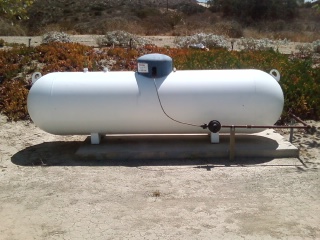


Propane is a practical energy source for South Dakota homes, farms, ranches, and rural properties without access to natural gas pipelines.
Whether you live near Sioux Falls, Rapid City, or a remote agricultural community, I’ll explain how much you should budget for a storage tank, compare delivery services, and prepare your installation for South Dakota’s harsh winters.
Quick Answer
What South Dakota homeowners should know


| Item | Quick answer |
|---|---|
| Residential propane price | $2.005/gal — EIA, November 16, 2026 |
| 500-gallon above-ground installation | $3,500–$5,500 — estimated planning budget |
| 500-gallon annual tank rental | $89/year — advertised Rapid City supplier rate |
| Typical 500-gallon tank setback | 10 feet from buildings and applicable property lines |
State plan review: Residential LPG installations below 2,000 gallons of water capacity are generally exempt from submitting installation plans to the South Dakota Department of Public Safety.
Local permits: Municipal requirements may still apply. Vermillion, for example, publishes a $100 permit fee per qualifying permanent above-ground tank.
Recommended capacity: A 500- or 1,000-gallon container is worth evaluating for homes relying on propane for primary heating.
Winter safety: Maintain sufficient fuel reserves, protect equipment from snow and ice damage, and ensure delivery trucks can access your property.


Ownership: South Dakota law prohibits unauthorized filling of propane containers owned by another party.
Installation costs are illustrative budgeting estimates. Rental and permit fees are actual published local examples, not statewide rates.
Sources: U.S. Energy Information Administration, South Dakota Administrative Rules, Patrons Cooperative, City of Vermillion, and South Dakota Codified Laws.
1. How Much Does a New Residential Tank Cost?
The purchase price depends on storage capacity, equipment condition, construction type, and whether the container is designed for above-ground or underground installation.
South Dakota suppliers commonly offer residential containers in capacities ranging from 120 to 1,000 gallons.



For example, Nelson’s Oil & Gas advertises these capacities for purchase or lease in South Dakota.
Because many local companies provide personalized quotations rather than publishing equipment prices, I’ve included preliminary purchasing budgets below.
Estimated equipment purchase prices
| Tank capacity | Above ground | Underground |
|---|---|---|
| 120 gallons | $900–$1,500 | $1,700–$2,500 |
| 250 gallons | $1,600–$2,500 | $2,200–$3,200 |
| 320 gallons | $2,000–$3,000 | $2,500–$3,600 |
| 500 gallons | $2,500–$3,800 | $3,200–$4,800 |
| 1,000 gallons | $4,500–$6,000 | $5,000–$7,500 |
Illustrative equipment-only budgets informed by published tank dealer pricing. These are not surveyed South Dakota retail averages.
For comparison, Oklahoma-based BLT Tanks publishes equipment price estimates of $3,325 for a new 500-gallon underground container and $4,750 for a new 1,000-gallon above-ground container. Freight and local installation costs must be considered separately.


I recommend purchasing equipment through a supplier that can also arrange installation, safety testing, and ongoing propane delivery.
An inexpensive tank purchased independently may become more expensive once transportation and installation charges are included.
For additional information, read my guide on how much a 500-gallon propane tank costs.
2. Estimated Installation Costs by Capacity
The total installation expense depends heavily on your property’s location, accessibility, soil conditions, and gas piping requirements.
A rural property with a level installation area and convenient road access will generally require less preparation than a mountainous property in the Black Hills.
Residential installation planning budget
| Tank size | Above ground | Underground |
|---|---|---|
| 120 gallons | $1,500–$2,800 | $3,000–$4,500 |
| 250 gallons | $2,400–$4,000 | $3,500–$6,000 |
| 320 gallons | $2,800–$4,500 | $4,000–$6,500 |
| 500 gallons | $3,500–$5,500 | $5,000–$8,500 |
| 1,000 gallons | $5,500–$8,500 | $7,500–$12,000+ |
Estimated budgets for purchased equipment and installation under relatively straightforward conditions. Fuel, taxes, appliances and unusually difficult site work are excluded. Underground installations must be permitted at the proposed location.
These estimates assume you are purchasing the equipment rather than leasing it.
A supplier-owned container may involve significantly lower upfront expenses, but you should consider annual rental fees and long-term fuel purchasing commitments.
I recommend obtaining at least three itemized installation quotations.
3. Breaking Down the Installation Expenses
Purchasing a propane container is only one part of establishing residential fuel service.
Understanding the remaining expenses can help you compare contractor quotations and avoid unexpected charges.
| Installation component | Estimated cost |
|---|---|
| Transportation and tank placement | $200–$700 |
| Concrete pad or approved supports | $100–$450 |
| Gas piping and trenching | $300–$1,500 |
| Regulators and fittings | $150–$500 |
| Permit and inspection allowance | $50–$300 |
| Underground excavation | $800–$3,000+ |
| Cathodic protection equipment | $150–$650 |
| Landscaping restoration | $200–$1,000+ |
| Difficult rural or mountain access | Site-specific quotation |
These are illustrative contractor budgeting allowances. Some suppliers include several of these services in their installation packages.
Worked example: Installing a 500-gallon tank
Suppose you are establishing propane service at a rural residential property outside Sioux Falls and decide to purchase a new container.
Sample residential installation budget — customer-owned 500-gallon above-ground system
| Item | Cost |
|---|---|
| New propane tank | $2,900.00 |
| Transportation and placement | $350.00 |
| Concrete supports | $200.00 |
| Gas piping and trenching | $650.00 |
| Regulators and fittings | $250.00 |
| Permit allowance | $100.00 |
| Installation subtotal | $4,450.00 |
| Initial fuel delivery (400 gallons) | $802.00 |
| Estimated project total | $5,252.00 |
Hypothetical installation budget using the November 2026 EIA residential fuel price. Taxes, appliance purchases and unexpected site work are excluded.
I would also maintain a contingency allowance of approximately 10% to 15%.
This gives you some financial flexibility if your installer discovers underground obstacles, frozen ground, unstable soil, or an unexpectedly complicated piping route.
4. Current Residential Propane Prices
According to the U.S. Energy Information Administration, South Dakota’s average residential propane price was $2.005 per gallon for the week of November 16, 2026, excluding taxes.
This represents an increase of approximately 14.6% compared with the corresponding reporting week in November 2025.
South Dakota residential propane price history
| Reporting week (2026) | Price per gallon |
|---|---|
| October 5 | $1.724 |
| October 12 | $1.824 |
| October 19 | $1.870 |
| October 26 | $1.951 |
| November 2 | $2.042 |
| November 9 | $2.056 |
| November 16 | $2.005 |
Source: EIA weekly residential propane price survey, October–November 2026.
South Dakota’s propane market is influenced by residential heating demand, agricultural consumption, wholesale fuel prices, and transportation expenses.
Grain drying operations can increase agricultural propane demand during harvest, while residential demand generally rises as outdoor temperatures fall.
Your actual delivered price may differ depending on annual consumption, equipment ownership, contract terms, and distance from the supplier’s distribution facility.
For additional information, read my guide to propane refill costs per gallon and ways to save money.
5. How Much Does It Cost to Fill Different Tank Sizes?
Residential propane containers are generally filled to approximately 80% of their rated water capacity to allow room for liquid expansion.
For example, a nominal 500-gallon tank normally holds approximately 400 gallons of propane at its conventional maximum fill level.
Residential refill cost comparison
| Tank capacity | 80% capacity | Fill from empty | Refill from 30% |
|---|---|---|---|
| 120 gal | 96 gal | $192.48 | $120.30 |
| 250 gal | 200 gal | $401.00 | $250.63 |
| 320 gal | 256 gal | $513.28 | $320.80 |
| 500 gal | 400 gal | $802.00 | $501.25 |
| 1,000 gal | 800 gal | $1,604.00 | $1,002.50 |
Calculated using the EIA residential price of $2.005 per gallon. Taxes and additional delivery charges are excluded.
Calculate your next propane delivery
Estimated delivery quantity (gallons) = Tank capacity × (80 − current gauge percentage) ÷ 100
Estimated refill cost = Delivery quantity × quoted price per gallon
| Example input or result | Amount |
|---|---|
| Tank capacity | 500 gallons |
| Supplier’s quoted price | $2.005 per gallon |
| Current gauge reading | 30% |
| Target fill | 80% |
| Estimated delivery quantity | 250 gallons |
| Estimated refill cost | $501.25 |
Assumes an 80% target fill level. Actual delivered quantities may vary.
During South Dakota’s winter heating season, I recommend arranging delivery when the gauge approaches 30%, or earlier if a major winter storm is forecast.
Running out of propane during a blizzard can leave your household without heat and potentially result in frozen water pipes.
6. Understanding Residential Propane Delivery Services
South Dakota’s rural population and extensive agricultural areas make dependable propane delivery particularly important.
Most residential suppliers offer two primary delivery arrangements.
| Automatic delivery | Will-call delivery |
|---|---|
| Your supplier estimates or monitors consumption and schedules deliveries when additional propane is needed. | You monitor the gauge and contact your supplier whenever additional propane is required. |
| Suitable for primary heating and households with consistent consumption. | Suitable for occasional propane users who regularly monitor their fuel supply. |
Personally, I would favor automatic delivery for a rural South Dakota property relying entirely on propane for heating.
During severe winter weather, delivery schedules can be disrupted by road closures, snow accumulation, and increased demand.
Automatic delivery does not eliminate the need to monitor your fuel supply, but it can reduce the likelihood of forgetting to schedule a refill.
7. Minimum Delivery Quantities and Additional Fees
One expense that homeowners frequently overlook is the minimum delivery requirement.
A smaller storage container may not accommodate enough propane to qualify for a supplier’s standard delivery service.
For example, Patrons Cooperative in Rapid City publishes a 175-gallon minimum delivery quantity. Agtegra publishes additional charges for certain deliveries below 250 gallons.
Actual published delivery fee examples
| Agtegra delivery service | Additional charge |
|---|---|
| Standard qualifying delivery | $0 |
| Delivery below 250 gallons | $75 |
| Less than 48 hours’ notice | $250 |
| After-hours, weekend or holiday delivery | $400 |
| Out-of-gas leak check | $75 |
| Tank access obstruction | $50 |
Source: Agtegra’s published service fee schedule, reviewed November 2026. Charges are subject to change and specific service conditions apply.
Why tank capacity affects delivery expenses
Suppose your supplier requires a minimum delivery of 175 gallons.
| Tank capacity | Refill quantity from 30% to 80% | Meets 175-gallon minimum? |
|---|---|---|
| 120 gallons | 60 gal | No |
| 250 gallons | 125 gal | No |
| 320 gallons | 160 gal | No |
| 500 gallons | 250 gal | Yes |
| 1,000 gallons | 500 gal | Yes |
This is one reason why I recommend confirming delivery requirements before purchasing a tank.
A smaller container may appear economical initially but could create recurring delivery difficulties.
Never deliberately run your tank to an unsafe fuel level simply to qualify for a minimum delivery.
8. Companies Offering Tank Sales, Installation and Delivery
South Dakota has independent propane dealers, agricultural cooperatives, and regional energy distributors.
The following companies advertise relevant propane services.
| Company | Service information |
|---|---|
| Nelson’s Oil & Gas | Southwestern South Dakota tank sales, leasing and delivery |
| Patrons Cooperative | Rapid City-area propane delivery and tank rental |
| Agtegra Cooperative | Residential and agricultural propane delivery |
| Enning Propane | Western South Dakota and Black Hills communities |
| Olson Propane | Residential delivery and professional tank installation |
| Koopman & Sons Gas | Colton, Hartford, Dell Rapids and Sioux Falls areas |
| F&M Cooperative | Tank installation, monitoring and delivery |
| Sioux Valley Cooperative | Watertown-area delivery and propane equipment services |
These are examples rather than ranked recommendations. Confirm current service territories, prices, qualifications, and equipment availability before making arrangements.
When contacting suppliers, ask about equipment ownership, emergency delivery availability, installation charges, minimum order quantities, and winter service policies.
I would also ask whether the company offers remote tank monitoring.
For households in isolated rural communities, knowing your fuel level without walking through deep snow can be particularly convenient.
9. Delivery and Installation Across Different Regions
South Dakota’s geography influences fuel consumption, installation expenses, and delivery accessibility.
| Region | Major communities | Important considerations |
|---|---|---|
| Southeastern South Dakota | Sioux Falls, Yankton, Vermillion | Suburban setbacks and agricultural demand |
| Northeastern South Dakota | Aberdeen, Watertown | Extreme cold, snow and wind |
| Central South Dakota | Pierre, Fort Pierre | Rural delivery routes and exposed terrain |
| Western South Dakota | Rapid City, Sturgis | Mountain terrain and winter accessibility |
| Black Hills | Custer, Deadwood, Lead | Rocky excavation and wildfire exposure |
| Northwestern South Dakota | Buffalo, Faith | Remote properties and delivery distances |
| South-central South Dakota | Winner, Chamberlain | Agricultural fuel demand and rural access |
Eastern South Dakota
Properties east of the Missouri River may have access to agricultural cooperatives offering residential and commercial propane services.
However, grain drying demand can compete with residential fuel requirements during the autumn harvest.
Western South Dakota
Properties in the Black Hills may require additional site preparation because of slopes, rocky terrain, and restricted delivery access.
If you own a mountain cabin, confirm that your supplier can deliver during winter.
Remote ranches and agricultural properties
A larger container may be appropriate when deliveries require significant travel.
However, agricultural installations involving multiple tanks or high-capacity storage may trigger additional regulatory requirements.
10. Understanding State Laws and Regulations
South Dakota regulates LPG storage and installation through its fire safety administrative rules and codified laws.
The State Fire Marshal’s Office, operating within the Department of Public Safety, performs relevant fire code and construction plan review functions.
Applicable regulations
| Regulation | What it governs |
|---|---|
| SDCL Chapter 34-39 | Liquefied petroleum gases |
| SDCL §34-39-9 | Container ownership and authorized filling |
| ARSD 61:15:01:06 | Fire safety for LPG installations |
| ARSD 61:15:01:08 | Residential installation plan review exemption |
| ARSD Chapter 61:15:03 | Installation plans and approval procedures |
| 2015 International Fire Code | State-adopted fire safety requirements |
| 2015 International Mechanical Code | Referenced mechanical installation requirements |
| NFPA 58 | LPG storage and handling standards |
| Local ordinances | Additional permitting and installation restrictions |
South Dakota’s state fire safety rules reference the 2015 editions of several international construction codes, including the International Fire Code and International Mechanical Code.
Municipalities may enforce different editions or more stringent requirements.
This distinction is important because an installation permitted in one community may require additional approvals in another.
11. Do You Need a Permit to Install a Tank?
Under South Dakota Administrative Rule 61:15:01:08, residential LPG installations with a water capacity below 2,000 gallons are exempt from submitting plans for review by the Department of Public Safety.
However, the exemption does not remove the obligation to comply with applicable installation standards or stricter local requirements.
State plan review considerations
| Residential installation | State capacity-based plan review |
|---|---|
| 120-gallon tank | Generally exempt |
| 250-gallon tank | Generally exempt |
| 500-gallon tank | Generally exempt |
| 1,000-gallon tank | Generally exempt |
| Two 500-gallon tanks | Generally below threshold |
| Installation totaling 2,000 gallons | Exemption no longer applies; confirm review |
| Installation exceeding 2,000 gallons | Confirm applicable state review requirements |
The residential exemption should not automatically be applied to commercial or agricultural bulk storage facilities.
Before purchasing multiple containers for a farm or ranch, contact the relevant fire safety authority.
Local permit example: Vermillion
The City of Vermillion publishes specific propane tank installation requirements that demonstrate why homeowners must check municipal regulations.
| Installation requirement | Published Vermillion rule |
|---|---|
| Application submission | At least 14 days before installation |
| Qualifying temporary LPG tank | $50 permit fee |
| Permanent above-ground tank exceeding 100 gallons | $100 per tank |
| Underground storage tank | Prohibited under published permit rules |
| Site plan and tank specifications | Required |
The underground restriction is particularly important. Do not purchase a buried tank before confirming that the proposed installation is permitted at your property.
Sioux Falls also maintains local fire code provisions addressing LPG installation permits.
I recommend contacting your city or county building department and fire authority before beginning work.
12. Minimum Distance From Buildings and Property Lines
Proper tank placement helps protect buildings, occupants, equipment, and neighboring properties.
Propane vapor is heavier than air and may accumulate in low-lying areas following a leak.
General residential tank setback requirements
| Rated capacity | Above ground | Underground |
|---|---|---|
| Under 125 gallons | 5 ft* | 10 ft |
| 125–250 gallons | 10 ft | 10 ft |
| 251–500 gallons | 10 ft | 10 ft |
| 501–1,200 gallons | 25 ft** | 10 ft |
| 1,201–2,000 gallons | 25 ft | 10 ft |
General IFC and NFPA planning distances from buildings and applicable adjoining property lines. Additional conditions, exceptions and municipal restrictions apply.
* Certain containers smaller than 125 gallons may qualify for installation alongside buildings when applicable requirements regarding openings, filling connections, relief valves, and ignition sources are satisfied.
** A single above-ground container of up to 1,200 gallons may qualify for a reduction to 10 feet when appropriately separated from other containers exceeding 125 gallons and all applicable conditions are met.
Example of a 500-gallon residential installation
Conceptual residential installation layout. Not to scale or intended as an approved construction plan.
Additional clearance requirements may apply around generators, mechanical ventilation openings, electrical equipment, and other ignition sources.
I would also consider where snow will accumulate when selecting an installation location.
13. Choosing the Right Storage Capacity
The appropriate tank capacity depends on household consumption, appliance demand, and delivery frequency.
South Dakota’s extended heating season makes adequate propane storage particularly important.
Usable propane storage capacity
Approximate propane storage at the conventional 80% fill level.
Recommended capacity by application
| Tank capacity | Typical application |
|---|---|
| 100-lb cylinder | Limited cooking and appliance use |
| 120 gallons | Fireplaces, cooking and water heating |
| 250 gallons | Supplemental heating and multiple appliances |
| 320 gallons | Moderate household consumption |
| 500 gallons | Whole-house heating and standby generators |
| 1,000 gallons | Large homes, ranches and remote properties |
If you only use propane for water heating and cooking, a smaller container may be sufficient.
Read my guide on 250-gallon propane tank prices and installation costs for additional purchasing considerations.
For a rural South Dakota household using propane as its primary heating fuel, I would evaluate both 500- and 1,000-gallon systems.
Your installer must also assess cold-weather vaporization capacity to ensure adequate fuel flow during periods of high demand.
14. How Long Will Your Fuel Supply Last During Winter?
One gallon of propane contains approximately 91,500 BTU of energy.
Suppose your furnace has an input rating of 100,000 BTU per hour and operates for the equivalent of 10 hours at full input each day.
Daily fuel consumption:
(100,000 × 10) ÷ 91,500 = 10.93 gallons per day
A 500-gallon tank provides approximately 250 gallons between an initial 80% fill and a 30% refill threshold.
That gives you approximately 23 days of heating under these assumptions.
Estimated winter heating runtime
| Furnace input | Full-output hours/day | Daily consumption | 500-gal tank | 1,000-gal tank |
|---|---|---|---|---|
| 60,000 BTU/hr | 6 | 3.93 gal | 64 days | 127 days |
| 80,000 BTU/hr | 8 | 6.99 gal | 36 days | 71 days |
| 100,000 BTU/hr | 10 | 10.93 gal | 23 days | 46 days |
| 120,000 BTU/hr | 12 | 15.74 gal | 16 days | 32 days |
| 150,000 BTU/hr | 12 | 19.67 gal | 13 days | 25 days |
Estimated operating time between 80% and 30% tank levels. Other appliances are excluded.
Actual consumption depends on insulation, house size, outdoor temperatures, thermostat settings, and furnace operation.
An older farmhouse exposed to strong prairie winds may consume considerably more fuel than a modern, well-insulated residence.
15. Above-Ground vs. Underground Installation
Both installation methods can provide dependable residential propane storage where permitted.
| Feature | Above ground | Underground |
|---|---|---|
| Initial expense | Generally lower | Generally higher |
| Appearance | Visible | Mostly concealed |
| Excavation | Limited | Extensive |
| Inspection access | Easier | More limited |
| Temperature exposure | Direct outdoor exposure | Moderated by soil |
| Corrosion protection | Exterior coating | Specialized protection |
| Future relocation | Easier | More complicated |
| Municipal restrictions | Location-dependent | May be prohibited locally |
Above-ground installations
Above-ground containers are generally the more economical option for rural homes, farms, and ranches.
They are easier to inspect, maintain, replace, and access during routine deliveries.
However, you must consider snow accumulation, falling ice, vehicle impacts, and cold-weather vaporization.
Underground installations
An underground container can improve the appearance of your property while reducing the vessel’s exposure to extreme outdoor temperature fluctuations.
Nevertheless, excavation through rocky or frozen ground can increase installation expenses.
Only equipment specifically designed and approved for underground installation should be buried.
Appropriate corrosion protection, drainage, and flotation protection are essential.
For additional information, read my guide on the cost of installing a buried propane tank.
16. Extreme Cold, Blizzards and Winter Safety
South Dakota’s severe winter weather introduces challenges that homeowners in warmer states may rarely encounter.
Propane has a normal boiling point of approximately minus 44°F. As temperatures decrease, the vapor pressure and available vaporization capacity also decrease.
An undersized system may struggle to provide adequate fuel flow at temperatures considerably above propane’s normal boiling point.
Winter hazards and precautions
| Hazard | Recommended precaution |
|---|---|
| Extreme cold | Have equipment professionally sized for winter demand |
| Snowdrifts | Maintain safe access to valves and regulators |
| Falling roof ice | Avoid exposed installation locations |
| Snowplow collisions | Provide appropriate physical protection |
| Frozen ground | Use suitable professionally designed supports |
| Delayed deliveries | Maintain adequate fuel reserves |
| Blocked regulator vents | Arrange safe clearing and professional assessment when needed |
| Ice accumulation | Avoid striking or damaging equipment |
Never use an open flame, improvised heater, or unapproved electrical heating device to warm a propane tank.
If your system cannot provide adequate fuel during extreme cold, contact your supplier to evaluate the equipment.
Maintaining winter delivery access
Before winter arrives, discuss driveway access requirements with your propane company.
Delivery vehicles require sufficient clearance, stable driving surfaces, and appropriate access to the tank.
A full driveway may be accessible to your passenger vehicle but unsuitable for a much heavier delivery truck.
17. Grassfire and Wildfire Protection
Western South Dakota and the Black Hills can experience wildfire conditions, while open prairie properties may be exposed to fast-moving grassfires.
The area surrounding your propane equipment should remain free of combustible debris and excessive vegetation.
I recommend discussing vegetation clearance, firewood storage, emergency vehicle access, and surrounding tree hazards with your installer.
Do not use combustible landscaping materials to conceal your tank.
If a wildfire threatens your property, follow evacuation instructions and do not delay your departure to protect propane equipment.
After exposure to fire, intense heat, or physical damage, have the system professionally inspected before returning it to service.
18. Buying or Leasing From a Supplier
Leasing a container can substantially reduce the initial expense of establishing propane service.
South Dakota homeowners also have access to suppliers publishing actual annual rental rates.
Advertised annual rental prices
Patrons Cooperative tank rental rates
Published Rapid City-area supplier rates. Confirm current availability and contract terms.
Buying versus leasing comparison
| Consideration | Buying | Leasing |
|---|---|---|
| Initial investment | Higher | Generally lower |
| Equipment ownership | Homeowner | Supplier |
| Supplier flexibility | Greater | Usually restricted |
| Annual rental | None | May apply |
| Maintenance | Owner’s responsibility | Subject to agreement |
| Resale value | Possible | Not applicable |
Can another company refill your leased tank?
South Dakota Codified Law §34-39-9 restricts filling, refilling, delivery, and use of LPG containers to their owners and parties authorized by their owners.
Consequently, you should not arrange for a competing propane company to refill supplier-owned equipment without appropriate permission.
Worked example: Is purchasing financially worthwhile?
Suppose buying your equipment requires an additional $3,000 investment compared with leasing.
Assume ownership saves you $0.25 per gallon and eliminates an $89 annual rental charge.
| Annual consumption | Fuel savings | Total annual savings | Simple payback |
|---|---|---|---|
| 400 gallons | $100 | $189 | 15.9 years |
| 600 gallons | $150 | $239 | 12.6 years |
| 800 gallons | $200 | $289 | 10.4 years |
| 1,000 gallons | $250 | $339 | 8.8 years |
| 1,500 gallons | $375 | $464 | 6.5 years |
These hypothetical calculations exclude maintenance expenses, financing costs, resale value, and future fuel price changes.
For additional information, read my guide on propane tank leasing costs and the advantages and disadvantages of renting.
19. Professional Installation Process
A permanent propane storage system requires qualified personnel, approved equipment, and specialized safety testing.
- Property assessment: Your installer evaluates household fuel requirements, property boundaries, environmental hazards, and delivery accessibility.
- Equipment selection: A suitable container is selected according to storage capacity and appliance demand.
- Permit verification: Applicable state review requirements and municipal approvals are identified.
- Underground utility identification: The responsible excavator contacts South Dakota 811 and arranges private utility locating where necessary.
- Site preparation: Approved supports, drainage, excavation, and necessary protective measures are prepared.
- Equipment installation: Qualified professionals position the container and install the associated gas system components.
- Testing and inspection: Required pressure tests, leak checks, and applicable inspections are completed.
- Initial fuel delivery: Following the required approvals and safety checks, the system is placed into service.
The South Dakota Public Utilities Commission advises that South Dakota 811 must receive notification at least two working days before applicable excavation begins.
Remember that privately owned gas lines, water pipes, electrical cables, and septic systems may require separate locating services.
20. Installing a Tank for a Standby Generator
Winter storms and electrical outages can make propane-powered standby generators particularly valuable.
However, prolonged operation can consume substantial quantities of fuel.
Estimated generator runtime
| Generator consumption | Daily fuel use | Runtime using 250 gallons |
|---|---|---|
| 1 gallon/hour | 24 gallons | 250 hours |
| 1.5 gallons/hour | 36 gallons | 167 hours |
| 2 gallons/hour | 48 gallons | 125 hours |
| 3 gallons/hour | 72 gallons | 83 hours |
| 4 gallons/hour | 96 gallons | 63 hours |
These estimates assume continuous operation and 250 gallons available between an initial 80% fill and a 30% reserve in a 500-gallon container.
Combined generator and furnace consumption
Suppose a winter power outage lasts three days.
Your generator consumes two gallons per hour, while your furnace consumes seven gallons daily.
| Appliance | Three-day consumption |
|---|---|
| Standby generator | 144 gallons |
| Propane furnace | 21 gallons |
| Combined consumption | 165 gallons |
| Estimated fuel expense | $330.83 |
This example illustrates why you should account for simultaneous appliance operation when choosing a storage capacity.
For additional calculations, read my guide on how often you need to refill a propane generator.
21. Buying Used or Refurbished Equipment
Purchasing a professionally refurbished tank may provide substantial savings.
However, equipment condition, previous service history, and ownership documentation should be your priorities.
Used tank purchasing checklist
| Inspection item | Why it matters |
|---|---|
| Manufacturer’s data plate | Establishes construction specifications |
| Serial number | Identifies the container |
| Ownership documentation | Confirms legal ownership |
| Exterior condition | Reveals corrosion or physical damage |
| Valve condition | Affects safe operation |
| Previous installation history | Helps establish suitability |
| Professional inspection | Identifies potential safety problems |
| Installation approval | Confirms suitability for the proposed use |
Before purchasing a tank through a classified advertisement, farm auction, or private seller, confirm that your intended fuel supplier is willing to inspect and service the equipment.
Permanent ASME containers generally follow different inspection and requalification requirements from portable DOT cylinders.
For portable cylinders, consult my guide on who recertifies propane tanks.
22. Best Time of Year to Purchase and Install Equipment
I recommend completing your installation before the autumn harvest and winter heating season whenever possible.
| Period | Installation considerations |
|---|---|
| January–March | Frozen ground, snow and high heating demand |
| April–May | Spring thaw and potentially muddy conditions |
| June–August | Generally favorable installation conditions |
| September–October | Increasing heating and agricultural demand |
| November–December | Winter weather and possible delivery delays |
Summer installations provide additional time to resolve permitting issues, complete landscaping restoration, and test connected heating equipment.
However, favorable installation conditions do not guarantee lower equipment or fuel prices.
Compare actual quotations and ask suppliers whether seasonal purchase programs are available.
23. How to Reduce Your Annual Propane Expenses
Your annual fuel expenses may eventually exceed the original equipment investment.
Understanding expected consumption makes it easier to compare suppliers and evaluate tank ownership.
Estimated annual residential fuel budget
Calculated using $2.005 per gallon
Fuel-only estimates. Actual expenses depend on consumption, seasonal prices, taxes and delivery charges.
Compare the effective delivered price
Suppose Supplier A charges $1.85 per gallon plus a $75 delivery fee, while Supplier B charges $2.05 per gallon without a delivery fee.
For a 250-gallon delivery:
| Expense | Supplier A | Supplier B |
|---|---|---|
| Fuel cost | $462.50 | $512.50 |
| Delivery fee | $75 | $0 |
| Total expense | $537.50 | $512.50 |
| Effective price per gallon | $2.15 | $2.05 |
Despite advertising a higher propane price, Supplier B would save you $25.
Improving insulation, maintaining heating equipment, reducing air leaks, comparing seasonal pricing programs, and avoiding emergency deliveries can also help reduce expenses.
24. Homeowner Installation and Safety Checklist
Before purchasing equipment or scheduling an installation, make sure you have addressed the following considerations.
- ☐ Calculate anticipated annual household fuel consumption.
- ☐ Select an appropriate storage capacity.
- ☐ Compare at least three propane supplier quotations.
- ☐ Confirm minimum delivery quantities.
- ☐ Decide whether to purchase or lease.
- ☐ Verify equipment ownership and documentation.
- ☐ Confirm installer qualifications and insurance.
- ☐ Check applicable state plan review requirements.
- ☐ Verify municipal permit requirements.
- ☐ Confirm whether underground installation is permitted.
- ☐ Verify building and property line setbacks.
- ☐ Evaluate snow, ice, wildfire and flooding hazards.
- ☐ Confirm winter delivery truck accessibility.
- ☐ Arrange required underground utility marking.
- ☐ Complete required safety tests and inspections.
- ☐ Establish a maintenance and delivery schedule.
Completing these preparations can help prevent installation delays, unexpected expenses, and future safety problems.
25. Frequently Asked Questions
How much does a 500-gallon propane tank cost in South Dakota?
A preliminary equipment purchase budget is approximately $2,500 to $3,800 for a new above-ground container. A complete installation may cost approximately $3,500 to $5,500, excluding initial fuel delivery.
How much is residential propane per gallon?
The EIA reported an average South Dakota residential propane price of $2.005 per gallon for the week of November 16, 2026, excluding taxes.
How much does it cost to fill a 500-gallon tank?
A conventional 80% fill from empty requires approximately 400 gallons. At $2.005 per gallon, the estimated fuel cost is $802.
Do I need a permit for a residential installation?
Residential LPG installations below 2,000 gallons generally qualify for South Dakota’s state plan review exemption. However, municipal permits and applicable installation requirements may still apply.
How far must a tank be from my house?
A typical 250- or 500-gallon container generally requires 10 feet of separation from buildings and applicable adjoining property lines. Additional clearances may apply.
Can I bury a propane tank in South Dakota?
Yes, where local regulations permit underground installations. However, some municipalities, including Vermillion under its published permit requirements, prohibit underground tanks.
How much does it cost to rent a tank?
Patrons Cooperative in Rapid City publishes annual rental rates of $69 for a 250-gallon container, $89 for a 500-gallon container, and $129 for a 1,000-gallon container.
Can propane freeze during a South Dakota winter?
Propane’s normal boiling point is approximately minus 44°F, while its freezing point is much lower. The more practical winter concern is reduced vapor pressure and inadequate vaporization capacity during extreme cold.
Can another supplier refill my leased tank?
Not without appropriate container-owner authorization under South Dakota law.
Is a 1,000-gallon container worth purchasing?
It may be worthwhile for large homes, remote ranches, and households with substantial winter fuel requirements. Compare additional purchase costs against potential delivery savings and increased fuel reserves.
What should I do if I smell propane?
Leave the affected area immediately. Avoid flames, electrical switches, and phone use near the suspected leak.
Contact 911 and your propane supplier from a safe location. Do not return until emergency responders or qualified personnel confirm that it is safe.
Conclusion
Purchasing and installing a propane storage system in South Dakota requires careful consideration of equipment prices, delivery arrangements, state regulations, municipal permits, and extreme winter weather.
For many households, a 500-gallon above-ground tank provides a practical balance between installation expenses, fuel storage, and maintenance accessibility.
However, a 1,000-gallon system may be more appropriate for large homes, remote ranches, and properties relying heavily on propane during winter.
My recommendation is to compare at least three local suppliers, obtain itemized installation quotations, and pay particular attention to minimum delivery quantities and emergency service charges.
A professionally installed and properly maintained propane system can provide dependable energy for your household throughout South Dakota’s demanding heating season.

Mike is an experienced propane technician with over 15 years of professional experience in the field. He has dedicated his career to helping customers with their propane needs, from installation to maintenance and repair. Together with Jeremy, he co-founded this website to provide useful information and guidance to customers seeking reliable propane services.