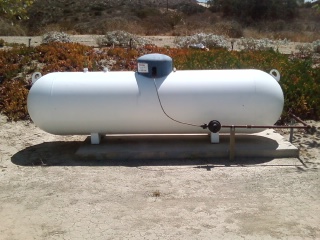


Installing a propane tank in South Carolina requires careful consideration of equipment prices, fuel delivery arrangements, state regulations, and property conditions.
Whether you live in the Upstate, the Midlands, or a coastal community near Charleston, I’ll explain how to choose the right storage capacity, compare suppliers, and establish a safe residential propane system.
Quick Answer
What South Carolina homeowners should know


| Item | Quick answer |
|---|---|
| New 500-gallon above-ground tank | $3,800 — advertised regional equipment price |
| New 500-gallon underground tank | $4,390 — advertised regional equipment price |
| Regional residential propane price | $3.785/gal — Lower Atlantic EIA average, November 16, 2026 |
| Typical 500-gallon tank setback | 10 feet from buildings and applicable property lines |
Installation budget: Approximately $4,500–$6,500 for a purchased 500-gallon above-ground system, excluding initial fuel delivery.
State regulations: The South Carolina Liquefied Petroleum Gas Board oversees propane industry licensing and safety requirements.
Permits: Check with your city or county building department regarding gas piping, installation permits, and inspections.
Upcoming code changes: The 2024 South Carolina Building Codes take effect on January 1, 2027.


Coastal safety: Properties exposed to hurricanes and flooding may require specialized tank anchoring and additional site preparation.
Equipment prices are advertised examples. Installation costs are illustrative budgeting estimates. The EIA fuel price is a regional benchmark, not a South Carolina-specific average.
Sources: NC Discount Propane, South Carolina Department of Labor, Licensing and Regulation, and the U.S. Energy Information Administration.
1. How Much Does a New Residential Tank Cost?
The purchase price depends on storage capacity, equipment condition, manufacturer, and whether the container is designed for above-ground or underground installation.
To provide a practical price reference, I reviewed advertised equipment prices from NC Discount Propane, which markets tanks to customers in both North Carolina and South Carolina.



New equipment price comparison
| Tank capacity | Above ground | Underground |
|---|---|---|
| 120 gallons | $1,390 | Request quote |
| 250 gallons | $2,490 | $2,990 |
| 320 gallons | $3,100 | $3,390–$3,490 |
| 500 gallons | $3,800 | $4,390 |
| 1,000 gallons | $5,999* | $6,499 |
Source: NC Discount Propane advertised equipment prices reviewed November 2026. The $5,999 model is marketed for above- or below-ground use. Transportation, installation, and fuel should be budgeted separately.
These prices demonstrate why you should distinguish equipment purchases from complete installation packages.
A $3,800 container may ultimately cost considerably more once you include transportation, gas piping, regulators, permits, and the first fuel delivery.
Before purchasing equipment independently, confirm that a licensed South Carolina propane company is willing to install and service it.


For additional information, read my guide on how much a 500-gallon propane tank costs.
2. Estimated Installation Costs by Capacity
The total installation cost depends heavily on the characteristics of your property.
A straightforward above-ground installation on a level rural property will generally require less labor than an underground installation on a coastal lot with high groundwater.
Residential installation planning budget
| Tank size | Above ground | Underground |
|---|---|---|
| 120 gallons | $1,800–$3,000 | Request quote |
| 250 gallons | $3,000–$4,500 | $4,500–$7,000 |
| 320 gallons | $3,800–$5,500 | $5,000–$8,000 |
| 500 gallons | $4,500–$6,500 | $6,000–$10,000 |
| 1,000 gallons | $7,000–$10,000 | $9,000–$14,000+ |
Illustrative budgets based on advertised equipment prices and estimated installation expenses. Initial fuel delivery, appliances, taxes and unusually difficult site work are excluded.
Leasing a container from a propane supplier may substantially reduce your initial investment. However, the supplier may require you to purchase fuel exclusively through its company.
I recommend comparing the complete cost of establishing service rather than the equipment price alone.
3. Breaking Down the Installation Expenses
An itemized installation estimate makes it easier to compare contractors and identify expenses that may not be included in an advertised package.
| Installation component | Estimated cost |
|---|---|
| Tank transportation and placement | $200–$700 |
| Concrete pad or approved supports | $100–$450 |
| Gas piping and trenching | $300–$1,500 |
| Regulators and fittings | $150–$500 |
| Permit and inspection allowance | $50–$350 |
| Underground excavation | $800–$3,000+ |
| Cathodic protection equipment | $150–$650 |
| Landscaping restoration | $200–$1,500+ |
| Specialized flood anchoring | Site-specific quotation |
These are preliminary budgeting allowances rather than published statewide contractor rates. Some installation packages already include several of these services.
Worked example: Installing a 500-gallon tank
Suppose you are establishing propane service at a residential property outside Columbia and decide to purchase your own equipment.
| Sample residential installation budget | Cost |
|---|---|
| New propane tank | $3,800.00 |
| Transportation and placement | $350.00 |
| Concrete supports | $200.00 |
| Gas piping and trenching | $650.00 |
| Regulators and fittings | $250.00 |
| Permit allowance | $150.00 |
| Installation subtotal | $5,400.00 |
| Initial fuel delivery (400 gallons at $3.785) | $1,514.00 |
| Estimated project total | $6,914.00 |
Hypothetical project budget using an advertised tank price and the EIA regional fuel benchmark. Taxes, appliance purchases and unforeseen work are excluded.
I would also maintain a contingency allowance of approximately 10% to 15%, particularly if excavation or extensive piping work is involved.
This gives you some financial flexibility if your contractor discovers underground obstacles, drainage problems, or unsuitable soil.
4. Current Residential Propane Prices
South Carolina is not individually listed in the U.S. Energy Information Administration’s weekly residential propane price survey.
However, the EIA publishes a Lower Atlantic regional average that provides a useful reference when budgeting for residential fuel delivery.
For the week of November 16, 2026, the regional average was $3.785 per gallon, excluding taxes.
Lower Atlantic residential propane price history
| Survey week (2026) | Price per gallon |
|---|---|
| October 12 | $3.584 |
| October 19 | $3.655 |
| October 26 | $3.700 |
| November 2 | $3.785 |
| November 9 | $3.774 |
| November 16 | $3.785 |
Source: EIA weekly residential propane price survey. Regional figures should not be interpreted as an independently measured South Carolina average.
Comparing prices with neighboring states
| State or region | Residential price per gallon |
|---|---|
| Georgia | $3.365 |
| North Carolina | $3.763 |
| Virginia | $3.793 |
| Florida | $5.167 |
| Lower Atlantic regional average | $3.785 |
Source: EIA, November 16, 2026.
Your actual delivered propane price may be lower or higher depending on supplier competition, equipment ownership, annual consumption, and delivery distance.
Some suppliers offer discounted rates for customers who own their tanks or participate in bulk purchasing programs.
I recommend obtaining personalized delivery quotations before committing to a particular company.
For additional information, read my guide on propane refill costs per gallon and ways to save money.
5. How Much Does It Cost to Fill Different Tank Sizes?
Residential propane containers are generally filled to approximately 80% of their rated water capacity to accommodate liquid expansion.
A nominal 500-gallon tank, therefore, normally holds approximately 400 gallons of propane at its conventional maximum fill level.
Refill cost comparison
| Tank capacity | 80% capacity | Fill from empty | Refill from 30% |
|---|---|---|---|
| 120 gal | 96 gal | $363.36 | $227.10 |
| 250 gal | 200 gal | $757.00 | $473.13 |
| 320 gal | 256 gal | $968.96 | $605.60 |
| 500 gal | 400 gal | $1,514.00 | $946.25 |
| 1,000 gal | 800 gal | $3,028.00 | $1,892.50 |
Calculated using the regional benchmark of $3.785 per gallon. Taxes and additional delivery charges are excluded.
Calculate your next propane delivery
Estimated gallons needed = tank capacity × (80 − current gauge percentage) ÷ 100.
Estimated fuel cost = gallons needed × price per gallon.
For a 500-gallon tank at 30%, you need 500 × (80 − 30) ÷ 100 = 250 gallons. At $3.785 per gallon, your estimated fuel cost is $946.25.
Assumes an 80% target fill level. Actual delivery quantities and invoice totals may vary.
I recommend arranging delivery when the gauge approaches 30%, or earlier if a hurricane is approaching or your supplier recommends a larger reserve.
Allowing your system to run completely empty may require additional safety checks before service can resume.
6. Understanding Residential Propane Delivery Services
Residential propane delivery involves a specialized delivery truck visiting your property and replenishing your permanently installed storage container.
Most propane suppliers offer two primary delivery arrangements.
| Delivery option | How it works | Suitable for |
|---|---|---|
| Automatic delivery | Your supplier monitors or estimates consumption and schedules deliveries when additional fuel is needed. | Households with regular propane consumption and vacation properties. |
| Will-call delivery | You monitor your tank gauge and contact the supplier when you need additional propane. | Homeowners who use propane occasionally and monitor consumption regularly. |
Automatic delivery can be particularly convenient if propane is your primary heating fuel or if you own a vacation property near Myrtle Beach or Hilton Head Island.
Will-call delivery may provide greater control over the timing of purchases.
However, you must monitor your fuel supply and account for the supplier’s delivery lead time.
Possible delivery and service charges
| Charge | When it may apply |
|---|---|
| Standard delivery fee | Routine fuel delivery |
| Emergency delivery fee | Urgent or after-hours orders |
| Minimum-order charge | Orders below the required quantity |
| Annual tank rental | Supplier-owned containers |
| Leak testing charge | Certain service interruptions |
| Tank monitoring fee | Remote monitoring services |
| Pump-out fee | Removing remaining propane |
| Tank removal fee | Ending an equipment lease |
Not every company imposes these charges.
Ask for a written fee schedule and fuel delivery agreement before selecting a supplier.
7. Companies Offering Installation and Delivery
South Carolina has independent propane dealers, regional distributors, and specialized equipment retailers.
The following companies advertise relevant residential propane services.
| Company | Service information |
|---|---|
| Edisto Gas | Residential delivery, installation and equipment service |
| Charleston/Beaufort Gas Company | Lowcountry delivery, tank sales and leasing |
| Stringer Oil & LP Gas | Anderson-area residential propane services |
| Evans Petroleum Company | Propane delivery and installation |
| West Propane | Pee Dee and surrounding communities |
| Carolina Propane | Orangeburg County and nearby areas |
| Propane Carolina | Coastal delivery, installation and monitoring |
| NC Discount Propane | Residential tank sales for both Carolinas |
| Gas Solutions Plus and Tanks | ASME tank sales and transportation |
These companies are examples rather than ranked recommendations. Verify their current licensing, service territories, fuel prices, and installation availability before making arrangements.
When contacting suppliers, provide the same estimated annual fuel consumption and proposed storage capacity.
This makes it easier to compare quotations fairly.
8. Delivery and Installation Across Different Regions
South Carolina’s geography affects equipment placement, fuel delivery accessibility, and installation expenses.
| Region | Major communities | Important considerations |
|---|---|---|
| Upstate | Greenville, Spartanburg, Anderson | Winter heating, slopes and rocky soil |
| Midlands | Columbia, Lexington, Camden | Suburban development and rural deliveries |
| Lowcountry | Charleston, Beaufort | Flooding, salt air and groundwater |
| Grand Strand | Myrtle Beach, North Myrtle Beach | Hurricanes and seasonal properties |
| Pee Dee | Florence, Darlington, Dillon | Agricultural demand and rural access |
| Central Savannah River Area | Aiken, North Augusta | Rural properties and summer heat |
| Northwestern region | Walhalla, Seneca | Mountain terrain and winter accessibility |
Upstate communities
Homeowners near the Blue Ridge Mountains may experience colder winters than households near the coast.
If propane is your primary heating fuel, consider a container with sufficient storage and cold-weather vaporization capacity.
Coastal communities
Properties along the Atlantic coast require particular attention to flooding, storm surge, high groundwater, and corrosion.
An underground installation may be more complicated than expected when the excavation fills with groundwater.
Rural communities
If you live far from a supplier’s distribution facility, ask about minimum delivery quantities and emergency delivery availability.
A larger tank may be financially worthwhile if it reduces the frequency of expensive or inconvenient deliveries.
9. Understanding State Laws and Safety Regulations
The South Carolina Liquefied Petroleum Gas Board, operating through the Department of Labor, Licensing and Regulation, oversees the state’s propane industry.
The Office of State Fire Marshal also performs relevant regulatory inspections and safety enforcement activities.
Applicable laws and technical standards
| Regulation or standard | What it governs |
|---|---|
| SC Code Title 40, Chapter 82 | LPG industry regulation |
| SC Code §40-82-30 | Professional licensing requirements |
| SC Code §40-82-250 | Industry liability insurance |
| SC Code §40-82-270 | Notification of system modifications |
| SC Regulation 71-8304.1 et seq. | LPG industry administrative regulations |
| South Carolina Fire Code | Storage and installation safety |
| South Carolina Fuel Gas Code | Gas piping and connected appliances |
| NFPA 58 | Propane storage and handling |
| NFPA 54 | Fuel gas systems, where applicable |
| SC Code Title 58, Chapter 36 | Underground utility protection |
South Carolina’s fire code specifically references NFPA 58 for LPG storage, transportation, handling, and equipment installation.
Important building code changes in 2027
The 2021 South Carolina Building Codes became effective on January 1, 2023.
The state has subsequently adopted updated construction codes scheduled to take effect on January 1, 2027.
These include the 2024 editions of the International Residential Code, International Fire Code, International Mechanical Code, and International Fuel Gas Code, with applicable state modifications.
If you are planning an installation for 2027, confirm which code editions apply to your permit application.
10. Do You Need a Permit to Install a Tank?
Permit requirements depend on the capacity of the storage container, the intended use, associated gas piping, and the applicable local jurisdiction.
South Carolina distinguishes between larger storage installations requiring construction document review and ordinary residential propane systems.
The State Fire Marshal’s published LPG site plan guidance identifies construction document submission thresholds involving individual containers exceeding 2,000 gallons or aggregate capacity exceeding 4,000 gallons. Its published review process specifically addresses dealer and reseller facilities.
Residential permit considerations
| Installation type | Requirements to verify |
|---|---|
| Portable 20-lb cylinder | Storage and usage restrictions |
| Permanent 120-gallon container | Local gas and mechanical requirements |
| 250-gallon residential tank | Placement and gas piping approvals |
| 500-gallon residential tank | Applicable local permits and inspections |
| 1,000-gallon tank | Setbacks and installation approvals |
| Underground installation | Excavation and inspection requirements |
| Individual container exceeding 2,000 gallons | Applicable construction document review |
| Combined capacity exceeding 4,000 gallons | Applicable construction document review |
| Standby generator system | Gas and electrical permits |
A typical 500-gallon residential installation falls below the specified large-storage plan review thresholds. However, it may still require local permits and inspections.
Examples of municipal requirements
The City of Charleston has a gas trade permit application covering both underground and above-ground propane installations.
The City of Cayce also identifies mechanical permits as necessary for covered gas system installations, alterations, and replacements.
I recommend contacting your city or county building department before purchasing equipment.
11. Contractor Licensing Requirements
South Carolina requires appropriate LPG licensing for businesses and individuals performing regulated propane installation, servicing, repairs, and appliance connections.
Section 40-82-30 establishes these licensing requirements.
Additionally, §40-82-250 establishes a $500,000 general liability insurance requirement for covered industry licensees.
Before hiring an installer, confirm that the company holds the appropriate South Carolina LPG license and that its personnel are properly qualified.
Do not assume that a general plumbing or construction credential automatically authorizes every type of LPG installation work.
I strongly recommend avoiding DIY installation of permanent propane systems. Pressurized flammable gas equipment requires professional installation and specialized safety testing.
12. Minimum Distance From Buildings and Property Lines
Proper tank placement helps protect buildings, occupants, equipment, and neighboring properties.
Because propane vapor is heavier than air, a leak may result in gas accumulation in low-lying areas.
General residential tank setback requirements
| Rated capacity | Above ground | Underground |
|---|---|---|
| Under 125 gallons | Conditional* | 10 feet |
| 125–250 gallons | 10 feet | 10 feet |
| 251–500 gallons | 10 feet | 10 feet |
| 501–1,200 gallons | 25 feet** | 10 feet |
| 1,201–2,000 gallons | 25 feet | 10 feet |
General NFPA 58 planning distances from important buildings and adjoining property lines that can be built upon. Confirm the applicable code edition and installation-specific conditions.
* Certain smaller containers may qualify for installation alongside buildings when applicable requirements concerning openings, filling connections, relief valves, and ignition sources are satisfied.
** A single above-ground container of up to 1,200 gallons may qualify for a reduction to 10 feet when separated by at least 25 feet from other containers exceeding 125 gallons and all applicable conditions are satisfied.
Example of a 500-gallon residential installation
Conceptual residential layout. Not to scale or intended as an approved construction plan.
Additional clearances may apply around generators, air-conditioning units, ventilation intakes, basement openings, and other potential ignition sources.
13. Choosing the Right Storage Capacity
The appropriate tank size depends on household fuel consumption, appliance demand, and preferred delivery frequency.
South Carolina generally experiences milder winters than northern states, but propane-powered pool heaters, generators, and water heaters can still create substantial fuel demand.
Usable propane storage capacity
Approximate fuel capacity at the conventional 80% fill level.
Recommended tank size by application
| Tank capacity | Typical application |
|---|---|
| 100-lb cylinder | Limited cooking and appliance use |
| 120 gallons | Cooking, fireplaces and water heating |
| 250 gallons | Supplemental heating and multiple appliances |
| 320 gallons | Moderate household consumption |
| 500 gallons | Whole-house heating, pool heaters and generators |
| 1,000 gallons | Large homes and substantial fuel demand |
If your home primarily uses electricity, a 120- or 250-gallon system may be sufficient.
Read my guide on 250-gallon propane tank prices and installation costs if you’re considering a smaller residential system.
For households with multiple high-demand appliances, I would begin by evaluating a 500-gallon container.
14. How Long Will Your Fuel Supply Last?
One gallon of propane contains approximately 91,500 BTU of energy.
You can estimate consumption using your appliance’s fuel input rating and operating hours.
Suppose your home has a 60,000-BTU-per-hour furnace operating for the equivalent of four hours at full input each day.
Daily consumption: 60,000 × 4 ÷ 91,500 = 2.62 gallons.
A 500-gallon tank provides approximately 250 gallons between its 80% initial fill and a 30% refill threshold.
250 ÷ 2.62 = 95.4 days.
Under these assumptions, your fuel would last approximately 95 days before reaching the refill threshold.
Estimated consumption and runtime
| Furnace input | Full-output hours/day | Daily consumption | 500-gal tank* |
|---|---|---|---|
| 40,000 BTU/hr | 3 | 1.31 gal | 191 days |
| 60,000 BTU/hr | 4 | 2.62 gal | 95 days |
| 80,000 BTU/hr | 6 | 5.25 gal | 48 days |
| 100,000 BTU/hr | 8 | 8.74 gal | 29 days |
| 120,000 BTU/hr | 10 | 13.11 gal | 19 days |
Estimated operating time between 80% and 30% tank levels. Other appliances are excluded.
Actual fuel consumption will depend on insulation, outdoor temperatures, furnace operation, and household energy requirements.
15. Above-Ground vs. Underground Installation
Both installation methods can provide dependable fuel storage when professionally designed and installed.
| Feature | Above ground | Underground |
|---|---|---|
| Initial expense | Generally lower | Generally higher |
| Appearance | Visible | Mostly concealed |
| Excavation | Limited | Extensive |
| Inspection access | Easier | More limited |
| Salt air exposure | Greater | Reduced for buried vessel |
| Groundwater exposure | Generally lower | Greater |
| Corrosion protection | Exterior coating | Specialized protection |
| Future relocation | Easier | More complicated |
Above-ground installations
Above-ground containers are usually the more economical choice for rural South Carolina properties.
They are easier to inspect, maintain, replace, and access during routine deliveries.
However, they must be appropriately supported and protected from physical damage, flooding, and falling debris.
Underground installations
An underground tank can preserve the appearance of landscaped gardens and upscale residential properties.
Nevertheless, installation expenses may increase substantially if the property has a high water table.
Only tanks specifically approved for underground installation should be buried.
Appropriate corrosion protection, drainage, soil assessment, and flotation protection are essential.
For additional information, read my guide on the cost of installing a buried propane tank.
16. Hurricane and Flood Safety Requirements
South Carolina’s coastal communities are particularly vulnerable to hurricanes, tropical storms, storm surges, and flooding.
Floodwater can displace a propane container and damage connected piping. Underground containers may also experience buoyancy forces when surrounding soil becomes saturated.
Charleston County’s emergency management guidance specifically warns about floating or overturned fuel tanks and advises obtaining permission before anchoring supplier-owned equipment.
Environmental hazards and precautions
| Hazard | Recommended precaution |
|---|---|
| Hurricane winds | Evaluate supports and required restraints |
| Storm surge | Assess flood elevation and anchoring |
| High groundwater | Evaluate underground flotation protection |
| Salt air | Maintain suitable protective coatings |
| Falling trees | Select a location with reduced exposure |
| Flooded roads | Maintain adequate fuel reserves |
| Damaged gas piping | Obtain professional inspection before reuse |
| Coastal erosion | Evaluate ground stability |
If your property is near a beach, tidal river, or regulated coastal wetland, additional development approvals may apply to excavation and associated construction.
Confirm these requirements with your local floodplain administrator and relevant coastal authorities.
What to do before and after a hurricane
Arrange fuel delivery sufficiently early, maintain emergency contact information, and follow evacuation instructions.
Do not delay evacuation to protect your equipment.
After a storm, do not approach a displaced container or attempt to reconnect damaged piping. Have your system professionally inspected before restoring service.
17. Buying or Leasing From a Supplier
Purchasing your own container may provide greater flexibility when comparing fuel suppliers.
Leasing, however, can make establishing propane service considerably more affordable.
| Consideration | Buying | Leasing |
|---|---|---|
| Initial investment | Higher | Generally lower |
| Equipment ownership | Homeowner | Propane supplier |
| Supplier flexibility | Greater | Usually restricted |
| Annual rental fees | None | Possible |
| Maintenance responsibility | Homeowner | Subject to agreement |
| Equipment removal | Owner’s responsibility | Subject to contract |
| Resale value | Possible | Not applicable |
Before arranging fuel delivery from a competing propane company, verify equipment ownership and applicable authorization requirements.
Do not arrange unauthorized filling of a supplier-owned tank.
Worked example: Long-term ownership savings
Suppose owning your equipment allows you to purchase propane for $0.50 less per gallon.
| Annual consumption | Annual savings | 10-year savings |
|---|---|---|
| 300 gallons | $150 | $1,500 |
| 500 gallons | $250 | $2,500 |
| 800 gallons | $400 | $4,000 |
| 1,000 gallons | $500 | $5,000 |
| 1,500 gallons | $750 | $7,500 |
If purchasing your equipment requires an additional investment of $3,500 and saves you $500 annually, the simple payback period would be seven years.
These calculations exclude maintenance expenses, rental savings, financing costs, and future fuel price changes.
For a more detailed comparison, read my guide on propane tank leasing costs and the pros and cons of renting.
18. Professional Installation Process
A permanent propane system should be installed by qualified personnel using approved equipment.
- Property assessment: The installer evaluates fuel requirements, possible locations, property boundaries and delivery access.
- Equipment selection: A suitable container is selected according to storage and vaporization requirements.
- Permit verification: Applicable building, mechanical, fire and environmental approvals are identified.
- Underground utility identification: The responsible excavator contacts South Carolina 811 and arranges private utility locating where necessary.
- Site preparation: Approved supports, drainage, excavation and necessary protective measures are prepared.
- Equipment installation: Licensed professionals position the container and install the associated gas system components.
- Testing and inspection: Required pressure tests, leak checks and applicable inspections are completed.
- Initial fuel delivery: Following the required approvals and safety checks, the system is placed into service.
Under South Carolina Code §58-36-60, notification for ordinary covered excavation must be submitted between three and twelve full working days before digging, excluding the notification day.
Privately owned gas lines, electrical cables, septic systems, and water lines may require separate locating services.
19. Mandatory Notification of Propane System Modifications
One South Carolina-specific regulation that homeowners should understand is §40-82-270.
Under this provision, installers and service workers must notify the existing propane supplier before performing work on a supplied system.
If several companies have supplied the system, the last supplier must receive the notification.
Homeowners and other parties who modify an existing propane system or appliance must also inform the licensed dealer who subsequently fills or services it.
Propane dealers must provide customers with an annual written notice explaining this responsibility.
This is particularly important when adding a standby generator, pool heater, fireplace, or outdoor kitchen.
Even if a different licensed contractor performs the installation, your regular fuel supplier must receive the applicable notification.
20. Installing a Tank for a Standby Generator
Hurricanes and severe thunderstorms can cause extended electrical outages.
A propane-powered standby generator can provide backup electricity for refrigeration, lighting, communications, and essential household equipment.
However, prolonged generator operation can consume substantial quantities of propane.
Estimated generator runtime
| Generator consumption | Daily fuel use | Runtime using 250 gallons |
|---|---|---|
| 1 gallon/hour | 24 gallons | 250 hours |
| 1.5 gallons/hour | 36 gallons | 167 hours |
| 2 gallons/hour | 48 gallons | 125 hours |
| 3 gallons/hour | 72 gallons | 83 hours |
| 4 gallons/hour | 96 gallons | 63 hours |
These estimates assume continuous operation and 250 gallons available between an 80% initial fill and a 30% reserve in a 500-gallon container.
If your generator consumes two gallons per hour, a 72-hour outage could require approximately 144 gallons of propane.
At the regional benchmark of $3.785 per gallon, that represents $545.04 in fuel.
For additional calculations, read my guide on how often you need to refill a propane generator.
21. How Much Propane Does a Swimming Pool Heater Use?
Swimming pool heaters are another important consideration for South Carolina homeowners.
A high-capacity pool heater can consume fuel considerably faster than a residential furnace.
Estimated pool heater fuel consumption
| Heater input | Consumption per hour | Fuel cost per hour* |
|---|---|---|
| 150,000 BTU | 1.64 gal | $6.20 |
| 200,000 BTU | 2.19 gal | $8.27 |
| 250,000 BTU | 2.73 gal | $10.34 |
| 300,000 BTU | 3.28 gal | $12.41 |
| 400,000 BTU | 4.37 gal | $16.55 |
Calculated at $3.785 per gallon using full-rated fuel input. Actual operating expenses depend on heater cycling and fuel pricing.
A 400,000-BTU pool heater operating at full input for five hours could consume approximately 21.9 gallons of propane.
This is why I would consider the pool heater’s fuel demand before selecting a residential tank size.
The installer must also confirm that the container and gas delivery system can support the heater’s required vapor flow.
22. Buying Used or Refurbished Equipment
A professionally refurbished storage container may reduce your initial investment.
However, purchasing equipment with an unknown service history can create safety and financial problems.
Used tank purchasing checklist
| Inspection item | Why it matters |
|---|---|
| Manufacturer’s data plate | Establishes construction specifications |
| Serial number | Identifies the container |
| Ownership documentation | Confirms legal ownership |
| Exterior condition | Reveals corrosion or physical damage |
| Valve condition | Affects safe operation |
| Previous installation history | Helps establish suitability |
| Professional inspection | Identifies potential safety problems |
| Installation approval | Confirms suitability for the intended use |
Before purchasing used equipment, contact your intended fuel supplier.
Permanent ASME storage containers generally follow different inspection and requalification requirements from portable DOT cylinders.
For portable cylinders, consult my guide on who recertifies propane tanks.
23. How to Reduce Your Annual Propane Expenses
Your ongoing fuel expenses may eventually exceed the initial installation cost.
Understanding annual consumption can help you compare suppliers and determine whether purchasing your own equipment makes financial sense.
Estimated annual residential fuel budget
Fuel-only estimates using a regional benchmark of $3.785 per gallon. Actual costs depend on consumption, supplier prices, taxes and service charges.
Compare the effective delivered price
Suppose Supplier A charges $3.50 per gallon plus a $75 delivery fee, while Supplier B charges $3.75 per gallon without a delivery fee.
For a 200-gallon delivery:
| Expense | Supplier A | Supplier B |
|---|---|---|
| Fuel cost | $700 | $750 |
| Delivery fee | $75 | $0 |
| Total expense | $775 | $750 |
| Effective price per gallon | $3.875 | $3.75 |
Despite advertising a higher fuel rate, Supplier B would save you $25.
Maintaining heating appliances, improving insulation, comparing seasonal pricing programs, and avoiding emergency deliveries can also help reduce expenses.
24. Homeowner Installation and Safety Checklist
Before purchasing equipment or scheduling installation, make sure you have addressed the following considerations.
- ☐ Calculate anticipated household fuel consumption.
- ☐ Select an appropriate storage capacity.
- ☐ Compare at least three supplier quotations.
- ☐ Decide whether to purchase or lease.
- ☐ Verify equipment ownership and documentation.
- ☐ Confirm contractor licensing and insurance.
- ☐ Check applicable municipal permits.
- ☐ Verify building and property line setbacks.
- ☐ Evaluate hurricane and flooding hazards.
- ☐ Confirm groundwater conditions for underground installations.
- ☐ Confirm delivery truck accessibility.
- ☐ Arrange required underground utility marking.
- ☐ Notify the existing supplier of applicable system modifications.
- ☐ Complete required safety testing and inspections.
- ☐ Retain installation and ownership documentation.
- ☐ Establish a maintenance and fuel delivery schedule.
Completing these preparations can help prevent installation delays, unexpected expenses, and future safety problems.
25. Frequently Asked Questions
How much does it cost to install a 500-gallon tank in South Carolina?
A preliminary budget is approximately $4,500 to $6,500 for a purchased above-ground system or $6,000 to $10,000 for an underground installation. Initial fuel delivery and unusual site preparation may cost extra.
How much is residential propane per gallon?
The EIA reported a Lower Atlantic regional average of $3.785 per gallon for the week of November 16, 2026. South Carolina does not have a separately published state-level price in this survey.
Do I need a permit for a residential installation?
Permanent installations may require local gas or mechanical permits and inspections. Contact your city or county building department before beginning installation.
How far must a propane tank be from my house?
A typical 250- or 500-gallon container generally requires at least 10 feet of separation from important buildings and applicable adjoining property lines. Additional clearances may apply.
Can I bury a propane tank near the coast?
Yes, when applicable requirements are satisfied. However, groundwater, flooding, corrosion protection, and potential flotation may make underground installation more complicated.
Can another propane company refill my leased tank?
Check your lease agreement and applicable container-owner authorization requirements before arranging delivery from a competing supplier.
Can I install a propane tank myself?
South Carolina requires appropriate licensing for regulated propane installation activities. I strongly recommend hiring a properly licensed LPG professional.
Are propane tanks safe during hurricanes?
Properly installed and maintained systems can withstand ordinary weather exposure, but no installation is completely hurricane-proof. Flooding, flying debris, falling trees, and damaged piping can create serious hazards.
Can I use the same tank for my generator and home appliances?
Yes, provided the system is professionally sized to satisfy the combined fuel consumption and simultaneous vapor demand of all connected appliances.
Do stationary propane tanks require recertification?
Permanent ASME containers generally do not follow the same periodic DOT requalification schedule as portable cylinders. However, appropriate inspections and maintenance remain necessary.
What should I do if I smell propane?
Leave the affected area immediately. Avoid flames, electrical switches, and phone use near the suspected leak.
Contact 911 and your propane supplier from a safe location. Do not return until emergency responders or qualified personnel confirm that it is safe.
Conclusion
Purchasing and installing a propane storage system in South Carolina requires careful consideration of equipment prices, fuel delivery arrangements, state regulations, municipal permits, and environmental conditions.
For many households, a 250- or 500-gallon above-ground tank provides a practical balance between installation expenses, fuel storage, and maintenance accessibility.
If you live near the coast, pay particular attention to hurricane exposure, groundwater, corrosion, and flood protection.
Homeowners using propane-powered generators or swimming pool heaters should also carefully evaluate their fuel consumption and vaporization requirements.
My recommendation is to compare at least three licensed propane suppliers, obtain itemized installation quotations, and confirm all applicable regulations before purchasing equipment.
A professionally installed and properly maintained propane system can provide dependable energy for your household for many years.

Mike is an experienced propane technician with over 15 years of professional experience in the field. He has dedicated his career to helping customers with their propane needs, from installation to maintenance and repair. Together with Jeremy, he co-founded this website to provide useful information and guidance to customers seeking reliable propane services.