
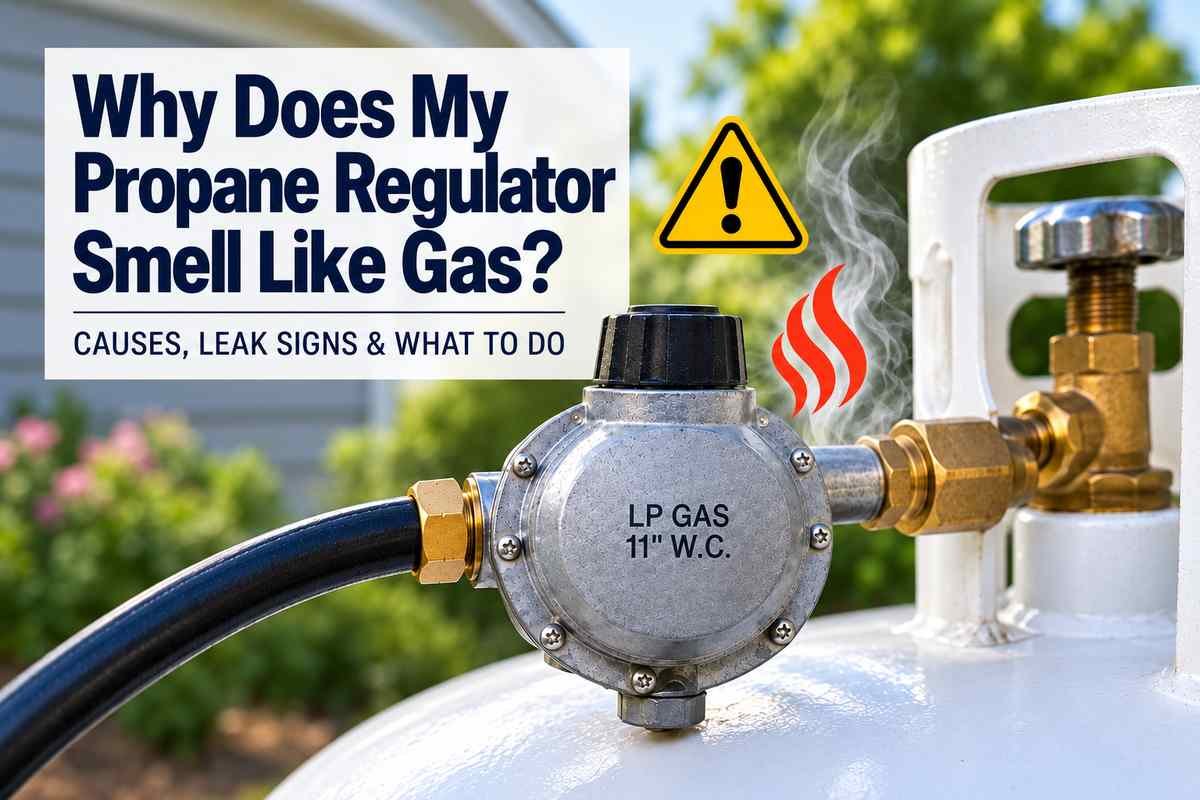
If your propane regulator smells like gas, treat the odor as a possible leak until the source has been identified. The smell may come from the regulator vent, a loose inlet or outlet fitting, a damaged hose, the tank or cylinder valve, or a small amount of propane released during a recent cylinder change. A persistent odor, hissing sound, or smell that becomes stronger when the valve is opened is not normal.
If the odor is strong or you suspect an active leak, avoid flames and sparks, leave the area, and call your propane supplier or emergency services from a safe location. The Propane Education & Research Council (PERC) advises shutting off the tank valve only if it is safe to do so and having the propane system checked before it is used again.
Why Does My Propane Regulator Smell Like Gas?
A propane smell around the regulator usually means propane or its odorant is escaping somewhere nearby. The regulator itself may be leaking, but the source can also be the cylinder connection, pigtail, hose, valve, threaded joint, or another component close to the regulator.


Propane is naturally odorless. Suppliers add an odorant so leaks are easier to detect. PERC notes that a propane odor, a hissing sound, unusual gas usage, or a propane detector alarm can all be signs of a leak. Because gas can move with air currents, the point where you smell it is not always the exact point where the leak is occurring.
| What You Notice | Possible Cause | Recommended Action |
|---|---|---|
| Odor strongest at the regulator vent | Internal regulator leak, diaphragm problem, or relief operation | Stop using the system and have the regulator inspected |
| Odor strongest at a fitting | Loose, damaged, or improperly sealed connection | Shut down safely and have the connection leak-tested |
| Smell appears after changing a cylinder | Residual gas or a leaking cylinder connection | Allow residual gas to disperse; investigate if odor continues |
| Odor with hissing | Active gas leak | Leave the area and report the leak from a safe location |
| Odor with weak, high, or unstable flames | Possible regulator or pressure-control problem | Stop operation and have system pressures checked |
| Odor with corrosion or physical damage | Damaged regulator, valve, hose, or fitting | Do not continue using the equipment until inspected |
1. Gas Is Escaping From the Regulator Vent
A persistent propane odor directly at the regulator vent can indicate a regulator problem and needs professional attention. The vent is an intentional opening that lets the diaphragm respond to atmospheric pressure. It must remain open and should never be plugged, taped, or sealed.
Some regulator designs also discharge gas through the vent when an internal relief mechanism operates. Fisher’s current regulator instructions tell customers to call for service if a regulator vents gas or a system leak develops, and they emphasize that the vent must remain unobstructed. Depending on the regulator design, venting may be caused by abnormal downstream pressure, internal seat leakage, debris, worn parts, or another fault.
If the odor is clearly coming from the vent, do not try to stop it by blocking the opening. Have a qualified propane professional determine why the regulator is venting.


2. A Loose or Leaking Regulator Connection
The regulator sits between several connections, so a leak near it can easily be mistaken for a leak from the regulator body. Common leak points include the connection at the tank or cylinder valve, the regulator inlet, regulator outlet, pigtail, hose, flare fitting, threaded fitting, or shutoff valve.
Different propane fittings seal in different ways. Some rely on a flare surface, some use a gasket or O-ring, and some threaded pipe connections use an approved sealing compound. Randomly adding PTFE tape or overtightening a fitting can damage a connection that was never designed to seal that way.
If you suspect a connection problem, stop operating the appliance. Our broader guide to propane regulator leaks explains other places leakage may occur around a regulator assembly.
3. The Smell Started After Changing a Propane Tank
A brief propane odor can occur when a portable cylinder is disconnected because a small amount of gas may remain trapped in the connector. Outdoors, that small release should disperse quickly. What is not normal is an odor that continues after the new cylinder is connected, returns every time the valve is opened, or grows stronger during operation.
After a cylinder change, possible trouble spots include a worn connector seal, damaged Type 1/ACME connection, poorly seated POL fitting, cracked pigtail, or cross-threaded connection. The cylinder valve itself can also leak.

PERC’s portable-cylinder guidance allows checking an accessible cylinder valve area and connection with leak detector solution or thick soapy water, following the equipment manufacturer’s instructions. If bubbles grow, close the valve and correct the connection. If the leak continues, contact the propane retailer. Never use a match, lighter, torch, or other flame to search for a propane leak.
4. The Regulator Diaphragm or Internal Parts Are Damaged
A regulator uses a flexible diaphragm, spring, valve seat, and other precision components to keep outlet pressure within its designed range. Damage, corrosion, contamination, age, water intrusion, or ordinary wear can cause internal leakage or unstable pressure.
A damaged diaphragm can allow gas to reach the atmospheric side of the regulator. Worn or contaminated valve components can also prevent the regulator from shutting off correctly. Either condition can create odor, pressure problems, or gas discharge through the vent on designs that use the vent as a relief path.
If you are also seeing pressure-related symptoms, review the common signs that a propane regulator is not working properly. Do not disassemble a regulator that is connected to a propane system. Fisher states that regulator service should be performed by qualified personnel.


5. The Regulator Vent Is Blocked by Ice, Dirt, Paint, or Insects
A blocked vent can interfere with regulator operation and should not be ignored. Manufacturer instructions commonly warn against snow, ice, mud, paint, insects, and other material blocking a regulator vent. Fisher also instructs users to check the vent after freezing rain, sleet, or snow.
Outdoor regulators should be installed in the orientation required by the manufacturer and protected from water accumulation and physical damage. If you see ice, corrosion, heavy dirt, or insect nesting around the vent, do not poke objects deep into the opening or dismantle the regulator. Have the regulator inspected if the obstruction cannot be safely cleared from the exterior.
Installation orientation matters too. See our guide on whether a propane regulator can be installed upside down for more context, but always follow the instructions for your exact regulator model.
6. The Regulator Is Old, Corroded, or Physically Damaged
Regulators do not last forever. Sunlight, rain, salt air, road spray, vibration, impacts, insects, water intrusion, and temperature cycling can all accelerate deterioration. Replacement guidance varies by manufacturer and application, so there is no one age limit that should be applied to every regulator.
For example, Fisher’s November 2025 instructions for its 64 and 67C Series state that those specific regulators should be replaced after 15 years even under ideal conditions, or sooner if inspection shows a need. That is a manufacturer-specific recommendation, not a universal rule for every propane regulator.
For a broader explanation, see how long propane regulators last and when replacement may be appropriate.
Is It Ever Normal to Smell Propane Near a Regulator?
A continuing propane smell around a regulator is not normal. The main exception is a brief odor after intentionally disconnecting a portable cylinder or hose, when a small amount of trapped gas can be released. The odor should dissipate quickly outdoors and should not return once the system is reconnected and operating.
Do not assume a faint odor is harmless. Propane odorant is intentionally noticeable at low concentrations, and a small leak may not make a hissing sound. PERC also warns that people can experience odor fatigue, and odor can sometimes be masked by other smells or absorbed by materials such as soil, water, or rust.
What to Do if Your Propane Regulator Smells Like Gas
If the smell is persistent, strong, or unexplained, use leak-safety procedures rather than continuing to troubleshoot next to the equipment.
- Extinguish flames and avoid sparks. Do not smoke or vape. Do not turn electrical switches, appliances, or other devices on or off in an area where gas may have accumulated.
- Leave the area. Get people away from the suspected leak, especially if the odor is indoors, strong, or increasing.
- Shut off the propane supply only if it is safe. PERC advises closing the tank valve when it can be done safely and when the leak is not suspected to be at the tank itself.
- Report the leak from a safe location. Contact your propane retailer. If you cannot reach them or the situation appears dangerous, call 911 or the fire department.
- Do not restart the system on your own. Before propane appliances are used again, have the system checked to make sure the leak has been corrected.
For current consumer guidance, see PERC’s steps to follow if you smell propane.
Can You Check a Propane Regulator for Leaks Yourself?
There is an important difference between checking a simple, accessible portable-cylinder connection and diagnosing a regulator or household gas system. PERC provides a soapy-water procedure for checking certain portable-cylinder valve and connection areas. That does not mean homeowners should disassemble regulators, loosen piping, adjust pressure, or pressure-test a residential propane system.
A qualified technician can test connections, regulator inlet pressure, outlet pressure, lock-up behavior, vent condition, and downstream piping. If the regulator is defective, replacement is usually safer than a field repair by an unqualified person.
Our guide to checking propane regulator pressure explains the measurements involved, but active leaks and regulator adjustment should be handled by someone trained for the equipment and applicable code requirements.
How a Technician Finds the Source of the Smell
A technician will usually inspect the entire gas path rather than replacing the regulator just because the odor seems strongest there. That can include the container valve, connector, pigtail, regulator body, vent, threaded joints, hoses, downstream piping, shutoff valves, and appliance connections.
They may use approved leak-detection solution, an electronic combustible-gas detector, and pressure-testing equipment. If outlet pressure rises when appliances are off, fluctuates outside the expected range, or fails to lock up correctly, the regulator or an upstream component may be at fault.
| Inspection Finding | What It May Suggest |
|---|---|
| Bubbles at a fitting | Leak at that connection or sealing surface |
| Gas odor or discharge at vent | Internal regulator fault or relief operation |
| Pressure continues rising after demand stops | Seat leakage or lock-up problem |
| Abnormal outlet pressure | Incorrect adjustment, wrong regulator, damage, or upstream fault |
| Corrosion/water in spring case | Regulator may require replacement |
How to Reduce the Risk of Future Regulator Leaks
- Keep the regulator vent clear of mud, paint, snow, ice, and insect nests.
- Protect regulators and hoses from impact, standing water, and sharp bends.
- Do not force cylinder connections or use sealants on fittings that do not require them.
- Replace damaged hoses, pigtails, connectors, and regulators with components approved for the application.
- Follow the regulator manufacturer’s installation position, pressure range, capacity, and maintenance instructions.
- Have abnormal flame behavior, repeated pilot outages, soot, unexplained propane use, or recurring odor investigated.
Frequently Asked Questions
Why does my propane regulator smell like gas but I do not hear hissing?
Small propane leaks may release enough odorant to be noticeable without producing an obvious hissing sound. Treat an unexplained persistent odor as a possible leak even when you cannot hear gas escaping.
Why do I smell propane only when I open the tank valve?
A smell that begins when the valve opens often points to a leak at a pressurized connection, hose, regulator, valve, or downstream component. Close the valve if it is safe to do so and have the source identified before continuing to use the system.
Can a bad propane regulator leak gas from the vent?
Yes. Depending on the regulator design, gas at the vent can result from an internal fault, diaphragm damage, seat leakage, or operation of an internal relief mechanism. The vent must not be plugged. A regulator that vents gas should be professionally inspected.
Can cold weather cause a propane smell near the regulator?
Cold weather can contribute to icing or blocked vents, especially when moisture is present. A propane odor is still a leak warning and should not be dismissed as normal winter behavior.
Can I keep using my grill or appliance if the smell is very faint?
No unexplained persistent propane odor should be ignored because it seems faint. Shut the equipment down safely and determine the cause before using it again.
Should I replace the regulator immediately if I smell gas?
Not necessarily. The leak may be at a nearby fitting, hose, connector, or tank valve rather than inside the regulator. The correct repair depends on where the leak is found. A regulator that is confirmed to be leaking, damaged, badly corroded, or venting abnormally should be replaced or serviced as directed by the manufacturer and a qualified professional.
Bottom Line
If your propane regulator smells like gas, assume there may be a leak until the system has been checked. A brief odor after disconnecting a portable cylinder can come from trapped gas, but a smell that persists, returns when the tank valve is opened, comes from the regulator vent, or occurs with hissing or pressure problems needs attention. Avoid ignition sources, leave the area when necessary, shut off the supply only when it is safe, and have the propane system inspected before putting it back into service.
Safety note: Propane equipment, installation requirements, and regulator specifications vary. Follow the instructions for your exact regulator and appliance along with applicable local codes. Do not disassemble or modify a propane regulator unless you are qualified to service that equipment.

Mike is an experienced propane technician with over 15 years of professional experience in the field. He has dedicated his career to helping customers with their propane needs, from installation to maintenance and repair. Together with Jeremy, he co-founded this website to provide useful information and guidance to customers seeking reliable propane services.


