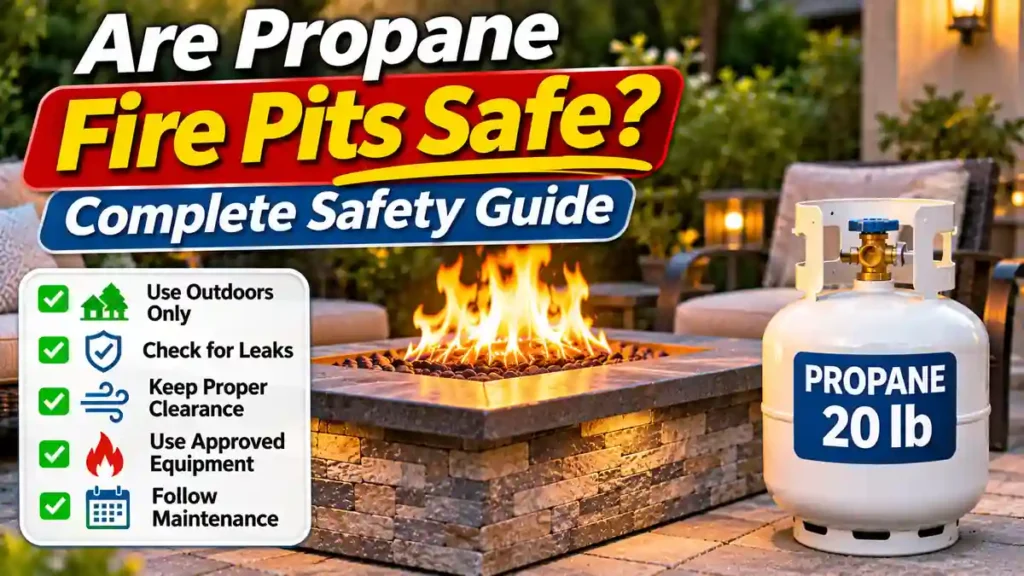
Quick Answer
Yes, propane fire pits can be safe when they are designed for their location, correctly installed, inspected, and supervised. But a propane flame is still an open fire. The most serious hazards include gas leaks, burns, ignition of nearby combustibles, inadequate outdoor ventilation, and carbon monoxide exposure when an outdoor-only unit is used in an enclosed space.
My practical rule is simple: verify the exact appliance manual, select a truly suitable outdoor location, check the fuel system before lighting, and never leave the flame unattended. If you smell gas, stop using the appliance and follow the emergency procedure below. Do not rely on generic clearance figures or a hose adapter to override the manufacturer’s requirements.
Propane fire pits appeal to me for an obvious reason: you get a controlled-looking flame without constantly adding wood, tending embers, or scooping out ash. That convenience is useful for a backyard conversation area, especially when you want to shut down the fire at the end of the evening.
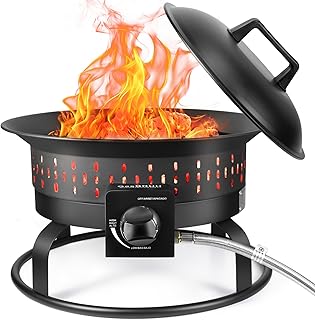
Convenience, however, can create its own blind spot. A polished table with decorative glass may look like furniture, yet the flame and surrounding metal can seriously burn a hand. A portable bowl may seem harmless beside a deck railing, yet the nearby railing, furniture cushions, and patio umbrella may all be combustible.
In this guide, I’ll explain how I evaluate a propane fire pit before use, where the most common problems start, and what I would check if I were setting one up for family or guests. The scenarios and calculations are original illustrative examples, not claims about incidents I personally witnessed or measurements I performed.
In This Guide
Are Propane Fire Pits Dangerous? The Main Risks
Any appliance that burns fuel creates hazards. What matters is whether its design, installation and everyday operation control those hazards. I find it useful to divide the risks into five groups rather than treating every concern as just “fire safety.”


Safety Reminder: Even properly installed propane fire pits present risks because they produce open flames and heat. Always follow the manufacturer’s operating instructions, maintain the required clearances, and supervise the fire pit while it is burning. If you suspect a propane leak, do not ignite the appliance. Avoid operating electrical switches or creating sparks, move away from the affected area, and contact your propane supplier or emergency services from a safe location.
One distinction often gets missed: a fire pit can burn with a normal-looking flame and still be placed unsafely. The fact that the unit lights does not prove that it has enough clearance, adequate ventilation, or the right regulator. That’s why I start with the surroundings, not the ignition button.
Are Propane Fire Pits Safer Than Wood-Burning Fire Pits?
Propane avoids the sparks, flying embers and ash handling associated with wood. The fire is also usually easier to extinguish with the appliance control and cylinder valve, following the manual. These are meaningful conveniences, but propane introduces fuel connections, valves and hoses that require checks.
I wouldn’t call either type universally safe. A wood fire can throw sparks onto decking. A propane fire pit can leak fuel if the connection is damaged. Both can ignite nearby material and burn people. You can compare the daily tradeoffs in our propane vs wood-burning fire pit guide.
Where Is It Safe to Put a Propane Fire Pit?
My preferred starting location is an open-air, level, noncombustible surface with a clear route to the controls and no nearby furniture, hanging decorations or overhead coverings. Concrete, suitable pavers or stone are common choices where the manufacturer approves them.

Do not treat a generic distance as a permission slip. Fire pit manuals specify different distances, and some prohibit use beneath any overhead enclosure regardless of its height. One published fire pit manual specifies 48 inches around the unit and 72 inches overhead; a different design may require more or less. Use your specific model’s instructions and local requirements. If either is stricter, follow the stricter rule.
Important Safety Note: The clearance values above are illustrative examples showing why requirements differ between propane fire pit models. They are not universal safety standards and do not constitute approval for any particular installation. Always follow the exact manufacturer’s instructions and applicable local fire codes. If the required clearances cannot be maintained, do not operate the fire pit in that location.
Look up, not just sideways
People tend to measure from the burner to the nearest chair and forget what is above it. A pergola, low tree branch, shade sail, awning or patio roof may be more dangerous than the furniture around the sides. Hot gases rise and radiant heat can affect surfaces well beyond the visible flame.
If you’re considering a screened porch, gazebo or covered patio, stop and read the section of your manual that defines permissible outdoor enclosures. “Outdoors” does not automatically mean every roofed or partly walled structure is acceptable. The safest choice when the manual is unclear is not to use it there until the manufacturer or a qualified professional confirms the installation.


Think about moving objects
Clearance is not just a drawing on the installation day. Guests move chairs. Wind moves fabric. Someone carries a paper plate close to the flame. I therefore plan a generous traffic path around a fire pit and avoid placing it where someone must step over a supply hose to reach a seat.
Propane Tank, Regulator and Hose Safety
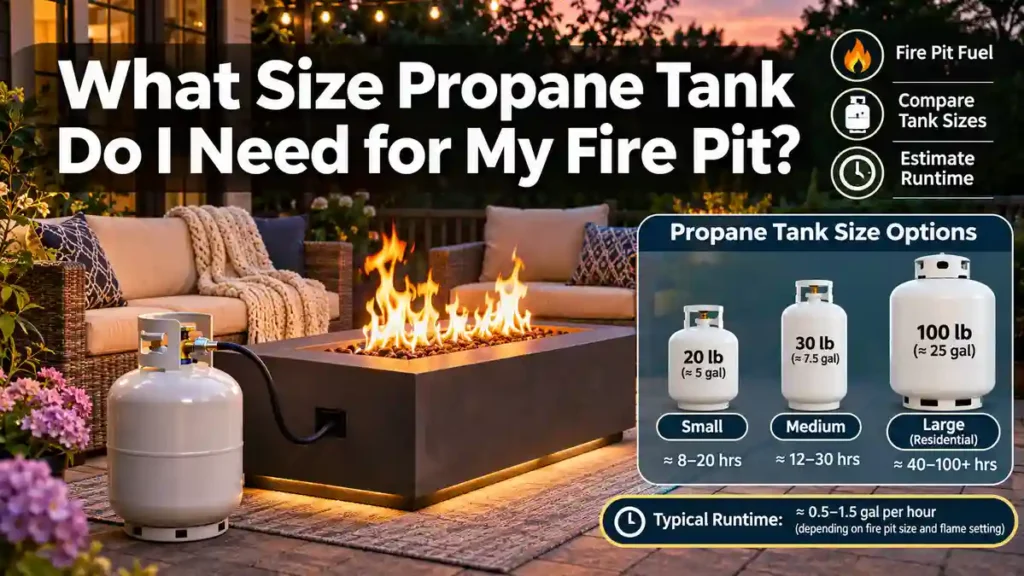
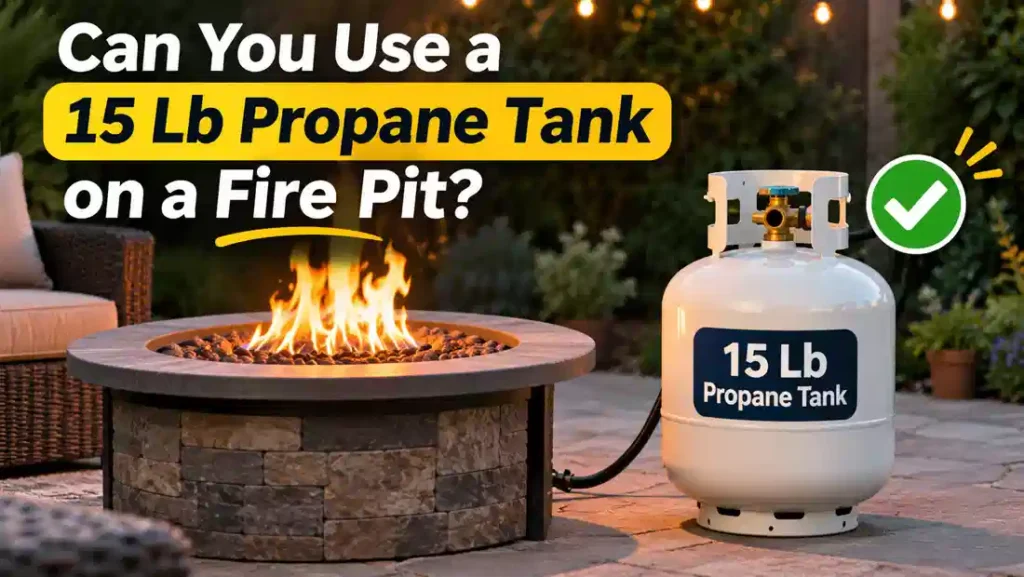
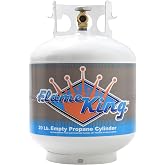
A common portable fire pit uses a standard 20 lb propane cylinder, but other appliances may specify a smaller cylinder or a permanently installed propane supply. The right size is whatever the manufacturer approves, with adequate fuel delivery for the rated burner input. Review our fire pit tank-size guide and smallest compatible tank guide before making a substitution.
Never connect a natural-gas-only appliance to propane, or a propane-only appliance to natural gas, unless the manufacturer explicitly supports a conversion performed with the approved components and required professional work. Fuel pressure, regulator characteristics and orifice design differ. An adapter that physically fits does not establish compatibility.
Important Safety Reminder: Inspect your propane fire pit’s cylinder, regulator, hose, connections, burner, and decorative media before operation. If you notice damaged components, suspected leaks, unusual odors, or unstable flames, stop using the appliance until the problem has been properly evaluated and corrected. Never use an open flame to check for propane leaks. Follow the manufacturer’s approved leak-testing procedure and use only approved replacement components.
How I would perform a routine leak check
I would first read the model’s leak-testing instructions. Many manuals call for an outdoor check of specified gas connections using a soapy solution while keeping ignition sources away. Expanding bubbles can indicate a leak. Never use a lighter or match to search for one.
If I saw growing bubbles, heard hissing or smelled gas, I would not light the unit. I would shut off the cylinder valve only if it could be done safely, keep people away, avoid switches and flames, and contact the propane supplier or emergency services as appropriate. I would not keep tightening random fittings, swap parts while gas is escaping or retry ignition to “see if it fixed itself.”
⚠️ If You Suspect a Substantial Propane Leak: Do not operate the appliance. Move people away from the area, avoid flames, smoking and electrical switching near the leak, and call emergency services or the gas supplier from a safe location. Close a valve only if safe. Do not re-enter or resume use until the danger is resolved.
Can Propane Fire Pits Cause Carbon Monoxide Poisoning?
Yes. Propane is a combustible fuel, and combustion can produce carbon monoxide (CO), especially when oxygen supply or combustion conditions are poor. CO is dangerous because you cannot reliably detect it by sight or smell. Outdoor-only propane fire pits belong outdoors in the ventilation conditions allowed by the manufacturer, not inside rooms, garages, sheds, enclosed tents or similar spaces.
Opening a garage door is not a reason to use an outdoor-only fire pit inside. Neither is placing a fan nearby. Even a flame that looks clean does not guarantee CO safety. Homes should have properly installed and maintained CO alarms as recommended by applicable safety guidance, but an alarm does not make an unsafe fire pit location acceptable.
Possible CO exposure symptoms include headache, dizziness, weakness, nausea, confusion and, in severe cases, loss of consciousness. If exposure is suspected, get everyone to fresh air immediately and obtain emergency medical help. Do not attempt to diagnose it by looking at the flame color.
For a dedicated article on this question, see can you use a propane fire pit indoors?
Are Propane Fire Pits Safe on Wooden or Composite Decks?
This depends on the appliance, the deck, the surface protection specified by the manufacturer and local rules. A propane fire pit being portable does not automatically make it safe for a wood deck. Radiant heat, falling hot media and contact with hot components can damage combustible surfaces. Composite boards can also deform or discolor.
I would begin with a simple yes-or-no question: Does the manual expressly permit this installation? If it requires a noncombustible base, I would not assume a thin decorative mat solves the problem. If the manual prohibits deck use, the answer is no, even if somebody online has used the same model on decking without trouble.
Also inspect railings, siding and anything underneath an elevated deck. A tank stored below, combustible debris, stored cushions or a nearby propane connection can create additional hazards. The complete placement questions are covered in our propane fire pit deck-safety guide.
Are Propane Fire Pits Safe Under Pergolas and Covered Patios?
Don’t assume a covered patio is safe just because its sides are open. Whether a specific roof, canopy or pergola is permissible depends on both the manufacturer’s defined enclosure rules and local codes. Some manuals forbid overhead use entirely. Others provide specific restrictions for ventilated outdoor structures.
I would assess roof material, clearance, air movement, side walls, possible trapped combustion products and furniture placement. A wood pergola wrapped in fabric or climbing plants can be particularly problematic. Whenever the installation seems marginal, moving to completely open sky is usually simpler than trying to argue a borderline structure into compliance.
Are Propane Fire Pits Safe Around Kids and Pets?
The most persistent risk to children and pets is contact with hot surfaces. A child may recognize the flame as dangerous but not understand that the surrounding rim and decorative stones can remain hot after it is turned off. Pets can brush against the edge, knock over a lightweight object or pull a leash across the burner area.
For family gatherings, I prefer to arrange seats so there is a clear supervised perimeter, with no reason for children to run between the fire and a doorway. Adults should handle all lighting, flame adjustments, cylinder changes and shutdown. Don’t leave the fire operating while you step inside, even for a short errand.
A fire pit cover belongs on only after the appliance has cooled as required by the manual. Do not use an improvised lid or place cups, snacks, toys or other objects on the hot rim. If your fire pit is meant to double as a table, confirm which surfaces the manufacturer allows you to use while it is burning.


Can You Roast Marshmallows or Cook on a Propane Fire Pit?
Some people assume that because propane can fuel cooking appliances, every propane fire pit is suitable for food. That’s not true. Many decorative fire pits are specifically not intended for cooking. Media, burner design and appliance certification can differ from a grill or food-rated burner.
I would check the manual before holding marshmallows, sausages or pans above the flame. Even when the fuel is propane, the decorative fire media and the appliance’s intended use matter. Our guides to roasting marshmallows over propane fire pits and cooking on a propane fire pit cover the distinction.
What About Wind, Rain and Winter Weather?
Weather changes a fire pit’s operating environment. Wind can deflect flames and may interfere with ignition or flame monitoring. Rain can affect components and leave porous lava rock wet, which may cause some media to pop or crack when heated. Cold weather can reduce the vaporization capacity of a small propane cylinder.
My rule is not to fight the weather with homemade modifications. Never build an improvised wall around the flame, partially enclose the burner with fabric or install unapproved shields. If the model has an approved glass wind guard, use it exactly as instructed. If flame behavior becomes erratic, turn the system off and wait for safer conditions.
For more detail, read how to protect a propane fire pit from wind and how to winterize a propane fire pit.
Worked Example: Is This Backyard Layout Safe?
Imagine a 40,000 BTU/h portable propane fire pit positioned on a stone patio. It sits 5 feet from a wooden fence, 3 feet from a cushioned chair and 7 feet below a fabric shade sail. Suppose the model’s actual manual requires 4 feet of clearance around the sides and 6 feet above, and otherwise allows the proposed open-air location.
Important Safety Note: This is a hypothetical backyard layout using assumed clearance requirements of 48 inches (4 feet) from surrounding combustible materials and 72 inches (6 feet) overhead. These distances are examples only, not universal propane fire pit safety standards. Always follow your specific manufacturer’s clearance requirements and applicable local fire codes. Even when the measured distance exceeds the stated minimum, overhead structures must be expressly permitted by the manufacturer. Do not operate the fire pit until all safety requirements are satisfied.
The chair is 12 inches too close under the assumed manual: 48 minus 36 equals 12. Moving it back 12 inches would reach the minimum, but I would leave additional practical margin so someone doesn’t accidentally slide it forward. The shade sail is a separate issue. If the manual bans overhead coverings, its 7-foot height does not make the setup acceptable.
This example shows why I don’t rely on a single “safe distance” answer. There is no benefit to passing two checks if a third one fails. It’s also why I would keep room for moving chairs, foot traffic and windblown items rather than designing the layout to the exact inch.
How Much Heat and Fuel Are Involved? A BTU Example
A fire pit’s BTU-per-hour label measures fuel input, not a promise of the exact heat your guests receive. If a model is rated at 40,000 BTU/h and operates at that full input for 3 hours, the theoretical fuel energy consumed is:
40,000 BTU/h × 3 hours = 120,000 BTU.
Using about 91,500 BTU per gallon of propane, that is roughly 1.31 gallons of fuel. At an illustrative $3.50 per gallon, the fuel expense is about $4.59. Actual consumption varies with operating rate, and tank vapor delivery may constrain performance.
Calculation Note: These estimates use approximately 91,500 BTU per gallon of propane and an illustrative propane price of $3.50 per gallon. Figures are rounded and assume the fire pit operates at its full rated burner input throughout the entire three-hour period. Actual consumption and costs may vary with burner settings, fuel prices, and operating conditions. These calculations are intended for fuel planning only and do not establish safe clearances, cylinder compatibility, or propane vaporization capacity.
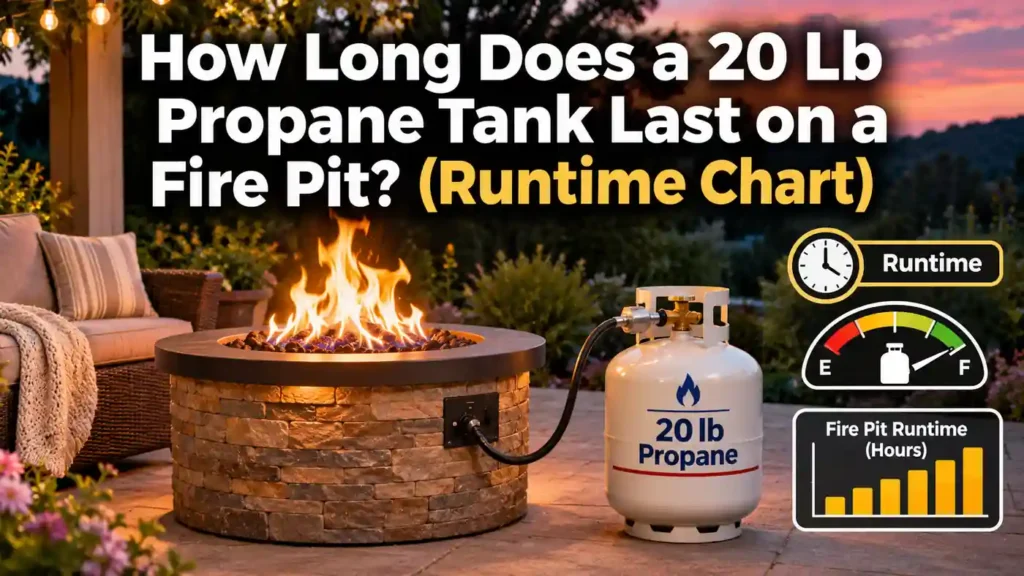
Why include fuel calculations in a safety article? Because running out of fuel can tempt someone to swap cylinders quickly in the dark, near a hot appliance, or during a crowded party. I would plan fuel before guests arrive and conduct cylinder changes only when the equipment is safely off and cool as instructed. To plan runtime, use our 20 lb fire pit tank runtime chart.


My 12-Point Propane Fire Pit Safety Checklist
Before each gathering, I would walk through these checks. The point is not to make a backyard evening complicated. It’s to turn easily forgotten details into a predictable routine.
Important Safety Reminder: I recommend completing all 12 checks before lighting your propane fire pit. If any item fails, do not operate the appliance until the issue has been corrected. Always follow the manufacturer’s instructions and applicable local fire regulations. This checklist supplements, but does not replace, the official operating manual.
My practical recommendation is to make any failed critical check a no-light decision. I wouldn’t average the checklist into a score where 11 good answers excuse one active gas leak or a prohibited indoor location. Some failures are absolute stop signs.
Decision Guide: Should You Use Your Fire Pit Tonight?
Important Safety Reminder: I recommend using this decision guide before every propane fire pit session. If your setup does not meet the manufacturer’s requirements, or you detect a possible safety hazard, do not operate the appliance. If you suspect a propane leak, move people away, avoid flames and electrical switching near the leak, and contact emergency services or your propane supplier from a safe location. Never resume operation until the hazard has been properly resolved.
How Often Should I Maintain My Propane Fire Pit?
I would inspect the visible hose, burner, media and general condition before every use. I would also follow the manual’s specified deeper maintenance schedule. Seasonal storage is a good moment to check for corrosion, nests, debris, worn seals and damaged accessories. Gas-system work and uncertain repairs belong with qualified service personnel.
If the flame turns uneven, the burner keeps shutting down, a control becomes difficult to use or ignition repeatedly fails, I would stop treating the symptom as an annoyance. Repeated relighting can be dangerous when unburned gas is present. Turn the system off, follow the manufacturer’s waiting instructions and investigate through authorized service rather than bypassing safeguards.
For a longer ownership checklist, see propane fire pit maintenance and why a propane fire pit won’t stay lit.
Are Propane Fire Pits Safe for Renters or at Rental Properties?
Renters need to check more than the appliance manual. A lease, property management policy, condominium rules, homeowners association requirements or local fire restrictions may prohibit open-flame appliances or propane storage. Apartment balconies and shared decks are especially sensitive because neighboring units, overhead structures and escape routes can be affected.
I would get written confirmation from the property manager when permission is uncertain. Even a compact, low-BTU model does not override a building’s ban. Rental hosts should establish who supervises the appliance, where cylinders are stored, who checks connections and how guests are informed about shutdown procedures.
What to Do if a Propane Fire Pit Smells Like Gas
Propane is odorized so escaping gas may produce a strong sulfur-like smell. Do not dismiss a noticeable gas odor as simply the normal smell of a fire pit. If you smell gas, cannot locate a suspected leak safely, or hear hissing, stop using the appliance.
Do not repeatedly operate an igniter, smoke, or touch nearby electrical switches when a leak is suspected. Move people away; close the fuel valve only if doing so poses no danger. From a safe location, contact the propane supplier or emergency services. Have the system checked before using it again. If a fire involves the propane cylinder or you cannot safely control the situation, retreat and call emergency responders; do not attempt to fight it yourself.
The full symptom guide is available in our propane fire pit odor article.
What I Would Prioritize Over Fancy Safety Accessories
Here’s my personal framework: I would spend my first attention on correct placement, genuine manufacturer-approved components, routine inspection and active supervision. An attractive glass guard or expensive cover cannot compensate for placing the entire appliance in a prohibited enclosure.
I would also favor straightforward controls and an easily accessible shutoff over complicated decorative features. During an unexpected problem, a simple route to safely stop fuel matters more than how the fire looks in photographs. For a family patio, I’d rather have a modest, properly positioned model than a large fire table squeezed tightly between furniture.
That’s a decision framework, not a claim that one product category is always safer. An appliance’s safety still rests on its testing, instructions, condition, installation and use.
Frequently Asked Questions
Can I leave a propane fire pit running all night?
No. An operating open-flame appliance must not be left unattended. Shut it down according to the manual when the gathering ends, and do not place a cover over hot components. Learn more in our overnight fire pit safety guide.
Is it safe to use a propane fire pit close to the house?
Only if the exact manufacturer’s clearance and ventilation requirements and applicable local rules are satisfied. Measure to siding, eaves, windows, trim, furniture and overhead materials. A wall made of noncombustible material does not automatically solve every ventilation or placement restriction.
Can I put a propane fire pit inside a screened porch?
Do not assume so. Screened porches can qualify as partially enclosed areas and may not provide the conditions required by the appliance. Consult the manufacturer’s specific enclosure rules; if use is not explicitly permitted, choose a different location.
Are propane fire pits safe for pets?
They can be managed more safely with direct supervision and sufficient separation, but animals can be burned by flames or hot surfaces. Keep pets away from the unit during operation and until it has completely cooled.
Is a blue or yellow flame safer?
Flame appearance varies with burner design and decorative media. It is not a reliable standalone test of correct combustion or absence of carbon monoxide. Follow the manufacturer’s description of normal flame behavior and have unexplained changes checked.
Can I change the fire pit regulator myself?
Never substitute a random regulator or hose because the fittings match. Use the manufacturer’s approved replacement components and follow its instructions, using qualified service when required. Incorrect pressure or gas delivery can create serious hazards.
Do I need a fire extinguisher nearby?
Follow local fire requirements and your appliance guidance. A suitable, accessible extinguisher can be useful for small, manageable surrounding fires, but it does not replace emergency evacuation. Never approach an escalating propane-cylinder fire or attempt a response beyond your training and safe capability.
How long is a propane fire pit safe to run?
There is no universal safe-hour limit. Stay within the manufacturer’s operating instructions, maintain supervision and suitable conditions, and plan enough fuel so you aren’t tempted to make rushed cylinder changes. Runtime also depends on tank capacity and burner input.

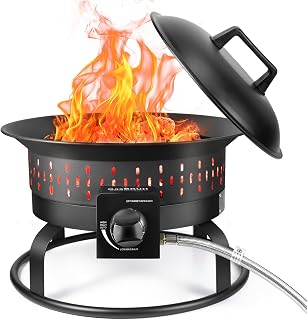
Final Verdict: A Safe Fire Pit Starts Before the Flame
My answer to “Are propane fire pits safe?” is a qualified yes. A properly designed and maintained unit, used where its manufacturer permits, can provide enjoyable outdoor warmth and ambiance. But its easy ignition should never become an excuse to skip the boring parts: clearance, inspection, ventilation and shutdown.
Before you light your next gathering, ask yourself four questions: Is the location actually approved? Is the complete fuel system correct and sound? Can guests stay clear of hot surfaces? And do I know exactly how to shut off the appliance if something goes wrong? If you cannot confidently answer all four, fix the problem before lighting.
Continue with our related resources on propane fire pit clearances, choosing an approved propane cylinder, and keeping a fire pit in safe working condition.
Editorial safety note: This article is general U.S.-oriented educational guidance, not a substitute for the exact appliance manual, local fire code, property restrictions or qualified installation advice. Examples of distances and costs are illustrative and must not be treated as product approvals. Internal links use PropaneHQ search results until article permalinks can be verified.

Mike is an experienced propane technician with over 15 years of professional experience in the field. He has dedicated his career to helping customers with their propane needs, from installation to maintenance and repair. Together with Jeremy, he co-founded this website to provide useful information and guidance to customers seeking reliable propane services.