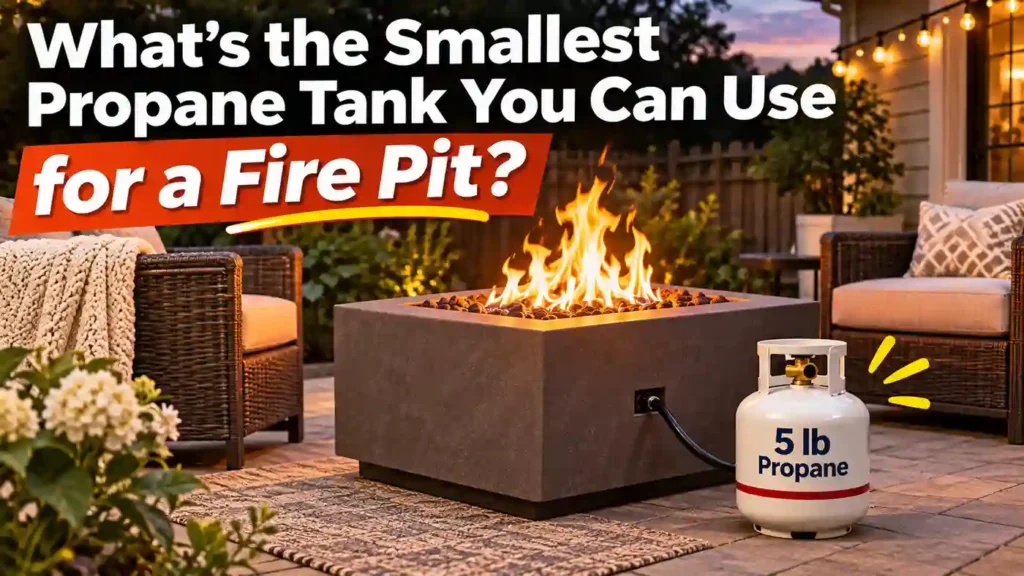
Quick Answer
A 1 lb propane cylinder can be the smallest option for a specifically designed, low-output propane fire pit. Some compact models may instead accept 5 lb or 10 lb cylinders. But for many standard outdoor propane fire pits rated around 40,000–60,000 BTU per hour, the manufacturer specifies a 20 lb cylinder.
Don’t assume a smaller tank is compatible merely because an adapter can be purchased. Check your exact fire pit manual, approved cylinder connection, required vapor delivery, and manufacturer instructions before choosing a size.
I understand why you might want a small propane tank. A 20 lb cylinder takes up space, adds weight, and may feel excessive when you only want a short fire on a balcony or during a weekend trip. The tempting question is whether a 1 lb camping bottle, 5 lb refillable tank, or 10 lb cylinder could do the same job without all the bulk.
My approach is to separate three questions that often get mixed together: Will the fitting connect? Can the cylinder supply enough propane vapor? And, most importantly, does the appliance manufacturer approve that cylinder? A correct answer requires all three—not just a hose that happens to screw on.
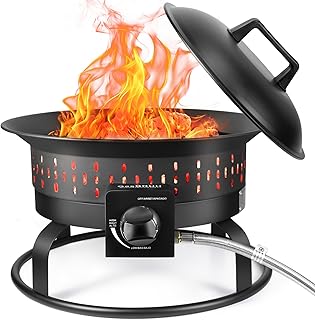

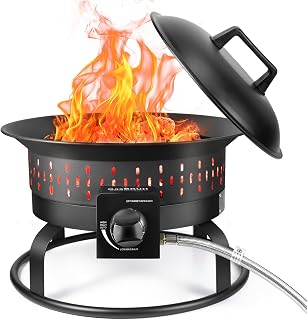
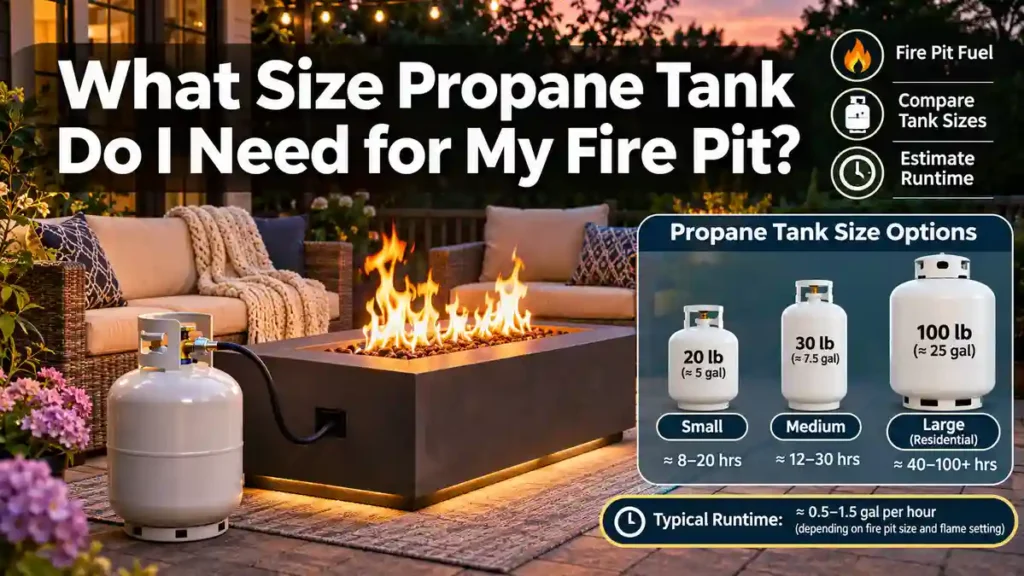
Smallest Propane Tank for a Fire Pit: Quick Comparison
Illustrative values use 4.24 lb of propane per US gallon and 21,600 BTU/lb. The nominal cylinder pounds describe propane fuel capacity, not the empty cylinder weight. Compatibility is appliance-specific.
Here’s the distinction I would keep in mind: smallest physically available and smallest safely compatible with your fire pit are different answers. For a standard 50,000 BTU/h portable fire bowl whose manual calls for a 20 lb cylinder, the smallest approved tank may still be 20 lb. No amount of arithmetic overrides a manufacturer restriction.
Can You Run a Fire Pit on a 1 Lb Propane Tank?
Potentially—but only if the fire pit was built and listed to use that kind of cylinder. One-pound camping cylinders are associated with compact stoves, heaters, and other small outdoor equipment. They are not automatically acceptable for a conventional fire pit, even if you can find a connection adapter.


At 10,000 BTU/h, a nominal one-pound cylinder contains enough fuel for about 2.16 hours of theoretical maximum-rate operation. At 40,000 BTU/h, it contains only about 0.54 hours of theoretical energy—roughly 32 minutes. Those figures ignore vaporization constraints, falling pressure, temperature, and unusable residual fuel. They are math illustrations, not permission to connect one.
There is also a supply-rate problem. Propane in the cylinder must vaporize as you use it. A tiny bottle has relatively little liquid surface area and metal area to absorb surrounding heat. Under sustained high demand, especially in cooler weather, it may not produce vapor fast enough. You could experience weak flames or shutdown before the theoretical fuel total is fully used.
My recommendation: if your goal is genuine one-pound portability, shop for a fire feature explicitly designed for a one-pound cylinder. Don’t start with a normal 50,000 BTU fire bowl and plan to improvise the fuel system afterward.


Is a 5 Lb Propane Tank Big Enough for a Fire Pit?
A refillable 5 lb tank is a convenient compromise between the tiny 1 lb bottle and a standard 20 lb cylinder. It is easier to carry, potentially easier to hide beside a compact outdoor setup, and may be suitable for some lower-output portable equipment. But a 5 lb tank is not automatically compatible with every fire pit.
If a fire pit burns 20,000 BTU/h, five pounds of propane contain enough energy for roughly 5.4 hours at full output, before practical derating. At 50,000 BTU/h, the same fuel yields only about 2.16 theoretical hours. Whether the tank can actually keep up with that high continuous draw depends on cylinder design, fill level, ambient temperature, and the unit’s certified setup.
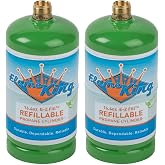
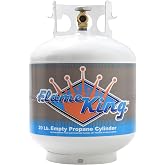

I would view the 5 lb cylinder as a good portability candidate rather than a universal recommendation. Compare the fire pit’s manual with the cylinder’s connection and vapor-delivery capabilities before buying.
What About a 10 Lb Propane Tank?
A 10 lb cylinder gives you twice the fuel of a 5 lb model and half the nominal fuel of a 20 lb cylinder. For certain approved lower-output fire pits, that can be a sensible balance. You might use it for a compact patio where long entertaining sessions are rare, or for a portable setup that must fit in a vehicle.
There is an important catch: a 10 lb cylinder can have a different physical footprint, and the appliance manual may still require a 20 lb cylinder. A fire table with a cabinet designed to hold a specific cylinder is not an invitation to squeeze in whichever tank fits. The safe arrangement also needs ventilation, valve access, hose protection, and stability.


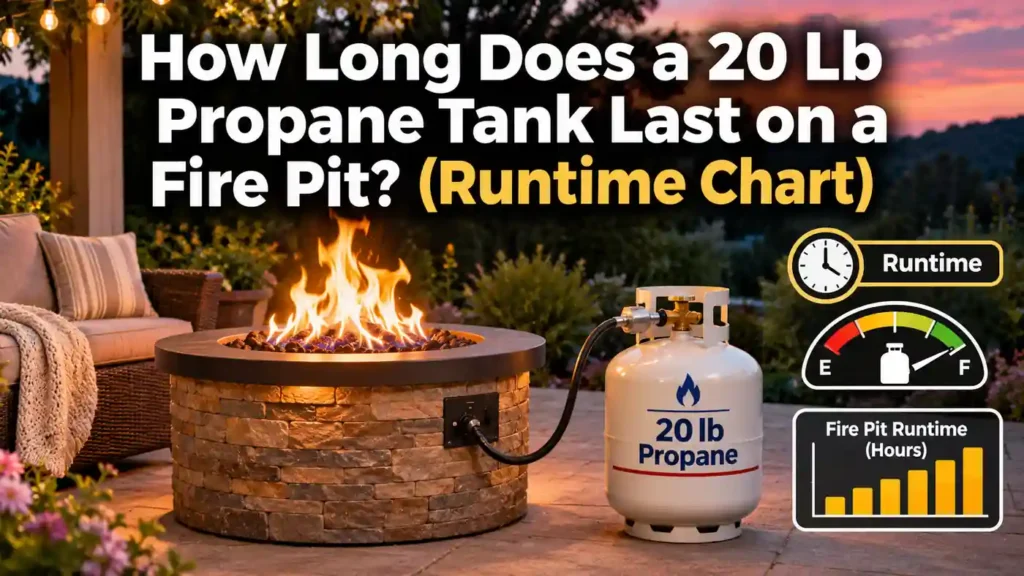
Propane Fire Pit Runtime Chart by Tank Size and Burner Output
For a useful first estimate, I use 21,600 BTU per pound of propane. I multiply cylinder fuel capacity by that energy figure and divide the result by the burner input rating in BTU per hour. The following chart assumes a completely filled cylinder, continuous operation at the stated input, and that all rated fuel is usable. Real runtime may be shorter.


Note: Theoretical energy-only runtime, rounded to one decimal place. Actual runtime depends on burner settings, ambient temperature, propane vaporization capacity, and operating conditions. These estimates do not indicate that a particular cylinder size is approved or capable of sustaining the listed burner demand. Always follow the fire pit manufacturer’s requirements.
Interactive Propane Fire Pit Runtime & Cost Calculator
Rather than guessing based on marketing descriptions, use this calculator to enter your tank capacity, burner rating, intended flame setting, local propane price, and realistic usable-fuel allowance. It produces an illustrative runtime, hourly cost, and cost for a gathering. Your actual results will vary with flame control design, weather, fuel level, and appliance specifications.
Propane Fire Pit Runtime Calculator
Estimate how long your propane tank could power your fire pit, how much fuel it may consume, and what your gathering could cost. Adjust the values below to see your estimated results.
A Worked Example: One 5 Lb Tank at 30,000 BTU/h
Suppose you own a fire pit that explicitly approves a 5 lb propane cylinder. Its burner is rated at 30,000 BTU/h, and you intend to run it at full output. The cylinder’s nominal energy is 5 × 21,600 = 108,000 BTU.
Divide 108,000 by 30,000 and you get a theoretical 3.6 hours. Now use an illustrative 85% planning allowance for accessible fuel and operating variability: 3.6 × 0.85 = 3.06 hours. That buffer is not a manufacturer specification; I use it to avoid planning a gathering around the exact last minute of idealized operation.
At $3.50 per gallon, 30,000 BTU/h consumes about 0.328 gallon per hour, costing approximately $1.15 per hour. A three-hour evening would cost roughly $3.44 in propane, assuming steady full-rated fuel input. A different flame level, local price, or refill policy changes the figure.
How Much Does Each Propane Tank Cost to Run?
I prefer separating fuel cost from the upfront purchase price of the cylinder. A refillable small cylinder may cost more per pound to refill in some markets, while a disposable cylinder can have a considerably higher per-unit fuel price. Treat the table below as a comparable fuel-only scenario, not a current retail quote.
Note: Fuel quantities and costs are calculated using approximately 4.24 lb of propane per gallon. Rounding differences are expected. These figures represent estimated fuel value, not necessarily the price you will pay to purchase or refill a cylinder. Actual retail prices for one-pound disposable bottles and propane tank exchanges are not equivalent to bulk per-gallon propane pricing.
One important shopping trap: some exchange services put 15 lb of propane into a 20 lb-capacity cylinder. The container is still a 20 lb-rated cylinder, but it holds less fuel than a full 20 lb refill. That’s a difference in fill quantity, not necessarily a different compatible tank size. For details, see our internal 15 lb propane tank compatibility guide.
Why the 80% Fill Rule Is Not the Same as 80% Runtime
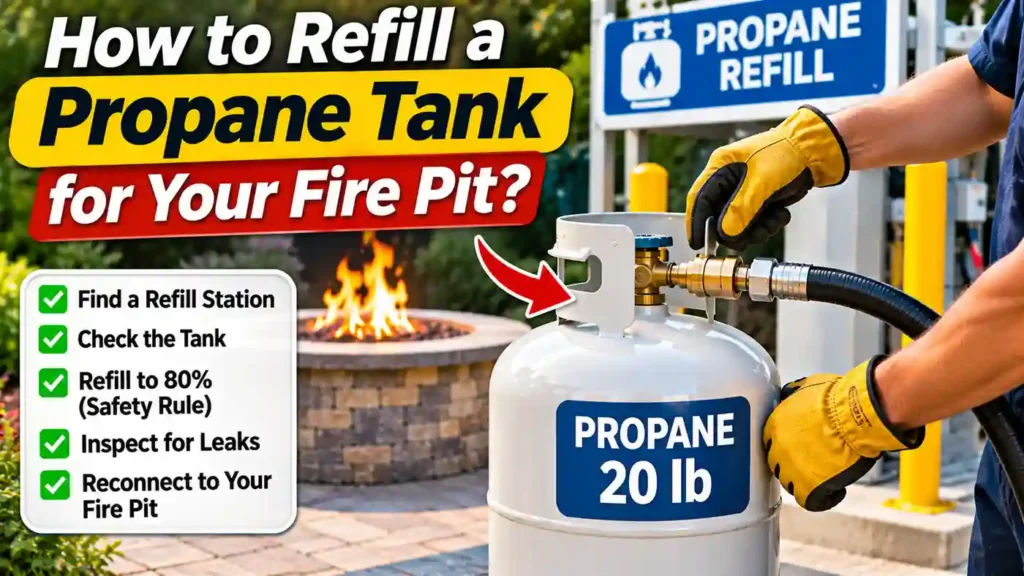
Propane containers need vapor space for thermal expansion. The familiar 80% filling principle means an appropriate container is not filled entirely with liquid. A properly filled cylinder marked for 20 lb of propane is designed to hold about 20 lb of propane—not merely 16 lb because someone applies another 80% reduction to its rated fuel capacity.
In other words, the 20 lb label is a propane capacity rating, while the 80% rule concerns the liquid fill volume relative to internal water capacity. They should not be multiplied together indiscriminately. My calculator’s separate usable-fuel input simply allows conservative planning for residual fuel, performance limitations, and uncertainty. It is not a filling instruction.
For a fuller explanation, continue to our 80% propane fill rule guide.
Will a Smaller Tank Supply Enough Vapor in Cold Weather?
This is the technical question I think most quick tank-size answers miss. A burner consumes propane vapor. The liquid inside the cylinder absorbs heat and turns into gas; the process cools the cylinder and its contents. Lower temperatures, lower remaining fuel levels, and smaller exposed surface area can all reduce the cylinder’s ability to sustain a high BTU demand.
That means a 5 lb container with enough total stored energy for two hours might still be a poor choice for a high-output burner under some conditions. Flame sagging or frost does not automatically mean a regulator is defective. It can indicate that vapor withdrawal is approaching the cylinder’s ability to supply gas.
I would never prescribe a universal minimum cylinder size based only on a BTU number. Actual vaporization capacity depends on cylinder geometry, fill percentage, temperature, and appliance requirements. A qualified propane professional or the product manufacturer can evaluate a specific setup.
Important: Propane vaporization capacity depends on cylinder size, ambient temperature, remaining fuel, and burner demand. Even when a small propane cylinder contains enough energy for the calculated runtime, it may not deliver vapor fast enough to support the fire pit’s rated BTU input. Always use a cylinder, regulator, and hose assembly approved by the fire pit manufacturer.
Can You Use an Adapter to Connect a 1 Lb or 5 Lb Tank?
An adapter may appear to solve a fitting mismatch, but threads are only one part of safe fuel-system design. An appliance’s listed configuration may specify a certain cylinder size, valve, regulator, and hose. Changing any of those parts without manufacturer authorization can make the appliance operate outside its evaluated conditions.
For example, some portable fire pit manuals expressly say to use a standard 20 lb cylinder only. In that case, I would not recommend a five-pound cylinder merely because someone sells a compatible-looking adapter. Follow the manufacturer’s requirements and use only parts the manufacturer approves.
If you’re upgrading to a smaller tank for convenience, ask the fire pit manufacturer whether that exact model is certified for the proposed setup. If you cannot get a clear answer, choose the specified cylinder instead.
Smallest Tank Versus Lightest Setup: What Actually Matters?
One of my favorite ways to approach this decision is to focus on the whole system rather than the cylinder label. A compact tank can be light, but if it requires extra fittings, a separate stand, and frequent refill trips, the result might be less convenient than a properly secured standard cylinder.
Compare the total loaded weight, physical dimensions, valve protection, securing method, and how you will transport and store the system. The smallest container is not always the easiest to live with. And if a larger cylinder gives you significantly fewer refill trips, the larger choice could create less inconvenience over a full season.
For a fire table with an enclosed cylinder cabinet, the important limit is the appliance’s specified enclosure arrangement. For an outdoor portable bowl, the cylinder may need to sit outside the fire pit at a manufacturer-specified separation distance. Don’t assume you can hide any tank under the burner to save floor space.
Decision Guide: Which Propane Tank Should You Choose?
Important: These tank sizes are general starting points for evaluating your options, not universal compatibility recommendations. Before selecting a propane cylinder, check your fire pit manufacturer’s approved tank capacity, connection type, regulator requirements, and minimum vapor delivery specifications. A smaller cylinder should never be substituted solely because an adapter fits.
My rule is simple: choose the smallest manufacturer-approved tank that can comfortably cover your longest normal session with a reasonable fuel reserve. If your fire pit demands a 20 lb cylinder, portability concerns are best solved by choosing a fire pit designed for small tanks—not by downsizing the cylinder against instructions.
How Many Nights Can You Get From a Small Propane Tank?
Runtime becomes more useful when converted into actual evenings. Say you use an approved 10 lb tank, your burner averages 20,000 BTU/h, and you light it for two hours per evening. The ideal energy-only estimate is 10.8 hours. That works out to 5.4 two-hour sessions. With an illustrative 85% planning factor, you’re closer to 9.18 hours or about four full two-hour sessions plus some margin.
Compare that with a 5 lb tank under the same conditions: 5.4 theoretical hours, or 4.59 buffered hours. That’s about two full two-hour evenings. The 10 lb cylinder could roughly halve refill frequency, without requiring a giant permanent propane tank.
My practical suggestion is to log three real sessions. Record the starting and ending fuel weight when you can do so safely, the hours burned, and your normal flame setting. Once you’ve measured real usage, your next tank-size decision will be much more reliable than a generic runtime chart.
What If You Already Have a 20 Lb Fire Pit but Want Less Weight?
If the appliance requires a 20 lb cylinder, first confirm whether the actual problem is carrying the filled cylinder, transporting it, or fitting it into storage. You may be able to solve the handling problem without modifying the gas supply: choose convenient refilling services, plan cylinder placement before each event, and use safe handling equipment appropriate to the cylinder.
You may also want to consider a different certified fire pit with a smaller BTU rating, especially if you mostly want decorative flames rather than maximum heat. Reducing the burner’s demand can make smaller approved fuel systems more practical and lower the cost of each evening.
Read our related fire pit tank sizing guide and 20 lb fire pit runtime guide if you want to compare those options further.
Safety Checklist Before Using Any Small Propane Cylinder
- Read the exact appliance manual: confirm the approved cylinder size, type, fuel, and connection.
- Inspect the cylinder: do not use a leaking, damaged, badly rusted, or out-of-date refillable cylinder.
- Use approved parts: do not improvise hoses, regulators, adapters, or orifices.
- Keep the tank upright: unless the equipment is expressly designed otherwise, use an upright vapor-withdrawal cylinder in its specified position.
- Protect the hose: avoid hot surfaces, traffic paths, sharp edges, and pinch points.
- Provide outdoor ventilation: never use an outdoor-only propane fire pit inside a house, garage, tent, or other enclosed space.
- Follow clearance rules: maintain required separation from combustible surfaces and the cylinder placement indicated in the manual.
- Check connections as instructed: use the manufacturer’s approved leak-check procedure before operation; never use an open flame to find leaks.
- Know the shutoff: if you smell gas, stop operation when safe, avoid ignition sources, move people away, and follow your utility/emergency guidance.
- Store cylinders safely: follow local regulations and the manufacturer’s storage directions; never put propane cylinders in living spaces.
Frequently Asked Questions
Can I use a 1 lb camping propane tank on a 50,000 BTU fire pit?
Not unless the fire pit manufacturer explicitly approves that exact configuration. One pound contains only about 21,600 BTU of energy, yielding roughly 26 minutes of theoretical full-output operation at 50,000 BTU/h. More importantly, the cylinder may not provide sufficient vapor and the appliance may require a 20 lb tank.
Is a 5 lb propane tank safer than a 20 lb tank?
Smaller capacity does not by itself make an incompatible setup safe. Proper approval, connections, regulator selection, cylinder condition, placement, and ventilation matter more than simply choosing the smallest cylinder.
How long does a 5 lb propane tank last on a fire pit?
At 20,000 BTU/h, the energy-only estimate is 5.4 hours; at 40,000 BTU/h, it is 2.7 hours. The exact runtime varies with average burner input, weather, and usable fuel. Those figures assume the fire pit is approved for the cylinder.
Can I put a 10 lb tank inside a fire table cabinet?
Only if the manufacturer permits that cylinder and enclosure configuration. A tank fitting inside a cabinet does not prove compliance with ventilation, securing, valve access, and fuel-system requirements.
Does the 80% fill rule mean a 20 lb tank contains only 16 lb?
No. The rated 20 lb propane capacity already corresponds to an appropriately filled cylinder. The 80% liquid-volume limit is not an instruction to subtract another 20% from the cylinder’s labeled propane capacity.
What size of tank should I buy for weekend gatherings?
Start with the tank your fire pit manufacturer specifies. Then estimate the fuel needed from BTU demand multiplied by event duration. For many conventional portable fire pits, that means a standard 20 lb tank; smaller approved equipment may allow smaller cylinders.
Final Verdict: The Smallest Tank Is the Smallest Approved Tank
If you take only one thing from this guide, make it this: a 1 lb tank may be the smallest available propane fuel option for specially designed fire features, but a standard fire pit may require 20 lb. Fuel capacity, cylinder vaporization, and listed appliance compatibility must all line up.
I would rather see you choose a slightly larger approved cylinder and enjoy steady, predictable flames than shave off a few pounds by adapting a system the manufacturer never intended. Use the calculator for planning, then let the appliance manual make the final compatibility decision.
For the next step, compare fire pit hourly and monthly fuel costs, refilling a propane fire pit tank, and 15 lb versus 20 lb cylinder options.
Editorial note: Calculations are original illustrative scenarios, not field tests or claims of first-hand use. Verify all model-specific limits with your appliance manufacturer. Internal links currently point to PropaneHQ site search results and should be replaced with confirmed article permalinks during publication.

Mike is an experienced propane technician with over 15 years of professional experience in the field. He has dedicated his career to helping customers with their propane needs, from installation to maintenance and repair. Together with Jeremy, he co-founded this website to provide useful information and guidance to customers seeking reliable propane services.