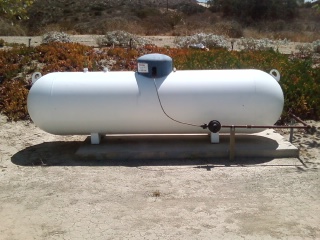


If you’re planning to buy a propane tank in Colorado, I recommend looking beyond the advertised purchase price. The right tank size, installation conditions, winter temperatures, and fuel delivery arrangements can affect how much you’ll spend over the next several years.
Colorado presents some challenges that you may not encounter in warmer states. A homeowner in Denver might use propane primarily for a cooking range, fireplace, or standby generator. Meanwhile, someone living near Breckenridge, Evergreen, or Steamboat Springs could rely on propane for home heating during long, cold winters. Rural properties may also require larger storage because delivery trucks cannot always reach remote homes during heavy snowfall.
Whether you’re searching for a 250-gallon propane tank in Colorado, comparing 500-gallon prices, or considering a 1,000-gallon tank for a mountain property, I’ll help you understand the equipment, installation costs, and fuel requirements. I’ll also cover where to buy propane tanks in Colorado, how to find suppliers near you, the effects of freezing weather, and the state’s installation regulations.


Pricing note: This 2027 guide uses published supplier information available in November 2026. Equipment prices shown are reference quotations, not verified Colorado statewide averages. Always obtain current local quotations before purchasing.
Quick Answer: How Much Does a Propane Tank Cost in Colorado?
The cost of a propane tank in Colorado depends on its size, whether it’s new or refurbished, and the expense of delivering and installing it on your property.
A published equipment-price reference from BLT Tanks, an Oklahoma supplier, provides the following estimates for new tanks.
| Tank size | New above-ground price reference | Propane at 80% fill |
|---|---|---|
| 120 gallons | $985 | 96 gallons |
| 250 gallons | $1,950 | 200 gallons |
| 320 gallons | $2,350 | 256 gallons |
| 500 gallons | $2,900 | 400 gallons |
| 1,000 gallons | $4,750 | 800 gallons |
These prices do not represent Colorado installed costs. BLT Tanks does not provide ordinary single-tank delivery, so local buyers need separate equipment and installation quotations.


For many Colorado homeowners, I would begin by comparing 250-gallon, 500-gallon, and 1,000-gallon propane tanks. A 250-gallon tank may work for limited residential fuel demand. A 500-gallon model offers more convenient storage for multiple propane appliances. A 1,000-gallon tank may be appropriate for high-demand heating or rural properties where frequent deliveries are inconvenient.
However, there’s one consideration I wouldn’t overlook: cold-weather vaporization. A tank may contain enough total propane for several weeks but still be unable to supply a large furnace or generator at the required rate during extremely low temperatures. That’s why I recommend having a qualified installer evaluate both your expected fuel consumption and your maximum appliance demand.
1. How Much Does a Propane Tank Cost in Colorado?
Propane tank prices in Colorado vary considerably depending on the equipment and installation. I wouldn’t expect a tank delivered to a suburban property near Denver to cost exactly the same as one delivered to an isolated mountain cabin. Transportation, site preparation, and winter access can make a significant difference.
What Factors Affect Propane Tank Prices?
I would divide the total cost into six categories:
- Equipment purchase: The tank, valves, gauges, and included components.
- Delivery: Transportation, unloading, and placement equipment.
- Site preparation: Grading, foundations, excavation, or additional access work.
- Installation: Regulators, piping, connections, and system testing.
- Approvals: Applicable permits and inspections.
- Initial fuel: The propane required to put the installation into operation.
A low advertised tank price may exclude most of these expenses.



How Much Does Installation Cost?
Let’s consider a hypothetical 500-gallon above-ground installation.
| Expense | Example budget |
|---|---|
| New 500-gallon tank | $2,900 |
| Delivery and site preparation | $500 |
| Regulators, piping, labor, and testing | $1,000 |
| First fill: 400 gallons at $3.50 | $1,400 |
| Illustrative total | $5,800 |
This is a budgeting example, not a Colorado contractor’s quotation. A long gas line, steep driveway, rock excavation, or difficult delivery access could increase the installation cost. I recommend getting two or three written estimates with comparable equipment and work included.
New vs. Used Propane Tank Prices
Used propane tanks can reduce the initial equipment expense. For example, a BLT Tanks advertisement from October 2026 listed certain refurbished tanks at approximately:
| Refurbished tank size | Published price range |
|---|---|
| 250 gallons | $795–$1,095 |
| 500 gallons | $1,575–$1,895 |
| 1,000 gallons | $2,755–$3,195 |
These were advertised equipment references, not Colorado retail prices or guarantees of current stock. The actual savings depend on the tank’s condition, replacement components, transportation, and professional installation. I would never purchase a used stationary tank without confirming ownership and having my intended supplier evaluate whether it can be safely installed and filled. For additional context, read how frequently you should replace a propane tank.


Should You Buy or Lease a Propane Tank?
Some Colorado propane suppliers offer tank leasing. This can reduce your upfront equipment expense, but a lease may require you to purchase propane exclusively from the company that owns the tank.
| Consideration | Buying | Leasing |
|---|---|---|
| Initial expense | Usually higher | Often lower |
| Equipment ownership | Homeowner | Supplier |
| Choice of fuel supplier | Potentially more flexible | Often restricted |
| Maintenance | Depends on contract | Depends on contract |
| Rental charges | Usually none | May apply |
| Long-term flexibility | Often greater | Contract-dependent |
I recommend comparing costs over several years before deciding. A tank lease that looks attractive initially may become expensive if the fuel price is consistently higher or additional service charges apply.
2. Where Can You Buy Propane Tanks in Colorado?
Colorado has propane companies serving metropolitan areas, agricultural communities, mountain towns, and rural properties. However, not every propane company sells tanks directly to individual homeowners. Some suppliers provide leased tanks, while others offer tank sales and installation. I recommend contacting suppliers with the exact tank size and property location.
Propane Tank Suppliers Near Denver
Mile High Propane serves Colorado customers and advertises tank sales, leasing, installation, and propane delivery. It is worth contacting if you’re comparing equipment ownership arrangements in the Denver region.
Polar Gas, based in Brighton, advertises tank installation services and tanks available for sale, including 250-, 325-, 500-, and 1,000-gallon sizes. I would request quotations for both equipment-only purchases and complete installations.
Where to Buy Propane Tanks in Colorado Springs
Mile High Propane lists a Calhan operation, making it a supplier to investigate for areas east of Colorado Springs. Other propane companies may serve Colorado Springs, Fountain, Monument, and surrounding communities. Before choosing, ask whether the company will sell a tank outright or only provide leased equipment.
Propane Suppliers in Fort Collins and Northern Colorado
Poudre Valley Co-op advertises propane delivery in Northern Colorado and offers tank leasing, with service for customers who already own their equipment. If you live near Fort Collins, Loveland, or surrounding communities, I would include the co-op when comparing delivery arrangements.
Propane Suppliers in Mountain Communities
Mountain property owners have different requirements from many suburban customers. When contacting a propane company serving Summit County, Routt County, or the San Juan Mountains, I would ask about winter delivery availability, snow-clearing requirements, tank access and delivery hose distance, automatic deliveries, emergency service, and minimum order quantities.
A supplier with reliable winter access may provide greater long-term value than one offering a slightly lower initial price.
Where Can You Find Propane Tanks for Sale Near You?
Mountain States Tank Supply advertises propane tank sales in Colorado and the Four Corners region. The company may be worth contacting for equipment availability, although you’ll still need to verify delivery and installation arrangements. Other potential sources include propane equipment distributors, authorized tank dealers, and refurbishment businesses. Before buying, ask whether the tank is approved for the intended installation and whether the local fuel supplier will service it.
3. What Propane Tank Sizes Are Available in Colorado?
Propane tanks are available in many capacities, from small portable cylinders to large stationary pressure vessels. One common source of confusion is the difference between pounds and gallons. A 100-pound portable propane cylinder is not equivalent to a 100-gallon stationary tank. Portable cylinders are normally described by their propane weight capacity, while stationary tanks are generally identified by their water capacity.
Colorado Propane Tank Size Chart
| Tank size | Approximate propane when full | Common application |
|---|---|---|
| 20-pound cylinder | 4.7 gallons | Grills and portable equipment |
| 100-pound cylinder | 23.5 gallons | Auxiliary appliances |
| 50-gallon tank | 40 gallons | Specialty low-demand use |
| 120-gallon tank | 96 gallons | Cooking and water heating |
| 250-gallon tank | 200 gallons | Moderate residential use |
| 500-gallon tank | 400 gallons | Multiple appliances and heating |
| 1,000-gallon tank | 800 gallons | High-demand heating and remote properties |
The stationary-tank values use the common 80% liquid-fill planning rule. Actual filling limits must be determined according to applicable requirements and conditions.
Small Propane Tanks in Colorado
Smaller tanks are useful for grills, outdoor kitchens, campers, temporary equipment, and limited residential applications. They generally cost less upfront, but frequent refilling may become inconvenient. A 20-pound grill cylinder is not a practical primary fuel source for a propane furnace.
Large Propane Tanks in Colorado
Larger stationary tanks are common options for home heating, standby generators, agricultural operations, and commercial applications. I recommend evaluating 500- and 1,000-gallon storage when the property uses substantial amounts of propane or has limited delivery access. However, bigger isn’t always better. A large tank may cost more to purchase and install without providing meaningful savings for a low-consumption household.
4. How Much Does a 1,000-Gallon Propane Tank Cost in Colorado?
A 1,000-gallon propane tank is a substantial residential storage option. I would consider this size for a large home with propane heating, multiple appliances, or a rural property where regular fuel deliveries are difficult. At an 80% fill, it holds approximately 800 gallons of propane.
1,000-Gallon Propane Tank Price
| Installation type | Equipment price reference |
|---|---|
| Above-ground 1,000-gallon tank | $4,750 |
| Underground 1,000-gallon tank | $5,250 |
These published BLT Tanks figures exclude Colorado transportation, excavation, piping, and installation. I would request a complete local quotation before purchasing.
What Are the Dimensions of a 1,000-Gallon Tank?
| Specification | Approximate value |
|---|---|
| Nominal capacity | 1,000 gallons |
| Propane at 80% fill | 800 gallons |
| Diameter | About 41 inches |
| Overall length | About 16 feet |
| Empty weight | Model-dependent, often over 1,500 pounds |
The exact measurements must come from the chosen manufacturer’s specification sheet.
How Much Does It Cost to Fill a 1,000-Gallon Tank?
| Price per gallon | Cost for 800 gallons |
|---|---|
| $2.50 | $2,000 |
| $3.00 | $2,400 |
| $3.50 | $2,800 |
| $4.00 | $3,200 |
| $4.50 | $3,600 |
These are hypothetical fuel prices for comparison, not current statewide Colorado rates.
How Long Does a 1,000-Gallon Tank Last?
Suppose your household consumes six gallons daily during winter. A full 800-gallon supply could theoretically provide approximately 133 days of fuel. However, I would plan to refill before the gauge reaches empty. If you schedule deliveries at 20%, you can use approximately 600 gallons between 80% and 20%.
600 ÷ 6 = 100 days between planned deliveries.
In reality, consumption may increase during prolonged cold weather. Your furnace, water heater, and generator may operate more often than expected.
Is a 1,000-Gallon Tank Worth Buying for a Mountain Home?
Possibly. A larger tank provides more fuel between deliveries, which may be valuable when roads are blocked by snow or when propane trucks cannot access your property regularly. However, I would also consider winter vaporization performance and site accessibility. The tank must meet the appliance system’s peak demand, not merely store enough total gallons.
5. How Much Does a 500-Gallon Propane Tank Cost in Colorado?
A 500-gallon propane tank is a practical size to investigate for a Colorado household using propane for heating, water heating, fireplaces, and other appliances. At 80% fill, it holds approximately 400 gallons.
500-Gallon Propane Tank Price
| Tank type | Equipment price reference |
|---|---|
| Above-ground 500-gallon | $2,900 |
| Underground 500-gallon | $3,325 |
The delivered and installed Colorado price may be significantly different.
What Are the Dimensions of a 500-Gallon Tank?
| Specification | Approximate measurement |
|---|---|
| Water capacity | 500 gallons |
| Propane at 80% | 400 gallons |
| Diameter | About 38–41 inches |
| Overall length | Approximately 9–10 feet |
| Empty weight | Often around 900–1,000 pounds |
Manufacturer designs differ, so I recommend checking the specific model rather than relying on a generic dimension chart.
How Much Does It Cost to Fill a 500-Gallon Tank?
| Price per gallon | Cost for 400 gallons |
|---|---|
| $2.50 | $1,000 |
| $3.00 | $1,200 |
| $3.50 | $1,400 |
| $4.00 | $1,600 |
| $4.50 | $1,800 |
The amount delivered will normally be less than 400 gallons if your tank still contains propane.
How Long Will a 500-Gallon Tank Last in Colorado Winter?
Let’s use a household that consumes five gallons daily. At 80% fill, the tank contains approximately 400 gallons. That provides a theoretical supply of 400 ÷ 5 = 80 days. If you refill when the tank reaches 20%, your operating window is approximately 300 gallons, providing 300 ÷ 5 = 60 days between deliveries.
During extreme weather, actual fuel consumption can rise. I recommend monitoring the tank gauge more frequently during winter rather than assuming the same refill interval will apply year-round.
Is a 500-Gallon Tank Enough for Whole-House Heating?
It can be, depending on your home’s insulation, heating equipment, outdoor temperature, and refill schedule. For a well-insulated house with moderate demand and reliable deliveries, 500 gallons may be sufficient. For a large mountain property with heavy heating needs, I would compare it with a 1,000-gallon tank. The important question is how much propane the household consumes during the coldest part of the year.
6. How Much Does a 250-Gallon Propane Tank Cost in Colorado?
A 250-gallon propane tank is a smaller stationary storage option that may suit homes with moderate propane consumption. It holds approximately 200 gallons at an 80% fill.
250-Gallon Propane Tank Price
BLT Tanks lists a new above-ground 250-gallon tank at approximately $1,950. An underground model has a published equipment estimate of $2,325. These prices do not include local installation.
250-Gallon Tank Dimensions
| Specification | Measurement |
|---|---|
| Water capacity | 250 gallons |
| Propane at 80% fill | 200 gallons |
| Diameter | 30 inches |
| Overall length | 7 feet 10 inches |
| Empty weight | Approximately 470 pounds |
How Much Does It Cost to Fill a 250-Gallon Tank?
At a hypothetical propane price of $3.50 per gallon, 200 × $3.50 = $700. If the tank is partially full, the actual delivery will be smaller.
How Long Does a 250-Gallon Tank Last?
Suppose your household consumes 60 gallons monthly. A full tank holds approximately 200 gallons. That provides about 3.3 months of theoretical supply. But if you schedule a delivery at 20%, the operating window is approximately 150 gallons: 150 ÷ 60 = 2.5 months between deliveries.
250-Gallon vs. 500-Gallon Propane Tanks
| Factor | 250 gallons | 500 gallons |
|---|---|---|
| Usual fill at 80% | 200 gal | 400 gal |
| Fuel from 80% to 20% | 150 gal | 300 gal |
| New equipment price reference | $1,950 | $2,900 |
| Hypothetical full-fill cost at $3.50/gal | $700 | $1,400 |
| Storage capacity | Moderate | Higher |
| Typical application | Limited to moderate use | Multiple appliances and heating |
For homes with modest propane consumption, I would investigate the 250-gallon option first. For winter heating, especially at remote mountain properties, the additional storage of a 500-gallon tank may be worthwhile.
7. How Much Do Small Propane Tanks Cost in Colorado?
Small propane tanks include portable cylinders as well as smaller stationary ASME vessels. These products serve different applications and shouldn’t be treated as interchangeable. A portable cylinder used for a grill or RV has different installation and requalification requirements from a stationary residential tank.
Common Small Propane Tank Sizes
| Size | Approximate propane capacity | Example use |
|---|---|---|
| 20 pounds | 4.7 gallons | Grill |
| 30 pounds | 7.1 gallons | RV appliances |
| 100 pounds | 23.5 gallons | Auxiliary appliances |
| 50-gallon stationary tank | 40 gallons | Specialty applications |
| 120-gallon stationary tank | 96 gallons | Limited residential use |
How Much Does a 120-Gallon Tank Cost?
BLT Tanks publishes a new above-ground equipment estimate of $985 and an underground estimate of $1,770. At 80% fill, the tank holds approximately 96 gallons. At a hypothetical delivered price of $3.50 per gallon, the propane would cost 96 × $3.50 = $336, excluding delivery fees and applicable charges.
Is a Small Propane Tank Suitable for a Mountain Cabin?
Possibly, if consumption is low. A seasonal cabin used occasionally for cooking and hot water may not need a 500-gallon tank. However, a cabin relying on propane heating during freezing weather could have much higher demand. I would estimate the maximum expected winter consumption before choosing a small tank.
100-Pound Cylinder vs. 100-Gallon Tank
A 100-pound cylinder typically contains approximately 23.5 gallons of propane when full. A 100-gallon stationary vessel holds about 80 gallons at an 80% fill. The difference is substantial. For further clarification, see my propane tank versus cylinder guide.
8. Small vs. Large Propane Tanks: Which Is Best for Colorado?
I recommend selecting a tank based on fuel consumption, delivery reliability, and peak appliance demand rather than simply choosing the largest model you can afford.
Advantages of Smaller Tanks
Smaller tanks generally require less equipment investment. They may work well for properties using propane only for cooking, water heating, or occasional appliances. The main drawback is more frequent refilling when consumption increases.
Advantages of Larger Tanks
Larger tanks provide more storage between deliveries. They may be particularly useful for mountain homes where winter road conditions can complicate propane delivery. However, larger tanks require more space, cost more upfront, and can involve higher initial fuel purchases.
My Tank Size Decision Guide
| Property or application | Tank size to evaluate |
|---|---|
| Outdoor grill | Approved portable cylinder |
| Seasonal cabin with limited use | 120–250 gallons |
| Home with several propane appliances | 250–500 gallons |
| Primary propane home heating | 500–1,000 gallons |
| High-demand mountain property | 500–1,000 gallons |
| Large generator or commercial application | Professionally sized storage |
These are starting points, not substitutes for a professional load assessment. I would also confirm how the tank will perform during the coldest expected weather.
9. What Are the Dimensions of Propane Tanks in Colorado?
Propane tank dimensions matter because the equipment must fit within the available installation area while maintaining required safety clearances. A tank’s physical dimensions alone do not tell you how much space the installation requires.
Standard Propane Tank Dimensions
| Tank capacity | Approximate diameter | Approximate overall length |
|---|---|---|
| 120 gallons | 24 inches | Around 5–6 feet |
| 250 gallons | 30 inches | Around 7 ft 10 in |
| 500 gallons | Often 38–41 inches | Around 9–10 feet |
| 1,000 gallons | Around 41 inches | Approximately 16 feet |
These are representative dimensions. The exact measurements depend on the manufacturer and model.
How Much Space Do You Need?
Before purchasing, I would check physical tank dimensions, required building setbacks, property-line distances, delivery truck accessibility, snow removal needs, maintenance access, and foundation requirements. If you live on a sloping mountain property, the installer may need additional site preparation. I recommend obtaining the manufacturer’s specification sheet and a professional placement plan before ordering the tank.
10. How Does Colorado’s Cold Weather Affect Propane Tanks?
Cold weather is one of the most important considerations for propane installations in Colorado. Propane can remain in liquid form inside a tank at extremely low temperatures, but its ability to vaporize and provide sufficient pressure decreases as temperatures fall. For a home using propane heating, that matters considerably.
Can Propane Freeze in Colorado?
Pure propane freezes at an extremely low temperature, far colder than ordinary Colorado winter conditions. The more practical concern is not the propane liquid turning solid. It’s the reduced vaporization rate and pressure when the tank becomes cold. A tank may still contain propane but fail to provide enough vapor for a high-demand appliance.
Why Tank Size Matters During Winter
A larger tank generally has more liquid surface area and can offer greater vaporization capability, depending on its design, fill level, and temperature. For example, a small tank might contain enough propane for a furnace to operate for several days in total. But it may not be able to vaporize propane quickly enough to meet the furnace’s fuel demand during severe cold. That’s why I recommend asking the installer to calculate the required BTU-per-hour supply at the design winter temperature.
How Does Tank Fill Level Affect Vaporization?
The amount of propane in the tank can influence vaporization performance. As liquid level falls, available surface area and heat transfer conditions can change. This is another reason not to size a winter heating system solely by total stored gallons. A tank that meets appliance demand when relatively full may become less capable of doing so when nearly empty and extremely cold.
How to Protect a Propane Tank During Snowfall
I recommend maintaining safe access to the tank, valves, regulators, and delivery point. Keep access routes available for service personnel and follow your propane company’s snow-removal instructions. Never use open flames or improvised heaters to warm a propane tank or regulator. If you suspect equipment has frozen or stopped functioning correctly, contact the supplier rather than attempting unsafe repairs.
What About Underground Propane Tanks in Snowy Areas?
Colorado has an especially relevant requirement. Under 7 CCR 1101-15, underground containers in areas where snow may cover the dome lid must be marked so emergency and service personnel can locate the tank. The marker must extend above the anticipated maximum snow level, subject to the regulation’s height provisions. I would ask the installer how this requirement applies to the property before choosing underground storage.
How Much Extra Propane Should You Store Before Winter?
I wouldn’t recommend one universal number. The appropriate reserve depends on appliance consumption, property access, expected temperatures, and delivery reliability.
| Winter consideration | Why it matters |
|---|---|
| Heavy snowfall | May interrupt deliveries |
| Long rural driveway | Requires truck access |
| High heating demand | Uses fuel faster |
| Generator operation | Adds substantial consumption |
| Low tank level | Can reduce vaporization capability |
| Supplier schedule | Determines refill timing |
For mountain homes, I would establish a winter delivery plan with the propane supplier before the heating season begins.
11. Above-Ground vs. Underground Propane Tanks in Colorado
Colorado’s terrain can influence whether an above-ground or underground propane tank makes more sense. For most properties, I would first compare installation costs and maintenance requirements. An underground installation may appeal to homeowners who want to preserve their property’s appearance. However, excavation in rocky mountain terrain can be considerably more difficult than installing a tank on a suitable above-ground foundation.
Above-Ground Propane Tank Advantages
Above-ground tanks are generally easier to install, inspect, and maintain. Service technicians can see the exterior of the vessel, assess visible corrosion, and access the equipment without excavating around it. The disadvantage is that the tank remains visible and exposed to outdoor conditions. During winter, it may become surrounded by snow, so access must be maintained.
Underground Propane Tank Advantages
An underground tank reduces the amount of visible equipment. Most of the vessel is buried, with the service dome remaining accessible at the surface. However, underground storage requires specialized construction and corrosion protection. Colorado’s LPG regulations include corrosion-prevention provisions that reference NFPA 58 and address the installation of cathodic protection systems.
Above-Ground vs. Underground Cost Comparison
| Factor | Above ground | Underground |
|---|---|---|
| Equipment price | Generally lower | Generally higher |
| Excavation | Usually limited | Required |
| Corrosion protection | Exterior maintenance | Burial-rated protection |
| Appearance | Entire vessel visible | Mostly concealed |
| Inspection access | Generally easier | More specialized |
| Rocky terrain impact | Usually lower | Can be significant |
| Snow-related access | Exposed fittings | Dome must remain locatable |
My Recommendation for Mountain Properties
For a rocky or sloped mountain property, I would usually investigate above-ground installation first. It can reduce excavation complexity and make future inspections more straightforward. An underground installation may still be appropriate when landscaping, site layout, and installation conditions support it. Before choosing either option, I recommend having the installer assess drainage, soil conditions, frost effects, access, and applicable installation requirements.
12. Where Can You Refill a Propane Tank in Colorado?
If you’re searching for propane fuel in Colorado, the refill method depends on the tank. A 20-pound cylinder can often be filled at a participating retail station. A 500-gallon stationary tank generally requires bulk propane delivery to the property.
Propane Refill Locations Near Denver
The Denver metropolitan area has propane companies and participating retail refill locations. U-Haul and independent propane providers may offer portable cylinder refills. For a residential stationary tank, companies such as Mile High Propane and Polar Gas are worth investigating for delivery and equipment services.
Propane Refill Services in Colorado Springs
Colorado Springs-area homeowners can compare residential propane providers and portable-cylinder refill stations. If your tank is permanently installed, I recommend asking about delivery coverage, minimum order quantities, and automatic refill programs.
Propane Refill in Fort Collins and Northern Colorado
Poudre Valley Co-op advertises propane delivery and service for customer-owned tanks in Northern Colorado. That can be useful if you want to own your equipment rather than lease it. Confirm service coverage and current rates before signing an agreement.
How Much Does Propane Cost Per Gallon in Colorado?
The price varies by supplier, delivery volume, customer agreement, and location. A small retail cylinder refill may have a different per-gallon price from a large residential delivery. For budgeting, consider these hypothetical costs.
| Price per gallon | 20-lb cylinder, 4.7 gal | 500-gallon tank, 400 gal |
|---|---|---|
| $2.50 | $11.75 | $1,000 |
| $3.00 | $14.10 | $1,200 |
| $3.50 | $16.45 | $1,400 |
| $4.00 | $18.80 | $1,600 |
| $4.50 | $21.15 | $1,800 |
These aren’t verified statewide Colorado fuel prices. For more detailed calculations, read my propane refill cost per gallon guide.
Refill vs. Exchange: Which Is Cheaper?
For a portable grill cylinder, I often prefer comparing the cost per pound or gallon rather than the advertised transaction price. Some exchange programs provide 15 pounds of propane in a cylinder commonly described as a 20-pound tank. A full eligible 20-pound cylinder contains approximately 4.7 gallons of propane. If you can refill the cylinder safely at a competitive price, you may receive more fuel for your money than with a standard exchange. However, exchange can be convenient if your cylinder is no longer suitable for normal refilling.
13. What Are Colorado’s Propane Tank Installation Regulations?
Colorado regulates liquefied petroleum gas through 7 CCR 1101-15, administered by the Division of Oil and Public Safety. The regulations incorporate the 2024 edition of NFPA 58, along with other applicable standards. For homeowners, I recommend understanding the difference between statewide requirements and local fire or building department rules.
Do You Need a Permit to Install a Propane Tank in Colorado?
Under the state’s LPG installation regulations, plans for installations using storage containers exceeding 2,000 gallons of water capacity must be submitted to the division for approval before construction. Certain bulk storage and other specialized installations have additional requirements. However, this does not mean that all residential tanks under 2,000 gallons are automatically exempt from every permit. Local authorities, including fire departments, may impose more stringent requirements. I recommend contacting the local fire authority and building department before scheduling installation.
How Far Must a Propane Tank Be From a House?
Minimum distances depend on capacity, configuration, applicable code exceptions, and nearby hazards. The following figures are common NFPA 58 planning references for individual stationary above-ground tanks.
| Tank size | General separation planning reference |
|---|---|
| 120 gallons | Smaller-container provisions may apply |
| 250 gallons | Commonly 10 feet |
| 500 gallons | Commonly 10 feet |
| 1,000 gallons | Commonly 25 feet, subject to applicable exceptions |
These figures are not a complete installation approval chart. NFPA 58 contains distinctions involving buildings, adjoining buildable property lines, tank groups, underground configurations, and certain reduced-distance provisions. I would not place a tank based solely on this table. Have a qualified installer verify the exact configuration against Colorado’s adopted code and local requirements.
Do Underground Propane Tanks Require Corrosion Protection?
Yes. Underground installations require appropriate corrosion protection under the applicable rules. Colorado’s LPG regulations address cathodic protection and installer qualifications. I recommend asking the installer which protective system is supplied with the tank and how it will be tested and maintained.
Are Snow Markers Required for Underground Tanks?
Where expected snowfall can cover an underground tank’s service dome, Colorado requires a marker so emergency personnel and the propane company can locate it. The regulation specifies that the marker must extend above the anticipated snow level, up to the prescribed maximum height.
Can You Install Your Own Propane Tank?
For a permanent residential installation, I recommend professional installation and inspection. The project may involve high-pressure fuel storage, regulators, piping, leak testing, and safety clearances. Even if a particular homeowner installation is not subject to the same contractor licensing rules as commercial work, the system still needs to comply with applicable safety codes.
Do Propane Tanks Need Recertification?
Portable DOT cylinders and large stationary ASME tanks follow different requirements. Certain portable cylinders require periodic requalification, while stationary tanks have distinct inspection and service rules. For additional information, see who recertifies propane tanks.
14. Which Propane Tank Brands Are Available in Colorado?
When choosing a tank, I look at the manufacturer’s specifications, safety certifications, warranty, and whether local suppliers can service the equipment. The brand is important, but it shouldn’t be the only consideration.
Manchester Tank
Manchester Tank produces portable cylinders and stationary ASME propane tanks. Its residential products include horizontal above-ground and underground models. I recommend reviewing the exact product drawing when comparing capacities and dimensions.
Quality Steel
Quality Steel manufactures larger stationary propane storage vessels. Its tanks are frequently encountered through propane equipment distributors. Some new equipment sold by BLT Tanks is manufactured by Quality Steel.
Worthington Enterprises
Worthington Enterprises is associated with portable propane cylinder products used for grills, camping, and other applications. If you need a residential stationary tank, confirm the exact product category rather than assuming every propane brand makes every size.
Flame King
Flame King offers portable cylinders and specialty propane tanks. Its products are worth considering for portable and recreational applications.
Tank Brand Comparison
| Brand | Common product focus | What I would compare |
|---|---|---|
| Manchester Tank | Cylinders and stationary tanks | Specifications and model drawings |
| Quality Steel | Stationary ASME storage | Vessel construction and protection |
| Worthington Enterprises | Portable cylinders | Ratings, valves, and compatibility |
| Flame King | Portable and specialty tanks | Intended use and certification |
For a large residential tank, I would generally prioritize the brand and model supported by the installing propane company.
15. How Much Does It Cost to Operate a Propane Tank in Colorado?
The tank purchase is only one part of the cost. Over several years, propane consumption may exceed the initial equipment investment. That’s why I recommend calculating expected usage before choosing between a 250-, 500-, and 1,000-gallon tank.
How to Calculate Propane Consumption
Propane contains approximately 91,500 BTU per liquid gallon. For an appliance with a known fuel-input rating, use Gallons per hour = BTU input per hour ÷ 91,500.
For example, a furnace with an input rating of 90,000 BTU per hour consumes approximately 90,000 ÷ 91,500 = 0.98 gallons per hour. If the furnace operates at that input for eight hours daily, it would consume about 7.9 gallons. Actual daily consumption depends on thermostat settings, weather, equipment cycling, and the heating load.
Annual Fuel Cost Comparison
| Annual propane use | At $2.50/gal | At $3.50/gal | At $4.50/gal |
|---|---|---|---|
| 200 gallons | $500 | $700 | $900 |
| 500 gallons | $1,250 | $1,750 | $2,250 |
| 800 gallons | $2,000 | $2,800 | $3,600 |
| 1,200 gallons | $3,000 | $4,200 | $5,400 |
| 1,800 gallons | $4,500 | $6,300 | $8,100 |
These are illustrative calculations rather than current Colorado price quotations.
Five-Year Ownership Example
Suppose you purchase a 500-gallon tank for $2,900. Assume delivery and installation cost another $1,200. Your initial equipment expense would be $4,100. If your home consumes 800 gallons annually at a hypothetical $3.50 per gallon, annual fuel cost would be $2,800 and five-year fuel expense would be $14,000.
Illustrative five-year total: $18,100.
That excludes maintenance, taxes, additional delivery charges, and price fluctuations. I would compare this calculation against a lease quotation before deciding how to obtain the tank.
How Can You Reduce Propane Costs?
I recommend maintaining heating equipment, reducing unnecessary fuel consumption, comparing delivery prices, and managing the tank level carefully. For mountain properties, improving insulation and reducing heat loss can be especially valuable. I would also ask suppliers about automatic delivery and whether larger delivery quantities affect the per-gallon rate.
16. What Size Propane Tank Do You Need for Your Colorado Home?
I wouldn’t determine tank size solely from the home’s square footage. Two houses of the same size can consume very different amounts of propane. One may have electric heating and use propane only for cooking. The other may operate a propane furnace, water heater, fireplace, and standby generator.
What Size Tank Is Best for Home Heating?
For moderate heating demand, I would evaluate a 500-gallon system. For high-demand homes or mountain properties where deliveries are difficult, I would also compare 1,000-gallon equipment. The installer should confirm both storage capacity and vaporization capability at the expected winter temperature.
What Size Tank Is Best for a Standby Generator?
Start with the generator manufacturer’s fuel-consumption chart. Suppose a generator uses three gallons of propane per hour at a particular electrical load. For 48 hours, 3 × 48 = 144 gallons. For 72 hours, 3 × 72 = 216 gallons. If the generator and furnace may operate simultaneously, their combined consumption must be considered. For further information, read the propane tank size chart for generators.
How to Choose Between 500 and 1,000 Gallons
Here’s a comparison using an assumed household consumption of five gallons daily.
| Factor | 500-gallon tank | 1,000-gallon tank |
|---|---|---|
| Propane at 80% fill | 400 gallons | 800 gallons |
| Fuel from 80% to 20% | 300 gallons | 600 gallons |
| Days between planned fills | 60 days | 120 days |
| Published new equipment reference | $2,900 | $4,750 |
The larger tank doubles the storage interval in this example. However, it also requires more space and a larger equipment investment. I recommend comparing the total installed costs and winter delivery conditions before deciding.
17. Frequently Asked Questions About Propane Tanks in Colorado
How Much Does a 500-Gallon Propane Tank Cost in Colorado?
A published mainland equipment reference is $2,900 for a new above-ground 500-gallon tank. Local Colorado purchase, delivery, and installation prices will vary.
Where Can I Buy a Propane Tank Near Me?
Contact propane suppliers serving your ZIP code. Mile High Propane, Polar Gas, Mountain States Tank Supply, and other Colorado companies are potential starting points.
How Much Does a 250-Gallon Tank Cost?
A published new equipment estimate is approximately $1,950 for an above-ground model, excluding delivery and installation.
How Much Does a 1,000-Gallon Tank Cost?
BLT Tanks publishes an equipment estimate of $4,750 for an above-ground model. The final installed Colorado cost depends on the property.
Is a 500-Gallon Tank Enough for Winter Heating?
It may be sufficient for some homes, but heating demand, vaporization capability, and delivery frequency must be evaluated.
Can Propane Tanks Freeze in Colorado?
Propane itself freezes at temperatures far below normal Colorado winter conditions. Reduced vaporization and pressure are more common practical concerns.
Do I Need a Permit to Install a Propane Tank?
Requirements depend on the installation and local jurisdiction. Colorado has statewide LPG regulations, while local fire and building authorities may impose additional requirements.
Can You Install a Propane Tank Underground?
Yes, when the equipment and installation comply with applicable rules. Underground tanks require appropriate corrosion protection and access to service fittings.
Can I Buy a Used Propane Tank?
Yes, but confirm ownership and have the tank evaluated by a qualified propane professional before purchasing.
How Often Should I Refill My Tank?
I recommend monitoring the gauge and scheduling delivery before the fuel level becomes critically low. The appropriate reorder level depends on your demand and the supplier’s delivery arrangements.
How Much Does It Cost to Fill a Tank?
Multiply the gallons delivered by the actual price per gallon. For example, 300 gallons at $3.50 costs $1,050 before additional charges.
18. Final Thoughts: Choosing the Best Propane Tank in Colorado
If you’re buying a propane tank in Colorado, my recommendation is to begin with your actual fuel requirements. A smaller tank may be suitable for a home using propane only for cooking or water heating. A 250-gallon or 500-gallon tank can provide more storage for multiple appliances. For large homes, primary propane heating, or mountain properties with limited winter deliveries, a 1,000-gallon tank may be worth considering.
However, Colorado adds an important complication: cold weather. A propane tank must not only contain enough fuel; it must also provide the vaporization capacity needed by your appliances during extreme temperatures.
I would also pay attention to winter delivery access, underground tank markings, corrosion protection, and installation requirements. Before buying, request written quotations from suppliers serving your property, have the proposed installation evaluated, and calculate how much propane your household is likely to consume.
The best propane tank is the one that meets your fuel demand safely, works reliably in Colorado’s climate, and provides manageable long-term ownership costs.

Mike is an experienced propane technician with over 15 years of professional experience in the field. He has dedicated his career to helping customers with their propane needs, from installation to maintenance and repair. Together with Jeremy, he co-founded this website to provide useful information and guidance to customers seeking reliable propane services.