

QUICK ANSWER — What Do Propane Tanks Cost in Delaware?
Published new equipment-only reference prices are approximately $985 for 120 gallons, $1,950 for 250 gallons, $2,900 for 500 gallons, and $4,750 for 1,000 gallons. These are not installed Delaware quotes. The EIA’s Delaware residential propane survey averaged $3.972 per gallon for the week of November 16, 2026, excluding taxes. I recommend estimating actual annual fuel demand and requesting local, itemized installation and delivery quotes.
| Tank size | Published new above-ground equipment price | Propane at 80% fill |
|---|---|---|
| 120 gallons | $985 | 96 gallons |
| 250 gallons | $1,950 | 200 gallons |
| 320 gallons | $2,350 | 256 gallons |
| 500 gallons | $2,900 | 400 gallons |
| 1,000 gallons | $4,750 | 800 gallons |
Equipment-price figures are BLT Tanks supplier references from outside Delaware. Delivery, installation, and taxes are extra. Actual lawful fill amounts depend on applicable filling requirements.
If you’re shopping for a propane tank in Delaware, I recommend looking beyond the advertised price. Delivery, winter fuel consumption, regulations, coastal weather, and supplier contracts can add substantially to the cost. A home near Wilmington that uses propane only for cooking may need a very different system from a Kent County farmhouse dependent on propane heating. A coastal property near Lewes may also face flood and corrosion considerations.
I’ll compare new and used tank costs, capacities, dimensions, fill expenses, local suppliers, and the Delaware rules that affect installation. I’ll also walk through practical calculations you can use to estimate storage capacity and the cost of operating a propane system.


Prepared for 2027 from information available in November 2026. The dated EIA price is not a guaranteed 2027 rate. Obtain current local prices and verify the applicable rules before purchasing.
1. How Much Does a Propane Tank Cost in Delaware?
There isn’t one statewide equipment price for every home in Wilmington, Dover, Newark, Middletown, and rural Delaware. I separate the total into tank purchase or lease, site preparation, installation and permits, and first propane fill. This makes quotations much easier to compare.
What Determines the Price?
- Tank capacity: A larger vessel usually costs more upfront, though equipment cost per gallon of nominal storage may be lower.
- Construction: Underground-rated tanks require burial-specific coatings and corrosion protection.
- Condition: Used equipment may cost less but can require inspection, repairs, and replacement fittings.
- Delivery: A narrow driveway, limited truck access, or long distance from the supplier can add expense.
- Installation: A foundation, excavation, piping run, regulators, and system testing may be needed.
- Local approval: Permits and inspections depend on the installation and town.
How Much Does Installation Cost?
Here is a hypothetical budget for a new 500-gallon above-ground installation. Only the fuel-cost calculation uses the dated Delaware EIA average; the other allowances are illustrations rather than contractor quotes.
| Expense | Illustrative budget |
|---|---|
| New 500-gallon tank | $2,900 |
| Delivery and site preparation | $450 |
| Regulators, piping, installation and testing | $950 |
| Initial 400-gallon fill at $3.972 | $1,588.80 |
| Illustrative total | $5,888.80 |
I recommend asking installers to itemize delivery, pipe length, regulators, foundation, labor, testing, approvals, and the initial fuel. Converting an older heating system may cost more than simply replacing an existing tank.


New vs. Used Propane Tank Prices
BLT Tanks advertised certain rebuilt models in October 2026 at prices shown below. These are historical out-of-state inventory references, not local offers or promises that the tanks are still available.
| Refurbished size | Advertised equipment price range |
|---|---|
| 250 gallons | $795–$1,095 |
| 500 gallons | $1,575–$1,895 |
| 1,000 gallons | $2,755–$3,195 |
I would never buy a used tank without ownership records, a readable manufacturer plate and confirmation that my proposed installer and propane supplier accept it. Transport, servicing, and repairs can erase savings. For an additional maintenance perspective, read how frequently you should replace a propane tank.
Is Buying or Leasing Better?
| Factor | Buying | Leasing |
|---|---|---|
| Initial expense | Higher | Often lower |
| Tank ownership | Homeowner | Propane supplier |
| Supplier selection | Potentially more flexible | Often restricted |
| Repairs | Depends on agreement | Depends on agreement |
| Equipment rental | Usually none | May apply |
| Home sale | Tank may transfer | Lease needs attention |
A lease can reduce initial spending, while buying may provide more control over the equipment. I would compare costs over five years, including fuel-price terms, rental fees, repairs, removal charges, and any restriction on who may fill the tank. Delaware regulates retail home-heating propane contracts, so read every contract rather than relying on a verbal offer.
2. Where Can You Buy Propane Tanks in Delaware?
Delaware has suppliers serving homeowners, farms, businesses, and seasonal properties. Not every fuel dealer sells tanks outright: some primarily lease tanks and deliver propane under a service agreement. I recommend asking for separate ownership and lease quotations, including the fuel supply terms.
Sharp Energy
Sharp Energy advertises propane tank installation, delivery, monitoring, and refills through Delaware operations in Newark, Dover, and Georgetown. Its Delaware service areas cover New Castle, Kent, and Sussex counties. I would ask whether it offers customer ownership for the size I need, what installation labor is included, and whether a service plan is required.



Delaware Propane
Delaware Propane advertises above-ground and underground tank installation, residential delivery, and leasing. If you’re considering the company, verify the exact towns served and whether buying a tank outright is possible. A lower initial lease expense may be appealing, but I would compare long-term propane rates and contract restrictions.
Schagrin Home Comfort Products
Schagrin advertises propane installation and related home-comfort services in parts of Delaware and the surrounding region. It is worth contacting when you’re converting an existing heating system or need an estimate for equipment and installation together.
PepUp Energy
PepUp operates across the Delmarva region and advertises propane delivery, tank installation, and equipment services. I would ask about delivery schedules, payment plans, emergency service, and availability for high-demand winter properties.
Kent Oil & Propane
Kent Oil & Propane advertises propane installation and delivery from the Camden area. For a home in central Delaware, I would compare the company’s tank ownership terms and delivered fuel prices with at least one competing quotation.


| Delaware supplier | Advertised service focus | Ask before signing |
|---|---|---|
| Sharp Energy | Installation, delivery, tank monitoring | New tank size and ownership options |
| Delaware Propane | Above-ground and underground tank service | Purchase versus lease availability |
| Schagrin | Propane installation and home services | Scope of installation quotation |
| PepUp Energy | Delivery, tank installation, fuel programs | Winter delivery and contract terms |
| Kent Oil & Propane | Residential tank installation and delivery | Service coverage for your ZIP code |
These are real supplier options, not a verified ranking or guarantee of stock. I recommend confirming current services directly rather than relying on a general list of propane retailers.
Buying Online vs. Buying Locally
Online equipment prices can be useful benchmarks, but the advertised cost may omit transportation, unloading, regulator assemblies, site work, and installation. I would never purchase a large stationary tank without first confirming that the intended local supplier will accept and refill it. Local installation support can be worth more than a modest difference in equipment price.
3. What Propane Tank Sizes Are Available in Delaware?
Portable propane cylinders are commonly identified by pounds of propane, while stationary tanks are usually discussed in gallons of water capacity. A 100-pound cylinder is much smaller than a 100-gallon stationary tank. See my propane tank vs. cylinder guide for a clearer comparison.
| Tank or cylinder | Approximate propane held | Typical use |
|---|---|---|
| 20-pound cylinder | 4.7 gal | Grill or portable equipment |
| 100-pound cylinder | 23.5 gal | Auxiliary appliances |
| 50-gallon stationary tank | 40 gal | Specialty low-demand use |
| 120-gallon stationary tank | 96 gal | Cooking, hot water and fireplace |
| 250-gallon stationary tank | 200 gal | Moderate residential demand |
| 500-gallon stationary tank | 400 gal | Heating and multiple appliances |
| 1,000-gallon stationary tank | 800 gal | High-demand heating and larger properties |
Stationary figures use an approximate 80% liquid-fill planning assumption. The applicable filling rules and conditions determine actual permitted amounts.
Smaller tanks have lower initial equipment expense and may be practical for intermittent use. Larger tanks provide more fuel between deliveries and may be appropriate for primary heating. I wouldn’t choose a tank solely by its volume: the installer should also check maximum appliance demand and cold-weather vaporization capability.
4. How Much Does a 1,000-Gallon Propane Tank Cost in Delaware?
A 1,000-gallon tank may be worthwhile for high heating demand, multiple propane appliances, or properties where delivery scheduling is inconvenient. Its conventional 80% fill is about 800 gallons.
Purchase Price and Dimensions
Published BLT Tanks equipment references are around $4,750 above ground and $5,250 underground, excluding delivery and installation in Delaware. Check the exact manufacturer’s specifications before choosing a site.
| Specification | Representative value |
|---|---|
| Nominal capacity | 1,000 gallons |
| Propane at 80% fill | 800 gallons |
| Diameter | About 41 inches |
| Overall length | About 16 feet |
| Empty weight | Model-dependent, often over 1,500 lb |
How Much Does Filling It Cost?
At the EIA Delaware residential survey average of $3.972 per gallon on November 16, 2026, 800 gallons would cost $3,177.60, excluding taxes and fees. Filling from a gauge reading of 30% to 80% adds about 500 gallons, or $1,986 at that illustrative rate.
I would consider this size when consumption justifies the added investment. A home using propane only for a kitchen range probably does not need 800 gallons of stored fuel. Ask suppliers to compare installed cost, peak-demand performance and expected delivery intervals.
5. How Much Does a 500-Gallon Propane Tank Cost in Delaware?
A 500-gallon tank is useful to evaluate for homes with a furnace, water heater, fireplace, or generator. At 80% fill, it contains roughly 400 gallons.
Price and Physical Size
BLT Tanks published equipment comparisons of about $2,900 above ground and $3,325 underground. These are not delivered Delaware quotations.
| Specification | Representative value |
|---|---|
| Nominal capacity | 500 gallons |
| Propane at 80% fill | 400 gallons |
| Diameter | About 38–41 inches |
| Overall length | Around 9–10 feet |
| Empty weight | Often about 900–1,000 lb |
Refill Cost Chart
| Delivered price per gallon | Cost of 400 gallons |
|---|---|
| $3.50 | $1,400 |
| $4.00 | $1,600 |
| $3.972 (EIA, Nov. 16, 2026) | $1,588.80 |
| $4.50 | $1,800 |
| $5.00 | $2,000 |
Except for the dated EIA average, these rates are hypothetical scenarios. Actual delivery quantity is smaller if the tank still contains propane.
How Long Does a 500-Gallon Tank Last?
Suppose your home uses four gallons per day. A full 80% fill gives 400 ÷ 4 = 100 theoretical days. If you reorder at 20%, you use approximately 300 gallons between the 80% and 20% gauge levels: 300 ÷ 4 = 75 days between planned fills.
Actual winter use can be much higher. I recommend basing the tank choice on peak heating demand, delivery timing, and the supplier’s ability to provide adequate vapor during freezing weather.
6. How Much Does a 250-Gallon Propane Tank Cost in Delaware?
A 250-gallon tank may suit a household with moderate propane demand. A standard planning fill of 80% gives about 200 gallons of liquid propane.
Price and Dimensions
Published new equipment-only references are $1,950 above ground and $2,325 underground. An example horizontal tank has the following dimensions:
| Specification | Representative measurement |
|---|---|
| Nominal capacity | 250 gallons |
| Propane at 80% fill | 200 gallons |
| Diameter | 30 inches |
| Overall length | 7 ft 10 in |
| Empty weight | Around 470 lb |
At $3.972 per gallon, a hypothetical 200-gallon fill costs $794.40 before taxes or fees. If your household uses 50 gallons per month, the 150-gallon operating window between 80% and 20% lasts about three months.
250 vs. 500 Gallons
| Factor | 250-gallon | 500-gallon |
|---|---|---|
| Propane at 80% | 200 gal | 400 gal |
| Fuel from 80% to 20% | 150 gal | 300 gal |
| New equipment reference | $1,950 | $2,900 |
| Full-fill fuel cost at $3.972 | $794.40 | $1,588.80 |
I would evaluate a 250-gallon tank for cooking, hot water and occasional fireplace use, but also compare 500-gallon storage for primary heating. The installer should assess vaporization capacity, not just total gallons.
7. How Much Do Small Propane Tanks Cost in Delaware?
Small propane equipment includes both portable cylinders and compact stationary vessels. They cannot automatically be substituted for one another because mounting, fittings, intended use and regulatory requirements differ.
| Size | Approximate propane | Typical application |
|---|---|---|
| 20-lb cylinder | 4.7 gal | Grill |
| 30-lb cylinder | 7.1 gal | RV appliances |
| 100-lb cylinder | 23.5 gal | Auxiliary equipment |
| 50-gallon stationary tank | 40 gal | Specialty uses |
| 120-gallon stationary tank | 96 gal | Cooking and limited residential use |
BLT Tanks’ published reference for a new 120-gallon above-ground tank is $985; an underground model was listed around $1,770. At $3.972 per gallon, 96 gallons costs about $381.31, excluding taxes and fees.
A household using 20 gallons monthly could theoretically get 4.8 months from 96 gallons. For planning deliveries between 80% and 20%, the operating quantity is about 72 gallons, or 3.6 months at that use rate. I would not rely on a small tank for substantial winter heating without professional assessment.
8. Small vs. Large Propane Tanks: Which Is Best for Delaware?
I recommend choosing capacity based on expected consumption, winter conditions and delivery access. Small tanks cost less up front but need more frequent refills when fuel demand is high. Larger ones can reduce delivery frequency but cost more and require more installation space.
| Application | Tank size to evaluate |
|---|---|
| Grill or portable equipment | Approved portable cylinder |
| Cooking and limited hot water | 120–250 gallons |
| Multiple appliances | 250–500 gallons |
| Primary propane heating | 500–1,000 gallons |
| Regular generator operation | Manufacturer-calculated capacity |
| High-demand rural home | 500–1,000 gallons |
These are conversation starters, not definitive designs. A qualified installer should check the combined BTU demand, expected cold-weather vaporization and the actual refill schedule.
9. What Are the Dimensions of Propane Tanks in Delaware?
The tank’s footprint is only part of the space required. You must also account for setbacks, building openings, delivery truck access, technician access, and snow clearance.
| Tank size | Approximate diameter | Approximate length |
|---|---|---|
| 120 gallons | 24 inches | 5–6 ft |
| 250 gallons | 30 inches | 7 ft 10 in |
| 500 gallons | 38–41 inches | 9–10 ft |
| 1,000 gallons | About 41 inches | About 16 ft |
These are illustrative manufacturer-model dimensions, not universal specifications. I recommend requesting the exact model drawing before planning a pad, trench or installation point. A narrow side yard may simply be unsuitable for the required clearances even when the tank itself appears to fit.
10. How Does Delaware Weather Affect Propane Storage?
Delaware has winter heating demand as well as coastal storms, flooding, and salt-air exposure. I recommend evaluating all three, especially for low-lying or waterfront properties.
Can Propane Freeze During a Delaware Winter?
Pure propane freezes at temperatures far below typical Delaware winter weather. The practical issue in cold weather is lower vapor pressure and a reduced rate of vaporization. A tank can contain plenty of liquid propane yet struggle to supply enough gas for a high-demand furnace or generator when conditions are very cold. Your installer should size the tank for maximum BTU demand, not just gallons stored.
Winter Delivery Planning
I would not choose a single reserve percentage for every property. Instead, look at the expected days until the next delivery and the appliances that might be running at the same time.
| Daily propane consumption | Fuel for seven days | Fuel for fourteen days |
|---|---|---|
| 3 gallons | 21 gal | 42 gal |
| 5 gallons | 35 gal | 70 gal |
| 8 gallons | 56 gal | 112 gal |
| 12 gallons | 84 gal | 168 gal |
These figures are planning calculations, not legal reserve requirements. Ask the supplier about automatic delivery and how it handles outages or winter access problems.
Coastal Flooding and Storm Exposure
For properties near Delaware Bay and the Atlantic coast, flooding can affect where a tank should be installed. High water can create buoyancy forces and damage equipment. I recommend a site-specific assessment of flood-zone requirements, anchoring, regulator placement, and any required protective barriers; never improvise modifications to a propane tank.
Salt Air and Corrosion
Coastal exposure can speed deterioration of exterior coatings and metal fittings. Keep the approved coating in good condition, arrange regular professional inspections, and make sure service equipment remains accessible. Never paint over the vessel’s identification plate or alter valves and relief devices.
11. Above-Ground vs. Underground Propane Tanks in Delaware
Both options can work in Delaware when the tank and site comply with applicable codes. The choice depends on appearance, installation cost, drainage, groundwater, and access.
Above-Ground Tanks
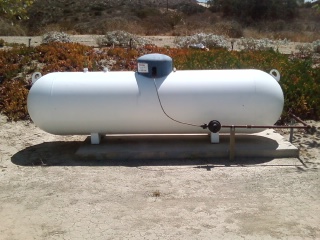
An above-ground tank is generally easier to inspect and maintain. It normally avoids the excavation and burial-corrosion requirements of an underground vessel. The disadvantage is visibility and potential exposure to weather, landscaping equipment, or vehicle movement. I would ask the installer whether traffic protection or a particular foundation is required.
Underground Tanks
An underground-rated tank can be visually unobtrusive, but the installation requires excavation, suitable coatings, corrosion protection, and an accessible service dome. In low-lying areas I would also assess groundwater and buoyancy concerns before choosing burial.
| Feature | Above-ground storage | Underground storage |
|---|---|---|
| Equipment purchase | Generally lower | Generally higher |
| Excavation | Often limited | Required |
| Inspection | Easier to inspect exterior | Specialized maintenance |
| Appearance | Tank remains visible | Mostly concealed |
| Corrosion protection | Exterior finish | Burial-rated coating and protection |
| High groundwater | Site planning needed | Additional buoyancy assessment |
| Flood exposure | Evaluate site and anchoring | Evaluate groundwater and uplift |
What Would I Choose?
If my property had suitable space, I would compare an above-ground installation first because it can reduce site work and make inspection easier. For a home where aesthetics strongly matter, an underground tank may justify a more expensive installation. The supplier should verify drainage, corrosion protection, and flood-site restrictions before approval.
12. Where Can You Refill a Propane Tank in Delaware?
Portable cylinders and large stationary tanks are generally filled in different ways. A grill cylinder may go to a retail refill station; a 500-gallon home tank normally receives bulk delivery at the property.
Propane Refill in Wilmington
U-Haul Moving & Storage of Wilmington advertises propane refills at 2920 Governor Printz Boulevard, Wilmington, DE 19802. Its online listing displayed $3.95 per gallon plus tax when checked for the original research. I would call first, as prices, hours, and eligible cylinder types can change.
Propane Refill Near Dover
For large residential tanks in the Dover area, Sharp Energy and other local fuel dealers advertise delivery services. Kent Oil & Propane is another supplier to investigate near Camden. Verify whether a particular branch offers walk-in cylinder refills or only scheduled deliveries.
Refill Services in Sussex County
Sharp Energy’s Georgetown operation serves Sussex County. Other participating retail locations in or around Milford, Lewes, and Rehoboth Beach may offer cylinder refills, but always confirm the service before making a special trip.
How Much Does a Refill Cost?
Using Delaware’s November 16, 2026 EIA residential average of $3.972 per gallon, the following are calculated fuel expenses before fees or taxes. They are not quotes from individual suppliers.
| Gallons delivered | Fuel cost at $3.972/gal |
|---|---|
| 50 | $198.60 |
| 100 | $397.20 |
| 150 | $595.80 |
| 200 | $794.40 |
| 300 | $1,191.60 |
| 400 | $1,588.80 |
| 600 | $2,383.20 |
| 800 | $3,177.60 |
Cylinder Refill vs. Exchange
A 20-pound propane cylinder contains roughly 4.7 gallons when filled to its nominal propane capacity. At a hypothetical $3.95 per gallon, 4.7 gallons cost about $18.57 before tax. An exchange may provide only 15 pounds in a nominal 20-pound cylinder, so compare the fuel quantity instead of just the transaction price.
My propane refill cost per gallon guide explains these comparisons in more detail.
13. What Are Delaware’s Propane Tank Installation Requirements?
Delaware propane installations fall under its State Fire Prevention Regulations and other applicable construction requirements. The updated fire-prevention regulations took effect January 1, 2026, with references to NFPA standards including NFPA 58. Before buying a tank, I would confirm the current adopted rules with the appropriate authority and the installer.
Do You Need a Permit to Install a Propane Tank?
Delaware DNREC guidance explains that State Fire Marshal tank-plan submissions generally apply to LPG installations other than those serving one- or two-family dwellings. That exception from a particular review process does not waive other applicable installation codes, local permits, gas-piping approvals, or inspection requirements. I recommend contacting the relevant building office and the propane installer before ordering equipment.
Commercial and Community Systems
Retail dispensing, bulk storage, commercial occupancies, and community gas systems may have additional plan-review and protection requirements. I would not assume the residential process applies to these larger or shared systems.
How Far Must a Tank Be From a House?
The correct setback depends on the tank’s capacity, configuration, nearby buildings, adjoining buildable property lines, and code exceptions. For initial discussion only, individual above-ground tanks commonly use the following NFPA 58-style planning references:
| Nominal stationary tank capacity | General planning reference |
|---|---|
| Less than 125 gallons | Special smaller-container provisions |
| 125–500 gallons | Commonly 10 feet |
| 501–2,000 gallons | Commonly 25 feet, with exceptions in specific configurations |
These figures are not an approved Delaware site plan. Other separation rules may apply to underground tanks, tank groups, building openings, sources of ignition, fill points, and particular protected installations. A qualified installer must verify the current code and exact location.
Underground Tanks and Corrosion
Buried tanks must be designed and protected for underground service. Ask the installer about the specified protective coating, cathodic protection, testing, and service-dome accessibility. At coastal sites, groundwater and flooding may also require special attention.
Does Delaware’s Underground Storage Tank Program Regulate Propane?
Delaware DNREC explains that propane is not considered a regulated substance under its Underground Storage Tank program. That does not exempt propane tanks from fire prevention and LPG installation rules. These programs address different hazards.
Can You Install the Tank Yourself?
For a permanent residential system, I recommend a properly qualified propane installer. Regulators, gas piping, connections, clearances, and leak testing need professional evaluation. Mistakes can create fire or gas-leak hazards.
Do Stationary Tanks Need Recertification?
Certain portable DOT cylinders need periodic requalification. Large stationary ASME vessels follow different inspection and service requirements. Read my guide to propane tank recertification for the distinction.
14. Which Propane Tank Brands Are Available in Delaware?
I recommend selecting equipment based on its intended use, certification, warranty, dimensions and the local installer’s ability to maintain it. A famous brand alone does not prove that a particular tank suits your home.
| Brand | Typical product emphasis | What to verify |
|---|---|---|
| Manchester Tank | Portable cylinders and stationary ASME tanks | Model drawing and approved configuration |
| Quality Steel | Stationary storage vessels | Construction, burial rating and warranty |
| Worthington Enterprises | Portable cylinder products | Cylinder rating and compatibility |
| Flame King | Portable and specialty tanks | Intended application and valves |
The company supplying and maintaining a permanent residential tank should confirm the exact product model. Portable cylinders and stationary vessels are not interchangeable simply because their capacities look similar.
15. How Much Does It Cost to Operate a Propane Tank in Delaware?
Fuel consumption may cost more over several years than the original tank. I recommend estimating annual gallons before choosing a vessel or a supply contract.
Propane Consumption Formula
Gallons per hour = appliance BTU input per hour ÷ 91,500.
For example, a furnace with a 90,000 BTU-per-hour fuel input uses around 0.98 gallons per hour while operating at that input. Eight hours of equivalent full-input operation is approximately 7.9 gallons; at $3.972 per gallon, that is roughly $31.38 before applicable charges. Real heating bills depend on insulation, thermostat settings, weather and equipment cycling.
Annual Fuel Expense at One Dated Price
| Annual usage | Cost at $3.972 per gallon |
|---|---|
| 200 gal | $794.40 |
| 400 gal | $1,588.80 |
| 600 gal | $2,383.20 |
| 800 gal | $3,177.60 |
| 1,200 gal | $4,766.40 |
| 1,500 gal | $5,958.00 |
These are calculations using a single November 2026 average, not a forecast of 2027 fuel prices.
Five-Year Ownership Example
Suppose the tank costs $2,900 and delivery/installation allowance is $1,400, for a $4,300 initial outlay. If the home consumes 800 gallons annually at a hypothetical five-year average of $4.00 per gallon, annual fuel is $3,200 and five years of fuel totals $16,000. Total initial equipment plus five-year fuel is therefore $20,300, before taxes, maintenance, additional fees and financing. Compare this with the total cost of a supplier lease.
I would also consider improving insulation, maintaining heating equipment, comparing dealer price plans, monitoring winter levels and retaining signed contracts and delivery receipts.
16. What Size Propane Tank Do You Need for Your Delaware Home?
Square footage alone cannot determine the best tank. A home with electric heating and only a propane range may use far less fuel than a similar-sized house with a propane furnace, water heater, dryer and backup generator.
Cooking, Water Heating and Home Heating
For limited propane demand, I would evaluate 120–250 gallons. For multiple appliances and primary home heating, I would examine 500–1,000 gallons with a qualified installer. Peak demand, cold-weather vaporization and supplier delivery schedules may change the recommendation.
Standby Generator Example
If a particular generator consumes three gallons per hour at a stated load, then 24 hours uses 72 gallons, 48 hours uses 144 gallons, and 72 hours uses 216 gallons. Check the manufacturer’s actual consumption table and add any simultaneous furnace demand before selecting the tank. My propane tank size chart for generators explains how to evaluate generator storage.
500 vs. 1,000 Gallons at Six Gallons Daily
| Planning factor | 500-gallon tank | 1,000-gallon tank |
|---|---|---|
| Propane at 80% | 400 gal | 800 gal |
| Fuel between 80% and 20% | 300 gal | 600 gal |
| Days between deliveries at 6 gal/day | 50 days | 100 days |
| Published new equipment reference | $2,900 | $4,750 |
The larger tank doubles the theoretical interval in this example, but costs more upfront and requires more room. I would ask the installer about peak winter demand and available service access before making that investment.
Buying Checklist
- Confirm tank capacity, model, manufacturer and condition.
- Establish ownership and warranty terms.
- Confirm current local code, permits and placement setbacks.
- Compare above-ground and underground site costs.
- Check regulators, piping, appliance demand and vaporization.
- Verify winter delivery access and the dealer’s service area.
- Request the propane price, contract terms and maintenance responsibilities in writing.
- Confirm that the intended supplier accepts customer-owned or refurbished equipment.
17. Frequently Asked Questions About Propane Tanks in Delaware
How Much Does a 500-Gallon Tank Cost in Delaware?
A published new-equipment reference is $2,900 for an above-ground model. Actual Delaware delivery, installation, and fuel prices require local quotations.
How Much Does a 250-Gallon Tank Cost?
A published equipment reference is approximately $1,950 for a new above-ground vessel, excluding local installation.
How Much Does a 1,000-Gallon Tank Cost?
BLT Tanks publishes a new-equipment price reference of approximately $4,750 for an above-ground model. That does not include Delaware transportation or installation.
Where Can I Buy a Propane Tank Near Me?
Sharp Energy, Delaware Propane, Schagrin, PepUp, and Kent Oil & Propane advertise propane services in the state. Contact each company for service area, tank availability, and ownership options.
What Is the Average Residential Propane Price in Delaware?
The EIA reported $3.972 per gallon for the week of November 16, 2026, excluding taxes. It’s a dated statewide survey average, not a guaranteed retailer price.
Do I Need a Permit for My Residential Tank?
Delaware State Fire Marshal plan review generally excludes LPG storage serving one- and two-family homes, but other approvals and safety rules may apply. Ask the installer and relevant local authority.
How Far Does a Tank Have to Be From the House?
It depends on capacity, installation, and applicable exceptions. Don’t rely on a generic setback chart as final approval; ask your qualified installer to verify NFPA 58-based requirements for your property.
Can I Install a Propane Tank Underground?
Yes, if the tank and site are suitable and the installation complies with applicable requirements. Groundwater, flooding, corrosion protection, and accessible fittings deserve particular attention in Delaware.
Can I Buy a Used Propane Tank?
Yes, but confirm legal ownership and have the proposed fuel supplier assess condition and installation suitability before paying.
Does a Tank Expire After 12 Years?
Some portable DOT propane cylinders have periodic requalification requirements. Stationary ASME tanks follow different inspection and service rules.
Is Buying Better Than Leasing?
Buying may offer greater ownership flexibility, while leasing may reduce upfront costs. Compare five-year fuel expenses, rental terms, maintenance, and termination charges.
18. Final Thoughts: Choosing the Best Propane Tank in Delaware
If you’re buying a propane tank in Delaware, I recommend starting with actual appliance demand, property layout and delivery reliability. A 120- or 250-gallon tank may be suitable for modest cooking and water-heating needs. A 500-gallon system offers more storage for multiple appliances, while a 1,000-gallon tank is worth considering for substantial heating demand or less convenient winter deliveries.
Capacity is only one factor. Compare fuel pricing, buying versus leasing, the contractor’s installation plan, town permits, safe placement, winter vaporization and the supplier’s ability to service the equipment.
The most useful propane tank is not necessarily the biggest or cheapest: it is the one that meets your fuel demand safely, fits your property and has manageable lifetime costs.

Mike is an experienced propane technician with over 15 years of professional experience in the field. He has dedicated his career to helping customers with their propane needs, from installation to maintenance and repair. Together with Jeremy, he co-founded this website to provide useful information and guidance to customers seeking reliable propane services.