

If you’re planning to install a propane tank in Montana, I’ll help you understand installation expenses, required permits, safety clearances, and the regulations that may apply to your property.
Whether you live in Billings, Bozeman, Missoula, Helena, or a remote mountain community, the installation cost depends on your tank’s location, soil conditions, gas piping, and accessibility.
In this guide, I’ll focus on what happens after you’ve selected a tank: site preparation, professional installation, above-ground versus underground placement, inspections, and the rules you should check before work begins.


Quick Answer: What Does Propane Tank Installation Cost in Montana?
For planning purposes, a relatively straightforward above-ground installation may involve approximately $600–$2,500 in installation-related expenses, while a more complex underground project can cost several thousand dollars more. These figures exclude the purchase of the tank and propane fuel.
National installation estimates published in 2026 commonly place residential installation work around $600–$2,500, with excavation and longer gas lines increasing the cost. Montana properties can be more expensive when the installer encounters rocky terrain, steep slopes, long driveways, or difficult winter access.
Installation Cost Breakdown
These are broad budgeting allowances, not a Montana contractor’s price list. Some expenses overlap in a packaged quotation and should not automatically be added together.
My recommendation: Before purchasing equipment, ask a local propane installer to inspect your site. Request a written quotation identifying the tank location, foundation, piping length, permits, testing, and all work included.


What Determines the Final Installation Cost?
I would look at five factors first: the installation type, distance to the house, terrain, local permitting requirements, and whether appliances are already connected to propane. An above-ground tank installed near a house with suitable access may be relatively straightforward.
A buried tank located far from the building could involve excavation, specialized equipment, corrosion protection, and significantly more labor. The installation should be priced as a complete system rather than simply as the cost of setting a tank on the ground.
What Does an Above-Ground Installation Include?
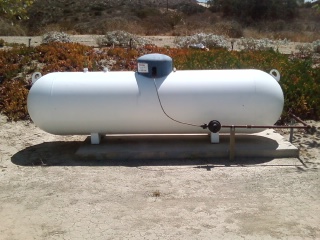
An above-ground installation generally involves preparing a suitable location, positioning the tank on approved supports, installing regulators and piping, and completing safety checks. I recommend confirming the work included before accepting a quotation.
Site Evaluation
The installer should examine the proposed location and determine whether it meets the applicable safety clearances. The evaluation may include distance to the building, property lines, ignition sources, windows, ventilation openings, and other hazards. The supplier should also assess whether its delivery truck can safely reach the tank.
Foundation and Supports
Stationary tanks need stable supports suitable for the equipment and ground conditions. Depending on the vessel and approved design, the installation may use manufactured supports, concrete pads, or another suitable foundation. For a sloped property, additional leveling and ground preparation may be necessary.



Regulator and Piping Installation
The propane supply system must deliver fuel at the required pressure. The installer selects regulators and piping according to the appliances’ input demand and the length of the piping run. I would ask whether the quote includes all regulators, shutoff valves, fittings, and connections.
Inspection and Testing
Before the system is placed into service, the installer should complete the required pressure and leak checks and verify safe operation. I wouldn’t accept an installation without understanding which inspections and tests have been performed.
Example: Installing a 500-Gallon Tank Beside a Rural Home
Suppose you already own an approved 500-gallon tank and need it installed at a single-family residence. The proposed location has good access, relatively level ground, and a moderate distance to the home.
Illustrative Installation Budget
This worked example excludes the tank purchase, fuel, taxes, and permit fees. The amounts are assumptions for illustrating a budget, not contractor quotations.


What Could Make This Project More Expensive?
If the installer encounters bedrock, needs a longer trench, or cannot reach the site with ordinary equipment, additional charges may apply. If the property is already equipped with compliant propane piping, the cost may be lower. I would have the installer inspect the site rather than relying on estimates based only on tank size.
What Does an Underground Installation Involve?
Underground propane storage is possible where the property, equipment, and applicable codes allow it. However, burying a tank involves more work than setting an above-ground vessel on prepared supports. The tank must be specifically approved for underground installation.
Excavation
The excavation must accommodate the tank, approved bedding, access to fittings, and any required anchoring. The precise dimensions depend on the manufacturer’s instructions and installation design. I would not excavate until the installer approves the location.
Corrosion Protection
Buried metal equipment requires appropriate corrosion protection. This can include protective coatings and cathodic protection using a suitable anode system. The installer must determine the applicable testing and maintenance requirements.
Groundwater and Drainage
Water accumulation can create corrosion and flotation concerns. If groundwater rises around an inadequately secured underground tank, buoyancy can cause movement. I would ask whether the proposed installation needs engineered restraints or additional drainage measures.
Underground Installation Budget Example
Suppose the tank is already purchased.
This is a hypothetical example for planning. It is not a statewide average or confirmed installed price. The actual expense may be substantially different depending on soil, groundwater, tank design, and access.
Would I Choose an Underground Tank?
For a property where appearance is important, underground storage may be worth investigating. However, Montana’s rocky terrain and variable ground conditions can make excavation expensive. I would compare the full installed quotations for both configurations before deciding.
How Do Montana’s Ground Conditions Affect Installation?
Montana’s geography can have a significant effect on propane installation. A flat property near a city may have entirely different installation requirements from a mountain residence accessed by a steep gravel road.
Rocky Soil and Bedrock
Rock can make excavation more difficult. A trench that is straightforward in ordinary soil may require specialized equipment when bedrock is encountered. I recommend discussing potential rock-excavation charges before signing the contract.
Sloped Properties
Slopes can affect foundation design and the safe movement of installation equipment. A tank must be placed on an appropriately prepared, stable support system. I wouldn’t use loose blocks or improvised leveling materials.
High Groundwater
Some sites have seasonal groundwater or drainage problems. This deserves particular attention for underground tanks and buried piping. The contractor should evaluate the site before finalizing the excavation design.
Remote Access Roads
Delivery vehicles need suitable access. Steep driveways, narrow turns, low branches, and limited turnaround space may complicate transportation and unloading. For remote properties, I would ask the supplier to inspect the route before delivery.
Site Condition Comparison
Do You Need a Permit to Install a Propane Tank in Montana?
Permit requirements depend on the installation, the jurisdiction, and the type of work being performed. Montana does not have one universal residential propane-tank permit fee or approval process that applies identically to every property.
The Montana Department of Labor & Industry administers statewide building-code programs, while certified local governments may enforce applicable codes within their jurisdictions. The Montana State Fire Marshal and local fire authorities also have roles in fire-safety regulation.
State Mechanical Permits
Montana’s Building Codes Program explains that mechanical permitting and inspection cover heating equipment and gas piping in applicable projects. The state requires mechanical permits for certain new buildings, alterations, additions, and repairs within its jurisdiction. For other locations, the local permitting authority may handle the work. I recommend contacting the Building Codes Program or local building department to identify the correct jurisdiction.
Local Fire Department Approval
Fire departments may review propane tank placement, storage arrangements, or related equipment. For example, the City of Livingston publishes an LPG tank installation application requiring information about the proposed work and applicable NFPA 58 standards. This illustrates why I wouldn’t assume that approval in one Montana municipality automatically applies in another.
Permit Checklist
Not every listed permit applies to every residential project.
When Should You Apply?
I would confirm permits before ordering equipment or beginning excavation. Starting work before approval can result in delays, additional expenses, or required corrections. Ask the installer whether the permit application and inspection appointments are included in the quoted services.
Which State Codes Govern Propane Installation?
Montana’s construction rules have undergone important updates. The Department of Labor & Industry lists the 2024 International Fuel Gas Code, International Mechanical Code, International Residential Code, and International Building Code, effective September 26, 2026, with Montana amendments. These codes govern relevant aspects of fuel-gas systems, building construction, and mechanical equipment.
The fire code is administered separately under Montana’s fire-prevention framework, with the 2024 International Fire Code rulemaking occurring in 2026 and local adoption and enforcement requiring attention. I recommend verifying the applicable code edition with the authority responsible for your installation.
NFPA 58 and LPG Storage
NFPA 58, the Liquefied Petroleum Gas Code, addresses propane storage, handling, transfer, and installation. The applicable fire and fuel-gas codes reference requirements for LPG systems. For installation planning, NFPA 58 is particularly important for tank location, separation distances, equipment, and protection.
International Fuel Gas Code
The fuel-gas code addresses system design, gas piping, regulators, appliance connections, and related safety requirements. I would ask the installer to identify which code provisions govern the piping and connected appliances.
State Amendments and Local Rules
Montana amendments can change how a model code applies. Local governments may also have their own approved code adoption and administrative requirements. I wouldn’t rely solely on a generic national installation chart.
Regulatory Reference Table
How Far Must a Propane Tank Be From a House?
One of the most important installation decisions is selecting a code-compliant location. The required distance depends on the tank’s water capacity, installation configuration, nearby buildings, property lines, and ignition sources.
General Separation Planning
For certain individual above-ground stationary vessels, commonly referenced NFPA 58 planning distances include:
This is a simplified planning reference, not a complete installation approval table. Specific provisions can differ for underground tanks, multiple vessels, openings, ignition sources, and other site conditions. I would never place the tank based on this table alone.
Distance to Property Lines
The code may require separation from adjoining property lines that can be built upon. This is particularly important on smaller residential lots. Before installation, I would mark the proposed tank location and have the contractor verify the required clearances.
Distance to Ignition Sources
Equipment such as air-conditioning units, electrical devices, and mechanical ventilation openings may affect placement. The applicable rules can specify additional clearances for filling connections and other tank components. The installer should review these separately from the general tank-to-building distance.
Why Would I Request a Site Plan?
A simple plan showing the tank, home, boundaries, openings, and gas piping can prevent misunderstandings. It also helps with permit review and installation quotations.
Can You Install a Tank Near a Garage or Detached Building?
A propane tank may be installed near a garage, workshop, barn, or detached building when the arrangement meets applicable safety requirements. However, the distance to the structure is only one consideration.
The installer must also examine property boundaries, windows, air intakes, ignition sources, and the intended use of the building. For a workshop, I would pay particular attention to welding equipment, electrical machinery, and vehicle traffic. If the tank serves several buildings, the piping system needs to be sized for the combined appliance load.
Multiple-Building Installation Checklist
I recommend including future buildings and planned equipment in the initial design when practical. Moving a tank later can involve disconnection, transportation, new piping, and retesting.
What Are the Rules for Buried Gas Lines?
A stationary propane tank often connects to a house through a buried gas line. The line must be suitable for propane service and installed according to the applicable fuel-gas requirements. I would never use ordinary water piping or improvised fittings for a propane installation.
Approved Piping Materials
The contractor should select piping specifically approved for the intended gas service. Depending on the approved system, materials may include suitable polyethylene gas piping, protected metallic piping, and appropriate transition fittings. Piping materials must match the installation design and code requirements.
Trench Depth
Burial depth depends on the applicable code, piping material, location, and site conditions. For example, a line passing beneath an area subject to vehicle loads may need a different installation arrangement from one crossing an ordinary lawn. I recommend having the installer specify the required depth rather than choosing a universal trench measurement.
Utility Location
Before digging, I would contact Montana 811 and arrange for buried utilities to be marked. This helps identify participating utilities’ lines and reduce the risk of damaging electrical, communications, water, or gas infrastructure. Private lines may require a separate locator.
Piping Cost Example
Suppose the tank is placed 60 feet from the building. Using a hypothetical installed allowance of $20 per foot:
60 × $20 = $1,200.
At a higher allowance of $35 per foot:
60 × $35 = $2,100.
These are budgeting scenarios, not contractor quotes or standard state rates. Actual costs depend on the terrain, material, depth, fittings, and excavation. For expensive or difficult ground conditions, I would request a clearly separated piping and trenching quotation.
What Inspections Are Required Before Using the Tank?
I recommend treating inspection and testing as essential parts of the installation rather than optional services. A new system should not be placed into operation until the necessary checks are completed.
Pressure Testing
The installer should perform the tests required by the applicable fuel-gas code and installation design. This helps identify unacceptable leakage or other defects in the new piping system.
Leak Checking
Connections, valves, regulators, and applicable components should be checked using approved methods. I would ask the technician to explain the testing completed before fuel service begins.
Regulator Verification
The installer should confirm that the regulators supply the correct pressure for the system. Incorrect pressure can interfere with appliance operation and create serious safety hazards.
Appliance Startup
If the installation includes a new furnace, water heater, range, or generator, the equipment should be placed into service by a qualified professional following the manufacturer’s instructions. The installation should also include appropriate combustion and ventilation safety checks.
Final Inspection Checklist
For owners planning a future inspection or service visit, my propane tank recertification guide explains the distinction between portable-cylinder requalification and stationary-tank servicing. I would keep copies of installation documents and inspection records. They may be useful when changing fuel suppliers, selling the property, or replacing equipment.
What Regulations Apply to Underground Tanks?
Underground propane installations deserve additional attention because the vessel is exposed to soil and groundwater. The installer must use equipment approved for burial and follow the applicable tank-manufacturer and code requirements.
Corrosion Protection
Buried metal vessels generally require suitable corrosion protection. A system may include coatings and cathodic protection designed to reduce deterioration. I recommend asking how the system will be inspected and tested after installation.
Tank Access
Underground tanks must retain approved access to the fittings and service components. The installer should ensure the access arrangement is appropriate for the site and protected from damage.
Groundwater and Buoyancy
High groundwater can create an upward force on a buried vessel. The installation design may require appropriate restraint or anchoring to prevent movement. I would have this issue evaluated rather than assuming a filled tank will remain stationary.
Is a Separate Environmental Storage-Tank Permit Required?
Montana’s Department of Environmental Quality administers regulatory programs for certain underground petroleum storage tanks. However, a conventional residential propane storage vessel should not automatically be classified as a regulated petroleum underground storage tank under those programs. The rules governing LPG storage and the rules governing regulated liquid petroleum storage are different.
I recommend confirming which regulatory program applies if the project involves an unusual commercial storage arrangement, multiple fuels, or specialized underground equipment.
How Does Montana’s Winter Weather Affect Installation?
Cold weather matters because propane pressure and vaporization capacity decrease as temperatures fall. A tank that stores enough gallons may still struggle to supply sufficient vapor for high-demand appliances in extremely cold conditions. I recommend discussing winter performance during the equipment-sizing process.
Does Propane Freeze?
Pure propane freezes at approximately minus 306°F, far below normal winter temperatures. Reduced vapor pressure and vaporization are much more practical concerns.
Why Does Tank Capacity Matter?
The system’s vaporization capacity depends on tank size, liquid level, surface area, and surrounding temperature. A larger tank may have an advantage under some conditions, but the correct design should be based on the connected equipment. For example, a furnace and standby generator operating simultaneously can require substantially more fuel vapor than a stove and water heater.
Winter Installation Considerations
Should You Install Before Winter?
When possible, I would schedule installation before the ground freezes and heavy snow arrives. This may reduce excavation complications and give the installer more flexibility. However, year-round installation may be possible when conditions and equipment allow.
What About Propane Tanks for Cabins and Remote Properties?
Cabins, ranches, and remote mountain homes can have different installation needs from suburban residences. The biggest challenge may be getting equipment and fuel to the property safely.
Long Driveways
A propane delivery truck requires suitable access and an appropriate location from which to fill the tank. I would ask the supplier whether the road width, slope, and turnaround area are adequate. If you are comparing portable and permanent storage, see my propane tank versus cylinder guide.
Seasonal Properties
A seasonal cabin may use relatively little propane, but winter freeze protection can still create fuel demand. The installation should be designed for the actual appliance requirements.
Off-Grid Homes
An off-grid home may use propane for cooking, water heating, refrigeration, space heating, or backup electricity. I would calculate total fuel demand before choosing a storage system.
Installation Decision Guide
For remote sites, I would request an in-person installation assessment instead of relying only on photographs.
Can You Install a Tank for a Standby Generator?
Yes. Propane tanks can supply properly designed standby-generator systems. However, generator installations may involve additional gas piping, mechanical, electrical, and other permit requirements. I recommend coordinating the propane installer and generator contractor before construction begins.
Estimate the Required Fuel Supply
Suppose a generator consumes 2.5 gallons of propane per hour at the expected electrical load.
These are hypothetical calculations. Use the generator manufacturer’s actual fuel-consumption specifications for the final design.
Don’t Overlook Peak Demand
The piping and regulator system must be capable of supplying the generator at the required pressure and maximum fuel demand. If the same tank supplies heating appliances, the installer should account for simultaneous operation.
For more information, read my propane tank size chart for generators.
Who Installs Propane Tanks in Montana?
I would begin with an established propane supplier that serves the property’s location. Several Montana companies advertise residential tank installation or related propane services.
Rocky Mountain Propane
Rocky Mountain Propane advertises residential and commercial tank installation in south-central Montana, including the Bozeman, Belgrade, Three Forks, Ennis, and Billings areas.
CHS Mountain West
CHS Mountain West advertises propane supply in northwest Montana, including tank purchase and lease options. I would ask which installation services are included in its customer arrangements.
PSI Propane
PSI Propane advertises above-ground and underground tank installation, exterior gas lines, maintenance, and safety checks in its Butte service area.
Montana Propane
Montana Propane, based in the Helena area, advertises tank and appliance installation, service, and propane delivery.
Polson Propane
Polson Propane advertises tank placement, regulators, new copper connections, leak checks, and service for new installations in its service area.
Installer Comparison
Service availability and equipment offerings should be verified directly for the property.
Questions I Would Ask the Installer
I would ask whether the company handles permits, excavation, delivery, piping, regulators, testing, and initial setup. I would also ask which tasks are excluded from the quotation. A less expensive bid may not be better if important work is charged separately.
How Can You Reduce Installation Expenses?
I recommend looking for savings in the installation design rather than compromising safety.
Compare Itemized Quotations
Request two or three quotations that cover the same work. Separate equipment, site preparation, piping, permits, and labor so the totals can be compared fairly.
Choose an Accessible Location
A location with suitable truck access may reduce handling and mobilization expenses. However, code clearances and safety requirements should always take priority.
Avoid Unnecessarily Long Gas Lines
Additional piping increases material and labor costs. I would work with the installer to select an efficient, code-compliant location.
Coordinate Excavation
If the property is already undergoing approved construction or utility work, coordinating site activities may reduce duplicate mobilization. Do not place gas piping in a shared trench unless the applicable separation and installation requirements are satisfied.
Evaluate Leasing
Some suppliers may provide installation incentives or reduced upfront equipment expenses under a tank lease. I would compare the contract’s total cost, including rental charges and fuel supplier restrictions.
Installation Savings Checklist
Can You Reuse or Relocate an Existing Propane Tank?
An existing stationary tank may be suitable for reuse if its condition, design, ownership, and proposed installation meet applicable requirements. However, I would not assume that an older vessel is suitable simply because it previously held propane. I would begin with a qualified professional’s inspection.
Before Reusing a Tank
Have a qualified professional evaluate the manufacturer plate, corrosion, fittings, valves, damage, and service history. The installer should also confirm that the intended fuel supplier will accept the vessel. For cylinder-specific requirements, see who recertifies propane tanks.
Before Moving a Tank
Verify ownership and arrange professional disconnection and transportation. A large propane tank must not be treated as ordinary household equipment. Its contents, pressure, and weight create significant hazards.
Replacement vs. Relocation
For additional information, see my guide to propane tank replacement intervals.
Installation Checklist Before You Hire a Contractor
Before paying a deposit, I would confirm the following:
- The tank model is approved for its intended installation.
- The proposed location meets required clearances.
- The correct permitting jurisdiction has been identified.
- Necessary permits and inspections are included or clearly assigned.
- Excavation and foundation requirements are documented.
- The installer has assessed drainage and groundwater.
- Underground corrosion protection is included where necessary.
- Gas piping and regulators are correctly specified.
- The quotation identifies the length and materials of the gas line.
- Delivery and unloading arrangements are confirmed.
- The installer has evaluated winter fuel demand.
- Pressure testing and leak checks are included.
- Appliance startup and coordination are addressed.
- Ownership and warranty terms are clear.
- Future service and maintenance responsibilities are identified.
I would keep a copy of the final site plan, permit approvals, equipment details, and testing documentation.
Frequently Asked Questions About Installation and Regulations
Do You Need a Permit for a 500-Gallon Propane Tank?
Permit requirements depend on the property’s jurisdiction and installation work. Contact the local fire authority and the responsible building or mechanical permitting office before installation.
Can You Bury a Propane Tank?
Yes, when the vessel is approved for underground service and the installation meets applicable code, corrosion-protection, and site requirements.
Can a Propane Tank Be Installed Beside a House?
Only when all required separation distances and other safety provisions are satisfied. The installer must verify the actual placement.
Does Montana Follow NFPA 58?
Applicable fire and fuel-gas codes reference propane installation and storage standards, including NFPA 58. Confirm the adopted requirements and any amendments with the authority having jurisdiction.
What Building Codes Apply in 2027?
Montana lists the 2024 International Fuel Gas Code and related 2024 construction codes as effective September 26, 2026. Fire-code and local-enforcement provisions should also be verified for the particular project.
Do Underground Tanks Require Corrosion Protection?
Yes. Buried metal propane equipment requires suitable corrosion protection according to the applicable installation requirements.
Can I Install My Own Propane Tank?
For a permanent stationary residential system, I recommend qualified professional installation and compliance with all applicable permits, testing, and safety requirements.
Can You Put a Tank on a Hill?
A sloped property may be suitable if the foundation, access, stability, and required clearances are properly addressed by the installation design.
What Happens If I Move a Tank Without Permission?
Moving supplier-owned equipment without authorization can create ownership and contractual problems as well as serious safety hazards. Arrange professional handling and obtain the necessary approval.
Does a New Installation Need a Leak Test?
Applicable gas-system requirements include inspection and testing. The installer should complete the required safety checks before the system enters service.
Can You Install a Tank in Winter?
Installation may be possible, but frozen ground, snow, and limited access can increase the difficulty and expense.
Is Underground Installation Always More Expensive?
It generally requires more excavation and protection work, although actual differences depend on the property and installation scope.
Can I Use a Refurbished Tank?
Potentially, if it is suitable for continued use and accepted by the installer and propane supplier after the necessary inspection.
Should I Choose the Tank Location Myself?
You can suggest a location, but a qualified installer should verify code compliance, delivery access, and system design before work starts.
Final Thoughts: Planning a Safe Installation in Montana
If you’re installing a propane tank in Montana, I recommend beginning with the property rather than focusing only on equipment.
The installation location, terrain, piping distance, permits, and professional labor can significantly affect the total cost.
For a relatively accessible residential property, an above-ground installation may be simpler and less expensive. For a property where underground storage is preferred, I would evaluate excavation conditions, corrosion protection, groundwater, and long-term maintenance.
Before starting work, confirm the applicable state and local codes, obtain an itemized quotation, and have the site evaluated by a qualified propane professional.
A well-planned propane installation should provide safe fuel storage, dependable appliance operation, practical delivery access, and fewer unexpected expenses over the years.

Mike is an experienced propane technician with over 15 years of professional experience in the field. He has dedicated his career to helping customers with their propane needs, from installation to maintenance and repair. Together with Jeremy, he co-founded this website to provide useful information and guidance to customers seeking reliable propane services.