

If you’re planning to buy or lease a propane tank in Nevada, I’ll help you compare equipment prices, installation expenses, and delivery options, especially if your property is outside a major city.
Whether you live in Las Vegas, Reno, Pahrump, Elko, Ely, or a remote desert community, choosing the right tank depends on your fuel consumption, distance from a supplier, and local installation requirements.
In this guide, I’ll explain how much different tank sizes cost, where to find propane suppliers, how rural delivery works, and what regulations you should check before installation.


Quick Answer: How Much Do Propane Tanks Cost in Nevada?
A new stationary propane tank has published equipment-price estimates of approximately $985 for a 120-gallon model, $1,950 for a 250-gallon tank, $2,900 for a 500-gallon tank, and $4,750 for a 1,000-gallon tank. These prices exclude delivery, installation, and propane fuel.
These are equipment references published by BLT Tanks in Oklahoma, not confirmed prices from Nevada dealerships.
| Tank size | Above-ground equipment price | Propane at 80% fill |
|---|---|---|
| 120 gallons | $985 | 96 gallons |
| 250 gallons | $1,950 | 200 gallons |
| 320 gallons | $2,350 | 256 gallons |
| 500 gallons | $2,900 | 400 gallons |
| 1,000 gallons | $4,750 | 800 gallons |
Unlike many other states, Nevada is not included in the U.S. Energy Information Administration’s weekly state residential propane price survey.
Therefore, I won’t present a nationwide or neighboring-state average as an official Nevada price.


For budgeting, a hypothetical delivered price of $3.00 per gallon would make a 400-gallon fill cost $1,200 and an 800-gallon fill cost $2,400. Your actual price could be higher or lower.
My recommendation: Compare 250- and 500-gallon tanks for moderate residential use. If you heat a rural home with propane or rely on a standby generator, compare 500- and 1,000-gallon tanks. Before purchasing, verify the supplier’s delivery territory, equipment ownership terms, and required installation approvals.
Pricing note: This 2027 guide uses equipment references available in November 2026. All fuel-price scenarios are hypothetical unless specifically identified as verified quotations.
What Propane Tank Sizes Are Available?
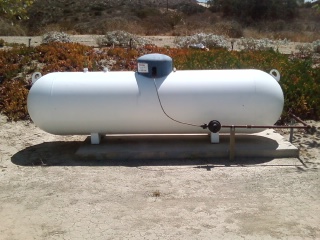
Propane containers range from small portable cylinders used for camping to large stationary vessels serving homes and commercial equipment. Portable cylinders are usually described by their propane capacity in pounds. Stationary tanks are normally described by their water capacity in gallons.
Propane Tank Size Chart
| Tank size | Approximate propane capacity | Typical application |
|---|---|---|
| 20-pound cylinder | 4.7 gallons | Grills |
| 30-pound cylinder | 7.1 gallons | RVs |
| 100-pound cylinder | 23.5 gallons | Auxiliary appliances |
| 120-gallon stationary tank | 96 gallons | Cooking and hot water |
| 250-gallon stationary tank | 200 gallons | Moderate residential demand |
| 320-gallon stationary tank | 256 gallons | Multiple appliances |
| 500-gallon stationary tank | 400 gallons | Residential heating |
| 1,000-gallon stationary tank | 800 gallons | Larger homes and generators |
These stationary capacities assume a typical 80% liquid fill for planning.



Why Are Tanks Filled to Approximately 80%?
Propane expands when its temperature rises. Stationary tanks need appropriate vapor space to accommodate liquid expansion. For example, a 500-gallon vessel commonly holds approximately 400 gallons of liquid propane at an 80% fill.
What Size Would I Choose?
For cooking and limited water heating, I would investigate a 120- or 250-gallon tank. For a full-time home using propane heating, I would compare 500- and 1,000-gallon options. For a rural property, delivery frequency becomes particularly important. A larger tank may help reduce how often the supplier must travel to your location.
How Much Does a 500-Gallon Propane Tank Cost?
A 500-gallon tank is a practical option for homes using propane for several appliances, heating, or standby generators. At an 80% fill, it contains approximately 400 gallons.
500-Gallon Tank Price Comparison
| Equipment | Published price estimate |
|---|---|
| New above-ground tank | $2,900 |
| New underground tank | $3,325 |
| Refurbished above-ground tank | $1,575–$1,895 |
The refurbished range comes from an October 2026 equipment advertisement. These are out-of-state equipment references, not Nevada installed quotations.


How Much Does It Cost to Fill?
Because a verified statewide price is unavailable, I would calculate several scenarios.
| Hypothetical price per gallon | 400-gallon delivery |
|---|---|
| $2.50 | $1,000 |
| $3.00 | $1,200 |
| $3.50 | $1,400 |
| $4.00 | $1,600 |
| $4.50 | $1,800 |
These are examples, not observed local rates.
How Long Does a 500-Gallon Tank Last?
Suppose your household consumes five gallons daily. A full 400-gallon supply theoretically lasts 80 days. However, I recommend scheduling delivery before the tank is empty. Between 80% and a planned 20% refill level, approximately 300 gallons are available.
300 ÷ 5 = 60 days between planned deliveries.
For a remote property, I would choose a reorder point that accounts for possible delivery delays.
Is a 1,000-Gallon Tank Worth Buying?
A 1,000-gallon tank provides considerably more fuel storage. This may be useful for ranches, off-grid properties, high-demand homes, and remote locations where deliveries are infrequent. At an 80% fill, it holds approximately 800 gallons.
Large Tank Price Comparison
| Equipment | Published price estimate |
|---|---|
| New above-ground tank | $4,750 |
| New underground tank | $5,250 |
| Refurbished tank | $2,755–$3,195 |
Full Refill Cost Scenarios
| Hypothetical price per gallon | 800-gallon delivery |
|---|---|
| $2.50 | $2,000 |
| $3.00 | $2,400 |
| $3.50 | $2,800 |
| $4.00 | $3,200 |
| $4.50 | $3,600 |
How Long Does a 1,000-Gallon Tank Last?
Suppose a household uses eight gallons daily. The 600 gallons available between 80% and 20% would last: 600 ÷ 8 = 75 days.
Under the same conditions, a 500-gallon tank would provide approximately 37.5 days between those levels.
Would I Choose This Capacity?
For a remote location with high fuel consumption, I would strongly consider comparing the larger tank. However, the decision should include installation expenses, supplier delivery schedules, and the actual amount of fuel needed annually. A tank that is too large can create unnecessary upfront expense.
How Much Does a 250-Gallon Tank Cost?
A 250-gallon tank can be suitable for smaller homes, cabins, and properties using propane for cooking and water heating. It holds approximately 200 gallons at an 80% fill.
Equipment and Fuel Comparison
| Item | Amount |
|---|---|
| New above-ground equipment | $1,950 |
| New underground equipment | $2,325 |
| Refurbished equipment | $795–$1,095 |
| Propane at 80% | 200 gallons |
| Fill cost at hypothetical $3/gal | $600 |
How Long Does It Last?
Suppose your home consumes 40 gallons monthly. A full 200-gallon supply theoretically represents five months of fuel. Between an 80% fill and a 20% reorder point, approximately 150 gallons are available.
150 ÷ 40 = 3.75 months between planned deliveries.
For low-consumption households, this size may be economical. However, for rural properties requiring several long-distance deliveries each year, I would compare the total delivery expenses with a larger tank.
Where Can You Buy Propane Tanks in Nevada?
There are local and regional suppliers serving different parts of the state. Some sell stationary tanks outright, while others primarily lease equipment. Before purchasing a tank from an outside seller, I recommend confirming that your intended propane company will install and refill it.
Wells Propane — Elko and Northern Eureka County
Wells Propane advertises residential and commercial propane delivery, tank installation, gas-line installation, and appliance services. Its stated service territory includes Elko and northern Eureka County. For a property in northeastern Nevada, I would ask about available tank sizes, delivery routes, and winter service.
Western State Propane — Elko Area
Western State Propane provides propane-related services in northeastern Nevada. The company advertises pricing and delivery arrangements for customers in communities including Elko. I would contact it for information about customer-owned tanks, rental terms, and service coverage.
Suburban Propane — Elko and Other Communities
Suburban Propane advertises residential delivery, tank installation, and emergency service in Elko. The company’s locations also include other Nevada communities. I would confirm the specific office handling your ZIP code and request a written equipment quotation.
Delta Liquid Energy — Pahrump and Nye County
Delta Liquid Energy advertises propane delivery and both above-ground and underground tank installation for customers in the Pahrump and Nye County area. For a desert property near Pahrump, I would ask about delivery territory, excavation, and installation approvals.
AmeriGas — Selected Nevada Locations
AmeriGas has service-location listings associated with areas such as North Las Vegas, Pahrump, and Winnemucca. I would verify current service coverage and inquire about tank leasing, delivery scheduling, and equipment installation.
Supplier Comparison
| Supplier | Area to investigate | Services to confirm |
|---|---|---|
| Wells Propane | Elko and northern Eureka County | Tank and gas-line installation |
| Western State Propane | Elko and surrounding communities | Residential delivery and equipment |
| Suburban Propane | Elko and other serviced areas | Delivery and tank installation |
| Delta Liquid Energy | Pahrump and Nye County | Above-ground and underground installation |
| AmeriGas | Selected urban and rural locations | Delivery and leasing arrangements |
These are supplier leads, not guarantees of inventory, pricing, or delivery to every address.
What Should You Ask Before Buying?
I would ask whether the supplier sells tanks outright, accepts privately owned tanks, provides installation, and services your exact property. For rural addresses, ask about delivery minimums, travel charges, winter access, and emergency service.
For more information about container differences, read my propane tank versus cylinder guide.
How Does Rural Propane Delivery Work?
Rural delivery can be one of the most important factors when choosing propane storage. Many Nevada properties are located substantial distances from major population centers. A supplier may have to travel long distances along highways, desert roads, or private access routes. I would investigate delivery logistics before deciding on tank capacity.
Automatic Delivery
With automatic delivery, the propane company estimates or monitors fuel consumption and schedules refills. This can be convenient for a full-time home. However, customers in remote locations should confirm whether automatic delivery is available.
Will-Call Delivery
With will-call service, you monitor the tank gauge and request fuel when needed. This gives you more control over ordering but requires planning. For a rural property, I would request delivery before reaching a low fuel level.
Rural Delivery Comparison
| Factor | Urban property | Remote property |
|---|---|---|
| Supplier choice | May have more options | Often fewer |
| Delivery distance | Generally shorter | Can be substantial |
| Delivery scheduling | Route dependent | Advance planning important |
| Road access | Often straightforward | May require site assessment |
| Emergency delivery | Supplier dependent | May be limited |
| Tank size | Based mainly on use | Also influenced by delivery frequency |
Do Rural Suppliers Charge More?
Some suppliers may charge delivery fees, small-order premiums, or other fees depending on their policies. However, I wouldn’t assume every rural customer pays more per gallon. Instead, I would request an itemized delivered price for the actual address and order size.
Propane Delivery in Elko, Ely, Winnemucca and Remote Areas
The state covers a large geographic area, so service availability depends heavily on location.
Elko and Spring Creek
Wells Propane, Western State Propane, and Suburban Propane are among the suppliers worth investigating. I would compare installation, equipment ownership, and refill options.
Ely and White Pine County
Suburban Propane has a listed service presence in Ely. For properties farther from town, I would confirm delivery mileage and minimum orders.
Winnemucca and Humboldt County
AmeriGas has a location listing associated with Winnemucca. I would also investigate independent dealers serving nearby rural communities.
Pahrump and Nye County
Delta Liquid Energy and other regional suppliers provide propane-related services in this area. For a home outside the main developed areas, I would discuss road access and installation requirements.
Reno, Sparks and Carson City
Northern Nevada has regional propane providers serving urban, suburban, and surrounding rural areas. I would compare delivery programs and ask about service to nearby communities such as Fernley, Fallon, and rural Washoe County.
Las Vegas and Clark County
Homeowners using propane outside natural-gas service areas should compare tank installation and delivery companies serving their specific location. Local fire and building requirements also deserve special attention.
How Much Does a Rural Propane Delivery Cost?
There isn’t one statewide delivered propane price that applies to every customer. For a rural property, I would separate the fuel cost from delivery-related charges.
Example: 300-Gallon Delivery
Suppose the supplier quotes a hypothetical propane price of $3.25 per gallon.
300 × $3.25 = $975.
Now assume an additional hypothetical delivery charge of $75. Total = $1,050, or an effective $3.50 per delivered gallon.
How Order Quantity Changes the Effective Cost
Assume the same $75 delivery charge.
| Delivery amount | Fuel at $3.25/gal | Total with $75 fee | Effective cost per gallon |
|---|---|---|---|
| 100 gallons | $325 | $400 | $4.00 |
| 200 gallons | $650 | $725 | $3.63 |
| 300 gallons | $975 | $1,050 | $3.50 |
| 400 gallons | $1,300 | $1,375 | $3.44 |
These are hypothetical calculations. They do not represent a particular company’s fee schedule.
My Recommendation
For a remote property, compare the total price of a larger planned delivery with several smaller orders. However, do not buy a larger tank solely to avoid an assumed delivery fee. Confirm the supplier’s actual charges first.
For more calculations, see my propane refill cost per gallon guide.
Buying vs. Leasing a Propane Tank
Buying a tank requires a larger initial investment but gives you ownership. Leasing can reduce upfront expense while potentially limiting your choice of propane supplier.
Buying vs. Leasing Comparison
| Factor | Buying | Leasing |
|---|---|---|
| Equipment ownership | Homeowner | Supplier |
| Initial equipment expense | Higher | Often lower |
| Annual rental charge | Usually none | May apply |
| Fuel supplier choice | Potentially more flexible | Often restricted |
| Maintenance | Owner and contract dependent | Contract dependent |
| Switching suppliers | New supplier may inspect tank | Removal or replacement may be needed |
Five-Year Cost Example
Suppose a new 500-gallon tank costs $2,900. Alternatively, assume the tank can be leased for a hypothetical $150 annually. Five years of rental would equal $750.
Now suppose the leased fuel arrangement charges an additional $0.30 per gallon, and your household uses 700 gallons annually.
700 × $0.30 × 5 = $1,050.
Adding rental fees produces $1,800 over five years in hypothetical lease-related costs. This excludes shared fuel costs and possible differences in installation and maintenance. I would compare real quotations over the intended ownership period.
Is Tank Ownership Important in Rural Areas?
Yes. If only a few companies serve your property, supplier flexibility can affect long-term expenses. However, owning the tank doesn’t guarantee that every propane company will agree to fill it. I would confirm acceptance before purchasing equipment from another seller.
What Does Professional Installation Cost?
The total installation expense depends on the property, tank design, piping, and required approvals. For Nevada homes, terrain and access can significantly influence the project.
Illustrative Above-Ground Installation Budget
| Expense | Hypothetical amount |
|---|---|
| New 500-gallon tank | $2,900 |
| Delivery and unloading | $450 |
| Ground preparation and supports | $300 |
| Gas piping and regulators | $700 |
| Professional installation and testing | $550 |
| Initial 400-gallon fill at assumed $3/gal | $1,200 |
| Illustrative project total | $6,100 |
This is a budgeting example, not a verified Nevada contractor quotation. The tank amount is a published equipment reference. Other charges are hypothetical.
What Could Increase Installation Costs?
A steep property, long driveway, rocky soil, or extended gas-line run may increase expenses. Underground installation requires additional work. I would ask the contractor to inspect the proposed tank location before preparing a final quotation.
Do You Need a Foundation?
A stationary tank needs suitable support. The foundation design depends on the tank, soil conditions, and installation requirements. I wouldn’t place a large tank directly on unstable soil or improvised supports.
Can You Install an Underground Propane Tank?
Yes, but Nevada has a specific state approval requirement for underground LP-gas tanks.
Under NAC 590.480, permission must be obtained from the Nevada Board for the Regulation of Liquefied Petroleum Gas before work begins. The regulation requires written authorization and installation information identifying the dealer and tank. This is an important distinction from simply checking local building permits.
Underground Installation Requirements
A burial-rated tank is required. The work may include excavation, approved bedding, corrosion protection, access to fittings, and suitable anchoring. I would also ask the contractor to evaluate soil and groundwater conditions.
Underground Tank Price Comparison
| Tank capacity | Above-ground equipment | Underground equipment |
|---|---|---|
| 120 gallons | $985 | $1,770 |
| 250 gallons | $1,950 | $2,325 |
| 320 gallons | $2,350 | $2,650 |
| 500 gallons | $2,900 | $3,325 |
| 1,000 gallons | $4,750 | $5,250 |
These are equipment-only estimates, not installed prices.
Can You Abandon an Underground Tank in Place?
Do not assume you can. NAC 590.480 includes a removal requirement for an abandoned underground LP-gas tank no longer serviced by the dealer, with a specified 90-day period and inspector notification. I would contact a licensed propane professional and the Board before discontinuing service or removing underground equipment.
What Are Nevada’s Propane Tank Regulations?
Propane storage, installation, servicing, and handling are regulated through the Nevada Board for the Regulation of Liquefied Petroleum Gas. The primary state framework is found in Nevada Revised Statutes Chapter 590 and Nevada Administrative Code Chapter 590. These requirements apply to various LPG businesses and installations.
State Approval for Installation
NAC 590.452 requires a person or business to request approval from the Board or its staff and submit a detailed plan before installing or modifying LP-gas equipment at an installation, except for routine maintenance. The regulation provides for written approval.
I recommend asking the installer to explain which Board approval is required for your proposed system and whether the application is included in the quoted work.
What About NFPA 58?
Nevada Administrative Code 590.600 adopts NFPA 58, the Liquefied Petroleum Gas Code, by reference, using the edition approved by the Board. NFPA 54, the National Fuel Gas Code, is also adopted under NAC 590.610.
These standards cover different aspects of propane storage, gas piping, and connected equipment. I would confirm the currently Board-approved edition rather than assuming the latest published edition automatically applies.
Do You Need a Local Permit?
Additional building, mechanical, or fire permits may be required. Washoe County, for example, lists 2024 ICC codes and NFPA 58 among its adopted requirements, with local amendments. The applicable approval process depends on the jurisdiction.
Nevada Propane Installation Checklist
| Requirement | What to verify |
|---|---|
| State installation approval | NAC 590.452 requirements |
| Underground tank authorization | NAC 590.480 |
| LP-gas code | Board-approved NFPA 58 edition |
| Fuel-gas piping | Applicable NFPA 54 requirements |
| Local permits | Building, mechanical and fire approval |
| Tank placement | Required safety clearances |
| Foundation | Stable support |
| Regulators | Correct equipment and pressure |
| Piping | Approved materials and installation |
| Testing | Appropriate leak and pressure checks |
| Access | Safe service and removal access |
Do Installers Need Licensing?
Nevada regulates LPG businesses and certificates of competency for certain activities. I would verify the contractor’s applicable state authorization before hiring them. For a large permanent residential system, I recommend professional installation instead of attempting the work yourself.
How Far Must a Propane Tank Be From a House?
Required tank separation distances depend on water capacity, installation type, property boundaries, buildings, and ignition sources.
For preliminary planning, commonly referenced NFPA 58 distances for certain above-ground vessels include:
| Tank water capacity | General planning reference |
|---|---|
| Under 125 gallons | Smaller-container provisions apply |
| 125–500 gallons | Commonly 10 feet |
| 501–2,000 gallons | Commonly 25 feet, subject to exceptions |
This is not a complete Nevada installation approval chart. The Board-approved code and local rules must be used to determine the correct location. Underground tanks, grouped vessels, and other configurations can have different requirements.
What About Property Lines?
Clearances may apply to adjoining property lines that can be built upon. Before purchasing a tank, I would ask the installer to review the proposed location and available space.
What About Driveways?
Vehicles create potential impact hazards. A tank near a driveway, parking area, or work zone may require additional protection. The installation should also provide appropriate access for the delivery truck.
How Does Desert Heat Affect Propane Tanks?
Desert temperatures can be extremely high during summer, particularly around Las Vegas and southern Nevada. Propane tank pressure rises as the fuel warms. Approved tanks are designed to withstand their specified operating conditions, but heat exposure and equipment maintenance still matter.
Should You Paint a Tank White?
Light-colored, reflective finishes are commonly used on above-ground propane tanks. Dark colors generally absorb more solar heat. I would follow the tank manufacturer’s coating requirements and confirm any proposed repainting with the supplier.
Can a Tank Be Left in Direct Sunlight?
Approved above-ground tanks may be installed outdoors in exposed locations when the installation meets applicable standards. However, you should not improvise enclosures or obstruct required ventilation, relief devices, or access.
Does Heat Affect Tank Filling?
Yes. Temperature affects liquid propane expansion and tank pressure. Qualified delivery personnel use approved filling procedures and equipment. Never attempt to bypass the tank’s overfill protection or safety valves.
Desert Maintenance Checklist
| Condition | Concern |
|---|---|
| Extreme sunlight | Heat absorption |
| High summer temperatures | Increased vapor pressure |
| Dust and sand | Equipment contamination |
| Windblown debris | Physical damage |
| Exposed metal | Coating deterioration |
| Flash flooding | Erosion and equipment movement |
What About Mountain Winters and Remote Roads?
Not all of Nevada experiences hot desert weather year-round. Higher elevations and northern areas can experience freezing temperatures, snow, and difficult winter roads. This matters for tank sizing and deliveries.
Can Propane Freeze in Winter?
Pure propane freezes at approximately minus 306°F, far below normal winter conditions. The practical concern is reduced vapor pressure and vaporization capacity.
Why Does This Matter?
When a furnace or generator requires substantial fuel, an undersized tank may have difficulty providing enough propane vapor during very cold weather. I recommend having the installer check the appliances’ peak demand and expected minimum temperatures.
Winter Delivery Planning
| Daily consumption | 7-day fuel requirement | 14-day requirement |
|---|---|---|
| 3 gallons | 21 gallons | 42 gallons |
| 5 gallons | 35 gallons | 70 gallons |
| 8 gallons | 56 gallons | 112 gallons |
| 12 gallons | 84 gallons | 168 gallons |
These are consumption calculations, not legally required reserves. For a remote mountain property, I would coordinate deliveries before severe winter conditions arrive.
What Size Tank Do You Need for a Standby Generator?
Standby generators are useful for off-grid properties, ranches, and homes needing backup electricity. However, generator consumption can be substantial. I recommend checking the manufacturer’s fuel-use specifications.
Generator Consumption Example
Suppose a generator consumes 2.5 gallons per hour at the expected electrical load.
| Runtime | Propane required |
|---|---|
| 8 hours | 20 gallons |
| 24 hours | 60 gallons |
| 48 hours | 120 gallons |
| 72 hours | 180 gallons |
| 120 hours | 300 gallons |
Runtime by Tank Size
Using a planned operating range between 80% and 20%:
| Tank capacity | Available fuel | Runtime at 2.5 gal/hour |
|---|---|---|
| 120 gallons | 72 gallons | 28.8 hours |
| 250 gallons | 150 gallons | 60 hours |
| 500 gallons | 300 gallons | 120 hours |
| 1,000 gallons | 600 gallons | 240 hours |
These estimates assume constant consumption and no additional appliances sharing the tank. The installer must also verify sufficient vaporization capacity and properly sized regulators and piping.
For more details, read my propane tank size chart for generators.
Should You Buy a New or Refurbished Tank?
Refurbished stationary tanks may cost less than new equipment. However, I recommend confirming ownership, manufacturer identification, condition, and acceptance by the intended fuel supplier.
New vs. Refurbished Equipment
| Factor | New | Refurbished |
|---|---|---|
| Equipment price | Generally higher | Often lower |
| Previous service | None | Previously used |
| Warranty | Manufacturer terms | Seller-dependent |
| Inspection | New equipment requirements | Condition assessment important |
| Appearance | Usually factory finish | May have been repainted |
| Availability | Supplier-dependent | Inventory-dependent |
What Would I Check?
I would ask for the manufacturer’s nameplate information, previous service history, and inspection records. A tank with significant corrosion, damage, or altered fittings should be assessed by a qualified professional. Portable DOT cylinders follow different requalification requirements from stationary ASME tanks. For questions about cylinder service and requalification, see my propane tank recertification guide.
For further information, read my guide to propane tank replacement and service life.
How Can You Save Money on Propane Deliveries?
I recommend comparing the total cost of propane service over several years. A low initial tank price may not be the cheapest arrangement if delivery fees and rental charges are high.
Compare Written Supplier Quotes
Ask for the price per gallon, order minimum, delivery fees, equipment rental, and service charges.
Consider Larger Planned Deliveries
A larger delivery may reduce the number of visits required for a remote property. However, confirm the supplier’s pricing before assuming larger orders are cheaper.
Review Automatic Delivery
Automatic delivery can reduce the risk of running out of propane. Ask whether tank monitoring is included and whether the supplier serves your location regularly.
Consider Tank Ownership
Owning a tank may provide greater flexibility when changing suppliers. However, some propane companies may require an inspection before accepting customer-owned equipment.
Compare Long-Term Costs
| Strategy | Potential benefit |
|---|---|
| Compare suppliers | Competitive delivered pricing |
| Review rental charges | Fewer unexpected expenses |
| Plan larger deliveries | Potentially fewer trips |
| Use suitable delivery scheduling | Lower runout risk |
| Maintain appliances | More efficient fuel use |
| Select correct tank capacity | Avoid unnecessary equipment expense |
How Do You Choose the Right Tank for Your Property?
I would select tank capacity based on fuel consumption, property location, and delivery availability. For rural properties, a tank’s storage capacity can be especially important because refill scheduling may be less flexible.
Nevada Tank Size Decision Guide
| Property or use | Sizes to investigate |
|---|---|
| Grill and portable appliances | Approved portable cylinders |
| Cooking and limited hot water | 120–250 gallons |
| Seasonal cabin | 120–500 gallons |
| Several residential appliances | 250–500 gallons |
| Primary propane heating | 500–1,000 gallons |
| Remote off-grid residence | 500–1,000 gallons or professionally sized |
| Standby generator | Manufacturer-based sizing |
| Ranch or commercial operation | Professionally designed system |
My Buying Checklist
Before purchasing or leasing, I would confirm:
- Tank size, condition, and legal ownership.
- Current equipment and delivered fuel prices.
- Supplier service coverage for the exact address.
- Delivery minimums and additional charges.
- Automatic or will-call service availability.
- Required Nevada Board approvals.
- Local building or fire permits.
- Tank separation distances.
- Foundation and road access.
- Underground installation authorization if applicable.
- Regulators, piping, and testing.
- Maintenance responsibilities and emergency service.
I would compare written quotations that cover the same scope of work.
Frequently Asked Questions
How Much Does a 500-Gallon Propane Tank Cost in Nevada?
A published equipment reference is approximately $2,900 for a new above-ground model before delivery, installation, and propane.
How Much Does a 1,000-Gallon Tank Cost?
A published equipment estimate is approximately $4,750 for a new above-ground vessel.
What Is the Average Propane Price in Nevada?
The EIA does not publish a weekly Nevada-specific residential propane average in its state survey. Obtain current prices from suppliers serving your address.
How Much Does It Cost to Fill a 500-Gallon Tank?
At a hypothetical $3.00 per gallon, filling an empty tank to 80% with 400 gallons would cost $1,200.
Is Propane Delivery Available in Rural Nevada?
Yes, some suppliers serve rural communities. Availability, minimum delivery quantities, and travel charges vary by location.
Can You Install an Underground Propane Tank?
Yes, but NAC 590.480 requires written permission from the Nevada LP-Gas Board before installation work begins.
Does Nevada Require Installation Approval?
NAC 590.452 establishes Board approval and plan-submission requirements for covered installation and modification work, excluding routine maintenance.
Can I Install a Tank Myself?
For a permanent residential system, I recommend using a properly authorized propane professional and obtaining the necessary approvals.
How Far Must a Tank Be From a House?
Required distances depend on capacity, configuration, and other hazards. A qualified installer must verify the applicable requirements.
Does Extreme Heat Damage Propane Tanks?
Approved tanks are designed for their specified operating conditions, but prolonged exposure and damaged coatings can create maintenance concerns.
Is Buying Better Than Leasing?
Buying provides ownership and potentially greater fuel supplier flexibility. Leasing may reduce upfront equipment expenses.
How Long Does a 500-Gallon Tank Last?
At five gallons daily, the approximately 300 gallons available between 80% and 20% would last 60 days.
Do Propane Tanks Need Recertification?
Certain portable DOT cylinders require periodic requalification. Stationary ASME vessels follow different inspection and maintenance requirements.
Final Thoughts: Choosing a Propane Tank in Nevada
If you’re buying or leasing a propane tank in Nevada, I recommend beginning with your actual fuel requirements and delivery options.
For cooking and limited water heating, a 120- or 250-gallon tank may be sufficient. A 500-gallon tank can be practical for regular household use.
For remote properties, significant heating demand, or extended generator operation, a 1,000-gallon tank may be worth comparing. However, I wouldn’t make the final decision based only on equipment prices.
Nevada’s rural distances, desert temperatures, winter conditions, and installation approval requirements deserve careful consideration.
Before buying, confirm your supplier’s delivery territory, request an itemized installation quotation, and have the proposed site evaluated by an authorized propane professional.
The best propane tank is one that safely meets your fuel needs, fits your property, and provides dependable service without unnecessary long-term expense.

Mike is an experienced propane technician with over 15 years of professional experience in the field. He has dedicated his career to helping customers with their propane needs, from installation to maintenance and repair. Together with Jeremy, he co-founded this website to provide useful information and guidance to customers seeking reliable propane services.