

If you’re planning to install a propane tank in New Jersey, I’ll help you understand installation costs, permits, licensed contractor requirements, and the regulations that apply before work begins.
Whether you live in Sussex County, Hunterdon County, Burlington County, Cape May, or another community, installation expenses depend on your property size, tank location, underground conditions, and gas piping requirements.
In this guide, I’ll focus on the installation process rather than repeating general tank purchase prices. I’ll cover above-ground and underground installations, municipal permits, state inspections, safety clearances, and practical ways to avoid unexpected expenses.


Quick Answer: How Much Does Propane Tank Installation Cost?
For preliminary budgeting, a relatively straightforward above-ground propane tank installation may cost approximately $600–$2,500, while an underground project can cost several thousand dollars more. However, these are broad national project estimates, not verified New Jersey contractor quotations.
Published national installation guides frequently include the equipment in their totals, so I recommend separating the tank itself from site preparation, piping, professional labor, and inspections. If you already own an approved tank, your installation expenses may be different from those of someone purchasing a complete package.
| Installation expense | Illustrative budget allowance |
|---|---|
| Tank delivery and unloading | $150–$500 |
| Foundation and site preparation | $150–$600 |
| Regulators, valves and fittings | $150–$500 |
| Gas piping and ordinary trenching | $300–$1,500 |
| Professional labor and testing | $300–$1,200 |
| Additional underground excavation | $700–$2,500+ |
| Permits and inspections | Varies by municipality and project |
These are hypothetical allowances for budgeting. Some items overlap in a contractor’s package, so don’t automatically add every figure together.
My recommendation: Before purchasing equipment, ask a qualified New Jersey propane contractor to evaluate your property and prepare an itemized quotation. Confirm the permits, piping, tank placement, inspections, and startup services included in the price.


Why Are Installation Expenses Different Between Properties?
A tank installed beside an accessible rural home may require relatively little site preparation. A tank installed on a narrow suburban lot could involve more complicated placement, longer piping, and additional review. For underground storage, excavation conditions and groundwater can also affect the project. I would base my decision on an actual site inspection rather than a single advertised installation price.
What Does a Complete Propane Tank Installation Include?
Installing a residential propane tank involves much more than placing the vessel beside your home. The contractor must design a system that safely stores and supplies fuel to the connected appliances. I recommend treating the installation as a complete project involving location, foundation, piping, regulators, testing, and approvals.
Site Evaluation
The contractor should examine the proposed location and identify nearby buildings, property boundaries, windows, doors, ventilation openings, and possible ignition sources. Delivery access and future maintenance also deserve consideration. For properties with limited space, the available tank locations may be restricted by required safety clearances.
Tank Placement
An above-ground tank must rest on a suitable supporting structure. The exact foundation depends on the equipment, site conditions, and manufacturer’s specifications. For underground storage, approved excavation, bedding, and corrosion protection are necessary.
Regulator and Piping Installation
The propane system needs regulators that provide the correct pressure and piping capable of supplying the appliances’ maximum demand. For example, a furnace, water heater, and standby generator may operate simultaneously. I would ask the installer to calculate the combined fuel requirements.



Safety Testing and Approval
Before entering service, the system must undergo the required inspection and testing procedures. The installer should also verify the safe operation of connected appliances. I would request documentation of the completed work.
How Much Does Above-Ground Installation Cost?
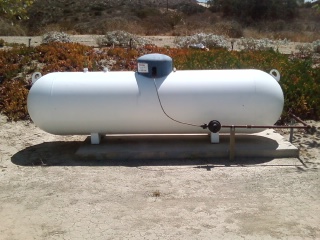
Above-ground installation is often simpler than underground installation because it generally requires less excavation. For a property with adequate space, this would be the first configuration I would evaluate.
Worked Example: Residential Installation
Suppose you’ve already purchased an approved 500-gallon tank. The property has level ground, suitable delivery access, and a moderate distance between the tank and the house.
| Expense | Hypothetical cost |
|---|---|
| Delivery and unloading | $300 |
| Foundation preparation | $250 |
| Regulators and fittings | $350 |
| Gas piping and trenching | $750 |
| Professional labor and testing | $600 |
| Illustrative installation total | $2,250 |
This example excludes the tank purchase, propane fuel, taxes, permit fees, and any necessary appliance modifications. The amounts are assumptions for planning rather than actual contractor quotes.


What Could Make Installation More Expensive?
A long piping run is one of the biggest variables. A tank positioned 100 feet from the house may involve more excavation and materials than one placed closer to the building. Other factors include slopes, buried utilities, retaining walls, limited access, and difficult soil conditions. I would ask the contractor to explain which site conditions affect the final price.
Should You Pay Separately for Testing?
Testing should be part of the installation scope. I recommend confirming that the quotation covers required pressure checks, leak testing, regulator verification, and applicable inspections. A cheaper proposal that excludes necessary safety procedures is not a better deal.
How Much Does Underground Installation Cost?
Underground propane tanks are installed below ground level, leaving approved access to valves and service fittings. This arrangement can reduce visual impact, but excavation and corrosion protection make the project more complex.
Example Underground Installation Budget
Suppose you’ve already purchased a tank specifically approved for burial.
| Work item | Hypothetical expense |
|---|---|
| Excavation and equipment | $1,500 |
| Bedding and backfill | $500 |
| Corrosion protection components | $400 |
| Site preparation and anchoring | $650 |
| Gas piping and trenching | $900 |
| Connections, labor and testing | $950 |
| Illustrative installation total | $4,900 |
These are hypothetical project allowances, not a statewide installation average. Actual costs depend on the equipment, soil conditions, site access, and contractor.
What Additional Work Is Necessary?
An underground installation may require special tank coatings, cathodic protection, appropriate bedding, approved riser arrangements, and inspections before the excavation is closed. I would ask for a written explanation of the corrosion-protection system and future testing responsibilities.
Can Groundwater Affect an Underground Tank?
Yes. Groundwater creates corrosion and buoyancy concerns. An improperly restrained underground vessel may shift when surrounding groundwater rises. The contractor should evaluate the soil and water conditions before selecting the installation method.
Which Installation Would I Choose?
I would compare above-ground and underground storage based on the property’s appearance, space, drainage, maintenance, and total installed cost. Underground installation may be worthwhile for some properties, but I wouldn’t select it solely because the tank will be less visible.
Do You Need a Permit to Install a Propane Tank?
Yes, new residential propane systems generally require the applicable construction permit and inspection. The responsible authority depends on the system’s capacity and configuration.
New Jersey has particularly specific rules governing LP-gas installations. Under N.J.A.C. 5:18-1.2, permits and inspections for new propane vapor-delivery systems with an aggregate water capacity of 2,000 gallons or less are generally the responsibility of the local construction official and plumbing subcode official.
Larger vapor-delivery systems and liquid-withdrawal systems fall under the New Jersey Department of Community Affairs’ Division of Codes and Standards. This distinction is important because homeowners shouldn’t automatically send every residential installation application to the state LP-Gas Safety Unit.
Which Authority Handles Your Installation?
| Installation type | Primary authority to check |
|---|---|
| Ordinary residential vapor system, 2,000 gallons or less | Local construction and plumbing officials |
| Vapor system exceeding 2,000 gallons | NJ Department of Community Affairs |
| Liquid-withdrawal LP-gas system | NJ Department of Community Affairs |
| Large storage installations | State LPG and applicable fire authorities |
| Appliance and building alterations | Appropriate local construction subcode officials |
| Zoning and property placement | Municipality |
Additional registration or fire inspection requirements may apply to larger systems.
What Documents Might You Need?
I recommend preparing a site plan showing the proposed tank, buildings, property boundaries, and gas piping route. The contractor may also need to submit equipment specifications and details of the installation. For underground work, the authority may require information about excavation, corrosion protection, and inspections.
Who Should Obtain the Permit?
Some propane suppliers handle applications as part of their installation service. Others expect the homeowner or a separate contractor to arrange permits. I would make this responsibility clear before signing the agreement.
How Much Are Propane Installation Permit Fees?
There is no single municipal propane installation fee that applies to every property. Permit costs depend on the municipality, construction work, subcode, and project valuation. For ordinary residential installations, the local construction department is the appropriate starting point.
Permit Budgeting Example
| Expense | Illustrative allowance |
|---|---|
| Construction permit administration | $75 |
| Plumbing or fuel-gas review | $100 |
| Additional inspection allowance | $75 |
| Hypothetical total | $250 |
These figures are not official New Jersey permit rates. They illustrate how I would reserve funds for a project until the municipality provides its actual fee schedule.
Why Would One Municipality Charge More?
A complex installation may require additional construction work or inspections. A new home with several connected appliances is different from replacing a tank at an existing compliant location. I recommend contacting the municipality’s construction office for the exact fee before approving the project budget.
What State Regulations Apply to Propane Installation?
The primary LP-gas regulatory framework is New Jersey Administrative Code Title 5, Chapter 18 (N.J.A.C. 5:18). It establishes requirements for propane system construction, location, installation, maintenance, inspection, and operation. The New Jersey Department of Community Affairs administers the LP-Gas Safety Program.
Which NFPA 58 Edition Applies?
N.J.A.C. 5:18-3.1 adopts NFPA 58, 2017 edition, with New Jersey-specific amendments. This matters because you should not assume that the newest published NFPA edition automatically applies to your project. The state’s amendments can also change how certain separation distances, underground installations, and piping requirements are interpreted.
What About the Fuel Gas Code?
New Jersey adopted the 2024 International Fuel Gas Code, effective August 17, 2026, under the Uniform Construction Code. The fuel-gas subcode governs applicable piping and appliance requirements. For a 2027 project, I would verify the code edition applicable to the permit application, including any transition provisions.
Regulatory Reference Table
| Regulation | Main purpose |
|---|---|
| N.J.A.C. 5:18 | State LP-gas requirements |
| NFPA 58 (2017), as amended | LPG storage and handling |
| N.J.A.C. 5:23 | Uniform Construction Code |
| 2024 International Fuel Gas Code | Gas piping and appliance installation |
| N.J.A.C. 5:70 | Uniform Fire Code |
| N.J.A.C. 5:18-6 | LP-gas plan and notice requirements |
| N.J.A.C. 5:18-10 | Training and qualifications |
| Local municipal requirements | Zoning and construction administration |
I would ask the installer to identify which regulations govern the exact work rather than relying on a generic propane installation checklist.
How Far Must a Propane Tank Be From a House?
Tank separation distances depend on water capacity, tank configuration, nearby structures, property boundaries, openings, and ignition sources. For initial planning, some commonly referenced NFPA 58 distances for individual above-ground stationary tanks are:
| Tank water capacity | General planning reference |
|---|---|
| Less than 125 gallons | Special smaller-container provisions |
| 125–500 gallons | Commonly 10 feet |
| 501–2,000 gallons | Commonly 25 feet, subject to exceptions |
This table is not a complete installation approval chart. The applicable code includes exceptions and requirements for other equipment arrangements.
Important State-Specific Difference
New Jersey’s amendments to NFPA 58 remove the qualifying phrase concerning property lines that can be built upon from several separation provisions. I would therefore avoid using a generic online setback diagram without checking the state’s amended rules.
How Are Underground Tank Distances Measured?
New Jersey specifically modifies NFPA 58 so that distances for underground and mounded ASME containers are measured from the pressure-relief valve and filling connection. This can affect where an underground tank is positioned.
What About Windows and Air Intakes?
The installer must also check clearances related to openings, ignition sources, and equipment. A location that appears to satisfy the general tank-to-building distance may still be unsuitable. I recommend having the contractor document the proposed clearances before installation.
Do Propane Installers Need a License?
New Jersey requires qualified people to perform regulated LP-gas installation and service work. The Department of Community Affairs administers the relevant qualifications under N.J.A.C. 5:18. Depending on the work, acceptable professional qualifications can include licensed LP-gas marketers, master plumbers, HVACR contractors, and propane service certificate holders. Other properly licensed trades may perform work within the scope of their licenses.
What Is Propane Service Certification?
Propane service certification covers specified installation and service activities. The required training depends on the work being performed, such as container installation or appliance service. I would verify that the contractor’s qualifications cover the actual installation.
Can Homeowners Install Their Own Equipment?
The DCA’s published FAQ recognizes limited homeowner circumstances involving owner-owned equipment, but that does not eliminate applicable construction permits, technical standards, or inspection requirements. For a permanent residential system, I recommend hiring an appropriately qualified professional. Incorrect piping, regulator selection, or pressure testing can create serious safety hazards.
Contractor Verification Checklist
| Item | What I would request |
|---|---|
| Business identification | Registered business details |
| Professional qualifications | Appropriate license or certificate |
| Insurance | Current coverage documentation |
| Installation scope | Written description of work |
| Permit responsibility | Named applicant |
| Testing | Required procedures included |
| Warranty | Equipment and workmanship terms |
| Maintenance | Who services the system afterward |
I would check credentials before paying a deposit.
What Inspections Are Required Before You Use the Tank?
Inspection requirements depend on the system and responsible authority. For ordinary residential installations, the local construction and plumbing officials generally handle applicable inspections. For larger systems under state oversight, the DCA has published an inspection-responsibility document covering underground work, foundations, piping, and final inspection.
Common Inspection Stages
| Inspection stage | What is checked |
|---|---|
| Site placement | Tank location and required clearances |
| Foundation | Approved supports and stability |
| Underground construction | Piping, bedding, depth and other components |
| Rough piping | Materials, connections and required testing |
| Regulators | Proper equipment and pressure |
| Final inspection | Completed installation |
| Appliance startup | Safe operation and commissioning |
Not every residential project requires every inspection listed.
Should You Backfill Before Inspection?
I wouldn’t cover buried piping or tank components until the responsible inspector and contractor have confirmed that the required inspections are complete. If the work is covered too early, the inspector may require excavation or other corrective work.
What Should You Keep After Installation?
I recommend keeping permit approvals, inspection records, tank identification information, test documentation, and the installation agreement. These records can help when changing suppliers or selling the property.
Can You Install an Underground Tank on a Small Residential Lot?
Possibly, but the site must meet applicable requirements. Small suburban lots can be challenging because of property boundaries, foundations, driveways, utilities, and other underground infrastructure.
Site Evaluation
I would ask the installer to determine whether the excavation can be completed safely without affecting adjacent structures. The proposed location must also provide approved access to service fittings.
Corrosion Protection
Underground propane vessels require appropriate protection from corrosion. New Jersey’s amended NFPA 58 provisions include specific requirements affecting underground installations and corrosion-protection testing. For certain tank installations surrounded by at least 12 inches of washed concrete sand, the state’s amendment specifies a corrosion-protection test interval not exceeding 60 months. This provision should not be interpreted as a universal five-year inspection interval for every buried propane tank. The contractor must identify the applicable testing requirements for the specific installation.
Underground Installation Checklist
- Confirm the tank is approved for burial.
- Verify applicable local and state approvals.
- Locate underground utilities before excavation.
- Evaluate soil and groundwater.
- Confirm separation distances.
- Install suitable bedding and backfill.
- Provide the required corrosion protection.
- Arrange inspections before covering regulated work.
- Complete applicable pressure and leak tests.
- Keep installation records for future maintenance.
How Do Soil and Groundwater Affect Installation?
New Jersey has varied soil and groundwater conditions. Some properties have sandy soil, while others have dense soil, rock, or high seasonal groundwater. These differences can influence excavation and foundation design.
Sandy Soil
Sandy soil may be easier to excavate in certain conditions, but trench stability, erosion, and drainage still matter. The contractor should follow the approved installation design.
Heavy Soil and Poor Drainage
Dense or poorly draining soil may increase excavation difficulty. Water accumulating around a buried vessel can create additional maintenance concerns.
High Groundwater
Groundwater can create buoyancy that may displace an inadequately secured underground tank. If the property is in a flood-prone area, I would ask whether anchoring or specialized protection is necessary.
Site Conditions Compared
| Condition | Potential concern |
|---|---|
| Sandy soil | Excavation stability and erosion |
| Dense soil | More difficult trenching |
| Rocky ground | Specialized excavation |
| High groundwater | Buoyancy and corrosion |
| Steep slope | Foundation stability |
| Limited driveway access | Delivery and unloading |
| Flood-prone property | Equipment displacement |
How Much Does Underground Gas Piping Cost?
Gas piping costs depend on the approved route, materials, burial requirements, and distance to the building. I recommend obtaining a separate piping quotation rather than accepting an unexplained lump sum. For budgeting the fuel purchase after commissioning, see my propane refill cost per gallon guide.
Piping Cost Example
Suppose the propane tank is installed 75 feet from the house. At a hypothetical installed allowance of $20 per foot: 75 × $20 = $1,500. At $35 per foot: 75 × $35 = $2,625. These are budgeting scenarios, not standard New Jersey contractor rates. The actual price may be higher or lower.
Can You Dig the Trench Yourself?
I would first ask the licensed installer whether homeowner excavation is permitted within the approved project arrangement. The contractor must still ensure that the trench and piping meet applicable requirements. Before excavation, contact New Jersey One Call at 811 to arrange utility marking. Private buried utilities may require separate locating.
What About Driveways?
A gas line crossing a driveway may require additional protection and excavation work. I would discuss that route with the installer before choosing the tank location.
How Does Winter Affect Propane Tank Installation?
Winter weather creates additional challenges for both installation and operation. Snow, frozen ground, and icy driveways can complicate site preparation and equipment delivery.
Can Propane Freeze?
Pure propane freezes at approximately minus 306°F, far below normal winter temperatures. The more practical concern is reduced vapor pressure and vaporization capacity. A tank can contain liquid propane but struggle to provide sufficient vapor for high-demand appliances under extreme cold.
Should You Install Before Winter?
If possible, I would schedule excavation and foundation work before the ground freezes. That may reduce scheduling complications. However, installation can still be possible during colder months when conditions and equipment permit.
What About Snow and Ice?
The installer should evaluate exposure to falling roof snow, ice, snowplows, and blocked access. Regulator vents and service components need appropriate protection without obstructing required ventilation. Never use an open flame to thaw propane equipment.
What Size Tank Should You Install?
I wouldn’t select tank capacity based only on square footage. The correct size depends on appliance demand, annual fuel consumption, and delivery frequency.
Residential Tank Sizing Guide
| Application | Capacities to evaluate |
|---|---|
| Cooking and limited hot water | 120–250 gallons |
| Several household appliances | 250–500 gallons |
| Primary home heating | 500–1,000 gallons |
| Seasonal property | Based on actual use |
| Standby generator | Manufacturer-based sizing |
| Larger rural residence | Professionally calculated |
| Commercial building | Engineered installation |
These are planning suggestions, not final equipment specifications.
Why Does Tank Capacity Matter?
Stationary tanks are usually described by their water capacity. A 500-gallon vessel commonly contains approximately 400 gallons of liquid propane at an 80% fill. A 1,000-gallon vessel commonly contains approximately 800 gallons. The installer must also verify that the tank can supply the required vapor during peak demand.
For more information, read my propane tank versus cylinder guide.
What If You Are Installing a Standby Generator?
A standby generator can require substantial propane storage and a properly sized gas supply system. I recommend coordinating the propane contractor and generator installer before beginning work.
Generator Runtime Example
Suppose a generator consumes 2.5 gallons per hour at the expected electrical load.
| Runtime | Propane required |
|---|---|
| 8 hours | 20 gallons |
| 24 hours | 60 gallons |
| 48 hours | 120 gallons |
| 72 hours | 180 gallons |
| 120 hours | 300 gallons |
Actual generator consumption varies by model and load.
Tank Runtime Example
Using the fuel available between an 80% fill and a planned 20% reorder level:
| Tank capacity | Available propane | Runtime at 2.5 gal/hour |
|---|---|---|
| 250 gallons | 150 gallons | 60 hours |
| 500 gallons | 300 gallons | 120 hours |
| 1,000 gallons | 600 gallons | 240 hours |
These figures assume no other appliances are using the tank. For more information, read my propane tank size chart for generators.
Who Installs Propane Tanks in New Jersey?
I recommend beginning with a propane supplier that regularly serves your county. One verified example is Allen’s Oil & Propane, which advertises residential tank installation in central and southern New Jersey. Its published service territory includes Burlington, Atlantic, Camden, Cumberland, Monmouth, and Ocean counties. The company describes assistance with permits, installation planning, appliance connections, and safety checks.
Other options include qualified independent contractors and licensed LP-gas marketers.
How Would I Choose an Installer?
I would compare at least two complete proposals. Each proposal should identify the equipment, location, foundation, piping, permit responsibilities, inspections, and warranty.
Questions to Ask Before Hiring
| Question | Why it matters |
|---|---|
| Are you properly licensed for this work? | Verify qualifications |
| Who applies for permits? | Avoid approval delays |
| Is excavation included? | Understand site costs |
| Are regulators and piping included? | Prevent surprise charges |
| Who schedules inspections? | Ensure compliance |
| Will you service customer-owned equipment? | Clarify future service |
| Is pressure testing included? | Confirm safe commissioning |
| What is the workmanship warranty? | Understand post-installation support |
Is Buying or Leasing Better for Installation?
Buying gives you equipment ownership, while leasing may reduce initial expenses. However, leased tanks can involve supplier restrictions and rental charges. New Jersey’s consumer-protection provisions under N.J.A.C. 5:18-11.3 require disclosures concerning equipment rental and installation fees. I recommend requesting a written explanation of all applicable charges.
Ownership Comparison
| Factor | Buying | Leasing |
|---|---|---|
| Tank ownership | Homeowner | Supplier |
| Initial equipment expense | Higher | Often lower |
| Installation charges | Contract-dependent | Contract-dependent |
| Fuel supplier choice | Potentially broader | Often restricted |
| Maintenance | Owner and agreement dependent | Supplier and agreement dependent |
| Tank removal | Owner responsibility | Contract-dependent |
A supplier may also decline to fill customer-owned equipment if it determines the tank is unsafe. I would confirm service acceptance before buying a used tank.
Can You Replace or Relocate an Existing Tank?
Yes, in some circumstances, but the equipment must be evaluated and handled properly. I recommend confirming ownership first. New Jersey regulations restrict the installation, removal, connection, disconnection, or filling of an LP-gas container without the owner’s permission.
Replacement Checklist
- Verify who owns the existing tank.
- Arrange a professional condition assessment.
- Confirm the proposed new location.
- Identify required permits and inspections.
- Plan disconnection and transportation.
- Install approved supports and piping.
- Complete required testing.
- Obtain authorization to return the system to service.
For information about equipment condition and replacement, read my propane tank replacement guide.
How Can You Save Money on Installation?
I recommend reducing unnecessary project costs through proper planning rather than cutting safety work.
Compare Complete Quotations
Request bids covering the same equipment, piping length, excavation, permits, and testing.
Choose an Accessible Location
A location with good truck access may reduce handling expenses. However, separation distances and other safety requirements must come first.
Minimize Unnecessary Piping
Long gas lines increase material and labor expenses. Work with the contractor to select an efficient, compliant location.
Coordinate Approved Construction
If you’re already completing permitted home improvements, coordinating excavation may help avoid duplicate work. The piping must still comply with the applicable requirements.
Installation Savings Guide
| Strategy | Potential benefit |
|---|---|
| Compare itemized bids | Better cost visibility |
| Confirm permits early | Avoid expensive corrections |
| Select a suitable location | Reduce unnecessary site work |
| Review piping layout | Control material and labor costs |
| Coordinate construction | Avoid duplicate excavation |
| Compare ownership terms | Understand long-term costs |
Final Installation Checklist
Before accepting the completed installation, I would verify:
- The tank is approved for its intended use.
- The contractor holds the applicable qualifications.
- Necessary permits have been issued.
- Required separation distances are satisfied.
- Foundations and supports are suitable.
- Underground corrosion protection is installed where required.
- Gas piping and regulators meet the approved design.
- All applicable inspections are complete.
- Pressure and leak testing has been performed.
- Connected appliances have been commissioned safely.
- Ownership and maintenance responsibilities are documented.
- The homeowner receives the relevant inspection and service records.
For further information about inspection and requalification, read my guide to who recertifies propane tanks.
Frequently Asked Questions
How Much Does Propane Tank Installation Cost?
For preliminary budgeting, national project references commonly fall around $600–$2,500 for relatively straightforward installations. Complex underground projects can cost substantially more. Confirm which expenses are included.
Do You Need a Permit?
Yes, new residential LP-gas installations generally require the applicable permit and inspections.
Who Issues Residential Propane Permits?
For ordinary vapor-delivery systems of 2,000 gallons or less aggregate water capacity, the local construction and plumbing officials generally handle permits and inspections.
What Is the Main State Regulation?
N.J.A.C. 5:18 governs LPG systems, with adopted NFPA 58 requirements and state-specific amendments.
Which NFPA 58 Edition Does New Jersey Use?
N.J.A.C. 5:18-3.1 adopts NFPA 58-2017 with modifications.
Can You Install an Underground Propane Tank?
Yes, when the equipment, site, permits, and installation meet applicable requirements.
How Far Must a Tank Be From a House?
The distance depends on tank capacity and configuration. A qualified installer must verify the state-amended code and other applicable clearances.
Do Installers Need a License?
Regulated LP-gas installation and service work must be performed by appropriately qualified people.
Can You Install a Tank on a Roof?
New Jersey’s fuel-gas subcode expressly prohibits LP-gas containers on building roofs.
Can You Install a Tank Near a Property Line?
Only when all applicable separation requirements are satisfied, including the state’s amendments to NFPA 58.
Do Underground Tanks Need Corrosion Protection?
Yes. Appropriate corrosion protection and testing are important requirements for buried metal vessels.
Does New Jersey Require Inspections Before Backfill?
The inspection process depends on the responsible authority and work involved. Confirm the required underground inspections before covering piping or equipment.
Can You Relocate a Leased Tank?
Not without addressing ownership authorization and the applicable professional installation requirements.
Can You Install a Tank for a Generator?
Yes. The tank, piping, and regulators must be appropriately sized, and applicable permits and inspections must be completed.
Final Thoughts: Planning a Safe Installation
If you’re planning propane tank installation in New Jersey, I recommend starting with your property rather than focusing only on the advertised installation price.
The proposed tank location, piping distance, underground conditions, permits, and contractor qualifications can all affect the project.
An above-ground tank may be practical when there is sufficient space and convenient access. An underground installation can reduce visual impact but requires additional excavation, corrosion protection, and inspection planning.
Before beginning, verify the proper permitting authority, hire an appropriately qualified contractor, and obtain an itemized quotation.
A properly planned propane installation should provide safe fuel storage, reliable appliance operation, compliant placement, and manageable long-term maintenance costs.

Mike is an experienced propane technician with over 15 years of professional experience in the field. He has dedicated his career to helping customers with their propane needs, from installation to maintenance and repair. Together with Jeremy, he co-founded this website to provide useful information and guidance to customers seeking reliable propane services.