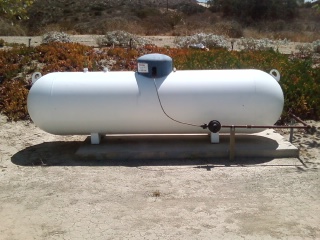


Installing a propane tank in Oklahoma is a practical investment, especially if you live outside major cities where natural gas pipelines may not be available.
From rural properties near Oklahoma City and Tulsa to ranches in western Oklahoma and vacation homes near Grand Lake, propane provides a reliable energy source for cooking, water heating, home heating, fireplaces, and emergency standby generators.
However, installing a permanent storage container involves more than purchasing a tank and arranging fuel delivery.


You also need to understand installation expenses, state regulations, contractor licensing, property setbacks, local permits, and maintenance requirements.
Oklahoma’s exposure to tornadoes, severe thunderstorms, flooding, and occasional winter storms introduces additional safety considerations that you should address before choosing an installation location.
In this guide, I’ll explain how much you should budget, which regulations apply, how to choose an appropriate tank capacity, and how to avoid costly installation mistakes.
Quick Answer
What Oklahoma homeowners should know


| Item | Price or requirement |
|---|---|
| New 500-gallon above-ground tank | $2,900 (advertised Oklahoma dealer price) |
| New 500-gallon underground tank | $3,325 (equipment only) |
| Residential propane price | $2.477/gal (EIA, November 16, 2026) |
| Typical 500-gallon tank setback | 10 feet from buildings and applicable property lines |
Installation budget: Approximately $3,700–$5,500 for a purchased 500-gallon above-ground system under relatively straightforward conditions, excluding fuel.
State regulations: The Oklahoma LP Gas Administration oversees propane safety requirements under Title 52 and Oklahoma Administrative Code Title 420.
Permits: State plan approval and local installation permits are separate requirements. Verify both before beginning work.
Severe weather: Consider tornado debris, flooding, strong winds, and the location of storm shelters when selecting your installation site.
Equipment prices are based on an Oklahoma retailer’s published pricing estimates. Installation budgets are illustrative rather than verified statewide contractor averages.



Sources: BLT Tanks in Kingfisher, Oklahoma; U.S. Energy Information Administration; Oklahoma LP Gas Administration.
1. How Much Does a New Residential Tank Cost?
The purchase price depends on the container’s capacity, construction, manufacturer, condition, and intended installation method.
To provide a realistic local price reference, I reviewed the advertised new-tank pricing estimates from BLT Tanks, a company based near Kingfisher, Oklahoma.
New equipment prices by capacity
| Tank capacity | Above ground | Underground |
|---|---|---|
| 120 gallons | $985 | $1,770 |
| 250 gallons | $1,950 | $2,325 |
| 320 gallons | $2,350 | $2,650 |
| 500 gallons | $2,900 | $3,325 |
| 1,000 gallons | $4,750 | $5,250 |
Source: BLT Tanks advertised equipment pricing estimates, reviewed November 2026. Prices are subject to change. Installation, individual tank transportation, fuel and certain accessories are excluded.


These prices provide a useful starting point when comparing local suppliers.
However, buying directly from a tank retailer is not necessarily the cheapest way to establish propane service. Some residential suppliers offer installation packages that include the container, regulators, gas piping, and equipment placement.
For example, purchasing a $2,900 tank independently may require you to arrange transportation and installation through another company.
Before purchasing, ask your intended propane supplier whether it will install and service customer-owned equipment.
You can also read my guide on how much a 500-gallon propane tank costs for additional purchase considerations.
2. Estimated Installation Costs by Tank Size
The total installation expense is normally higher than the advertised equipment price.
Transportation, site preparation, approved supports, gas piping, regulators, permits, labor, and safety testing all contribute to the final cost.
Residential installation budget
| Capacity | Above-ground installation | Underground installation |
|---|---|---|
| 120 gallons | $1,500–$2,500 | $3,000–$5,000 |
| 250 gallons | $2,500–$4,000 | $3,800–$6,000 |
| 320 gallons | $3,000–$4,500 | $4,200–$6,500 |
| 500 gallons | $3,700–$5,500 | $5,000–$8,000 |
| 1,000 gallons | $5,500–$8,000 | $7,000–$11,000+ |
Illustrative planning ranges developed using local equipment pricing and estimated installation allowances. Excludes initial propane delivery, appliances, taxes and unusually difficult site work.
These estimates assume you are purchasing your equipment. Leasing a container from a propane supplier may substantially reduce your upfront expenses.
What determines the final installation price?
The most significant cost factors include:
- Tank capacity and condition.
- Transportation distance.
- Accessibility for delivery and lifting equipment.
- Excavation and trenching requirements.
- Soil and drainage conditions.
- Gas piping length.
- Regulators and other safety equipment.
- Permit and inspection fees.
- Underground corrosion protection.
- Landscaping restoration.
A rural property with a level installation area and easy road access may require considerably less preparation than a property with rocky ground, steep slopes, or restricted access.
My recommendation is to request an itemized quotation before committing to an installation.
3. Breaking Down the Installation Expenses
Understanding the individual installation expenses can help you identify whether a supplier’s quotation represents good value.
A company advertising a low installation fee may exclude important components, such as trenching, regulators, or the initial fuel delivery.
| Installation component | Estimated cost |
|---|---|
| Transportation and tank placement | $200–$600 |
| Concrete pad or approved supports | $100–$400 |
| Gas piping and trenching | $300–$1,500 |
| Regulators and fittings | $150–$450 |
| Permit and inspection allowance | $50–$300 |
| Underground excavation | $800–$2,500+ |
| Cathodic protection equipment | $150–$600 |
| Landscaping restoration | $200–$1,000+ |
These are individual budgeting allowances, not published Oklahoma contractor rates. Some suppliers combine several components in their installation packages.
Worked example: Installing a 500-gallon tank
Suppose you are building a home on a rural property outside Oklahoma City and decide to purchase a new above-ground storage container.
| Sample residential installation budget | Cost |
|---|---|
| New propane tank | $2,900.00 |
| Transportation and placement | $350.00 |
| Concrete supports | $200.00 |
| Gas piping and trenching | $650.00 |
| Regulators and fittings | $250.00 |
| Permit allowance | $100.00 |
| Installation subtotal | $4,450.00 |
| Initial fuel delivery (400 gallons) | $990.80 |
| Estimated project total | $5,440.80 |
Calculated using a published equipment price and the November 2026 EIA fuel benchmark. Other expenses are hypothetical allowances. Taxes and appliance purchases are excluded.
I would also maintain a contingency fund of approximately 10% to 15% for unexpected expenses.
For example, if your contractor discovers rocky soil, drainage problems, or previously unidentified underground utilities, additional work may become necessary.
4. Current Residential Propane Prices
According to the U.S. Energy Information Administration, Oklahoma’s average residential propane price was $2.477 per gallon for the week of November 16, 2026.
This represents an increase of approximately 13.7% compared with the corresponding reporting week in November 2025.
| Reporting week (2026) | Price per gallon |
|---|---|
| Oct 5 | $2.294 |
| Oct 12 | $2.325 |
| Oct 19 | $2.352 |
| Oct 26 | $2.383 |
| Nov 2 | $2.431 |
| Nov 9 | $2.467 |
| Nov 16 | $2.477 |
Source: EIA weekly residential propane price survey, October–November 2026.
Although Oklahoma produces significant quantities of oil and natural gas, local propane prices remain influenced by seasonal demand, wholesale fuel markets, transportation expenses, and supplier pricing policies.
Your delivered price may also depend on how much propane you consume annually and whether you own or lease your storage equipment.
I recommend comparing the complete delivery cost rather than relying exclusively on the advertised price per gallon.
For additional information, see my guide to propane refill costs per gallon and ways to save money.
5. How Much Does It Cost to Fill a Tank?
Residential propane containers are generally filled to approximately 80% of their rated water capacity to allow space for liquid expansion.
A nominal 500-gallon tank, therefore, normally holds approximately 400 gallons of propane at its conventional maximum fill level.
| Tank size | 80% capacity | Fill from empty | Refill from 30% |
|---|---|---|---|
| 120 gal | 96 gal | $237.79 | $148.62 |
| 250 gal | 200 gal | $495.40 | $309.62 |
| 320 gal | 256 gal | $634.11 | $396.32 |
| 500 gal | 400 gal | $990.80 | $619.25 |
| 1,000 gal | 800 gal | $1,981.60 | $1,238.50 |
Calculated using $2.477 per gallon. Additional delivery charges and applicable taxes are excluded.
Calculate your next propane delivery
Gallons needed = tank capacity × (80 − current gauge percentage) ÷ 100.
Estimated cost = gallons needed × quoted price per gallon.
For a 500-gallon tank at 30%, the estimated delivery is 250 gallons. At $2.477 per gallon, the estimated fuel cost is $619.25.
Assumes an 80% target fill level. Actual delivered quantities and invoice totals may differ.
I recommend contacting your supplier when the gauge approaches 30%, particularly during winter or before severe weather.
Running completely out of fuel can lead to additional service expenses because Oklahoma requires documented safety testing following an out-of-gas condition.
6. Understanding State Laws and Regulations
Oklahoma has a dedicated regulatory framework governing liquefied petroleum gas storage, transportation, installation, and distribution.
The Oklahoma LP Gas Administration is the primary agency responsible for administering and enforcing these requirements.
| Regulation or standard | What it governs |
|---|---|
| Oklahoma Statutes, Title 52, §420.1 et seq. | State LPG regulation |
| Oklahoma Administrative Code, Title 420 | Licensing and technical safety requirements |
| OAC 420:10-1-5 | Industry permits |
| OAC 420:10-1-14 | Propane storage and handling |
| OAC 420:10-1-15 | Gas piping, appliances and testing |
| NFPA 58 | Liquefied Petroleum Gas Code |
| NFPA 54 | National Fuel Gas Code |
| Local building ordinances | Permits and property-specific requirements |
Oklahoma law recognizes current and subsequent editions of NFPA 58 and NFPA 54 as applicable technical standards, together with the state’s supplemental regulations.
The Oklahoma Uniform Building Code Commission also adopted updated 2024 editions of several international construction codes, effective September 14, 2026. These include the International Residential Code and International Fuel Gas Code.
This means you should be cautious about relying on installation advice based on older code editions.
7. Do You Need a Permit to Install a Tank?
Permit requirements can be confusing because there is a difference between an installer’s professional permit, state-level installation plan approval, and a local construction or mechanical permit.
State plan approval requirements
Under OAC 420:10-1-14, advance state plan approval is required for fixed installations with an individual container capacity of at least 2,000 gallons or a combined water capacity exceeding 4,000 gallons.
Separate approval requirements apply to certain public buildings and commercial propane dispensing installations.
An ordinary 500-gallon residential installation generally falls below those state capacity thresholds, but this does not eliminate other applicable approvals.
| Installation type | Requirements to verify |
|---|---|
| 120-gallon residential tank | Local permits and gas system requirements |
| 250-gallon residential tank | Placement, piping and local approvals |
| 500-gallon residential tank | Local mechanical or fire permits |
| 1,000-gallon residential tank | Setbacks and applicable local approvals |
| Underground residential tank | Excavation, piping and inspection requirements |
| Individual tank of 2,000 gallons or more | State plan approval |
| Combined capacity exceeding 4,000 gallons | State plan approval |
| Certain public or commercial installations | Separate state approval requirements |
Local permit requirements
Municipalities may administer their own construction permits, inspections, zoning requirements, and fire prevention programs.
For example, Tulsa has announced a planned January 1, 2027, municipal adoption date for its updated construction code ordinances following the state’s September 2026 code changes.
Before purchasing your equipment, contact your city or county building department and confirm which requirements apply to your address.
Ask whether you need to submit a property survey, tank specifications, piping layout, contractor information, or a proposed site plan.
I recommend obtaining written confirmation whenever possible, particularly when installing a tank on a newly developed rural property.
8. Can You Install Your Own Equipment?
Oklahoma generally requires businesses and individuals engaged in propane equipment installation to hold the appropriate state registration permit.
The state has professional licensing categories, including Class IV and Class IV-D installer permits, with different authorized activities and qualifications.
However, Oklahoma Statutes §52-420.4 contains a limited exception allowing individuals to install LPG equipment in their own single-unit residence, provided the installation receives the required inspection before use.
That exception should not be interpreted as permission to install or operate an uninspected propane system.
Even when homeowner installation is legally possible, I strongly recommend hiring a qualified propane professional.
Permanent installations involve pressurized flammable gas, equipment compatibility, proper pressure regulation, piping, and specialized safety testing.
Before hiring a contractor, verify the company’s authorization, installer qualifications, insurance, and responsibility for obtaining required approvals.
9. Minimum Distance From Houses and Property Lines
Choosing a compliant installation location is one of the most important decisions you will make.
Propane vapor is heavier than air and may accumulate in low-lying areas following a leak. Proper separation helps reduce exposure to buildings, ignition sources, and neighboring properties.
General residential tank setback requirements
| Rated capacity | Above ground | Underground | Between tanks |
|---|---|---|---|
| Under 125 gal | 5 ft* | 10 ft | None |
| 125–250 gal | 10 ft | 10 ft | None |
| 251–500 gal | 10 ft | 10 ft | 3 ft |
| 501–1,200 gal | 25 ft** | 10 ft | 3 ft |
| 1,201–2,000 gal | 25 ft | 10 ft | 3 ft |
| 2,001–30,000 gal | 50 ft | 50 ft | 5 ft |
General IFC Table 6104.3 planning distances from buildings and adjoining property lines that can be built upon. Confirm the applicable NFPA 58 requirements and local amendments with the installation authority.
* Certain smaller containers may be installed alongside buildings when applicable requirements for ventilation openings, ignition sources, filling connections, and relief valves are satisfied.
** A single above-ground container of up to 1,200 gallons may qualify for a reduction to 10 feet when it is at least 25 feet from other containers exceeding 125 gallons and satisfies applicable code conditions.
Underground tanks must also maintain the required separation between the entire container and nearby buildings or applicable property boundaries.
Example of a 500-gallon installation layout
Conceptual residential layout for a 500-gallon above-ground tank. Not to scale or intended as an approved installation plan.
I recommend allowing additional space wherever possible rather than designing your entire installation around the absolute minimum setback.
Consider future garages, workshops, swimming pools, storm shelters, and home extensions.
A compliant location today may become unsuitable if you construct another building nearby.
10. Choosing the Right Storage Capacity
The correct tank size depends on your household’s fuel consumption, appliance requirements, and preferred delivery frequency.
Oklahoma generally experiences less prolonged extreme cold than northern states. Nevertheless, households using propane for primary heating can consume substantial quantities during winter.
Usable propane capacity comparison
Approximate fuel storage at an 80% fill level.
Which capacity is suitable for your household?
| Tank size | Typical application |
|---|---|
| 100-lb cylinder | Cooking and limited appliance use |
| 120 gallons | Fireplaces, cooking and water heating |
| 250 gallons | Supplemental heating and multiple appliances |
| 320 gallons | Moderate residential fuel consumption |
| 500 gallons | Whole-house heating and standby generators |
| 1,000 gallons | Large homes, ranches and high fuel demand |
A 250-gallon container may be sufficient if your primary heating system is electric and you only use propane for cooking, hot water, or occasional fireplace operation.
You can read my guide on how much a 250-gallon propane tank costs if you are considering this capacity.
For homes relying on propane as their primary heating fuel, I would generally start by evaluating a 500-gallon system.
Remember that storage capacity alone does not determine suitability. Your supplier must also evaluate the tank’s ability to supply adequate propane vapor when multiple appliances operate simultaneously.
11. How Long Will Your Fuel Supply Last?
Rather than relying on a general estimate, I recommend calculating consumption using your appliance’s fuel input rating and operating hours.
One gallon of propane contains approximately 91,500 BTU of energy.
Suppose your house has an 80,000-BTU-per-hour furnace operating for the equivalent of six hours at full input each day.
The estimated daily consumption is:
80,000 × 6 ÷ 91,500 = 5.25 gallons/day
A 500-gallon tank provides approximately 250 gallons between an initial 80% fill and a 30% refill threshold.
250 ÷ 5.25 = 47.6 days
Under these assumptions, you would need to arrange another delivery approximately every 48 days.
Estimated heating runtime
| Furnace input | Full-output hours/day | Daily consumption | 500-gal tank* |
|---|---|---|---|
| 40,000 BTU/hr | 4 | 1.75 gal | 143 days |
| 60,000 BTU/hr | 6 | 3.93 gal | 64 days |
| 80,000 BTU/hr | 6 | 5.25 gal | 48 days |
| 100,000 BTU/hr | 8 | 8.74 gal | 29 days |
| 120,000 BTU/hr | 10 | 13.11 gal | 19 days |
*Estimated time between 80% and 30% tank levels. Other propane appliances are excluded.
Actual consumption depends on insulation, weather, thermostat settings, furnace operation, and the size of your home.
12. Above-Ground vs. Underground Installation
Both options can provide dependable residential fuel storage when professionally installed.
However, Oklahoma’s severe weather exposure makes the decision more significant than simply choosing which installation looks better.
| Feature | Above ground | Underground |
|---|---|---|
| Installation expense | Generally lower | Generally higher |
| Appearance | Visible | Mostly concealed |
| Excavation | Limited | Extensive |
| Inspection access | Easier | More limited |
| Flying debris exposure | Greater | Reduced for buried vessel |
| Flood-related movement | Possible | Possible due to buoyancy |
| Corrosion protection | Exterior coating | Specialized protection |
| Future relocation | Generally easier | More complicated |
Above-ground installations
An above-ground tank is usually the more economical choice for rural properties, ranches, and homes with adequate outdoor space.
It is easier to inspect, maintain, and replace. Installation also requires less excavation.
However, the container and exposed equipment may be vulnerable to falling trees, flying debris, vehicle impacts, and severe weather.
Underground installations
A buried tank can improve the appearance of your property and reduce the vessel’s direct exposure to airborne debris.
Nevertheless, its exposed valves and connected piping remain vulnerable. An underground installation is not tornado-proof.
Proper corrosion protection, soil assessment, drainage, and protection against flotation are essential.
If you’re considering this option, read my guide on the cost of installing a buried propane tank for a more detailed expense breakdown.
13. Tornado Safety and Storm Shelter Considerations
Tornadoes are a particularly important consideration for Oklahoma homeowners.
Strong winds and airborne debris can damage propane equipment, displace containers, and break connected gas piping.
You should discuss severe weather exposure with your installer before deciding where to position your tank.
Protecting your installation from severe weather
| Hazard | Recommended precaution |
|---|---|
| Flying debris | Evaluate exposure when selecting the site |
| Strong winds | Use suitable supports and required anchoring |
| Falling trees | Avoid locations with obvious tree hazards |
| Floodwater | Evaluate flotation and anchoring requirements |
| Damaged gas piping | Obtain professional inspection before reuse |
| Power outages | Maintain sufficient fuel reserves |
| Storm shelter exposure | Consider openings, ventilation and access routes |
Can you install a tank near a storm shelter?
You should be particularly cautious when locating propane equipment near an underground storm shelter.
Because propane vapor is heavier than air, a leak could potentially allow gas to accumulate in below-ground spaces.
Have your installer evaluate the shelter’s entrances, ventilation openings, surrounding ground levels, and required propane equipment clearances.
Do not assume that the standard distance from your house automatically makes the same location safe for a storm shelter.
What should you do after a tornado?
If severe weather damages your property, do not approach a displaced tank or attempt to reconnect damaged piping.
Move away from suspected leaks and contact emergency services and your propane supplier from a safe location.
The Propane Education & Research Council recommends professional assessment of propane equipment following damaging storms.
14. Buying or Leasing From a Supplier
Purchasing your own container can provide greater flexibility, while leasing can substantially reduce the initial cost of establishing propane service.
| Consideration | Buying | Leasing |
|---|---|---|
| Initial investment | Higher | Generally lower |
| Tank ownership | Homeowner | Propane supplier |
| Supplier flexibility | Greater | May be restricted |
| Annual rental fees | None | Possible |
| Maintenance responsibility | Homeowner | Subject to agreement |
| Equipment removal | Owner's responsibility | Subject to lease terms |
| Resale value | Possible | Not applicable |
Understanding Oklahoma's updated ownership regulations
Oklahoma Senate Bill 1613, which took effect on November 1, 2026, amended several provisions of the state’s LPG regulation laws, including requirements concerning container identification and authorization for filling.
The amended provisions require propane permit holders to identify their owned containers and require consumer authorization before filling.
Before arranging delivery from a competing supplier, check your lease agreement and confirm the current ownership and filling requirements with the Oklahoma LP Gas Administration.
Do not assume that a change in state law automatically cancels your contractual obligations.
Worked example: Long-term ownership savings
Suppose owning your tank allows you to purchase propane at $0.35 less per gallon than your existing leased-tank arrangement.
| Annual fuel consumption | Annual savings | 10-year savings |
|---|---|---|
| 300 gallons | $105 | $1,050 |
| 500 gallons | $175 | $1,750 |
| 800 gallons | $280 | $2,800 |
| 1,000 gallons | $350 | $3,500 |
| 1,500 gallons | $525 | $5,250 |
If purchasing your equipment requires an additional investment of $2,800 and your annual fuel savings amount to $350, the simple payback period would be eight years.
This excludes maintenance expenses, financing costs, rental savings, and future fuel price changes.
For more information, see my guide on propane tank leasing costs and the advantages and disadvantages of renting.
15. Finding Suppliers and Installation Services
Oklahoma has independent propane dealers, regional fuel distributors, agricultural suppliers, and specialized tank retailers.
Examples of companies to investigate include:
| Company | Services |
|---|---|
| BLT Tanks | New and rebuilt propane equipment sales |
| Steve's Propane | Residential tank sales, leasing and fuel delivery |
| Circle A Propane | Residential delivery and cylinder filling |
These are examples rather than ranked recommendations. Contact each company to verify its service area, pricing, installation availability, and current qualifications.
Before choosing a supplier, determine whether the company offers automatic delivery, emergency services, equipment maintenance, and customer-owned tank installation.
Delivery minimums are also important. For example, Circle A Propane publishes a 100-gallon minimum for residential home delivery.
A smaller minimum can be particularly valuable if you use propane only occasionally.
16. Installation Considerations Across Different Regions
Oklahoma’s geography can influence excavation costs, equipment accessibility, and delivery schedules.
| Region | Major communities | Installation considerations |
|---|---|---|
| Central Oklahoma | Oklahoma City, Norman, Edmond | Suburban setbacks and severe storms |
| Northeastern Oklahoma | Tulsa, Bartlesville | Local permits and storm exposure |
| Western Oklahoma | Elk City, Weatherford | Strong winds, rural deliveries and grassfires |
| Oklahoma Panhandle | Guymon, Boise City | Winter weather and remote properties |
| Southeastern Oklahoma | McAlester, Broken Bow | Rocky terrain and wooded properties |
| Southern Oklahoma | Ardmore, Duncan | Summer heat and rural access |
| Northern Oklahoma | Enid, Ponca City | Agricultural fuel demand and storm exposure |
If you live in the Panhandle or a remote western community, I would pay particular attention to delivery frequency and the availability of emergency fuel service.
Homeowners in southeastern Oklahoma should evaluate excavation conditions and tree-related hazards.
On smaller suburban lots, confirm property boundaries and future construction plans before purchasing a container.
17. Professional Installation Process
A permanent propane system requires careful planning, qualified installation, and documented safety testing.
- Property assessment — Your installer evaluates the proposed location, fuel requirements, property boundaries and equipment accessibility.
- Equipment selection — An appropriate container is selected according to fuel storage needs and appliance demand.
- Permit verification — Applicable state and municipal approvals are identified.
- Underground utility identification — The responsible excavator contacts OKIE811 and arranges private utility locating when required.
- Site preparation — Approved supports, drainage, excavation and required protective measures are prepared.
- Tank and piping installation — Qualified professionals position the container and install the associated gas system.
- Testing and inspection — Required pressure tests, leak checks, documentation and inspections are completed.
- Initial fuel delivery — Following the necessary approvals and safety checks, the system is placed into service.
OKIE811 advises homeowners to arrange underground utility marking three business days before digging. The statutory minimum notice period is 48 hours, excluding the notification date, weekends, and legal holidays.
Remember that privately owned underground gas lines, electrical lines, and water systems may require separate locating services.
18. Oklahoma's Pressure Testing and Form 4 Requirements
One regulation that Oklahoma homeowners should understand concerns documentation of gas system testing.
Under OAC 420:10-1-15, required pressure tests and leak tests must be documented using an approved Form 4 or another authorized form.
The regulation identifies several circumstances requiring testing.
| Situation | Testing consideration |
|---|---|
| New customer receiving initial gas service | Required testing and documentation |
| System not supplied with gas for 24 months | Required testing |
| New or modified gas piping | Applicable pressure or leak testing |
| Suspected gas leak | Required professional assessment and testing |
| Out-of-gas condition | Required testing before restoring service |
| Service interruption | Applicable safety testing |
The completed documentation is retained by the servicing company, provided to the responsible customer, and filed with the LP Gas Administration within 15 working days.
I recommend keeping your copy of the completed testing form with your property and equipment records.
This is another reason to avoid allowing your tank to become completely empty. An emergency delivery may involve more than the cost of the fuel itself.
19. Installing a Tank for a Standby Generator
Oklahoma’s severe thunderstorms and tornadoes can result in extended power outages.
A propane-powered standby generator can help maintain electricity for refrigeration, lighting, communications, and essential household equipment.
However, generator operation can consume substantial quantities of fuel.
Estimated generator runtime
| Generator consumption | Daily fuel use | Runtime using 250 gallons |
|---|---|---|
| 1 gallon/hour | 24 gallons | 250 hours |
| 1.5 gallons/hour | 36 gallons | 167 hours |
| 2 gallons/hour | 48 gallons | 125 hours |
| 3 gallons/hour | 72 gallons | 83 hours |
| 4 gallons/hour | 96 gallons | 63 hours |
These estimates assume continuous operation and 250 gallons of available fuel between an initial 80% fill and a 30% reserve in a 500-gallon container.
Actual consumption depends on the generator model and electrical load.
If your furnace, water heater, and generator share the same fuel supply, your available runtime will be shorter.
For additional calculations, read my guide on how often you need to refill a propane generator.
20. Buying Used or Refurbished Equipment
A professionally refurbished tank may provide considerable savings compared with purchasing new equipment.
However, pressure vessel condition and ownership documentation should be your priorities.
| Inspection item | Why it matters |
|---|---|
| Manufacturer's data plate | Establishes construction specifications |
| Serial number | Identifies the equipment |
| Ownership documents | Confirms the seller's right to sell |
| Exterior condition | Reveals possible corrosion and damage |
| Valve condition | Affects safe operation |
| Previous installation history | Helps determine suitability |
| Professional inspection | Identifies potential safety defects |
| Installation approval | Confirms the proposed use is acceptable |
Before purchasing a used tank from a private seller, ask your intended propane supplier whether it is willing to inspect, install, and service the equipment.
Permanent ASME storage containers generally follow different inspection requirements from portable DOT cylinders.
If you also use portable cylinders, consult my guide on who recertifies propane tanks.
21. How to Reduce Your Annual Propane Expenses
Fuel consumption can eventually exceed your initial equipment investment, particularly if propane is your primary heating source.
Understanding your annual expenses can help you choose a suitable supplier and evaluate whether tank ownership is financially worthwhile.
Estimated annual residential fuel expenses
Calculated at $2.477 per gallon. Fuel-only estimates. Actual costs depend on consumption, seasonal prices, taxes and supplier charges.
I recommend calculating your effective delivered price rather than comparing advertised fuel prices alone.
For example, suppose Supplier A charges $2.35 per gallon plus a $60 delivery fee, while Supplier B charges $2.50 per gallon without a delivery fee.
For a 200-gallon delivery, Supplier A would charge $530, while Supplier B would charge $500.
Despite its higher advertised fuel price, Supplier B would save you $30.
Improving home insulation, maintaining heating appliances, avoiding emergency deliveries, and comparing seasonal pricing programs can also help reduce your annual expenses.
22. Homeowner Installation Checklist
Before purchasing equipment or scheduling installation, make sure you have addressed these essential requirements.
- ☐ Calculate anticipated annual propane consumption.
- ☐ Select an appropriate storage capacity.
- ☐ Compare at least three local supplier quotations.
- ☐ Decide whether to purchase or lease.
- ☐ Verify equipment ownership and identification.
- ☐ Confirm installer qualifications and insurance.
- ☐ Check applicable state and local permits.
- ☐ Verify building and property line setbacks.
- ☐ Evaluate tornado, flooding and vehicle hazards.
- ☐ Review the location of underground storm shelters.
- ☐ Confirm delivery truck accessibility.
- ☐ Arrange required underground utility marking.
- ☐ Complete required pressure tests and leak checks.
- ☐ Obtain your Form 4 or applicable testing documentation.
- ☐ Establish a maintenance and fuel delivery schedule.
- ☐ Retain equipment ownership and installation records.
Completing these preparations can help prevent unnecessary installation delays, unexpected expenses, and future safety problems.
23. Frequently Asked Questions
How much does it cost to install a 500-gallon tank in Oklahoma?
A reasonable preliminary budget is approximately $3,700 to $5,500 for a purchased above-ground system or $5,000 to $8,000 for an underground installation. Initial fuel delivery and additional site work may cost extra.
How much is residential propane per gallon?
The EIA reported an average residential propane price of $2.477 per gallon for the week of November 16, 2026. Individual suppliers may charge different rates.
Do I need a permit for a 500-gallon residential installation?
A single 500-gallon residential installation generally falls below Oklahoma’s state capacity-based plan approval threshold. However, local permits, professional installation requirements, and safety testing may still apply.
How far must a tank be from my house?
A typical 250- or 500-gallon container generally requires at least 10 feet of separation from buildings and applicable adjoining property lines. Additional clearances may apply.
Can a tornado damage an above-ground tank?
Yes. Strong winds, flying debris, falling trees, and damaged piping can affect above-ground equipment. Underground installations also have vulnerabilities.
Can I bury a tank in my backyard?
Yes, provided the container is specifically designed for underground installation and satisfies applicable placement, corrosion protection, excavation, and inspection requirements.
Do I need a leak test if I run out of propane?
Yes. Oklahoma’s regulations identify an out-of-gas condition as a circumstance requiring appropriate testing and documentation before service is safely restored.
Can I purchase my own storage container?
Yes. Customer-owned equipment may provide greater supplier flexibility, although you become responsible for applicable maintenance and inspection requirements.
Can I paint my tank a dark color?
Avoid doing so. Oklahoma’s supplemental LPG regulations require bulk storage containers of 120 gallons or more to have a heat-reflective paint color. Consult your supplier before repainting equipment.
What should I do if I smell propane?
Leave the affected area immediately. Avoid operating electrical switches, using flames, or using a phone near the suspected leak. Contact 911 and your propane supplier from a safe location. Do not return until emergency responders or qualified personnel confirm that it is safe.
Conclusion
Installing a propane storage system in Oklahoma requires careful consideration of equipment prices, installation expenses, local permits, state regulations, and environmental hazards.
For many households, a 500-gallon above-ground tank provides a practical balance between installation cost, storage capacity, and maintenance accessibility.
Underground installations may be preferable when appearance and reduced direct debris exposure are important, while larger containers may benefit ranches, remote properties, and households with high fuel consumption.
My recommendation is to compare at least three propane suppliers, obtain itemized installation quotations, confirm the applicable regulations, and carefully evaluate your property’s exposure to tornadoes and flooding.
Pay particular attention to Oklahoma’s documented pressure testing and leak testing requirements.
A professionally installed and properly maintained propane system can provide dependable energy for your household for many years.

Mike is an experienced propane technician with over 15 years of professional experience in the field. He has dedicated his career to helping customers with their propane needs, from installation to maintenance and repair. Together with Jeremy, he co-founded this website to provide useful information and guidance to customers seeking reliable propane services.