Short answer: A standard 20-lb propane cylinder usually takes about 10–15 minutes for the whole refill stop when there is no line, while the actual propane transfer often takes only a few minutes. Larger cylinders, first fills, inspection problems, payment delays, or a busy station can make the visit longer.
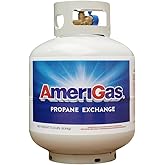
If you are asking “how long does it take to refill a propane tank?” because you are deciding whether to refill before a cookout, RV trip, or weekend project, the most useful distinction is between active filling time and total time at the station. They are not the same.
U-Haul’s current propane guidance says most refills take just a few minutes once a certified attendant begins the process. A Colorado Springs Ace Hardware operator gives a more customer-focused estimate of about 10–15 minutes for a 20-lb cylinder and notes that larger tanks can take longer. Those two estimates fit together: the pumping itself is quick, but inspection, setup, disconnecting, payment, and waiting for an attendant add time.
How Long Does a Propane Refill Take?
For a typical grill cylinder, plan on roughly 10–15 minutes from the time service begins until you are ready to leave. If the station is busy, the total visit may be longer. If you bring a larger cylinder or the attendant finds a condition that needs attention, allow extra time.
| Refill situation | Practical timing | What affects it |
|---|---|---|
| 20-lb grill cylinder | About 10–15 minutes for a typical service visit | Inspection, hookup, fill, disconnect, payment |
| Active filling on a standard cylinder | Often only a few minutes | How much propane is needed and dispenser flow |
| 30- or 40-lb portable cylinder | Usually longer than a 20-lb cylinder | More propane to transfer |
| Large portable cylinder, such as 100 lb | Allow extra time; some retailers say larger cylinders can take up to about 30 minutes | Capacity, handling, inspection, station equipment |
| Partially full cylinder | Potentially shorter pumping time | Less propane is added, but inspection and setup still take time |
| New cylinder being filled for the first time | May take longer | The station may need to perform or verify first-fill preparation |
| Residential or permanently mounted tank | Not directly comparable | Gallons delivered, truck setup, site access, and delivery scheduling |
These are planning estimates, not guaranteed service times. A retailer’s staffing, equipment, queue, local procedures, and the condition of your cylinder matter more than a stopwatch.
Why the Actual Filling Takes Less Time Than the Whole Visit
Many online answers give one number without explaining what it measures. That is why you may see “a few minutes” on one site and “10–15 minutes” on another. Both can be reasonable.
The active fill is the period when liquid propane is actually moving from the dispenser into your cylinder. The total service time includes everything around that transfer.


| Stage | What happens | Why it can add time |
|---|---|---|
| Check-in | You request propane service and an authorized attendant comes to the dispenser. | The attendant may be helping another customer. |
| Pre-fill inspection | The cylinder is checked for condition, valve issues, and qualification markings. | Older or damaged cylinders need closer review. |
| Setup | The cylinder is positioned and connected to approved filling equipment. | Larger or unusual cylinders may need different handling. |
| Propane transfer | The attendant fills the cylinder using the station’s approved procedure. | A larger or emptier cylinder needs more propane. |
| Final check | The fill is stopped, equipment is disconnected, and the cylinder is checked before release. | Any sign of leakage or valve trouble must be addressed. |
| Payment | You pay for the propane or the refill service. | Some locations have pay-at-pump; others require going inside. |
If you want a deeper look at the procedure itself, see our guide to what happens when you get a propane tank refilled.
What Happens Before the Propane Starts Flowing?
A professional refill does not begin the moment the hose reaches the cylinder. The filler first needs to determine that the cylinder is acceptable to fill.
The U.S. Department of Transportation’s Pipeline and Hazardous Materials Safety Administration (PHMSA) advises that cylinders should not be filled when they have serious rust, corrosion, pitting, dents, bulges, cuts, cracks, damaged protective parts, or a leaking or defective valve or pressure-relief device. The manufacturing and requalification markings also need to be checked.
That inspection can be quick when the cylinder is clean, current, and familiar. It can take longer when the markings are hard to read or the cylinder shows damage. An out-of-date cylinder may be refused until it is properly requalified.
If you are unsure whether yours is eligible, our guide to which propane tanks can be refilled explains the common acceptance issues.
What Factors Make a Propane Refill Take Longer?
1. The cylinder is larger
A 20-lb grill cylinder simply needs less product than a 40-lb or 100-lb cylinder. Even if the dispenser’s transfer rate is strong, the larger container generally needs more handling and more propane.
U-Haul locations commonly advertise service for a wide range of portable containers, including cylinders up to 100 lb. The larger the amount being added, the less useful it is to assume that a standard grill-tank time applies.
2. The tank is completely empty
If a cylinder is partially full, the station adds only what is needed to reach its allowable fill level. That can shorten the actual transfer compared with an empty cylinder of the same size.
However, a partial tank does not eliminate the inspection, connection, disconnection, and final-check steps. That is why a half-full 20-lb cylinder may not cut your total visit time in half.
You also do not generally need to run a portable cylinder completely empty before taking it in. See whether a propane tank has to be empty before refilling for more detail.
3. The station is busy or only one employee can dispense propane
At many hardware stores, travel centers, and equipment-rental locations, propane dispensing is only one of several jobs handled by trained staff. You may spend more time waiting for an authorized employee than you spend actually filling the cylinder.
If time matters, calling ahead can be more useful than comparing theoretical pump speeds. Ask whether propane is available during all store hours and whether a trained attendant is currently on duty.
4. The cylinder needs extra inspection
Rust around the bottom, a damaged collar, an unreadable date, valve damage, or questionable requalification markings can stop a routine refill from being routine. Safety checks are not optional simply because you are in a hurry.
PHMSA’s current consumer guidance says a typical DOT cylinder should be requalified within 12 years of manufacture, with later intervals depending on the requalification method. If your cylinder is near or past its qualification date, expect the filler to look closely at the markings.
Our article on refilling an expired propane cylinder explains what may happen when the date is no longer current.
5. It is a new cylinder’s first fill
A brand-new cylinder may require first-fill preparation that an ordinary refill does not. Depending on how the cylinder was supplied and the retailer’s procedures, the station may need to verify that it is ready for propane service before filling it.
Do not try to speed this up by venting or transferring propane yourself. If the cylinder has never been filled, tell the attendant when you arrive and let the propane retailer handle the appropriate procedure.
6. The station’s payment process adds time
Some modern refill locations let you request service and pay at the propane dispenser. Others require you to go inside, get an employee, return to the tank, then go back inside to pay. The propane may flow for only a few minutes while the retail process takes much longer.
How Long Does It Take to Refill a 20-lb Propane Tank?
A good planning estimate is about 10–15 minutes for a normal 20-lb cylinder refill when an attendant is available. U-Haul says the refill itself takes just a few minutes once the attendant starts, while Ace Hardware’s Colorado Springs propane service gives about 10–15 minutes as an average for a 20-lb tank.
A standard 20-lb cylinder is the most common grill cylinder, so this is the best benchmark for the typical consumer search. If your tank is partially full and passes inspection immediately, the active pumping portion may be shorter. If there is a line, the customer-facing total can be much longer.
If you still need a station, start with where to refill a 20-lb propane tank.
How Long Do 30-lb, 40-lb, and 100-lb Propane Refills Take?
There is no single national refill time for every cylinder size. Larger cylinders hold more propane, can be heavier to position, and may require different handling. A retailer that estimates 10–15 minutes for a 20-lb cylinder may advise allowing considerably more time for a large portable cylinder; Ace’s Colorado Springs guidance says larger tanks can take up to about 30 minutes.
For planning purposes, treat the 20-lb timing as a baseline rather than a promise. If you are bringing a 100-lb cylinder, an RV cylinder, or several cylinders at once, call the station first. Not every location fills every size.
Is Refilling Faster Than Exchanging a Propane Tank?
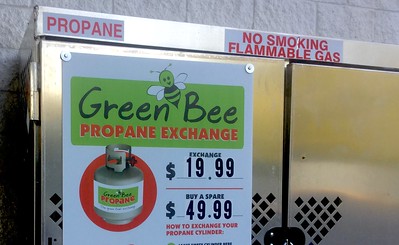
Exchange can be faster when the cage is immediately accessible, but refill may be nearly as quick when a trained attendant is ready. The difference often comes down to waiting and payment rather than the propane transfer itself.
Exchange has the advantage of swapping cylinders instead of connecting yours to dispensing equipment. Refill has other advantages: you keep your own cylinder, you do not surrender propane that is still inside, and you can pay for the amount added at retailers that meter by volume.
For the cost and fuel-quantity tradeoffs, read our comparison of propane refill versus tank exchange.
How to Make Your Propane Refill Visit Faster
You cannot control the filling procedure, but you can avoid several preventable delays:
- Call before driving over. Confirm that propane service is operating and that someone authorized to dispense is on duty.
- Know your cylinder size. Ask whether the station fills 20-, 30-, 40-, 100-lb, RV, or forklift cylinders as appropriate.
- Check the cylinder condition. Heavy corrosion, dents, damaged valves, or an expired qualification date can stop the refill.
- Keep the valve accessible. Remove unnecessary appliance hoses or accessories before transport if the manufacturer’s instructions allow it.
- Avoid peak periods. Weekends before major cookouts or holidays can create lines at popular refill locations.
- Secure the cylinder upright for transport. Having it safely positioned makes arrival and departure easier.
For late or weekend trips, you can also use our guide to finding a propane refill station that is open now.
Do Not Rush the Safety Checks
Saving five minutes is never a reason to skip cylinder inspection or transport precautions. PHMSA requires attention to cylinder condition and qualification, while the Propane Education & Research Council (PERC) advises consumers to transport portable cylinders upright, secured against movement, with the valve closed.
PERC also advises against leaving cylinders in a vehicle. Drive directly to your destination and remove the cylinder promptly. Never transport a leaking cylinder.
After reconnecting the cylinder to an appliance, follow the appliance and cylinder manufacturer’s instructions. PERC recommends checking connections for leaks using an appropriate leak-detection solution or a thick soapy-water solution and looking for bubbles.
What About Refilling a Residential Propane Tank?
A home propane delivery is a different service from taking a 20-lb cylinder to a refill station. The truck must reach the property, position safely, connect the delivery hose, transfer potentially many gallons, document the delivery, and disconnect.
For homeowners, the biggest time factor is often delivery scheduling, not the minutes spent pumping propane once the truck arrives. The on-site time varies with how many gallons are needed, tank access, truck setup, and the supplier’s procedures, so a portable-cylinder estimate should not be applied to a 250-, 500-, or 1,000-gallon residential tank.
FAQ: Propane Tank Refill Time
Can a propane tank be refilled in five minutes?
Sometimes the active propane transfer for a standard cylinder can be completed in only a few minutes. U-Haul says most refills take just a few minutes once the attendant begins. Your total stop is usually longer because inspection, connection, final checks, and payment also take time.
How long should I allow for a 20-lb propane refill?
Allow roughly 10–15 minutes when there is no line and the cylinder passes inspection. Give yourself more time if the station is busy or only certain employees are authorized to dispense propane.
Does a half-full propane tank refill faster?
The active transfer may be shorter because less propane needs to be added. The station still has to inspect, connect, fill, disconnect, and check the cylinder, so the overall visit will not necessarily be half as long.
Does a propane tank need to be empty before refilling?
No. A refill station can generally add propane to a partially full eligible cylinder. Refilling instead of exchanging also means you do not give up the propane already in the tank.
Why would a refill take 30 minutes or more?
Common reasons include a larger cylinder, several cylinders in one order, a line of customers, limited trained staff, extra inspection, qualification-date questions, or a payment process that requires going inside the store.
Is a new propane tank slower to fill the first time?
It can be. A new cylinder may need additional first-fill checks or preparation before propane is added. Tell the retailer that the cylinder is new and has never been filled rather than attempting any preparation yourself.
How long does a 100-lb propane tank take to refill?
Expect a 100-lb cylinder to take longer than a standard 20-lb grill cylinder. Some retailers advise that larger cylinders can take up to around 30 minutes. Call ahead because not every refill station accepts 100-lb cylinders.
Is exchange always faster than refill?
No. Exchange may be quicker when a cage is immediately available, but a refill can also be fast when an attendant is ready. U-Haul notes that most active refills take only a few minutes, so waiting for service often determines which option is faster.
Bottom Line
For a standard 20-lb grill cylinder, plan on about 10–15 minutes for a normal refill visit when service is immediately available. The actual propane transfer can take only a few minutes. Larger tanks, multiple cylinders, first fills, inspection problems, and lines can increase the total time.
The best way to avoid delays is simple: use a station that fills your cylinder size, call ahead when timing matters, bring a cylinder that is in good condition and within its qualification period, and never ask an attendant to rush a safety check.
Sources and Safety References
- U-Haul: Propane Refill vs. Exchange — current refill-time and service information.
- U.S. DOT / PHMSA: Is Your Cylinder Safe to Fill? — cylinder condition and requalification guidance.
- Propane Education & Research Council: Portable Cylinder Safety Guide — handling, transport, storage, and leak-safety guidance.
- Ace Hardware Colorado Springs: Propane Tank Refills — real-world retailer timing benchmark.

Mike is an experienced propane technician with over 15 years of professional experience in the field. He has dedicated his career to helping customers with their propane needs, from installation to maintenance and repair. Together with Jeremy, he co-founded this website to provide useful information and guidance to customers seeking reliable propane services.