

If you’re planning to buy or lease a propane tank in Louisiana, I’ll help you compare tank prices, delivery services, installation costs, and state requirements.
Whether you live in Baton Rouge, Lafayette, Shreveport, or rural southern Louisiana, choosing the right tank depends on your fuel consumption, property conditions, and budget.
In this guide, I’ll cover propane tank sizes, refill prices, local suppliers, buying versus leasing, hurricane preparedness, and important installation rules so you can make an informed decision.


Quick Answer: Purchase and Installation Costs
The cost of a propane tank in Louisiana depends on its size, condition, installation type, and whether you purchase or lease it.
Here are published new-equipment price estimates from BLT Tanks, an Oklahoma-based supplier.
These are equipment-only references, not installed Louisiana prices. The supplier does not ordinarily deliver individual tanks.
For fuel-cost illustrations, I’ll use the EIA’s Gulf Coast regional residential propane average of $3.091 per gallon for November 16, 2026, excluding taxes.


At this regional benchmark, filling an empty 500-gallon tank with 400 gallons of propane would cost approximately $1,236.40, before applicable charges. This isn’t a Louisiana statewide average or a guaranteed supplier rate.
For homes using propane primarily for cooking and water heating, I recommend evaluating 120- and 250-gallon tanks first. For larger homes, heating systems, or standby generators, 500- and 1,000-gallon tanks may offer more convenient storage.
My recommendation: Before buying, obtain two or three complete quotations from Louisiana propane suppliers. Ask about equipment ownership, delivery pricing, installation, flood exposure, maintenance, and applicable state permits.
Propane tank costs vary across Louisiana. The total depends on equipment size, delivery, installation work, and the amount of propane purchased. A home in an easily accessible neighborhood may cost less to equip than a rural property with a long driveway, soft soil, or seasonal flooding.
What Affects Propane Tank Prices?
- Tank size: Larger tanks generally cost more upfront but provide more fuel between deliveries.
- New or refurbished equipment: Used tanks can cost less, although condition and inspection history are important.
- Above-ground or underground installation: Underground tanks require excavation, suitable construction, and corrosion protection.
- Soil and drainage: Wet ground or unstable soil can require special site preparation.
- Delivery accessibility: Distance, narrow roads, and difficult unloading may affect price.
- Gas piping: Longer pipe runs can increase installation costs.
- Permits and inspections: Louisiana LPG requirements and local approvals must be considered.
Worked Example: Budgeting for a 500-Gallon Installation
Suppose you’re purchasing a new above-ground 500-gallon tank.



This is a hypothetical budget, not a quotation from a Louisiana installation company. The equipment cost is based on a published out-of-state reference. Installation allowances are illustrative, while the fuel calculation uses the dated Gulf Coast regional average. A property requiring flood-resistant placement, additional anchoring, or substantial piping may cost more.
How Much Do Used Propane Tanks Cost?
Used and professionally refurbished tanks may provide savings. BLT Tanks advertised these refurbished-tank ranges in October 2026.
These are equipment references, not confirmed Louisiana inventory. I would verify ownership, vessel identification, corrosion, valves, and acceptance by the intended fuel supplier before purchasing used equipment.
Local Suppliers and Purchasing Options
Louisiana has independent propane dealers, regional companies, and national suppliers offering residential, agricultural, and commercial services. Not every company sells large stationary tanks outright. I recommend identifying suppliers that serve your exact address before comparing prices.


ReedGas Propane — Southern Louisiana
ReedGas Propane advertises residential propane delivery in southern Louisiana. The company operates three locations serving 16 parishes and offers routine delivery and prebuy programs for eligible customers. It also advertises 500-gallon underground tank options and plans allowing customers to purchase underground equipment. I would contact ReedGas when comparing an underground installation with an above-ground tank.
Vacherie Fuel — Thibodaux and Vacherie
Vacherie Fuel operates facilities in Thibodaux and Vacherie. Services include residential delivery, commercial bulk supply, bottle exchange, and tank installation. I would ask about above-ground tank placement, generator fuel storage, and hurricane preparedness.
Neill Gas — Louisiana and Mississippi
Neill Gas advertises residential propane delivery in parts of Louisiana and Mississippi, plus equipment for sale or lease. I would confirm the stationary tank options and service territory for my address.
O’Neal Gas — Northern Louisiana
O’Neal Gas provides delivery, tank sales and rentals, installations, and appliance-related services. Advertised equipment includes 120-, 150-, 250-, 500-, and 1,000-gallon tanks. I would compare purchasing with renting.
AmeriGas — Selected Louisiana Communities
AmeriGas has service locations covering portions of Louisiana. Contact the local office to confirm bulk delivery and tank arrangements.
Louisiana Propane Supplier Comparison
These are supplier leads, not guarantees of service at every address.
How Would I Compare Propane Suppliers?
I recommend requesting an itemized written quotation showing tank model, delivery, site preparation, installation, piping, testing, fuel price, and ownership terms. For a flood-prone property, ask how the tank will be secured. The Louisiana Propane Gas Association’s dealer directory can help identify additional providers.
Buying or Leasing: Comparing Long-Term Costs
Buying and leasing are both possible, but long-term costs differ. Buying means you own the equipment; a lease generally leaves ownership with the supplier and may restrict refills by competing companies.
Advantages of Buying
Buying may provide greater ownership flexibility and the opportunity to compare fuel suppliers, provided another company agrees to inspect and service the tank. Upfront costs and maintenance responsibilities may be higher.
Advantages of Leasing
Leasing can reduce upfront spending, and the supplier may handle certain maintenance. Contracts can include rental fees, minimum fuel purchases, and limits on switching suppliers.
Buying vs. Leasing Comparison
Five-Year Buying vs. Leasing Example
Suppose a 500-gallon tank costs $2,900 to purchase, or you lease one for a hypothetical $125 annually.
If the lease also costs $0.30 more per gallon and you use 700 gallons per year, the additional fuel expense is 700 × $0.30 × 5 = $1,050. Combined with rent, the hypothetical lease-related cost becomes $1,675. This excludes shared fuel expenses, installation, maintenance, and other charges. Compare real supplier contracts rather than assuming these rates.
Can Another Supplier Fill a Leased Tank?
Louisiana law protects LPG tank ownership and restricts unauthorized filling or handling of another person’s tank. I wouldn’t arrange a refill without confirming ownership and obtaining appropriate authorization, especially when buying a house with an existing tank.
Available Storage Capacities and Common Uses
Portable cylinders are commonly described by propane weight in pounds; stationary vessels are generally rated by water capacity in gallons.
Storage Capacity Chart
Stationary-tank values use an approximate 80% fill for planning; actual permitted filling follows code and equipment conditions.
Why Aren’t Stationary Tanks Filled Completely?
Liquid propane expands as temperature increases, so vapor space must remain. A 500-gallon water-capacity vessel commonly holds about 400 gallons of liquid at an 80% fill.
Which Size Would I Choose?
I would start with 120–250 gallons for cooking and limited hot water, or compare 500–1,000 gallons for significant generator or multiple-appliance demand. Maximum hourly vapor demand also matters.
1,000-Gallon Systems: Prices, Dimensions and Fuel Capacity
A 1,000-gallon tank may serve large residences, businesses, farms, and extended generator operation. It holds approximately 800 gallons at an 80% fill.
1,000-Gallon Tank Prices
These aren’t installed Louisiana quotations.
1,000-Gallon Tank Dimensions
Use manufacturer-specific dimensions before planning installation.
How Much Does It Cost to Fill a 1,000-Gallon Tank?
At the illustrative Gulf Coast regional price, 800 × $3.091 = $2,472.80. Filling from 30% to 80% adds around 500 gallons: 500 × $3.091 = $1,545.50. These aren’t Louisiana supplier quotes.
How Long Does a 1,000-Gallon Tank Last?
At eight gallons per day, 800 gallons provides 100 theoretical days. From 80% down to a planned 20% refill level, 600 gallons would last 75 days at that consumption rate.
Is a 1,000-Gallon Tank Worth Buying?
I would consider it for high consumption, substantial generator requirements, or limited delivery access after severe storms. It is likely excessive for low-demand appliances.
500-Gallon Systems: Costs and Backup Power Needs
A 500-gallon tank can suit several appliances or a standby generator. It holds around 400 gallons at 80% fill.
500-Gallon Tank Prices
500-Gallon Tank Dimensions
How Much Does It Cost to Fill a 500-Gallon Tank?
At the Gulf Coast regional benchmark, 400 × $3.091 = $1,236.40.
Only $3.091 is the dated regional EIA average; other prices are hypothetical.
How Long Does a 500-Gallon Tank Last?
At five gallons daily, 400 gallons theoretically lasts 80 days. The 300 gallons between 80% and 20% lasts 60 days.
Is a 500-Gallon Tank Enough for a Generator?
It depends on the generator’s consumption and target runtime. Continuous generator operation can use much more propane than cooking or hot water.
250-Gallon Options for Smaller Fuel Requirements
A 250-gallon stationary tank may work for moderate demand, holding around 200 gallons at 80% fill.
250-Gallon Tank Prices
250-Gallon Tank Dimensions
How Much Does It Cost to Fill a 250-Gallon Tank?
At the regional benchmark, 200 × $3.091 = $618.20.
How Long Does a 250-Gallon Tank Last?
At 40 gallons monthly, a full tank theoretically provides five months. The 150 gallons available between 80% and 20% provide 3.75 months.
250-Gallon vs. 500-Gallon Comparison
Smaller Cylinders and Residential Storage Costs
Small propane containers include portable cylinders and lower-capacity stationary tanks.
Small Propane Tank Sizes
How Much Does a 120-Gallon Tank Cost?
BLT Tanks lists $985 for an above-ground 120-gallon tank and $1,770 for an underground model, excluding local delivery and installation.
How Much Does It Cost to Fill a 120-Gallon Tank?
96 × $3.091 = $296.74, rounded, using the Gulf Coast regional benchmark.
How Long Does a 120-Gallon Tank Last?
At 20 gallons monthly, 96 gallons theoretically lasts 4.8 months. The 72 gallons between 80% and 20% provide 3.6 months.
100-Pound Cylinder vs. 100-Gallon Tank
A 100-pound portable cylinder holds around 23.5 gallons of propane, compared with approximately 80 gallons at 80% fill in a 100-gallon stationary tank. See my propane tank versus cylinder guide.
Buying New or Used Equipment
Used equipment can offer savings, but a tank may have corrosion, damaged valves, unreadable identification, or ownership restrictions. Louisiana humidity makes condition particularly important.
Where Can You Find Used Tanks?
Look into reputable refurbishers, commercial resellers, agricultural equipment suppliers, and private listings. Prefer sellers who can document ownership and service history.
Used Tank Inspection Checklist
Used 500-Gallon Tank Cost Example
Suppose a refurbished 500-gallon tank costs $1,800. Add hypothetical costs of $350 for transportation, $400 for servicing, and $850 for installation. The total is $3,400 before propane. Flood-resistant placement or corrosion work may remove the savings. Read how frequently propane tanks should be replaced.
How Residential Fuel Delivery Works
Most stationary residential tanks are filled by bulk delivery trucks. Delivery terms depend on the supplier, ownership, usage, and service location.
Automatic Propane Delivery
With automatic delivery, the supplier estimates or monitors consumption and schedules refills. ReedGas Propane advertises routine delivery arrangements.
Will-Call Delivery
With will-call service, the homeowner checks the tank gauge and requests fuel. Ask how much advance notice is needed during storms or busy periods.
Automatic vs. Will-Call Delivery
Are There Propane Delivery Fees?
Ask about minimum quantities, administrative charges, emergency deliveries, equipment rental, and how fuel prices vary with order size.
What Happens If You Run Out of Propane?
An empty tank can interrupt appliances or generator service. Restoration may require safety checks or leak testing. Contact the supplier rather than bypassing safety devices.
Regional Delivery Coverage and Refill Locations
Delivery territories vary by parish. Verify coverage by your exact address rather than assuming the nearest office can serve you.
Baton Rouge Service Area
Compare regional and national providers, asking about tank sales, leasing, delivery, and standby-generator work.
Lafayette and Acadiana
ReedGas Propane serves parts of southern Louisiana. Confirm service at your address before requesting installation.
Thibodaux and Vacherie
Vacherie Fuel advertises delivery and installation. Ask about safe above-ground placement and generator fuel storage.
Northern Louisiana Service Area
O’Neal Gas advertises tank purchasing, rental, installation, and residential deliveries.
Central Louisiana Service Area
AmeriGas has a Boyce location and serves supported territories. Verify tank options and coverage locally.
Louisiana Supplier Comparison
Where Can You Refill a 20-Pound Propane Cylinder?
Some retail propane stations refill portable cylinders, while others offer exchanges. Confirm availability before visiting.
How Much Does a 20-Pound Propane Refill Cost?
A standard 20-pound cylinder holds about 4.7 gallons at rated fill.
These are hypothetical retail rates, not verified Louisiana station prices. See my propane refill cost per gallon guide.
Equipment Dimensions and Property Space Requirements
Tank dimensions matter for space planning, but installations also require safe clearances and access for service and delivery.
Standard Propane Tank Dimensions
These are representative dimensions; use the manufacturer’s model specifications.
How Much Space Does a Propane Tank Need?
The tank needs stable support, code-required separation, and accessible gauges and valves. Check distances to the home, property boundaries, windows, equipment, and ignition sources.
What About Louisiana’s Soft Soil?
Saturated or unstable soil can affect supports, foundation design, and long-term stability. Have the installer evaluate the site.
What About Flood-Prone Properties?
Flood exposure may require engineered anchoring to prevent flotation or displacement. Concrete blocks alone may not provide adequate protection.
Horizontal vs. Vertical Tanks
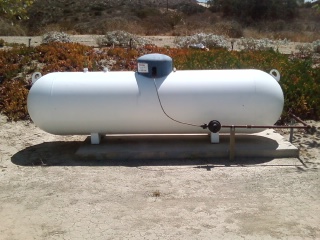
Larger stationary vessels commonly have horizontal designs; some smaller approved models are vertical. Install only in the approved orientation.
Above-Ground vs. Underground Installation Options
High water tables, heavy rain, and flood hazards make this comparison particularly important.
Advantages of Above-Ground Tanks
They are easier to inspect and usually require less excavation, but can be exposed to storm debris, corrosion, or flooding.
Advantages of Underground Tanks
They are less visible and experience more stable surrounding temperatures, but require approved equipment, excavation, corrosion protection, and service access.
Above-Ground vs. Underground Equipment Prices
These equipment-only references exclude local delivery, excavation, anchoring, and installation.
Can an Underground Propane Tank Float?
Yes. Groundwater or floodwater can create buoyancy and displace inadequately secured vessels. Evaluate flotation hazards before buying.
Do Underground Tanks Need Corrosion Protection?
Yes. Appropriate protective coatings, cathodic protection, and inspection or testing may be required. Ask who maintains them.
Is an Underground Tank Worth It in Louisiana?
It may be on suitable sites, but high groundwater and flood exposure deserve professional assessment. Don’t decide on appearance alone.
State Installation Rules, Safety Standards and Permits
Louisiana regulates LPG through the Louisiana Liquefied Petroleum Gas Commission, principally under Louisiana Revised Statutes Title 40, Chapter 10, and Louisiana Administrative Code Title 55, Part IX. The Commission identifies NFPA 58 (2017 edition) and NFPA 54 (2018 edition) as adopted standards, subject to Louisiana exceptions and additional rules. A qualified Louisiana installer should determine what applies to your project.
When Is an Installation Permit Required?
Businesses performing regulated LPG work must hold appropriate permits or registrations. Reporting and approval requirements depend on the installation. Local building or fire approval may also apply. Don’t assume a small stationary vessel removes professional installation or reporting obligations.
Louisiana Propane Installation Checklist
Does Louisiana Require LPG Installers to Be Qualified?
Yes. Specified installation, repair, adjustment, and service activities require appropriate Commission qualifications, permits, registrations, or competency credentials. Verify these before hiring.
How Far Must a Propane Tank Be From a House?
Distances depend on tank size, configuration, buildings, boundaries, openings, and ignition sources. Common NFPA-based preliminary references for certain above-ground tanks include:
Important: This is not a complete Louisiana approval chart. State exceptions, underground installations, tank groups, and site details may change clearances. Have the installer verify actual requirements; don’t place a tank solely from this table.
Are Installation Reports Required?
Louisiana LPG regulations address installation documentation and special provisions for certain facilities, including public-assembly buildings. Ask the contractor what reports apply to the project.
Does Louisiana Require Pressure Testing?
Appropriate piping inspection, required pressure tests, leak checks, regulator verification, and appliance startup should be included in the work agreement.
Can You Install a Propane Tank Yourself?
For a large stationary residential system, I recommend a properly qualified contractor. Incorrect piping or regulators can cause fires, explosions, and carbon monoxide hazards from improperly operating appliances.
Do Portable Propane Cylinders Require Recertification?
Certain DOT cylinders require periodic requalification, while stationary ASME vessels follow different rules. Read my guide to who recertifies propane tanks.
Hurricane Preparedness and Flood Protection
Hurricanes and flooding can threaten both tank stability and fuel delivery. Plan storm protection during initial installation.
Can a Propane Tank Float During a Flood?
Yes. Buoyancy can move an inadequately secured tank, even if it isn’t completely empty, damaging piping and creating serious hazards.
Should Propane Tanks Be Anchored?
At flood-prone sites, engineered anchoring or other suitable restraints may be required. Do not improvise straps or anchors without professional guidance.
What Happens if a Propane Tank Is Submerged?
Floodwater can damage valves, regulators, connections, and appliances. Do not use a submerged, displaced, or damaged system until a qualified propane professional has inspected it. Don’t straighten piping or restart flooded appliances yourself.
What Should You Do Before a Hurricane?
- Check the fuel gauge and contact your supplier about needs.
- Schedule any necessary delivery early.
- Secure loose items that could hit the tank.
- Keep service valves and access routes clear.
- Review the supplier’s storm and emergency procedures.
- Follow evacuation orders and local guidance.
- Never operate a generator or fuel-burning appliance indoors.
What Should You Do After a Hurricane?
Assess from a safe distance. If you smell gas, hear hissing, or observe damaged equipment, leave, avoid ignition sources, and contact emergency services and the propane supplier from a safe location. Don’t operate nearby switches. Have damaged or submerged systems inspected before use.
Louisiana Hurricane Propane Safety Checklist
Is a Larger Tank Better for Hurricane Preparedness?
Larger vessels store more propane, but need safe placement and storm protection. Size storage around generator runtime, household demand, and delivery reliability.
Sizing Fuel Storage for Standby Generators
Standby generators can consume significant propane during utility outages. Use the manufacturer’s fuel-consumption chart at the expected electrical load.
How Do You Calculate Generator Fuel Use?
Suppose a generator uses three gallons per hour continuously.
Actual fuel use varies by generator and load.
How Long Could a 500-Gallon Tank Run a Generator?
A 500-gallon tank holds around 400 gallons at 80%. At three gallons/hour, theoretical runtime is 133 hours. Using the 300 gallons between 80% and 20% gives 100 hours, or 4.2 days.
How Long Could a 1,000-Gallon Tank Run the Same Generator?
800 gallons at three gallons/hour represents about 267 theoretical hours. The 600-gallon operating window offers 200 hours, about 8.3 days.
Generator Tank Comparison
These are planning calculations, not guaranteed runtimes. Verify maximum vapor delivery as well as storage. See my propane tank size chart for generators.
Protecting Your Equipment From Heat, Humidity and Heavy Rain
Louisiana’s heat, rain, humidity, and coastal air create particular equipment-maintenance challenges.
Does Heat Increase Propane Pressure?
Yes. As propane temperature rises, tank pressure increases. Approved vessels have required pressure-protection equipment. Never modify or obstruct relief devices.
Can Humidity Cause Rust?
Yes. Moisture contributes to corrosion where protective coatings are damaged. Watch for coating deterioration and have significant rust assessed.
Is Coastal Salt Air a Problem?
Salt air may accelerate corrosion. Discuss protective coatings and inspection intervals with the propane supplier.
How Does Heavy Rain Affect a Tank Foundation?
Poor drainage can cause erosion, settlement, or unstable supports. Keep drainage clear and report movement or damage.
Louisiana Climate Maintenance Guide
Arrange professional inspection when supports, valves, or piping appear damaged.
Fuel Requirements for Farms and Commercial Operations
Agricultural and commercial uses include drying, heating, forklifts, kitchens, temporary heaters, and standby generators.
Propane for Agricultural Operations
Crop drying and farm heating can involve high seasonal fuel demand. Calculate maximum hourly burner input as well as annual consumption.
Propane for Commercial Kitchens
Restaurants can use propane for cooking and water heating. Size the system for appliances operating simultaneously.
Propane for Forklifts
Many LPG forklifts use specialized liquid-withdrawal cylinders, commonly around 33 pounds, which aren’t interchangeable with grill cylinders.
Propane for Temporary Construction Heating
Temporary heaters need appropriate equipment, ventilation, and code-compliant installations.
Commercial Application Comparison
For substantial commercial and agricultural needs, use a professionally designed fuel system.
Common Equipment Brands and Manufacturers
Compare exact model specifications, construction standards, suitability, warranty, and local supplier support—not just brand name.
Manchester Tank
Manufactures portable cylinders and stationary ASME propane vessels for residential and commercial uses.
Quality Steel
Produces stationary above-ground and underground propane tanks. BLT Tanks publishes prices for some Quality Steel vessels.
Worthington Enterprises
Associated with portable propane cylinders for grills, recreation, and other applications.
Flame King
Offers portable and specialty propane cylinders commonly used for grills and RVs.
Propane Tank Brand Comparison
For a permanent installation, I would select equipment the local propane supplier can safely service.
Annual Fuel Expenses and Ownership Costs
Long-term fuel consumption often matters more than the tank’s original purchase price.
How to Calculate Propane Consumption
Propane supplies about 91,500 BTU per gallon. Gallons per hour = Appliance input BTU per hour ÷ 91,500. An appliance rated at 90,000 BTU/hour uses about 0.98 gallon/hour at full input. Eight hours uses about 7.87 gallons, costing approximately $24.32 at the dated $3.091 Gulf Coast regional benchmark.
Annual Propane Cost Comparison
These are calculations at a historical regional benchmark, not Louisiana dealer quotations or forecasts.
Five-Year Tank Ownership Example
Suppose you buy a 500-gallon tank for $2,900 and budget $1,400 for delivery and installation: $4,300 upfront. At 600 gallons per year and a hypothetical $3.25/gallon, annual fuel costs $1,950. Five years of fuel is $9,750, making the illustrative five-year total $14,050, excluding taxes, maintenance, fees, financing, and changes in usage.
How Can You Reduce Propane Costs?
Compare written delivered-fuel prices and ask about prebuy programs, automatic delivery, fuel contracts, and tank rental. Maintain appliances and use the manufacturer’s generator consumption chart for realistic planning.
Choosing the Right Storage Capacity for Your Home
Two homes of the same square footage can consume very different amounts of propane. Appliance type, generator requirements, and delivery reliability are more useful sizing criteria.
Capacity Selection Guide
These are starting points, not final specifications.
What Size Tank Do You Need for Home Heating?
Review previous delivery records or have an installer estimate annual heating consumption and maximum hourly fuel demand.
What Size Tank Do You Need for a Generator?
Use manufacturer fuel-consumption figures at expected load. Calculate total fuel for the desired runtime plus other appliances sharing the tank.
500-Gallon vs. 1,000-Gallon Comparison
At a hypothetical six gallons/day:
Larger storage can reduce deliveries but costs more and requires more space.
Pre-Purchase Checklist
- Exact tank capacity and manufacturer
- New or refurbished condition
- Legal ownership and warranty
- Buying or leasing terms
- Location and clearances
- Louisiana LPG Commission requirements
- Installer qualifications
- Local building and fire approvals
- Soil and foundation suitability
- Flood exposure and anchoring
- Burial rating when applicable
- Corrosion protection
- Regulators, piping and testing
- Delivered propane price
- Generator consumption
- Hurricane-season delivery planning
- Emergency service
- Acceptance of customer-owned equipment
Obtain quotes with comparable equipment and installation scope.
Frequently Asked Questions
What Is the Purchase Price of a 500-Gallon Tank?
A new above-ground equipment reference is about $2,900; actual Louisiana installed cost requires a local quote.
How Much Does a 250-Gallon Propane Tank Cost?
A published above-ground equipment estimate is about $1,950 before installation.
How Much Does a 1,000-Gallon Propane Tank Cost?
A published above-ground equipment estimate is about $4,750 before installation.
What Is the Average Propane Price in Louisiana?
The EIA does not publish a separate weekly Louisiana residential price. The Gulf Coast regional average was $3.091/gallon for November 16, 2026, excluding taxes. Louisiana supplier rates may differ.
Where Can I Buy Propane Tanks Near Me?
Investigate ReedGas Propane, Vacherie Fuel, Neill Gas, O’Neal Gas, and other providers. Confirm the service territory and tank availability.
Can I Lease a Propane Tank?
Yes. Some Louisiana suppliers offer equipment rentals or leases.
Is Buying Better Than Leasing?
Buying may increase flexibility, while leasing reduces initial expense. Compare contracts and multi-year costs.
How Much Does It Cost to Fill a 500-Gallon Tank?
A 400-gallon fill costs $1,236.40 at the dated Gulf Coast regional benchmark, before additional charges. This isn’t a verified Louisiana quote.
Do I Need a Permit to Install a Propane Tank?
State LPG installer requirements and installation reports may apply, along with local approvals. Consult a qualified contractor.
How Far Must a Propane Tank Be From a House?
Distances depend on tank size, configuration, and site hazards. Have an approved installer check applicable NFPA 58 and Louisiana rules.
Can a Propane Tank Float During a Flood?
Yes. Floodwater may move an inadequately secured tank. Proper site design and anchoring matter.
Can I Install an Underground Propane Tank?
Yes, when approved for the site and properly designed for groundwater, corrosion, and flotation risks.
Should a Flooded Propane Tank Be Inspected?
Yes. Have a qualified propane professional inspect submerged or displaced equipment before reuse.
Can I Buy a Used Propane Tank?
Yes, subject to ownership, condition, and dealer acceptance.
How Much Propane Does a Standby Generator Use?
It depends on model and load. Use the manufacturer’s hourly consumption chart.
Do Propane Tanks Expire After 12 Years?
Certain DOT cylinders need periodic requalification; stationary ASME vessels have different requirements.
Is Automatic Delivery Better Than Will-Call?
Automatic service may simplify regular deliveries; will-call requires monitoring and advance scheduling.
Does Louisiana’s Humidity Damage Propane Tanks?
Humidity and coastal air may contribute to corrosion, making coating inspection and maintenance important.
Final Thoughts: Choosing Safe and Reliable Fuel Storage
If you’re purchasing a propane tank in Louisiana, I recommend beginning with your actual fuel requirements and property conditions.
A 120- or 250-gallon tank may be sufficient for cooking, hot water, and limited appliance use. A 500-gallon tank can serve multiple appliances or a standby generator. For greater demand or long potential storm-related delivery interruptions, compare 1,000-gallon equipment.
However, I wouldn’t choose the largest tank solely for capacity. Louisiana homeowners must also consider installation safety, flooding, hurricanes, humidity, ownership, and delivery reliability.
Before buying, compare written quotations and have the proposed installation location assessed by a qualified LPG professional.
The best propane tank is one that safely meets your household’s fuel demand, fits your property, and provides reliable storage while accounting for Louisiana’s climate and installation requirements.

Mike is an experienced propane technician with over 15 years of professional experience in the field. He has dedicated his career to helping customers with their propane needs, from installation to maintenance and repair. Together with Jeremy, he co-founded this website to provide useful information and guidance to customers seeking reliable propane services.