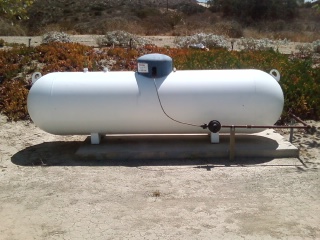


If you’re planning to buy or lease a propane tank in Massachusetts, I’ll help you compare tank prices, delivery options, installation expenses, and state requirements.
Whether you live in Worcester, Springfield, Cape Cod, or a rural Berkshire County community, the right tank depends on your fuel consumption, winter heating needs, and property conditions.
In this guide, I’ll cover propane tank sizes, refill costs, local suppliers, buying versus leasing, Massachusetts permits, and cold-weather planning so you can make an informed decision.


Quick Answer: How Much Does a Propane Tank Cost in Massachusetts?
The cost of a propane tank in Massachusetts depends on its capacity, condition, whether it is installed above or below ground, and whether you buy or lease it.
The following published prices from BLT Tanks, an Oklahoma-based supplier, provide equipment-only estimates.
| Propane tank size | New above-ground equipment price | Propane at 80% fill |
|---|---|---|
| 120 gallons | $985 | 96 gallons |
| 250 gallons | $1,950 | 200 gallons |
| 320 gallons | $2,350 | 256 gallons |
| 500 gallons | $2,900 | 400 gallons |
| 1,000 gallons | $4,750 | 800 gallons |
These prices are reference estimates, not Massachusetts installed quotations. Local transportation, installation, permits, and fuel are additional.
For propane fuel, the U.S. Energy Information Administration reported a Massachusetts residential average of $3.820 per gallon for November 16, 2026, excluding taxes.


At that price, filling an empty 500-gallon tank with 400 gallons would cost approximately $1,528 before additional charges.
For a home using propane mainly for cooking and water heating, I would begin by comparing 120- and 250-gallon tanks. For full-time home heating, I would investigate 500- and 1,000-gallon tanks.
My recommendation: Obtain itemized installed-price quotations from at least two Massachusetts suppliers. Confirm the tank ownership agreement, local fire department permits, gas-fitting work, winter delivery arrangements, and ongoing service charges.
Pricing note: This 2027 guide uses information available as of November 24, 2026. The equipment prices are published out-of-state benchmarks, and fuel calculations use the EIA’s November 16, 2026 Massachusetts residential average. Neither represents a guaranteed local price or a 2027 forecast.
What Affects Propane Tank Prices?
- Tank capacity: Larger vessels usually require a higher initial investment.
- Equipment condition: Refurbished tanks may cost less than new equipment.
- Installation type: Underground tanks require additional site work and corrosion protection.
- Property accessibility: Narrow driveways and difficult unloading locations may increase expenses.
- Ground conditions: Rock, slopes, drainage, and frost can influence foundation and excavation work.
- Gas piping: Longer piping runs generally increase installation costs.
- Permits and inspections: Municipal fire and gas-fitting requirements may add expenses.
Example: Installing a 500-Gallon Propane Tank in Massachusetts
Suppose you buy a new above-ground 500-gallon tank.



| Expense | Illustrative amount |
|---|---|
| New 500-gallon propane tank | $2,900 |
| Delivery and site preparation | $500 |
| Regulators, piping, installation, and testing | $1,100 |
| Initial 400-gallon fill at $3.820 | $1,528 |
| Illustrative total | $6,028 |
This is a hypothetical budget, not a Massachusetts installer quote. The $2,900 equipment cost is a published reference. The site and installation allowances are assumptions, while the fuel amount uses the dated EIA average. Actual costs depend on the property and the work required.
How Much Do Used Propane Tanks Cost?
Used and refurbished tanks may offer savings. BLT Tanks advertised the following refurbished equipment price ranges in October 2026.
| Refurbished tank size | Published equipment range |
|---|---|
| 250 gallons | $795–$1,095 |
| 500 gallons | $1,575–$1,895 |
| 1,000 gallons | $2,755–$3,195 |
These are out-of-state advertised prices, not verified Massachusetts inventory. Before buying a used tank, I would confirm ownership, inspect its documentation, and ask whether my intended propane supplier would install or refill it.
Where Can You Buy Propane Tanks in Massachusetts?
Massachusetts has propane suppliers serving Greater Boston, Central Massachusetts, the Pioneer Valley, the Berkshires, southeastern Massachusetts, and Cape Cod. Some offer tank sales, while others specialize in leased equipment. I recommend contacting suppliers that explicitly serve your town.


George Propane — Western Massachusetts
George Propane advertises professional propane tank installation in western Massachusetts. Its services include residential and commercial propane delivery and tank monitoring. I would investigate this company when comparing a new tank installation with ongoing automatic delivery.
FSi Propane — Western Massachusetts
FSi Propane advertises propane delivery throughout western Massachusetts and nearby Connecticut communities. It also offers tank leasing, including installation, safety testing, and maintenance under its program. For a homeowner looking to reduce initial equipment costs, I would ask about the complete lease agreement.
H.A. George & Sons Fuel — Berkshire County
H.A. George & Sons Fuel advertises propane tank installation and testing across central and northern Berkshire County and parts of southern Vermont. Its service information specifically emphasizes safe tank placement and access for the delivery truck. I would investigate this company for properties near Pittsfield, North Adams, Adams, and Williamstown.
Fraticelli Oil & Propane — Central Massachusetts
Fraticelli Oil & Propane advertises propane tank installation and leasing in central Massachusetts and southern New Hampshire. The company’s tank program includes installation, connection, and maintenance. I would request quotations for both equipment leasing and long-term fuel supply.
Tasse Fuel Corporation — Central Massachusetts
Tasse Fuel Corporation advertises propane tank delivery and installation in Central Massachusetts. Its service area includes Southbridge, Sturbridge, Charlton, Webster, and nearby communities. I would contact Tasse Fuel when comparing residential propane equipment and local delivery.
Medway Oil & Propane — Eastern Massachusetts
Medway Oil & Propane advertises propane delivery, tank installation, leasing, and wireless tank monitoring across its eastern Massachusetts service area. For households around Medway and surrounding communities, I would ask about installation fees and automatic delivery.
Clifford Propane — Berkshire County
Clifford Propane advertises residential and commercial delivery, equipment installation, repairs, tank rental, and tank swaps in the Lenox area. I would include it when comparing leased tank arrangements in the Berkshires.
Massachusetts Propane Supplier Comparison
| Supplier | Region to investigate | Published services |
|---|---|---|
| George Propane | Western Massachusetts | Tank installation and delivery |
| FSi Propane | Western Massachusetts | Leasing, installation, testing and maintenance |
| H.A. George & Sons Fuel | Berkshire County | Installation, testing and delivery |
| Fraticelli Oil & Propane | Central Massachusetts | Tank leasing and installation |
| Tasse Fuel | Southbridge and surrounding towns | Delivery and tank installation |
| Medway Oil & Propane | Eastern Massachusetts | Leasing, monitoring and delivery |
| Clifford Propane | Lenox and Berkshire County | Rental, installation and delivery |
These are supplier leads rather than guarantees of current inventory or coverage at every address.
How Would I Request a Quote?
I would provide the exact address, proposed tank size, appliance list, and estimated annual propane use. Then I would request an itemized price for equipment, permits, site work, installation, pressure testing, and fuel. I would also ask whether the supplier accepts customer-owned tanks.
Buying vs. Leasing a Propane Tank in Massachusetts
Buying and leasing can have different long-term financial consequences. When you buy a propane tank, you own the equipment. When you lease, the dealer generally retains ownership and may restrict who supplies the fuel.
Advantages of Buying
Owning a tank may offer more flexibility when comparing propane suppliers. However, a new fuel company may require a safety inspection and may decline to service unsuitable equipment. The tank also requires a larger initial investment.
Advantages of Leasing
Leasing usually reduces the equipment purchase cost. The propane company may handle installation, maintenance, and certain repairs under the contract. However, rental fees, minimum annual fuel purchases, and supplier restrictions may affect the total expense.
Buying vs. Leasing Comparison
| Factor | Buying | Leasing |
|---|---|---|
| Initial equipment cost | Higher | Often lower |
| Tank ownership | Homeowner | Supplier |
| Fuel supplier flexibility | Potentially greater | Often restricted |
| Annual rental fees | Usually none | May apply |
| Maintenance responsibility | Owner and contract dependent | Contract dependent |
| Switching dealers | New dealer may inspect tank | Tank removal or replacement may be needed |
| Long-term costs | Purchase plus fuel and service | Rent plus fuel and service |
Can Another Supplier Fill Your Leased Tank?
Massachusetts propane suppliers generally restrict other companies from filling supplier-owned tanks. I recommend confirming the tank’s legal ownership and any applicable authorization before arranging a refill. Don’t assume that the propane tank belongs to you simply because it is installed on your property.
Five-Year Buying vs. Leasing Example
Suppose you purchase a 500-gallon propane tank for $2,900. Alternatively, assume a hypothetical annual lease fee of $150.
| Expense | Buying | Leasing |
|---|---|---|
| Equipment purchase | $2,900 | $0 |
| Five years of rental | $0 | $750 |
| Equipment-related total | $2,900 | $750 |
Now assume the leased fuel arrangement costs an additional $0.35 per gallon. If the household uses 900 gallons annually, 900 × $0.35 × 5 = $1,575 in additional fuel expense. Adding five years of rental produces $2,325 in hypothetical lease-related expense, excluding fuel costs common to both options. This is why I would compare the full five- or ten-year cost rather than just the initial equipment price.
What Does Massachusetts Tell Consumers?
Massachusetts’ utility consumer guidance notes that heating oil and propane are unregulated utilities and encourages consumers to keep their contracts and related paperwork. It also explains that propane pricing can differ based on annual consumption and whether the supplier owns the tank. I recommend reviewing these issues before signing a lease.
What Propane Tank Sizes Are Available in Massachusetts?
Propane containers range from portable cylinders to large stationary vessels. Portable cylinders are generally described in pounds, while stationary tanks are commonly described by gallons of water capacity.
Massachusetts Propane Tank Size Chart
| Tank size | Approximate propane capacity | Typical use |
|---|---|---|
| 20-pound cylinder | 4.7 gallons | Grills and portable appliances |
| 30-pound cylinder | 7.1 gallons | RV equipment |
| 100-pound cylinder | 23.5 gallons | Auxiliary appliances |
| 120-gallon tank | 96 gallons | Cooking and water heating |
| 250-gallon tank | 200 gallons | Moderate residential demand |
| 500-gallon tank | 400 gallons | Residential heating |
| 1,000-gallon tank | 800 gallons | Large homes and businesses |
The stationary figures assume an approximate 80% liquid fill for planning. Actual filling limits depend on the equipment and applicable safety requirements.
Why Are Stationary Tanks Filled to About 80%?
Liquid propane expands as its temperature increases. The vapor space allows for expansion. That’s why a 500-gallon stationary tank commonly holds about 400 gallons of liquid propane at an 80% fill.
What Size Would I Choose?
For limited cooking and water-heating demand, I would start with 120- and 250-gallon tanks. For a full-time home heated with propane, I would compare 500- and 1,000-gallon tanks. Actual equipment sizing should also account for maximum hourly appliance demand and cold-weather vaporization capacity.
How Much Does a 1,000-Gallon Propane Tank Cost in Massachusetts?
A 1,000-gallon tank can be suitable for large homes, rural residences, agricultural operations, and substantial generator demand. At an 80% fill, it holds approximately 800 gallons.
1,000-Gallon Equipment Prices
| Configuration | Published equipment estimate |
|---|---|
| Above-ground 1,000-gallon tank | $4,750 |
| Underground 1,000-gallon tank | $5,250 |
These are equipment-only estimates.
1,000-Gallon Tank Dimensions
| Specification | Approximate value |
|---|---|
| Water capacity | 1,000 gallons |
| Propane at 80% fill | 800 gallons |
| Diameter | Around 41 inches |
| Overall length | Approximately 16 feet |
| Empty weight | Model-dependent, often above 1,500 pounds |
Use the actual manufacturer’s specification sheet before preparing the installation site.
How Much Does It Cost to Fill a 1,000-Gallon Tank?
Using the November 16, 2026 Massachusetts residential average, 800 × $3.820 = $3,056. If the tank is at 30% and filled to 80%, approximately 500 gallons would be delivered. 500 × $3.820 = $1,910. These figures exclude taxes and other applicable charges.
How Long Will a 1,000-Gallon Tank Last?
Suppose your household consumes eight gallons daily. An 800-gallon supply theoretically lasts 100 days. But if you schedule refills at 20%, approximately 600 gallons are available between 80% and 20%. 600 ÷ 8 = 75 days between planned deliveries.
Is a 1,000-Gallon Tank Worth Buying?
I would consider it for a home with substantial heating demand or a rural property where fewer winter deliveries would be helpful. For cooking-only households, it may be unnecessarily large.
How Much Does a 500-Gallon Propane Tank Cost in Massachusetts?
A 500-gallon tank is one of the sizes I recommend comparing first for a home with propane heating. It holds approximately 400 gallons at an 80% fill.
500-Gallon Tank Prices
| Configuration | Published equipment estimate |
|---|---|
| Above-ground 500-gallon tank | $2,900 |
| Underground 500-gallon tank | $3,325 |
These prices exclude local delivery and installation.
500-Gallon Tank Dimensions
| Specification | Approximate value |
|---|---|
| Water capacity | 500 gallons |
| Propane at 80% fill | 400 gallons |
| Diameter | Around 38–41 inches |
| Overall length | Around 9–10 feet |
| Empty weight | Often 900–1,000 pounds |
How Much Does It Cost to Fill a 500-Gallon Tank?
400 × $3.820 = $1,528.
| Propane price per gallon | Cost for 400 gallons |
|---|---|
| $2.50 | $1,000 |
| $3.00 | $1,200 |
| $3.50 | $1,400 |
| $3.820 | $1,528 |
| $4.00 | $1,600 |
| $4.50 | $1,800 |
| $5.00 | $2,000 |
Only $3.820 is the dated EIA Massachusetts average. Other prices are hypothetical scenarios.
How Long Does a 500-Gallon Tank Last?
Suppose your household uses six gallons per day in winter. A full 400-gallon supply theoretically lasts around 67 days. Between 80% and 20%, approximately 300 gallons can be consumed. 300 ÷ 6 = 50 days between planned deliveries.
Is a 500-Gallon Tank Enough for Winter Heating?
It may be sufficient, but the answer depends on appliance demand, building insulation, and the delivery schedule. I would review actual heating-fuel consumption rather than relying only on square footage.
How Much Does a 250-Gallon Propane Tank Cost in Massachusetts?
A 250-gallon tank can suit smaller houses, seasonal properties, and homes with moderate propane use. At 80% fill, it contains approximately 200 gallons.
250-Gallon Tank Prices
| Configuration | Published equipment estimate |
|---|---|
| Above-ground 250-gallon tank | $1,950 |
| Underground 250-gallon tank | $2,325 |
250-Gallon Tank Dimensions
| Specification | Approximate value |
|---|---|
| Water capacity | 250 gallons |
| Propane at 80% fill | 200 gallons |
| Diameter | About 30 inches |
| Overall length | Around 7–8 feet |
| Empty weight | Approximately 470 pounds |
How Much Does It Cost to Fill a 250-Gallon Tank?
200 × $3.820 = $764.
How Long Does It Last?
Suppose the household consumes 50 gallons per month. A full 200-gallon supply theoretically lasts four months. Using a planned refill point of 20%, approximately 150 gallons are available between deliveries. 150 ÷ 50 = three months between planned fills.
250-Gallon vs. 500-Gallon Comparison
| Feature | 250 gallons | 500 gallons |
|---|---|---|
| Fuel at 80% | 200 gal | 400 gal |
| Fuel between 80% and 20% | 150 gal | 300 gal |
| Equipment reference | $1,950 | $2,900 |
| Full-fill fuel at $3.820 | $764 | $1,528 |
| Storage between deliveries | Moderate | Twice as much |
For cooking and limited hot water, the smaller tank may be enough. For home heating, I would compare the larger option.
How Much Do Small Propane Tanks Cost in Massachusetts?
Small propane tanks include portable cylinders and low-capacity stationary vessels. The correct product depends on the appliances being supplied.
Small Propane Tank Size Chart
| Container | Approximate fuel capacity |
|---|---|
| 20-pound cylinder | 4.7 gallons |
| 30-pound cylinder | 7.1 gallons |
| 100-pound cylinder | 23.5 gallons |
| 120-gallon stationary tank | 96 gallons |
How Much Does a 120-Gallon Tank Cost?
BLT Tanks publishes an equipment estimate of $985 for an above-ground model and $1,770 for an underground model. These are not Massachusetts installed prices.
How Much Does It Cost to Fill a 120-Gallon Tank?
96 × $3.820 = $366.72.
How Long Does a 120-Gallon Tank Last?
Suppose you consume 20 gallons per month. A full 96-gallon supply theoretically lasts 4.8 months. Between 80% and 20%, approximately 72 gallons can be used. 72 ÷ 20 = 3.6 months between planned refills.
100-Pound Cylinder vs. 100-Gallon Tank
A 100-pound portable propane cylinder holds approximately 23.5 gallons. A 100-gallon stationary tank holds approximately 80 gallons at an 80% fill. These are different products.
For more information, read my propane tank versus cylinder guide.
New vs. Used Propane Tanks for Sale in Massachusetts
Used tanks may cost less than new equipment. However, buying a used stationary vessel requires careful inspection and confirmation of legal ownership.
Where Can You Find Used Tanks?
Possible sources include propane equipment refurbishers, agricultural equipment sellers, and private resale listings. I would prefer a dealer who documents the tank’s identification and condition.
Used Tank Inspection Checklist
| Item | What to verify |
|---|---|
| Ownership | Seller has legal authority to transfer tank |
| Nameplate | Manufacturer information remains legible |
| Corrosion | No unacceptable deterioration |
| Valves and fittings | Appropriate for continued service |
| Damage history | No unassessed structural damage |
| Installation suitability | Compatible with proposed site |
| Supplier acceptance | Intended propane dealer will service it |
Used Tank Cost Example
Suppose a refurbished 500-gallon tank costs $1,800. Add hypothetical charges of $450 for transportation, $400 for servicing, and $1,000 for installation. The total would be $3,650 before propane. I would compare that amount with a complete new-tank installation quote.
Do Stationary Propane Tanks Expire?
Stationary ASME tanks are not governed by the same periodic requalification schedule as DOT portable cylinders. They must still be maintained and inspected as applicable.
For more information, read my guide on how frequently propane tanks should be replaced.
How Does Propane Delivery Work in Massachusetts?
Propane delivery is especially important during the winter heating season. Snowstorms, cold temperatures, and difficult road access can delay fuel deliveries. I recommend understanding the supplier’s delivery arrangements before signing a contract.
Automatic Delivery
With automatic delivery, the company estimates or monitors fuel consumption and schedules refills. Some suppliers offer electronic tank monitoring. Eastern Propane & Oil and Medway Oil & Propane advertise propane monitoring services. For a full-time residence using propane heat, I would investigate automatic delivery.
Will-Call Delivery
With will-call service, you monitor the tank gauge and request fuel when needed. This can work well for lower-demand households but requires regular attention. I would ask how much notice the supplier needs during cold weather.
Delivery Options Compared
| Factor | Automatic delivery | Will-call |
|---|---|---|
| Scheduling | Supplier-managed | Customer-managed |
| Monitoring | Often supplier-supported | Mainly homeowner |
| Convenience | Higher | Requires planning |
| Winter delivery | Depends on supplier program | Requires advance notice |
| Best suited for | Regular heating demand | Customers tracking fuel closely |
Does Propane Delivery Cost More for Small Orders?
It can. Massachusetts consumer guidance notes that propane prices may be higher for households using very little fuel each year. I would ask how price per gallon changes with order quantity and annual consumption.
What If You Run Out of Propane?
A runout can interrupt heating and other appliances. A qualified technician may need to conduct safety checks before service is restored. I would contact the supplier rather than attempting improvised connections or bypassing safety controls.
Where Can You Get Propane Delivery in Massachusetts?
Propane supplier coverage varies by region. I recommend checking service by town and ZIP code before requesting a quote.
Propane Delivery in Greater Boston
Medway Oil & Propane serves communities within its eastern Massachusetts territory. Other regional propane companies also serve parts of Greater Boston. For urban and suburban properties, I would verify available tank locations and municipal fire permits before purchasing equipment.
Propane Delivery in Worcester and Central Massachusetts
Fraticelli Oil & Propane and Tasse Fuel Corporation advertise delivery and tank installation in parts of Central Massachusetts. I would compare installation, lease fees, and refill pricing.
Propane Delivery in Springfield and the Pioneer Valley
FSi Propane and George Propane serve parts of western Massachusetts. I would request a quote for the actual address, especially when comparing automatic delivery programs.
Propane Delivery in Berkshire County
H.A. George & Sons Fuel and Clifford Propane provide propane-related services in the Berkshires. For rural homes, I would ask about delivery access and winter lead times.
Propane Delivery in Southeastern Massachusetts
Medway Oil & Propane serves eastern Massachusetts communities, while other independent suppliers serve southeastern towns. I would verify exact delivery coverage rather than assuming every supplier can reach the property.
Regional Propane Delivery Comparison
| Region | Supplier to investigate | Service |
|---|---|---|
| Greater Boston / Eastern MA | Medway Oil & Propane | Delivery, leasing and monitoring |
| Central Massachusetts | Fraticelli Oil & Propane | Installation, leasing and delivery |
| Southbridge/Sturbridge | Tasse Fuel | Tank delivery and installation |
| Western Massachusetts | George Propane | Installation and delivery |
| Pioneer Valley | FSi Propane | Leasing, testing and delivery |
| Berkshire County | H.A. George & Sons Fuel | Installation and delivery |
| Lenox area | Clifford Propane | Rental, installation and delivery |
How Much Does It Cost to Refill a 20-Pound Cylinder?
A standard 20-pound cylinder holds approximately 4.7 gallons. Using hypothetical retail prices:
| Retail price per gallon | Cost for 4.7 gallons |
|---|---|
| $3.00 | $14.10 |
| $3.50 | $16.45 |
| $4.00 | $18.80 |
| $4.50 | $21.15 |
| $5.00 | $23.50 |
These are illustrative calculations, not verified Massachusetts retail refill rates. For more information, see my propane refill cost per gallon guide.
What Are the Dimensions of Propane Tanks in Massachusetts?
Tank dimensions affect site selection, property access, and compliance with required clearances. I recommend reviewing the exact manufacturer’s specification sheet before preparing the site.
Standard Propane Tank Dimensions
| Tank capacity | Approximate diameter | Approximate length |
|---|---|---|
| 120 gallons | 24 inches | About 5–6 feet |
| 250 gallons | 30 inches | Around 7–8 feet |
| 500 gallons | 38–41 inches | Around 9–10 feet |
| 1,000 gallons | Around 41 inches | Approximately 16 feet |
Actual measurements vary by manufacturer.
How Much Space Is Required?
Tank placement depends on the vessel’s capacity, nearby structures, property lines, ignition sources, and approved clearances. It also requires access for delivery trucks and maintenance personnel.
What About Small Suburban Yards?
A property may have enough physical space for the tank but not enough room to satisfy all placement requirements. I would have the supplier and local fire department review the proposed location.
What About Wooded or Rural Properties?
Trees, uneven terrain, and snow accumulation can limit service access. I recommend considering winter truck access when selecting the location.
Above-Ground vs. Underground Propane Tanks in Massachusetts
Both above-ground and underground propane tanks may be suitable for Massachusetts homes. The decision depends on available space, ground conditions, appearance preferences, and installation cost.
Advantages of Above-Ground Tanks
Above-ground tanks are generally easier to inspect, maintain, and replace. They often require less excavation. For a rural property with sufficient space, I would compare above-ground equipment first.
Advantages of Underground Tanks
Underground tanks reduce the visual impact of large fuel-storage equipment. They also experience more stable surrounding temperatures. However, underground installation requires burial-rated equipment, excavation, corrosion protection, and suitable access to service fittings.
Above-Ground vs. Underground Equipment Prices
| Tank size | Above-ground reference | Underground reference |
|---|---|---|
| 120 gallons | $985 | $1,770 |
| 250 gallons | $1,950 | $2,325 |
| 500 gallons | $2,900 | $3,325 |
| 1,000 gallons | $4,750 | $5,250 |
These are equipment estimates, not completed Massachusetts project costs.
Does Massachusetts’ Rocky Soil Affect Installation?
Yes. Shallow bedrock, boulders, and uneven terrain may increase excavation expenses. I would request a site assessment before choosing an underground tank.
Does Frost Depth Matter?
Yes. Buried gas piping and foundations must be installed according to applicable requirements and local conditions. I would ask the contractor to address frost and drainage during the design.
Do Underground Tanks Require Corrosion Protection?
Yes. Buried propane tanks require suitable corrosion protection, which can include coatings and cathodic protection. I recommend confirming inspection and testing responsibilities with the supplier.
What Are Massachusetts’ Propane Tank Installation Requirements?
Massachusetts regulates propane installations through its fire safety and fuel-gas codes. Two important regulatory frameworks are:
- 527 CMR 1.00 — Massachusetts Comprehensive Fire Safety Code, including provisions for liquefied petroleum gas installations.
- 248 CMR 3.00 through 8.00 — Massachusetts Fuel Gas Code and related gas-fitting regulations, governing gas piping, equipment, installation, and licensing.
The Massachusetts fire code in effect as reviewed for this guide is based on the 2021 edition of NFPA 1, with state amendments effective May 12, 2023. The Board of Fire Prevention Regulations began a process to develop further amendments in October 2026. Proposed changes should not be treated as adopted requirements until they take effect.
I recommend confirming the current code with the local fire department and qualified installer before starting the project.
Do You Need a Permit to Install a Propane Tank in Massachusetts?
Yes, homeowners should plan for local fire department permit review for a new stationary propane tank installation. Massachusetts fire regulations include provisions for propane storage and installation permits. Municipal fire departments such as those in Berkley and Merrimac expressly require permits for new above-ground and underground propane tanks. Gas piping and equipment work may also require a separate gas-fitting permit and inspection. I would contact the local fire department and gas inspector before ordering equipment.
Massachusetts Permit and Inspection Checklist
| Requirement | Who to contact |
|---|---|
| New stationary propane tank | Local fire department |
| Propane storage authorization | Head of fire department |
| Gas piping installation | Local gas inspector |
| Gas-fitting permit | Local plumbing/gas-fitting authority |
| Tank placement | Fire department and installer |
| Underground installation | Installer and local authorities |
| Final inspection | Relevant permitting authorities |
| Appliance connection | Licensed gas fitter or properly authorized professional |
The exact permit process and fees vary by municipality and project.
Does Massachusetts Require Licensed Gas Fitters?
Massachusetts regulates gas-fitting work through the Board of State Examiners of Plumbers and Gas Fitters. The state’s fuel gas regulations address piping, gas appliances, and related equipment. For a residential project, I recommend confirming that the contractor holds the appropriate license or authorization for each part of the installation. Tank placement and gas piping may involve different professional responsibilities.
Does Massachusetts Use NFPA 58?
Yes. Massachusetts’ fire and fuel-gas regulatory frameworks reference NFPA standards, including NFPA 58 provisions for LPG systems. However, state amendments and the applicable edition matter. I wouldn’t assume that the latest published NFPA 58 edition automatically replaces the rules Massachusetts has adopted.
How Far Must a Propane Tank Be From a House?
Required distances depend on the water capacity of the tank, installation design, nearby buildings, property lines, openings, and ignition sources. For preliminary planning, commonly referenced NFPA 58 distances for certain individual above-ground tanks include:
| Tank water capacity | General planning reference |
|---|---|
| Less than 125 gallons | Smaller-container provisions may apply |
| 125–500 gallons | Commonly 10 feet |
| 501–2,000 gallons | Commonly 25 feet, subject to exceptions |
Important: These figures are not a complete Massachusetts approval chart. The actual code includes exceptions, special arrangements, and other separation requirements. The local fire department and qualified installer must verify the specific location before installation.
Can a Tank Be Installed Next to a Property Line?
That depends on the capacity, configuration, and required clearances. For smaller lots, I would have the installer prepare a site plan showing distances to buildings, property boundaries, openings, and ignition sources. The fire department should review the proposed placement before site work begins.
Do Propane Installations Require Testing?
Yes. Applicable installation and fuel-gas rules require appropriate inspection and testing. I recommend confirming that the contract includes pressure testing where required, leak checks, regulator verification, and safe appliance startup.
Can You Install a Propane Tank Yourself?
I recommend hiring a properly qualified installation contractor. Massachusetts has specific rules governing gas-fitting work and permitting. Improperly installed propane systems can lead to fires, explosions, and carbon monoxide hazards.
What About Portable Cylinder Recertification?
Certain DOT cylinders require periodic requalification, while stationary ASME tanks follow different inspection and maintenance requirements. For more information, read my guide to who recertifies propane tanks.
How Does Massachusetts Winter Weather Affect Propane Tanks?
Cold weather increases heating demand and can affect propane vaporization. Massachusetts also experiences snow, ice, strong coastal storms, and winter delivery disruptions. I recommend preparing the propane system before temperatures drop.
Can Propane Freeze in Massachusetts?
Pure propane freezes at approximately minus 306°F, far below ordinary Massachusetts winter temperatures. The more practical problem is reduced vapor pressure and vaporization capacity. A tank may contain liquid propane but still struggle to provide enough vapor for high-demand appliances in extremely cold conditions.
Why Does Tank Size Matter in Winter?
Vaporization capacity depends on tank size, liquid level, exposed surface area, and ambient temperature. A larger tank can provide more vaporization capacity under certain conditions. However, correct system design must also consider the connected appliances and regulators. I would have the installer evaluate maximum BTU demand at the expected winter design temperature.
Can Snow Block Propane Deliveries?
Yes. Snow-covered roads, narrow driveways, and buried filling connections can prevent safe delivery. I recommend clearing the approach according to the supplier’s instructions.
Can Ice Affect the Regulator?
Accumulated snow and ice can obstruct regulator vents or damage fittings. Never use an open flame or improvised heat source to thaw propane equipment. If something appears frozen or damaged, contact a qualified technician.
Winter Fuel Reserve Planning
| Daily consumption | Seven-day supply | Fourteen-day supply |
|---|---|---|
| 3 gallons | 21 gallons | 42 gallons |
| 5 gallons | 35 gallons | 70 gallons |
| 8 gallons | 56 gallons | 112 gallons |
| 12 gallons | 84 gallons | 168 gallons |
| 15 gallons | 105 gallons | 210 gallons |
These are consumption examples, not mandatory reserve requirements. I would set a reorder point based on household demand and delivery lead times.
How Much Propane Does a Massachusetts Home Use for Heating?
Propane consumption depends on the home’s size, insulation, equipment efficiency, and local weather. A newer, well-insulated home may use substantially less fuel than an older building of the same size.
How to Calculate Furnace Consumption
Propane contains approximately 91,500 BTU per gallon. Use the formula: Gallons per hour = Appliance input BTU per hour ÷ 91,500.
Suppose a furnace has an input rating of 90,000 BTU per hour. 90,000 ÷ 91,500 = approximately 0.98 gallons per hour. If it operates at that input for 10 hours, it uses approximately 9.84 gallons. At $3.820 per gallon, the cost is about $37.57. This is a theoretical fuel-input calculation, not an estimate of a typical household’s daily bill.
Furnace Fuel Consumption Chart
| Furnace input | Approximate propane use per hour |
|---|---|
| 40,000 BTU | 0.44 gal |
| 60,000 BTU | 0.66 gal |
| 80,000 BTU | 0.87 gal |
| 100,000 BTU | 1.09 gal |
| 120,000 BTU | 1.31 gal |
Actual daily consumption depends on how often the furnace operates.
Can a 500-Gallon Tank Last the Entire Winter?
Not necessarily. Suppose a home consumes six gallons daily for 120 winter days. 6 × 120 = 720 gallons. A 500-gallon stationary tank holds approximately 400 gallons at 80%. The household would need additional fuel deliveries during that period.
What About Seasonal Homes?
Vacation properties may consume less propane during periods when they are unoccupied. However, maintaining heat to protect plumbing can still create substantial demand. I would calculate the fuel needed during both occupied and unoccupied periods.
How Much Propane Does a Standby Generator Need in Massachusetts?
Standby generators can provide backup electricity during winter storms and other outages. However, generator fuel consumption can be substantial. I recommend using the manufacturer’s propane consumption chart rather than guessing based on generator size.
Example: Generator Using 2.5 Gallons Per Hour
| Runtime | Propane needed |
|---|---|
| 8 hours | 20 gallons |
| 12 hours | 30 gallons |
| 24 hours | 60 gallons |
| 48 hours | 120 gallons |
| 72 hours | 180 gallons |
| 120 hours | 300 gallons |
These calculations assume continuous operation at 2.5 gallons per hour. Actual consumption changes with generator load and operating conditions.
Generator Runtime by Tank Size
Using a planned operating window from 80% to 20%:
| Tank size | Available fuel | Runtime at 2.5 gal/hour |
|---|---|---|
| 120 gallons | 72 gal | 28.8 hours |
| 250 gallons | 150 gal | 60 hours |
| 500 gallons | 300 gal | 120 hours |
| 1,000 gallons | 600 gal | 240 hours |
These are planning estimates rather than guaranteed operating times. The tank and regulator system must also meet the generator’s maximum vapor demand, especially in cold weather.
What Size Tank Would I Choose?
For a generator intended to operate only during short outages, a smaller tank may be adequate. For extended outages or a system shared with the home’s heating equipment, I would compare larger tanks. For additional guidance, read my propane tank size chart for generators.
How Much Does It Cost to Operate a Propane Tank in Massachusetts?
The tank purchase is a one-time expense, while propane fuel is a recurring cost. For a home heated with propane, annual fuel expenses can exceed the tank’s purchase price over time.
Annual Propane Cost Chart
Using the EIA’s November 16, 2026 Massachusetts residential average of $3.820 per gallon:
| Annual propane use | Calculated fuel expense |
|---|---|
| 200 gallons | $764 |
| 400 gallons | $1,528 |
| 600 gallons | $2,292 |
| 800 gallons | $3,056 |
| 1,000 gallons | $3,820 |
| 1,500 gallons | $5,730 |
| 2,000 gallons | $7,640 |
These are calculations using one dated statewide price, not predictions for 2027.
Five-Year Tank Ownership Example
Suppose you purchase a new 500-gallon tank for $2,900. Assume hypothetical installation and delivery expenses of $1,600. Initial equipment and installation = $4,500.
Now suppose the home consumes 900 gallons annually at an illustrative average price of $3.75 per gallon. Annual fuel cost: 900 × $3.75 = $3,375. Five years of fuel = $16,875. Equipment and installation = $4,500. Illustrative five-year total = $21,375. This excludes maintenance, additional supplier fees, financing, and changes in fuel consumption.
How Can You Reduce Propane Costs?
I recommend obtaining written quotations from multiple providers when possible. Ask about automatic delivery, fixed-price agreements, prebuy plans, tank lease fees, and minimum annual fuel purchases. Improving home insulation and maintaining heating appliances may reduce annual consumption.
What Size Propane Tank Do You Need for Your Massachusetts Home?
I wouldn’t choose a propane tank based solely on square footage. The right capacity depends on the number of propane appliances, their fuel consumption, winter temperatures, and delivery reliability.
Massachusetts Propane Tank Decision Guide
| Application | Tank sizes worth evaluating |
|---|---|
| Grilling and portable equipment | Approved portable cylinders |
| Cooking and limited hot water | 120–250 gallons |
| Seasonal cottage | 120–500 gallons, based on usage |
| Several home appliances | 250–500 gallons |
| Primary heating | 500–1,000 gallons |
| Standby generator | Manufacturer-based sizing |
| Rural home with difficult winter access | Larger storage where justified |
| Commercial equipment | Professionally designed system |
These are preliminary comparisons, not final equipment specifications.
What About Homes in Western Massachusetts?
Western Massachusetts properties may experience colder winters and difficult delivery access. I would review historical heating demand and the supplier’s winter service schedule.
What About Cape Cod and Coastal Homes?
Properties near the coast may experience salt air, wind, and storm-related access issues. I would ask about corrosion protection and maintenance, especially for exposed above-ground tanks.
500-Gallon vs. 1,000-Gallon Comparison
Suppose the household consumes eight gallons daily.
| Factor | 500-gallon tank | 1,000-gallon tank |
|---|---|---|
| Fuel at 80% | 400 gal | 800 gal |
| Fuel between 80% and 20% | 300 gal | 600 gal |
| Days between planned fills | 37.5 | 75 |
| Equipment reference | $2,900 | $4,750 |
The larger tank approximately doubles the fuel available between planned refills. However, it also requires more space and a higher investment.
Massachusetts Propane Tank Buying Checklist
Before purchasing or leasing, I recommend checking:
- Tank size and manufacturer
- New or refurbished condition
- Proof of ownership
- Lease or purchase terms
- Current propane price per gallon
- Minimum delivery quantities
- Automatic or will-call service
- Winter delivery availability
- Municipal fire department permit requirements
- Gas-fitting permit and inspection requirements
- Tank separation distances
- Foundation and site conditions
- Underground installation suitability
- Regulators and piping included
- Pressure testing and leak checks
- Maintenance responsibilities
- Emergency service availability
- Acceptance of customer-owned tanks
I would compare quotations that include the same equipment and installation work.
Frequently Asked Questions About Propane Tanks in Massachusetts
How Much Does a 500-Gallon Propane Tank Cost?
A published new-equipment estimate is approximately $2,900 for an above-ground 500-gallon tank, excluding Massachusetts delivery and installation.
How Much Does a 250-Gallon Tank Cost?
A published new-equipment reference is approximately $1,950 for an above-ground model.
How Much Does a 1,000-Gallon Tank Cost?
A published equipment estimate is approximately $4,750 for a new above-ground 1,000-gallon tank.
What Is the Average Propane Price in Massachusetts?
The EIA reported a Massachusetts residential average of $3.820 per gallon for November 16, 2026, excluding taxes.
How Much Does It Cost to Fill a 500-Gallon Tank?
At $3.820 per gallon, a 400-gallon delivery would cost approximately $1,528 before other charges.
Where Can I Buy Propane Tanks Near Me?
George Propane, Fraticelli Oil & Propane, FSi Propane, H.A. George & Sons Fuel, Tasse Fuel, Medway Oil & Propane, and other regional suppliers offer propane-related services. Confirm service for your address.
Can I Lease a Propane Tank?
Yes. Several Massachusetts suppliers advertise tank leasing.
Is Buying Better Than Leasing?
Buying may provide greater ownership flexibility, while leasing reduces initial equipment expense. Compare the complete long-term costs and contract terms.
Do I Need a Permit to Install a Propane Tank?
Plan for local fire department permit review. Gas piping and equipment work may require separate gas-fitting permits and inspections.
Which Massachusetts Code Applies to Propane Tanks?
The Massachusetts Comprehensive Fire Safety Code, 527 CMR 1.00, and applicable Massachusetts Fuel Gas Code provisions under 248 CMR govern relevant aspects of installation.
How Far Must a Tank Be From a House?
Required distances depend on tank capacity, installation type, and nearby hazards. Have the local fire department and installer verify the site.
Can I Install an Underground Propane Tank?
Yes, where site conditions and local requirements permit. Excavation, corrosion protection, and access must be considered.
Can Propane Freeze During a Massachusetts Winter?
Pure propane freezes far below ordinary Massachusetts temperatures. Reduced vapor pressure and vaporization capacity are the more practical winter concerns.
How Long Does a 500-Gallon Tank Last?
At six gallons daily, the approximately 300 gallons available between 80% and 20% would last 50 days.
Can Winter Storms Delay Propane Deliveries?
Yes. Snow, ice, and inaccessible roads or driveways can prevent safe deliveries. Plan ahead.
Do Portable Propane Cylinders Require Recertification?
Certain DOT cylinders require periodic requalification. Stationary ASME tanks have different requirements.
How Much Propane Does a Generator Use?
Consumption varies by generator and electrical load. Use the manufacturer’s rated propane consumption figures.
Final Thoughts: Choosing the Best Propane Tank in Massachusetts
If you’re buying or leasing a propane tank in Massachusetts, I recommend starting with the amount of propane your household actually needs.
A 120- or 250-gallon tank may be suitable for cooking, water heating, and limited appliance use. A 500-gallon tank can provide convenient storage for residential heating. For larger homes, high-demand appliances, or rural properties where winter delivery may be difficult, a 1,000-gallon tank may be worth comparing.
However, I wouldn’t choose equipment based solely on its advertised price. Massachusetts homeowners should also consider municipal fire permits, gas-fitting requirements, tank ownership, winter delivery, site conditions, and long-term propane expenses.
Before purchasing, obtain written quotations from qualified suppliers and have the proposed installation location reviewed by the appropriate authorities.
The best propane tank is one that safely meets your fuel demand, fits your property, and provides dependable storage at a reasonable long-term cost.

Mike is an experienced propane technician with over 15 years of professional experience in the field. He has dedicated his career to helping customers with their propane needs, from installation to maintenance and repair. Together with Jeremy, he co-founded this website to provide useful information and guidance to customers seeking reliable propane services.