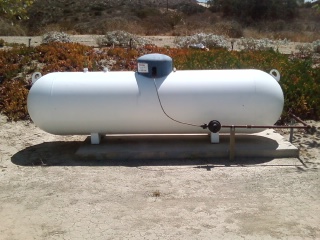


If you’re planning to buy or lease a propane tank in Minnesota, I’ll help you compare tank prices, fuel delivery costs, installation expenses, and state requirements.
Whether you live near Minneapolis, St. Cloud, Duluth, Rochester, or a rural northern Minnesota community, choosing the right tank depends on your heating needs, winter conditions, and budget.
In this guide, I’ll cover propane tank sizes, refill prices, local suppliers, buying versus leasing, installation regulations, and cold-weather planning so you can make an informed decision.


Quick Answer: How Much Does a Propane Tank Cost in Minnesota?
A new propane tank can cost approximately $985 for a 120-gallon model, $1,950 for a 250-gallon tank, $2,900 for a 500-gallon tank, or $4,750 for a 1,000-gallon tank, before delivery and installation.
These are published equipment-only estimates from BLT Tanks, an Oklahoma-based supplier, not verified Minnesota installed prices.
For propane fuel, the U.S. Energy Information Administration reported a Minnesota residential average of $2.176 per gallon for November 16, 2026, excluding taxes.
Using that benchmark, filling a 250-gallon tank to 80% costs approximately $435.20; a 500-gallon tank costs $870.40; and a 1,000-gallon tank costs $1,740.80. These calculations aren’t quotations or predictions of 2027 prices.


For a home using propane as its primary heating fuel, I would begin by comparing 500- and 1,000-gallon tanks. For cooking, hot water, or occasional appliances, a 120- or 250-gallon tank may be sufficient.
My recommendation: Request itemized quotations from at least two Minnesota propane suppliers. Compare purchase or lease costs, installation, winter delivery availability, recurring fees, and the delivered fuel price.
Pricing note: This 2027 guide uses information available as of November 24, 2026. Equipment prices are published out-of-state references; fuel examples use the EIA’s November 16, 2026 statewide average.
What Affects Propane Tank Prices in Minnesota?
- Tank size: Larger tanks cost more upfront but store more fuel.
- Condition: Used equipment may require inspection or servicing.
- Installation: Underground storage needs excavation, burial-rated equipment, and corrosion protection.
- Location: Rural delivery routes and difficult access can raise costs.
- Ground conditions: Slope, drainage, and frost can affect supports and piping.
- Permits and inspections: Local building, mechanical, and fire requirements may apply.
Example: Installing a 500-Gallon Propane Tank in Minnesota
This is a hypothetical budget, not a Minnesota installer’s quote. The equipment price is a published reference; the installation allowances are assumptions and the fuel calculation uses the dated statewide average.
How Much Do Used Propane Tanks Cost?
Professionally refurbished tanks may cost less. BLT Tanks advertised these ranges in October 2026:



These are out-of-state equipment references, not verified Minnesota resale prices. Confirm ownership, condition, and supplier acceptance before buying.
Propane Tank Prices in Minnesota by Size
I recommend comparing total installed cost and annual usage, not just equipment price. A large tank may reduce delivery frequency, but it also requires more space and money for a full fill.
New Above-Ground vs. Underground Tank Prices
These are published equipment estimates, excluding delivery and installation. Verify exact model availability and pricing.
Which Propane Tank Offers Better Value?
A 500-gallon tank stores approximately twice the propane of a 250-gallon tank at 80% fill. For regular home heating, that can reduce deliveries. For cooking-only homes or summer cabins, smaller storage may be more economical.


Where Can You Buy Propane Tanks in Minnesota?
Minnesota has independent propane dealers, cooperatives, and regional fuel suppliers. Some sell stationary tanks outright, while others lease equipment. I recommend checking coverage by ZIP code.
Lakes Gas — Multiple Minnesota Locations
Lakes Gas operates numerous Upper Midwest locations, including in Minnesota. Its published services include residential delivery, tank leasing, cylinder exchange, and commercial propane. I would investigate it for automatic delivery and equipment arrangements around Greater Minneapolis, St. Cloud, and Hermantown.
Federated Co-ops — East-Central Minnesota
Federated Co-ops serves homes, farms, and businesses in east-central Minnesota and northwestern Wisconsin. Ask about bulk delivery, equipment availability, and seasonal fuel programs.
Como Oil & Propane — Minnesota Service Areas
Como Oil & Propane, associated with ThompsonGas, serves Minnesota communities. Directory listings include Barnum, Hibbing, and Tower. Confirm current territory and tank arrangements before ordering.
Local Agricultural Cooperatives
Agricultural cooperatives may provide rural propane delivery, farm storage, and seasonal programs. For remote properties, I would compare their service routes with larger dealers.
Minnesota Propane Association Directory
The Minnesota Propane Association maintains propane-business listings, useful for locating tank sales, leasing, and delivery companies in smaller towns.
Minnesota Propane Supplier Comparison
These are leads, not guaranteed availability or verified inventory. Request an itemized quote for tank, delivery, piping, installation, testing, fuel, and recurring fees.
Buying vs. Leasing a Propane Tank in Minnesota
Owning a tank may offer more choice among fuel dealers willing to service it, while leasing can reduce upfront expenses. Lease agreements may restrict who can refill a supplier-owned tank.
Advantages of Buying
You own the equipment and may be able to compare suppliers. However, purchasing costs more initially, and maintenance can be your responsibility. A new supplier may require inspection.
Advantages of Leasing
Leasing may include some installation and maintenance under the agreement. Watch for annual rental charges, minimum purchases, contract termination fees, and restrictions on competing deliveries.
Buying vs. Leasing Comparison
Five-Year Buying vs. Leasing Example
If the leased fuel price is hypothetically $0.30 per gallon higher and the home consumes 900 gallons yearly, the five-year fuel difference is 900 × $0.30 × 5 = $1,350. With rental fees, that would mean $1,975 in hypothetical lease-related costs, excluding common fuel charges and other costs.
Can Another Company Fill a Leased Tank?
Supplier-owned tanks are generally subject to ownership and contract restrictions. I would not arrange a competing delivery without verifying the tank’s ownership and obtaining any required authorization. Confirm ownership when buying a home with an existing tank.
What Propane Tank Sizes Are Available in Minnesota?
Portable cylinders are typically described in pounds of propane, while stationary tanks are specified by their water capacity in gallons.
Minnesota Propane Tank Size Chart
Stationary values assume about 80% liquid fill for planning. Applicable rules determine actual filling limits.
Why Aren’t Propane Tanks Filled to 100%?
Propane expands as it warms, so the vessel needs vapor space. A 500-gallon tank commonly holds around 400 gallons at an 80% fill.
What Size Would I Choose?
For cooking and limited water heating, I’d compare 120- and 250-gallon tanks. For primary heating, I’d investigate 500- and 1,000-gallon tanks and ask the installer to verify peak demand and winter vaporization capacity.
How Much Does a 500-Gallon Propane Tank Cost in Minnesota?
A 500-gallon tank holds about 400 gallons at an 80% fill and is a useful starting point for a home relying on propane heating.
500-Gallon Tank Prices
How Much Does It Cost to Fill a 500-Gallon Tank?
At the November 16, 2026 benchmark: 400 × $2.176 = $870.40.
Only $2.176 is the dated statewide average; all other prices are hypothetical scenarios.
How Long Does a 500-Gallon Tank Last?
At six gallons daily, a full 400-gallon supply theoretically lasts around 67 days. Using the 80%-to-20% delivery window, 300 ÷ 6 = 50 days between planned fills.
Is a 500-Gallon Tank Enough for Winter?
It depends on insulation, furnace size, winter temperatures, and deliveries. For remote northern properties with high consumption, I would also compare a 1,000-gallon tank.
How Much Does a 1,000-Gallon Propane Tank Cost in Minnesota?
A 1,000-gallon vessel stores approximately 800 gallons at an 80% fill and may reduce deliveries for a high-demand home or farm.
1,000-Gallon Tank Prices
How Much Does It Cost to Fill a 1,000-Gallon Tank?
800 × $2.176 = $1,740.80. Refilling from 30% to 80% adds about 500 gallons and costs $1,088 at the same benchmark.
How Long Does a 1,000-Gallon Tank Last?
At eight gallons daily, 800 gallons theoretically lasts 100 days. Using 600 gallons between the 80% and 20% levels, 600 ÷ 8 = 75 days between planned refills.
When Would I Choose a 1,000-Gallon Tank?
I would consider it for a large home with high heating demand or a rural property with limited winter delivery access. For cooking-only use, this size is typically more than needed.
How Much Does a 250-Gallon Propane Tank Cost in Minnesota?
At an 80% fill, a 250-gallon stationary tank holds approximately 200 gallons of propane.
250-Gallon Tank Prices
How Much Does It Cost to Fill a 250-Gallon Tank?
200 × $2.176 = $435.20.
How Long Does It Last?
At 50 gallons monthly, a full 200-gallon supply represents four months. Between 80% and 20%, approximately 150 gallons are available, or three months at the assumed rate.
250-Gallon vs. 500-Gallon Comparison
I would compare the smaller size for moderate consumption and the larger one for regular winter heating.
How Much Do Small Propane Tanks Cost in Minnesota?
Small containers include portable cylinders and low-capacity stationary tanks. The equipment should match the application.
Small Propane Tank Capacity
How Much Does a 120-Gallon Tank Cost?
A published equipment estimate is $985 above ground and $1,770 underground, before delivery and installation.
How Much Does It Cost to Fill a 120-Gallon Tank?
96 × $2.176 = $208.90, rounded.
How Long Does It Last?
At 20 gallons per month, the full 96 gallons theoretically lasts 4.8 months. Approximately 72 gallons between 80% and 20% represents 3.6 months.
100-Pound Cylinder vs. 100-Gallon Tank
A 100-pound portable cylinder contains approximately 23.5 gallons; a stationary 100-gallon tank holds around 80 gallons at 80% fill. They are different products. See my propane tank versus cylinder guide.
New vs. Used Propane Tanks for Sale in Minnesota
Used tanks may cost less upfront, but their condition, ownership, and supplier acceptance are important.
Where Can You Find Used Tanks?
Potential sources include refurbishers, farm-equipment dealers, commercial resellers, and private listings. I favor equipment with readable identification and inspection records.
Used Tank Inspection Checklist
Used 500-Gallon Tank Cost Example
Suppose a refurbished tank costs $1,800. Add hypothetical transportation of $450, servicing of $350, and installation of $950. The total becomes $3,550 before propane. Compare with a complete new-tank quote.
Do Propane Tanks Have Expiration Dates?
Stationary ASME tanks follow different requirements from portable DOT cylinders. Certain DOT cylinders require periodic requalification; stationary tanks require appropriate inspection and maintenance. Read my guide to when propane tanks should be replaced.
How Does Propane Delivery Work in Minnesota?
Severe cold, heavy snow, and rural road conditions can affect propane deliveries. Choose a program that fits consumption and access.
Automatic Propane Delivery
The supplier estimates or monitors consumption and schedules refills. For a full-time heating customer, I would consider this option.
Will-Call Propane Delivery
You monitor the gauge and request delivery. This may suit lower-use homes and cabins but requires advanced planning in winter.
Delivery Options Compared
How Early Should You Order Propane?
Minnesota Attorney General consumer guidance warns that extreme cold can sometimes cause deliveries to require two weeks or more of notice. I wouldn’t wait until the tank approaches empty. Use your actual consumption and supplier lead time to set a reorder point.
Can Propane Trucks Deliver During Snowstorms?
Not always. Icy roads, blocked driveways, and snow-covered filling connections can prevent safe delivery. Keep access clear according to the supplier’s directions.
Where Can You Get Propane Delivery in Minnesota?
Delivery territories vary. Confirm service by town and ZIP code.
Propane Delivery in Minneapolis and the Twin Cities
Lakes Gas advertises residential delivery and leasing in Greater Minneapolis. Check suburban site access and local permits.
Propane Delivery in St. Cloud and Central Minnesota
Lakes Gas advertises service in the St. Cloud area through its Clear Lake location. Compare lease terms, fuel price, and delivery programs.
Propane Delivery in Duluth and Northeastern Minnesota
Lakes Gas advertises service in Hermantown; Como Oil & Propane appears in northern Minnesota business listings. Prioritize winter delivery reliability.
Propane Delivery in East-Central Minnesota
Federated Co-ops serves portions of east-central Minnesota. Ask about minimum delivered quantities and seasonal programs.
Propane Delivery in Rural Minnesota
Local cooperatives and independent dealers may supply farm and residential accounts. Ask about bulk delivery routes and winter availability.
Minnesota Delivery Supplier Comparison
How Much Does a 20-Pound Propane Refill Cost?
A 20-pound cylinder holds approximately 4.7 gallons. The following prices are hypothetical retail scenarios, not verified Minnesota station quotes.
For additional guidance, see my propane refill cost per gallon guide.
What Are the Dimensions of Propane Tanks in Minnesota?
Tank dimensions affect siting, access, and safety clearances. I would review exact model specifications before preparing the foundation.
Standard Propane Tank Dimensions
Dimensions vary by model. A tank that physically fits might still be too close to buildings, property boundaries, or ignition sources.
What About Wooded Properties?
Falling branches and snow can create hazards. Keep service routes open and let the installer choose an appropriate location.
What About Farms?
Vehicles and equipment can strike exposed tanks. Keep vessels out of traffic routes and install approved impact protection where required.
Above-Ground vs. Underground Propane Tanks in Minnesota
Both configurations may be appropriate depending on site conditions and the applicable rules.
Advantages of Above-Ground Tanks
Above-ground equipment is easier to inspect, maintain, and replace, and usually involves less excavation.
Advantages of Underground Tanks
Underground equipment is less visible and experiences moderated soil temperatures. It requires suitable excavation, corrosion protection, and access to service fittings.
Above-Ground vs. Underground Comparison
Does Minnesota’s Frost Affect Underground Tanks?
Yes. Frost depth, soil movement, and buried-piping requirements matter. Have the installation site evaluated.
Do Underground Tanks Need Cathodic Protection?
Underground vessels generally require appropriate corrosion protection, which may include coatings, anodes, and testing. Confirm who maintains it.
What Are Minnesota’s Propane Tank Installation Requirements?
Minnesota regulates LPG under the Minnesota State Fire Code and related building, mechanical, and fuel-gas rules. Minnesota Rules 7511.6101 incorporates NFPA 58 (2017) with state-specific amendments. Minnesota Rules Chapter 1346 covers applicable mechanical and fuel-gas requirements.
Does Minnesota Require a Permit to Install a Propane Tank?
Permit requirements depend on the project and jurisdiction. A stationary tank may require local fire/building review, while connecting appliances may involve mechanical or fuel-gas permits. Ask the local authorities and installer before purchasing.
Minnesota Propane Installation Requirements
Which NFPA 58 Edition Does Minnesota Use?
Minnesota Rules 7511.6101 identifies the 2017 edition of NFPA 58 with Minnesota amendments. Confirm the code in effect at the time of installation rather than assuming a newer publication has been adopted.
How Far Must a Propane Tank Be From a House in Minnesota?
Clearances depend on water capacity, configuration, nearby buildings, property lines, and ignition sources.
These are simplified planning references, not an installation approval chart. Different configurations, such as underground and grouped tanks, may have different rules. The qualified installer must confirm site-specific distances.
Can a Propane Tank Be Installed on a Roof?
Minnesota’s NFPA 58 amendments prohibit LP-gas container installations on building roofs. Do not plan roof-mounted residential propane storage.
Do You Need a Mechanical Permit?
Regulated mechanical or gas systems generally require permitting subject to local jurisdiction and exceptions. Confirm with the municipal building official.
Does Minnesota Require Pressure Testing?
Applicable fuel-gas and LPG rules address inspection and testing. Include appropriate tests, leak checks, regulator verification, and appliance startup in the installation scope.
Can You Install Your Own Propane Tank?
For large residential stationary tanks, I recommend a qualified propane professional. Improper placement, piping, or regulators can create fire, explosion, and carbon monoxide hazards.
Do Portable Cylinders Need Recertification?
Certain DOT cylinders require periodic requalification. ASME stationary tanks have different inspection rules. Read my guide to who recertifies propane tanks.
What Consumer Protection Laws Apply to Propane in Minnesota?
Minnesota statutes address purchase contracts, pricing disclosures, and certain supplier practices. Review these provisions when choosing prebuy and capped-price plans.
Minnesota Propane Purchase Contracts
Minnesota Statutes §216B.0994 restricts certain additional service, transportation, and similar fees under qualifying prebuy and capped-price contracts when statutory conditions apply. It doesn’t mean every fee is prohibited under every agreement.
Are Suppliers Required to Disclose Prices?
Minnesota consumer protections cover information about per-gallon pricing, fees, and discounts for qualifying residential heating customers. Request all charges in writing.
Can a Supplier Refuse to Sell Propane?
Minnesota Statutes §216B.0995 addresses refusals to sell propane when supply is available and specified payment conditions are satisfied. Legal qualifications apply; it is not a promise of immediate delivery in every situation.
Minnesota Propane Consumer Protection Summary
What If You Have a Billing Dispute?
Review the contract and invoices, request a written explanation from the supplier, and consult consumer resources from the Minnesota Department of Commerce or Attorney General if unresolved.
How Does Minnesota Winter Weather Affect Propane Tanks?
Subzero temperatures, snowstorms, and rural road conditions can increase heating use and complicate deliveries.
Can Propane Freeze in Minnesota?
Pure propane freezes at approximately minus 306°F—far below ordinary Minnesota temperatures. The practical issue is reduced vapor pressure and vaporization capacity in extreme cold.
Why Does Tank Size Matter in Winter?
Vaporization depends on size, liquid level, surface area, and temperature. Have an installer assess maximum BTU demand and cold-weather performance.
Can Snow Affect Delivery?
Yes. Keep driveways and filling connections accessible according to supplier guidance.
Can Ice Damage Regulators?
Snow and ice may obstruct vents or damage fittings. Never use open flames or makeshift heating to thaw propane equipment. Contact a qualified professional.
Minnesota Winter Fuel Reserve Chart
These are illustrative consumption estimates, not legal reserves. Choose a reorder point based on use and delivery lead times.
How Much Propane Does a Minnesota Home Use for Heating?
Heating usage depends on insulation, appliance efficiency, thermostat settings, weather, and operating time. Two homes of the same size can have very different bills.
How to Calculate Furnace Consumption
One gallon of propane contains approximately 91,500 BTU. Use gallons per hour = appliance input BTU/hour ÷ 91,500.
A 90,000-BTU/hour input furnace uses about 0.98 gallons per hour. At full input for 10 hours it consumes around 9.84 gallons, costing about $21.40 at the dated $2.176 benchmark. This is an illustrative full-input calculation, not a typical daily bill.
Furnace Consumption Comparison
Can a 500-Gallon Tank Last the Entire Winter?
Not necessarily. Six gallons daily for 120 days means 720 gallons, so a 500-gallon tank holding approximately 400 gallons at 80% would need additional deliveries.
What About a Seasonal Cabin?
Consider fuel used to keep pipes from freezing during unoccupied periods, not only weekend or summer consumption.
How Much Propane Does a Standby Generator Need in Minnesota?
A standby generator may consume significant fuel during outages. Use the manufacturer’s fuel consumption chart for sizing.
Generator Consumption Example
At an illustrative 2.5 gallons per hour:
Generator Runtime by Tank Size
These examples assume no other appliances share the tank and adequate cold-weather vaporization capacity. See my propane tank size chart for generators.
How Can Minnesota Homeowners Save Money on Propane?
Compare complete supplier agreements, not only the advertised per-gallon price.
Compare Prebuy Programs
Prebuy plans allow customers to purchase a quantity of propane before the heating season under specified terms. Check how unused gallons and extra consumption are handled.
Ask About Fixed-Price Contracts
Check contract duration, permitted fees, and cancellation provisions. Minnesota consumer protections may be relevant.
Consider Automatic Delivery
This can reduce runout risk but doesn’t automatically guarantee the lowest per-gallon price.
Improve Home Insulation
Reducing drafts and improving insulation can reduce propane heating demand.
Maintain Appliances
Professional maintenance helps support safe and efficient operation.
Propane Savings Comparison
How Much Does It Cost to Operate a Propane Tank in Minnesota?
The recurring fuel bill can matter more than the initial tank purchase. Estimate annual consumption before choosing an agreement.
Annual Propane Cost Chart
At the dated $2.176 per gallon Minnesota average:
These are mathematical examples, not 2027 forecasts.
Five-Year Tank Ownership Example
Suppose a new 500-gallon tank costs $2,900 and hypothetical delivery and installation total $1,400. Initial cost = $4,300.
At 900 gallons annually and a hypothetical average $2.50 per gallon, annual fuel expense is $2,250, and five years of fuel cost $11,250. Adding equipment and installation gives an illustrative five-year total of $15,550, excluding taxes, maintenance, and other charges.
What Would I Compare Before Buying?
I would obtain the installed equipment cost, delivered fuel price, and expected annual consumption, then compare buying and leasing over several years.
What Size Propane Tank Do You Need for Your Minnesota Home?
The best capacity depends on appliances, insulation, occupancy, winter temperatures, and supplier delivery routes—not just floor area.
Minnesota Propane Tank Decision Guide
These are preliminary comparisons, not final specifications.
What About Northern Minnesota Homes?
Plan for prolonged cold and possible delivery delays. Larger storage can help, but it also costs more to purchase and fill.
What About Rural Properties?
Discuss long driveways, access restrictions, and winter delivery schedules before selecting tank size.
500-Gallon vs. 1,000-Gallon Comparison
Minnesota Propane Tank Buying Checklist
- Tank size and manufacturer.
- New or refurbished condition.
- Legal ownership and lease terms.
- Delivered propane price and minimum order.
- Prebuy and fixed-price program conditions.
- Automatic or will-call arrangements.
- Winter delivery availability.
- Minnesota State Fire Code and fuel-gas requirements.
- Local permits, inspections, and separation distances.
- Foundation, drainage, and site accessibility.
- Underground installation and corrosion protection, if applicable.
- Piping, regulators, and system testing.
- Furnace/generator demand.
- Maintenance, emergency service, and termination charges.
Frequently Asked Questions About Propane Tanks in Minnesota
How Much Does a 500-Gallon Propane Tank Cost in Minnesota?
A published equipment reference is approximately $2,900 for a new above-ground tank, excluding Minnesota delivery and installation.
How Much Does a 250-Gallon Tank Cost?
The new above-ground equipment reference is approximately $1,950, before local costs.
How Much Does a 1,000-Gallon Tank Cost?
The equipment reference is approximately $4,750 for a new above-ground model.
What Is the Average Propane Price in Minnesota?
The EIA reported $2.176 per gallon as the statewide residential average for November 16, 2026, excluding taxes.
How Much Does It Cost to Fill a 500-Gallon Tank?
At $2.176 per gallon, a 400-gallon delivery is $870.40, before additional charges.
Where Can I Buy Propane Tanks in Minnesota?
Lakes Gas, Federated Co-ops, Como Oil & Propane, and local cooperative or independent dealers are places to investigate. Verify exact service territory and tank sales.
Can I Lease a Propane Tank?
Yes. Many suppliers offer leases with varying rent, fuel purchase, and maintenance terms.
Is Buying Better Than Leasing?
Buying may offer more flexibility, but leasing generally reduces initial costs. Compare the full agreement.
Do I Need a Permit to Install a Propane Tank?
Local building, mechanical, and fire approvals may apply. Confirm with the relevant authority and installer.
What Code Applies to Propane Tanks in Minnesota?
Minnesota Rules 7511.6101 incorporates NFPA 58 (2017) with state amendments, alongside applicable mechanical and fuel-gas rules.
How Far Must a Tank Be From a House?
It depends on water capacity, configuration, and nearby hazards. The installer must verify code-compliant clearances.
Can I Install an Underground Tank?
Yes, where site conditions and rules allow. Proper buried equipment, corrosion protection, and installation are required.
Can Propane Freeze in Minnesota?
Pure propane freezes far below Minnesota temperatures, but vaporization and pressure may fall in extreme cold.
How Long Does a 500-Gallon Tank Last?
At six gallons daily, 300 gallons between the 80% and 20% levels would last around 50 days.
Can Winter Storms Delay Delivery?
Yes. Plan refills well ahead of severe weather.
Does Minnesota Have Propane Consumer Protection Laws?
Yes. State statutes address certain propane purchase contracts, disclosures, and supplier practices.
Can Suppliers Add Fees to Prebuy Contracts?
Minnesota law restricts some fees under qualifying agreements, subject to statutory conditions. Review the full contract.
Do Propane Cylinders Expire?
Some DOT cylinders require periodic requalification, while stationary ASME tanks follow different rules.
Final Thoughts: Choosing the Best Propane Tank in Minnesota
For a Minnesota home using propane mainly for cooking and hot water, a 120- or 250-gallon tank may be enough. For primary heating, I would compare a 500-gallon tank with a 1,000-gallon option where higher consumption or difficult rural deliveries justify the additional capacity.
I wouldn’t decide based only on purchase price. Consider winter delivery, ownership and contract terms, Minnesota’s installation standards, permits, and long-term fuel use.
Before committing, obtain written quotations from qualified suppliers and have the proposed location professionally evaluated.
The best propane tank is one that safely meets your heating requirements, fits your property, and provides dependable storage at a manageable long-term cost.

Mike is an experienced propane technician with over 15 years of professional experience in the field. He has dedicated his career to helping customers with their propane needs, from installation to maintenance and repair. Together with Jeremy, he co-founded this website to provide useful information and guidance to customers seeking reliable propane services.