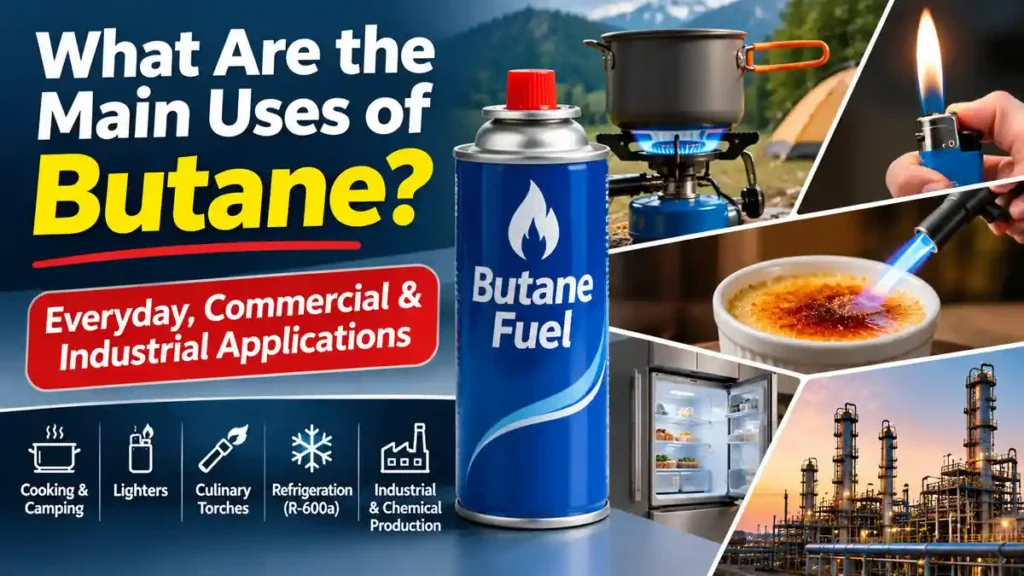
TL;DR: What Are the Main Uses of Butane?
Butane is used as a portable cooking and lighter fuel, aerosol propellant, refrigerant and industrial feedstock. Its compact liquefied storage is useful, but its flammability and weak cold-weather vaporization require care.
Butane Technical Properties
| Property | Specification |
|---|---|
| Formula | C₄H₁₀ |
| n-Butane boiling point | 31.1°F (−0.5°C) |
| Isobutane boiling point | 10.9°F (−11.7°C) |
| n-Butane energy | Approximately 102,000 BTU per US gallon |
| Lower heating value | Approximately 45.7 MJ/kg |
| Vapor density | Heavier than air |
| Main hazard | Highly flammable |
What Is Butane?
Butane is a colorless, highly flammable hydrocarbon with the chemical formula C₄H₁₀. It is a gas at ordinary room conditions but liquefies under moderate pressure, making it practical for compact fuel cartridges. Normal butane and isobutane have the same formula but different molecular structures and boiling points. I recommend checking which one your appliance actually requires. Butane vapor is heavier than air and can collect in low, poorly ventilated spaces.
1. Portable Cooking Stoves
For related guidance, see my article on butane versus gas stoves.


One of butane’s most familiar applications is the portable tabletop stove. A compact cartridge supplies vapor to a compatible burner for camping, picnics and temporary food preparation. I would choose this setup for moderate temperatures, not freezing conditions. Only use the exact cartridge specified by the stove manufacturer; some camping stoves are outdoor-only.
2. Disposable and Refillable Lighters
For related guidance, see my article on using butane in a Zippo.
Butane fuels pocket lighters, utility lighters and many refillable torch lighters. Liquefied fuel fits inside a small reservoir and vaporizes when released. Refill only lighters explicitly designed to be refilled, following their instructions.
3. Culinary Torches
For related guidance, see my article on butane torches for culinary purposes.


Chefs use small butane torches to caramelize crème brûlée, brown toppings and apply concentrated heat. These are precision tools rather than substitutes for general cooking equipment. Keep the flame away from combustible materials and use food-preparation equipment according to its instructions.
4. Soldering and Small Repairs
Portable butane soldering irons and microtorches can provide localized heat without an electrical outlet. They are used for suitable electronics, crafts and repair work. I would check the tool’s temperature range and the material being heated, and avoid exposing flammable components to the flame.
5. Camping and Outdoor Recreation
For related guidance, see my article on how long a 220g butane canister lasts.
Butane cartridges are lightweight and convenient for recreational cooking. The tradeoff is declining vapor pressure as temperatures approach freezing. Isobutane or propane-containing blends may perform better in cold conditions, but only in appliances designed for them. Never warm a cartridge with a flame.
6. Aerosol Propellants
Butane and isobutane are used as propellants in certain deodorants, air fresheners, cosmetic sprays and household aerosols. When the nozzle opens, vapor pressure helps dispense the formulation. Not every aerosol contains butane. Read the label: hydrocarbon propellants can ignite near sparks and flames.



7. Refrigeration
Isobutane, designated R-600a, is used in many domestic refrigerators and freezers. Normal butane is designated R-600. Hydrocarbon refrigerants have low direct global warming potential but are highly flammable (ASHRAE A3 classification). Never substitute refrigerants or modify a sealed cooling circuit without qualified servicing.
8. Synthetic Rubber Manufacturing
Butane-related petrochemical feedstocks can be converted into butadiene, a building block for synthetic rubbers such as styrene-butadiene rubber. These materials are used in tires, belts and industrial goods. Butane is processed chemically; it is not simply added to finished rubber.
9. Gasoline Blending
Refineries blend butane into gasoline where permitted by volatility specifications. Butane can contribute favorable octane characteristics but increases vapor pressure, so allowable amounts depend on season and applicable fuel rules. It generally reduces energy per gallon compared with conventional gasoline.
10. LPG Mixtures
For related guidance, see my article on butane versus LPG costs.


Butane is one of the principal components of liquefied petroleum gas. LPG composition varies by region, season and supplier. Butane-rich blends can work in warm climates, while propane-rich blends generally provide better vaporization in cold conditions. Check appliance and regulator compatibility rather than treating all LPG as identical.
11. Portable Heating
Certain purpose-built heaters use butane or approved LPG mixtures. However, combustion can produce carbon monoxide, especially under poor conditions. Never use a cooking stove as a makeshift space heater or assume a portable heater is approved for indoor use.
12. Laboratories
Laboratories may use butane as a burner fuel, reference material or chemical feedstock. Such uses require suitable ventilation, storage and fire controls. High-purity grades have specifications that differ from ordinary consumer fuel.
13. Specialized Industrial Extraction
Engineered commercial processes sometimes use butane as a solvent for nonpolar compounds. Escaping vapor can cause fires or explosions, particularly in enclosed rooms. I do not recommend improvised or home extraction with butane.
14. Petrochemical Processing
Industrial plants use isomerization to convert n-butane into isobutane, dehydrogenation to make butenes or butadiene, and other reactions to create valuable chemical products. Process selection depends on catalyst, purity and plant design.
15. Chemical Manufacturing
Butane is also an upstream raw material for specialized industrial chemicals and refinery intermediates. This broader feedstock role is why its importance extends well beyond small portable fuel containers.
Why Manufacturers Choose Butane
Butane combines relatively high liquid-volume energy content with compact storage and a useful vapor pressure for specific appliances. Its limitations are flammability, vapor accumulation risk and weaker cold-weather vaporization than propane. For me, the right choice always starts with the appliance specification, operating temperature and intended location.
Butane vs. Propane
For related guidance, see my article on butane versus propane for household use.
Both are LPG hydrocarbons, but propane’s much lower boiling point makes it generally better for cold-weather heating and generator fuel systems. Butane is often convenient for lighters and compact cartridge stoves. Never substitute one for the other unless the equipment manufacturer explicitly permits it.
| Fuel | Normal boiling point | Typical application |
|---|---|---|
| n-Butane | 31.1°F | Lighters, compact stoves |
| Isobutane | 10.9°F | Camping blends, R-600a refrigeration |
| Propane | −43.7°F | Heating, grills, generators |
How Long Does a Butane Cartridge Last?
Runtime depends on fuel mass and burner consumption. For example, a 220 g cartridge consumed at 150 g per hour lasts theoretically 220 ÷ 150 = 1.47 hours, or about 88 minutes. Actual results depend on temperature, fuel blend and operating conditions. Compare consumption in grams per hour when shopping for a stove.
| Consumption | 220 g cartridge theoretical runtime |
|---|---|
| 80 g/h | 2.75 h |
| 100 g/h | 2.20 h |
| 120 g/h | 1.83 h |
| 150 g/h | 1.47 h |
| 180 g/h | 1.22 h |
| 200 g/h | 1.10 h |
Safe Storage and Handling
For related guidance, see my article on safe butane canister storage.
Keep cartridges within manufacturer temperature limits, away from ignition sources and excessive heat. Inspect for corrosion, deformation and valve damage. Do not puncture or refill nonrefillable containers. If you suspect a leak, avoid electrical switches and ignition sources, move away and seek qualified help from a safe location. Never search for a leak with a flame.
Environmental Considerations
Complete combustion of butane produces carbon dioxide and water; burning 1 kg produces approximately 3.03 kg of CO₂. Incomplete combustion can produce carbon monoxide and soot. Unburned butane is a volatile organic compound that can contribute to ground-level ozone formation. Low-GWP refrigeration use does not make burning or releasing butane environmentally neutral.
Frequently Asked Questions
What is butane mainly used for?
Portable stoves, lighters, torches, aerosol propellants, refrigeration, LPG blends and petrochemical feedstocks.
Can I cook with butane?
Yes, using a compatible appliance in a location approved by its manufacturer.
Is butane the same as propane?
No. Their boiling points, vapor pressures and equipment requirements differ.
Can butane power a propane generator?
Do not substitute butane unless the generator manufacturer explicitly approves that fuel.
Does butane expire?
The fuel does not spoil like food, but valves, seals and containers can deteriorate.
Is butane heavier than air?
Yes. Leaked vapor may accumulate in low areas.
Final Thoughts
Butane is far more versatile than lighter fuel. It supports cooking, portable tools, refrigeration and major industrial processes. My advice is to select fuel based on appliance approval, temperature and safety requirements—not convenience alone. For cold-weather heating or standby generators, propane is generally more suitable.

Mike is an experienced propane technician with over 15 years of professional experience in the field. He has dedicated his career to helping customers with their propane needs, from installation to maintenance and repair. Together with Jeremy, he co-founded this website to provide useful information and guidance to customers seeking reliable propane services.