
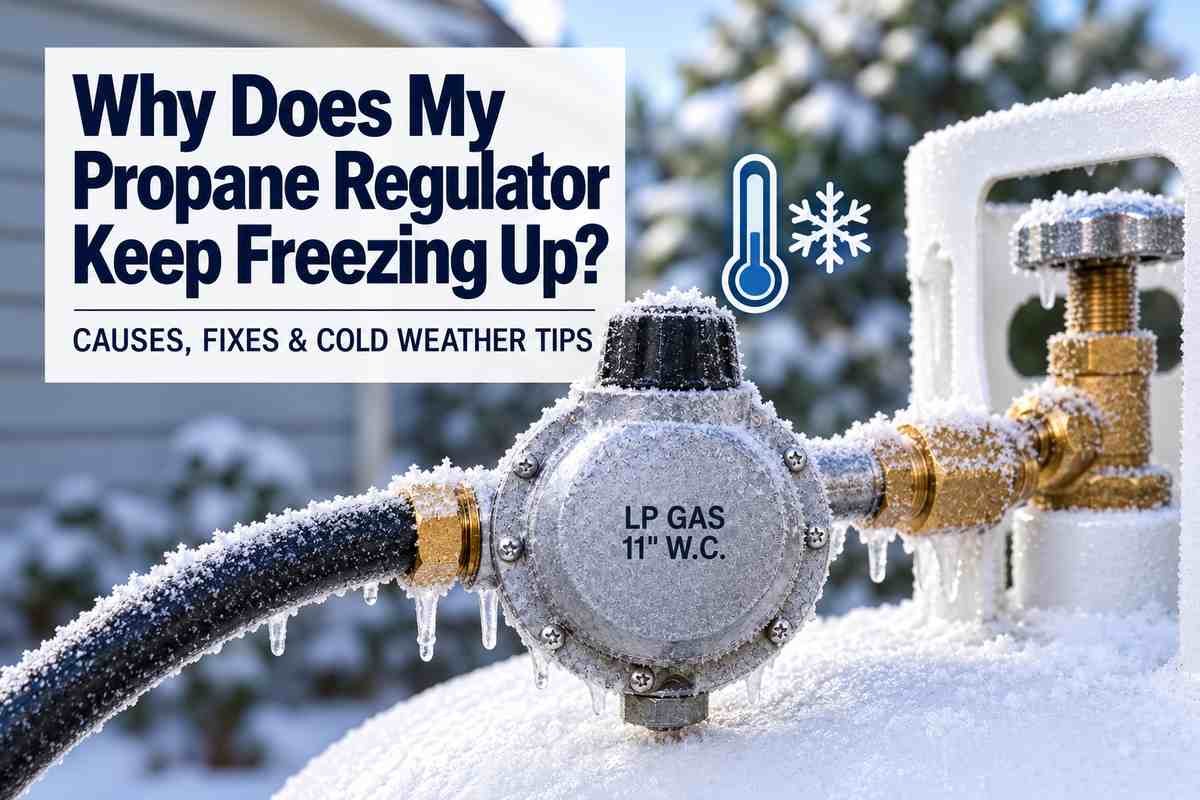
Quick answer: A propane regulator that keeps freezing up usually has moisture freezing inside the regulator or inlet piping, an ice- or snow-blocked vent, a restricted pigtail or supply line, or operating conditions that create heavy chilling. A light layer of frost on the outside can be normal during high gas flow, but repeated freeze-ups that cause low pressure, weak flames, or appliance shutdowns need professional diagnosis. Do not use a torch, heat gun, or open flame to thaw propane equipment.
A regulator can become very cold while propane is flowing because high-pressure vapor expands as the regulator reduces pressure. That cooling can create harmless surface frost, but a true freeze-up is different: ice interferes with gas flow, the diaphragm, the valve seat, or the vent, and the system no longer regulates correctly.
RegO’s technical guidance identifies excessive moisture in LP gas as a primary cause of regulator freeze-up and notes that freezing can occur even when the outdoor temperature is above 32°F if moisture, gas flow, and temperature combine in the wrong way. Fisher/Emerson also warns that water entering a regulator spring case can freeze across the diaphragm and prevent normal movement or relief operation.


Common Causes
The most common causes are moisture in the propane system, a vent exposed to freezing rain or snow, restricted gas flow, poor regulator placement, and severe chilling as propane expands through the regulator. High heating demand and cold weather can make the conditions worse, but the white frost you see on the outside is not always proof that the regulator has failed.
1. Moisture Inside the Propane System Can Freeze at the Regulator
Internal moisture is one of the clearest causes of repeated propane regulator freeze-ups. RegO explains that moisture in LP gas can condense and then freeze on the cold regulator nozzle as high-pressure gas expands into the regulator body. Once ice forms at a small passage, normal flow and pressure regulation can be disrupted.
Moisture can be associated with an improperly purged container, contaminated propane, water entering through the regulator vent, or condensation inside the spring case. The problem can appear on new or old systems. It may also seem intermittent because the ice melts when the weather warms or gas flow stops, then forms again the next time conditions are right.
This is why repeatedly thawing the regulator does not solve the problem. The water is still there. A propane supplier or qualified technician needs to identify how moisture entered the system and correct the source.


Do not pour methanol or another chemical into a regulator yourself. RegO specifically warns not to use methanol to remove ice from inside a frozen regulator because it can damage the diaphragm and seat disc. Moisture treatment of LP-gas containers is a job for properly trained propane professionals.
2. The Regulator Vent Is Blocked by Ice, Snow, or Freezing Rain
The regulator vent allows the diaphragm to respond to changing appliance demand. If the vent is sealed by ice, packed snow, mud, insects, or debris, the regulator may not control pressure correctly.
Fisher’s regulator inspection guidance says outdoor regulators should be installed so the vent is protected from the elements, typically with the vent pointing vertically downward or under an appropriate protective cover. Water that enters the spring case can freeze across the diaphragm, restricting its movement. Freezing rain can also form directly across the vent screen.
After a winter storm, visually check the regulator area without dismantling anything. PERC recommends carefully clearing heavy snow and ice from propane piping, regulators, and meters, using methods that avoid damaging the equipment. Do not strike the regulator with a tool, chip aggressively at the vent, or pack insulation around it.
3. A Kinked Pigtail or Restricted Inlet Can Contribute to Freeze-Up
A bent, kinked, contaminated, or undersized inlet path can create a restriction that worsens chilling and pressure loss. RegO specifically lists kinked or bent pigtails as a condition associated with freeze-ups.

Restrictions matter because the propane must squeeze through a smaller effective opening. That can increase localized pressure drop and cooling while also starving the regulator under load. Corrosion or debris inside an old pigtail can cause similar symptoms.
If several appliances develop weak flames or shut down at the same time, the issue may be upstream of the appliances. Compare the symptoms with our guide on why a propane regulator keeps shutting off and the article about a regulator that works for a few minutes and then stops.
4. Single-Stage Regulation Can Produce More Chilling
RegO notes that the chilling effect can be more severe in some single-stage systems because the pressure reduction from tank pressure to appliance pressure happens across one regulator nozzle. In a properly designed two-stage system, the pressure reduction is divided between stages, reducing the chilling effect at each regulator.
That does not mean you should simply add or swap regulators yourself. Regulator stage, inlet pressure, outlet pressure, BTU capacity, relief protection, pipe sizing, and code requirements all matter. Any change to the propane distribution system should be made by a qualified person.


5. Heavy Propane Demand Can Expose a Marginal System
Cold weather often brings the highest propane demand of the year. A furnace may run for long periods while a water heater, fireplace, range, or generator is also operating. That increases vapor flow through the regulator and can make its internal surfaces colder.
High demand by itself is not the same as internal moisture contamination, but it can make an existing moisture or restriction problem show up more quickly. RegO notes that freeze-up conditions can occur during periods of higher heating demand in cold weather.
The tank also has to vaporize enough liquid propane to supply that load. As outdoor temperature falls, a given tank’s vaporization capacity drops. A small or nearly empty cylinder can struggle sooner than a larger container with more wetted surface area. In those cases, frost may appear on the tank and regulator while pressure falls under load.
Our article on what to do when a propane tank appears to freeze explains the tank-side symptoms in more detail.
6. Poor Regulator Position or Weather Protection Lets Water In
Regulator orientation is not cosmetic. Fisher/Emerson advises that outdoor vents should be positioned so water drains away and the vent is protected from freezing rain, sleet, and snow. A vent pointing upward can allow water to collect inside the regulator. A horizontal installation may require a manufacturer-approved cover or vent shelter.
Roof runoff is another common installation problem. A regulator located directly below an eave, roof valley, gutter discharge, or snow-slide path can be repeatedly soaked and then frozen. Moving or shielding a regulator must follow the manufacturer’s instructions and applicable codes rather than a homemade cover that accidentally blocks the vent.
Frost vs. Freeze-Up: They Are Not the Same Thing
A frosted regulator can look alarming, but exterior frost is sometimes simply evidence that the metal is cold while propane is flowing. The more important question is whether the system continues to regulate and supply gas normally.
| Exterior Frost | True Freeze-Up / Fault |
|---|---|
| May occur during high flow | Often causes gas-flow or pressure problems |
| Appliances continue operating normally | Weak flames, shutdowns, or repeated pilot loss may occur |
| Vent remains open | Vent, diaphragm area, or inlet may be obstructed by ice |
| May disappear when demand falls | Tends to recur until moisture, restriction, or installation issue is corrected |
If you need to confirm whether the regulator is maintaining the required pressure, see our guide on how propane regulator pressure is checked. Pressure testing on a system that is malfunctioning should be performed by a qualified technician.
Can a Propane Regulator Freeze Above 32°F?
Yes. RegO states that regulator freeze-ups can occur at temperatures above 32°F. The reason is localized refrigeration: propane cools as it expands through the regulator, so internal metal surfaces can become colder than the surrounding air. If moisture is present, that localized cold spot can be below freezing even when the weather station says the outdoor temperature is slightly warmer.
This explains why a regulator can appear to “freeze on a mild day,” especially during sustained gas flow. Ambient temperature is only one part of the equation; moisture, flow rate, pressure drop, and restrictions also matter.
What Should You Do If the Regulator Is Frozen?
Do not treat a propane regulator like a frozen water pipe. Heating propane equipment with an open flame or uncontrolled heat source can damage components and create a fire or gas-leak hazard.
- Turn off propane appliances. If appliance operation is unstable or gas flow is interrupted, stop using the system.
- If you smell propane, treat it as a leak. Avoid flames and sparks, leave the area, and follow your propane supplier’s emergency instructions.
- Do not plug or cover the vent. The regulator needs the vent to operate.
- Do not use a torch, lighter, heat gun, or other open/high-temperature heat source.
- Clear loose snow carefully only if it can be done without damaging the regulator. PERC recommends care around propane components; a broom is safer than striking equipment with a shovel.
- Have repeated freeze-ups diagnosed. A qualified propane professional can check moisture, regulator condition, vent installation, inlet restrictions, pigtails, pressures, tank capacity, and total appliance load.
Should You Pour Hot Water on a Frozen Propane Regulator?
Avoid boiling or very hot water and do not make water-thawing your regular fix. Adding water can introduce more moisture around the vent and may refreeze. The safer approach is to stop operation when the regulator is not functioning correctly, allow conditions to stabilize, and have the root cause corrected.
Never use an open flame or attempt to heat the propane tank. PERC specifically warns against applying an external heat source to propane storage cylinders or tanks in extreme cold.
How a Technician Diagnoses Repeated Freeze-Ups
A useful service call looks beyond the ice itself. Depending on the system, the technician may check:
- Whether the container was properly purged and whether excessive moisture is suspected.
- The regulator vent orientation and protection from rain, snow, roof runoff, mud, and insects.
- Whether the pigtail is kinked, corroded, contaminated, or restricted.
- Inlet pressure, outlet pressure, and pressure under appliance load.
- Whether the regulator is the correct stage and capacity for the installation.
- The total connected BTU load and whether the propane container can vaporize enough fuel in cold weather.
- Age, corrosion, flooding, or internal damage to the regulator.
An older regulator with corrosion or repeated operational problems may need replacement. See how long propane regulators typically remain in service, but always follow the specific manufacturer’s replacement guidance for the regulator installed on your system.
How to Prevent a Propane Regulator From Freezing Again
The permanent fix depends on the cause. Good prevention includes keeping the regulator correctly oriented and protected from weather, keeping the vent clear, maintaining properly routed pigtails, using the correct regulator system, and having moisture or supply issues handled by the propane supplier.
Do not wrap the regulator tightly in plastic, towels, insulation, or tape. Anything that blocks the vent can create a more serious problem than the original frost. Do not drill, enlarge, or modify the vent.
If freeze-ups only occur during very cold weather and heavy heating demand, ask the propane supplier to evaluate the entire supply system rather than assuming the regulator alone is defective. Tank vaporization, regulator capacity, piping size, pigtail restrictions, and fuel level can all affect winter performance.
Frequently Asked Questions
Why does my propane regulator freeze only when the furnace runs?
A furnace creates a large, sustained propane demand. Higher flow increases chilling through the regulator and can expose moisture, restrictions, or inadequate supply capacity that may not be noticeable with a smaller appliance.
Does a frozen regulator mean the propane tank is empty?
No. A low tank level can reduce vaporization capacity in cold weather, but a regulator can freeze while plenty of propane remains. Check the fuel level, weather, load, and regulator system rather than assuming the tank is empty.
Can ice on the outside damage a propane regulator?
Exterior frost alone does not necessarily mean damage, but heavy ice that blocks the vent or water that enters the spring case can prevent proper regulator operation and may contribute to corrosion.
Can I cover my propane regulator in winter?
Use only protection that keeps weather off the regulator without blocking the vent and that complies with the manufacturer’s instructions. A homemade airtight cover or plastic wrap can obstruct required ventilation.
Should I replace a regulator that keeps freezing?
Replacement may be necessary if the regulator is corroded, internally damaged, contaminated, or no longer controls pressure correctly. However, replacing the regulator without correcting moisture, vent orientation, restrictions, or tank-sizing problems can allow the same symptom to return.
Can a kinked hose or pigtail make the regulator freeze?
Yes. RegO specifically identifies kinked or bent pigtails that restrict LP-gas flow as a condition associated with freeze-ups. A damaged or restricted pigtail should be evaluated and replaced with the correct component by a qualified person.
Bottom Line
If your propane regulator keeps freezing up, focus on the cause—not just the ice. Internal moisture is a major cause of true regulator freeze-up, while blocked vents, poor weather protection, restricted pigtails, severe chilling, and high winter demand can contribute. Light exterior frost can be normal, but recurring pressure loss, appliance shutdowns, vent blockage, or gas odor requires professional inspection.
Authoritative Sources

Mike is an experienced propane technician with over 15 years of professional experience in the field. He has dedicated his career to helping customers with their propane needs, from installation to maintenance and repair. Together with Jeremy, he co-founded this website to provide useful information and guidance to customers seeking reliable propane services.


