Quick Answer
The main downsides of using a propane fire pit are ongoing fuel costs, limited tank runtime, refill trips, uneven outdoor warmth, placement restrictions, and maintenance of the burner and gas components. You also give up some of the sound and smell of a wood fire, and many decorative models are not approved for cooking. A convenient flame still needs supervision and a suitable outdoor location.
I would choose propane when easy lighting and predictable cleanup matter most. I would hesitate if you expect it to heat a large patio, replace a cooking fire, or fit wherever an outdoor table fits. Before buying, I would calculate your evening fuel cost and confirm that the exact model is permitted in your intended spot.
A propane fire pit can look effortless in a product photograph: turn a knob, enjoy the flames, and head indoors without shoveling ashes. What the photograph leaves out is the cylinder, its refill schedule, the clearance around the furniture, and the parts that eventually need attention.
My perspective is that the biggest disappointment usually comes from buying for one purpose and using it for another. A decorative centerpiece is not automatically a strong patio heater. A portable bowl is not automatically lightweight once you include its fuel. This guide helps you decide which compromises you can comfortably live with.
The calculations and decision tools below are original planning examples. I am not presenting them as field tests, personal product ownership, or information that nobody else has ever published. Product facts are identified separately from assumptions.
Propane Fire Pit Disadvantages at a Glance
| Downside | Most affected reader | My buying check |
|---|---|---|
| Recurring fuel expense | Frequent users and high-flame enthusiasts | Estimate cost for your actual monthly hours. |
| Tank runs out | People hosting longer gatherings | Budget usable fuel before guests arrive. |
| Limited or uneven warmth | Buyers expecting whole-patio heating | Separate decorative flame from heating performance. |
| Placement restrictions | Renters and small-patio owners | Read the exact manual and property rules. |
| Weather sensitivity | Exposed or windy locations | Assess whether enough suitable evenings remain. |
| Maintenance and repairs | Buyers expecting maintenance-free furniture | Check replacement parts and service access. |
| Cooking limitations | Families planning campfire food | Verify explicit manufacturer permission. |
| Storage and handling | People with limited outdoor space | Plan approved cylinder storage and refill transport. |
I would use this chart to identify your deal-breaker before comparing colors or discounts. If the location is prohibited, a lower price changes nothing. If your main goal is warmth, a beautiful flame photograph does not answer the most important question. Start with the propane fire pit buying guide if you have not chosen a format yet.
1. Fuel Costs Continue Long After You Buy the Fire Pit
Propane is a recurring expense, and a higher burner rating can make that expense noticeable. The useful question is not simply whether propane is expensive. I want to know how much fuel your chosen burner consumes during the evenings you actually plan to enjoy.


I use approximately 91,500 BTU per US gallon for these planning calculations, rounded from the energy-content figure published by the U.S. Energy Information Administration. Divide burner input by that value to estimate gallons per hour. Then multiply by your effective price per gallon.
| Burner input | At $3/gal | At $4/gal | At $5/gal |
|---|---|---|---|
| 30,000 BTU/hr | $0.98 | $1.31 | $1.64 |
| 40,000 BTU/hr | $1.31 | $1.75 | $2.19 |
| 50,000 BTU/hr | $1.64 | $2.19 | $2.73 |
| 58,000 BTU/hr | $1.90 | $2.54 | $3.17 |
| 60,000 BTU/hr | $1.97 | $2.62 | $3.28 |
| 100,000 BTU/hr | $3.28 | $4.37 | $5.46 |
These prices are assumptions for comparison. Your refill receipt, exchange quantity, taxes, and applicable fees determine your real cost. A lower advertised transaction price is not necessarily a lower price per gallon if you receive less propane.
I would track fuel spending alongside operating hours for several fill cycles. Even an approximate record is more useful than assuming that every tank represents the same number of evenings. For the purchase budget alongside fuel, see how much a propane fire pit costs.
2. A Tank Can Run Out Earlier Than You Expect
A cylinder-fed fire pit has a finite fuel supply. A nominal full propane fill and a partly used cylinder are different starting points, and some exchange programs provide less fuel than the cylinder’s nominal propane capacity. Read the actual net fuel quantity rather than assuming the container is full.
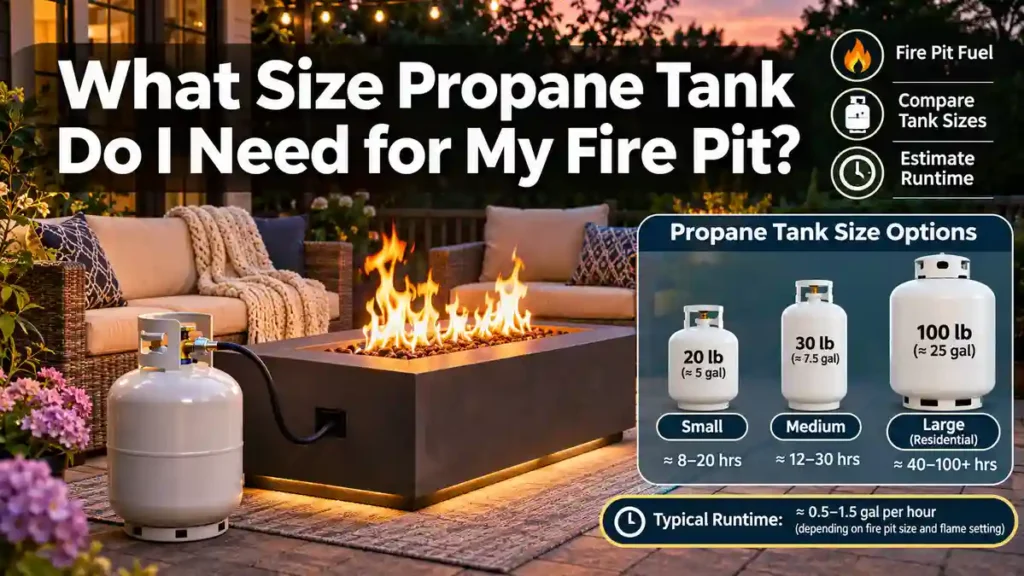
For comparison, I use approximate liquid equivalents below. The capacity refers to propane contents, not the total weight of the steel cylinder plus fuel. These quantities already represent the stated propane fill; do not subtract another allowance for the cylinder’s vapor space.



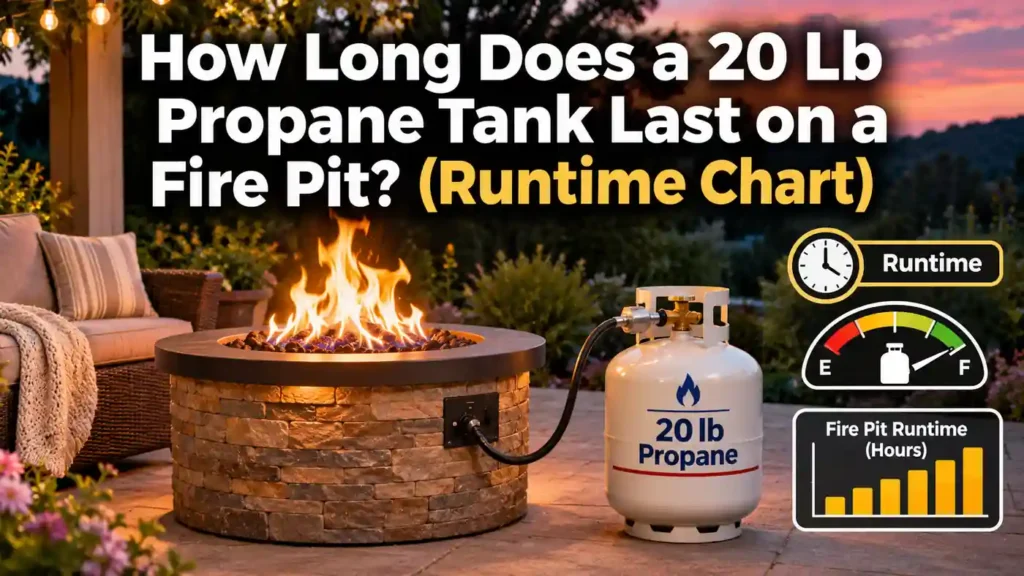
| Input | 15 lb ≈ 3.53 gal | 20 lb ≈ 4.70 gal | Fuel for 3 hours |
|---|---|---|---|
| 30,000 BTU/hr | 10.8 hours | 14.3 hours | 0.98 gal |
| 40,000 BTU/hr | 8.1 hours | 10.8 hours | 1.31 gal |
| 50,000 BTU/hr | 6.5 hours | 8.6 hours | 1.64 gal |
| 58,000 BTU/hr | 5.6 hours | 7.4 hours | 1.90 gal |
| 60,000 BTU/hr | 5.4 hours | 7.2 hours | 1.97 gal |
| 100,000 BTU/hr | 3.2 hours | 4.3 hours | 3.28 gal |
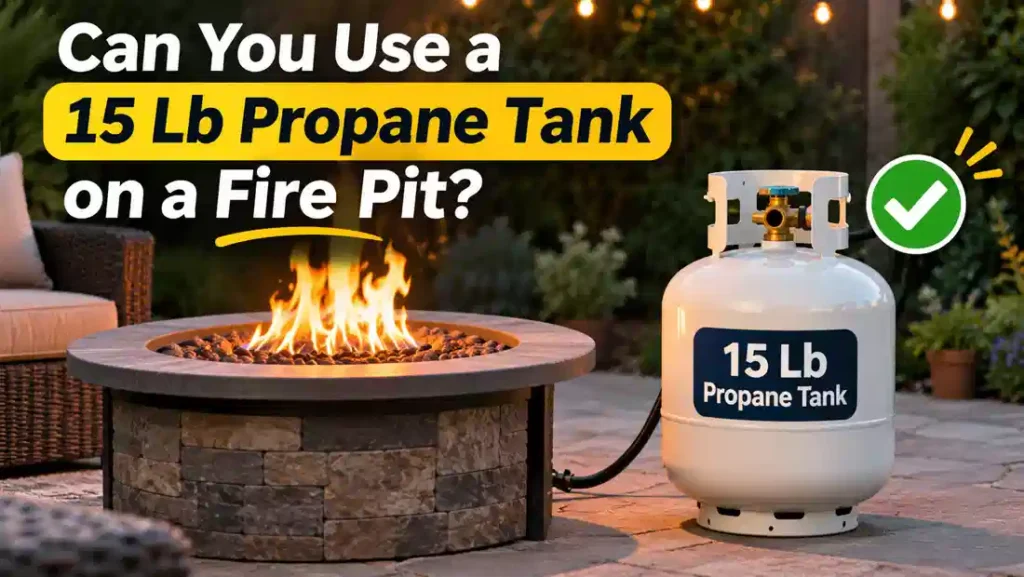
This table is an energy calculation, not approval to use either cylinder with every burner. Follow the exact appliance’s approved tank arrangement. Actual runtime depends on the flame setting, remaining fuel, temperature, and the ability of the cylinder to supply vapor.
My event-planning rule is to work backward from the gathering length. Estimate the fuel needed, confirm that sufficient fuel is available, and leave operational margin. I would not plan a long evening around the last uncertain portion of a cylinder or promise guests the maximum theoretical runtime.
3. Refills, Storage, and Cylinder Handling Add Chores
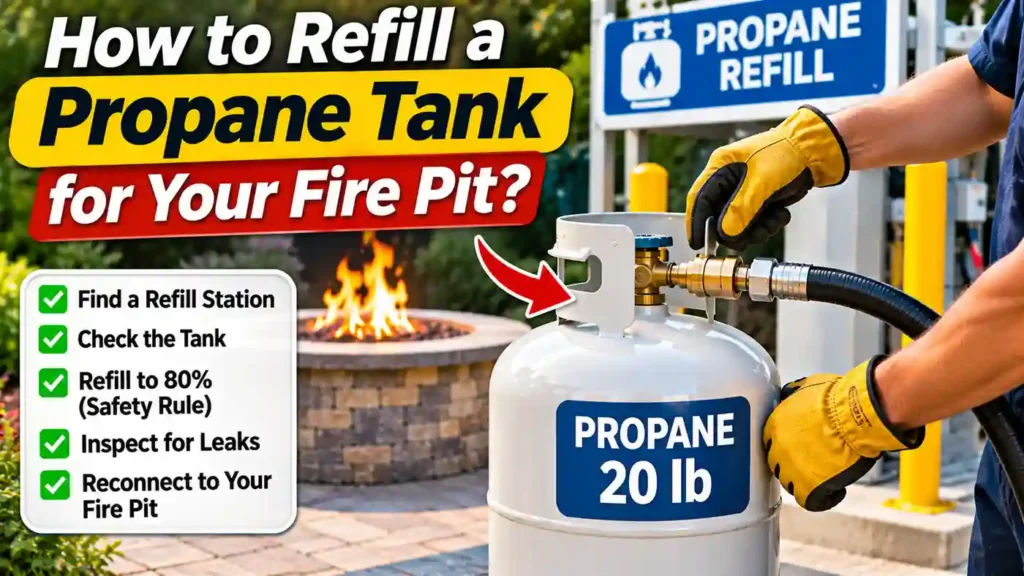
Propane removes ash handling but introduces fuel logistics. You need an appropriate refill or exchange source, a way to transport the cylinder, and suitable outdoor storage. If getting fuel requires a special trip, that inconvenience belongs in the ownership decision.
PERC advises keeping portable cylinders upright and secured during transport, removing them promptly from vehicles, and storing them outdoors rather than in enclosed garages, sheds, or basements. Spare cylinders should not be stored under or near the operating appliance. Follow supplier guidance and local requirements for your situation.


I would test the practical routine before buying: can you comfortably move the approved cylinder, reach the compartment valve, and arrange refills? Someone with limited lifting ability may find this more important than burner size. A hidden cylinder cabinet can also be awkward to access after patio chairs are arranged.
4. A Large BTU Number Does Not Guarantee Comfortable Seating
A burner’s BTU-per-hour rating describes fuel-energy input. It does not measure the temperature at your chair. Wind, seating distance, flame geometry, and outdoor conditions affect how much warmth you experience. I would avoid treating the rating like a guarantee that the whole patio will become comfortable.
Outland Living describes its fire tables as decorative appliances and cautions that their heating effect may not suit use as the main heat source. That distinction matters when you are choosing between ambiance and practical warmth. I would ask which purpose matters more before spending money.
My preferred comparison is task-based: do you want a visible flame for conversation, warmth around selected seats, or a device specifically designed to heat an outdoor area? Those are different purchases. Read propane fire pit versus fire table to separate furniture layout from flame preferences.
Technical Comparison: Different Fire Pits, Different Compromises
The first two rows use manufacturer-published product specifications. The remaining row is an illustrative design case, not a specific product. Dimensions and weight help reveal practical disadvantages that a flame photograph can hide; cylinder weight is additional.
| Model or design | Rated input | Size / weight | Fuel arrangement | Main compromise |
|---|---|---|---|---|
| Outland Premium 870 | 58,000 BTU/hr | 19 × 19 × 11 in.; 25 lb with rocks | Propane; specified 20-lb tank; automatic ignition | Separate cylinder and hose add to the portable setup. |
| Outland Granville Series 403 | 50,000 BTU/hr | 44 × 32 × 24 in.; 96 lb with rocks | Propane; specified 20-lb tank; automatic ignition | Furniture-sized footprint and weight reduce flexibility. |
| Illustrative built-in fire feature | 100,000 BTU/hr assumed | Dimensions and weight depend on design | Approved supply and controls must be specified | Higher fuel demand and permanent installation commitments. |
Notice that a heavier table does not necessarily have the higher burner rating. I would compare footprint, access, materials, approved supply, and replacement parts individually. The most useful technical specification is the one that answers your particular concern, not whichever number is largest.
5. Wind and Rain Can Reduce the Number of Useful Evenings
Outdoor equipment still depends on outdoor conditions. Gusts can disturb a flame or push heat away from the seats, while moisture can interfere with some ignition arrangements. Weather resistance should not be read as permission to operate regardless of conditions.
I would follow the model’s weather instructions and stop when conditions are unsuitable. A manufacturer-approved wind guard is not permission to exceed operating limits, and an improvised wall or cover can create a new clearance or ventilation problem. Never move the fire into a garage, tent, or enclosed room to escape weather.
Before buying, I would think about when you realistically use the patio. If most of your intended evenings are exposed to strong wind or heavy rain, the cost per enjoyable evening may be higher than the fuel calculation suggests. That is a planning consideration rather than a universal performance claim.
6. Cold Weather Can Limit Fuel Delivery
Liquid propane must vaporize before a typical vapor-fed fire pit burns it. A small or low cylinder in cold conditions may struggle to deliver the required vapor rate, especially at higher demand. Having liquid fuel remaining does not prove that the cylinder can sustain the burner’s maximum input.
Outland’s cylinder-size guidance specifically warns that smaller-than-recommended tanks can lead to reduced flame and performance problems. I would follow the approved size instead of selecting a smaller cylinder solely to make the setup easier to carry.
If the flame becomes unexpectedly weak, stop and follow the troubleshooting instructions or contact a qualified technician. Do not heat a cylinder with a flame, hot water, or improvised heater, and do not adjust supply pressure to force a larger flame. Runtime arithmetic cannot diagnose a fuel-delivery problem.
7. Placement Rules Can Eliminate Your Preferred Location
A fire table is not ordinary furniture. The appliance manual controls the required surface, clearances, ventilation, and other installation conditions. Property rules and local restrictions may also limit use, even if a seller shows an attractive balcony photograph.
I would measure the usable layout with chairs pulled out and people moving around. Include safe access to the controls and cylinder compartment. The equipment may physically fit while leaving an impractical arrangement for the people using it.
For renters, the downside can be more fundamental: you might have nowhere both permitted and suitable to use or store the equipment. Review propane fire pit considerations for renters before purchasing. A portable label does not override a lease or fire restriction.
8. You Still Own a Gas Appliance That Needs Attention
No wood ash does not mean no maintenance. Burners, ignition parts, hoses, controls, and the enclosure need the inspection and care specified in the manual. Leaves, insects, weather exposure, and wear can create problems that are easy to overlook beneath decorative media.
For built-in equipment, HPC emphasizes service access, appropriate enclosure ventilation, approved media, and proper installation. I would treat access panels and replacement-part availability as buying features. A repairable burner behind an inaccessible enclosure can still become an expensive service job.
- Check the manufacturer’s inspection and maintenance schedule.
- Inspect only as directed, with the appliance off and cool.
- Keep required vents and access openings unobstructed.
- Use approved replacement components and decorative media.
- Have damaged gas components or abnormal operation evaluated before further use.
I would ask for the model’s parts information before purchasing, rather than after an ignition failure. The fire pit buying checklist helps you evaluate serviceability alongside appearance.
9. Cooking and Decorative Options May Be Restricted
A propane fire pit is not automatically a grill. Outland’s support guidance does not condone cooking over its decorative portable fire pits. Other products may have different instructions, so I would look for explicit permission for the exact appliance and intended food use.
This can disappoint anyone imagining routine marshmallow evenings. Buying a cooking appliance separately may be the better choice if food is a central part of your plans. A fuel commonly used for cooking does not make every appliance burning that fuel suitable for food preparation.
Decorative freedom also has limits. Do not assume you can substitute garden stones, extra glass, or decorative logs because they fit the bowl. Follow the approved media type, amount, and placement. I would decide whether the manufacturer’s permitted appearance is something I like before buying.
10. The Atmosphere Is Different From a Wood Fire
Some people enjoy propane precisely because there is no need to arrange logs or manage embers. Others miss the crackling sound, wood aroma, and changing shape of a traditional fire. I would treat that as a personal preference rather than claim one fuel creates a universally better experience.
My question is whether you enjoy tending the fire or mainly enjoy sitting beside it. If tending wood is part of the attraction, propane may feel less satisfying. If a brief evening outside is the goal, quick operation may matter more. Neither preference can be settled by a specification table.
11. Low Smoke Does Not Mean Zero Emissions or Zero Risk
Propane combustion still produces carbon dioxide. Using the EIA factor of approximately 12.68 pounds of carbon dioxide per gallon, I can estimate direct combustion emissions from the same fuel-use calculation. This is not a complete lifecycle comparison with wood, electricity, or natural gas.
| Burner | Propane/hour | CO₂ per 3-hour evening |
|---|---|---|
| 40,000 BTU/hr | 0.437 gal | 16.6 lb |
| 60,000 BTU/hr | 0.656 gal | 24.9 lb |
| 100,000 BTU/hr | 1.093 gal | 41.6 lb |
A real flame also creates burn hazards, and improper combustion or use in enclosed areas can create carbon monoxide danger. Supervise the appliance and keep children and pets outside the required safe area. A glass guard is not a substitute for supervision.
If you suspect a gas leak, leave the affected area, avoid flames and anything that could create a spark, and call your gas supplier or emergency services from a safe location. Do not keep trying the igniter or remain beside the appliance to investigate. Resume use only after the problem has been professionally resolved.
Worked Example: What Does a Month of Patio Evenings Cost?
Here is my original example for a household using the fire pit regularly. All prices and the schedule are illustrative. I calculate with unrounded values, then round the displayed results.
| Input or calculation | Example |
|---|---|
| Burner input | 60,000 BTU/hour |
| Schedule | 3 hours × 8 evenings = 24 hours/month |
| Fuel price assumption | $4/gallon |
| Monthly propane | 60,000 ÷ 91,500 × 24 = 15.74 gallons |
| Fuel per evening | 1.97 gallons |
| Fuel cost per evening | $7.87 |
| Monthly fuel expense | $62.95 |
| Equivalent nominal 20-lb fills | 15.74 ÷ 4.70 = 3.35 fills |
The fill-equivalent figure measures fuel volume, not a promise that you will make that exact number of trips. Starting fuel and remaining propane change your refill timing. This distinction matters because practical inconvenience depends on your routine as well as consumption.
Interactive Propane Fire Pit Runtime and Cost Calculator
Use actual fuel available rather than cylinder capacity when estimating your next evening. The default represents a nominal full fill. The calculator assumes constant burner input and cannot determine safe cylinder size, vaporization capacity, or suitable operating conditions.
Estimate only: A halfway knob position does not establish half the rated fuel consumption. Use the nameplate rating for full-input estimates.
- Gallons/hour: burner input ÷ 91,500.
- Ideal runtime: gallons available × 91,500 ÷ burner input.
- Monthly fuel cost: gallons/hour × price/gallon × hours/evening × evenings/month.
My Original Ownership Test: Count Useful Evenings, Not Just Features
I would compare the annual ownership budget with the evenings you reasonably expect to use the fire pit. This makes the purchase more personal than a generic pros-and-cons score. It also gives weather exposure, refill inconvenience, and storage a place in the decision.
| Budget item | Occasional use | Frequent use |
|---|---|---|
| Fire pit and initial accessories | $500 assumed | $500 assumed |
| Evenings in the year | 12 | 40 |
| Hours per evening | 3 | 3 |
| Burner / propane price | 60,000 BTU/hr; $4/gal | 60,000 BTU/hr; $4/gal |
| Annual fuel cost | $94.43 | $314.75 |
| First-year total | $594.43 | $814.75 |
| First-year cost per evening | $49.54 | $20.37 |
This example excludes repairs, extra cylinders, delivery, and installation. It charges the entire initial purchase to the first year rather than spreading it across an assumed lifespan. Frequent use lowers the purchase cost per evening while increasing total fuel spending. Both results can be true at once.
My Decision Guide: When the Downsides Matter Most
| Your priority or constraint | My assessment | Next step |
|---|---|---|
| Quick decorative fire and manageable fuel budget | Propane may fit well | Confirm placement and select suitable equipment. |
| Strong warmth across a large outdoor area | Do not rely on flame appearance | Assess equipment designed for the heating task. |
| Routine cooking over the fire | Decorative models may disappoint | Choose equipment explicitly approved for cooking. |
| No suitable outdoor cylinder storage | Resolve this before buying | Confirm a permitted storage and supply arrangement. |
| Rare use and inconvenient refill trips | Convenience may be overstated | Compare total cost per expected evening. |
| Uncertain lease or local permission | Pause the purchase | Confirm the rules before ordering. |
| Preference for crackling logs and tending a fire | Propane may not deliver that experience | Compare permitted alternatives against your actual priorities. |
Frequently Asked Questions
Are propane fire pits expensive to run?
They can be, depending on burner input and your fuel price. Use the hourly cost table and your expected schedule instead of assuming one universal running cost. Lower purchase price does not guarantee lower fuel consumption.
Does a bigger propane tank solve every drawback?
No. An approved larger supply may reduce refill frequency, but it does not remove placement restrictions, maintenance, weather limits, or supervision. It also does not reduce the fuel consumed at the same burner input.
Can I reduce costs by turning the flame down?
A lower firing rate generally uses less fuel, but the savings depend on the actual rate. Do not assume knob position maps directly to consumption. Keep operation within the manufacturer’s instructions and never alter the regulator to save fuel.
Would I still buy a propane fire pit?
I would consider one for convenient outdoor ambiance after checking the location, fuel routine, and parts support. I would avoid buying it mainly for an unverified heating promise or a cooking use the manufacturer does not permit.
The best choice is the one whose drawbacks fit your routine. Compare the broader Propane Fire Pits guides, then come back to your expected evening length, available space, and refill plan. Those practical details will matter more than the flame in a promotional photograph.

Mike is an experienced propane technician with over 15 years of professional experience in the field. He has dedicated his career to helping customers with their propane needs, from installation to maintenance and repair. Together with Jeremy, he co-founded this website to provide useful information and guidance to customers seeking reliable propane services.