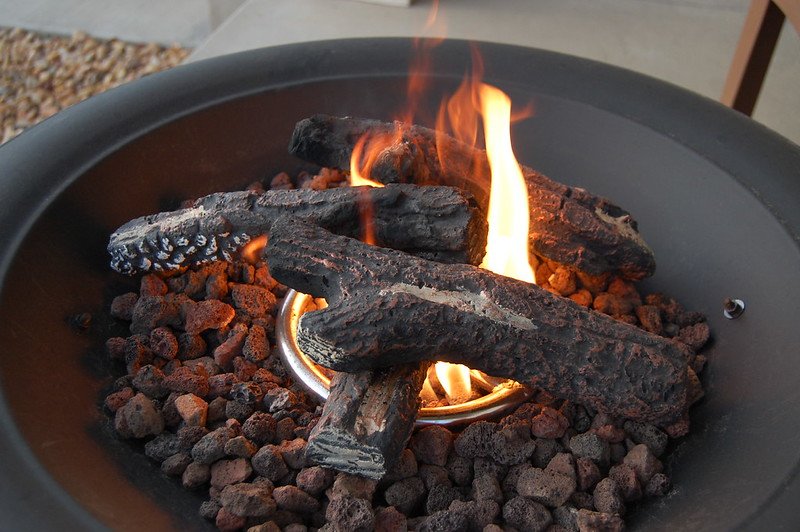
Quick Answer: Propane Fire Pit vs. Fire Table—Which Is Better?
A propane fire pit bowl is generally better when you want portability, a campfire-style gathering spot, and a lower upfront price. A propane fire table is generally better when you want a furniture-like patio centerpiece, a usable ledge, and a tidier cylinder arrangement. Neither is inherently warmer or more economical. Their actual burner input, not their shape or price, determines theoretical fuel consumption.
I would choose a portable bowl for camping or a flexible backyard and a fire table for a furnished patio where I expect to entertain regularly. At 50,000 BTU per hour, either format consumes about 0.55 gallons of propane hourly, costs about $2.19 per hour at $4 per gallon, and gets an ideal 8.6 hours from a nominal 20-pound propane fill.
Updated November 2026 · US buyers. Prices below are illustrative buying budgets, not retailer quotes. Dimensions and ratings are representative ranges, and any actual installation must follow the specific product’s listing, manual, and local rules. I use calculations to make the purchase decision measurable instead of guessing from photos.
At-a-Glance Comparison
| Decision factor | Propane fire pit bowl | Propane fire table | Who wins? |
|---|---|---|---|
| Common use | Camp-style circle, camping, casual gatherings | Patio conversation set and furniture focal point | Depends on use |
| Example upfront range | $100–$300 portable bowl | $200–$700 standard table; premium higher | Bowl for budget |
| Illustrative burner input | 30,000–60,000 BTU/hr | 30,000–70,000 BTU/hr | Neither automatically |
| Surface for cups | Typically none | Often a perimeter ledge; model-specific | Fire table |
| Cylinder arrangement | Often external with manufacturer hose | May be concealed or external, design-specific | Often fire table |
| Ease of movement | Often lightweight and movable after cooling | Usually heavier and more furniture-like | Bowl |
| Fuel economy at equal BTU | Same theoretical energy use | Same theoretical energy use | Tie |
| Storage and maintenance | Compact, simple shell | Additional surfaces, doors and finish | Often bowl |
| Seating atmosphere | Lower central flame | Raised furniture-level flame | Personal preference |
“Fire pit” is also an umbrella term. Manufacturers sometimes call a fire table a fire pit table or a propane fire pit. For clarity, I use fire pit bowl to mean a lower, relatively open fire feature with little or no tabletop; and fire table to mean a gas burner built into a table-like enclosure with usable surrounding surface. Both can have round, square, or rectangular designs.
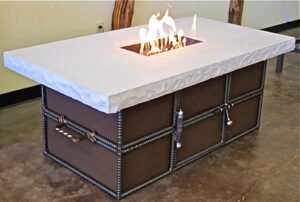
What Is the Difference Between a Propane Fire Pit and Fire Table?
I think of the difference as a choice between a fire feature and a piece of outdoor furniture that contains a fire feature. A portable bowl directs attention to its flame, rock bed, and seating circle. A table integrates the flame into a raised surface, so people can gather around it more like a coffee table. The visual design changes how you organize the patio even when the burner output stays unchanged.
A fire bowl may use a hose leading to an external upright cylinder. This arrangement can make it easy to move the bowl after disconnecting and cooling it according to the manual, though you still need a safe location for the cylinder and hose. A fire table may contain an approved ventilated cylinder compartment, or it may require a separate cylinder cabinet or remote supply. Never assume an enclosed base is approved for cylinder storage: verify that feature in the manual.


There are hybrids, too. Some round bowls are heavy, permanent landscape features, while some compact fire tables are relatively portable. I would evaluate the actual dimensions, net weight, storage arrangement, and whether the unit has a real usable ledge before relying on a category label.
Technical Details: How the Two Designs Compare
These representative examples are design types, not claims that every product in the group carries the same dimensions or output. A current manufacturer listing for a portable fire bowl, for example, shows a 19-inch, 58,000-BTU model, while retailer listings also include 50,000-BTU fire tables with 34-inch tops. Both demonstrate why selecting by shape alone is unreliable.
| Design type | Approx. footprint | Illustrative BTU/hr | Typical construction | Practical consideration |
|---|---|---|---|---|
| Compact portable bowl | 19–24 in. diameter | 30k–60k | Powder-coated steel or iron, removable carry lid | External cylinder and hose routing |
| Large decorative bowl | 30–42 in. diameter | 40k–80k | Concrete-composite, stone-effect or steel | Heavy; sometimes permanently positioned |
| Small square fire table | 28–34 in. wide; 24–26 in. high | 30k–50k | Steel cabinet and metal burner | Often fits conversation seating |
| Rectangular fire table | 42–60 in. long | 40k–70k | Steel/aluminum enclosure and burner | More tabletop area; larger footprint |
| Low round fire table | 30–42 in. diameter; 12–18 in. high | 40k–60k | Composite or metal body | Looks like a bowl but has wider perimeter |
| Custom built-in feature | Site-specific | 50k–150k+ | Specified burner, noncombustible enclosure | Gas supply needs professional planning |
When I read a technical sheet, I check the listed fuel (propane, not natural gas), maximum input, ignition type, approved regulator and hose, required minimum clearances, tank size, allowable surfaces, warranty, and whether fire glass or lava rock is included. Burner output in BTU/hour represents fuel input energy, not guaranteed heat delivered to a particular seat.
Which Is Warmer: A Propane Fire Pit or a Fire Table?
There is no universal winner. If I compare a 58,000-BTU fire bowl with a 30,000-BTU fire table, the bowl consumes nearly twice as much fuel at maximum input. That may support a larger flame and different warmth around the seating circle, but I would not promise twice the usable warmth. Wind, burner geometry, radiant exposure, flame height, and how far you sit away affect comfort.
At equal BTU input, the theory predicts equal propane energy consumed per hour. It does not predict identical comfort. A low fire bowl can put the flame closer to knees and legs, while a raised table places it higher and can shift which parts of the body feel radiant heat. A broad rectangular burner can look elegant from the front seats but perform differently from a ring-shaped burner surrounded by chairs.



I use a simple practical test: position the likely chairs, estimate the distance from the burner to each seat, and consider the direction of prevailing wind. A freestanding bowl may be easier to reposition between gatherings, while a heavy table could be better as a permanent patio layout. If warmth is the main goal, I would study reviews and actual burner configuration rather than buying solely on the highest advertised BTU rating.
Which Costs More to Buy?
For straightforward consumer purchases, fire tables often cost more because you buy a cabinet or furniture frame, finished top, and sometimes an enclosed cylinder compartment. A steel bowl can cost less because it uses fewer finished surfaces and simpler structure. The gap disappears with custom or premium masonry bowls, though, so the word “pit” is not synonymous with budget.
| Budget component | Portable bowl example | Standard fire table example |
|---|---|---|
| Appliance purchase | $170 | $420 |
| Compatible empty cylinder | $55 | $55 |
| First propane fill | $20 | $20 |
| Cover and accessories | $25 | $55 |
| Delivery/assembly allowance | $0 | $40 |
| Illustrative first-day cash cost | $270 | $590 |
This example shows a $320 upfront difference. It is not a promise about actual store prices; each retailer may include different accessories or shipping. If a table includes a weather cover and a bowl does not, compare the packages rather than adding a cover to both. Conversely, if you already have an in-date, compatible cylinder, do not count another purchase. The purpose of the exercise is to avoid a false bargain created by incomplete pricing.
For more purchasing ranges, including premium and installed models, visit my how much a propane fire pit costs. I keep that broader cost article separate so this comparison can concentrate on which design makes sense for your space.


BTU Consumption: Does a Fire Table Use More Propane?
Neither format necessarily uses more propane. The amount burned depends on actual BTU input at the selected setting. I use approximately 91,500 BTU per US gallon of liquid propane and about 4.7 gallons in a nominal full 20-pound cylinder for these estimates. The cylinder’s permitted liquid filling capacity is already accounted for in that nominal propane fill; do not subtract an extra 20% from 4.7 gallons.
Gallons/hour = BTU/hour ÷ 91,500. Then multiply gallons/hour by your propane price to find fuel cost per hour. Divide 4.7 by gallons/hour for ideal run time with a full 20-pound fill. These calculations assume steady input, no weather-related supply constraints, and no additional reserve.
| Burner rating | Fuel use gal/hr | 20-lb ideal runtime | Hourly fuel at $4/gal |
|---|---|---|---|
| 20,000 BTU/hr | 0.219 | 21.5 hr | $0.87 |
| 30,000 BTU/hr | 0.328 | 14.3 hr | $1.31 |
| 40,000 BTU/hr | 0.437 | 10.8 hr | $1.75 |
| 50,000 BTU/hr | 0.546 | 8.6 hr | $2.19 |
| 55,000 BTU/hr | 0.601 | 7.8 hr | $2.40 |
| 58,000 BTU/hr | 0.634 | 7.4 hr | $2.54 |
| 60,000 BTU/hr | 0.656 | 7.2 hr | $2.62 |
| 75,000 BTU/hr | 0.820 | 5.7 hr | $3.28 |
Here is the useful comparison: a 58,000-BTU bowl burns about 0.634 gallons per hour, while a 40,000-BTU table burns about 0.437. At the same price per gallon, the bowl uses approximately 45% more propane per hour. But if I bought a 40,000-BTU bowl and a 58,000-BTU table, that difference would reverse. The burner rating decides the fuel arithmetic, not the furniture shape.
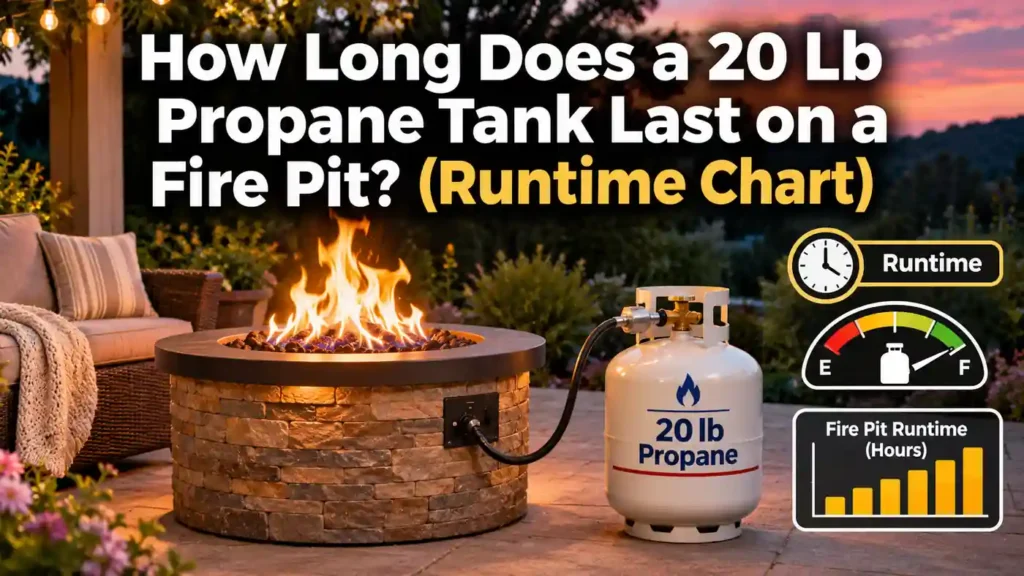
These are ideal maximum-input estimates, not certified performance data. Low ambient temperature can affect how quickly a small cylinder supplies vapor, and lower flame settings can reduce consumption by an amount that should be measured rather than guessed. My 20-pound cylinder runtime chart explains how to estimate realistic runtime around a specific burner.
Fuel Cost Scenarios at $3, $4 and $5 per Gallon
Since propane retail prices differ across regions and can change, I compare three illustrative prices. I would rather provide a transparent range than pretend one nationwide price applies to every buyer.
| Burner / example | At $3 per gallon | At $4 per gallon | At $5 per gallon | Average monthly at $4/gal, 4 hr/week |
|---|---|---|---|---|
| 30k BTU table | $0.98/hr | $1.31/hr | $1.64/hr | $22.73 |
| 40k BTU table/bowl | $1.31/hr | $1.75/hr | $2.19/hr | $30.31 |
| 50k BTU either format | $1.64/hr | $2.19/hr | $2.73/hr | $37.89 |
| 58k BTU portable bowl | $1.90/hr | $2.54/hr | $3.17/hr | $43.95 |
| 60k BTU either format | $1.97/hr | $2.62/hr | $3.28/hr | $45.46 |
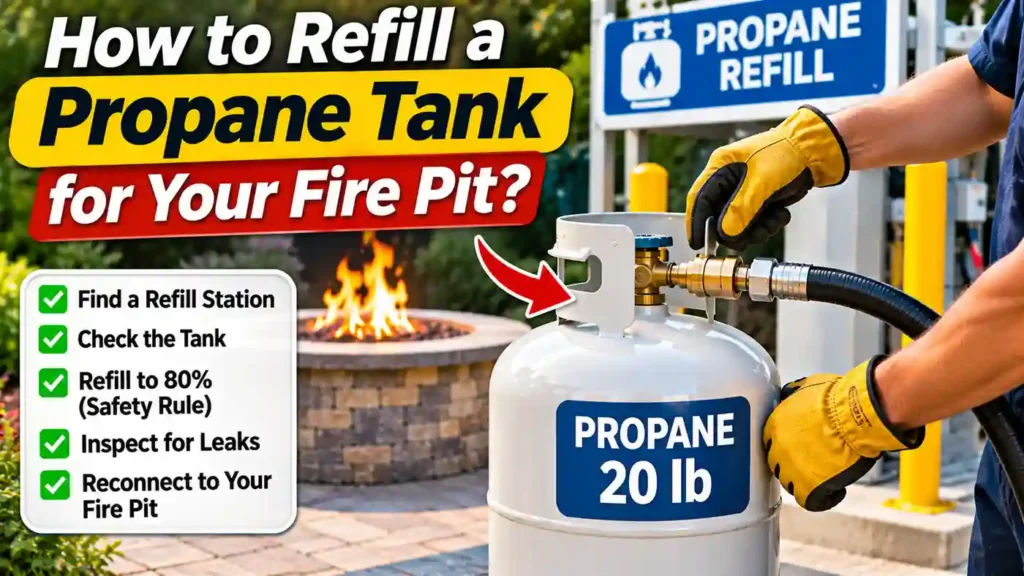
The monthly column is based on four hours of operation per week, 52 weeks a year, and 12 calendar months. It excludes refill trip costs, delivery fees, cylinder maintenance, tax, and any energy left in a cylinder at the end of the period. If you buy propane through an exchange program, check the net propane weight, not just the price printed on the exchange cage. For more, read refilling a fire pit cylinder and my dedicated propane fire pit hourly and monthly costs.
Interactive Fire Pit vs. Fire Table Runtime Calculator
I built this comparison around two independent burners. Enter their rated BTU inputs, propane price, usable gallons per cylinder, and weekly hours. The results estimate both runtime and monthly fuel spending. If you want to compare identical-output models, enter the same BTU number in both fields; that makes the fuel result tie automatically.
Illustrative steady-input estimates: 91,500 BTU per gallon, 52/12 weeks per month. Real-world conditions and flame settings affect runtime.
I would treat this as a planning tool, not a fuel gauge. The math does not know whether an appliance is throttled, whether your cylinder is partially full, or whether cold weather affects vapor delivery. If the calculator is blocked by a browser security setting, you can use the same numbers with the BTU tables above.
Worked Example: An $180 Bowl vs. a $430 Fire Table
Suppose I want a four-hour fire every Saturday evening. I consider a portable bowl for $180 rated at 58,000 BTU/hour, and a table for $430 rated at 40,000 BTU/hour. To make the comparison fair, I assume both use propane at $4 per gallon and that I will use each for the same four hours weekly. This is a hypothetical buying example, not a live product quotation.
- Bowl: 58,000 ÷ 91,500 = 0.634 gallons/hour. Weekly consumption = 2.536 gallons. Approximate annual fuel expense = $527.39.
- Table: 40,000 ÷ 91,500 = 0.437 gallons/hour. Weekly consumption = 1.749 gallons. Approximate annual fuel expense = $363.72.
- Fuel difference: About $163.67 per year in this scenario, because the example bowl has a larger rated burner.
- Purchase premium: The table costs $250 more upfront ($430 less $180). Ignoring differences in accessories, the lower estimated fuel bill could offset that premium after roughly 1.5 years of this use schedule.
That result is not a rule that fire tables pay for themselves. It is a comparison of a 58,000-BTU burner with a 40,000-BTU burner. Change both models to 50,000 BTU/hour and the fuel cost advantage disappears. When I shop, I refuse to attribute a burn-rate difference to a format when it actually comes from different burner specifications.
First-Year Ownership Budget: Apples to Apples
The sticker price is only one part of the decision. I add a compatible cylinder, first propane purchase, accessories not included with the model, delivery or assembly, and expected fuel consumption. To avoid double-counting fuel, the example table below separates nonfuel initial costs from the entire calculated annual fuel expense.
| Expense | Portable bowl example | Fire table example |
|---|---|---|
| Appliance | $180 | $430 |
| Cylinder | $55 | $55 |
| Other accessories/delivery | $25 | $75 |
| Nonfuel initial cost | $260 | $560 |
| Rated input | 58,000 BTU/hr | 40,000 BTU/hr |
| Fuel for 4 hr/week at $4/gal | $527.39 | $363.72 |
| Illustrative year-one total | $787.39 | $923.72 |
Here, the bowl still costs less over the first year because its lower nonfuel purchase expense outweighs the higher fuel consumption. Over multiple years, a fire table may catch up in fuel spending if you actually operate the table’s smaller burner at the modeled rate. But wear, weather protection, repairs, changing fuel prices, and differing use patterns can change the outcome. I would rather budget with reasonable ranges and then update the calculation after actual ownership.
Which Is Better for a Small Patio?
For a compact patio, I lean toward a table only when the perimeter genuinely replaces another piece of furniture. Otherwise a portable bowl can be more flexible: use it during a gathering, then store it properly afterward. In either case, clearance requirements may eliminate a model from consideration before its footprint does.
A fire table’s published diameter might appear compact, but remember the space for seating, moving around the table, and accessing its cylinder compartment. A bowl with an external tank has a different space penalty: its cylinder and the manufacturer’s hose need protected, permitted placement. I would draw the real footprint on the ground using tape and mark the seating locations before ordering.
| Patio situation | My likely preference | Reason |
|---|---|---|
| Small patio, frequent entertaining | Compact fire table if clearances permit | May replace an ordinary coffee table |
| Small patio, occasional use | Portable bowl if approved | Can be removed and stored when cool |
| Large circular seating area | Round bowl or large round table | Promotes face-to-face gathering |
| Long narrow outdoor sofa set | Rectangular fire table | Matches furniture footprint |
| Flexible backyard parties | Portable bowl | Easier to reposition between uses |
| Balcony or apartment | Only a model explicitly permitted | Property and fire restrictions come first |
If you are renting, the correct answer may be neither. Many buildings restrict open-flame appliances or propane cylinders, regardless of the product’s marketing claims. Read fire pits for renters before considering either design for a balcony.
Which Handles the Propane Tank Better?
A fire table with a listed, ventilated built-in compartment has a genuine cosmetic advantage: it may keep a 20-pound cylinder neatly inside the designated cabinet. But some fire tables require an external cylinder, and some fire bowls are sold with matching tank-cover side tables. You must follow the approved cylinder location and hose arrangement for the exact model.
A hidden tank is not automatically safer than a visible one. What matters is upright positioning, the correct regulator, manufacturer-approved ventilation, hose routing, valve access, and clearances. I never recommend placing an external cylinder inside a cabinet that was not specifically designed for it. If a manufacturer requires the cylinder to remain outside its fire table, that is the rule to follow.
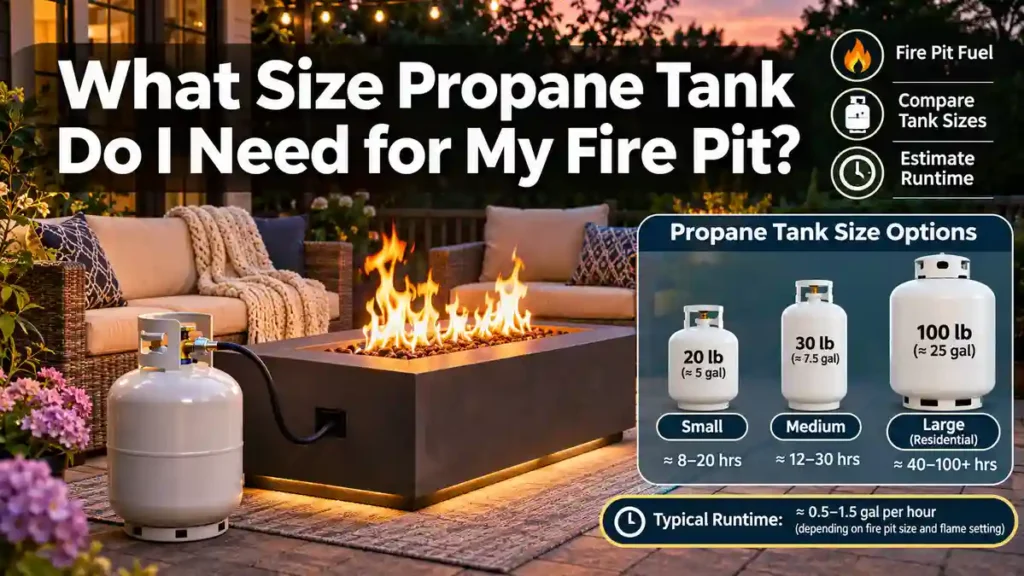
At a rated 50,000 BTU/hour, the nominal 4.7-gallon contents of a full 20-pound cylinder supply about 8.6 ideal hours. If you frequently entertain, the tank’s practical capacity can matter more than whether it is concealed. My choosing the right tank size and smallest usable fire pit cylinders explain why choosing a larger or smaller supply must start with appliance compatibility, not just desired runtime.
Construction and Weather Resistance: What Lasts Longer?
Neither style wins automatically. A basic portable bowl may have a small painted-steel shell and a simple burner assembly. A fire table can add cabinet doors, fasteners, decorative finishes, fire glass, and edges that may weather differently. Premium bowls can be just as complex when made of cast-concrete composites or permanent masonry.
| Material or component | What I like | What I would inspect |
|---|---|---|
| Powder-coated steel | Accessible price, simple construction | Chips, welds, rust-prone seams, drainage |
| Aluminum enclosure | Resistance to red rust and lighter handling | Panel stiffness and mixed-metal fasteners |
| Concrete or composite body | Architectural appearance and mass | Cracks, stains, weight and handling damage |
| Stainless burner | Often useful for corrosion resistance | Actual grade, serviceability and listing |
| Fire glass or lava rock | Decorative flame appearance | Approved material and specified loading depth |
| Ignition and control parts | Convenient lighting | Manufacturer parts and instructions |
I would not infer durability from weight alone. A heavy concrete-look table may still have a basic igniter, while a light steel bowl can be easy to maintain and store. The quality of the specific product, its weather exposure, and availability of compatible service parts matter more than whether it has a table ledge. My Wayfair propane fire pit quality guide offers a practical checklist for evaluating construction, warranties, and customer complaints on marketplace listings.
Which Is Easier to Clean and Maintain?
A basic bowl often has fewer decorative panels, compartments, and finished edges to maintain. That can make routine inspection and cleaning straightforward. A table has more exterior surface area and may require extra attention around burner media, cabinet doors, drainage points, and surface finishes. But individual models vary, and a quality table can be easier to service than a poorly designed bowl.
- Before use, inspect the approved hose, connections, burner area, and visible signs of damage according to the manual.
- Remove debris in the manner recommended for the specific burner. Do not modify its openings.
- Use only the fire media type and quantity authorized by the manufacturer.
- Clean the enclosure with products compatible with its coating, metal, or stone-effect finish.
- Allow the fire feature to cool completely before fitting its designated weather cover.
- Store cylinders upright in an approved outdoor location; do not keep spare cylinders beneath or near the flame.
- If you suspect a gas leak, stop operating the equipment, leave the area, and contact the appropriate propane professional or emergency service.
For either format, I would verify that replacement ignition components and approved regulator/hose assemblies are obtainable. I would not try to solve a gas-supply problem by substituting generic parts or bypassing safety controls.
Safety: Is a Fire Table Safer Than a Fire Pit?
Neither design is categorically safe simply because it is taller, shorter, heavier, or has a hidden cylinder. Both are outdoor gas-burning appliances. A table’s ledge can also tempt guests to set combustible items or hands too close to the flame, while a ground-level bowl can place the flame nearer children or pets. The safe choice depends on the precise design, placement, instructions, and supervision.
Use propane fire pits and tables only outdoors in locations approved by their manufacturers and applicable rules. Never use them in a house, tent, garage, enclosed porch, or other unventilated space. Do not assume a generic overhead clearance number applies to all models. Follow the manual’s combustible-material separation requirements and local code.
I would check the complete propane fire pit safety guide before either purchase, especially when children, pets, wind or a crowded patio are part of the plan.
Which One Is Better for Entertaining?
I tend to like a fire table when friends gather around outdoor sofas. The tabletop can give each guest a clear orientation, and a wide rectangular model often looks coordinated with lounge furniture. But I would keep the usable surface separate from the flame zone and verify the manufacturer’s restrictions for placing items on the top. Not every edge is safe to touch or use while the burner is on.
For a camp-style circle of folding chairs, I prefer the lower bowl look. It places the fire at the center of the gathering without imposing a big furniture footprint. A portable bowl may also be more appropriate when the gathering changes locations—subject to local fire restrictions and campsite rules. “Propane” does not imply an exemption from every burn ban.
There is also a social trade-off: a wide table creates a convenient boundary between people, while a compact bowl can encourage moving chairs closer to a shared center. Neither arrangement is universally better. I would choose based on how the group really uses the space, not how a staged product photo looks.
My Decision Guide: Choose in Five Questions
Before comparing specific models, review my Propane Fire Pit Buying Guide: Prices, Types & Features for the full shopping checklist.
After comparing price, fuel, and space, I would make the final decision with five questions. This is my own repeatable method for avoiding purchase regret—not a manufacturer rating system.
- Will I move it? If yes, I lean toward a portable bowl. Check weight, carry method, cooling time, and permitted transportation procedures.
- Do I actually need a table? If my patio already has a good coffee table, buying another surface may not add value.
- What is my full first-year budget? I total appliance, compatible cylinder, included versus missing accessories, delivery and expected fuel use.
- Which burner matches the experience I want? I compare BTU input and flame configuration without assuming the highest number equals the best comfort.
- Can I legally and safely use it here? If the answer is not clear, I do not buy either model until I check the manual and property restrictions.
| What matters most to you | My default choice | When I might change it |
|---|---|---|
| Lowest purchase cost | Basic portable fire bowl | A discounted table with a complete setup costs less |
| Outdoor coffee table function | Fire table | Perimeter is too hot or too narrow for the intended use |
| Camping and variable seating | Portable bowl | Campsite rules prohibit it or its size is unsuitable |
| Neat concealed-cylinder look | Approved fire table or dedicated tank-cover design | Cylinder must remain externally located |
| Custom landscape design | Built-in fire pit or fire table | Future relocation makes permanent work impractical |
| Lowest propane use | Lower actual burner input | Both have the same BTU and settings |
The Cost I Think Buyers Overlook Most
It is not the cost of the lava rock or the first tank fill. It is the cost of a design that does not fit everyday habits. Imagine buying a $500 table because it looks sophisticated, then discovering that your family never uses its small perimeter surface, or that the chairs cannot be positioned around it with adequate clearance. The apparent value vanishes if you seldom light it.
The reverse happens when someone buys a $150 bowl but hosts frequent sit-down patio evenings and soon buys an ordinary outdoor coffee table beside it. That extra furniture may eliminate most of the apparent savings. I would price the whole patio arrangement, not just the burner enclosure. The answer can change without a single BTU changing.
My small practical experiment is to use an outdoor-safe placeholder—the dimensions of the product marked on the patio with tape—then arrange the chairs and walk through the space. I also mark where the approved cylinder would sit and which direction its hose must run. This quick exercise may reveal a spatial problem before any money is spent.
Frequently Asked Questions
Is a propane fire table the same as a propane fire pit?
A fire table is a type of propane fire pit that incorporates a table-like surface around the burner. In this guide, I distinguish it from a simpler bowl-style propane fire pit.
Do propane fire tables produce as much heat as fire pits?
They can, if the burner inputs and conditions are comparable. A 50,000-BTU table and 50,000-BTU bowl have the same theoretical fuel-energy input per hour, but perceived warmth can differ due to design, wind, and distance from the flame.
Is a propane fire pit cheaper to run than a fire table?
Not inherently. At equal actual BTU input and propane prices, the fuel cost is equal. A 30,000-BTU model costs about $1.31/hour at $4/gallon, versus $2.19/hour for a 50,000-BTU model, irrespective of shape.
How long does a 20-pound tank last on a fire table?
About 8.6 ideal hours at 50,000 BTU/hour or 10.8 at 40,000 BTU/hour, assuming approximately 4.7 gallons available. Actual time depends on burner setting, cylinder supply, and conditions. Read 20-pound cylinder runtime chart for the full chart.
Can I use a smaller propane tank?
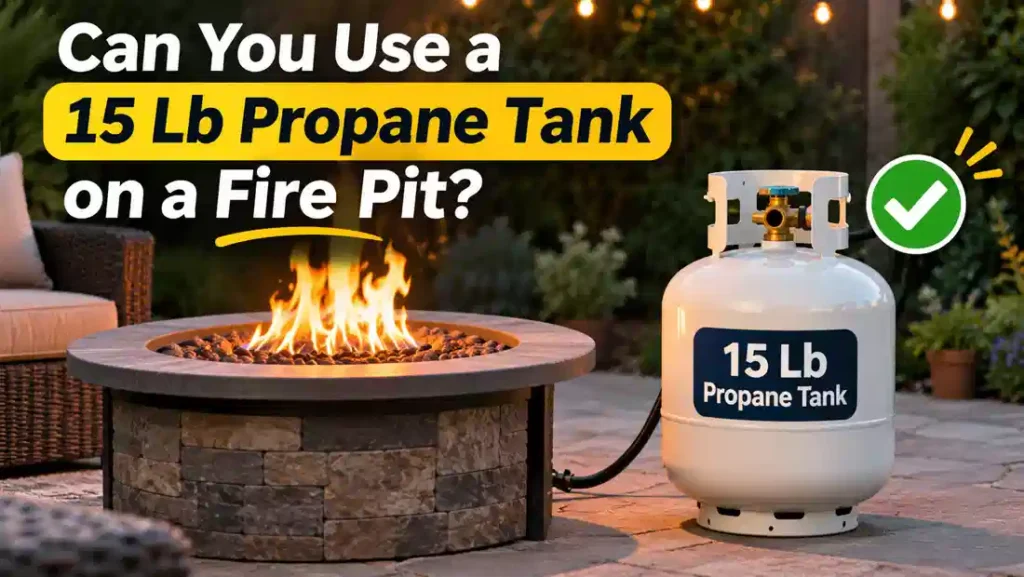
Only if the manufacturer explicitly permits the size and connection. Smaller cylinders may not vaporize enough propane for high-BTU appliances, especially when cold. Read smallest usable fire pit cylinders and 15-pound propane tank compatibility before changing a supply arrangement.
Can you place drinks on a fire table?
Only in areas and under conditions the manufacturer explicitly permits. A tabletop ledge is not necessarily cool or safe when flames are burning. Keep all combustible and heat-sensitive items away from the burner and hot surfaces.
Are propane fire tables suitable for a covered porch?
Do not assume so. Outdoor gas appliances must not be used in enclosed or inadequately ventilated spaces. Required open sides and overhead clearances depend on the exact appliance and local rules. A roof or screen can make an otherwise outdoor-looking space unsuitable.
Can I convert a propane fire pit into a fire table?
Not by simply building a wooden top around a burner. Conversion of a listed appliance or its enclosure can change airflow, clearances, and safety. Choose a purpose-built listed model or consult a qualified professional about a properly engineered custom installation.
What if I care more about appearance than heat?
Consider the flame pattern, seating layout, enclosure material, and finish. A low-input fire table may give you the furniture aesthetic at a lower hourly fuel cost, but it may also produce a smaller flame. Buy for the actual atmosphere you prefer.
Final Verdict: Propane Fire Pit or Fire Table?
I would choose a portable propane bowl for a flexible, low-cost, campfire-style setup. I would choose a propane fire table for a patio where it genuinely functions as part of the furniture. Neither is universally hotter, safer, longer-lasting, or less expensive to operate. Compare the specific burner, manufacturer instructions, real setup price and how frequently you will use it.
My most useful buying rule is to separate three budgets: first-day equipment cost, yearly propane expense, and the value of your patio layout. A good decision satisfies all three. For the next steps, see how much a propane fire pit costs, choosing the right tank size, propane fire pit hourly and monthly costs, and complete propane fire pit safety guide. I would review those before choosing a specific model or planning the cylinder location.

Mike is an experienced propane technician with over 15 years of professional experience in the field. He has dedicated his career to helping customers with their propane needs, from installation to maintenance and repair. Together with Jeremy, he co-founded this website to provide useful information and guidance to customers seeking reliable propane services.