Updated November 5, 2026. This guide addresses U.S. consumers buying outdoor propane decorative fire features. Dimensions, prices, fuel scenarios and usage estimates are illustrative unless a particular manufacturer states otherwise. I give you a buyer’s evaluation framework, not fabricated hands-on product testing.
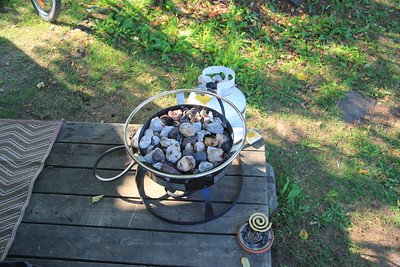
If you are wondering what to look for when buying a propane fire pit, I would begin by deciding how you actually intend to spend an evening outdoors. A compact portable fire bowl might be ideal for an approved campsite. A square fire table might be more comfortable beside patio chairs. A wide decorative bowl can make a dramatic focal point—but it may be surprisingly heavy and need a different cylinder arrangement. All three can be good products when the site, fuel system and budget match the intended use.
My biggest concern is that buyers often compare attractive photos while skipping the technical information that determines whether they can safely use the unit. I want you to finish this guide knowing exactly which fields to read in a product listing, what the numbers mean and when I would reject a seemingly attractive deal.
For a wider overview that compares fire pit types, price ranges, features and fuel planning alongside this checklist, start with my Propane Fire Pit Buying Guide: Prices, Types & Features.
My 12-point buying checklist: quick reference
| Priority | What I check | Why it matters | Deal breaker |
|---|---|---|---|
| 1. Intended location | Outdoor-only manual and clearances | Determines whether it fits the property | Required distances cannot be met |
| 2. Listing/certification | Model number, appropriate certification and label | Independent product safety evidence | No trustworthy model documentation |
| 3. Fuel connection | Propane model, approved regulator, hose | Controls compatibility and safe supply | Unclear or improvised fittings |
| 4. Cylinder placement | Approved upright tank size, internal or remote | Affects layout and operation | No compliant position for cylinder |
| 5. Burner input | BTU/hr and adjustable range | Sets maximum nominal fuel use | No rated input information |
| 6. Frame/surface | Metal, composite, corrosion resistance | Affects weathering and support | Visible instability or material damage |
| 7. Ignition | Piezo/electronic/manual as specified | Usability and serviceability | Unclear safe lighting instructions |
| 8. Footprint | Overall dimensions plus required clearances | Prevents a cramped, unsafe layout | Fits physically but violates clearances |
| 9. Accessories | Approved burner media, lid, cover | Impacts real price and usefulness | Missing essential approved parts |
| 10. Seller/returns | Who sells it, freight, damage claims | Affects financial risk | Unworkable return terms |
| 11. Warranty/parts | Igniter, burner, regulator support | Determines repair options | No replacement-part pathway |
| 12. Ownership cost | Unit + cylinder + fuel + delivery | Better budget than a sale badge | Price exceeds ready-to-use budget |
I suggest keeping this checklist next to your browser while comparing three candidate models. If any appliance fails the safety and location checks, I stop there. There is no point calculating its low hourly fuel cost if I cannot place it where the manufacturer permits.
1. Choose the right type of propane fire pit
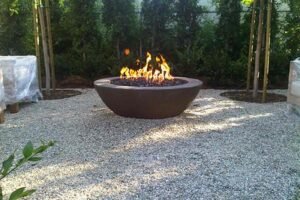
I group propane fire pits into portable bowls, furniture-style tables, column or urn-style features, and heavy decorative or built-in appliances. The practical distinctions are surface area, portability, weight, approved cylinder location and installation requirements. A table often provides a usable surface when the burner is off and fully cool; a portable bowl emphasizes the fire itself. A decorative stone-look feature may provide neither easy movement nor tabletop utility.
| Design type | Example dimensions | Illustrative burner input | Typical cylinder configuration | Best suited to |
|---|---|---|---|---|
| Portable fire bowl | 15–24 in. diameter | 30,000–60,000 BTU/hr | Frequently external approved upright cylinder | Camping or flexible seating |
| Compact steel fire table | 28–32 in. wide | 40,000–50,000 BTU/hr | Sometimes enclosed upright cylinder | Smaller open patios |
| Rectangular fire table | 40–55 in. long | 40,000–60,000 BTU/hr | Integrated or external depending on model | Sofa-style seating |
| Decorative composite bowl | 30–48 in. diameter | 30,000–65,000 BTU/hr | Model-specific, sometimes remote | Permanent-looking outdoor centerpiece |
| Tabletop-listed fire feature | Small, manual-specific | Often substantially lower ratings | Manufacturer-designated small fuel cylinder | Only approved tabletop environments |
| Built-in decorative appliance | Project-specific | Varies widely | Professionally designed approved supply | Planned outdoor installation |
Those are illustrative ranges, not limits imposed on every product. I never put an ordinary freestanding propane bowl on top of furniture and call it a tabletop unit. Only a product specifically designed and instructed for tabletop operation belongs there. The exact certification category, installation directions and cylinder limits matter. To compare two popular styles in detail, see my fire pit tables versus bowls guide.


2. Check certification, labeling and the exact manual
This is where I would spend more time than most product advertisements encourage. For U.S. outdoor decorative gas appliances, ANSI Z21.97/CSA 2.41 is a relevant product standard. I look for a legitimate certification or listing mark associated with the exact model, readable safety labeling and an accessible manufacturer manual. I also check whether the model described in the listing matches the nameplate. A vague statement that something is “safe” is not enough.
The standard encompasses portable, stationary and built-in outdoor decorative appliances, but a mark does not eliminate the need to follow product-specific instructions. The manual defines permissible installation, ventilation and clearance requirements. I would verify the actual listing with the certification organization when something seems inconsistent. A generic picture of a certification logo on a marketplace image is not the same as documented certification for the model you receive.
A second consideration is fuel type. An LP/propane appliance is not automatically compatible with natural gas. A natural-gas conversion must only be performed if the exact manufacturer permits a specified conversion and qualified installation where required. I never recommend swapping jets, regulators or fittings based on a general online tip.
3. Measure your patio before looking at product dimensions
One of the easiest buying errors is to measure only the body of the fire pit. I measure the location first, then account for the required clearances to combustible material, any overhead structure, furniture, walking paths and cylinder position. A product might physically fit between two chairs but still be prohibited in that location by the manual or local rules. In particular, a covered porch, enclosed sunroom, balcony or screened area requires much more scrutiny than an open yard.
Here’s a simple footprint illustration. A 48-by-24-inch fire table covers 8 square feet of ground in plan view. A circular 20-inch bowl covers approximately π × 10² ÷ 144 = 2.18 square feet. That makes the table’s body footprint about 3.7 times greater, but it does not make its required safe operating area 3.7 times larger. Clearance instructions and the separate cylinder’s location govern the actual layout.

| Example body | Plan dimensions | Body footprint | What the figure excludes |
|---|---|---|---|
| Rectangular fire table | 48 × 24 inches | 8.00 sq ft | Required clearances and chairs |
| Square fire table | 30 × 30 inches | 6.25 sq ft | Movement space and door access |
| Round portable bowl | 20-inch diameter | 2.18 sq ft | Remote cylinder and hose |
| Round large bowl | 40-inch diameter | 8.73 sq ft | Heavy handling, overhead rules |
I would mark the footprint with tape or cardboard before ordering. Then I would read the exact manufacturer’s instructions for the placement in question. For renters and apartments, my fire pit guide for renters explains why written permission and local regulations come before a purchase.
4. Understand burner BTU ratings before buying
BTU/hr is the nominal energy input rate, not a guarantee of a particular flame height or how warm a person’s legs will feel. Wind, distance, burner shape and the heat released into the surroundings all change comfort. More BTUs usually mean more fuel consumed at full rated operation. I would compare similar burners at the same rating, rather than assume an expensive model is hotter because it has a thick composite shell.
For a quick estimate I use 91,500 BTU per gallon of propane. Divide a rated burner input by 91,500 to estimate gallons consumed each hour at full input. Divide the usable fuel gallons by that rate to estimate runtime. It is a useful benchmark, although the real fuel rate at low settings depends on the burner controls and equipment.
| Maximum burner input | Fuel at full rate (gal/hr) | 20-lb cylinder runtime* | Fuel/hr at $3/gal | Fuel/hr at $4/gal | Fuel/hr at $5/gal |
|---|---|---|---|---|---|
| 20,000 BTU/hr | 0.219 | 21.5 hr | $0.66 | $0.87 | $1.09 |
| 30,000 BTU/hr | 0.328 | 14.3 hr | $0.98 | $1.31 | $1.64 |
| 40,000 BTU/hr | 0.437 | 10.8 hr | $1.31 | $1.75 | $2.19 |
| 45,000 BTU/hr | 0.492 | 9.6 hr | $1.48 | $1.97 | $2.46 |
| 50,000 BTU/hr | 0.546 | 8.6 hr | $1.64 | $2.19 | $2.73 |
| 58,000 BTU/hr | 0.634 | 7.4 hr | $1.90 | $2.54 | $3.17 |
| 60,000 BTU/hr | 0.656 | 7.2 hr | $1.97 | $2.62 | $3.28 |
| 65,000 BTU/hr | 0.710 | 6.6 hr | $2.13 | $2.84 | $3.55 |
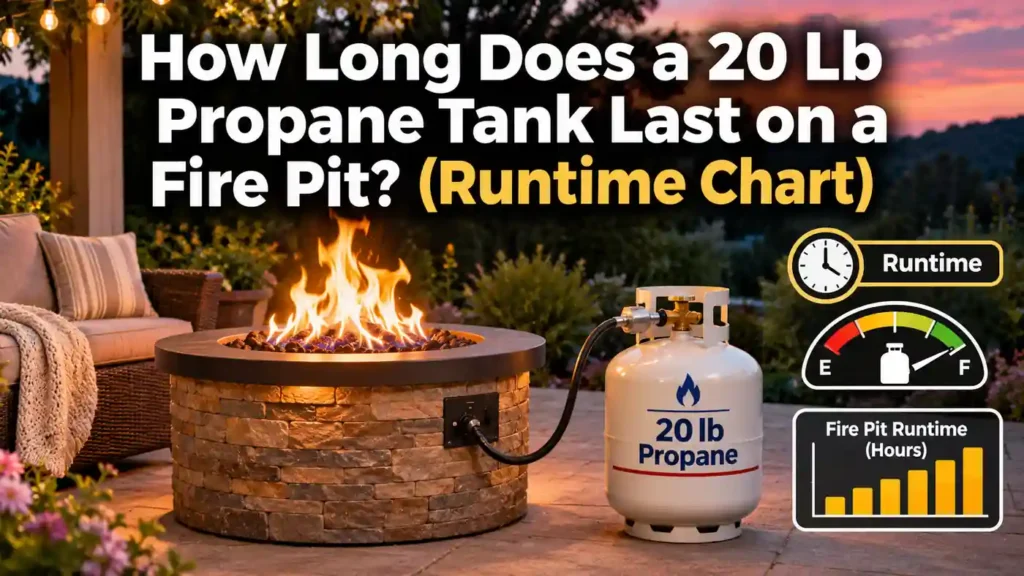
*Assumes 4.7 gallons are available from the cylinder, rated full operation and no supply interruption. Actual fills, weather and appliance operation may change results. At 50,000 BTU/hr, the arithmetic is 50,000 ÷ 91,500 = approximately 0.546 gallon/hour; 4.7 ÷ 0.546 = roughly 8.6 hours. This calculation is why I would not buy a high-output model solely for a bigger flame unless the added fuel cost makes sense for my use. Read how long a 20-lb propane tank lasts on a fire pit for more scenarios.


5. Check the cylinder size, supply and where it will sit
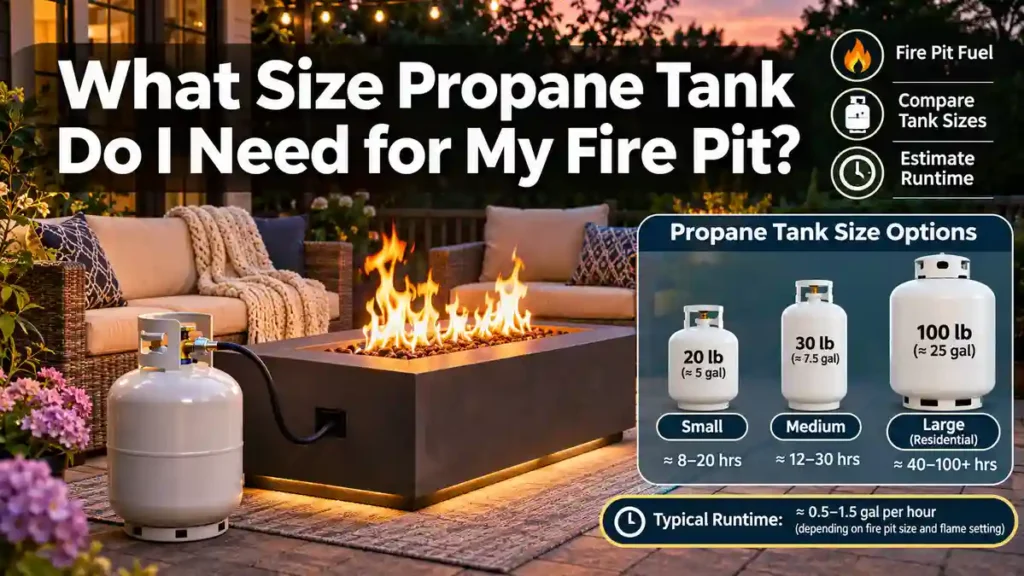
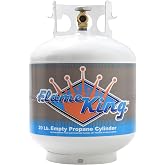
I look for the exact propane cylinder size specified by the manufacturer. Many common fire tables use an approved upright 20-pound cylinder, but cylinder size, gas withdrawal requirements, regulator pressure and installation arrangements are model-dependent. Decorative units may use a remote cylinder; some small tabletop-listed models use a different purpose-designed fuel supply. None of these details should be guessed from a product photograph.
Do not hide an external cylinder inside an unapproved enclosure or beneath a hot bowl. Do not extend or substitute the gas hose, interchange regulators, use an unauthorized adapter or assume a large cylinder automatically improves safe performance. The fuel system must match the appliance. If I cannot find the correct hose and regulator identified in the instructions, I consider that a reason not to order.
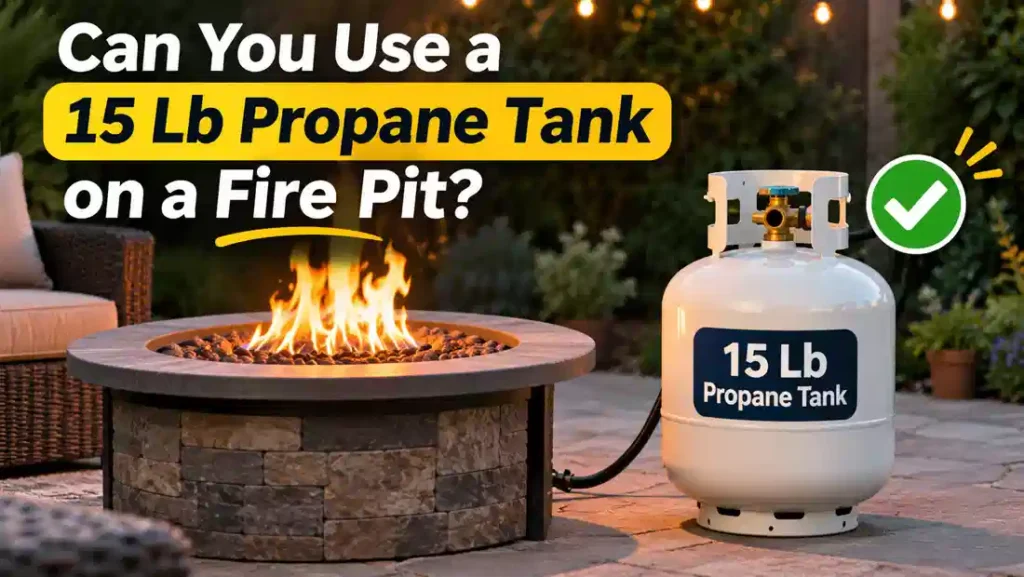
A standard nominally full 20-pound cylinder holds around 4.7 gallons. A 15-pound exchange-fill quantity is about 3.5 gallons, so a shorter runtime than a fully filled 20-pound cylinder can be entirely expected. For deciding which supply is right for a specific appliance, use my propane fire pit cylinder sizing guide and read the appliance manual as the final authority.
6. Materials: look past the words ‘steel’ and ‘stone’
I treat construction quality as an ownership issue rather than a decorative preference. Powder-coated steel can be affordable and sturdy, but finish damage and trapped moisture may lead to rust. Aluminum may offer lower weight and strong corrosion resistance, although thickness and frame design still matter. Stainless steel is especially useful in the burner area; even then, not all stainless grades or installations weather identically. Composite stone-look materials can be attractive and substantial but may chip, stain or require special handling.
| Material or component | Possible advantage | What I examine | Potential drawback |
|---|---|---|---|
| Powder-coated steel body | Budget-friendly, structurally practical | Finish coverage, welds, feet and drainage | Rust if finish fails |
| Aluminum body | Lightweight and corrosion-resistant | Wall thickness, joints and frame stability | Can dent or be relatively costly |
| Stainless burner | Good corrosion resistance in intended grades | Grade stated, parts availability | Not immune to all corrosion |
| MGO / composite shell | Decorative concrete or stone appearance | Instructions, finish and edge quality | Weight, cracking or finish vulnerability |
| Fire glass or lava rock | Purpose-made decorative burner media | Exact approved type, quantity and placement | Wrong media can obstruct operation |
| Protective cover | May limit weather exposure while stored | Correct fit and cooling requirements | Not a substitute for proper storage |
I also inspect assembled weight. A portable bowl that’s easy to move is useful when I rearrange my seating frequently. A heavy composite centerpiece can be a better fit for a permanent outdoor design. Neither is intrinsically better; I ask how often I expect to move the appliance and whether I can handle it safely.
7. Ignition controls and flame adjustment
A buyer may focus on the flame and ignore the control system. I check whether the product has a push-button piezo igniter, a battery-powered electronic ignition or an approved manual-light procedure. I read the lighting and shutdown directions before purchasing, especially if the controls are placed close to an area that can become hot.
If a listing claims variable flame settings, I do not infer an exact percentage reduction in BTUs from the position of the knob. Burner flow is not guaranteed to vary linearly with knob travel. A proper runtime estimate on low is best measured from the manufacturer’s consumption data or actual fuel usage, rather than assuming that a control set halfway always burns half as much fuel.
I would also ask whether approved replacement ignition components are obtainable. A product can be aesthetically attractive but frustrating to own if a minor igniter failure makes the entire unit effectively disposable. This is an area where documentation and service support matter more to me than a flashy sales photograph.
8. Interactive propane fire pit runtime and cost calculator
Enter your candidate model’s rated BTU/hr, estimated average share of maximum input, fuel available and local refill price. I use a simple linear part-load approximation to provide planning figures, not laboratory test results. It will help you compare purchase options consistently.
Estimate propane runtime and hourly cost
Assumes propane contains 91,500 BTU/gallon and that average fuel use scales with the percentage entered. The model-specific manual governs actual supply and safe use.
For users who need a formula without JavaScript, the same calculation is estimated gallons per hour = (BTU/hr × estimated average input fraction) ÷ 91,500. Runtime equals fuel gallons divided by that consumption. If your browser blocks the interactive tool, these formulas and the chart above still work.
9. Worked example: the cheaper fire pit may cost more over time
Suppose I'm choosing between a $190 fire table rated at 60,000 BTU/hr and a $250 table rated at 40,000 BTU/hr. Both are assumed suitable for my outdoor location and use the correct approved cylinder. I expect 80 burner-hours in a year, with each operated at full input for the comparison. If my refill price is $4/gallon, the first consumes about 52.46 gallons annually, costing $209.84 in fuel. The second consumes about 34.97 gallons, costing $139.89.
| Example ownership metric | $190 / 60,000-BTU model | $250 / 40,000-BTU model |
|---|---|---|
| Purchase price | $190 | $250 |
| Full-input fuel consumption | 0.656 gal/hr | 0.437 gal/hr |
| Fuel for 80 hours | 52.46 gal | 34.97 gal |
| Annual fuel cost at $4/gal | $209.84 | $139.89 |
| First-year unit + fuel cost | $399.84 | $389.89 |
| Fuel-only saving for lower-input model | — | Approximately $69.95/year |
In this deliberately simplified example, the more expensive 40,000-BTU model becomes about $9.95 cheaper after 80 full-rate hours, despite costing $60 more at purchase. The difference comes from fuel input, not product quality. It would be misleading to claim that a smaller burner is always preferable: if you need a stronger flame for an open and windy site, comfort and suitability still matter. I also exclude taxes, repairs, accessories and time value of money, so you should treat the example as a budgeting method, not a lifetime-cost guarantee.
10. Estimate total cost, not the discount percentage
I use what I call the ready-to-light total: advertised appliance price + required delivery + approved missing accessories + cylinder purchase + initial propane + taxes. I add return freight risk separately when a product is heavy or marketed through a third-party seller. A dramatic “70% off” sign tells me little unless the same exact model is genuinely comparable at another retailer.
| Illustrative purchase budget | Option A: budget bowl | Option B: fire table |
|---|---|---|
| Fire pit | $145 | $260 |
| Delivery | $0 | $35 |
| Required accessory not included | $20 | $0 |
| Empty cylinder (assumption) | $55 | $55 |
| Initial 4.7-gal fuel at $4/gal | $18.80 | $18.80 |
| Total before sales tax | $238.80 | $368.80 |
Both options are examples rather than current store quotes. I would verify whether the hose, regulator, lid or cover is included, whether freight is nonrefundable, and if an empty cylinder is actually needed because I might already own an approved one. For retailer options see the best places to buy propane fire pits; for broader budgets see my fire pit price breakdown.
11. Compare monthly fuel costs for realistic usage patterns
Many people shop as if they will run a fire pit every night, then discover they only use it during gatherings. I would write down the number of evenings I expect to use it and the average hours per evening. Multiply those to estimate monthly hours. The table below uses a 50,000-BTU/hr burner at an assumed 70% average input rate and three illustrative propane refill prices.
| Usage pattern | Monthly propane | At $3/gal | At $4/gal | At $5/gal |
|---|---|---|---|---|
| Occasional: 2 hr/month | 0.77 gal | $2.30 | $3.06 | $3.83 |
| Weekly: 8 hr/month | 3.06 gal | $9.18 | $12.24 | $15.30 |
| Regular: 16 hr/month | 6.12 gal | $18.36 | $24.48 | $30.60 |
| Frequent: 30 hr/month | 11.48 gal | $34.43 | $45.90 | $57.38 |
This is why I recommend calculating the cost for your likely habits rather than relying only on a single full-flame runtime number. A model rated 60,000 BTU/hr but usually used at a low setting could consume less than a 40,000-BTU/hr model used continually at full power; actual input must be known to conclude which is cheaper. My hourly and monthly propane fire pit cost guide goes deeper into fuel budgeting.
12. Don't overlook replacement parts, warranty and returns
When I compare two similar models, I would rather buy from a seller that identifies the manufacturer, serial or model number, clear support instructions and warranty terms. Igniters, switches, lids and approved replacement fuel-system components can determine whether a repair is practical. A warranty that requires expensive return freight is less valuable than it first appears, especially on a heavy composite table.
Before checkout I check who sold the appliance, not just the name of the website displaying it. Marketplace sellers can have different fulfillment and return conditions. I inspect the delivered package promptly for shipping damage and preserve the documentation. I never assemble or ignite an appliance that arrived with visibly damaged gas-system components. Ask for manufacturer-approved replacement parts or a return instead.
13. Safety checks I make before first use
A good buying choice must remain safe once it arrives. I follow the exact manufacturer's assembly, leak-check, placement and lighting steps. I never use a propane fire pit inside a home, garage, tent, vehicle or other enclosed location; propane combustion can produce carbon monoxide. An open flame is not proof of complete combustion. I keep children, pets and combustibles at the required distances, use the approved burner media, and shut down the appliance as instructed.
- Review location approval. Confirm outdoor-only use and the specific side and overhead clearances before assembly. My guide to indoor use, covered patios, and fire table storage explains the distinctions.
- Inspect the fuel system. Look for shipping damage, correct regulator and supplied hose; follow the manufacturer's approved leak-check instructions, never an open flame.
- Verify cylinder position. Keep the approved cylinder upright and in the correct permitted location, following local storage rules.
- Check decorative media. Use the exact type and quantity approved for the appliance; do not substitute rocks or glass not rated for use.
- Learn emergency shutdown. If gas odor or abnormal operation occurs, stop use, close the supply only if safe, evacuate the area and call appropriate emergency assistance.
- Keep the manual accessible. Manufacturer guidance controls servicing and maintenance, not generic internet advice.
For the detailed safety decision, see Are Propane Fire Pits Safe? Complete Safety Guide. If you intend to roast marshmallows, do not assume any decorative gas burner is approved for cooking; follow the manufacturer's instructions for the specific product.
14. My decision guide by buyer type
| Buyer situation | My starting choice | What I would prioritize |
|---|---|---|
| First-time homeowner with an open patio | Compact certified fire table | Clearances, easy controls, included regulator, dependable returns |
| Approved campsite user | Purpose-built portable propane bowl | Portable weight, approved cylinder setup, convenient storage |
| Sofa seating area | Rectangular fire table | Correct height, edge utility, unobstructed controls |
| Small patio | Measure a compact model first | Safe clearances rather than just product width |
| Frequent entertaining | Serviceable midrange appliance | Sturdy build, parts support and realistic propane cost |
| Decorative garden centerpiece | Premium bowl/composite unit | Professional placement needs, finish quality and freight |
| Rental property | No purchase until approved | Property rules, local codes, actual installation permission |
| Strict budget buyer | Simpler approved model with clear warranty | Total ready-to-use cost, not MSRP discount |
I have a simple tie-breaker when two units pass the important checks: I choose the one with the clearer manual and more complete parts information. A modestly cheaper product is not a bargain if the manufacturer cannot tell me which regulator belongs on it or whether a damaged ignition assembly is replaceable.
15. Questions I ask a seller before ordering
- Can you provide the exact full model number and appliance manual before I purchase?
- What recognized certification or listing applies to this specific model?
- What are the side, overhead and floor placement requirements for my intended site?
- Which propane cylinder sizes are approved, and where must the cylinder sit?
- Are the regulator, hose, igniter, burner media, cover and lid included?
- Is the cylinder included and filled, or do I have to buy and fill it separately?
- What is the maximum burner input in BTU per hour, and is lower-flame consumption documented?
- How are damaged gas-system parts replaced, and which service items are supported?
- What are the freight, damaged-delivery and return conditions on this exact item?
- Does the warranty cover the frame, coating, burner and ignition system separately?
I do not necessarily expect a store associate to know all ten answers immediately. I do expect the product documentation or manufacturer to provide credible answers before I spend several hundred dollars. Where information is missing, I take that uncertainty seriously.
16. Frequently asked questions
How many BTUs should a propane fire pit have?
I would not prescribe one BTU rating for every patio. Many consumer fire features are marketed around 30,000–60,000 BTU/hr, but your outdoor layout, desired flame and operating budget all matter. If you want to minimize fuel consumption, look for a suitable model with lower actual firing rates rather than simply the largest published rating.
Is stainless steel better than powder-coated steel?
For many burner components, an appropriate stainless grade can help resist corrosion. For the body, overall construction, coating, thickness and environmental exposure matter. I would rather buy a well-made coated steel unit than assume every product labeled “stainless” is automatically superior.
Should I get a propane fire pit table or bowl?
I choose a table for furniture functionality when completely cool and a bowl for a fire-centered seating arrangement or purpose-built portability. The model's fuel consumption depends on burner input, not the word “table” or “bowl.”
Is a 20-pound propane tank enough for a fire pit?
It can be for many compatible consumer models. Assuming 4.7 gallons, a 50,000-BTU/hr burner can run about 8.6 hours at full input. But the manufacturer determines allowable cylinder size and the specific installation arrangement; never substitute a different supply without approval.
Are more expensive propane fire pits safer?
Price does not establish safety. I compare appropriate certification, the exact manual, installation compatibility, component quality and correct use. A compliant, well-documented budget model can be a better choice than an expensive unverified appliance.
How much will my propane fire pit cost to operate?
Multiply actual gallons per hour by your cost per gallon. For example, 40,000 ÷ 91,500 gives about 0.437 gallon per hour; at $4/gallon, that is roughly $1.75 hourly at full input. A lower actual input uses less fuel, while a higher local refill price increases expense.
Can I install a propane fire pit under a covered patio?
I would never assume that is acceptable. A product might be labeled outdoor-only yet still prohibit overhead structures or require specific clearances. Check the exact installation manual, local rules and any property restrictions. If the permitted location cannot be established, do not use it there.
My final buying recommendation
When I shop for a propane fire pit, I narrow the field in this order: permitted location, trustworthy certification and manual, cylinder arrangement, suitable size, dependable construction, burner rating, total price and ongoing fuel cost. That order prevents an attractive discount from hiding a poor match. Only after those checks do I compare colors and decorative finishes.
A good purchase is not necessarily the fire pit with the largest flame. It is one I can use where I intend, operate according to the manual, maintain with available parts and afford to fuel during the evenings I actually spend outside. If you are ready to compare specific models, go next to where to buy propane fire pits; then check tank compatibility, cylinder runtime and the safety checklist. Those are the questions I would answer before putting anything in the shopping cart.

Mike is an experienced propane technician with over 15 years of professional experience in the field. He has dedicated his career to helping customers with their propane needs, from installation to maintenance and repair. Together with Jeremy, he co-founded this website to provide useful information and guidance to customers seeking reliable propane services.