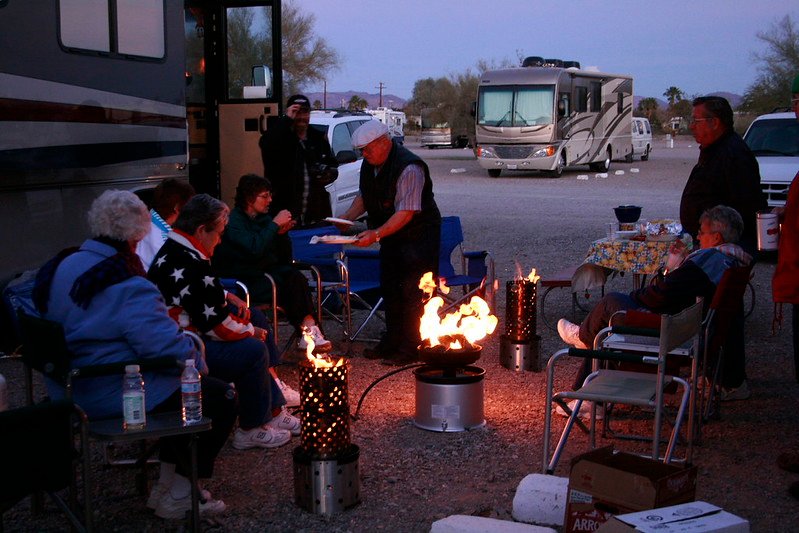
Choosing between propane and wood is easier when you stop asking which fire is universally better. The useful question is which one fits your yard, schedule, and expectations. A beautiful fire pit that feels inconvenient may get used less than a simpler model that suits your routine.
My preference for an everyday patio would usually be propane. I like the idea of controlling the flame without continually adding logs. For a deliberately slow camping-style evening, I can see why you would prefer wood. Those are different experiences, and your priorities should drive the purchase.
In this comparison, I use original budgeting examples and a practical decision method. The examples are planning scenarios, not personal product tests, current retailer quotes, or promises about your fuel use.
Propane Fire Pit vs Wood Burning: Quick Comparison
| Factor | Propane fire pit | Wood-burning fire pit |
|---|---|---|
| Starting the fire | Follow the lighting sequence; no log-building process | Requires suitable fuel, ignition, and airflow |
| Flame control | Adjustable within the appliance’s operating range | Changes as logs burn and new fuel is added |
| Smoke and smell | Much less wood-smoke-type pollution; still combustion emissions | Smoke and wood odor, even with careful burning |
| Cleanup | No wood ash; burner and media still need care | Ash, charcoal, and debris require attention |
| End of evening | Shut down according to the manual; surfaces remain hot | Extinguish completely; residual coals need attention |
| Fuel storage | Approved outdoor cylinder storage | Dry firewood storage with airflow |
| Atmosphere | Steady decorative flame | Crackle, changing flames, and glowing coals |
| Cooking | Only if the exact appliance permits it | Only with suitable equipment and approved cooking setup |
I would use this table to narrow the choice, then check the actual model. Fuel type alone does not tell you whether a particular unit fits your patio, can be used on your surface, or has the accessories you need. The propane fire pit buying guide can help you evaluate the gas options after you settle the fuel question.
Technical Differences That Actually Matter
A propane fire pit meters gas through a regulator and burner system designed for that appliance. Its maximum BTU input describes the rate of fuel energy supplied. A wood fire changes continuously with fuel quantity, moisture, species, airflow, and the way you build it.
That makes a simple number-for-number comparison difficult. A consumer wood fire pit may not publish a directly comparable BTU input at all. I would not invent one by estimating flame height or copying a rating from a wood stove.
| Technical detail | Propane | Wood |
|---|---|---|
| Fuel-energy planning value | Approximately 91,500 BTU per U.S. gallon | Varies with species, moisture, and quantity |
| Illustrative rated input | 50,000 BTU/hour for calculations below | No fixed rating assumed in this comparison |
| Portable manufacturer example | Outland Deluxe listing: 58,000 BTU/hour | Check each manufacturer’s dimensions and loading limits |
| Fuel quantity example | 20 lb of propane ≈ 4.72 U.S. gallons | Weigh or measure your actual firewood supply |
| Wood moisture target | Not applicable | Below approximately 20% for better burning |
| Clearances and surface approval | Use the exact model’s manual | Use the exact model’s manual |
| Useful heat at your chair | Depends on design, wind, and seating | Depends on design, fire condition, wind, and seating |
The wood-moisture target comes from established EPA wood-burning guidance. Check a freshly split face with a suitable moisture meter rather than assuming that weathered bark means a dry interior. Dry wood helps, but it does not make a wood fire emission-free.


Which Fire Pit Feels Warmer?
Wood can produce an intense, changing radiant fire, while propane offers steadier control. However, neither statement proves that a particular model will keep your group warmer. A tall-sided bowl, a broad table edge, seating distance, and wind can change how much warmth reaches you.
I would judge warmth from your likely seating arrangement. A generous tabletop can be useful for entertaining while also placing your chair farther from the flame. A compact bowl may bring the visual fire closer, but you must still keep every required clearance.
Do not confuse fuel input with delivered comfort. Some energy moves upward into the air, and a gust can redirect heat. I would be skeptical of a universal heating-radius claim unless the manufacturer explains the conditions behind it.
If warmth is the main goal, decide whether a decorative fire feature is the right equipment. You may need warmer clothing or a separately approved outdoor heating arrangement. Never move either kind of outdoor fire pit into an enclosed space to retain heat.
Smoke, Odor, and Your Neighbors
Propane is usually the easier choice when avoiding wood smoke is a priority. EPA guidance identifies propane and natural gas as alternatives that reduce harmful air pollutants compared with backyard wood burning. That does not mean propane produces no emissions or is suitable indoors.

Wood smoke contains fine particles and gases. Children, older adults, and people with heart or lung conditions can be particularly sensitive. If smoke affects your household or nearby neighbors, I would give that concern more weight than the appeal of a traditional campfire.
A smokeless wood fire pit still burns wood. Designs using secondary combustion can burn more of the smoke under suitable operating conditions, but the name should not be read as zero smoke throughout startup, refueling, and shutdown. Fuel quality and loading also matter.
My practical test is whether the likely smoke path crosses occupied areas or nearby windows. If the setting makes smoke a recurring problem, switching chair positions is not a complete solution. Choose a more suitable activity or appliance rather than treating neighbors as part of the experiment.
Propane vs Wood Fire Pit Costs: Compare Complete Setups
A basic wood bowl can have a modest purchase price, while both premium wood designs and propane fire tables can cost considerably more. I would avoid declaring an entire fuel category cheaper based on the least expensive product in that category.


Include the equipment needed for your actual setup. For propane, that may mean an approved cylinder and protective cover. For wood, it may mean a permitted stand, spark-control accessory, tools, and a dry storage arrangement. Required accessories depend on the model.
| Budget item | Propane example | Wood example |
|---|---|---|
| Fire pit | $350 | $200 |
| Cylinder or fuel-handling/storage accessories | $70 | $70 |
| Model-approved cover or other necessary accessories | $40 | $40 |
| Initial equipment total | $460 | $310 |
| Installation, tax, and delivery | Excluded; add actual charges | Excluded; add actual charges |
These examples intentionally compare plausible complete setups without claiming they are identical products. Substitute actual quotes before buying. A permanent installation, custom surround, or professionally installed gas supply requires a separate budget.
Worked Example: Fuel Cost for the Same Evening
For a useful operating-cost comparison, I start with the same planned evening length. That gives you a budgeting comparison, not a laboratory comparison of equal heat output. Wood and propane will not necessarily deliver identical warmth or ambience.
| Input | Assumed value |
|---|---|
| Evening length | 3 hours |
| Propane burner input | 50,000 BTU/hour continuously |
| Propane price | $4 per gallon |
| Firewood bundle price | $8 per bundle |
| Wood used in this scenario | 2 bundles |
| Kindling or starter expense | $1 per evening |
Propane expense = calculated gallons × price per gallon
| Calculation | Result |
|---|---|
| Propane: 50,000 × 3 ÷ 91,500 | 1.64 gallons |
| Propane: unrounded gallons × $4 | $6.56 |
| Wood: 2 bundles × $8 + $1 starter | $17.00 |
| Difference in this scenario | $10.44 less for propane |
This example favors propane because the assumed bundled wood is relatively expensive. Your result could reverse with inexpensive local wood or a higher propane price. Free wood also has handling, drying, and storage requirements, so I would not automatically call it free entertainment.
The burner may use less fuel on a lower setting, but I would not assume that a halfway knob position means half the rated consumption. Use manufacturer information or your own measured fuel records for a more precise estimate. For additional examples, see how much it costs to run a propane fire pit.
My Fuel-Price Crossover Check
Here is an original calculation you can adapt to your own quotes. Keep the example evening and wood quantity unchanged, then solve for the bundle price at which the two fuel bills match. This isolates the effect of wood price instead of changing several assumptions together.
| Step | Value |
|---|---|
| Propane expense | $6.56 |
| Subtract wood starter allowance | $6.56 − $1 = $5.56 |
| Divide by assumed bundles | $5.56 ÷ 2 = $2.78 per bundle |
| Interpretation | Above about $2.78 per comparable bundle, propane costs less under these assumptions |
A bundle is not a standardized energy unit. Compare the quantity and quality you actually receive, and keep your expected consumption realistic. This method helps with your household budget; it does not establish that either fuel is inherently more efficient.
When Does a Higher Purchase Price Pay Back?
Using the earlier setup budgets, propane starts with a higher equipment cost but a lower assumed fuel bill. You can divide that extra equipment cost by the savings per comparable evening to estimate a simple payback point.
| Item | Calculation or total |
|---|---|
| Extra propane setup cost | $460 − $310 = $150 |
| Fuel savings per evening | $17 − $6.56 = $10.44 |
| Simple payback | $150 ÷ $10.44 ≈ 14.4 evenings |
| First whole evening beyond that threshold | 15th evening |
| Propane total after 20 evenings | $460 + (20 × $6.56) = $591.20 |
| Wood total after 20 evenings | $310 + (20 × $17) = $650.00 |
This simplified calculation excludes maintenance, replacement parts, price changes, and resale value. It is useful only if the proposed setups both meet your needs. I would not buy an appliance I dislike simply because an optimistic spreadsheet says it pays back.
Propane Runtime vs Adding More Wood
Propane gives you a finite fuel supply that you can plan around. Wood lets you continue adding approved fuel while operating within the pit’s limits, but that means tending the fire and keeping suitable fuel available.
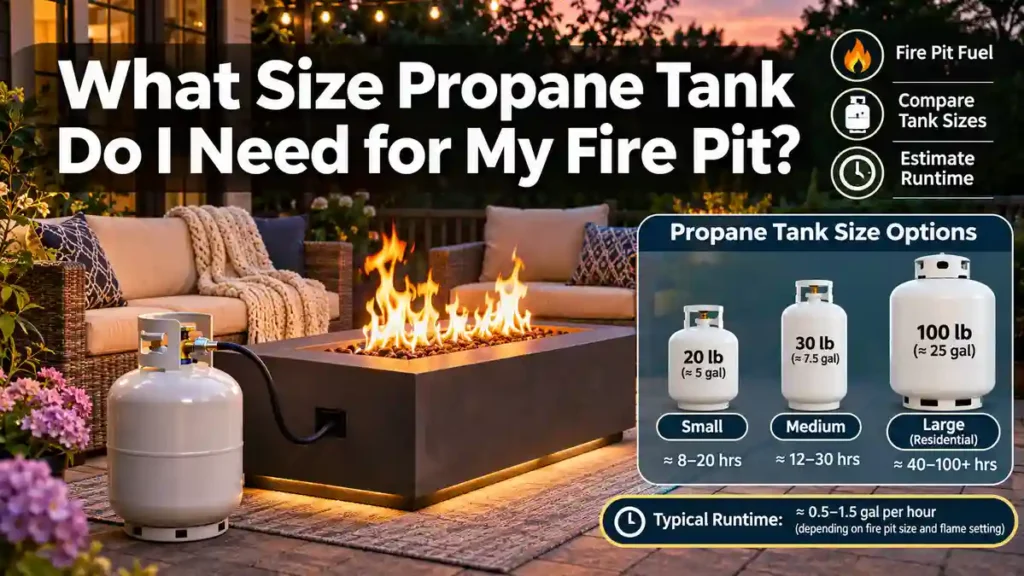
| Burner input | Gallons per hour | 20 lb of fuel | 15 lb of fuel |
|---|---|---|---|
| 40,000 BTU/hour | 0.44 | 10.8 hours | 8.1 hours |
| 50,000 BTU/hour | 0.55 | 8.6 hours | 6.5 hours |
| 58,000 BTU/hour | 0.63 | 7.4 hours | 5.6 hours |
| 60,000 BTU/hour | 0.66 | 7.2 hours | 5.4 hours |
These estimates use approximately 4.24 pounds per gallon and 91,500 BTU per gallon. Actual runtime depends on available fuel, settings, temperature, and the appliance. Cold conditions can limit vapor supply, especially as a cylinder empties.
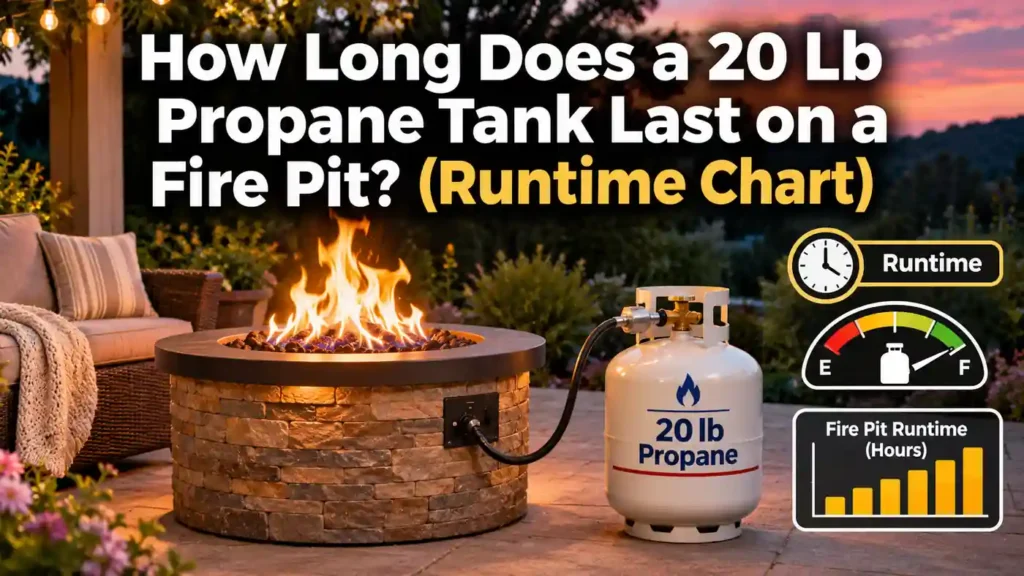
A cylinder labeled for a certain propane capacity does not always arrive containing that amount. Check the supplied net fuel quantity. For a fuller explanation, read how long a 20-lb propane tank lasts on a fire pit.
Convenience: Count the Whole Evening
I would evaluate the time before and after the flame, not only the hours sitting beside it. Propane still requires inspection, correct lighting, supervision, shutdown, and cooldown. Its practical advantage is avoiding the repeated log handling and ash management associated with wood.
Wood can be enjoyable precisely because it takes attention. Splitting suitable pieces, arranging the fire, and watching it change may be part of the evening you want. That same involvement can feel inconvenient when you only have a short break outside.
My decision rule is to match the fire to the available time. If you often stop suddenly to handle family responsibilities, consider how you will maintain supervision and safely end the session. Neither appliance should be left operating unattended.
Safety, Clearances, and Local Restrictions
I would check permission before comparing finishes or accessories. Fire restrictions, property rules, and the appliance manual can eliminate an option immediately. Propane is not automatically allowed whenever wood fires are banned; the current local order decides.
| Check | Propane concern | Wood concern |
|---|---|---|
| Fuel hazard | Leaks, damaged hoses, incompatible components | Escaping sparks, embers, and unsuitable fuel |
| End-of-use hazard | Hot burner, media, and body after shutdown | Hidden heat in coals and ash |
| Placement | Exact clearances and approved surface required | Exact clearances and approved surface required |
| Overhead or enclosed space | Outdoor appliance restrictions still apply | Outdoor appliance restrictions still apply |
| Changing weather | Stop when conditions exceed safe operation | Wind can spread embers and increase fire risk |
Follow the exact model’s requirements for surface protection and clearances. Do not assume a mat makes every deck installation acceptable, or that a roofed patio counts as unrestricted outdoor space. Neither type belongs in a garage, tent, or enclosed room.
If you suspect a propane leak, move everyone away, avoid ignition sources, and call for help from a safe location. Do not relight or improvise a repair. Use the propane fire pit safety guide alongside the manufacturer’s manual.
For an established campground wood fire, follow the site’s extinguishing procedure and do not leave until it is completely out and cold. Portable metal pits may have specific shutdown instructions; confirm these before lighting so you can extinguish safely without guessing at the end.
Can You Cook Over Either Type?
Only choose a fire pit for cooking when its manufacturer permits that use and provides a suitable arrangement. A decorative propane flame is not automatically a cooking burner. Outland Living, for example, identifies its fire pits and tables as decorative appliances and does not endorse cooking on them.
A wood-burning pit can support a traditional cooking experience when the model and accessories are intended for it. Use suitable untreated cooking wood and follow the appliance instructions. Never burn painted, treated, or unknown construction scraps.
If marshmallows are part of your plan, check permission before buying. The guide to roasting marshmallows over a propane fire pit explains why appliance suitability matters more than the apparent cleanliness of the flame.
Maintenance, Storage, and Long-Term Ownership
Propane avoids wood ash, but it is not maintenance-free. Inspect accessible components as directed, keep ventilation openings clear, and protect the cooled appliance with the correct cover. Replace damaged parts through approved channels rather than adapting unrelated hoses or regulators.
Wood fire pits need ash removal after everything is safely cold, unobstructed airflow, and protection from prolonged moisture. Follow the manufacturer’s disposal instructions and use an appropriate noncombustible ash container. Ash that appears inactive can still conceal heat.
Plan storage before purchase. Propane cylinders need appropriate upright outdoor storage, while firewood needs a dry arrangement with airflow. The appliance’s footprint is only part of the space requirement. For ownership planning, see how long propane fire pits last.
Which Is Better for the Environment?
I would separate local smoke from the broader climate question. Propane generally reduces the harmful air pollution associated with backyard wood smoke, but it is a fossil fuel and produces carbon dioxide when burned. Wood also releases carbon dioxide and other pollutants during combustion.
The wider comparison depends on fuel sourcing, transport, combustion conditions, and what would otherwise happen to the wood. I would not describe wood as automatically carbon-neutral or propane as emission-free. Using less fuel and skipping unnecessary fires reduces combustion either way.
My Decision Guide: Which Should You Choose?
| Your priority | My starting choice | Why |
|---|---|---|
| Short, frequent patio evenings | Propane | Convenient control and less cleanup |
| Traditional campfire ritual | Wood | Changing coals, sound, and hands-on tending |
| Avoiding wood smoke around neighbors | Propane, or no fire | Less wood-smoke pollution; location still matters |
| Approved campfire cooking | Suitable wood cooking setup | Choose equipment actually designed for food |
| Access to inexpensive dry firewood | Compare wood carefully | Actual fuel costs may favor it |
| Little storage space | Measure both complete setups | Cylinders and wood require space beyond the pit |
| Unresolved restrictions or unsafe location | Wait | Permission and safe placement come first |
I would rank your priorities before browsing products. If avoiding wood smoke is non-negotiable, a bargain wood pit is not the right deal. If tending logs is the whole reason you want a fire, convenient propane controls may not replace that experience.
If you remain undecided, trying a suitable rental can reveal whether you enjoy the layout and operating routine. Read whether you can rent a propane fire pit instead of buying before committing to a permanent purchase.
Frequently Asked Questions
Is a propane fire pit cheaper than wood?
Sometimes. Your purchase price, propane price, wood quantity, and usage pattern determine the result. Compare complete setups and the same planned evening rather than assuming inexpensive equipment guarantees inexpensive use.
Does a smokeless wood fire pit eliminate smoke?
No. Secondary combustion can reduce visible smoke under suitable conditions, but startup, wet fuel, and refueling can still produce smoke. Smokeless does not mean pollution-free.
Can I put wood in a propane fire pit?
No, unless the manufacturer explicitly designed and approved that exact appliance for both fuels. Adding wood can damage the burner and create hazards. Do not improvise a conversion.
Which is better for a small patio?
I would usually consider propane first for smoke reduction and control, but only if the entire setup meets the manual and local rules. A small appliance does not automatically fit a small space safely.
My Choice: Match the Fire to Your Actual Routine
For regular patio use, I would lean toward propane because convenient control and reduced cleanup make spontaneous evenings more practical. For a permitted setting where tending a traditional fire is the attraction, I would consider wood.
Start with permission and placement, then compare smoke, storage, fuel costs, and the time you want to spend tending the fire. The better choice is the one that fits your real outdoor routine and can be used safely—not the one with the most dramatic product photograph.

Mike is an experienced propane technician with over 15 years of professional experience in the field. He has dedicated his career to helping customers with their propane needs, from installation to maintenance and repair. Together with Jeremy, he co-founded this website to provide useful information and guidance to customers seeking reliable propane services.