Quick Answer: Are Propane Fire Pits Legal in Your State?
Propane fire pits may be allowed, but there is no universal rule that applies everywhere in a state. Whether you can light one depends on your city and county fire code, current burn-ban orders, the property or campground rules, and the manufacturer’s instructions. Some restrictions exempt propane devices with a shutoff valve; others prohibit decorative open flames.
Before I light a fire pit, I check these four things:
- Local rules: City or county fire department and applicable burn ban.
- Location: Backyard, balcony, deck, HOA property or public campground restrictions.
- Clearances: Required distances from buildings, overhead covers and combustibles.
- Appliance: Outdoor rating, approved propane cylinder and manufacturer instructions.
Bottom line: I would never assume a propane fire pit is permitted just because wood fires are banned or because a retailer sells the appliance locally. Confirm the rules for your exact address before lighting it.
Meta description: Explore propane fire pit regulations by state, local fire codes, burn bans, balcony restrictions, safety clearances and propane fuel costs.
If you’re shopping for a propane fire pit, you might expect the legal question to be simple: “Can I use it in my state?” I see a more useful question: Can I use this particular propane appliance on this particular property today? That distinction matters enormously. Two neighbors across a city boundary may be under different ordinances. A public campground and a private backyard in the same county may have opposite rules. An apartment balcony can be disallowed even when a detached home’s open patio is acceptable.
I built this guide around a practical compliance method rather than claiming to have found a single 50-state yes-or-no answer. I’ll walk you through state-by-state checkpoints, explain why burn bans are often misunderstood, and show how to calculate fuel consumption so you can select a safer, more practical fire feature. I also include a calculator you can use without leaving this page.
Propane Fire Pit Regulations at a Glance
| Rule layer | Question to ask | Why it matters |
|---|---|---|
| State rules | Is any statewide emergency or restriction in effect? | Temporary orders can override normal practice |
| County/parish/borough | Is there a county burn ban or separate rule for gas? | Unincorporated areas differ from city limits |
| City or fire district | How does local code classify propane decorative fire features? | Permits, clearances and apartment rules differ |
| Land manager | Is a portable propane fire pit allowed at this park/campground? | Public lands use their own fire orders |
| Property owner/HOA | Does the lease, HOA or insurer restrict open flames? | Private restrictions can be more stringent |
| Manufacturer manual | Does this exact model fit the site and supply? | Clearances, fuel and assembly vary |
My rule: All six checks must agree. Permission from one authority does not cancel a stricter requirement from another. If a restriction is ambiguous, don’t interpret silence as approval; ask the authority that issued it.


Before You Check Your State: Have These Four Details Ready
- Your exact location: City limits or unincorporated county, and whether the site is private property or public land.
- Fire pit classification: Portable propane bowl, decorative fire table, built-in fire feature or cooking appliance.
- Fuel and shutoff: The manufacturer’s approved supply and whether it has an accessible positive shutoff valve.
- Proposed placement: Open patio, deck, balcony, covered area or campground, plus manufacturer clearance specifications.
With this information, the fire department or land manager can give a more useful answer than a general question about whether “fire pits are legal.”
Are Propane Fire Pits Legal in All 50 States?
There isn’t a dependable blanket answer covering every address in all 50 states. States use different fire-code adoption systems, county and city governments may adopt additional restrictions, and wildfire agencies issue temporary orders. Consequently, I won’t label an entire state “allowed” based on one county’s rule.
The table below is a state-by-state verification directory, not a list of confirmed statewide approvals. It tells you which layer of government or fire authority deserves your attention first. Use it to identify whom to contact, then obtain the active text of the applicable rule before you operate an appliance.
| State | What I would verify before lighting |
|---|---|
| Alabama | Municipal fire marshal; neighborhood covenants |
| Alaska | Borough rules; local fire service and public-land restrictions |
| Arizona | Wildfire restrictions, city fire code and county orders |
| Arkansas | County burn bans and municipal fire rules |
| California | CAL FIRE jurisdiction, air district and local fire code |
| Colorado | County and land-manager Stage 1/2 restriction orders |
| Connecticut | Local fire marshal, property type and fire code |
| Delaware | State fire marshal and local outdoor-fire ordinances |
| Florida | County wildfire advisories, municipal fire rules |
| Georgia | County burn restrictions and fire marshal |
| Hawaii | County fire department and property-specific rules |
| Idaho | Fire district, forest or BLM restrictions |
| Illinois | Local fire department, municipal outdoor-fire ordinances |
| Indiana | Town/county outdoor-fire rules and burn restrictions |
| Iowa | Local fire marshal and city recreational-fire rules |
| Kansas | County emergency orders and local fire rules |
| Kentucky | County and municipal fire department rules |
| Louisiana | Statewide burn orders when active; parish rules |
| Maine | Town fire department and outdoor-burning rules |
| Maryland | County fire code and municipality restrictions |
| Massachusetts | Local fire department; town recreational-fire rules |
| Michigan | Municipal fire code and state-land restrictions |
| Minnesota | Municipal fire codes and DNR fire restrictions |
| Mississippi | County burn bans and municipal rules |
| Missouri | Municipal fire code; wildfire conditions |
| Montana | Local fire district, county and public-land orders |
| Nebraska | County/local burning rules and fire conditions |
| Nevada | County fire marshal and BLM/public-land restrictions |
| New Hampshire | Municipal fire department and state forest-fire rules |
| New Jersey | Local fire official, property and state-land rules |
| New Mexico | County, municipal and federal-land restrictions |
| New York | Local code; NYC has specific residential fire-pit rules |
| North Carolina | County fire marshal and forest-service fire restrictions |
| North Dakota | County burn-ban notices and city fire code |
| Ohio | Local fire code and open-burning classification |
| Oklahoma | County burn bans and municipal fire rules |
| Oregon | Oregon fire districts, local rules and public-land restrictions |
| Pennsylvania | Township/borough fire code and local ordinances |
| Rhode Island | Local fire marshal and municipal ordinances |
| South Carolina | Local ordinances, county restrictions, wildfire alerts |
| South Dakota | County burn bans and public-land restrictions |
| Tennessee | Local fire department, county and park rules |
| Texas | County burn bans; city/municipal fire ordinances |
| Utah | County fire restrictions and public-land orders |
| Vermont | Town fire warden and local fire code |
| Virginia | Local fire marshal, season and open-burning rules |
| Washington | DNR, air-quality bans, county and park burn-ban levels |
| West Virginia | Local rules, forest-fire seasons, land restrictions |
| Wisconsin | DNR fire-danger restrictions and municipal rules |
| Wyoming | County fire wardens and federal-land orders |
Important: These entries identify likely authorities and rule types, not 50 verified legal conclusions. For tribal lands, federal forests, national parks, state parks, privately managed campgrounds and municipalities, check the specific land manager’s restrictions separately.
Four Real Examples That Show Why Location Matters
1. California: burn restrictions are tied to the local jurisdiction
California’s CAL FIRE burn-status system reports conditions by administrative unit and state-responsibility area. A status such as “burning allowed” or “permit required” is not a blanket approval for a propane fire table at every residence. Your city fire department, air district and property rules may control different activities. My approach is to identify whether you live within a city fire jurisdiction, a CAL FIRE state-responsibility area or another district, then ask specifically about manufactured gas fire features.



2. Colorado: a propane exception may exist, but the order controls
On certain BLM-managed Colorado lands, published Stage 1 and Stage 2 restrictions exempt devices using pressurized gas or liquid fuel. In a municipality, the rule may be expressed as permission for devices with an on/off shutoff valve in a cleared area. That doesn’t prove every decorative fire bowl is permitted. I would verify the operative agency order, fuel type, placement and device classification before using it.
| Wording in an active restriction | What I verify about my propane fire pit |
|---|---|
| “Solid-fuel or wood fires prohibited” | Whether the order separately allows outdoor propane decorative appliances. |
| “Gas cooking devices exempt” | Whether a decorative fire bowl is actually covered; I never treat it as a stove automatically. |
| “Pressurized fuel with positive shutoff permitted” | Whether this specific appliance and its location meet the stated exception and all other rules. |
| “All open flames prohibited” | Assume the outdoor fire pit is prohibited unless the responsible authority expressly says otherwise. |
3. Washington: even the same park system has different restriction levels
Washington State Parks distinguishes several burn-ban levels. Its Level 3 guidance permits self-contained portable gas or propane fire pits, whereas Level 4 prohibits open flames of any type. Elsewhere, Washington’s DNR, local fire districts and air-quality agencies may have their own jurisdictions and rules. So the question is not just “Does Washington have a ban?” but “Whose land am I on and which level is active?”
4. New York: New York City is not the whole state
New York City’s 2022 Fire Code contains a dedicated residential fire-pit provision, FC 307.7. It specifies qualifying detached residential properties in certain zoning districts, requires supervision and includes a 10-foot clearance from combustible materials and building surfaces. That is a city-specific rule—not permission for an apartment balcony or every New York backyard. I would also check any rules that distinguish solid-fuel pits from propane-fueled decorative devices.
City, County or Park: Who Has the Answer?
Inside city limits: I start with the municipal fire department or fire-prevention office. Outside city limits: I check county restrictions and the serving fire district. At a campground or public park: I ask the land manager for the current, device-specific rule. At a rental or HOA property: I also check the lease and private property rules. A favorable answer from one group does not override another applicable restriction.


When Are Propane Fire Pits Allowed During a Burn Ban?
The most important distinction I make is between a burn ban that limits wood and other solid fuels and an order that restricts all outdoor open flames. Some authorities explicitly allow certain propane-fueled devices during particular fire-restriction stages. Others prohibit decorative propane fire pits, even when they allow gas cooking equipment. I would never assume an exception applies based only on the words “propane” or “gas.”
To get the correct answer, I read the current order from the authority covering the location where I want to use the fire pit. I check its effective date, geographical boundaries, definitions, exemptions, and equipment conditions. The same county can have one rule for a city backyard and another for a state park or federal recreation area.
| Wording in the restriction | What I check for a propane fire pit | My practical response |
|---|---|---|
| “Wood and charcoal fires prohibited” | Does the order separately address propane decorative flame devices? | Read the full order; do not infer approval from a solid-fuel prohibition alone. |
| “Gas stoves allowed” | Is the exemption limited to cooking, or does it include fire tables and fire bowls? | Ask the issuing authority before operating a decorative fire pit. |
| “Pressurized gas with a shutoff valve exempt” | Does my certified appliance meet every condition of that exemption? | Verify device class, placement, clearance and any site-specific limitations. |
| “All open flames prohibited” | Is an explicit exception provided for this type of equipment? | Do not light the pit unless the responsible authority confirms an exception. |
| “Stage 1” or “Stage 2” fire restriction | Which agency issued the stage designation and what does its order actually say? | Follow the order’s definitions; stage names are not interchangeable across agencies. |
I also check air-quality restrictions where they apply. A smoke or open-burning advisory can have different coverage and exemptions from a wildfire-related emergency order. The phrase “burn ban” by itself does not tell you which set of rules is in force.
Which Authority Controls Propane Fire Pit Regulations at Your Address?
Before you search for “propane fire pit laws in my state,” I recommend determining the jurisdiction. In the United States, state fire codes often provide a baseline, but counties, cities, fire districts and land-management agencies can impose additional restrictions. A landlord or homeowners association may also restrict what you can do on private property.
I use the following sequence rather than relying on a statewide summary that may overlook local rules:
- State: Find out whether an applicable state fire-code provision or emergency restriction governs the proposed activity.
- City or county: Check the municipal ordinance, county burn-ban order and fire-prevention guidance for the exact address.
- Fire district or marshal: Ask how the local authority classifies a propane decorative fire feature and whether permits or minimum separations apply.
- Public-land manager: If the pit will be used in a park, forest or campground, obtain the property manager’s current equipment policy.
- Property management: For apartments, rentals and HOA properties, review lease terms, community policies and building restrictions.
- Manufacturer: Confirm that your specific model is approved for the proposed surface, enclosure, fuel supply and clearances.
Quick Local-Rules Check
My recommendation: Don’t ask only whether propane fire pits are legal in your state. Ask: “Is this outdoor propane decorative fire pit permitted at my exact address, on this type of property, under today’s fire restrictions?” A useful answer should identify the responsible authority, the applicable rule, and any conditions you must meet.
How Do Fire Codes Classify Propane Fire Pits?
Not every gas appliance is regulated as the same kind of equipment. A recreational fire, an outdoor fireplace, an approved gas cooking appliance and a permanently installed decorative gas fire feature can fall under different rules. That distinction matters when an ordinance permits a “recreational fire” or exempts a “portable cooking device.” Neither term automatically includes every propane fire table.
When I contact a fire-prevention office, I describe the fire pit’s manufacturer, model, fuel type, rated input, cylinder arrangement, shutoff method and proposed location. I do not reclassify a decorative burner as a camping stove just to fit an exemption.
| Type of propane fire feature | Typical regulatory question | Information I prepare |
|---|---|---|
| Portable propane fire bowl | Is it allowed as an outdoor decorative gas appliance during current restrictions? | Model manual, cylinder size, shutoff valve and proposed location. |
| Freestanding propane fire table | Are clearances and cylinder placement compliant on this patio or deck? | Rated input, minimum separations and enclosure details. |
| Small tabletop flame feature | Does the applicable code or property policy prohibit open flames on tables or balconies? | Fuel cartridge, outdoor-use labeling and surface instructions. |
| Permanent built-in propane fire pit | Are building, fuel-gas or mechanical permits and inspections required? | Plans for piping, regulator, shutoff and installation by a qualified professional. |
A product’s BTU rating describes its gas input, not whether a location is legal. I use technical details to help the fire official identify the appliance—not to replace an approval or inspection.
Are Propane Fire Pits Permitted on Balconies, Decks and Covered Patios?
This is one of the most location-dependent parts of propane fire pit regulations. A fire table permitted on an uncovered concrete patio at a detached house might still be prohibited on an apartment balcony or under a combustible awning. There may be restrictions related to building occupancy, open flames, cylinder storage, access routes and the manufacturer’s outdoor-use listing.
| Proposed location | What could restrict it | My decision before use |
|---|---|---|
| Open backyard patio | Local fire ordinance, burn ban, combustible clearances | Confirm municipal or county rules and follow the product manual. |
| Wood or composite deck | Combustible surface rules, floor clearance, cylinder arrangement | Check the exact appliance approval and required protective measures. |
| Apartment or condominium balcony | Multi-unit building rules, cylinder restrictions, lease or HOA ban | Do not assume permission; confirm with the fire authority and management. |
| Covered patio or pergola | Overhead combustible materials and outdoor ventilation restrictions | Use only if both local rules and the manufacturer expressly permit the setup. |
| Rooftop terrace | Building-code provisions, fire-department requirements, roof protection and management rules | Seek property-specific approval before placing an open-flame appliance. |
| Campground or park | Current land-manager fire order and permitted equipment list | Check the specific location’s current rules before transporting the pit there. |
If you’re renting, my article on propane fire pits for renters explains why written approval matters. For patio suitability, see how to set up a propane fire pit in your backyard. I would not treat a heat mat as permission to disregard a combustible-surface prohibition.
What Clearance Rules Apply to Propane Fire Pits?
Clearance requirements can come from several places: the adopted local fire code, the fire official’s conditions, the appliance listing and the manufacturer’s manual. The strictest applicable requirement determines whether a location is suitable. A number repeated in an online article is not a substitute for your specific model’s instructions.
For example, I use a 10-foot separation from buildings and combustible materials as an initial planning reference in some outdoor-fire scenarios, not as a universal permission rule. Different codes and appliances may specify other distances, including overhead and below-appliance clearances. A unit can fail the placement test even when a burn ban explicitly allows propane devices.
Before setting up a propane fire pit, I check:
- Distance from siding, fences, furniture, dry vegetation and other combustible materials.
- Overhead branches, patio roofs, curtains, awnings and pergola elements.
- Whether the manufacturer approves the deck, slab or tabletop surface.
- Whether the tank compartment, hose routing and gas connections are configured as designed.
- Whether exits and walkways remain unobstructed.
- Whether the cylinder can be stored and operated legally at the property.
I also distinguish between operating clearance and cylinder-storage restrictions. A fire pit might have adequate space from a building but still fail local rules concerning where propane cylinders may be stored, particularly in multifamily buildings. Read the relevant guidance on propane fire pit safety before choosing your location.
Propane Fire Pit Restrictions in State Parks, National Forests and Campgrounds
A state-level law does not automatically grant permission to use a propane fire pit on public land. State parks, national forests, Bureau of Land Management areas, national parks and privately operated campgrounds may each publish separate fire restrictions. Their policies can differ from the rules for a private backyard just a few miles away.
In Washington, for example, State Parks has used graduated burn-ban levels with different treatment of self-contained propane fire pits. The key is the current park-system announcement and its specific level, not a general claim that propane is always exempt. On federal lands, read the managing agency’s current order and any restrictions for the individual recreation area.
I recommend checking the following before packing a portable fire pit:
- Is the site managed by a state, federal, municipal or private entity?
- Does the current fire order name portable propane fire pits or only gas cooking stoves?
- Are open-flame appliances limited to designated campsites or fire rings?
- Are a shutoff valve, elevated stand or other conditions specified?
- Can the campground restrict propane fire pits even when a surrounding county permits them?
When the rule uses a broad term such as “campfire,” I ask the site manager how the rule applies to a manufactured propane decorative flame. If no clear answer is available, I leave the fire pit off.
Do Shutoff Valves Make Propane Fire Pits Exempt From Fire Bans?
Not automatically. Some fire-restriction orders distinguish a pressurized-fuel device with an immediate shutoff from a wood-burning campfire. That can help explain why certain gas appliances qualify for an exception. However, the presence of a valve alone does not establish that all decorative propane fire pits are exempt.
I check the wording carefully. A ban may mention a “gas stove,” “approved cooking device,” “manufactured gas fire pit,” or “pressurized liquid or gaseous fuel appliance.” Those descriptions are not always interchangeable. A fire table meant primarily for ambiance should not be represented as cooking equipment unless the rule expressly covers it.
I also check whether the authority imposes separate rules for wind, wildfire danger, nearby vegetation, enclosed spaces or overnight use. Even when an exemption exists, an unattended flame is not acceptable. For safety considerations, see Can You Leave a Propane Fire Pit Burning All Night?.
How I Verify Propane Fire Pit Laws Before Lighting One
My approach is deliberately conservative because temporary orders can change quickly. Instead of collecting old screenshots of fire bans, I use a short verification process on the day I want to operate the appliance.
- Locate the property precisely. Determine the city, county, relevant fire district and whether the site is on public land.
- Check today’s fire restrictions. Read the issued order, not a shortened social media summary.
- Identify the device category. Note that a decorative propane fire pit may not be covered by a cooking-device exemption.
- Confirm the property rules. Check lease, HOA, campground or building-management restrictions.
- Check placement and cylinder rules. Compare the appliance manual with local clearance and storage requirements.
- Ask for clarification in writing. If the rule is ambiguous, contact the local fire-prevention office or land manager before lighting the pit.
A Question I Would Send to the Fire Department
“I have an outdoor manufactured propane fire pit rated at approximately 50,000 BTU/hr, using the manufacturer’s approved cylinder and shutoff system. I would like to use it on an uncovered patio at my address. Does the current fire code or burn restriction permit this specific type of decorative gas appliance, and what clearances, cylinder restrictions or permits apply?”
This gives the official useful facts without assuming your fire pit is legal or that an exception applies.
My Propane Fire Pit Regulations Decision Guide
Here’s how I make a final decision after checking the legal requirements and the actual setup. This guide is a planning aid, not an official permit or real-time legal determination.
| What you found | My recommendation | What to do next |
|---|---|---|
| Local authority confirms the device is permitted; no conflicting restrictions; manual requirements met | Proceed only within the approved conditions | Recheck temporary orders and supervise the appliance whenever it is operating. |
| Burn ban exists, but an exemption may cover pressurized-gas appliances | Verify before using | Confirm that the actual decorative fire pit—not just a cooking stove—is included. |
| Apartment balcony or HOA location with unclear rules | Do not light yet | Get clarification from the fire authority and property management. |
| Manufacturer clearance cannot be met | Do not use at that location | Find another site that satisfies every applicable clearance requirement. |
| Public-land order prohibits all open flames without an applicable exception | Do not use | Choose a permitted alternative activity or another compliant location. |
| Gas odor, damaged connection, hissing or unstable appliance | Stop and treat as a safety issue | Leave the area; close the supply only if safe; seek qualified or emergency assistance as appropriate. |
My final test: Can I identify which authority permits this appliance, where I am allowed to place it, which conditions apply right now and whether the manufacturer approves the setup? If any answer is missing, I would resolve it before lighting the flame.
Do You Need a Permit to Install a Propane Fire Pit?
A portable, factory-built appliance may be treated differently from a permanent fire feature connected to fixed piping. A permanent gas line, underground piping, pressure regulator, gas conversion or built-in burner can involve building, fuel-gas or mechanical permits, professional installation and inspection. Never assume that a portable fire-pit exemption covers permanent work.
I separate projects into three groups:
- Freestanding portable pit: Verify the outdoor placement, cylinder rules and local recreational-fire policy.
- Built-in fire pit using a portable cylinder: Ask whether construction, landscaping setbacks and appliance enclosure ventilation requirements apply.
- Permanent piped propane or natural-gas feature: Contact the authority having jurisdiction and a qualified gas professional before installation; confirm permits, inspection and supply sizing.
Do not change a natural-gas burner to propane by merely swapping a hose. Different fuel pressures and orifices matter. For more detail, read How to Convert a Natural Gas Fire Pit to Propane? and How to Connect a Propane Fire Pit to Your House Gas Line.
My Pre-Lighting Inspection Checklist
Even if your local rules allow a fire pit, legal permission is not enough to establish safe operation. I would complete the following checks before every gathering:
- Confirm the current restriction level and the device-specific exemption, if any.
- Read the appliance label and manufacturer clearance instructions.
- Keep the unit on its approved, stable and appropriately noncombustible surface.
- Keep combustible furniture, branches, decorations and fabric away from the flame and hot surfaces.
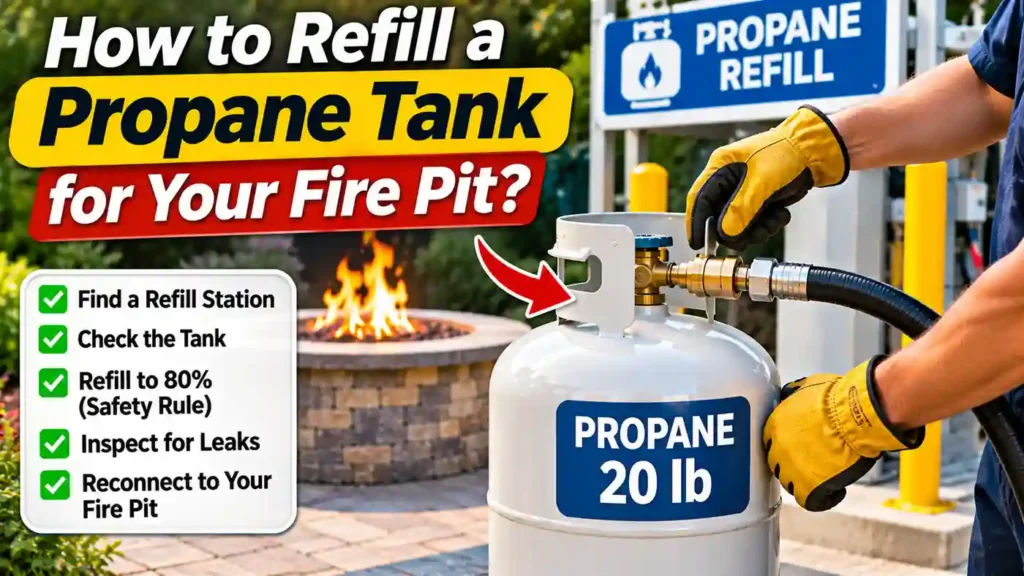
- Inspect the hose, regulator and cylinder for visible damage; do not use damaged components.
- Check gas connections with the manufacturer-approved leak-test method—never a flame.
- Keep a suitable fire extinguisher accessible and know how to shut off the propane.
- Stay with the flame continuously. Extinguish it before leaving or sleeping.
- Keep children and pets supervised around the appliance.
- If you smell gas or suspect a leak, do not light or relight. Shut off the supply if it can be done safely, leave the area and contact emergency or qualified service personnel as appropriate.
For related guidance, I recommend Are Propane Fire Pits Safe? and Can You Leave a Propane Fire Pit Burning All Night?.
What I Would Ask the Local Fire Marshal
Calling the fire department is more productive when you describe the appliance accurately. I would say: “I have an outdoor, manufacturer-built propane decorative fire pit rated at 50,000 BTU per hour. It uses a standard 20-pound cylinder and has a positive shutoff valve. Is it permitted at a detached residence on an uncovered patio at my address, and does today’s burn restriction change that?”
Then I would ask for the applicable code section or written guidance, minimum clearance, any permit requirement and any restrictions on cylinder storage. If you’re in a multi-unit building, tell the fire official. If you’re going to a park, ask the park or land-management office directly; don’t assume a municipal answer controls federal land.
Common Mistakes I Would Avoid
- Confusing wood-fire rules with gas-fire rules. Sometimes the rules differ; sometimes they don’t.
- Assuming a shutoff valve guarantees permission. Some orders allow controlled gas devices but may exclude decorative pits.
- Treating a 10-foot rule as sufficient everywhere. The manufacturer or local authority may require more.
- Ignoring the building type. Balcony, rooftop and multi-unit housing rules can be far stricter than detached-home rules.
- Using old burn-ban notices. Restrictions can change quickly.
- Assuming “propane is cleaner” means “safe indoors.” Outdoor fire pits are not indoor heating appliances.
- Overbuying BTU output. A larger burner increases fuel use and may need a larger or differently configured propane supply.
Frequently Asked Questions About Propane Fire Pit Regulations
Are propane fire pits legal during a burn ban?
Sometimes. Only the current order issued by the responsible agency can answer. Certain orders exempt controlled, pressurized-gas devices; others restrict all open flames. Check whether decorative fire pits are included, not just cooking stoves.
Can my HOA ban propane fire pits even if my city allows them?
Yes. Private property rules can impose additional restrictions. Obtain the current HOA documents or written management decision rather than relying on a salesperson’s assurance.
Are propane fire pits permitted on apartment balconies?
Do not assume so. Occupancy classifications, local fire code, cylinder rules, manufacturer instructions and lease restrictions can bar their use.
Does a propane fire pit need an inspection?
A portable appliance may not require the same permit or inspection process as a fixed gas installation. Ask your local building or fire department about your exact setup.
Does the propane cylinder have to be a certain size?
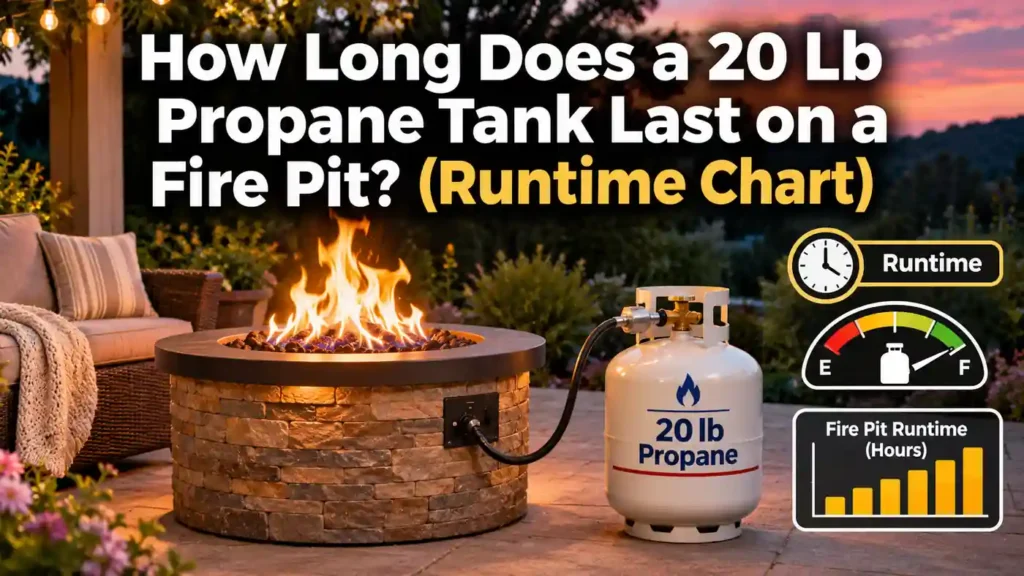
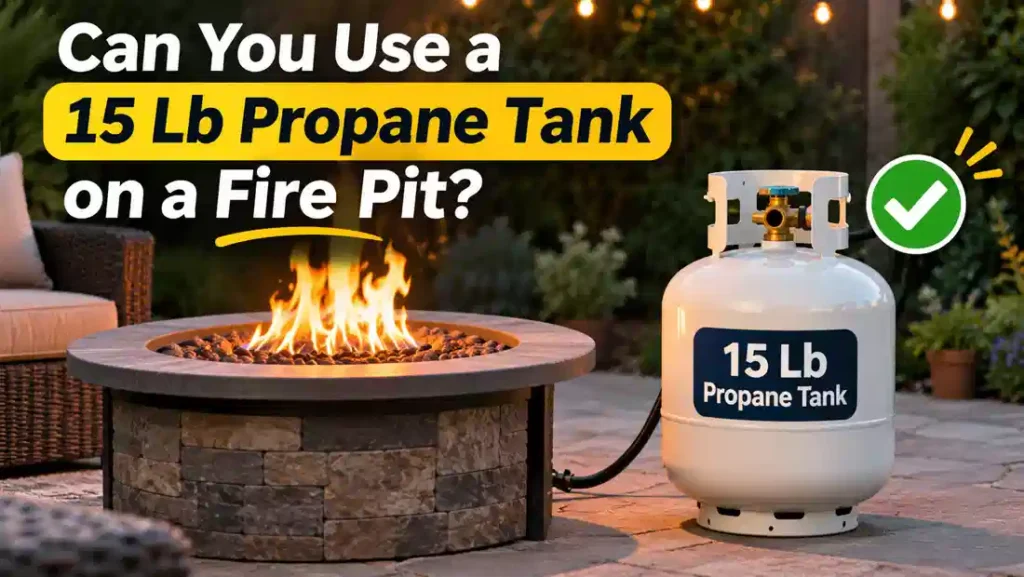
Use only the cylinder size and connection approved for the appliance. A 20-lb cylinder is common, but that doesn’t mean it fits every device or is allowed in every location.
Can I leave a propane fire pit burning while I go inside?
No. I recommend continuous supervision and shutting off the burner whenever you’re leaving the area, even for a short time. Many fire codes and manufacturer manuals require constant attendance.
What if the fire department and HOA rules disagree?
Comply with both. If either prohibits the proposed use, don’t proceed. Ask each authority for clarification in writing when necessary.
My Final Recommendation
The most responsible way to answer “Are propane fire pits legal in my state?” is to narrow the question to the exact address, equipment and date of use. Start with your local fire authority, add the current fire-restriction notice, check the appliance manual, and confirm landlord or HOA permission. Only then make a buying or installation decision.
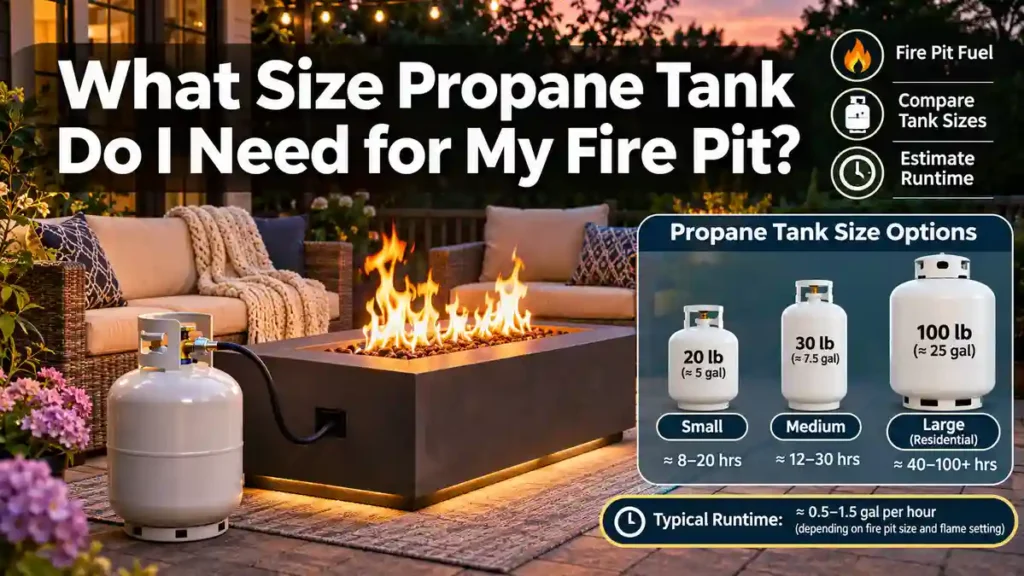
I prefer a modest, well-built, easily shut-off fire pit in a genuinely open, compliant area over the largest BTU rating I can afford. The best fire feature isn’t the one with the tallest flame; it’s the one you can use comfortably, economically and lawfully without putting people or property at risk. Next, compare propane tank sizes for fire pits and 20-lb cylinder runtime to finish planning your setup.
Editorial verification note (November 9, 2026): Examples were checked against official public guidance from CAL FIRE, BLM Colorado, Washington State Parks, Washington Department of Ecology, the New York City Fire Code and the U.S. Fire Administration. The page deliberately does not reproduce external links, per the site’s editorial linking policy. Current local regulations should be confirmed with the authority having jurisdiction before use.

Mike is an experienced propane technician with over 15 years of professional experience in the field. He has dedicated his career to helping customers with their propane needs, from installation to maintenance and repair. Together with Jeremy, he co-founded this website to provide useful information and guidance to customers seeking reliable propane services.