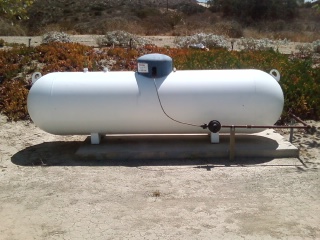


If you’re planning to buy a propane tank in Florida, I recommend looking beyond the advertised purchase price. The tank itself is only one part of the investment. Delivery, installation, permits, regulators, gas piping, and the initial propane fill can substantially increase the total cost.
Florida also presents special challenges: hurricanes, flooding, high groundwater, coastal corrosion, and extended summer heat all influence where and how a propane tank should be installed. A homeowner in Orlando may use propane primarily for cooking and hot water; someone in Tampa might operate a pool heater; and a property near Ocala could need a large backup-generator supply.
In this guide, I’ll compare tank prices for popular sizes, explain refill expenses, review Florida suppliers, and cover relevant state requirements. I’ll also show you calculations for estimating fuel use and choosing a tank sized for your needs.


Pricing note: This article was prepared for 2027 using information available in November 2026. Equipment figures are published supplier references—not statewide Florida quotes. The EIA fuel figures are dated survey averages, not predictions or guaranteed offers.
Quick Answer: How Much Does a Propane Tank Cost in Florida?
The price of a propane tank in Florida depends on capacity, condition, construction and installation. A larger tank costs more upfront but can reduce the frequency of propane deliveries.
| Tank size | New above-ground equipment reference | Propane at 80% fill |
|---|---|---|
| 120 gallons | $985 | 96 gallons |
| 250 gallons | $1,950 | 200 gallons |
| 320 gallons | $2,350 | 256 gallons |
| 500 gallons | $2,900 | 400 gallons |
| 1,000 gallons | $4,750 | 800 gallons |
These published equipment estimates come from BLT Tanks, an Oklahoma supplier. They do not include delivery or installation in Florida, and availability and prices can change. The EIA’s Florida residential propane price averaged $5.167 per gallon for November 16, 2026, excluding taxes. At that rate, 400 gallons would cost approximately $2,066.80 before other charges.
My recommendation: Compare 120- or 250-gallon tanks for modest appliance use, 500-gallon tanks for several appliances or generators, and 1,000-gallon tanks for substantial demand. Have a licensed propane professional evaluate flooding, storm exposure, code requirements, and peak appliance use before selecting a capacity.


1. How Much Does a Propane Tank Cost in Florida?
There isn’t one price that applies to homes in Miami, Orlando, Tampa, Jacksonville, and rural Florida. A site with easy truck access and prepared ground may require much less installation work than a flood-prone coastal site. I divide the full expense into equipment, transportation, site preparation, installation, permits and first fill.
What Affects the Total Price?
- Capacity and condition: Larger, new vessels generally cost more than smaller or refurbished equipment.
- Above-ground versus underground: Buried vessels need a suitable protective coating, corrosion controls and excavation.
- Property access: Narrow driveways, slopes, gates or difficult unloading can add labor.
- Gas piping and testing: Lengthy piping and multiple appliance connections increase the scope.
- Hurricane and flood conditions: Some locations need specially engineered foundations or anchoring.
- Fuel delivery: The initial fill is a separate and sometimes substantial expense.
Worked Example: 500-Gallon Installation
| Expense | Illustrative budget |
|---|---|
| New 500-gallon above-ground tank | $2,900 |
| Delivery and site preparation | $500 |
| Regulators, piping, labor and testing | $1,000 |
| First fill: 400 gallons × $5.167 | $2,066.80 |
| Illustrative total | $6,466.80 |
The equipment reference and dated EIA fuel price are published inputs; the installation amounts are hypothetical allowances, not actual Florida contractor quotes. I would obtain two or three detailed quotations with the same scope of work before choosing.
Should You Buy or Lease?
| Factor | Buying | Leasing |
|---|---|---|
| Upfront equipment cost | Higher | Often lower |
| Tank ownership | Homeowner | Propane supplier |
| Supplier choice | Potentially flexible | Usually subject to agreement |
| Maintenance | Depends on agreement | Depends on lease |
| Recurring rental | Usually none | May apply |
| Switching providers | May be simpler | Contract-dependent |
Buying can be attractive when you intend to remain in the home for years. Leasing may reduce the initial bill. I recommend comparing fuel prices, rental fees, service obligations, and any tank-removal terms over a five-year period rather than assuming one option always wins.
2. Where Can You Buy Propane Tanks in Florida?
Florida has several established propane companies serving residential, agricultural and commercial customers. Not every company sells stationary tanks outright; some place supplier-owned tanks with customers who sign delivery agreements. Before contacting a provider, know your ZIP code, expected appliances and preferred ownership model.
Blossman Gas
Blossman Gas advertises propane services through Florida locations including Orlando, Fort Myers and Ocala. It provides residential propane and appliance-related services. Ask whether the quoted tank is owned by you or supplied under an agreement, and whether the estimate includes regulators and gas piping.



AmeriGas
AmeriGas advertises residential propane delivery, tank placement and installation-related services. I would ask for a site evaluation, itemized installation quote and explanation of delivery terms. Don’t assume a particular branch stocks a specific tank size.
Suburban Propane
Suburban Propane advertises service in Florida communities including Clearwater, Wildwood and St. Augustine. Verify whether it offers the required capacity, installation services, emergency support and customer-owned tank filling at your address.
Local and Independent Suppliers
Independent propane companies may offer different ownership options and local service arrangements. I would compare their delivered fuel price, automatic-delivery terms, annual rental charges and service availability during hurricane season.
| Provider | Published service focus | Useful question |
|---|---|---|
| Blossman Gas | Residential fuel and gas services | Can I purchase the tank outright? |
| AmeriGas | Residential delivery and installations | What is included in the site-survey quote? |
| Suburban Propane | Delivery and tank services | What are minimum delivery and emergency-service terms? |
| Independent dealer | Varies by location | Will you service a customer-owned tank? |
For properties in Orlando, Tampa, Jacksonville, Miami or rural counties, ask each company to verify service to the exact address. A retail cylinder refill station isn’t necessarily a residential bulk-tank installer.


3. What Propane Tank Sizes Are Available in Florida?
Portable cylinders are often measured by the weight of propane they hold, while stationary storage tanks are usually described by their nominal water capacity in gallons. A 100-pound cylinder is much smaller than a 100-gallon stationary tank.
| Tank size | Approximate liquid propane | Common application |
|---|---|---|
| 20-pound cylinder | 4.7 gallons | Grills |
| 30-pound cylinder | 7.1 gallons | RV appliances |
| 100-pound cylinder | 23.5 gallons | Auxiliary equipment |
| 50-gallon stationary tank | 40 gallons | Specialty low demand |
| 120-gallon tank | 96 gallons | Cooking and hot water |
| 250-gallon tank | 200 gallons | Moderate household demand |
| 500-gallon tank | 400 gallons | Multiple appliances, generator |
| 1,000-gallon tank | 800 gallons | High-consumption property |
The stationary figures assume an 80% liquid fill for planning. Actual legal filling quantities depend on temperature, equipment and applicable filling rules. Smaller tanks can be economical for low usage, but pool heaters and standby generators may consume fuel much faster than many homeowners expect.
4. How Much Does a 1,000-Gallon Propane Tank Cost in Florida?
A 1,000-gallon tank stores about 800 gallons at an 80% fill. I would evaluate it for large properties with substantial fuel use, farms, multiple appliances or significant generator requirements.
| Configuration | Published new equipment reference |
|---|---|
| Above-ground 1,000-gallon tank | $4,750 |
| Underground 1,000-gallon tank | $5,250 |
These are out-of-state equipment references, not delivered Florida quotes. A representative horizontal vessel may be around 41 inches in diameter and 16 feet long, but actual dimensions and empty weight depend on the manufacturer.
Filling Cost and Refill Example
At $5.167 per gallon, an 800-gallon fill costs $4,133.60 before taxes and fees. But most service deliveries add only the amount needed to restore the tank to an appropriate level. A gauge change from 30% to 80% on a 1,000-gallon tank is a nominal 500-gallon delivery: 500 × $5.167 = $2,583.50.
A larger tank can reduce delivery frequency. However, you shouldn’t choose one without checking required setbacks, property access, fuel demand and the amount of cash tied up in a full delivery.
5. How Much Does a 500-Gallon Propane Tank Cost in Florida?
A 500-gallon tank is worth considering for homes using propane for several appliances, including water heating, cooking, fireplaces, pool heating and standby power. It holds approximately 400 gallons when filled to 80%.
| Configuration | Published equipment estimate |
|---|---|
| Above-ground 500-gallon | $2,900 |
| Underground 500-gallon | $3,325 |
A representative horizontal model may be roughly 38–41 inches in diameter and 9–10 feet long, depending on construction. Always use the manufacturer’s exact drawing for installation planning.
500-Gallon Fill Cost
| Price per gallon | Cost for 400 gallons |
|---|---|
| $3.50 | $1,400 |
| $4.00 | $1,600 |
| $4.50 | $1,800 |
| $5.167 (dated EIA average) | $2,066.80 |
| $5.50 | $2,200 |
Only the $5.167 rate is tied to the specified November 2026 statewide EIA survey; other rates are hypothetical comparisons.
How Long Will It Last?
At four gallons per day, 400 gallons represents 100 theoretical days. If you reorder at a 20% gauge reading, the amount used between 80% and 20% is about 300 gallons, or 75 days at the same rate. These calculations don’t account for seasonal consumption changes or minimum operating reserves.
For generators, use the manufacturer’s actual load-specific fuel chart. If a generator consumes three gallons per hour, its theoretical 400-gallon supply would cover about 133 hours with no other demand, but planning to empty the tank is not prudent.
6. How Much Does a 250-Gallon Propane Tank Cost in Florida?
A 250-gallon stationary vessel holds approximately 200 gallons at an 80% fill. It can suit moderate household use if delivery arrangements are convenient.
| Feature | 250-gallon tank | 500-gallon tank |
|---|---|---|
| Above-ground equipment reference | $1,950 | $2,900 |
| Underground equipment reference | $2,325 | $3,325 |
| Propane at 80% | 200 gal | 400 gal |
| Fuel between 80% and 20% | 150 gal | 300 gal |
| Full fill at $5.167/gal | $1,033.40 | $2,066.80 |
A representative 250-gallon vessel is around 30 inches in diameter and 7 feet 10 inches long, with exact dimensions model-dependent.
If your home uses 50 gallons monthly, 150 gallons between planned deliveries represents roughly three months. The same consumption would yield six months between 80% and 20% for a 500-gallon tank. A pool heater or generator could shorten either interval substantially.
7. How Much Do Small Propane Tanks Cost in Florida?
Small propane tanks can be suitable for grills, RVs, outdoor kitchens and limited residential use. But buyers should distinguish portable DOT cylinders from permanent ASME tanks.
| Size | Approximate propane capacity |
|---|---|
| 20-pound cylinder | 4.7 gallons |
| 30-pound cylinder | 7.1 gallons |
| 100-pound cylinder | 23.5 gallons |
| 50-gallon stationary tank | 40 gallons |
| 120-gallon stationary tank | 96 gallons |
A published new-equipment reference for a 120-gallon above-ground tank is $985; an underground model is listed at $1,770. Filling 96 gallons at $5.167 per gallon equals approximately $496.03, before charges.
If your home uses 20 gallons monthly, the operating window from 80% to 20% is about 72 gallons on a 120-gallon tank. That’s roughly 3.6 months between planned deliveries. For heavy generator use or pool heating, I would compare a larger tank.
A 100-pound cylinder holds only about 23.5 gallons, whereas a 100-gallon stationary tank holds about 80 gallons at 80% fill. For a fuller explanation, see my propane tank vs. cylinder guide.
8. New vs. Used Propane Tanks in Florida
Used tanks can save money, but I would never buy one solely because the listing looks inexpensive. A stationary propane vessel is pressure equipment; legal ownership, condition, manufacturer markings and local supplier acceptance matter.
| Check | What to verify |
|---|---|
| Ownership | Seller can legally transfer the tank |
| Nameplate | Manufacturer identification is readable |
| Condition | No unacceptable corrosion or damage |
| Fittings | Suitable valves and gauges |
| Service history | Prior use and repair records |
| Transportation | Safe lifting and hauling arrangements |
| Acceptance | Proposed supplier will inspect and service it |
For a coastal property, pay special attention to corrosion. A supplier in Oklahoma advertised certain refurbished 250-gallon vessels for $795–$1,095, 500-gallon vessels for $1,575–$1,895, and 1,000-gallon vessels for $2,755–$3,195 in October 2026. These are historical out-of-state advertisements, not Florida quotes or current inventory guarantees.
A used 500-gallon tank priced at $1,800 may require $400 for transportation, $350 for professional servicing and $800 for installation. That’s $3,350 excluding fuel, so always compare a complete new-tank quote with a complete used-tank quote. Read my article about how frequently a propane tank should be replaced when assessing older equipment.
9. Where Can You Refill a Propane Tank in Florida?
Eligible portable cylinders can often be refilled at participating U-Haul and independent propane locations. A stationary residential tank typically requires bulk delivery at your home.
Orlando, Tampa and Jacksonville
U-Haul advertises propane refill services at several Orlando locations. Its North Tampa location at 10415 N. Florida Avenue, Tampa, FL 33612 has advertised propane services, while Jacksonville locations include Oak Hill and Mandarin. Before visiting, check the station’s current hours, price and whether it can fill your cylinder type.
South Florida has additional retailers and bulk-fuel suppliers, but availability differs by ZIP code. I would contact the exact branch rather than assuming every location offers refills.
20-Pound Cylinder Refill Calculations
| Hypothetical retail price | Cost for 4.7 gallons |
|---|---|
| $3.00/gal | $14.10 |
| $3.50/gal | $16.45 |
| $4.00/gal | $18.80 |
| $4.50/gal | $21.15 |
| $5.00/gal | $23.50 |
These are retail planning examples and should not be confused with the EIA’s residential bulk-delivery survey. Refill versus exchange value depends on how much fuel you receive. Some standard exchange cylinders contain 15 pounds rather than 20 pounds.
For a more detailed breakdown, see my propane refill cost per gallon guide.
10. What Are the Dimensions of Propane Tanks in Florida?
The tank’s physical dimensions are only part of the area needed for installation. Setbacks, property lines, building openings, ignition sources and truck access all affect where the tank can go.
| Tank size | Approximate diameter | Approximate length |
|---|---|---|
| 120 gallons | 24 in | 5–6 ft |
| 250 gallons | 30 in | About 7 ft 10 in |
| 500 gallons | 38–41 in | About 9–10 ft |
| 1,000 gallons | About 41 in | About 16 ft |
Actual specifications differ by manufacturer and model. For Florida sites, I would also evaluate the flood zone, storm exposure, nearby traffic and foundation design. Don’t choose a horizontal or vertical configuration solely because it appears to fit a tight yard; the tank must be approved for its intended mounting and use.
11. Above-Ground vs. Underground Propane Tanks in Florida
Florida’s water table, soil, flood risk and corrosion conditions can influence the choice between an above-ground and an underground tank. An underground installation may be attractive aesthetically, but it’s more complex than burying a standard tank in a hole.
| Factor | Above ground | Underground |
|---|---|---|
| Equipment cost | Generally lower | Generally higher |
| Excavation | Limited | Required |
| Appearance | Visible | Mostly concealed |
| Corrosion management | Accessible protective coating | Burial-rated coating and protection |
| Groundwater concerns | Site-dependent | Particularly important |
| Flood risk | Foundation and anchoring assessment | Buoyancy and anchoring assessment |
| Inspection | Typically easier | More specialized |
Where groundwater rises, buried tanks may experience buoyant forces, especially at low fill levels. The installer must assess flotation risks and design any required anchoring. Do not attempt to keep a tank overfilled as a flotation remedy. For coastal properties, protective coatings, support corrosion and service access are additional considerations.
I would generally investigate an above-ground installation first when suitable space exists, then compare the premium for an underground design using a site-specific professional proposal.
12. How Do Florida Hurricanes Affect Propane Tanks?
A hurricane can expose propane equipment to strong winds, debris, flooding and storm surge. A shifted tank can damage connected piping even when the vessel remains intact. Anchoring, foundations and connections should therefore be designed for the site by a qualified professional.
Before a Storm
- Review the tank’s position, supports and any anchoring arrangements with your supplier.
- Keep service access clear and remove loose materials that could strike the tank.
- Know the location of the shutoff valve and the supplier’s emergency instructions.
- Calculate enough fuel for the generator’s expected operating hours, if applicable.
- Keep emergency contact details handy and follow local evacuation instructions.
Don’t disconnect gas piping or improvise modifications to prepare for a storm. The Florida Propane Gas Association advises that large tanks in flood-prone areas should be properly anchored.
After a Storm
Look at the installation from a safe distance. If a tank has moved, fittings are damaged or flooding affected the equipment, don’t operate the system until the supplier has evaluated it. If propane is smelled or a leak is suspected, leave the area, avoid ignition sources and electrical switches, and contact emergency responders or the supplier from a safe place.
13. What Are Florida’s Propane Tank Installation Regulations?
Florida regulates liquefied petroleum gas through Chapter 527, Florida Statutes, and Chapter 5J-20, Florida Administrative Code. The Florida Department of Agriculture and Consumer Services (FDACS) administers licensing and certain industry requirements. Florida’s Rule 5J-20.002 amendment effective November 17, 2026 adopts the 2024 editions of NFPA 58 and NFPA 54.
Are Permits Required?
Permanent propane installations may need building, plumbing, mechanical or fire approvals depending on the local jurisdiction and the project. I recommend asking the local building department and appropriately licensed propane installer what is required for the proposed site.
How Far Must a Tank Be From the House?
| General above-ground capacity | Common NFPA 58 planning reference |
|---|---|
| Under 125 gallons | Special provisions apply |
| 125–500 gallons | Often 10 feet |
| 501–2,000 gallons | Often 25 feet, subject to exceptions |
This is not a site-approval chart. Tank groups, buried configurations, nearby structures, property boundaries, building openings and code exceptions can change the applicable requirements. Have a qualified installer and the authority having jurisdiction verify the location under currently adopted Florida rules.
Who May Fill or Service a Tank?
Florida Statutes Section 527.07 restricts unauthorized filling, use and transfer of LPG containers. Read tank ownership and lease terms before asking another company to fill supplier-owned equipment. Under Section 527.067, owners or end users who modify an LPG installation must notify the dealer who next services it as required by the statute. Never alter valves, piping or regulators without qualified personnel.
Portable DOT cylinders follow periodic requalification rules distinct from stationary ASME tanks. See who recertifies propane tanks for more details.
14. Which Propane Tank Brands Are Available in Florida?
I recommend prioritizing the exact model and locally supported installation rather than selecting solely on brand recognition. Manufacturers supply different categories of equipment, from grill cylinders to stationary ASME vessels.
| Brand | Common product emphasis | What to verify |
|---|---|---|
| Manchester Tank | Cylinders and stationary tanks | Model dimensions and construction |
| Quality Steel | Stationary propane vessels | Coating, burial rating and specifications |
| Worthington Enterprises | Portable cylinders | Container ratings and valves |
| Flame King | Portable and specialty containers | Certification and intended use |
Ask the installing supplier which brands it can support with inspection, service and appropriate replacement parts. An underground tank must be purpose-built for burial; a portable cylinder cannot simply be substituted for a stationary vessel. The manufacturer’s data plate and specification sheet should match the delivered product.
15. How Much Does It Cost to Operate a Propane Tank in Florida?
Over time, fuel consumption may exceed the original equipment price. That is why I recommend calculating annual gallons and comparing supplier price terms before buying the tank.
Propane Consumption Formula
One gallon of liquid propane contains approximately 91,500 BTU. To estimate an appliance’s full-input fuel consumption:
Gallons per hour = Appliance input BTU/hour ÷ 91,500
For example, a pool heater rated at 200,000 BTU/hour consumes about 2.19 gallons/hour at full input. Three hours of operation would use about 6.56 gallons. Ten such sessions in a month would use around 65.6 gallons, assuming full input throughout. Actual consumption depends on equipment cycling and demand.
| Annual usage | At $4.00/gal | At $5.167/gal | At $5.50/gal |
|---|---|---|---|
| 100 gal | $400 | $516.70 | $550 |
| 300 gal | $1,200 | $1,550.10 | $1,650 |
| 600 gal | $2,400 | $3,100.20 | $3,300 |
| 1,000 gal | $4,000 | $5,167.00 | $5,500 |
| 1,500 gal | $6,000 | $7,750.50 | $8,250 |
The $5.167 column uses one dated statewide EIA survey average, not a forecast for 2027. The other two columns are illustrative rates. Taxes, rental, service and delivery fees may add costs.
Five-Year Example
Suppose equipment and installation cost $4,400, and the household consumes 600 gallons annually. At a hypothetical $4.50 per gallon, annual fuel is $2,700, five years of fuel is $13,500, and the illustrative five-year total is $17,900, before other expenses. Comparing fuel price and contract terms often matters more than a small equipment discount.
16. What Size Propane Tank Do You Need for Your Florida Home?
Tank size should reflect appliances, usage patterns, delivery access and peak demand—not only the house’s floor area. Two homes of the same size may have very different fuel needs if one uses electric heating while the other operates a pool heater and standby generator.
| Application | Tank size worth evaluating |
|---|---|
| Grill or RV equipment | Approved portable cylinders |
| Cooking and limited hot water | 120–250 gallons |
| Several propane appliances | 250–500 gallons |
| Pool heating | Based on BTU input and planned hours |
| Standby generator | Based on manufacturer fuel-use chart |
| Large, high-demand property | 500–1,000 gallons or professionally sized system |
Generator Runtime Example
If a generator consumes three gallons per hour at a given load, 48 hours requires 144 gallons and 72 hours requires 216 gallons. A 500-gallon tank has an approximate 300-gallon operating window between 80% and 20%; that translates to about 100 hours at three gallons per hour if no other appliances consume fuel. Actual generator fuel demand may change with load.
For more planning guidance, read the propane tank size chart for generators.
Buyer Checklist
- Verify capacity, new/used condition, ownership and manufacturer markings.
- Check installation permits, setbacks and licensed contractor qualifications.
- Evaluate flooding, storms, groundwater and corrosion hazards.
- Request an itemized quote including delivery, labor, piping and testing.
- Confirm expected propane use and peak vaporization demand.
- Review rental charges, emergency service and supplier-switching conditions.
- Ask who inspects the tank and what happens if the property is sold.
17. Frequently Asked Questions About Propane Tanks in Florida
How Much Is a 500-Gallon Propane Tank in Florida?
A published mainland equipment reference for a new above-ground model is $2,900. Actual Florida purchase, delivery and installation costs require a local quotation.
How Much Is a 1,000-Gallon Propane Tank?
BLT Tanks publishes a new-equipment reference around $4,750 for an above-ground model, excluding Florida delivery and installation.
How Much Does a 250-Gallon Tank Cost?
A published new above-ground equipment reference is approximately $1,950, before local installation expenses.
Where Can I Buy a Propane Tank Near Me?
Contact established local suppliers such as Blossman Gas, AmeriGas or Suburban Propane and verify tank sales, leases and installation service in your ZIP code.
What Is the Average Residential Propane Price in Florida?
The EIA reported $5.167 per gallon for the week of November 16, 2026, excluding taxes. Prices vary by supplier and over time.
Do I Need a Permit?
Permit requirements depend on the installation and local building or fire authority. Have your licensed installer confirm them before ordering a tank.
How Far Must a Tank Be From the House?
The proper distance depends on size, installation type and site details. Use the current adopted code and professional site evaluation, not a generic online rule.
Can I Install an Underground Tank?
Yes, if the tank is burial-rated and the installation meets local requirements. Groundwater, flood zones, buoyancy and corrosion protection deserve particular attention.
Can I Buy a Used Tank?
Yes, provided ownership can be verified and a qualified professional finds it suitable for service. Confirm your intended supplier will accept and fill it.
Can a Florida Hurricane Damage a Propane Tank?
Yes. Flooding, debris or movement can damage piping and equipment. Have tanks properly installed and assessed after suspected storm damage.
Do Propane Tanks Expire Every 12 Years?
Certain portable DOT cylinders require periodic requalification, while stationary ASME tanks have different inspection rules. Don’t apply cylinder schedules to all vessels.
18. Final Thoughts: Choosing the Best Propane Tank in Florida
If you’re purchasing a propane tank in Florida, begin with your actual fuel demand. Smaller tanks can be sufficient for cooking and hot water, while a 500-gallon tank can provide more practical storage for several appliances or a generator. For high-demand use, a 1,000-gallon vessel may be worth evaluating.
But the cheapest tank isn’t always the least expensive system over time. Florida homeowners should pay special attention to storm and flood protection, groundwater, local approvals, corrosion, delivery reliability and long-term fuel prices. Have a qualified propane professional evaluate the site and compare written quotes with the same equipment and labor included.
The right propane tank safely meets your appliance demand, fits your property, and provides manageable long-term ownership costs.

Mike is an experienced propane technician with over 15 years of professional experience in the field. He has dedicated his career to helping customers with their propane needs, from installation to maintenance and repair. Together with Jeremy, he co-founded this website to provide useful information and guidance to customers seeking reliable propane services.