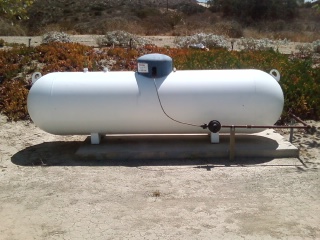


If you’re planning to buy a propane tank in Georgia, I recommend looking beyond the advertised tank price. The equipment itself is only one part of the cost. You also need to consider delivery, site preparation, professional installation, permits, regulators, gas piping, and your first propane fill.
Georgia has a wide range of properties that use propane differently. A homeowner near Atlanta may need a propane tank for cooking, hot water, or a standby generator. Someone in the North Georgia mountains might rely on propane for home heating during winter. Meanwhile, a poultry farm in South Georgia could consume large quantities of propane for agricultural heating. These properties need different tank capacities and delivery arrangements.
In this guide, I’ll compare propane tank prices in Georgia, explain the most common sizes, and show you how much it costs to fill 120-, 250-, 500-, and 1,000-gallon tanks. I’ll also discuss where to buy propane tanks in Georgia, which suppliers offer installation or leasing, what to check before purchasing used equipment, and the state requirements that apply to permanent propane systems.


Because Georgia experiences severe thunderstorms, occasional freezing weather, and tropical-storm remnants, I’ll explain how weather can affect tank placement and fuel availability. My goal is to help you choose a safe, properly sized propane tank without spending more than necessary.
Pricing note: This 2027 buying guide uses publicly available information checked in November 2026. Tank equipment prices are published supplier references, not statewide Georgia quotations. Fuel prices can change, so request a current quote before purchasing.
Quick Answer: How Much Does a Propane Tank Cost in Georgia?
The cost of a propane tank in Georgia depends on its capacity, whether it’s new or refurbished, its installation requirements, and whether you purchase or lease the equipment.
For equipment-only comparisons, BLT Tanks, an Oklahoma-based supplier, publishes the following estimates for new stationary propane tanks.


| Propane tank size | New above-ground equipment price | Propane at 80% fill |
|---|---|---|
| 120 gallons | $985 | 96 gallons |
| 250 gallons | $1,950 | 200 gallons |
| 320 gallons | $2,350 | 256 gallons |
| 500 gallons | $2,900 | 400 gallons |
| 1,000 gallons | $4,750 | 800 gallons |
These aren’t installed Georgia prices. BLT Tanks doesn’t offer ordinary single-tank delivery, so I would use its figures as equipment-cost benchmarks rather than local purchase offers.
For propane fuel, the U.S. Energy Information Administration reported a Georgia residential average of $3.365 per gallon for November 16, 2026, excluding taxes. At that rate, filling a 500-gallon tank with 400 gallons would cost approximately $1,346 before additional charges.
For many homeowners, I recommend beginning with 250- and 500-gallon tanks. If you use propane primarily for cooking or limited hot-water demand, a 120-gallon model may be sufficient. For a large home, agricultural operation, or substantial standby-generator demand, a 1,000-gallon tank may be worth evaluating.
My recommendation: Calculate your expected consumption, compare buying and leasing, and request complete installation quotations from at least two Georgia propane suppliers. Don’t purchase a large tank simply because it offers more storage.
1. How Much Does a Propane Tank Cost in Georgia?
The cost of purchasing a propane tank in Georgia varies by capacity, equipment condition, supplier, and installation location. A 500-gallon tank delivered to a suburban property near Atlanta may involve less site work than the same tank installed on steep terrain in North Georgia. A farm requiring multiple tanks or larger fuel lines will have different requirements from a single-family home.



What Factors Affect Propane Tank Prices?
- Tank capacity: A larger vessel normally costs more to manufacture and transport, although the price per gallon of nominal storage capacity often declines with increasing size.
- New or refurbished equipment: A used or rebuilt tank may cost less initially, but its condition, warranty, and service eligibility must be evaluated.
- Above-ground or underground construction: Underground equipment requires suitable coatings, corrosion protection, and additional installation work.
- Transportation: Delivery distance, unloading equipment, and access to the property can affect the final price.
- Foundation and site preparation: A sloped lot, rocky soil, or drainage problem can increase construction costs.
- Regulators and piping: The number of appliances, system pressure, and distance from the tank determine which components are needed.
- Permits and inspections: Required approvals, professional installation, and system testing must be included in the budget.
How Much Does It Cost to Install a 500-Gallon Propane Tank?
Let’s create a sample budget for an above-ground installation.
| Expense | Illustrative amount |
|---|---|
| New 500-gallon tank | $2,900 |
| Delivery and site preparation | $450 |
| Regulators, piping, labor, and testing | $950 |
| First fill: 400 gallons at $3.365 | $1,346 |
| Illustrative project total | $5,646 |
This is a budgeting example, not a local installation quote. The tank price comes from an out-of-state equipment supplier. The installation allowances are hypothetical, while the fuel calculation uses Georgia’s dated EIA residential average. A longer gas line, foundation work, excavation, or difficult access could substantially increase your actual costs. I recommend asking installers to itemize equipment, labor, fuel, taxes, and additional services.
How Much Do Used Propane Tanks Cost in Georgia?
Used propane tanks can provide meaningful savings. For example, BLT Tanks’ October 2026 advertisement included the following rebuilt equipment ranges.
| Rebuilt tank size | Advertised equipment price |
|---|---|
| 250 gallons | $795–$1,095 |
| 500 gallons | $1,575–$1,895 |
| 1,000 gallons | $2,755–$3,195 |
These are advertised prices from an Oklahoma supplier, not confirmed Georgia retail offers. Inventory and freight arrangements may change. A used tank may also require servicing, replacement fittings, transportation, and installation work. I wouldn’t assume a $1,700 used tank is automatically cheaper than a new model until I had calculated the complete cost.


Is It Cheaper to Buy or Lease a Tank?
Some Georgia propane suppliers offer tank ownership and leasing arrangements. Buying can provide greater control over the equipment, while leasing may reduce upfront costs.
| Consideration | Buying | Leasing |
|---|---|---|
| Initial equipment expense | Higher | Often lower |
| Tank ownership | Homeowner | Supplier |
| Choice of fuel supplier | Potentially flexible | Often restricted |
| Maintenance responsibility | Depends on agreement | Depends on lease |
| Rental payments | Usually none | May apply |
| Switching suppliers | May be simpler | Contract-dependent |
I recommend asking about fuel pricing, minimum purchases, maintenance responsibilities, and what happens when you terminate the agreement. Over several years, the propane price you pay may matter more than a small difference in equipment cost.
2. Where Can You Buy Propane Tanks in Georgia?
Georgia has propane companies serving metropolitan areas, farms, mountain communities, and rural homes. However, not every supplier sells tanks outright. Some providers lease equipment and deliver propane, while distributors sell the tank but don’t install it. I recommend deciding which service you need before requesting quotations.
Piedmont Propane — Northeast Georgia
Piedmont Propane advertises residential, agricultural, commercial, and industrial propane services. It offers both tank sales and leasing, along with installation, inspections, maintenance, and repairs. The company lists Georgia locations in Athens, Homer, Washington, and Elberton. If you’re located in Northeast Georgia, I would contact Piedmont Propane to compare purchasing and leasing a stationary tank.
Spalding Gas — Griffin and McDonough
Spalding Gas advertises residential propane deliveries, equipment leasing, and wireless tank monitoring. Its distribution center is in Griffin, and it also lists a McDonough location. The company advertises storage equipment starting at approximately 125 gallons and extending to larger configurations. I would ask whether a customer-owned tank can be filled under the supplier’s policies and what equipment-related charges apply.
Gas Solutions Plus and Tanks — Tank Sales Across Georgia
Gas Solutions Plus and Tanks advertises delivery of new ASME propane tanks across Georgia. It identifies 120-, 250-, 500-, and 1,000-gallon sizes and serves areas including Atlanta, Athens, Gainesville, Augusta, Macon, Savannah, and North Georgia. However, there’s an important distinction: the company advertises tank delivery, not Georgia installation. It states that buyers must arrange installation through their own appropriately qualified Georgia installer. That can be useful if you want to purchase equipment separately, but I would confirm the complete project cost before ordering.
Donny’s Propane Gas — Middle Georgia
Donny’s Propane Gas advertises propane delivery, tank installation, equipment service, and refill stations in Middle Georgia. Its contact information includes a Macon service number. For properties around Macon and surrounding communities, I would ask whether the company offers both equipment purchase and leasing.
Blossman Gas
Blossman Gas operates propane businesses across the southeastern United States, including Georgia. It advertises residential and commercial propane services, equipment leasing, and tank-related work. I would contact the nearest branch to confirm delivery coverage and availability of the tank size you need.
Georgia Propane Supplier Comparison
| Supplier | Published services | Area to investigate |
|---|---|---|
| Piedmont Propane | Tank sales, leasing, installation, delivery | Athens and Northeast Georgia |
| Spalding Gas | Leasing, monitoring, delivery | Griffin and McDonough |
| Gas Solutions Plus and Tanks | New tank sales and delivery | Statewide equipment supply |
| Donny’s Propane Gas | Delivery, installation, refills | Macon and Middle Georgia |
| Blossman Gas | Residential and commercial propane | Various Georgia locations |
These are verified service examples rather than a ranking of suppliers or a guarantee of local stock.
How to Find a Propane Tank for Sale Near You
I recommend providing each company with your ZIP code, desired tank capacity, and a description of your appliances. Ask whether the quotation includes the tank itself, delivery and unloading, site preparation, regulators and fittings, gas piping, system testing, initial propane, and applicable permits and inspections. A complete installed-price quotation will usually be more useful than an equipment-only price.
3. What Propane Tank Sizes Are Available in Georgia?
Propane storage ranges from portable cylinders used for grills to large stationary vessels serving homes and farms. One of the most common buying mistakes is confusing tank capacity in gallons with cylinder capacity in pounds. A 100-pound propane cylinder is much smaller than a 100-gallon tank.
Georgia Propane Tank Size Chart
| Tank size | Approximate propane when full | Common application |
|---|---|---|
| 20-pound cylinder | 4.7 gallons | Grills and portable equipment |
| 30-pound cylinder | 7.1 gallons | RV appliances |
| 100-pound cylinder | 23.5 gallons | Auxiliary appliances |
| 50-gallon stationary tank | 40 gallons | Specialty low-demand use |
| 120-gallon tank | 96 gallons | Cooking and water heating |
| 250-gallon tank | 200 gallons | Moderate household use |
| 500-gallon tank | 400 gallons | Multiple appliances and generators |
| 1,000-gallon tank | 800 gallons | High-demand homes and farms |
The stationary tank figures use an approximate 80% fill for planning. Actual allowed filling amounts depend on temperature and applicable filling requirements.
Small Propane Tanks
Smaller tanks work well for grills, outdoor kitchens, RVs, fireplaces, and limited residential appliances. They cost less upfront and require less installation space. However, frequent refills can become inconvenient when consumption is substantial.
Large Propane Tanks
Larger stationary tanks offer more storage between deliveries. For a home using propane for heating, hot water, and a standby generator, I would evaluate a 500-gallon tank. For large agricultural operations, the appropriate storage capacity may be substantially greater. I recommend having the system sized according to total consumption and peak fuel demand.
4. How Much Does a 1,000-Gallon Propane Tank Cost in Georgia?
A 1,000-gallon propane tank is a substantial storage option for homes, farms, and commercial properties. It may be appropriate for large residences with multiple propane appliances, poultry operations, or sites requiring substantial fuel reserves.
1,000-Gallon Tank Equipment Prices
| Tank configuration | Published price reference |
|---|---|
| New above-ground 1,000-gallon | $4,750 |
| New underground 1,000-gallon | $5,250 |
These are BLT Tanks equipment estimates, not Georgia delivered or installed quotations.
What Are the Dimensions of a 1,000-Gallon Tank?
| Specification | Approximate value |
|---|---|
| Nominal capacity | 1,000 gallons |
| Propane at 80% fill | 800 gallons |
| Diameter | Around 41 inches |
| Overall length | Approximately 16 feet |
| Empty weight | Commonly over 1,500 pounds |
Exact measurements depend on the manufacturer and model. I recommend obtaining the manufacturer’s drawing before planning the installation location.
How Much Does It Cost to Fill a 1,000-Gallon Tank?
At Georgia’s dated EIA residential average of $3.365 per gallon, 800 × $3.365 = $2,692. This calculation assumes an empty tank receiving an 800-gallon fill. If the tank already contains propane, the delivery quantity will be smaller. For example, filling from 30% to 80% adds approximately 500 gallons. 500 × $3.365 = $1,682.50, before taxes and other charges.
How Long Will a 1,000-Gallon Tank Last?
Suppose a household consumes six gallons daily. A full 800-gallon supply could theoretically last about 133 days. However, I would plan deliveries before the gauge reaches empty. If the operating window is from 80% to 20%, the tank provides approximately 600 gallons between fills. 600 ÷ 6 = 100 days between planned deliveries. Actual consumption may vary with heating demand, generator use, and weather.
Is a 1,000-Gallon Tank Worth Buying in Georgia?
I would consider this size for high-consumption homes, farms, or properties where fewer deliveries are desirable. However, a large tank may not make sense for a homeowner using propane only for cooking and an occasional fireplace. The additional equipment investment should be justified by actual demand.
5. How Much Does a 500-Gallon Propane Tank Cost in Georgia?
A 500-gallon propane tank is one of the sizes I would investigate first for a home using propane for several appliances. It holds approximately 400 gallons at an 80% fill.
500-Gallon Tank Prices
| Tank type | New equipment reference |
|---|---|
| Above-ground 500-gallon | $2,900 |
| Underground 500-gallon | $3,325 |
These published equipment figures exclude delivery and installation in Georgia.
What Are the Dimensions of a 500-Gallon Tank?
| Specification | Representative value |
|---|---|
| Water capacity | 500 gallons |
| Propane at 80% fill | 400 gallons |
| Diameter | Approximately 38–41 inches |
| Overall length | Around 9–10 feet |
| Empty weight | Often 900–1,000 pounds |
Manufacturer models differ, so use the actual vessel drawing.
How Much Does It Cost to Fill a 500-Gallon Tank?
| Price per gallon | Cost for 400 gallons |
|---|---|
| $2.50 | $1,000 |
| $3.00 | $1,200 |
| $3.365 | $1,346 |
| $3.50 | $1,400 |
| $4.00 | $1,600 |
| $4.50 | $1,800 |
Only $3.365 is the dated EIA Georgia statewide residential average used here. The other prices are hypothetical scenarios.
How Long Will a 500-Gallon Tank Last?
Suppose your household consumes four gallons daily. A full 400-gallon supply represents 100 days of theoretical fuel. However, if you plan to refill at 20%, the operating window between 80% and 20% contains approximately 300 gallons. 300 ÷ 4 = 75 days between planned deliveries. This example assumes constant consumption. Your actual demand may increase during winter or generator operation.
Is a 500-Gallon Tank Enough for a Georgia Home?
It may be. For homes using propane for several appliances, a 500-gallon tank can provide convenient storage. But I wouldn’t automatically recommend it for a household using propane only for occasional cooking. I would compare expected fuel demand with supplier minimum-delivery arrangements.
6. How Much Does a 250-Gallon Propane Tank Cost in Georgia?
A 250-gallon propane tank is a useful middle-ground option for homes with moderate propane consumption. It stores approximately 200 gallons when filled to 80%.
250-Gallon Tank Price
BLT Tanks publishes new equipment estimates of $1,950 for an above-ground tank and $2,325 for an underground model. These are not Georgia installed quotations.
What Are the Dimensions of a 250-Gallon Tank?
| Specification | Approximate measurement |
|---|---|
| Water capacity | 250 gallons |
| Propane at 80% fill | 200 gallons |
| Diameter | Around 30 inches |
| Overall length | About 7 feet 10 inches |
| Empty weight | Approximately 470 pounds |
How Much Does It Cost to Fill a 250-Gallon Tank?
Using the November 16, 2026, Georgia EIA average: 200 × $3.365 = $673. The actual amount delivered depends on how much propane remains in the tank.
How Long Does a 250-Gallon Tank Last?
Suppose your household uses 50 gallons monthly. A full 200-gallon supply theoretically provides four months of fuel. But if you schedule deliveries at a 20% gauge reading, you have approximately 150 gallons between fills. 150 ÷ 50 = three months between planned deliveries.
250-Gallon vs. 500-Gallon Propane Tanks
| Feature | 250 gallons | 500 gallons |
|---|---|---|
| Propane at 80% fill | 200 gal | 400 gal |
| Operating window, 80% to 20% | 150 gal | 300 gal |
| Published equipment reference | $1,950 | $2,900 |
| Full-fill fuel cost at $3.365/gal | $673 | $1,346 |
| Fuel storage | Moderate | Twice as much |
For a low-to-moderate-demand household, I would consider a 250-gallon tank first. For regular propane heating or a substantial standby generator, the additional storage of a 500-gallon tank may be worthwhile.
7. How Much Do Small Propane Tanks Cost in Georgia?
Small propane tanks include portable cylinders and smaller stationary ASME vessels. These products aren’t interchangeable. Portable cylinders commonly serve grills, RVs, camping equipment, and other temporary applications. Stationary tanks are designed for permanent fuel storage.
Small Tank Comparison
| Size | Approximate propane capacity |
|---|---|
| 20-pound cylinder | 4.7 gallons |
| 30-pound cylinder | 7.1 gallons |
| 100-pound cylinder | 23.5 gallons |
| 50-gallon stationary tank | 40 gallons |
| 120-gallon stationary tank | 96 gallons |
How Much Does a 120-Gallon Tank Cost?
BLT Tanks publishes an equipment reference price of $985 for a new above-ground 120-gallon tank. An underground model is listed at $1,770. These amounts exclude Georgia delivery and installation.
How Much Does It Cost to Fill a 120-Gallon Tank?
At 80% fill, a 120-gallon tank contains approximately 96 gallons. Using the Georgia EIA average: 96 × $3.365 = $323.04. This calculation excludes additional charges.
Is a 120-Gallon Tank Enough for a Small Home?
Possibly. If the home uses propane only for a cooking range and water heater, a 120-gallon tank may provide convenient storage. However, a household with heavy propane heating demand or a large generator may require a bigger system. I recommend evaluating the appliance’s maximum hourly fuel demand as well as overall consumption.
100-Pound Cylinder vs. 100-Gallon Tank
A 100-pound portable cylinder contains approximately 23.5 gallons of propane. A 100-gallon stationary tank holds about 80 gallons at 80% fill. For a more detailed explanation, read my propane tank versus cylinder guide.
8. New vs. Used Propane Tanks for Sale in Georgia
Used propane tanks may offer savings, but I recommend approaching private-sale listings cautiously. A stationary propane tank is a pressure vessel, not ordinary secondhand equipment. Before buying, confirm that the seller legally owns the tank and that your intended propane supplier will accept it.
Where Can You Find Used Propane Tanks?
Potential sources include tank refurbishers, equipment resellers, agricultural auctions, and private advertisements. However, some tanks installed at private properties are leased and remain the supplier’s property. I wouldn’t rely solely on a seller’s verbal statement of ownership.
Used Propane Tank Buying Checklist
| Inspection item | What I would verify |
|---|---|
| Ownership | Seller has legal authority to transfer |
| Manufacturer plate | Identification remains readable |
| Corrosion | No unacceptable damage |
| Valves and fittings | Suitable for continued service |
| Previous use | Known service history |
| Transportation | Safe handling and hauling arrangements |
| Supplier approval | Local provider will inspect and service the tank |
Are Refurbished Tanks Worth Buying?
They can be. However, the savings depend on the equipment’s condition and the work needed to install it. For example, suppose a used 500-gallon tank costs $1,700. Add $350 for transport, $400 for professional servicing, and $850 for installation. The illustrative total becomes $3,300 before the initial propane fill. That is more than the tank’s advertised purchase price and may approach the cost of a new equipment package depending on what installation services are included. I would always compare complete installed costs.
For additional information, see my guide on how frequently you should replace your propane tank.
9. Where Can You Refill a Propane Tank in Georgia?
Propane refill options depend on whether you have a portable cylinder or a stationary residential tank. A 20-pound grill cylinder can often be refilled at participating retail locations. A 500-gallon stationary tank is generally filled by a propane delivery truck at the property.
Propane Refill in Atlanta
Georgia Gas Distributors advertises propane-cylinder refills and autogas services at its Atlanta plant. Its listed address is 1475 Old Chattahoochee Avenue NW, Atlanta, GA 30318. The business primarily serves commercial customers, so I would confirm that it can refill the exact cylinder you have before visiting. Participating U-Haul locations and other propane retailers may also offer cylinder refills in the Atlanta metropolitan area.
Propane Refill in Macon
Donny’s Propane Gas advertises refill stations and propane delivery in Middle Georgia. AmeriGas also lists a Macon office at 4262 Interstate Drive, Macon, GA 31210. However, a propane office isn’t necessarily a walk-in cylinder refill station. I recommend calling ahead to confirm the services available.
Propane Refill in Athens and Northeast Georgia
Piedmont Propane serves Athens and several surrounding communities. For stationary residential tanks, I would ask about automatic delivery, customer-owned tank requirements, and payment plans.
Propane Refill in Savannah and Coastal Georgia
Savannah-area homeowners can investigate bulk suppliers and participating retail refill stations. For a large residential tank, I recommend comparing local delivery providers rather than using portable-cylinder pricing. Coastal service conditions may differ from inland Georgia, particularly after major storms.
How Much Does a 20-Pound Propane Tank Refill Cost?
A standard 20-pound cylinder holds approximately 4.7 gallons when properly filled to its rated propane capacity. Using hypothetical retail refill prices:
| Price per gallon | Cost for 4.7 gallons |
|---|---|
| $3.00 | $14.10 |
| $3.50 | $16.45 |
| $4.00 | $18.80 |
| $4.50 | $21.15 |
| $5.00 | $23.50 |
These are calculation examples, not verified Georgia retail-cylinder refill prices. The EIA residential average should not be treated as the price charged at a walk-in refill station.
Is Propane Refill Cheaper Than Exchange?
Often, refilling can provide better value when an eligible cylinder is in good condition and the refill station has competitive pricing. Some standard exchange services provide 15 pounds of propane in a cylinder commonly called a 20-pound tank. I recommend comparing the quantity received rather than the advertised transaction price.
For additional calculations, read my propane refill cost per gallon guide.
10. What Are the Dimensions of Propane Tanks in Georgia?
Tank dimensions matter because the equipment must fit your property while allowing appropriate separation distances and service access. I recommend getting a manufacturer’s drawing before choosing the final installation location.
Propane Tank Dimensions Chart
| Capacity | Approximate diameter | Approximate length |
|---|---|---|
| 120 gallons | 24 inches | About 5–6 feet |
| 250 gallons | 30 inches | About 7 ft 10 in |
| 500 gallons | 38–41 inches | About 9–10 feet |
| 1,000 gallons | About 41 inches | About 16 feet |
These are representative measurements. Actual specifications depend on the manufacturer and design.
How Much Space Does a Propane Tank Need?
A tank may physically fit beside a house but still fail to meet required safety clearances. I would check the distance to buildings, property lines, driveways, ignition sources, and other hazards. The supplier also needs adequate access for fuel deliveries and service work. A narrow driveway or steep lot may limit where a large tank can be placed.
Horizontal vs. Vertical Propane Tanks
Larger stationary tanks commonly use horizontal configurations. Vertical tanks are available for certain smaller capacities and applications. I wouldn’t choose the orientation based solely on appearance. The model must be designed and approved for its intended installation.
11. Above-Ground vs. Underground Propane Tanks in Georgia
Both above-ground and underground propane tanks may be suitable for Georgia homes. The right choice depends on available space, budget, soil conditions, landscaping, and maintenance requirements.
Advantages of Above-Ground Tanks
Above-ground tanks are generally easier to install and inspect. They also avoid the excavation costs associated with underground equipment. I would usually compare above-ground options first when the property has sufficient space and there is no strong reason to conceal the vessel.
Advantages of Underground Tanks
Underground tanks can reduce the visual impact of large storage equipment. However, they require appropriate coatings, corrosion protection, and an accessible service dome. In some Georgia locations, clay-heavy soil, drainage conditions, rock, or high groundwater can complicate excavation.
Underground Tank Installation Costs
| Tank size | Above-ground | Underground | Difference |
|---|---|---|---|
| 120 gallons | $985 | $1,770 | $785 |
| 250 gallons | $1,950 | $2,325 | $375 |
| 500 gallons | $2,900 | $3,325 | $425 |
| 1,000 gallons | $4,750 | $5,250 | $500 |
These are equipment-price differences only. Excavation, backfill, corrosion protection, and other installation work can make underground projects substantially more expensive.
Which Type Would I Choose?
For a straightforward residential installation, I would generally start by pricing an above-ground tank. If appearance is especially important, an underground option may justify additional expense. I recommend evaluating drainage, soil conditions, erosion, and potential flooding before choosing underground storage.
12. What Are Georgia’s Propane Tank Installation Requirements?
Georgia regulates liquefied petroleum gas through the Office of the Commissioner of Insurance and Safety Fire, with requirements in Georgia Administrative Rules, Subject 120-3-16. The regulations adopt the 2024 editions of NFPA 54 and NFPA 58, with Georgia-specific modifications. These standards address propane storage, gas piping, equipment installation, personnel qualifications, inspections, and other safety requirements.
Do You Need a Permit to Install a Propane Tank in Georgia?
The requirements depend on the size and purpose of the installation and the local authority. Georgia’s Rule 120-3-16-.05 requires state review and approval of plans for systems with aggregate propane storage capacity exceeding 4,000 water gallons. Additional plan-review provisions apply to certain vehicle-fuel dispensing installations.
This does not mean a residential tank under 4,000 gallons is automatically exempt from all permits or inspections. Local building and fire authorities may have additional requirements for the site, piping, or connected appliances. Before purchasing, I recommend contacting the local permitting authority and a qualified propane installer.
How Far Must a Propane Tank Be From a House?
Minimum separation distances depend on tank size, configuration, and nearby hazards. For preliminary planning, the following are common NFPA 58-based distances for certain individual stationary above-ground tanks.
| Tank capacity | General planning distance |
|---|---|
| Less than 125 gallons | Special provisions may apply |
| 125–500 gallons | Commonly 10 feet |
| 501–2,000 gallons | Commonly 25 feet, subject to exceptions |
These values are not a complete Georgia installation approval chart. Specific code provisions may address underground tanks, property lines, building openings, tank groups, ignition sources, and other conditions. I would never purchase a tank solely because its placement appears to meet a simplified online chart. Have your installer confirm the exact requirements for the property.
Who Can Install and Service Propane Equipment?
Georgia regulates LPG dealers and industry workers. The state’s rules include requirements for licensed propane businesses and trained personnel performing various regulated activities. Georgia also has LP-gas mechanic licensing provisions administered through the Department of Agriculture for applicable commercial work. I recommend verifying the contractor’s qualifications and confirming who will perform the required testing and inspections.
Can You Fill a Tank Owned by Another Propane Company?
Tank ownership matters. Georgia’s LPG rules restrict the introduction of gas into containers by unauthorized parties, and requirements involving owner permission may apply. For leased equipment, I recommend obtaining the owner’s authorization before changing suppliers. Georgia issued a temporary emergency exception following Hurricane Helene in 2024, but that limited exception should not be interpreted as a permanent authorization for ordinary customer switching.
Are Underground Tanks Subject to Corrosion-Protection Rules?
Yes. Underground installations must meet the applicable standards for burial and corrosion protection. I would ask the installer to identify the coating, anode or cathodic protection system, and required inspection procedures.
Do Portable Propane Cylinders Need Recertification?
Certain portable DOT cylinders require periodic requalification, while stationary ASME tanks have different inspection and maintenance requirements. For details, see my guide to who recertifies propane tanks.
13. How Does Georgia’s Weather Affect Propane Tanks?
Georgia’s climate creates different challenges depending on the region. North Georgia can experience freezing winter weather, while South Georgia and coastal communities may face severe thunderstorms, tropical storms, or flooding. A properly designed propane system should account for the property’s specific conditions.
Can Propane Freeze in Georgia?
Pure propane freezes at temperatures far below normal Georgia winter conditions. However, cold weather can reduce vaporization and vapor pressure. A tank may contain liquid propane but have difficulty supplying enough vapor for a high-demand appliance. For homes relying on propane heating, I recommend asking the installer to verify vaporization capacity at the expected winter design temperature.
What About Severe Storms?
Strong winds, falling trees, flooding, and debris can damage exposed propane equipment. I recommend keeping the tank clear of unnecessary combustible materials and having the proposed location evaluated for storm exposure. After a major storm, do not attempt to reconnect damaged gas piping or operate equipment that may have been struck or submerged. Contact the propane supplier for inspection.
Is Coastal Corrosion a Concern?
For properties near Savannah or Georgia’s coast, salt-laden air and moisture can contribute to corrosion. I would periodically check the tank’s protective finish and supports under the supplier’s maintenance program.
Can Flooding Affect Underground Tanks?
Yes. Floodwater and groundwater can create buoyancy forces on buried tanks. Proper installation may require additional precautions depending on the site’s flood risk. I would have the installer evaluate that risk before choosing underground storage.
14. What Are the Best Propane Tank Brands Available in Georgia?
When comparing tank brands, I recommend focusing on the actual model rather than brand recognition alone. The manufacturer’s specifications, warranty, construction rating, and local service support all matter.
Manchester Tank
Manchester Tank produces portable propane cylinders and stationary ASME vessels. Its product specifications can help you compare tank dimensions and design.
Quality Steel
Quality Steel manufactures stationary propane tanks for above-ground and underground applications. BLT Tanks advertises new Quality Steel equipment.
Worthington Enterprises
Worthington Enterprises is associated with portable cylinder products commonly used for grills, recreational applications, and other uses. Confirm the exact product category before comparing it with stationary storage vessels.
Flame King
Flame King sells portable and specialty propane containers. Its products may suit recreational and smaller equipment applications.
Brand Comparison
| Brand | General product emphasis | What to check |
|---|---|---|
| Manchester Tank | Cylinders and ASME tanks | Specifications and warranty |
| Quality Steel | Stationary propane tanks | Construction and burial rating |
| Worthington Enterprises | Portable cylinders | Certification and valve compatibility |
| Flame King | Portable and specialty tanks | Approved application |
For permanent residential storage, I would prioritize equipment supported by the company performing the installation.
15. How Much Does It Cost to Operate a Propane Tank in Georgia?
The tank purchase is a one-time equipment expense when you own it. Propane consumption, however, becomes an ongoing cost. For homeowners with substantial heating or generator demand, fuel spending can exceed the original tank price within a few years.
How to Calculate Propane Consumption
Propane contains approximately 91,500 BTU per liquid gallon. Use this formula: Gallons per hour = Appliance fuel-input BTU per hour ÷ 91,500. Suppose a propane furnace has an input rating of 90,000 BTU per hour. 90,000 ÷ 91,500 = approximately 0.98 gallons per hour. If it operates at that input for six hours, that is about 5.9 gallons per day. At $3.365 per gallon, the daily fuel cost would be approximately $19.85. Actual usage varies with thermostat settings, outdoor temperature, equipment cycling, and heating demand.
Annual Propane Cost Comparison
Using Georgia’s November 16, 2026, EIA residential average:
| Annual propane use | Calculated fuel expense |
|---|---|
| 200 gallons | $673 |
| 400 gallons | $1,346 |
| 600 gallons | $2,019 |
| 800 gallons | $2,692 |
| 1,000 gallons | $3,365 |
| 1,500 gallons | $5,047.50 |
These are calculations using a single dated price, not forecasts for the whole of 2027.
Five-Year Ownership Example
Suppose you purchase a new 500-gallon tank for $2,900. Assume another $1,300 for delivery and installation. Your initial cost would be $4,200. If the property consumes 700 gallons annually at a hypothetical average price of $3.25 per gallon, annual fuel expense is $2,275, five-year propane expense is $11,375, and illustrative five-year total is $15,575. This excludes maintenance, taxes, financing, and additional fees. I recommend comparing this ownership calculation with the total cost of a leased system.
How Can You Reduce Propane Costs?
I would focus on reducing unnecessary fuel consumption and comparing supplier charges. Maintain appliances, improve insulation where heating demand is significant, monitor tank levels, and ask about automatic deliveries or budgeting plans. For customer-owned tanks, confirm whether a supplier will inspect and service the equipment before switching providers.
16. What Size Propane Tank Do You Need for Your Georgia Home?
The right propane tank size depends on the appliances connected to the system, how often they operate, and the reliability of propane deliveries. I wouldn’t choose based solely on the home’s square footage. A home using propane only for cooking may consume very little fuel compared with one operating a furnace, pool heater, and standby generator.
Tank Size Decision Guide
| Application | Tank sizes worth evaluating |
|---|---|
| Grill and portable equipment | Approved portable cylinder |
| Cooking and limited hot water | 120–250 gallons |
| Several residential appliances | 250–500 gallons |
| Primary home heating | 500–1,000 gallons |
| Standby generator | Sized using manufacturer data |
| Poultry or agricultural heating | Professionally designed storage |
| High-demand rural property | 500–1,000 gallons or engineered system |
These are starting points, not final engineering recommendations.
What Size Tank Do You Need for a Generator?
Start with the generator manufacturer’s fuel-consumption specifications. Suppose the generator consumes three gallons per hour at a particular electrical load. At that rate, 24 hours requires 72 gallons; 48 hours requires 144 gallons; and 72 hours requires 216 gallons. If the generator shares the tank with a furnace or water heater, their combined consumption should be included. For more information, see my propane tank size chart for generators.
What About Poultry Farms?
Poultry houses may use substantial propane for space heating, especially during brooding. However, the correct storage requirement depends on the number of houses, burner capacity, production cycle, and expected weather. I would not size agricultural storage using a generic residential chart. Ask a qualified propane supplier to calculate demand and delivery requirements for the operation.
500-Gallon vs. 1,000-Gallon Example
Suppose a household consumes five gallons daily.
| Factor | 500-gallon tank | 1,000-gallon tank |
|---|---|---|
| Propane at 80% fill | 400 gal | 800 gal |
| Fuel between 80% and 20% | 300 gal | 600 gal |
| Days between planned fills | 60 | 120 |
| Equipment price reference | $2,900 | $4,750 |
The larger tank approximately doubles the fuel available between deliveries. But it also requires more space and additional upfront equipment spending.
Georgia Propane Tank Buying Checklist
Before purchasing, I recommend verifying these items:
- The correct tank size and manufacturer
- Whether equipment is new or refurbished
- Ownership and warranty terms
- State and local installation requirements
- Building and property-line clearances
- Delivery truck accessibility
- Foundation or excavation requirements
- Regulators and gas piping included in the quote
- Current propane price and delivery fees
- Maintenance and emergency-service responsibilities
I would request written answers and compare quotations with the same scope of work.
17. Frequently Asked Questions About Propane Tanks in Georgia
How Much Does a 500-Gallon Propane Tank Cost in Georgia?
A published out-of-state equipment reference is $2,900 for a new above-ground 500-gallon tank. Actual Georgia delivery and installation costs depend on the supplier and property.
How Much Does a 250-Gallon Tank Cost?
A published new-equipment estimate is $1,950 for an above-ground model, excluding local transportation and installation.
How Much Does a 1,000-Gallon Tank Cost?
BLT Tanks publishes a new equipment estimate of $4,750 for an above-ground model. A complete Georgia installation requires a local quotation.
What Is the Average Propane Price in Georgia?
The EIA reported an average residential propane price of $3.365 per gallon for the week of November 16, 2026, excluding taxes.
Where Can I Buy Propane Tanks Near Me?
Piedmont Propane, Spalding Gas, Gas Solutions Plus and Tanks, and other Georgia suppliers advertise tank-related services. Confirm availability and delivery coverage at your exact address.
Is It Better to Buy or Lease a Propane Tank?
Buying may offer greater ownership flexibility, while leasing often reduces the initial equipment cost. Compare long-term fuel prices and contract obligations.
Do I Need a Permit to Install a Propane Tank?
Requirements depend on the project and jurisdiction. Georgia has statewide LPG regulations, and local building or fire authorities may have additional approval requirements.
How Close Can a Propane Tank Be to a House?
The required distance depends on capacity, configuration, and nearby hazards. Have a qualified installer verify the exact requirements under Georgia’s adopted NFPA 58 provisions.
Can I Install an Underground Propane Tank?
Yes, when the tank and installation comply with the applicable requirements. Soil conditions, drainage, corrosion protection, and access must be considered.
Can I Buy a Used Propane Tank?
Yes, but verify ownership and have the proposed propane supplier inspect or approve the equipment before purchasing.
Do Propane Tanks Expire After 12 Years?
Certain portable DOT cylinders require periodic requalification. Stationary ASME tanks follow different inspection and maintenance requirements.
How Often Should I Refill My Tank?
I recommend monitoring the gauge and arranging deliveries before fuel becomes critically low. The best reorder level depends on consumption and supplier arrangements.
18. Final Thoughts: Choosing the Best Propane Tank in Georgia
If you’re purchasing a propane tank in Georgia, I recommend beginning with your actual fuel requirements. A 120- or 250-gallon tank may be suitable if you use propane primarily for cooking, hot water, or occasional appliances. A 500-gallon tank can provide convenient storage for homes with several propane appliances or regular generator use. For large residences, agricultural operations, or high-demand properties, a 1,000-gallon tank may be worth considering.
However, I wouldn’t choose based on capacity or equipment price alone. Georgia homeowners should also evaluate installation requirements, storm exposure, delivery access, tank ownership, and long-term propane expenses. Before purchasing, get written estimates from established suppliers, verify the tank specifications, and have the site evaluated by a qualified installer.
The best propane tank is the one that safely meets your fuel demand, fits your property, and offers manageable long-term ownership costs.

Mike is an experienced propane technician with over 15 years of professional experience in the field. He has dedicated his career to helping customers with their propane needs, from installation to maintenance and repair. Together with Jeremy, he co-founded this website to provide useful information and guidance to customers seeking reliable propane services.