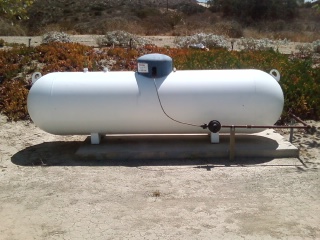


If you’re planning to buy a propane tank in Hawaii, I recommend looking beyond the tank’s advertised price. A tank sold on the mainland may seem affordable until you add freight to Hawaii, interisland shipping, unloading, site preparation, professional installation, permits, and the first propane delivery.
Hawaii’s islands also have distinctive installation challenges. Propane suppliers and tank models aren’t equally available everywhere. Coastal air can accelerate corrosion, volcanic rock may complicate excavation, and some properties have steep access roads or flood exposure. Earthquakes, heavy rain, and tropical storms also matter when planning a permanent system.
A Honolulu homeowner might need propane for cooking and hot water, while a Big Island property could use it for a dryer, water heater, and generator. Resorts, farms, and commercial operations may require much larger storage. I’ll compare capacities, budget scenarios, refill options, suppliers, county permits, and long-term ownership expenses so you can choose the right equipment.


Pricing note: Prepared for 2027 using information reviewed in November 2026. Hawaii does not have a current state-level residential EIA propane-price series. Unless a specific retailer is named, all fuel prices and equipment budgets here are illustrative assumptions, not confirmed Hawaii market offers.
Quick Answer: How Much Does a Propane Tank Cost in Hawaii?
The total price depends on capacity, island, availability, whether you buy or lease, shipment, and the work needed to install and fill the tank. For larger stationary tanks, I recommend requesting a complete installed quote from a propane dealer serving your island.
| Stationary tank size | Illustrative equipment-only budget | Propane at 80% fill |
|---|---|---|
| 50 gallons | Request a model-specific quote | 40 gallons |
| 100 gallons | Request a model-specific quote | 80 gallons |
| 120 gallons | $1,000 | 96 gallons |
| 250 gallons | $2,000 | 200 gallons |
| 500 gallons | $3,000 | 400 gallons |
| 1,000 gallons | $5,000 | 800 gallons |
These rounded prices are budgeting placeholders, not Hawaii supplier quotations. U-Haul Moving & Storage of Honolulu displayed $6.25 per gallon plus tax for walk-in propane cylinder refills when reviewed in November 2026. At that price, a 4.7-gallon refill would cost about $29.38 before tax. A retail cylinder rate should not be used as an assumed price for bulk residential delivery.
My recommendation: Confirm a supplier serves the exact property, ask what equipment it will accept and maintain, and get separate written prices for the tank, freight, installation, permits, and fuel. Start with a consumption estimate rather than automatically buying the largest tank.


1. How Much Does a Propane Tank Cost in Hawaii?
Hawaii’s island geography affects the total cost of purchasing and installing propane tanks. Even if a mainland seller offers a competitively priced vessel, you may need to arrange ocean freight, local trucking, crane or lift equipment, and an installer who will work with that model.
What Determines the Price?
- Capacity and design: Larger stationary tanks and underground-rated vessels generally require more materials and more complicated handling.
- Island availability: A tank stocked on Oahu may need another shipment before it reaches Maui, Kauai, or Hawaii Island.
- New or refurbished condition: Used vessels may need inspection, replacement parts, or corrosion remediation.
- Site preparation: Slopes, drainage, volcanic rock, and limited access may increase labor and foundation expenses.
- Gas piping and approvals: Regulators, piping, leak tests, permits, and inspections can all affect the total.
Sample 500-Gallon Above-Ground Installation Budget
| Expense | Illustrative cost |
|---|---|
| New 500-gallon tank | $3,000 |
| Freight, delivery, unloading | $1,000 |
| Foundation, regulators, piping, labor | $1,500 |
| Permits and miscellaneous site costs | $300 |
| Initial 400-gallon fill at assumed $5/gal | $2,000 |
| Illustrative total | $7,800 |
Every figure in this example is a hypothetical assumption, including the fuel price. It’s a method for organizing a quote, not a predicted invoice. A property with installed propane infrastructure may cost less to adapt, while an inaccessible or rocky site could cost more.
Why Freight Makes Such a Difference
A large stationary vessel requires specialized transportation and handling. Before buying from outside Hawaii, I would verify that the seller can legally and practically ship the particular tank, who will receive it at the terminal, and which local company will place and connect it. Confirm that the intended fuel dealer will accept it before paying for the vessel.
Buying vs. Leasing
| Comparison | Customer-owned tank | Leased or supplier-provided tank |
|---|---|---|
| Initial equipment cost | Higher | Often lower |
| Ownership | Homeowner | Supplier |
| Fuel supplier flexibility | Subject to service acceptance | Often restricted |
| Maintenance | Agreement-dependent | Agreement-dependent |
| Rental fee | Usually none | May apply |
| Removal at end of service | Owner responsibility | Determined by contract |
I recommend comparing at least five years of fuel and equipment charges. The best arrangement depends on consumption, rental conditions, delivery fees, and the rights you have under the contract.
2. Where Can You Buy Propane Tanks in Hawaii?
Start with the company that will actually deliver propane to your property. A portable cylinder retailer isn’t necessarily equipped to sell and install a 500-gallon stationary tank.



Hawaii Gas
Hawaii Gas advertises gas services on the major Hawaiian islands, including residential gas installations, propane cylinders, tanks, and delivery arrangements. It publishes engineering guidance about foundations, tank separation, access, and approvals. I would start by requesting the specific tank-size options and ownership arrangements available at my address.
Buying on Oahu
On Oahu, Hawaii Gas is a lead for stationary residential service. U-Haul Moving & Storage of Honolulu advertises portable propane cylinders and refills. Hardware Hawaii advertises new cylinders, refills, and exchanges at participating stores. I would confirm whether I need a portable cylinder or a permanent tank before shopping.
Buying on Maui
Hawaii Gas offers propane services on Maui, and Arrows Propane is another business to ask about island-specific service. Confirm whether the provider supplies stationary tanks, offers bulk delivery, or primarily services portable cylinders. Availability may differ by area.
Buying on Hawaii Island
Hawaii Gas advertises service on Hawaii Island. A property near Hilo, Kona, Waimea, or a remote location may require a driveway and delivery-truck access assessment. I would verify coverage for the exact parcel, not only the ZIP code.


Buying on Kauai
Hawaii Gas is a starting point for stationary tank arrangements. Hardware Hawaii’s Koloa location advertises cylinder sales and refill or exchange services. For larger tanks, ask the delivery supplier about its approved equipment and installation process.
| Provider | Island/service area to check | Service type |
|---|---|---|
| Hawaii Gas | Major Hawaiian islands | Stationary propane supply and gas services |
| U-Haul Moving & Storage of Honolulu | Oahu | Portable cylinder sales and refills |
| Hardware Hawaii | Oahu and Kauai | Cylinder refills, exchange, and retail |
| Arrows Propane | Maui | Ask about propane services and tank availability |
These are service leads, not a price ranking or guarantee of inventory. Ask about tank ownership, capacity, shipping, permits, maintenance, and delivery fees before signing an agreement.
3. What Propane Tank Sizes Are Available in Hawaii?
Portable cylinders are commonly rated in pounds of propane; larger stationary ASME tanks are generally described by their nominal water capacity in gallons. A 100-pound cylinder is not the same as a 100-gallon stationary tank.
| Tank size | Approximate propane capacity | Typical application |
|---|---|---|
| 20-pound cylinder | 4.7 gal | Grilling and portable equipment |
| 30-pound cylinder | 7.1 gal | RV and recreational appliances |
| 100-pound cylinder | 23.5 gal | Limited household appliances |
| 50-gallon stationary tank | 40 gal | Specialty low-demand use |
| 120-gallon tank | 96 gal | Cooking and hot water |
| 250-gallon tank | 200 gal | Moderate household demand |
| 500-gallon tank | 400 gal | Several appliances and generators |
| 1,000-gallon tank | 800 gal | High-demand residential/commercial use |
The stationary figures assume an approximate 80% fill for planning. Actual filling levels must follow the applicable requirements.
Hawaii Gas describes 100-pound cylinder systems as an option for certain customers with low monthly consumption. Larger stationary vessels may be preferable when fuel demand is greater or convenient deliveries are important. I would size the tank using actual consumption and maximum hourly appliance demand, not only the number of stored gallons.
4. How Much Does a 1,000-Gallon Propane Tank Cost in Hawaii?
A 1,000-gallon tank contains about 800 gallons at 80% fill. I would investigate this size for large residences, agriculture, commercial facilities, or substantial generator demand, provided the site and supplier can support it.
Purchase Price and Dimensions
For an initial equipment budget, consider a hypothetical $5,000 allowance, excluding shipping and installation. This is not a quoted Hawaii price.
| Specification | Representative measurement |
|---|---|
| Nominal capacity | 1,000 gal |
| Propane at 80% | 800 gal |
| Diameter | Approximately 41 in |
| Overall length | About 16 ft |
| Empty weight | Often over 1,500 lb; model-dependent |
Request the exact manufacturer’s dimensional drawing before designing the site.
Cost to Fill a 1,000-Gallon Tank
| Hypothetical bulk fuel price | Cost for 800 gallons |
|---|---|
| $4/gal | $3,200 |
| $5/gal | $4,000 |
| $6/gal | $4,800 |
| $7/gal | $5,600 |
The rates are illustrative, not verified Hawaii bulk-delivery prices. Refilling from 30% to 80% adds about 500 gallons, which would cost $2,500 at an assumed $5 per gallon before fees.
Is This Size Worth It?
A 1,000-gallon tank makes more sense when annual demand or delivery logistics justify the capacity. A house that uses propane only for cooking may never need this much storage. Compare the upfront cost, site clearances, and delivery interval with a 500-gallon option.
5. How Much Does a 500-Gallon Propane Tank Cost in Hawaii?
A 500-gallon vessel holds about 400 gallons at an 80% fill. It is worth comparing for households running several propane appliances or a significant standby generator.
Price and Dimensions
Use $3,000 as a hypothetical equipment-only starting allowance, not a current Hawaii price.
| Specification | Representative measurement |
|---|---|
| Water capacity | 500 gallons |
| Propane at 80% fill | 400 gallons |
| Diameter | Around 38–41 inches |
| Overall length | About 9–10 feet |
| Empty weight | Often 900–1,000 pounds |
500-Gallon Fill Cost Scenarios
| Assumed fuel price | 400-gallon fill |
|---|---|
| $4/gal | $1,600 |
| $5/gal | $2,000 |
| $6/gal | $2,400 |
| $7/gal | $2,800 |
All values are planning examples. To estimate time between refills, suppose you consume four gallons per day. A full 400-gallon supply is a theoretical 100 days; using an 80%-to-20% operating window gives about 300 gallons, or 75 days between planned refills.
For a generator burning three gallons per hour at a specified load, that 300-gallon operating window is theoretically 100 hours of generator-only operation. Allow for other appliances, changes in generator load, and additional reserve.
6. How Much Does a 250-Gallon Propane Tank Cost in Hawaii?
A 250-gallon stationary tank contains approximately 200 gallons at 80% fill. It may be suitable for moderate residential demand.
For preliminary budgeting, use an illustrative $2,000 equipment allowance, not a verified local price. Your actual quote should include local availability, freight, placement, piping, and permits.
| Specification | Representative value |
|---|---|
| Capacity | 250 gallons |
| Propane at 80% | 200 gallons |
| Diameter | Around 30 inches |
| Overall length | About 7 ft 10 in |
| Empty weight | Approximately 470 pounds |
Cost to Fill
| Assumed bulk price | Cost for 200 gallons |
|---|---|
| $4/gal | $800 |
| $5/gal | $1,000 |
| $6/gal | $1,200 |
| $7/gal | $1,400 |
If you use 40 gallons monthly, a full tank represents about five months of theoretical fuel. Using a refill threshold of 20%, about 150 gallons fall within the operating window: 150 ÷ 40 = 3.75 months.
250-Gallon vs. 500-Gallon Tanks
| Factor | 250 gal | 500 gal |
|---|---|---|
| Fuel at 80% fill | 200 gal | 400 gal |
| Fuel between 80% and 20% | 150 gal | 300 gal |
| Hypothetical equipment allowance | $2,000 | $3,000 |
| Fill at hypothetical $5/gal | $1,000 | $2,000 |
I would compare the larger tank’s higher initial expense against the convenience of fewer deliveries.
7. How Much Do Small Propane Tanks Cost in Hawaii?
Smaller cylinders and stationary tanks can work for grills, cooking, water heating, and other low-demand uses. They are not interchangeable: cylinders and ASME stationary vessels have different ratings and installation rules.
| Tank | Approximate propane quantity |
|---|---|
| 20-pound cylinder | 4.7 gallons |
| 30-pound cylinder | 7.1 gallons |
| 100-pound cylinder | 23.5 gallons |
| 50-gallon stationary tank | 40 gallons |
| 120-gallon stationary tank | 96 gallons |
U-Haul Honolulu advertises portable cylinder sales and refills, while Hardware Hawaii offers cylinders and related services through participating stores. Check stock and whether the cylinder type is eligible for refill.
20-Pound Cylinder Refill Example
U-Haul Honolulu displayed $6.25/gallon plus tax in November 2026. A 4.7-gallon refill at that displayed rate would cost $29.38 before tax. Prices can change. This is a retail-cylinder figure, not a bulk delivery quote.
120-Gallon Stationary Tank
A hypothetical $1,000 equipment allowance can serve as an initial budgeting placeholder; it is not a verified Hawaii seller price. At 80% fill, the tank holds about 96 gallons. If the hypothetical bulk price were $5 per gallon, 96 gallons would cost $480.
A 100-pound cylinder holds about 23.5 gallons, while a 100-gallon stationary tank holds approximately 80 gallons at 80% fill. See my propane tank vs. cylinder guide for more detail.
8. New vs. Used Propane Tanks in Hawaii
Used propane vessels may appear attractive because of their lower advertised purchase price. I would be cautious, especially if the tank has experienced long-term coastal exposure, has an unclear service history, or needs to be moved between islands.
| Used-tank inspection | What to verify |
|---|---|
| Ownership | Seller legally owns the vessel and can transfer it |
| Data plate | Manufacturer identification is readable |
| Corrosion | No unacceptable damage or deterioration |
| Valves and fittings | Suitable for continued service |
| Service history | Records of inspections or repairs |
| Transportation | Safe handling and lifting arrangements |
| Supplier acceptance | Local fuel provider will inspect and refill it |
Refurbished Tank Cost Example
Suppose a used 500-gallon tank costs a hypothetical $1,800. Add $800 freight and handling, $500 professional servicing, and $1,500 installation. Your illustrative total becomes $4,600 before propane. That example shows why a used-tank deal can become expensive in Hawaii.
Ask the local fuel supplier to approve the exact vessel before paying for it. See my guide on how frequently to replace a propane tank.
9. Where Can You Refill a Propane Tank in Hawaii?
Portable cylinders can be refilled at participating retail stations, while stationary residential vessels are generally supplied by bulk-delivery trucks. Check that the company actually serves your tank type and property.
Honolulu and Oahu
U-Haul Moving & Storage of Honolulu advertises propane refilling at 2722 Kilihau Street, Honolulu, HI 96819, including eligible portable cylinders, RV equipment, and other propane applications. Its displayed price was $6.25/gallon plus tax when reviewed in November 2026. I recommend calling ahead to confirm service and price.
Hardware Hawaii advertises propane refills at participating Kailua and Kapolei stores. Store service hours and cylinder eligibility may differ.
Kauai
Hardware Hawaii’s Koloa location advertises refill and exchange services. For permanent residential tanks, contact a bulk-fuel supplier such as Hawaii Gas to discuss delivery arrangements.
Maui
Contact Hawaii Gas or local propane businesses to determine which portable-cylinder and stationary-tank services are available in your area. Tell the company your tank type and approximate capacity before visiting.
Hawaii Island
Hawaii Gas advertises propane service on the Big Island. Properties near Hilo, Kona, Pahoa, and remote areas should confirm driveway access, delivery coverage, and scheduling before arranging a new installation.
Refill vs. Exchange
A standard 20-pound cylinder holds about 4.7 gallons at its rated fill. At the documented Honolulu U-Haul example of $6.25/gallon, that costs approximately $29.38 before tax. Some exchange services provide 15 pounds in a container commonly called a 20-pound cylinder, so compare the amount received rather than only the transaction price.
For more calculations, read my propane refill cost per gallon guide.
10. What Are the Dimensions of Propane Tanks in Hawaii?
Large propane tanks must fit the property while leaving space for safe setbacks and maintenance access. I would never choose an installation spot based only on the physical footprint of the vessel.
| Tank capacity | Approximate diameter | Approximate length |
|---|---|---|
| 120 gallons | 24 inches | 5–6 feet |
| 250 gallons | 30 inches | 7–8 feet |
| 500 gallons | 38–41 inches | 9–10 feet |
| 1,000 gallons | Around 41 inches | Around 16 feet |
The actual dimensions depend on the manufacturer. Ask for a specification drawing and check clearances to structures, property lines, doors, windows, ignition sources, vegetation, and delivery routes.
Hawaii’s volcanic rock, slopes, and narrow access roads can make positioning heavy tanks difficult. I recommend a site visit before arranging freight. A compliant location must also allow access to valves, inspection fittings, and the delivery connection.
11. Above-Ground vs. Underground Propane Tanks in Hawaii
Both above-ground and underground tanks may be possible where the equipment and site comply with applicable regulations. I would evaluate the property’s terrain, drainage, corrosion environment, flood risk, and required excavation before choosing.
| Factor | Above-ground | Underground |
|---|---|---|
| Equipment cost | Generally lower | Generally higher |
| Excavation | Usually limited | Required |
| Appearance | Visible | Mostly concealed |
| Inspection | Easier external access | Specialized procedures |
| Corrosion protection | Coating and maintenance | Burial-rated system |
| Volcanic rock | Less excavation | May complicate work |
| Flooding | Site and anchoring assessment | Groundwater/uplift assessment |
An above-ground tank typically reduces excavation expenses and makes the exterior easier to inspect. Underground tanks can be visually discreet but need correct coatings, cathodic protection where required, and accessible service fittings. High groundwater can cause buoyancy concerns for buried equipment.
For a straightforward residential property, I would generally obtain an above-ground quote first. If aesthetics are a priority, ask for an underground alternative after the site assessment.
12. What Are Hawaii’s Propane Tank Installation Requirements?
Hawaii uses applicable state and county fire and building requirements, with local amendments and recognized LPG standards. Permit rules vary by county, so a threshold that applies on Oahu shouldn’t automatically be used on Maui or Hawaii Island. Check the authority having jurisdiction before buying equipment.
Honolulu Permits
Honolulu Fire Department guidance generally requires permits for LPG tank installations, with exceptions for certain portable or interconnected systems below 125 gallons aggregate water capacity. For a single container or interconnected group at or above 125 gallons, plans are generally required. The department lists a $200 tank installation permit fee for qualifying systems and indicates that zoning approval is required before its tank permit submission. Verify the applicable procedures and current fees directly before filing.
Maui County Permits
Maui County maintains an LPG permit process. Its published exception includes systems with water capacity 124 gallons or less serving one- or two-family homes. Applications are handled through the county’s MAPPS system. The total capacity of interconnected containers and exact use can affect the review; confirm details with Maui County.
Hawaii County Permits
Hawaii County Fire Department publishes an LPG and storage tank application; its materials identify installations exceeding 125 gallons as a category requiring review. Verify the current threshold and application process with the county fire authority responsible for the site.
Kauai Requirements
Consult Kauai Fire Department and the county building authority for the applicable tank size, occupancy, and local code provisions. An exemption in another county does not establish approval on Kauai.
How Far Must a Propane Tank Be From a House?
Separation requirements vary by capacity, above- or below-ground configuration, nearby buildings, property lines, and the specific adopted provisions. Hawaii Gas engineering guidance describes circumstances where certain individual above-ground tanks of 1,200 gallons or less may qualify for at least 10 feet separation if relevant conditions are met. Do not treat 10 feet as a universal clearance for every Hawaii tank. Have a qualified installer prepare and confirm the final placement plan.
| Planning issue | Ask the installer to verify |
|---|---|
| Tank size | Applicable code category and water capacity |
| Building openings | Required clearance to doors and windows |
| Property boundaries | Relevant separation to adjoining property |
| Ignition sources | Electrical and mechanical clearances |
| Delivery trucks | Access, turning space, hose reach |
| Flooding | Foundation stability and anchoring |
| Permits | Fire, building, and zoning approvals |
Permanent installations involve pressure vessels, gas regulators, piping, and leak testing. I recommend hiring appropriately qualified professionals and never modifying pressure-vessel fittings or supports yourself.
Tank Recertification
Portable DOT cylinders and stationary ASME vessels follow different rules. Some portable cylinders need periodic requalification; large stationary tanks have separate inspection and maintenance obligations. Read my guide to who recertifies propane tanks.
13. How Does Hawaii’s Climate Affect Propane Tanks?
Salt air, humidity, heavy rain, severe storms, flooding, and earthquakes can all affect propane equipment. I recommend assessing the specific property rather than assuming all Hawaiian locations have the same exposure.
Heat and Propane Pressure
Propane pressure changes with temperature. Use only approved equipment and follow the applicable filling limits. Avoid improvised enclosures that restrict ventilation or block service access. Never heat a propane vessel with an open flame.
Salt Air and Corrosion
Coastal exposure can accelerate corrosion of coatings, supports, fittings, and exposed metal. Inspect equipment through a professional maintenance program and address damaged protective finishes. Do not paint over the manufacturer’s data plate or tamper with valves.
Storms and Flooding
Flooding can displace inadequately restrained tanks, and storm debris can damage piping. Hawaii Gas engineering guidance discusses anchoring where flotation may occur. A qualified installer should assess flood risk and any anchoring design. After a storm, do not reconnect damaged gas lines yourself; contact the supplier.
Volcanic Rock and Earthquakes
Volcanic rock can increase excavation expense. Seismic movement can stress improperly supported tanks or piping. Ask the contractor how foundations, supports, and connections comply with the applicable requirements for the site.
14. Which Propane Tank Brands Are Available in Hawaii?
I would focus on the tank model’s certification, warranty, suitability for the site, and support from a local installer rather than selecting by brand alone. A manufacturer widely sold on the mainland may not have predictable inventory in Hawaii.
| Manufacturer | Typical product focus | What to verify |
|---|---|---|
| Manchester Tank | Cylinders and stationary vessels | Dimensions, warranty, local service |
| Quality Steel | Above- and underground stationary tanks | Availability, shipping, burial rating |
| Worthington Enterprises | Portable propane cylinders | Cylinder certification and fittings |
| Flame King | Portable and specialty tanks | Approved application and compatibility |
For stationary residential storage, I would give substantial weight to which brands the local fuel supplier is able and willing to install, maintain, and refill.
15. How Much Does It Cost to Operate a Propane Tank in Hawaii?
Fuel usage matters more than a small equipment-price difference when you plan to keep a tank for several years. Propane contains approximately 91,500 BTU per liquid gallon. Divide an appliance’s input BTU per hour by 91,500 to estimate gallons per hour.
Gallons per hour = appliance input BTU/hour ÷ 91,500.
For example, a 40,000-BTU/hour appliance consumes approximately 0.44 gallons per hour while operating at that input. Running two hours per day would use around 0.87 gallons. Real demand varies with cycling and use.
Annual Fuel-Cost Scenarios
| Annual usage | At assumed $4/gal | At assumed $5/gal | At assumed $6/gal |
|---|---|---|---|
| 100 gallons | $400 | $500 | $600 |
| 250 gallons | $1,000 | $1,250 | $1,500 |
| 500 gallons | $2,000 | $2,500 | $3,000 |
| 750 gallons | $3,000 | $3,750 | $4,500 |
| 1,000 gallons | $4,000 | $5,000 | $6,000 |
| 1,500 gallons | $6,000 | $7,500 | $9,000 |
All rates here are hypothetical, not Hawaii statewide averages. Always substitute a current written local quote.
Five-Year Ownership Example
Assume a 500-gallon tank costs $3,000 and another $2,500 goes to shipping, site preparation, and installation. The hypothetical equipment project totals $5,500. If annual usage is 500 gallons at an assumed average of $5/gallon, five years of fuel costs $12,500. The illustrative five-year total is $18,000, excluding taxes, maintenance, delivery fees, financing, and price changes.
To control costs, maintain appliances, improve hot-water efficiency, compare supplier programs, and track tank levels. I would compare a purchase option with a supplier-provided tank agreement over the same time horizon.
16. What Size Propane Tank Do You Need for Your Hawaii Home?
The right size depends on connected appliances, consumption, reliable delivery access, and the supplier’s available equipment. Square footage alone is not enough to size storage.
| Household use | Sizes or equipment worth evaluating |
|---|---|
| Outdoor grilling | Portable cylinder |
| Low-demand cooking | Portable cylinder system or small stationary tank |
| Cooking and hot water | 120–250 gallons or approved cylinder system |
| Several household appliances | 250–500 gallons |
| Standby generator | Determine from manufacturer’s fuel data |
| High-demand commercial facility | Professionally engineered storage |
These are preliminary choices, not engineering prescriptions. For a generator consuming three gallons/hour at a particular load, 24 hours requires 72 gallons, 48 hours requires 144 gallons, and 72 hours requires 216 gallons. The plan must allow for other appliances and reserve. See my propane tank size chart for generators.
500-Gallon vs. 1,000-Gallon Example
| Factor | 500 gallons | 1,000 gallons |
|---|---|---|
| Propane at 80% fill | 400 gal | 800 gal |
| Fuel between 80% and 20% | 300 gal | 600 gal |
| Days at 5 gallons/day | 60 | 120 |
| Hypothetical equipment allowance | $3,000 | $5,000 |
The larger tank doubles the amount stored within the planning window but requires more space and upfront spending.
Hawaii Propane Tank Buying Checklist
- Confirm the manufacturer’s exact tank size, condition, and warranty.
- Verify availability and shipment arrangements for your island.
- Ask the bulk-fuel supplier to confirm the model will be accepted and maintained.
- Verify county fire, building, and zoning permits.
- Review foundation, service access, flood exposure, corrosion, and seismic conditions.
- Request separate costs for freight, unloading, piping, labor, testing, and first fill.
- Compare delivered propane prices, service arrangements, and tank ownership terms.
I recommend obtaining written quotations before paying a deposit.
17. Frequently Asked Questions About Propane Tanks in Hawaii
How Much Does a 500-Gallon Tank Cost?
Get a local supplier quote. This guide uses $3,000 as a hypothetical equipment-only allowance, not a verified Hawaii market price. Freight and installation are extra.
Where Can I Buy Propane Tanks Near Me?
Hawaii Gas is a starting point for stationary residential equipment. U-Haul Honolulu and Hardware Hawaii advertise portable cylinder products or refill services. Check coverage on your specific island.
How Much Does a 250-Gallon Tank Cost?
Ask a local propane company for a written equipment and installed quote. The illustrative equipment allowance in this article is $2,000, which is not a market quote.
How Much Does a 1,000-Gallon Tank Cost?
Equipment, shipping, site work, and initial fill costs depend on island access and supplier availability. Use a site-specific quotation.
What Is the Average Propane Price Per Gallon in Hawaii?
The EIA does not publish a current Hawaii state-level residential propane price average. U-Haul Honolulu displayed $6.25/gallon plus tax for eligible portable cylinder refills in November 2026; that is not a statewide bulk-delivery price.
How Much Is a 20-Pound Cylinder Refill?
At the documented Honolulu U-Haul example of $6.25/gallon, 4.7 gallons would be about $29.38 before tax. Check the current store rate.
Do I Need a Permit?
Permit requirements vary by county, tank size, and application. Honolulu, Maui, and Hawaii County publish LPG permit procedures. Confirm with the local authority and installer.
How Far Must a Tank Be From the House?
It depends on configuration, capacity, and the adopted code provisions. Ask the installer to verify your plan rather than relying on a universal setback.
Can I Install a Tank Underground?
Potentially, when an approved tank and installation method fit the site. Evaluate rock, groundwater, flooding, corrosion protection, and excavation costs.
Can I Buy a Used Tank?
Yes, when ownership and condition are acceptable. The intended supplier should approve the vessel before purchase.
Do Propane Tanks Expire After 12 Years?
Some portable DOT cylinders require periodic requalification, while stationary ASME tanks have different inspection and maintenance rules.
Should I Buy or Lease?
Buying provides ownership but often a higher initial expense. Leasing can reduce upfront cost but may limit supplier choice. Compare contracts and five-year total costs.
18. Final Thoughts: Choosing a Propane Tank in Hawaii
If you’re buying a propane tank in Hawaii, start with fuel consumption and confirmed supplier availability on your island. Small cylinder systems can suit low-demand cooking, while 120- and 250-gallon tanks may work for moderate residential use. A 500-gallon tank can offer more storage for several appliances or regular generator use. A 1,000-gallon tank may make sense for high-demand properties or when delivery logistics make extra storage valuable.
I would not select the largest tank just because it stores more fuel. In Hawaii, shipping, site access, permits, coastal corrosion, storm exposure, and the local propane company’s service policies can materially affect both costs and safety.
The best tank is the one that safely meets your consumption, fits the property, can be serviced reliably, and offers manageable long-term costs. Obtain written quotations, verify the model and installation site, and use a qualified installer before making a commitment.

Mike is an experienced propane technician with over 15 years of professional experience in the field. He has dedicated his career to helping customers with their propane needs, from installation to maintenance and repair. Together with Jeremy, he co-founded this website to provide useful information and guidance to customers seeking reliable propane services.