TL;DR: Refilling a 20-pound propane cylinder generally costs less per gallon than exchanging it, especially when an exchange contains 15 pounds rather than a nominal 20-pound fill. A full 20-pound cylinder holds about 4.7 gallons; a 15-pound exchange holds about 3.5 gallons. Compare the total price divided by actual gallons, and consider convenience, cylinder condition and generator runtime.
If you use a portable propane generator for home backup, camping or job-site power, you have probably wondered whether to exchange a cylinder at a store or take it to a propane refill station. I would not decide by the sign that says “$19.99 exchange” or “$3.50 per gallon” without doing the math.
Generators can consume propane quickly under load, so even a small difference in fuel price and fill quantity can add up over a long outage. In this guide, I’ll show you the calculations I use, explain when exchange is worth the convenience, and highlight safety and supply issues that matter just as much as price.


The short answer: refill usually costs less per gallon
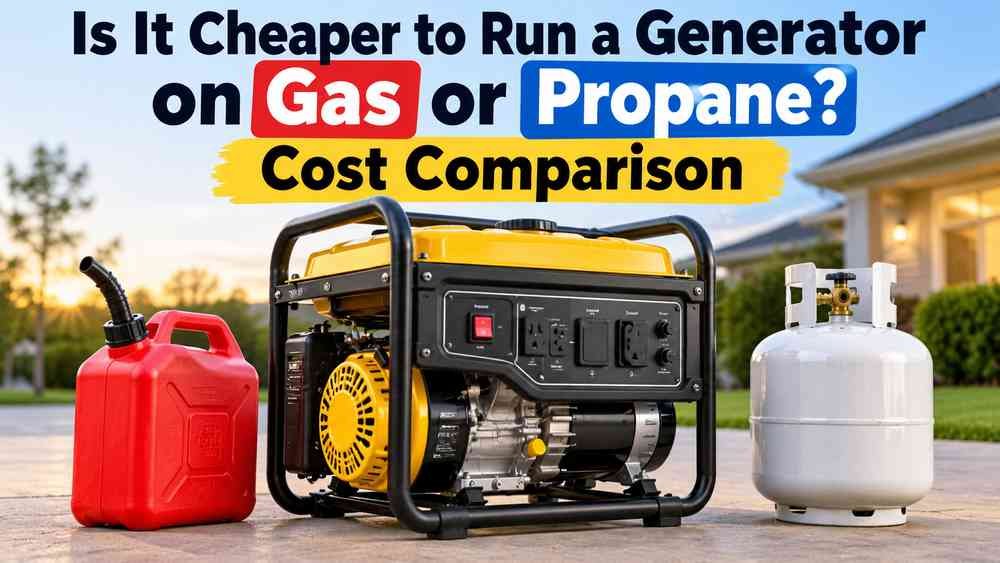
When I compare propane tank exchange with refill for generator fuel, I compare the gallons actually received, not the sticker price on the cage. A common 20-pound cylinder holds about 4.7 gallons when filled to its rated propane capacity, but many exchange programs supply about 15 pounds, or roughly 3.5 gallons. That means an exchange can cost more per usable gallon even when the advertised ticket price looks close to a refill. Your actual cylinder fill and exchange label are what matter.
How much propane is in a 20-pound tank?
A 20-pound cylinder is a weight rating, not a promise of 20 gallons. Liquid propane weighs approximately 4.24 pounds per U.S. gallon under ordinary reference conditions. Dividing 20 pounds by 4.24 gives roughly 4.7 gallons. A cylinder exchanged with a labeled net propane weight of 15 pounds contains about 3.5 gallons. Never try to defeat the cylinder’s overfill protection or fill a cylinder yourself without the proper qualifications and equipment.
| Container / transaction | Propane weight | Approximate gallons |
|---|---|---|
| 20-lb cylinder, nominal full fill | 20 lb | 4.7 gal |
| Exchange labeled 15 lb net | 15 lb | 3.5 gal |
| Exchange labeled 17 lb net | 17 lb | 4.0 gal |
| 40-lb cylinder, nominal full fill | 40 lb | 9.4 gal |
| 100-lb cylinder, nominal full fill | 100 lb | 23.5 gal |
All quantities are approximate. Cylinder condition, legal filling limits and the exchange supplier’s stated net contents determine what you receive.


Propane exchange vs refill: real cost comparison
To make this practical, I use illustrative prices rather than pretending every store charges the same amount. Imagine a local refill station charges $3.50 per gallon, while a cylinder exchange costs $22 and delivers 15 pounds of propane.
| Option | Cash paid | Gallons received | Effective cost per gallon |
|---|---|---|---|
| Refill: 4.7 gallons at $3.50 | $16.45 | 4.7 | $3.50 |
| Exchange: 15 lb net | $22.00 | 3.5 | About $6.22 |
| Exchange: 17 lb net | $22.00 | 4.0 | About $5.49 |
At these hypothetical prices, refilling is substantially cheaper per gallon. But your local refill station might charge a flat minimum, and an exchange might be discounted. Calculate your own effective price before deciding.
The simple formula I use before buying
Effective price per gallon = total price ÷ gallons actually supplied.
For a refill sold by the gallon, the math is straightforward. For an exchange labeled by net pounds, convert to gallons first: net propane pounds ÷ 4.24. Then divide the exchange price by that figure.



Example: a $20 exchange labeled 15 pounds delivers about 3.54 gallons. $20 ÷ 3.54 = approximately $5.65 per gallon. Compare that with the price on your local dispenser, including tax and any service fee.
One nuance I always check: a refill station may charge for the amount added, not for a full 4.7 gallons. If your cylinder still contains propane, paying to refill the missing quantity can preserve the fuel you already purchased.
Generator runtime: why the extra gallons matter
A generator’s runtime depends on load, engine efficiency, ambient conditions and the specific model. The following are examples only, not guaranteed specifications. I would always use the manufacturer’s published consumption at the load I expect to run.
| Illustrative generator consumption | 15-lb exchange (~3.5 gal) | 20-lb nominal fill (~4.7 gal) |
|---|---|---|
| 0.40 gal/hour | 8.8 hours | 11.8 hours |
| 0.60 gal/hour | 5.9 hours | 7.8 hours |
| 0.80 gal/hour | 4.4 hours | 5.9 hours |
| 1.00 gal/hour | 3.5 hours | 4.7 hours |
The practical difference is not only money. A nominally full refill can mean fewer trips during an outage. For a more detailed explanation of consumption, read how often you need to refill a propane generator.


When exchanging a propane tank makes sense
I would choose exchange when the convenience is worth the premium. Exchange cages can have longer hours than staffed filling stations, and a retailer may be closer to home. An exchange can also be useful when an otherwise eligible cylinder is approaching a requalification deadline, although the retailer’s acceptance rules vary and a cylinder with damage or other safety defects may be refused. You should never treat exchange as a way to bypass cylinder safety requirements.
Exchange can be appealing when you need a replacement cylinder quickly and the only refill station is closed. However, confirm that the cylinder you receive has a suitable valve, is compatible with your generator’s approved connection and regulator arrangement, and is in serviceable condition.
If you are buying your first cylinder, the exchange price may not include the cylinder itself. The initial purchase and later swaps can have different economics. Compare the entire transaction, not just the refill-versus-swap sign.
When refilling is the better choice
I prefer refilling when I already own a sound, in-date cylinder, the filling station charges by the gallon, and I can make the trip during operating hours. This is especially compelling if I have several cylinders to fill before storm season.
Refilling can also avoid wasting residual fuel. If I exchange a cylinder that still has a pound or two left, that remaining propane usually does not earn me a discount. A metered refill instead charges for the new propane added. Ask the station how it handles minimum charges and partially full cylinders.
Never assume every retail location offers filling. Some only sell exchange cylinders, and some have restrictions on the sizes or types they accept.
What about 40-pound and 100-pound cylinders?
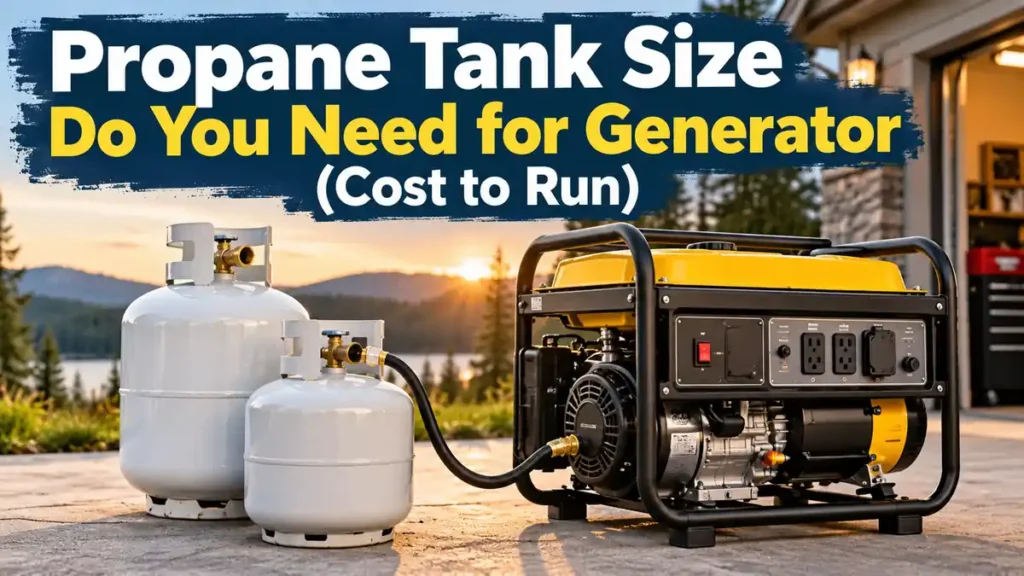
For extended generator use, I would evaluate whether a larger approved cylinder or properly designed stationary tank makes more sense than repeatedly swapping 20-pound cylinders. Larger cylinders can reduce refill trips, but weight, handling and vaporization capacity become more important.
| Cylinder | Approximate usable gallons | Approximate propane weight | Practical consideration |
|---|---|---|---|
| 20 lb | 4.7 | 20 lb | Portable, frequent changes |
| 40 lb | 9.4 | 40 lb | Heavier to handle |
| 100 lb | 23.5 | 100 lb | Heavy cylinder; transport and installation constraints |
These are nominal propane contents, not total filled-cylinder weights. A 100-pound cylinder can weigh much more than 100 pounds when its steel tare weight is included. Do not lift, transport, connect or store large cylinders in ways that violate the manufacturer’s instructions or applicable rules.
Cold-weather vaporization may limit generator output even when a cylinder contains plenty of fuel. See how to calculate propane vaporization capacity and why a propane tank freezes during generator use.
A five-day outage example
Imagine a generator using 0.6 gallon per hour for eight hours each day. Over five days, it consumes 24 gallons. At the illustrative refill rate of $3.50 per gallon, fuel costs about $84, excluding transport, taxes and fees. With 15-pound exchanges containing about 3.54 gallons each, you would need seven exchanges to supply at least 24 gallons, at $22 each, totaling $154. You may have some fuel left in the final cylinder.
| Five-day scenario | Refill | 15-lb exchange |
|---|---|---|
| Fuel required | 24 gallons | 24 gallons |
| Illustrative purchase method | 24 gallons at $3.50 | 7 exchanges at $22 |
| Cash outlay | $84 | $154 |
| Difference | Exchange requires $70 more cash in this example | |
This calculation deliberately isolates fuel purchase cost. It does not include cylinder acquisition, deposits, unused fuel, delivery or travel. Your generator might also need additional oil checks or service during extended runtime.
The hidden costs that change the answer
Travel: Driving 25 miles to save a few dollars can erase the advantage, especially if you make a special trip. I combine refills with errands when possible.
Hours and staffing: A lower refill price is irrelevant if the station is closed during an outage. I plan fuel before bad weather rather than counting on last-minute availability.
Flat-rate filling: Some retailers charge a fixed price for a cylinder even if it takes less than its rated capacity. Ask before handing over a partly full cylinder.
Cylinder ownership: Purchasing a new cylinder costs more upfront than refilling one you already own. Account for its useful service life and required requalification.
Delivery: For a permanent generator connected to a stationary tank, bulk propane delivery pricing and minimum delivery quantities are different from portable cylinder economics. For larger installations, see whole-house generator installation costs.
How I would prepare propane cylinders for an outage
I would first check the generator manual for the approved propane connection, fuel supply requirements and expected consumption. Then I would inspect cylinder condition and requalification markings, verify that valves and fittings are suitable, and arrange filling or exchange well before an approaching storm.
I keep cylinders outdoors, upright and secured in an appropriate ventilated location away from heat and ignition sources, following local rules. I never store cylinders in living spaces, basements or enclosed areas where leaked gas could accumulate. I do not run a portable generator in a garage, porch enclosure or near openings: carbon monoxide can kill even when the engine burns propane.
When connecting a cylinder, I follow the manufacturer’s instructions and use only approved hoses, regulators and fittings. I do not improvise adapters or connect a portable generator directly to household propane piping without a professionally designed and approved setup. See connecting a portable generator to a propane line for the considerations involved.
Does tank exchange reduce generator reliability?
Not inherently. A compatible, correctly filled, properly connected cylinder can power a generator regardless of whether you obtained it by refill or exchange. Reliability issues are more likely to involve insufficient vaporization, undersized regulators or hoses, damaged valves, leaks, contaminated or unsuitable components, or simply running out of propane.
A 15-pound exchange cylinder does not provide the same runtime as a nominal 20-pound fill, and in cold weather a small cylinder may struggle to vaporize enough propane for a high-demand engine. If your generator starts and stalls under load, do not assume the solution is a larger valve or an improvised regulator. Have the supply requirements evaluated.
For homeowners using a generator to keep essential appliances running, I also explain the electrical side in running a refrigerator and freezer on a propane generator.
Questions I would ask the retailer
Before choosing a supplier, I ask five things: What is the total price including taxes? How many net pounds or gallons will I receive? Is the price metered or flat? Are my cylinders eligible and in date? What are the operating hours during storms or holidays?
I also ask whether the retailer fills only standard grill cylinders or can handle larger cylinders. Some suppliers offer both exchange and refill, while others do only one. I write down the net quantity from the exchange label rather than assuming every brand or location uses the same fill amount.
Frequently asked questions
Is propane tank exchange cheaper than refill?
Usually not on a per-gallon basis when the exchange contains less propane than a nominal full refill. But promotional pricing, refill minimums and travel costs can reverse the result locally.
How much propane is in an exchanged 20-pound tank?
Check the supplier’s net-weight label. Many exchanges are marketed at about 15 pounds of propane, roughly 3.5 gallons, rather than the nominal 20 pounds or 4.7 gallons of a fully filled 20-pound cylinder.
Can I use an exchange tank on my propane generator?
Only if the cylinder, valve, regulator, hose and fuel delivery are approved and compatible with your generator. Follow the manual and do not assume a grill connection is suitable for every generator.
Will a full 20-pound tank run a generator all night?
It depends on consumption and load. At an illustrative 0.5 gallon per hour, 4.7 gallons lasts about 9.4 hours. A 15-pound exchange containing about 3.5 gallons lasts roughly seven hours at the same rate.
Is it cheaper to refill a partly full tank?
At a metered refill station, usually yes: you pay for the amount added. With a flat-rate fill, the answer depends on the station’s pricing policy.
Can I refill an expired cylinder?
A cylinder must meet applicable requalification and condition requirements. Have an authorized propane professional assess it; do not use or fill a cylinder that is out of compliance or damaged.
Should I use a 100-pound tank for my generator?
It may reduce refilling frequency, but confirm the generator’s propane demand, cold-weather vaporization, approved connections, handling requirements and local codes before choosing a larger cylinder.
My verdict: choose by gallons, not by the cage price
For generator fuel, I generally favor refilling a safe, eligible cylinder at a metered station because the per-gallon price is often lower and I keep any propane already in the cylinder. I still see a place for exchange when convenience, hours or cylinder replacement outweigh the premium.
My rule is simple: convert the advertised quantity into gallons, calculate the true cost per gallon, and estimate runtime using your generator’s actual consumption. That gives you a far more useful answer than comparing two sticker prices alone.

Mike is an experienced propane technician with over 15 years of professional experience in the field. He has dedicated his career to helping customers with their propane needs, from installation to maintenance and repair. Together with Jeremy, he co-founded this website to provide useful information and guidance to customers seeking reliable propane services.