Price research checked: November 1, 2026. US dollars. Retail prices are listing snapshots, not guaranteed quotes; all other project budgets identified as illustrations are planning assumptions. Installation costs vary by location, property, contractor, and equipment package.
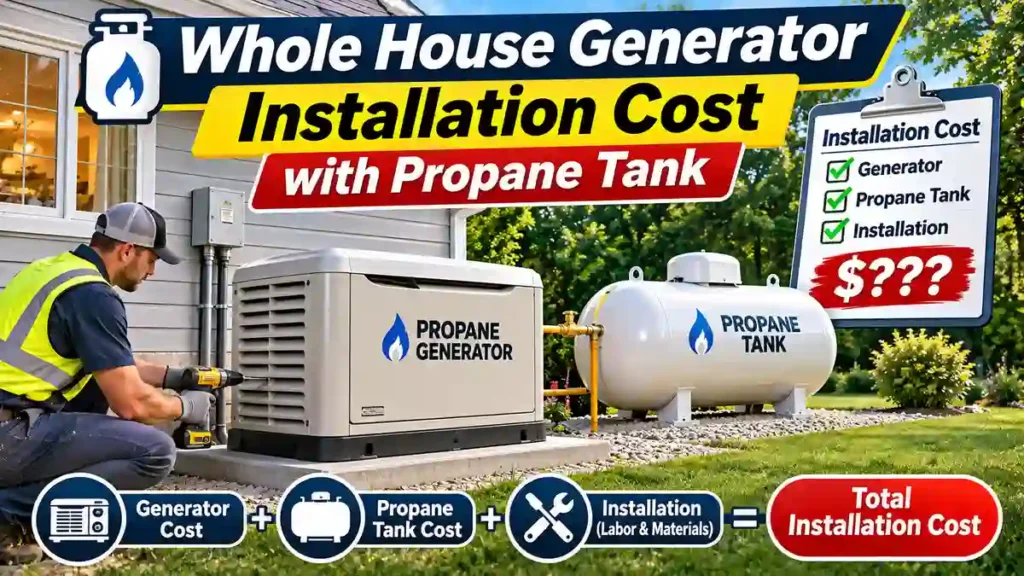
How much does it cost to install a whole-house generator with a propane tank? I would initially budget $10,000–$25,000 or more for a professionally installed residential propane standby system that includes a tank. A straightforward smaller installation may land near the low end, while a larger generator, buried 500-gallon tank, difficult electrical service, or long gas-line run can exceed the upper end. That’s a practical synthesized planning range—not a verified nationwide average. A generator’s advertised equipment price is rarely the final check you’ll write.
TL;DR — The whole-system budget: A typical residential generator itself can represent roughly $3,000–$8,000+, with larger or liquid-cooled equipment costing more. A purchased 250-gallon tank might cost around $500–$1,200 installed in a straightforward setting; a 500-gallon tank around $1,000–$2,500, and a 1,000-gallon tank around $2,000–$5,000, using published 2026 tank-installation ranges. Buried tanks, extra excavation and restoration can increase that substantially. Professional electrical and gas work commonly adds thousands. Allow for permits, a pad, commissioning, the first propane delivery, and a contingency. Check whether your generator quote already includes the automatic transfer switch and installation labor before adding either again.
Whole House Generator Installation Cost with Propane Tank: Itemized Guide
I separate the estimate into mutually exclusive line items. In particular, a tank-and-placement price is not just the tank shell; a generator package with an included transfer switch is not a generator-only quote. These are broad references, not amounts you should add together mechanically.


| Component | 2026 budget reference | What to confirm |
|---|---|---|
| Standby generator / generator package | $3,000–$8,000+ for many air-cooled sizes | kW on propane; transfer switch included? |
| Automatic transfer switch, equipment alone | About $789–$1,349 for sampled 200A Generac models | Do not add if bundled; installation extra |
| 250-gal tank and basic installation | About $500–$1,200 | Above-ground, ownership, delivery and supports |
| 500-gal tank and basic installation | About $1,000–$2,500 | Underground work may add substantially |
| 1,000-gal tank and basic installation | About $2,000–$5,000 | Truck access, lifting and site conditions |
| Electrical installation labor and wiring | Commonly $3,000–$5,000 as part of full generator installation | Avoid adding a bundled install charge twice |
| Additional gas piping, regulators | Site-specific; short runs may be hundreds, difficult runs thousands | Pipe length, BTU demand, trench restoration |
| Generator pad and site preparation | Often hundreds; grading or engineered work higher | Included in contractor package? |
| Permits and inspections | Common planning allowance $80–$450+, local fee schedule rules | Electrical, fuel-gas, zoning, fire review |
| Commissioning / load verification | Included in some packages; otherwise quote separately | Startup, transfer operation and documentation |
| Initial propane fill | Tank gallons delivered × contracted $/gallon | Frequently excluded from installation quote |
The useful comparison is a written turnkey total, showing exclusions and who pays for fuel. HomeGuide’s generator-only installation benchmark is about $6,000–$11,000 for unit and ordinary labor; a new purchased propane tank and unusual work may sit outside that benchmark. Ask for the scope rather than combining incompatible averages.
Generator Purchase Price by Capacity
A 10kW system is not simply a discounted 26kW unit. Larger equipment can require different transfer arrangements, electrical sizing, fuel piping, and load management. I recommend a documented home load assessment before shopping by floor area.
| Capacity | November 2026 retail evidence or planning status | Common project fit | Important caution |
|---|---|---|---|
| 10kW | Generac 7321 package listed at $4,329 regular | Selected essential circuits | 16-circuit switch; load selection matters |
| 14kW | Obtain current model-specific quote | Smaller homes with managed loads | No equivalent current retail package price verified here |
| 18kW | Generac 7324 package $6,639 regular | Broader essential loads | 200A switch does not mean unlimited output |
| 20kW | Obtain current model-specific quote | Medium household with managed demand | Ratings depend on specific model |
| 22kW | Generac 7325 package $7,229 regular | Many medium and larger homes | $6,506.10 promotional listing also observed |
| 24kW | Generac 7326 package $7,639 regular | Larger simultaneous loads | $6,875.10 promotional listing observed |
| 26kW | Generac 7328 package $8,059 regular | Higher household demand | $7,253.10 promotional listing observed |
| 30kW+ | Dealer quotation necessary | Complex or very large loads | Liquid cooling and major electrical work may apply |
Those Generac snapshots are equipment packages including the indicated switch, not installed project prices. A sale price is not a dependable year-round budgeting figure. Kohler, Briggs & Stratton, Champion and other manufacturers offer propane-capable standby options; I would compare their specific models by rated LP output, local service support, warranty and what the retailer actually includes, not by brand reputation alone.
If you’re unsure how much power you really need, my separate home generator load-calculation guide explains the appliance-first approach.


How Much Does the Propane Tank Cost?
Stationary tank sizes are normally water-capacity labels. A nominal 500-gallon vessel ordinarily holds up to about 400 gallons of liquid propane at an 80% fill; a 250-gallon tank about 200; a 1,000-gallon tank about 800. Those gallons are not all your planned usable outage reserve: I prefer to budget to a delivery reorder point, often around 20%–30% indicated level depending on supplier and outage risk.
| Nominal tank | Approx. 80% fill | Published basic installed price reference | Where it may fit |
|---|---|---|---|
| 120 gal | 96 gal | $400–$900 | Short backup periods or light loads |
| 250 gal | 200 gal | $500–$1,200 | Smaller standby demand; frequent refill risk |
| 500 gal | 400 gal | $1,000–$2,500 | Common planning size for dedicated standby fuel |
| 1,000 gal | 800 gal | $2,000–$5,000 | Extended outages or additional household propane appliances |
Published estimates overlap and sometimes count different labor. Underground models use specially rated construction and need excavation, protective coatings, appropriate corrosion protection, backfill and testing. Never quote an above-ground tank price as a buried, fully restored installation. For more detail on matching tank capacity to generator demand, see the propane tank size chart.
Above-Ground Versus Underground Tank Installation
Above ground is generally my first budget comparison because placement, inspection and future servicing are simpler. The supplier still needs a safe fill-truck route, suitable support, clearances and accessible valves. Underground storage protects the view but may require machinery, spoil disposal, landscaping repairs and corrosion-protection records.
| Factor | Above-ground tank | Underground tank |
|---|---|---|
| Initial project cost | Usually lower | Usually higher |
| Broad 2026 installed reference, all sizes | $300–$3,000 | $1,500–$5,000; difficult sites can exceed this |
| Site work | Level supports, possibly pad | Excavation, bedding, backfill, restoration |
| Inspection/access | Components readily visible | Tank buried; service dome accessible |
| Corrosion planning | Exterior inspection and coating | Underground-rated coatings and cathodic protection |
| Appearance | Visible vessel | Mostly concealed |
| Best reason to choose | Budget and access | Appearance and site preferences |
I would request an itemized excavation and restoration price before choosing buried storage. Also ask who tests and documents cathodic protection and who owns that obligation. Do not automatically apply federal petroleum underground-storage-tank rules to a residential propane tank; LP-gas requirements come from the applicable NFPA 58 edition and state or local rules. Read my above-ground versus underground tank comparison for placement tradeoffs.
A practical detail I also check is whether a tank marked “500 gallons” is actually dedicated to the generator. If it also serves a furnace, cooking range and water heater, you can’t allocate its entire contents to outage generation. A tank with a lower normal reserve might be acceptable for short, predictable interruptions but risky for a property that can remain inaccessible after storms. I would not approve a tank size from generator kW alone: fuel demand, local winter vaporization and supplier delivery lead time all matter.

Buying Versus Leasing the Tank
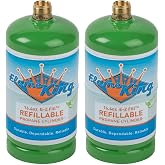
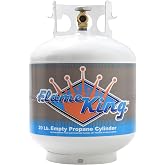
A purchased tank increases cash paid up front but can let you compare propane suppliers, provided the tank and installation meet the supplier’s service requirements. A leased tank can reduce the entry cost, although annual rental, minimum gallons, exclusivity and removal fees may be the real price of that convenience.
| Decision | Own the tank | Lease from supplier |
|---|---|---|
| First payment | Higher | Often lower |
| Future supplier choice | More flexibility, subject to supplier policies | Frequently restricted |
| Tank maintenance | Owner generally responsible | Contract defines supplier responsibilities |
| Recurring charges | Inspection and upkeep | Possible rent, minimum-use or service fees |
| Leaving supplier | Tank remains yours | Removal and termination provisions apply |
Ask for a five-year cost comparison using the same assumed gallons purchased. A nominally free tank with a materially higher per-gallon fuel price may cost more than owning one. Get all fees in writing.
Electrical Installation and Automatic Transfer Switch
A permanent standby generator usually senses grid failure, starts and supplies power through an automatic transfer switch (ATS) that isolates the utility supply. But a 200-amp switch rating does not mean a 22kW generator can produce 200 amps at 240 volts. Load management or selected-circuit design may still be necessary.
| Electrical component | Price reference / budgeting method | Why it matters |
|---|---|---|
| 200A ATS equipment | Observed $789–$1,349 standalone listings | Verify service-entrance rating and compatibility |
| Switch/panel installation | Included in many $3,000–$5,000 typical labor packages | Requires qualified electrical work |
| Conduit and feeder | Estimate from actual routed distance | Long or difficult runs raise cost |
| Smart load management | Price per required module, often hundreds | Prevents overload with large appliances |
| Panel/service alterations | Separate site quote | Existing gear may not be compatible |
| Inspection and testing | Confirm inclusion | Required by permitting authority |
A load-shedding design may make a properly sized generator less expensive than buying several additional kilowatts. I would never omit required transfer equipment, bypass utility isolation or connect a standby generator through a dryer receptacle.


Propane Piping and Regulator Costs
Fuel-side work needs its own design. Contractors evaluate generator full-load BTU-per-hour input, total connected propane appliances, winter temperatures, pipe length, pressure drops, and regulators. A tank that has plenty of gallons may still fail to vaporize enough propane in cold weather.
| Site condition | Pricing approach | Potential complication |
|---|---|---|
| Short accessible run | Quote fittings, regulator train, labor and test | Existing appliances share supply |
| Medium buried run | Price by engineered pipe route plus trench work | Driveway, roots or obstacles |
| Long rural run | Itemize trenching, crossings, pipe and restoration | Pressure drop and larger piping |
Published gas-line installation guides suggest roughly $15–$50+ per linear foot in some residential work, but that is not a generator fuel-system bid. I would not multiply that figure blindly by your straight-line tank distance. A licensed gas installer must determine compliant pipe sizes, regulator stages, required flow and pressure test procedures. Never alter regulator settings as a shortcut.
Labor and the Contractors Behind the Price
Whole-home installations coordinate an electrician, qualified propane technician, generator dealer, and sometimes excavator or concrete contractor. A single turnkey bid may wrap those costs together; another may show each trade separately.
| Trade | What you’re paying for | Common cost driver |
|---|---|---|
| Electrician | ATS, feeder, service isolation, testing | Panel condition and distance |
| Propane installer | Tank placement, fuel design, regulators, leak tests | BTU demand and pipe routing |
| Excavator | Tank hole, trench, backfill | Rock, access and spoil removal |
| Pad contractor | Generator support and drainage | Grade and soil stability |
| Dealer/technician | Configuration, battery, startup, training | Manufacturer warranty procedures |
I ask whether the dealer is coordinating the trades and carrying the installation warranty. The cheapest generator-only offer can become expensive if nobody accepts responsibility for a failed startup or an excluded inspection.
Permits and Inspection Requirements
Permit rules are local, not one nationwide state-by-state fee schedule. California’s San José requires building and planning permission for an emergency standby generator; the city of Rockledge, Florida, identifies electrical permits and licensed fuel work; Austin, Texas, specifies separate electrical and plumbing permits for certain backup installations. New York City has specialized requirements for permanent fuel-burning backup systems, while Uwchlan Township, Pennsylvania, calls for building and electrical permits and a site plan. These examples do not define requirements everywhere in those states.
Plan for electrical, gas, site/zoning and possibly fire review. Your installer should identify which adopted versions of NFPA 54, NFPA 58 and the electrical code apply, plus local amendments, setbacks and any homeowners-association conditions. The governing authority and equipment listing determine the correct location—not a universal distance copied from a blog. See professional generator installation requirements for more context.
What Size Tank Is Enough for a 14kW, 20kW, 22kW or 26kW Generator?
Generator capacity does not equal actual electrical draw. The next values use specific published Generac Guardian-series LP consumption rates, at 50% and 100% rated load—not a blanket estimate for every brand. The numbers can differ for newer designs; use the selected model’s manual to make a final fuel plan.
| Guardian class | LP gal/hr at 50% | LP gal/hr at 100% | 24 hours at 50% | 3 days at 50% | 7 days at 50% |
|---|---|---|---|---|---|
| 14kW | 1.81 | 3.07 | 43.4 gal | 130.3 gal | 304.1 gal |
| 20kW | 2.36 | 3.74 | 56.6 gal | 169.9 gal | 396.5 gal |
| 22kW | 2.53 | 3.90 | 60.7 gal | 182.2 gal | 425.0 gal |
| 26kW | 2.06 | 3.63 | 49.4 gal | 148.3 gal | 346.1 gal |
At 50% load, a fully filled nominal 500-gallon tank holds about 400 liquid gallons. If I plan to order more when the gauge reads 20%, only 300 gallons are available from 80% down to that point. For the 20kW example, 300 ÷ 2.36 ≈ 127 hours, or 5.3 days, before the planned reorder threshold. At 100% load, 300 ÷ 3.74 ≈ 80 hours. Heating and cooking use that same reserve if connected to the tank. Follow my propane generator refill-planning guide to build a delivery schedule.
First Fill, Refills and Delivery Charges
Budget for propane independently from equipment. At an illustrative $3.00 per gallon, the arithmetic is straightforward: delivered gallons × $3.00. This is not a verified nationwide selling price; actual suppliers set their own contracts, surcharges and delivery minimums.
| Tank | Approx. gallons from empty to 80% | Sample initial fill at $3/gal | Sample delivery from 20% to 80% |
|---|---|---|---|
| 250 gal | 200 | $600 | 150 gal = $450 |
| 500 gal | 400 | $1,200 | 300 gal = $900 |
| 1,000 gal | 800 | $2,400 | 600 gal = $1,800 |
Ask whether your quoted price includes first delivery, minimum-order fees, tank rent, hazardous-material or remote-delivery charges. A quoted “tank fill” may not mean the vessel arrived empty. If fuel supply is uncertain, investigate delivery arrangements for home generators before the installation is complete.
Four Illustrative Whole-System Project Budgets
These are worked budgeting examples, not actual bids or manufacturer package prices. Each example treats the tank line as tank plus basic placement and the generator line as generator plus ATS; electrical labor, gas pipe, pad and first fill are separately itemized only because they are assumed excluded. Fuel is priced at the hypothetical $3/gal.
| Cost item | Small 14kW / 250 gal aboveground | Family 20kW / 500 gal aboveground | Large 24kW / 500 gal underground | Rural 26kW / 1,000 gal aboveground |
|---|---|---|---|---|
| Generator + ATS assumption | $4,700 | $6,000 | $7,639 | $8,059 |
| Tank + basic placement | $1,100 | $2,100 | $4,500 | $4,500 |
| Electrical labor and wiring | $2,000 | $3,200 | $4,000 | $4,300 |
| Additional propane piping | $850 | $1,300 | $2,100 | $4,000 |
| Pad or generator site work | $450 | $500 | $550 | $800 |
| Extra excavation/restoration | $0 | $0 | $1,500 | $0 |
| Permits/inspections | $300 | $350 | $650 | $650 |
| Separately billed commissioning | $250 | $350 | $450 | $500 |
| First fill | $600 | $1,200 | $1,200 | $2,400 |
| Subtotal | $10,250 | $15,000 | $22,589 | $25,209 |
| Contingency (about 10%; rural 12%) | $1,025 | $1,500 | $2,259 | $3,025 |
| Planning total | $11,275 | $16,500 | $24,848 | $28,234 |
The 24kW and 26kW generator package assumptions use published regular-price examples, not installed costs. For the other sizes I inserted explicit hypothetical placeholders. No site survey was performed, so soil, electrical service, distances, tax and code corrections could change every line. My favorite tactic is to build exactly this same table for each bidder, leaving blank rows when they refuse to identify an inclusion.
How Much Does It Cost to Run the Generator?
Propane consumption generally increases with load, but it is not perfectly proportional: engines burn some fuel simply staying running. This sample uses the same specific Guardian 50%-load figures above and $3.00 per gallon; it excludes maintenance and tax.
| Generator / modeled load | Gal/hr | Cost/hr | 8 hours | 24 hours | 72 hours | 168 hours |
|---|---|---|---|---|---|---|
| 14kW at 50% | 1.81 | $5.43 | $43.44 | $130.32 | $390.96 | $912.24 |
| 20kW at 50% | 2.36 | $7.08 | $56.64 | $169.92 | $509.76 | $1,189.44 |
| 22kW at 50% | 2.53 | $7.59 | $60.72 | $182.16 | $546.48 | $1,275.12 |
| 26kW at 50% | 2.06 | $6.18 | $49.44 | $148.32 | $444.96 | $1,038.24 |
Exercise cycles add smaller annual fuel consumption; actual weekly exercise duration and load depend on model settings. Don’t multiply a 50%-load row by 24 hours if your household runs at another load. For cost planning, collect actual winter demand and the chosen generator’s published consumption curve.
Annual Maintenance and Lifetime Costs
An installed standby unit needs oil and filters, battery care, inspections, periodic authorized servicing, and attention to the propane system. HomeGuide’s broad published range of $200–$650 per year for professional generator maintenance is useful for a first-year allowance, not a binding schedule or quote.
| Ownership task | Frequency to verify | Planning cost approach |
|---|---|---|
| Oil/filter and inspection | Manufacturer hours/calendar | Professional service budget or parts |
| Air filter / spark plugs | Model-specific | Parts and labor as needed |
| Starting battery | Test on schedule; replace when due | Price approved battery and service |
| Propane piping/regulators | Supplier / code inspection requirements | Separate inspection allowance |
| Buried-tank corrosion protection | Applicable NFPA 58 / local inspection plan | Ask for testing contract |
| Repairs after severe storm | As needed | Contingency reserve |
I also ask who handles generator warranty calls and whether their technicians service the specific engine/controller model. A cheap unit with weak local support can be expensive when it stops during a winter outage. More maintenance context appears in generator servicing intervals.
Hidden Expenses That Change the Quote
The big surprises are often not the machine. Upgrading an overloaded or outdated electrical panel, routing a trench around a driveway, replacing damaged landscaping, obtaining engineered flood-elevation support, or arranging a crane for limited access can each change the total. Generator location may also affect sound, exhaust, clearances and delivery accessibility.
I recommend a 10%–15% contingency in early planning—not because every project will overrun, but because a preliminary bid cannot reveal every underground obstruction. Put exclusions in writing; do not treat an unspecified “standard installation” as unlimited excavation or wiring.
How I Compare Two Generator Installation Quotes
I put every bidder into the same spreadsheet with five columns: equipment, permits, site work, exclusions and recurring obligations. If one proposal says “20kW with installation” and another says “22kW package,” the labels do not tell me which is more complete. I check the LP rating, transfer-switch model, required panel alterations, actual pipe route, tank placement and the delivered propane quantity. I also ask whether sales tax, battery, delivery, concrete work, programming and final utility coordination are included. Each item either has a number or the word “excluded”; nothing should be assumed free.
Next, I compare the usable backup service, not merely the installed kilowatts. If one generator can run the essential circuits with load management, the household may not benefit from buying a larger unit that consumes more fuel or requires a larger supply. I also record the installer’s warranty-service response process. The offer that survives this comparison is often not the shortest quotation or the one with the highest advertised capacity.
Ten Practical Ways to Spend Less Without Cutting Safety
- Get two or three comparable itemized bids, not just generator prices.
- Size the generator from simultaneous loads and permitted load management.
- Ask whether the transfer switch, battery, startup and permits are included.
- Compare buying and leasing a tank using five-year propane prices and fees.
- Price an accessible above-ground tank before choosing a buried tank.
- Ask installers to compare two code-compliant locations to shorten routing.
- Coordinate excavation, electrical and propane trades to avoid repeat mobilization.
- Get your propane supplier’s delivery and minimum-purchase terms in advance.
- Schedule before peak storm-season queues if your timeline allows.
- Prioritize local warranty service, proper clearances and documented inspection over the lowest bid.
Never save money by doing unqualified gas piping, bypassing the ATS, omitting permits or modifying regulators. The financial benefit of a generator disappears quickly if the installation becomes unsafe or unusable.
Is the Investment Worth It?
For a home that rarely loses electricity for more than an hour, the economics may favor a much smaller emergency-power solution. For frequent multi-day outages, a sump pump, well, heat-dependent property, work-from-home setup, or essential medical equipment, automatic backup can be materially more valuable. I consider both the financial loss avoided and the practical value of not having to start a portable generator in dangerous weather.
I would not promise a fixed home-value increase. The best decision rests on outage frequency, what you truly must power, installation price, ongoing fuel and maintenance, and your tolerance for manual setup. I would write down the estimated annual outage hours and compare those with five years of fuel and maintenance before making the decision.
Propane Versus Natural Gas Versus Portable Backup
| Option | Typical up-front comparison | Fuel storage | Automatic? | Biggest limitation |
|---|---|---|---|---|
| Propane standby | Generator + electrical + gas + tank + fill | Tank on property | Usually yes | Fuel deliveries and tank cost |
| Natural gas standby | Generator + electrical + utility gas connection | Usually none on property | Usually yes | Utility availability/capacity |
| Portable propane | Portable generator + safe cords or transfer system | Cylinders or approved tank supply | Generally manual | Limited power and refueling |
| Portable dual-fuel | Portable unit + safe connection equipment | Propane and/or gasoline | Generally manual | Different fuel ratings and manual handling |
Natural gas can avoid tank purchase where a compliant utility service already exists. Extending or upgrading a gas main, however, may erase the savings. A portable generator can cost dramatically less but does not provide the same unattended transfer behavior. Compare propane versus natural gas generators before assuming either fuel wins everywhere.
How Long Does Installation Take?
A straightforward physical install may require only several working days once materials, trades and approvals are ready; the calendar can be weeks longer. Here is a planning sequence—not promised contractor lead times.
| Project stage | Illustrative scheduling allowance | What can delay it |
|---|---|---|
| Assessment and bid | Several days to 2 weeks | Contractor availability |
| Permits and approvals | Days to multiple weeks | Local review and HOA |
| Equipment/tank ordering | Days to several weeks | Stock or tank fabrication |
| Pad/excavation and tank placement | 1–3 workdays | Weather, rock, access |
| Gas and electrical installation | 1–4 workdays | Service shutdowns or long runs |
| Inspections, startup and training | 1–5 workdays after readiness | Inspection scheduling and corrections |
Ask for a sequence with milestones, who orders the equipment, and when deposits are due. A calendar commitment should also state what happens if the generator or tank arrives late.
Questions I Would Ask Every Installer
Before signing, I want written answers on generator LP rating, power-load calculation, included ATS, panel work, tank capacity, purchase versus lease, first propane fill, gas-line distance, regulator design, equipment clearance, excavation/restoration, permits, final inspection, startup, warranty-service provider and maintenance schedule. Ask whether they evaluated the tank’s winter vaporization capability and other propane appliances.
Request the total price including tax and a change-order process. The best quote tells you exactly what must happen for the system to pass inspection and automatically support your selected circuits—not merely that the generator will be dropped beside the house.
Frequently Asked Questions
How much does it cost to install a whole-house generator with a propane tank?
A reasonable initial budget is about $10,000–$25,000+ for many professionally installed systems including purchased tank storage, but that range is a planning synthesis rather than a verified national average. Smaller and simple installations can be lower; underground tanks, long pipe runs, large generators, and service upgrades may exceed it. Your written bids should separate equipment, tank placement, fuel piping, electrical labor, permitting, first fill and contingency.
How much does a 22kW propane generator cost installed?
A Generac 22kW generator with a 200A transfer switch was listed at $7,229 regular price in a November 2026 US retail snapshot, with a temporary discount observed. That is not an installed price. Tank purchase or rental, propane piping, wiring, pad, permits and fuel can add thousands. I would get competing turnkey local estimates and ask whether the quoted capacity is its actual LP rating.
How much does a 500-gallon propane tank cost installed?
Published 2026 basic tank-and-installation estimates frequently fall around $1,000–$2,500 for 500-gallon storage, but exact inclusions vary. A buried installation can cost more because of excavation, backfill, corrosion protection and restoration. Also ask whether regulators, a long fuel line, first propane delivery and ongoing tank inspections are excluded. The tank normally holds a maximum of about 400 gallons of liquid propane at an 80% fill.
Is a 250-gallon tank enough for a whole-house generator?
Sometimes, but it is a much smaller reserve than many homeowners expect. A nominal 250-gallon tank holds approximately 200 gallons at an 80% fill. A 20kW Guardian example at 2.36 gallons per hour would run around 85 hours from full to theoretically empty at 50% load, but planning to reorder at 20% tank level leaves 150 gallons, or about 64 hours. Shared household propane appliances reduce that further.
How much does underground propane tank installation cost?
Broad 2026 estimates for buried tanks are around $1,500–$5,000 across several common capacities, with rocky sites, difficult access and full landscape restoration potentially costing more. Don’t assume excavation is included in a tank’s retail sticker price. Ask the contractor to itemize the underground-rated vessel, corrosion protection, backfill, inspection, trenching, restoration and future testing obligations. Verify whether site-specific engineering is required.
Is it cheaper to buy or lease a propane tank?
Leasing often lowers the first payment, but rental charges, minimum purchases and supplier exclusivity can increase long-run cost. Buying costs more initially and creates maintenance responsibility, though it may provide more freedom to compare suppliers. I compare both options over five years at the same gallons used, and ask about tank removal, transfer-of-ownership terms and the contracted price per gallon. There is no universally cheapest arrangement.
Does generator installation include the transfer switch?
Not always. Some retail generator packages already include a matching automatic transfer switch, while other quotes cover only the generator body. Even with the switch in the box, professional installation and any electrical-panel modifications may cost extra. I ask for the exact switch model and service-entrance rating in the estimate. Never add a separate switch equipment charge to a bundled package without checking the parts list.
How much propane does a 22kW generator use per hour?
A published Generac Guardian 22kW example consumes approximately 2.53 gallons per hour at 50% load and 3.90 gallons per hour at full load. Newer generations and different manufacturers can use different amounts, so those figures do not apply automatically to every 22kW generator. Your real fuel use depends on household electrical demand. Obtain the selected model’s consumption data and plan for heating, cooking and hot-water use from the same tank.
How long will a 500-gallon tank run a whole-house generator?
The tank’s nominal water capacity is 500 gallons; an 80% fill is approximately 400 gallons of propane. At 2.36 gal/hr, that gives about 169 hours from full to theoretical empty. If your delivery plan preserves the last 20% tank level, you have 300 gallons to use, or 127 hours at the same draw. That is about 5.3 days, before allowing other appliances or changing loads.
How much does it cost to run a propane generator for 24 hours?
At an illustrative fuel price of $3.00/gal, a 20kW Guardian consuming 2.36 gal/hr at 50% load costs $169.92 for 24 hours in propane alone. At its published full-load figure of 3.74 gal/hr, the cost becomes $269.28 for the day. Those examples exclude taxes, delivery fees, maintenance and other propane appliances. Your retailer’s delivered price and your actual running load determine the real bill.
Do I need permits to install a whole-house propane generator?
A permanent standby installation commonly requires electrical approval, and may also need fuel-gas, building, zoning or fire review. Requirements can differ even between nearby municipalities. San José, California, and Rockledge, Florida, publish specific generator approval requirements, while other jurisdictions have different processes. Ask the contractor to name the authority having jurisdiction, list every permit included, and confirm who schedules final inspections and resolves corrections.
Can I connect a generator to my existing propane tank?
Possibly, but only after a qualified propane professional checks available fuel capacity, tank ownership and condition, other connected appliance loads, winter vaporization, fuel-pressure requirements and pipe capacity. A tank used for heating may be large enough in gallons but undersized for the generator’s peak vapor draw. Do not connect the generator with an unapproved tee or adjust a regulator to make an undersized supply work.
Does a whole-house generator increase property value?
A permanent generator may appeal to buyers in areas with frequent outages, but I would not assume it raises sale price by any fixed percentage or returns its installation cost. Its value depends on regional outage risks, quality of installation, maintenance records, and buyer needs. Consider the avoided costs of spoiled food, interrupted business, flooding or lost heating before framing this as purely a resale investment.
How long does installation usually take?
Once permits, labor and equipment are ready, the actual installation may take a few working days on a simple property. The full project can take several weeks or longer because of design reviews, permit queues, tank procurement, utility coordination and inspections. Rocky trenching, panel upgrades or severe weather add uncertainty. Ask bidders for a schedule separating administrative lead time from hands-on installation and final commissioning.
Is a propane generator cheaper to install than a natural gas generator?
Not necessarily. If natural gas already reaches the property and its service has adequate capacity, it may avoid the cost of a dedicated propane tank and initial fill. Where gas mains are unavailable—or require a costly extension—propane becomes a practical alternative. Compare equal generator capacities and transfer equipment, then itemize gas-service upgrades versus propane tank placement, delivery, piping and recurring fuel costs before deciding.
What I Would Budget Before Calling Contractors
If I were pricing a modest property, I would start around $11,000–$17,000 as a working budget for a straightforward above-ground installation, then let local site conditions and verified quotes change it. A more complex larger system with buried storage may justify $20,000–$30,000+. These are illustrative envelopes, not guaranteed market prices.
The winning bid is not necessarily the lowest line at the bottom. It’s the one that explicitly accounts for the generator’s propane rating, safe transfer equipment, adequate fuel delivery, code-compliant placement, first fill, professional commissioning and service after installation. Request an itemized proposal before you commit.

Mike is an experienced propane technician with over 15 years of professional experience in the field. He has dedicated his career to helping customers with their propane needs, from installation to maintenance and repair. Together with Jeremy, he co-founded this website to provide useful information and guidance to customers seeking reliable propane services.