
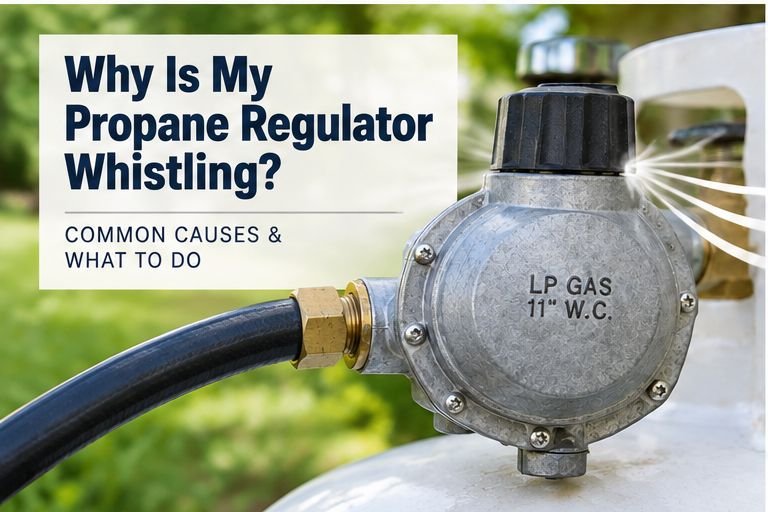
A propane regulator may whistle because propane is moving at high velocity through the regulator or another restriction, causing vibration or a high-pitched tone. The sound can sometimes occur during normal gas flow, but a new or persistent whistle accompanied by propane odor, weak or unstable flames, repeated shutdowns, visible damage, or poor appliance performance should be checked by your propane supplier or a qualified gas technician. If you smell propane, stop troubleshooting and follow your supplier’s emergency instructions from a safe location.
What Causes a Propane Regulator to Whistle?
A high-pitched whistle is different from a low propane regulator hum or an intermittent propane regulator clicking noise. Comparing the sound pattern can help narrow the cause.
Whistling is usually created when gas flow excites a small opening, valve component, diaphragm, pipe, fitting, or hose at a frequency you can hear. It is similar to the way air can make a tone when it passes through a narrow opening, although a propane system should never be treated casually because gas leaks and incorrect pressure can be hazardous.


A regulator reduces pressure while continuously changing its valve opening to match downstream demand. That means gas velocity and internal forces change as burners turn on and off. Certain flow rates can produce a whistle even when the regulator is still controlling pressure, while other noises can indicate a restriction or malfunction.
| When It Whistles | Possible Explanation | What to Watch For |
|---|---|---|
| Only while a large burner runs | High gas flow / resonance | Normal vs. weak flame |
| When several appliances start | High total demand | Pressure drop or shutdown |
| After cylinder replacement | Connection/startup/excess-flow issue | Very low flow |
| During cold weather | Vaporization or icing condition | Frost, declining performance |
| Even when no appliance is using gas | Needs investigation | Odor, leak indicators, pressure issue |
1. Gas Is Moving Quickly Through the Regulator
High gas velocity can create a whistle when propane passes through the regulator’s valve opening. The regulator is intentionally a pressure-reducing restriction. When appliance demand rises, the internal valve opens farther and flow changes. Under certain conditions, turbulence can create an audible tone.
A high-BTU appliance is more likely to create noticeable flow than a small pilot or stove burner. A whole-house generator, large furnace, pool heater, construction heater, or outdoor cooker can demand hundreds of thousands of BTUs per hour depending on the equipment.
If the whistle appears only during high flow but appliance pressure and performance remain correct, it may be an operating characteristic. If the whistle comes with low pressure, weak flames, or shutdowns, capacity and piping should be checked.


2. The Regulator Is Near Its Capacity
If high demand is also causing weak appliance performance, compare it with low propane regulator pressure. A whistle accompanied by abnormal discharge deserves a look at propane coming from the regulator vent.
A regulator operating near or beyond the required flow can show pressure drop and may also become noisier. Regulators have published capacities based on specified inlet and outlet conditions. The nameplate or manufacturer data—not physical size alone—should be used for selection.
Consider a property with a 120,000-BTU/h furnace, 199,000-BTU/h tankless water heater, and 60,000-BTU/h range. Those appliances represent 379,000 BTU/h of connected load before considering other equipment or the applicable sizing method. The regulator and piping need to be selected for the actual system design.
A larger regulator is not automatically safer or better. It must have the correct pressure characteristics and be approved for the application.
3. A Valve or Fitting Is Creating the Tone
The whistle you hear near the regulator may actually originate from a nearby valve, fitting, hose, connector, or section of piping. Sound travels through metal very effectively. A small vibration at one point can resonate elsewhere and make the regulator seem like the source.

Do not loosen fittings to locate the noise. A technician can compare sound with gas demand and pressure readings while inspecting the system without creating an uncontrolled release.
4. An Excess-Flow Device Is Restricting Flow
If the whistling is accompanied by a propane odor, also review why a propane regulator may smell like gas.
An excess-flow device can reduce flow after a sudden surge, particularly in portable-cylinder applications. RegO explains that excess-flow valves are surge-sensitive and are designed to close when flow exceeds their rated closing conditions. Restrictions elsewhere can also affect how these devices operate.
A common clue is a propane grill or heater that suddenly has a tiny flame after the cylinder valve was opened quickly. Follow the equipment manufacturer’s reset instructions rather than bypassing any safety feature.


5. The Regulator Vent Is Partially Obstructed
A blocked or damaged regulator vent can interfere with normal diaphragm operation and should be corrected according to manufacturer requirements. Outdoor regulators can be exposed to insects, dirt, ice, water, paint, and debris.
Do not plug the vent to stop noise. The vent is required for regulator operation and, depending on design and installation, safety venting. If the vent is damaged or its position is questionable, have a qualified person inspect it.
6. Cold Weather Is Changing System Behavior
Low temperature can reduce tank vaporization capacity and contribute to regulator icing or pressure problems. As propane vapor is withdrawn, liquid propane must boil to replace it. This process absorbs heat. A small, nearly empty cylinder on a very cold day may have much less vaporization capacity than the same cylinder in warm weather.
Pressure reduction through the regulator also produces cooling. Frost can therefore appear externally without automatically proving a defect. However, recurring icing combined with loss of gas flow should be evaluated.
7. Internal Contamination or Wear Is Affecting the Regulator
A regulator that suddenly starts whistling after years of quiet service may have changed internally. Dirt, corrosion, worn seating surfaces, or other deterioration can affect gas flow and pressure control. RegO’s service material identifies foreign material at regulator seating surfaces as a cause of lock-up and creeping pressure.
Do not disassemble a propane regulator to search for debris. Internal components affect pressure calibration and gas-tight operation. Replacement or service should follow manufacturer instructions.
Is Whistling the Same as Hissing?
No—whistling is typically a tonal sound, while hissing sounds more like escaping air or gas. The distinction matters because suspected gas leakage requires immediate attention. Propane is odorized so leaks can often be detected by smell, but you should never rely on hearing alone.
| Sound | Description | Typical Concern |
|---|---|---|
| Whistle | Clear high-pitched tone | Flow, resonance, restriction |
| Hum | Low steady vibration | Diaphragm/valve vibration |
| Buzz | Rough vibration | Resonance or unstable flow |
| Click | Short mechanical snap | Valve/control movement |
| Hiss | Continuous escaping-gas-like sound | Possible leak; investigate promptly |
Does Whistling Mean the Propane Pressure Is Too High?
A whistle cannot tell you whether pressure is high, low, or correct. Gas pressure must be measured. In residential low-pressure propane work, a manometer is commonly used because pressures are often specified in inches of water column.
RegO’s LP-Gas Serviceman’s Manual describes checking regulator delivery pressure under load and gives 11 inches water column as a common value at an appropriate point in a typical low-pressure installation. It also emphasizes checking pressure with appliances operating because static pressure can look acceptable even when the system cannot maintain flow.
Could the Propane Tank Be the Problem?
Yes, the tank can contribute indirectly if it cannot vaporize enough propane for the connected load. This is more likely with small containers, low fuel levels, very cold weather, and high-BTU equipment. A regulator cannot deliver vapor that the container is unable to produce.
If the whistle appears as flames gradually weaken, especially in cold conditions, have both the tank vaporization capacity and downstream system checked.
What Can You Safely Inspect?
You can perform a visual observation without opening or adjusting the gas system. Note exactly when the whistle starts, which appliances are operating, whether flames change, and whether the noise stops when gas demand stops.
- Check whether the tank is nearly empty.
- Look for obvious external regulator damage or corrosion.
- Observe frost or ice without applying heat.
- Check whether all appliances or only one are affected.
- Record outdoor temperature and approximate fuel level.
- Follow the manufacturer’s normal operating instructions.
Never search for a leak with a match or flame. Never loosen a fitting because you suspect it is whistling.
When Should You Call the Propane Company?
Call for professional service when the whistling is new, persistent, getting louder, or accompanied by performance problems. A technician can verify regulator capacity, identify the model and pressure range, measure delivery and lock-up pressure, inspect venting and piping, and check whether an excess-flow or appliance condition is involved.
Call urgently from a safe location if you smell propane, suspect a leak, see a damaged gas line, or observe fire damage.
Should You Replace a Whistling Regulator?
Do not replace a regulator solely because it whistles unless inspection shows replacement is appropriate. The sound may originate elsewhere, and choosing the wrong replacement can introduce incorrect pressure or insufficient capacity.
A replacement must match gas type, stage, inlet pressure, outlet pressure, capacity, connections, venting requirements, orientation, and intended application. Regulators are not universal.
Frequently Asked Questions
Why does my propane regulator whistle when I turn on the stove?
The added gas flow can create vibration or a tone through the regulator or nearby piping. If the stove flame remains normal and there are no other symptoms, document the condition. A new or worsening sound should be inspected.
Why does the whistle stop when I turn off an appliance?
That strongly suggests the sound is related to gas flow. It does not prove the regulator is good or bad, but it gives a technician a useful diagnostic clue.
Can I spray lubricant into the regulator?
No. Do not spray oil, lubricant, cleaner, insecticide, or other chemicals into a propane regulator or vent unless the manufacturer specifically provides an approved procedure and product.
Can I cover the regulator to make it quieter?
Do not place an improvised airtight cover around a propane regulator. Installation, ventilation, weather protection, and access must follow manufacturer and code requirements.
Bottom Line
A whistling propane regulator is most often a flow-related sound, but the surrounding symptoms determine how seriously it should be treated. Whistling that appears only at high demand may come from gas velocity or resonance. Whistling combined with weak flames, repeated shutdowns, cold-weather flow loss, visible damage, or propane odor needs further investigation. Do not adjust pressure or dismantle the regulator to eliminate the noise. Have pressure, regulator capacity, piping, vent condition, tank vaporization, and appliance demand checked when the cause is uncertain.
Technical references include RegO’s LP-Gas Serviceman’s Manual and RegO guidance on regulator and excess-flow operation. Follow the instructions for your exact equipment and local requirements.

Mike is an experienced propane technician with over 15 years of professional experience in the field. He has dedicated his career to helping customers with their propane needs, from installation to maintenance and repair. Together with Jeremy, he co-founded this website to provide useful information and guidance to customers seeking reliable propane services.


