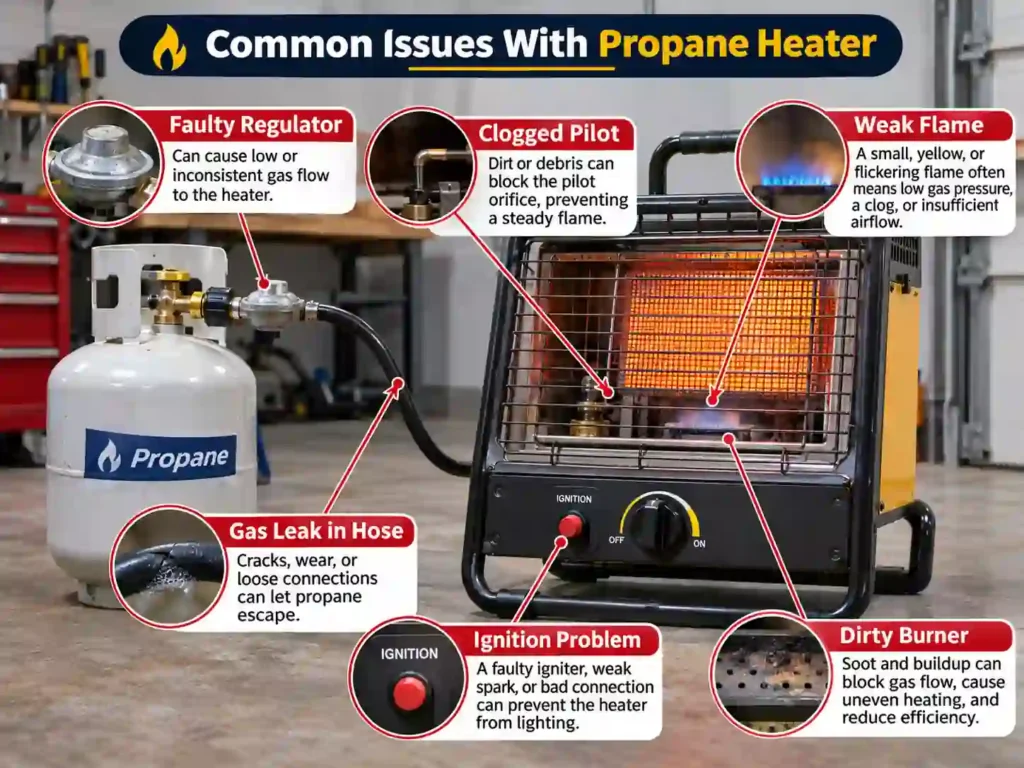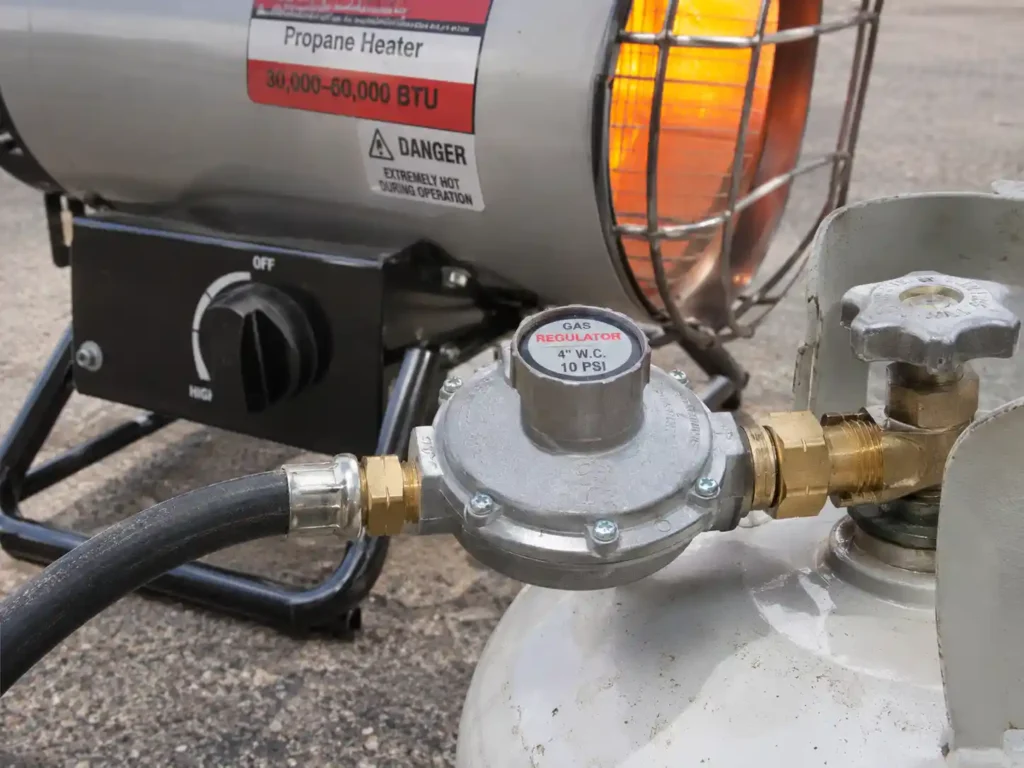


A propane heater is supposed to provide consistent heat without requiring constant adjustments. However, when the regulator starts failing, you may notice weak flames, reduced heat output, unusual noises, difficulty starting the heater, or unexpected shutdowns.
The propane regulator is responsible for reducing the pressure of the gas coming from your tank to a level your heater can safely use. Without proper pressure regulation, your heating equipment may receive too much or too little propane.
What makes diagnosing regulator problems difficult is that many of the symptoms resemble those of an empty propane tank, clogged burner, faulty thermocouple, or damaged gas hose.


In this guide, I’ll explain how to recognize a failing propane heater regulator, identify common causes, distinguish regulator problems from other heater issues, and determine when replacement is necessary.
Quick Answer
Your propane heater regulator may be failing if you notice any of the following:
- Weak or unusually large burner flames.
- Inconsistent heat output.
- Frequent or unexpected heater shutdowns.
- Persistent yellow flames where blue flames are normally expected.
- Difficulty igniting the heater.
- Unusual humming, whistling, or hissing.
- Excessive regulator icing accompanied by poor performance.
- Propane leaking around the regulator.
- Visible corrosion or physical damage.
These symptoms do not automatically mean your regulator is defective. A qualified propane technician can confirm regulator failure by measuring gas pressure and inspecting the fuel supply system.
If you smell propane, stop using the heater immediately. Do not attempt to relight it.


What Does a Propane Heater Regulator Do?
A propane heater regulator controls the pressure of propane flowing from the fuel tank to the heater. Since propane is stored under pressure, the gas must be delivered at a pressure appropriate for the heating appliance.
Without a properly functioning regulator, fluctuations in tank pressure could interfere with the heater’s performance and safety.
A propane regulator typically contains the following components:
| Component | Function |
|---|---|
| Diaphragm | Responds to changes in gas pressure. |
| Regulator spring | Helps maintain the intended outlet pressure. |
| Valve assembly | Controls the flow of propane. |
| Inlet connection | Receives propane from the fuel supply. |
| Outlet connection | Delivers regulated gas to the heater. |
| Vent opening | Allows atmospheric pressure to act on the diaphragm. |
| Regulator housing | Protects internal components. |
When any of these components becomes damaged, worn, contaminated, or obstructed, the regulator may lose its ability to maintain consistent gas pressure.
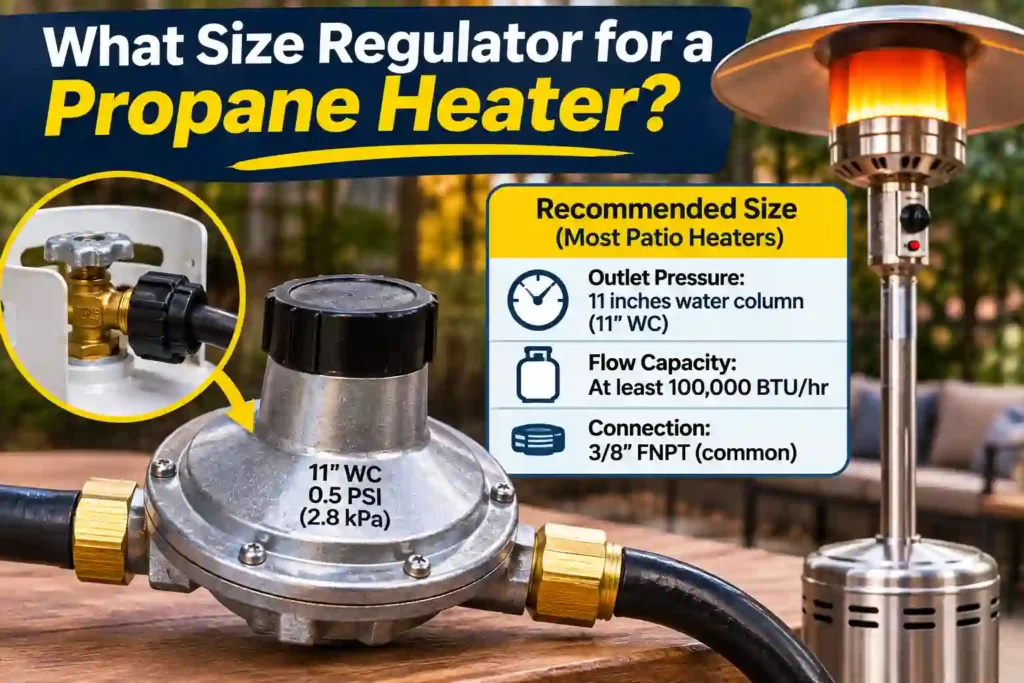
Many low-pressure propane appliances operate at approximately 11 inches of water column. However, some portable heaters, construction heaters, and outdoor heating equipment require substantially different operating pressures.



This is why I always recommend checking your heater’s specifications rather than assuming all propane regulators are interchangeable.
12 Signs Your Propane Heater Regulator Is Failing
1. Your Heater Produces Weak Flames
One of the most noticeable symptoms of a regulator problem is a burner flame that appears smaller or weaker than usual.
You might turn your heater to its highest setting but notice very little improvement in heat output.
A failing regulator may restrict the amount of propane reaching the burner because of internal wear, contamination, or diaphragm problems.


Other possible causes include:
- Low propane tank levels.
- Restricted gas hoses.
- Blocked burner openings.
- Insufficient tank vaporization capacity.
- Activated excess-flow safety devices.
- Incorrect regulator sizing.
If your tank contains sufficient propane but your heater continues producing weak flames, the fuel delivery system needs further investigation.
2. The Flame Becomes Yellow or Orange
Many conventional propane burners produce predominantly blue flames when operating correctly.
A persistent yellow flame, particularly when accompanied by black soot, may indicate incomplete combustion.
Improper gas pressure can contribute to this condition, although restricted combustion air and dirty burners are also common causes.
Keep in mind that infrared propane heaters and certain decorative heating appliances are designed to glow orange or produce visible yellow flames. Always compare the flame appearance with the manufacturer’s description of normal operation.
Abnormal combustion should never be ignored because it may increase carbon monoxide production.
For more background, see my guide on whether a bad propane regulator can cause a yellow flame.
3. The Heater Produces Inconsistent Heat
Have you noticed your propane heater working normally for several minutes before suddenly losing heat?
A deteriorating regulator may struggle to maintain stable pressure as fuel demand changes.
You might experience a heater that operates well on its lowest setting but becomes unreliable when switched to a higher setting.
This can also happen when a regulator has insufficient flow capacity for the heater.
A properly sized and functioning regulator should maintain the required delivery pressure throughout the heater’s approved operating range.
4. Your Propane Heater Keeps Shutting Off
Unexpected shutdowns are another possible indication of fuel delivery problems.
When gas pressure becomes insufficient, the burner or pilot flame may become unstable, causing the heater’s safety system to interrupt operation.
However, a regulator is not necessarily responsible every time a heater shuts down.
Other potential causes include a defective thermocouple, dirty pilot assembly, activated oxygen depletion sensor, overheating protection, or malfunctioning tip-over switch.
Never bypass these safety devices to keep your heater running.
I also explain why a propane regulator can cause a pilot light to keep going out.
5. The Heater Is Difficult to Ignite
A propane heater that previously started easily may begin requiring multiple ignition attempts.
If the regulator cannot deliver the required pressure, the pilot or main burner may not receive enough fuel to ignite reliably.
Before blaming the regulator, consider whether the propane supply is depleted, the ignition system is malfunctioning, or the pilot assembly is obstructed.
If ignition repeatedly fails, stop attempting to light the heater. Follow the manufacturer’s shutdown instructions and arrange an inspection.
Repeated ignition attempts could allow unburned propane to accumulate.
6. You Hear Unusual Humming or Whistling
Some propane regulators produce a faint humming sound during normal operation as internal components respond to changing gas demand.
However, unusually loud or persistent noises deserve attention, especially when accompanied by unstable flames or poor heating performance.
| Sound | Possible Explanation |
|---|---|
| Faint humming | Normal diaphragm vibration. |
| Loud humming | Pressure instability or component vibration. |
| Persistent whistling | Restricted flow or pressure-related problems. |
| Continuous hissing | Possible gas leakage. |
| Popping at the burner | Ignition or combustion problems. |
| Unusual rattling | Loose or damaged components. |
A noise alone does not confirm that the regulator is failing. Nevertheless, continuous hissing or any suspected gas leakage requires immediate safety precautions.
Read more about propane regulator whistling and its possible causes.
7. The Regulator Becomes Excessively Frosted
Frost sometimes develops on propane equipment during operation because expanding propane absorbs heat.
A light coating of frost does not necessarily mean the regulator is defective.
However, extensive ice buildup accompanied by declining heater performance can indicate a problem.
Potential causes include moisture contamination, unusually high fuel demand, insufficient tank vaporization, or restricted gas flow.
Never attempt to thaw a propane regulator using an open flame, heat gun, or other direct heating device.
Persistent icing should be investigated by a qualified propane professional.
My guide on why propane regulators keep freezing up explains the possible causes.
8. You Smell Propane Near the Regulator
Propane manufacturers add an odorant to help people recognize gas leakage. The smell is commonly compared to rotten eggs or sulfur.
A propane odor near the regulator could originate from damaged fittings, deteriorated seals, a defective diaphragm, or a malfunctioning internal valve.
Gas escaping through a regulator vent is particularly concerning and requires professional evaluation.
- Leave the affected area immediately.
- Do not light the heater or any other appliance.
- Do not operate electrical switches.
- Avoid smoking, open flames, and potential ignition sources.
- Contact your propane supplier or emergency services from a safe location.
- Do not resume using the heater until a qualified professional confirms that it is safe.
Once you are safely away from the affected area, you can learn more about common causes of propane regulator leaks. Never attempt to diagnose an active leak yourself.
9. The Burner Flame Is Larger Than Normal
Although low gas pressure is a common concern, excessive outlet pressure can be equally dangerous.
A regulator that fails to control pressure may allow too much propane to reach the heater.
Possible warning signs include unusually large flames, roaring burner sounds, overheating, and discoloration of nearby heater components.
Operating a heater above its designed gas pressure can damage internal components and create serious fire and combustion hazards.
Turn the equipment off if it is safe to do so, discontinue use, and have the system inspected.
10. Your Heater Appears to Consume More Propane
Have you noticed that your propane tank does not last as long as it used to, even though your heating habits have not changed?
Under certain failure conditions, improper regulation may contribute to excessive fuel consumption.
However, increased consumption can also result from colder weather, longer operating periods, higher thermostat settings, poor insulation, or gas leakage.
Fuel consumption alone is not a reliable way to diagnose regulator failure, but it becomes more significant when combined with abnormal flames or overheating.
11. The Regulator Shows Visible Physical Damage
Propane heater regulators are frequently exposed to moisture, dust, temperature fluctuations, and accidental impacts.
Over time, these conditions may damage the regulator’s protective housing or internal components.
Look for external warning signs such as corrosion, cracks, damaged threads, bent fittings, deteriorated hoses, and damaged vent openings.
A regulator that has been submerged in floodwater or subjected to significant impact should not be returned to service without professional evaluation.
Even when a damaged regulator appears to work normally, its ability to control pressure safely may have been compromised.
12. The Heater Stops Working at Higher Settings
A regulator may deliver sufficient propane for a small pilot flame or low burner setting but struggle when fuel demand increases.
For example, a 30,000 BTU propane heater might operate normally at 10,000 BTU but shut down when switched to maximum output.
This could indicate restricted gas flow, insufficient regulator capacity, inadequate tank vaporization, or deteriorating internal regulator components.
A technician can measure operating pressure under load to determine whether the regulator is responsible.
Propane Heater Regulator Troubleshooting Chart
The following table summarizes common symptoms and their possible explanations.
| Symptom | Possible Regulator Problem | Other Possible Cause | Priority |
|---|---|---|---|
| Weak flame | Restricted gas flow | Low fuel supply | High |
| Abnormally large flame | Excessive outlet pressure | Incorrect burner orifice | Immediate |
| Yellow flame with soot | Incorrect pressure | Dirty burner | Immediate |
| Poor heat output | Insufficient pressure | Inadequate fuel supply | High |
| Frequent shutdowns | Unstable gas pressure | Safety sensor problem | High |
| Difficulty starting | Restricted propane delivery | Ignition failure | High |
| Gas smell | Internal or external leakage | Damaged hose or fitting | Emergency |
| Continuous hissing | Possible regulator leakage | Loose connection | Emergency |
| Excessive icing | Moisture or pressure problems | Insufficient vaporization | High |
| Visible corrosion | Component deterioration | Weather exposure | High |
| Fluctuating flame | Unstable regulation | Burner obstruction | High |
These symptoms are useful starting points, but a professional pressure test provides more reliable evidence than visual observations alone.
What Causes a Propane Heater Regulator to Fail?
Normal Wear and Tear
Regulators contain mechanical components that repeatedly respond to changes in pressure and gas demand.
Years of operation can gradually affect the diaphragm, springs, seals, and valve assembly.
As these components deteriorate, the regulator may become less effective at maintaining consistent pressure.
Moisture and Water Intrusion
Outdoor heaters are particularly vulnerable to environmental exposure.
Rainwater, condensation, and flooding can introduce moisture into areas of the regulator that should remain protected.
Moisture can promote internal corrosion or freeze during cold weather, interfering with pressure regulation.
Dirt, Insects and Other Contaminants
Regulator vents can become obstructed by dust, insects, spider webs, and debris.
Because the vent helps the diaphragm respond to atmospheric pressure, an obstruction can interfere with normal operation.
Never insert wires, needles, or sharp objects into a regulator vent to remove debris.
Using the Wrong Regulator
Not every propane regulator is suitable for every heater.
Installing an incorrect regulator can result in insufficient gas flow, excessive pressure, unstable combustion, and unreliable heater operation.
The replacement must match the manufacturer’s required pressure, flow capacity, connection type, and intended application.
Exposure to Extreme Temperatures
Extreme environmental conditions can affect propane delivery and the durability of regulator components.
Cold weather can also reduce a tank’s ability to vaporize propane quickly enough to satisfy the heater’s fuel demand.
This sometimes creates symptoms that resemble regulator failure even when the regulator is functioning correctly.
How to Check Whether Your Propane Heater Regulator Is Bad
You can perform several basic observations without dismantling or adjusting the regulator.
Only proceed with these checks when there is no suspected gas leak, carbon monoxide warning, or other immediate hazard.
Basic Regulator Inspection Checklist
Completing these checks does not establish that the heater is safe to operate.
If these observations reveal no obvious explanation, professional testing is the next appropriate step.
How a Technician Tests a Propane Regulator
A qualified technician typically uses a pressure-measuring instrument called a manometer or another suitable pressure gauge.
Several measurements can help establish whether the regulator is functioning properly.
| Professional Test | What It Determines |
|---|---|
| Inlet pressure test | Whether adequate propane pressure reaches the regulator. |
| Outlet pressure test | Whether regulated pressure meets appliance specifications. |
| Flow pressure test | Whether pressure remains acceptable under demand. |
| Lock-up pressure test | Whether the regulator controls pressure when demand stops. |
| Leak test | Whether propane escapes from the system. |
| Combustion assessment | Whether the heater burns fuel appropriately. |
These tests help distinguish regulator failure from problems involving the tank, piping, gas hose, burner, or heater control system.
Is My Propane Regulator Bad or Is My Tank Running Low?
A nearly empty propane tank and a failing regulator can produce remarkably similar symptoms.
Both can cause weak flames, reduced heat output, and unexpected shutdowns.
However, there are some differences worth considering.
| Observation | Low Fuel or Inadequate Tank Supply | Failing Regulator |
|---|---|---|
| Weak flame | Common | Possible |
| Reduced heating capacity | Common | Possible |
| Oversized flame | Unlikely | Possible |
| Visible regulator damage | Unrelated | Possible |
| Gas escaping from regulator vent | Unrelated | Possible |
| Performance worsens in cold weather | Possible | Possible |
| Problems persist with an adequate fuel supply | Less likely | Possible |
| Abnormal regulated outlet pressure | Possible under load | Possible |
A propane tank’s pressure is largely influenced by temperature while liquid propane remains inside. Therefore, measuring tank pressure alone is not a dependable way to determine how much fuel remains.
Regulator Failure vs. Other Propane Heater Problems
Before purchasing a replacement regulator, consider other components that may be responsible.
| Component | Typical Symptoms When Faulty |
|---|---|
| Thermocouple | Pilot goes out when the control is released. |
| Oxygen depletion sensor | Unexpected safety shutdowns. |
| Igniter | No spark or unreliable ignition. |
| Burner | Uneven flame, soot, or poor combustion. |
| Gas hose | Restricted fuel flow or leakage. |
| Excess-flow device | Limited fuel delivery. |
| Thermostat | Incorrect heating cycles. |
| Tip-over switch | Unexpected shutdowns. |
| Pressure regulator | Incorrect or unstable gas delivery pressure. |
Some portable heater manufacturers identify hose contamination and activated excess-flow devices as additional causes of fuel delivery problems.
Replacing a regulator without identifying the underlying problem could waste money without restoring normal heater operation.
Worked Example: Is Your Regulator Providing Enough Propane?
Suppose you own a propane heater rated at 30,000 BTU per hour.
Using approximately 91,500 BTU of energy per gallon of propane, you can estimate its theoretical fuel consumption at maximum rated input.
Gallons per Hour = BTU Input ÷ 91,500
30,000 ÷ 91,500 = 0.328 gallons per hour
Estimated runtime with 4.7 gallons of propane:
14.3 Hours
At maximum rated fuel input, assuming the available propane can be fully utilized.
| Heater Input Rating | Propane Consumption per Hour | Estimated Runtime with 20 lb of Propane |
|---|---|---|
| 9,000 BTU | 0.098 gallons | 47.8 hours |
| 18,000 BTU | 0.197 gallons | 23.9 hours |
| 20,000 BTU | 0.219 gallons | 21.5 hours |
| 30,000 BTU | 0.328 gallons | 14.3 hours |
| 40,000 BTU | 0.437 gallons | 10.8 hours |
| 60,000 BTU | 0.656 gallons | 7.2 hours |
| 80,000 BTU | 0.874 gallons | 5.4 hours |
| 100,000 BTU | 1.093 gallons | 4.3 hours |
These are theoretical estimates, not recommendations to connect every listed heater to a 20-pound cylinder. Larger heaters may require a larger propane supply to maintain adequate vaporization and safe operation.
If your heater consumes significantly less propane while producing unusually weak heat, restricted fuel delivery may be responsible.
Nevertheless, this calculation cannot confirm regulator failure. Operating pressure must be measured against the heater’s specifications.
How Long Does a Propane Heater Regulator Last?
The service life of a propane regulator varies according to its design, operating environment, usage frequency, and manufacturer recommendations.
Some residential propane vapor regulators have manufacturer-recommended service lives of 15 years or longer. However, those recommendations should not automatically be applied to portable heater regulator assemblies.
Factors that can shorten regulator life include frequent outdoor exposure, excessive moisture, improper storage, physical damage, contamination, and unsuitable operating conditions.
I recommend recording the installation date and checking the manufacturer’s replacement recommendations rather than relying on a universal expiration period.
A regulator showing signs of failure needs attention regardless of its age.
For more information, see my guide on how long propane regulators last.
Can You Repair a Failing Propane Heater Regulator?
In most consumer applications, replacing a defective regulator assembly is preferable to attempting an internal repair.
Propane regulators are precision gas-control devices. Disassembling them without appropriate training can compromise the diaphragm, valve assembly, seals, and pressure settings.
You should never attempt to stretch the internal spring, patch a damaged diaphragm, seal the regulator vent, or modify the regulator to increase gas flow.
Some commercial regulators may be professionally serviceable, but this depends on the manufacturer’s specifications.
How Much Does It Cost to Replace a Propane Heater Regulator?
Replacement costs depend on the heater type, regulator specifications, and whether the regulator is sold separately or as part of a hose assembly.
| Regulator Type | Estimated Replacement Part Cost |
|---|---|
| Basic low-pressure regulator | $15–$35 |
| Portable heater regulator and hose | $20–$60 |
| High-pressure regulator assembly | $25–$80 |
| Two-stage propane regulator | $40–$120 |
| Specialized commercial regulator | $75–$200 |
Prices are approximate US budgeting estimates rather than verified current retail quotes. Professional inspection, installation, travel charges, and additional replacement parts may increase the total cost.
The least expensive regulator is not necessarily the best replacement. Compatibility and appropriate safety certification are more important than price.
See my detailed guide to the cost of replacing a propane regulator.
How to Choose a Replacement Propane Heater Regulator
Before buying a replacement regulator, check these important specifications.
| Specification | What to Check |
|---|---|
| Outlet pressure | Exact pressure required by the heater. |
| BTU capacity | Sufficient capacity for maximum fuel demand. |
| Fuel compatibility | Designed for propane. |
| Inlet connection | Compatible with the approved fuel supply. |
| Outlet connection | Compatible with the heater or approved hose. |
| Regulator type | Low-pressure, high-pressure, or other specified design. |
| Safety certification | Appropriate certification for its intended application. |
| Manufacturer compatibility | Approved replacement part or assembly. |
Whenever possible, purchase the original equipment manufacturer’s recommended replacement. Never select a regulator based solely on whether its connections physically fit your propane tank and heater.
Should You Reset or Replace Your Propane Heater Regulator?
Some fuel delivery problems involve an activated excess-flow safety device rather than a defective regulator.
Certain manufacturers provide model-specific procedures for restoring normal operation when this occurs. Follow only the procedure approved for your particular equipment.
A reset will not repair a damaged diaphragm, corroded valve, leaking housing, or defective internal spring.
Regulator Replacement Decision Guide
Is there a propane smell, suspected gas leakage, excessive flame size, or abnormal combustion? If so, discontinue use and seek appropriate professional assistance. Leave the area immediately if a gas leak is suspected.
If there are no immediate hazards, confirm that the propane supply is adequate and the cylinder size is appropriate for the heater.
Check accessible hoses, regulator housing, and vent openings for visible deterioration or obstructions without dismantling the equipment.
If problems persist, a qualified technician should determine whether the regulator is maintaining the required gas pressure.
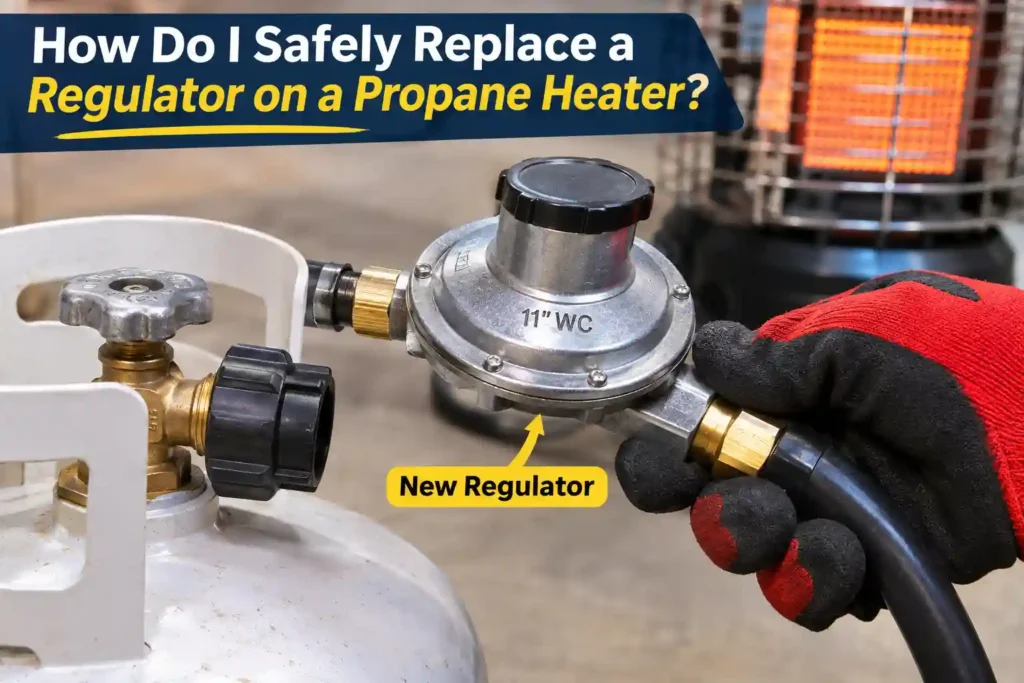
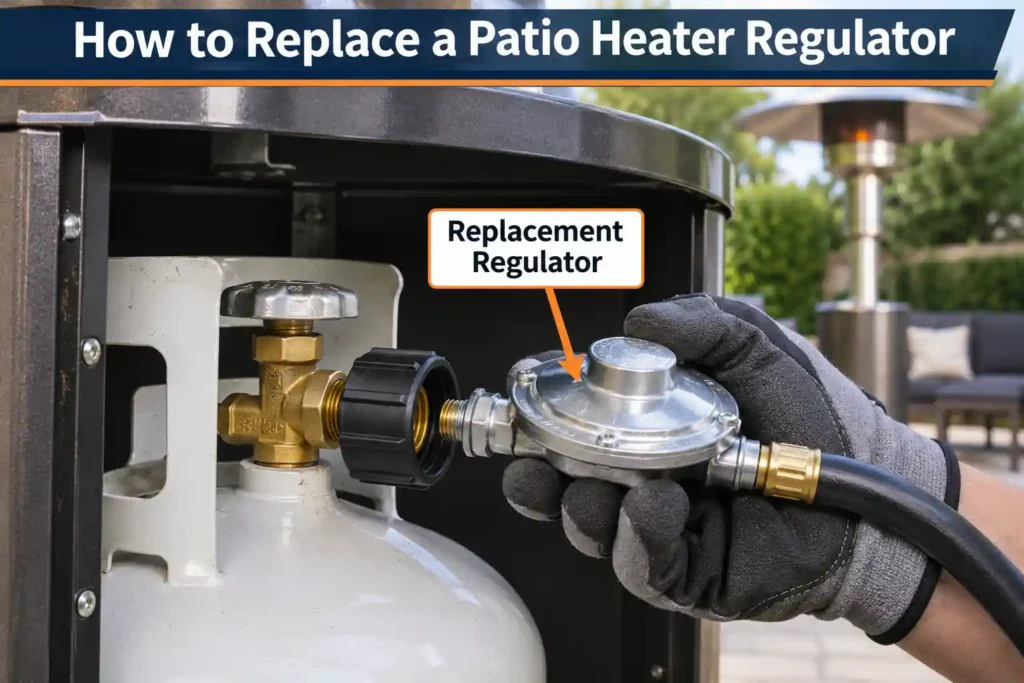
If testing confirms regulator failure, replace the defective component with a manufacturer-approved regulator and have the system checked for safe operation.
How to Prevent Premature Regulator Failure
Proper care can help extend the service life of your propane heating equipment.
Keep the regulator protected from environmental exposure according to the manufacturer’s installation instructions. Inspect accessible hoses and fittings regularly, avoid dropping the regulator assembly, and never cover or paint over the regulator vent.
- Protect the regulator from unnecessary moisture exposure.
- Follow the manufacturer’s storage instructions.
- Inspect accessible hoses for deterioration.
- Keep regulator vents free from external obstructions.
- Avoid dropping or striking the regulator assembly.
- Use the correct propane cylinder and regulator capacity.
- Arrange periodic professional inspections.
- Follow manufacturer-recommended replacement intervals.
These precautions can reduce the likelihood of premature failure and unexpected interruptions during cold weather.
Frequently Asked Questions
Can a Bad Propane Regulator Cause Low Heat?
Yes. A regulator that restricts propane flow can reduce burner output and prevent a heater from achieving its rated heating capacity.
Can a Propane Regulator Fail Suddenly?
Yes. Although some regulators deteriorate gradually, physical damage, contamination, or internal mechanical failure can cause sudden operating problems.
Can a Bad Propane Regulator Cause Carbon Monoxide?
Incorrect gas pressure can contribute to incomplete combustion and increased carbon monoxide production. Carbon monoxide is odorless and potentially fatal. Use appropriate carbon monoxide alarms and only operate heaters in locations approved by their manufacturers.
If a carbon monoxide alarm sounds or occupants develop symptoms such as headaches, dizziness, nausea, or confusion, leave the affected area immediately and contact emergency services.
Is a Humming Propane Regulator Dangerous?
A slight humming sound may be normal. Loud or persistent humming accompanied by abnormal combustion, gas odors, or poor heater performance requires investigation.
Should Propane Come Out of the Regulator Vent?
Continuous propane discharge from a regulator vent is not normal operating behavior. Treat suspected discharge as a gas leak and follow emergency safety procedures.
Can I Use a Propane Grill Regulator on a Propane Heater?
Only when the heater manufacturer permits that specific regulator and all pressure, capacity, connection, and safety requirements are satisfied. Many propane heaters require regulators that differ from standard grill regulators.
Can I Operate a Propane Heater Without a Regulator?
Do not bypass or remove a regulator required by the heater’s design. Some heaters contain an integrated regulator, but this does not mean the pressure-control system can safely be eliminated.
Can I Adjust My Propane Heater Regulator Myself?
I do not recommend adjusting a gas regulator yourself. Incorrect pressure adjustments can cause dangerous combustion, equipment damage, and gas leakage. Have adjustable regulators serviced by a qualified professional.
My Final Thoughts
A propane heater regulator is a relatively small component, but it plays an essential role in the safety and reliability of your heating equipment.
Weak flames, inconsistent heating, unexpected shutdowns, unusual noises, and physical damage are all reasons to investigate the propane delivery system.
My recommendation is to avoid replacing components based on symptoms alone. Check the fuel supply, review the manufacturer’s instructions, and have a qualified technician confirm whether the regulator is delivering the correct pressure.
If your regulator is leaking, physically damaged, or unable to maintain its specified operating pressure, discontinue use and arrange replacement with an approved component.
The cost of replacing a faulty propane regulator is small compared with the potential consequences of operating an unsafe heating appliance.

Mike is an experienced propane technician with over 15 years of professional experience in the field. He has dedicated his career to helping customers with their propane needs, from installation to maintenance and repair. Together with Jeremy, he co-founded this website to provide useful information and guidance to customers seeking reliable propane services.