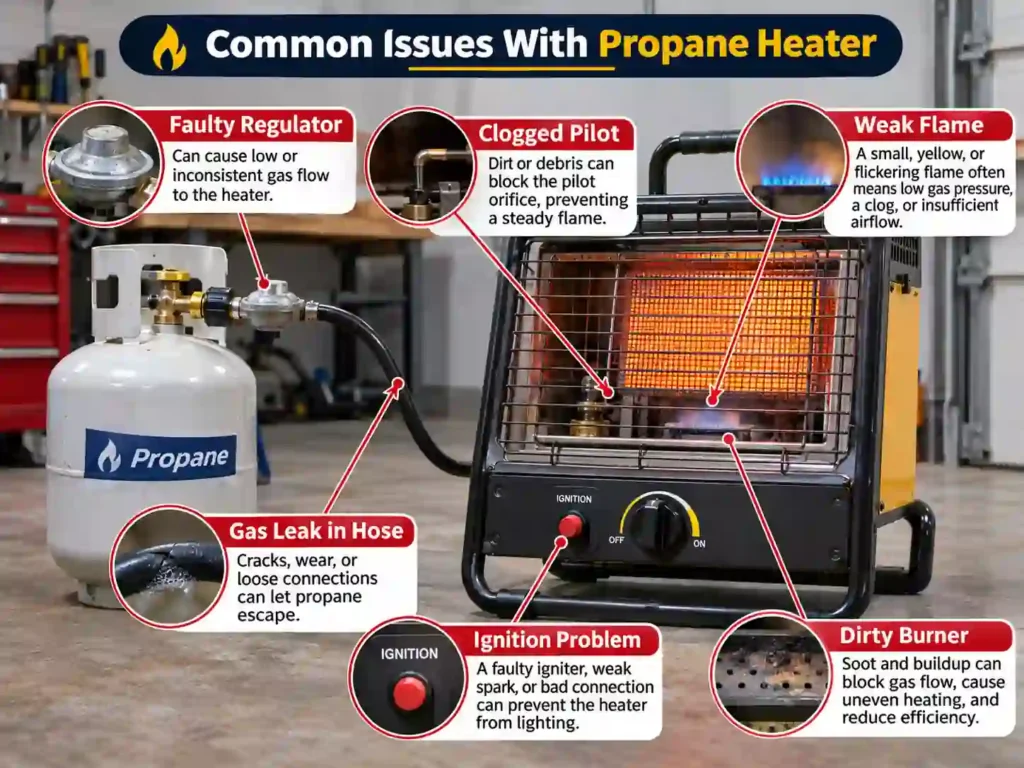


Propane heaters rely on a steady supply of gas to produce consistent and reliable heat. One of the most important components responsible for maintaining that supply is the propane regulator.
Although regulators are relatively simple mechanical devices, they can develop problems over time. Exposure to moisture, dirt, extreme temperatures, improper installation, and normal wear can interfere with their ability to control gas pressure.
You may experience a heater that produces very little heat, shuts down unexpectedly, makes unusual noises, or struggles to ignite. In some cases, the problem is not the heater itself but the regulator supplying propane to it.


However, not every regulator-related problem requires replacement. Sometimes the underlying issue involves insufficient fuel supply, incorrect regulator sizing, or a restricted gas hose.
In this guide, I’ll walk you through the most common propane heater regulator issues, explain why they occur, and help you determine the appropriate course of action.
Quick Answer
The most common issues with propane heater regulators include:
- Low or excessive gas pressure.
- Restricted propane flow.
- Freezing and ice buildup.
- Damaged internal diaphragms.
- Gas leakage.
- Blocked regulator vents.
- Humming and whistling noises.
- Inconsistent outlet pressure.
- Incorrect regulator sizing.
- Corrosion and moisture damage.
- Activated excess-flow safety devices.
- Worn internal valves and seals.
Some problems originate within the regulator, while others involve the propane tank, hose, or heating appliance.


If you suspect a propane leak, discontinue use, leave the affected area, and contact your propane supplier or emergency services from a safe location.
Understanding How a Propane Heater Regulator Works
Before discussing common regulator problems, it helps to understand what this component actually does.
Propane is stored under pressure inside a cylinder or storage tank. That pressure changes depending on the temperature of the fuel.
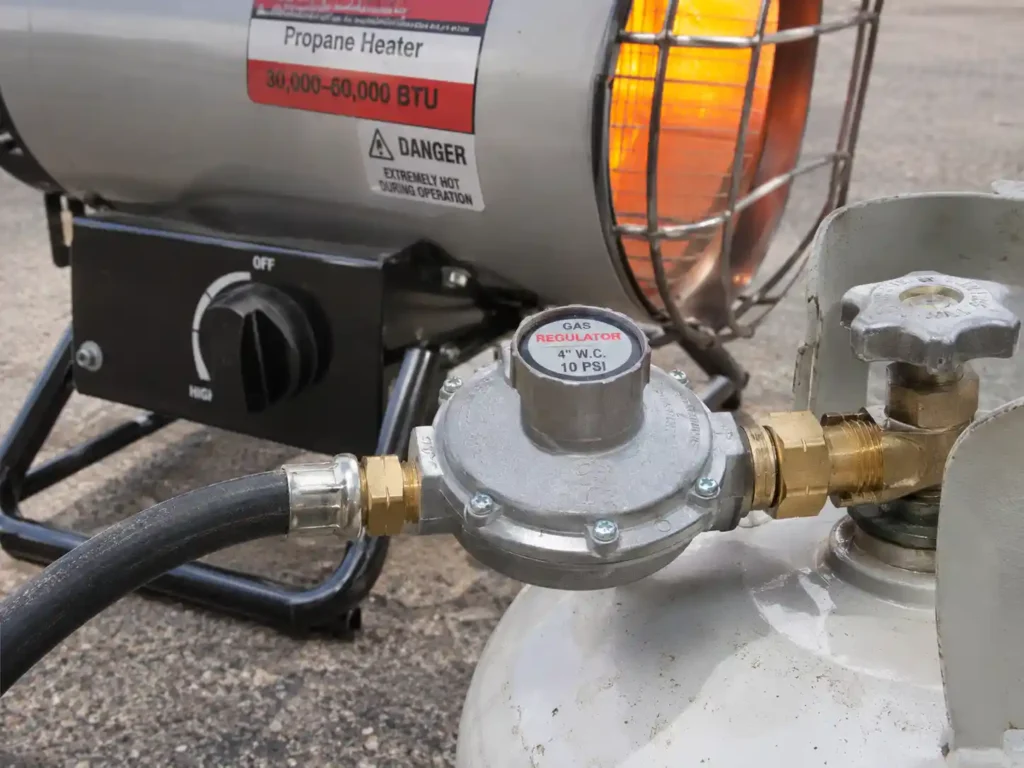
Your heater, however, requires propane at a specific operating pressure. The regulator reduces and controls the incoming pressure to meet those requirements.
The regulator uses a combination of mechanical components to respond to changing gas demand.



| Regulator Component | Primary Function | Potential Problem |
|---|---|---|
| Diaphragm | Responds to pressure changes | Cracking or deterioration |
| Spring | Helps establish outlet pressure | Damage or deterioration |
| Valve seat | Controls gas flow | Wear or contamination |
| Vent | Provides atmospheric reference pressure | Blockage or moisture intrusion |
| Inlet connection | Receives propane | Leakage or restriction |
| Outlet connection | Supplies regulated propane | Leakage or damage |
| Housing | Protects internal components | Corrosion or cracking |
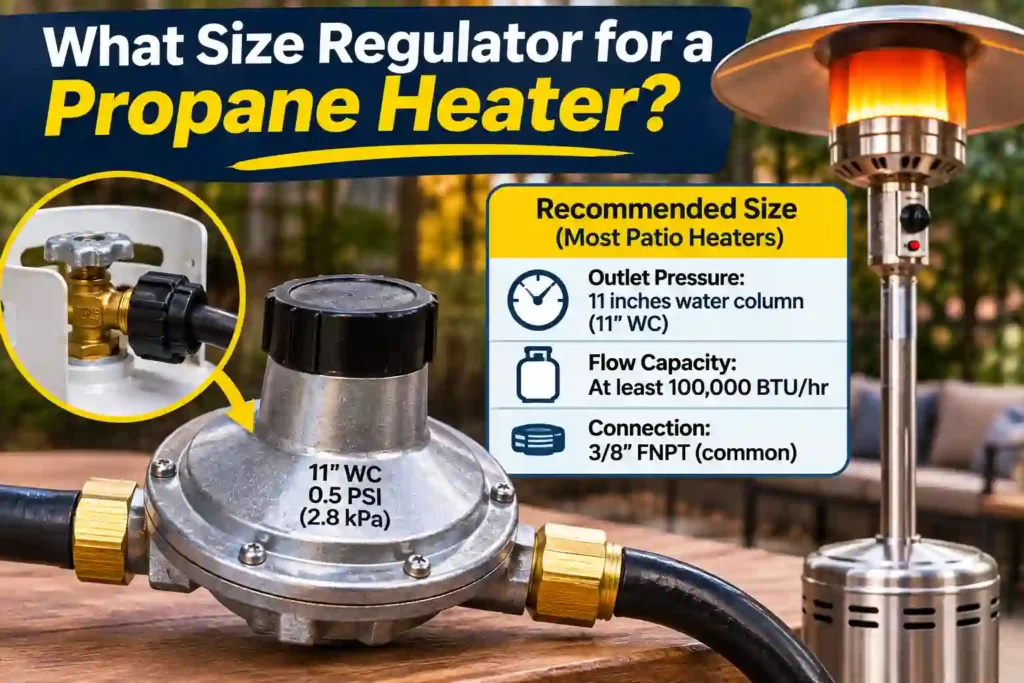
Many conventional low-pressure propane heaters operate at approximately 11 inches of water column (WC). However, some portable, industrial, and construction heaters require different operating pressures.
For additional information, I recommend reading my guide on inlet pressure vs. outlet pressure on a propane regulator.
Understanding these pressure requirements is important because installing the wrong regulator can create performance problems even when the regulator is brand new.
15 Common Propane Heater Regulator Problems and Their Solutions
1. Low Propane Regulator Pressure
Low outlet pressure is one of the most common issues affecting propane heater performance. When the regulator cannot deliver sufficient pressure, the burner may receive less fuel than it needs.


You may notice weak flames, insufficient heat, difficulty starting the heater, or a burner that goes out unexpectedly.
Possible causes include internal regulator deterioration, inadequate inlet pressure, insufficient regulator capacity, and restrictions within the fuel delivery system.
Cold weather may also reduce the propane tank’s vaporization capacity, resulting in insufficient fuel delivery.
Recommended Solution: Have a qualified technician measure inlet and outlet pressures under operating conditions. Do not attempt to increase regulator pressure by adjusting its internal spring.
2. Excessively High Gas Pressure
While insufficient pressure reduces heater performance, excessive pressure presents a potentially serious safety hazard.
When a regulator delivers propane above the heater’s specified operating pressure, the burner may receive more fuel than it was designed to handle.
Common warning signs include unusually large flames, roaring burner noises, overheating, soot accumulation, and abnormal fuel consumption.
Excessive pressure may result from a damaged valve seat, obstructed regulator vent, incorrect regulator selection, or internal mechanical failure.
Recommended Solution: Discontinue heater operation and arrange professional pressure testing. Replace the regulator if it cannot maintain the manufacturer’s specified pressure.
3. Restricted Propane Flow
Sometimes a regulator delivers acceptable pressure when the heater is off but cannot maintain sufficient fuel flow while the burner is operating.
This problem becomes particularly noticeable when you increase the heater’s output.
For example, your heater may operate normally at its lowest setting but struggle when switched to maximum heat.
Restricted propane flow can result from:
- Internal contamination.
- Damaged gas hoses.
- Undersized regulators.
- Activated excess-flow devices.
- Insufficient propane vaporization.
- Obstructed fuel connections.
Recommended Solution: Have the entire fuel supply system evaluated instead of immediately replacing the regulator.
You may also find my guide on why a propane regulator has good pressure but no flow helpful.
4. Propane Regulator Freezing Up
Freezing is a particularly frustrating problem for people who depend on propane heaters during winter.
As propane vaporizes inside the cylinder and expands through the fuel delivery system, heat is absorbed. This cooling effect can cause frost to develop on propane equipment.
However, excessive icing can indicate an underlying problem.
| Cause of Freezing | Potential Effect |
|---|---|
| Moisture contamination | Ice may obstruct internal gas passages. |
| Excessive fuel demand | Increased cooling of the fuel supply system. |
| Undersized propane cylinder | Insufficient vaporization capacity. |
| Freezing precipitation | Obstruction of the regulator vent. |
| Liquid propane entering a vapor regulator | Abnormal cooling and dangerous pressure conditions. |
| Incorrect installation | Greater exposure to moisture and debris. |
A light coating of frost does not automatically indicate regulator failure. Nevertheless, repeated freezing accompanied by poor heating performance requires investigation.
Never use boiling water, a heat gun, or an open flame to thaw a regulator.
Recommended Solution: Discontinue operation when icing interferes with performance and have a propane professional identify the underlying cause.
For further information, see my guide on why propane regulators keep freezing up.
5. Propane Leaking From the Regulator
Gas leakage is among the most dangerous issues associated with propane heater regulators.
A leak may originate from a deteriorated seal, damaged connection, cracked housing, defective diaphragm, or internal pressure-control problem.
You may detect a sulfur-like odor, hear continuous hissing, or notice that your propane supply is being depleted unexpectedly.
Important Gas Leak Safety Warning
If you suspect a propane leak:
- Get everyone out of the affected area immediately.
- Do not attempt to ignite the heater.
- Avoid operating electrical switches or creating sparks.
- Contact your propane supplier or emergency services from a safe location.
- Do not return until emergency personnel or a qualified professional determines that it is safe.
- Have the propane system inspected before resuming operation.
For further reading after the immediate hazard has been addressed, see my guide on common causes of propane regulator leaks.
6. Damaged or Worn Regulator Diaphragm
The diaphragm is a flexible internal component that helps the regulator respond to pressure changes.
Over time, exposure to environmental conditions, contamination, and repeated operating cycles may cause the diaphragm to deteriorate.
A damaged diaphragm can interfere with the regulator’s ability to maintain stable outlet pressure.
Depending on the regulator design and the extent of the damage, symptoms may include fluctuating flames, inconsistent heating, incorrect gas pressure, or propane escaping through the vent.
Unfortunately, diaphragm damage is not always visible from outside the regulator.
Recommended Solution: Do not dismantle the regulator to inspect its diaphragm. Have the assembly professionally evaluated and replaced when necessary.
7. Blocked Regulator Vent
Many propane regulators have a vent that allows the internal diaphragm to respond to atmospheric pressure.
Because propane heater regulators are frequently exposed to outdoor conditions, these vents can become obstructed.
Common obstructions include insects, spider webs, dust, mud, snow, ice, and accumulated debris.
A blocked vent may cause incorrect outlet pressure, extinguished pilot flames, and unreliable regulator operation. Freezing precipitation can also obstruct exposed regulator vents.
Recommended Solution: Visually inspect the accessible vent without inserting tools into it. Never plug, paint over, or seal a regulator vent. Arrange professional servicing if an obstruction is suspected.
8. Humming, Whistling, or Vibrating Noises
A propane regulator does not necessarily operate in complete silence.
Some regulators produce faint humming or vibration as their internal mechanisms respond to changing fuel demand.
However, persistent or unusually loud noises may indicate an underlying issue.
| Noise | Possible Explanation | Recommended Action |
|---|---|---|
| Faint humming | Normal mechanical vibration | Monitor for changes |
| Loud humming | Pressure instability | Arrange inspection |
| High-pitched whistling | Flow restriction or component vibration | Investigate professionally |
| Continuous hissing | Possible propane leak | Follow emergency procedures |
| Rattling | Loose or deteriorated components | Discontinue use and inspect |
| Burner popping | Ignition or combustion problem | Have heater serviced |
If the noise becomes progressively louder or is accompanied by inconsistent heating, the regulator and fuel supply system should be inspected.
9. Activated Excess-Flow Safety Device
Some propane cylinder connections and hose assemblies contain an excess-flow safety device designed to restrict propane delivery when unusually high flow is detected.
Depending on the equipment design, this device may activate during an abnormal surge in gas flow.
Once activated, the heater may produce a very small flame or fail to operate properly.
This can easily be mistaken for a defective regulator.
Possible contributing factors include abrupt changes in fuel demand, damaged fuel connections, and actual gas leakage.
Recommended Solution: Follow the heater manufacturer’s approved troubleshooting procedure only when there is no suspected leak or immediate hazard. Never bypass or disable the excess-flow device.
10. Incorrect Regulator Size or BTU Capacity
A propane regulator can be in excellent mechanical condition and still cause problems if it is incorrectly sized.
Regulators have specified pressure ranges and maximum flow capacities. The regulator must be suitable for the heater’s maximum fuel input requirements.
An undersized regulator may deliver sufficient propane at low settings but fail to maintain pressure when demand increases.
Similarly, a regulator with an inappropriate outlet pressure may cause poor combustion or overheating.
| Heater Input Rating | Approximate Fuel Demand |
|---|---|
| 9,000 BTU/hr | 0.098 gal/hr |
| 18,000 BTU/hr | 0.197 gal/hr |
| 30,000 BTU/hr | 0.328 gal/hr |
| 40,000 BTU/hr | 0.437 gal/hr |
| 60,000 BTU/hr | 0.656 gal/hr |
| 80,000 BTU/hr | 0.874 gal/hr |
| 100,000 BTU/hr | 1.093 gal/hr |
| 150,000 BTU/hr | 1.639 gal/hr |
These figures represent theoretical propane consumption at maximum rated fuel input, using approximately 91,500 BTU per gallon.
I recommend understanding what BTU capacity means on a propane regulator before purchasing replacement equipment.
11. Incorrect Regulator Outlet Pressure
Not all propane heater regulators operate at the same pressure.
For example, conventional residential heating appliances may use low-pressure propane, whereas certain construction and industrial heaters require higher pressures.
| Pressure Specification | Approximate Equivalent |
|---|---|
| 10 inches WC | 0.36 PSI |
| 11 inches WC | 0.40 PSI |
| 14 inches WC | 0.51 PSI |
| 1 PSI | 27.7 inches WC |
| 5 PSI | 138.4 inches WC |
| 10 PSI | 276.8 inches WC |
These are pressure conversions, not recommended operating pressures for specific heaters.
Installing a high-pressure regulator on equipment designed for low-pressure propane can create serious safety hazards.
Recommended Solution: Always match the regulator to the heater manufacturer’s exact pressure requirements. Never assume compatibility simply because the fittings connect properly.
12. Regulator Pressure Droop
Pressure droop refers to a decrease in regulated outlet pressure as gas flow increases.
A certain amount of droop is a normal characteristic of many mechanical regulators. Excessive pressure reduction, however, can interfere with heater operation.
Imagine a propane heater that operates properly at its lowest heat setting but loses flame intensity whenever you increase the temperature.
This could indicate excessive droop, inadequate regulator capacity, or an upstream fuel supply problem.
Recommended Solution: Have a technician compare operating pressures at different fuel demands against the regulator and heater specifications.
13. Regulator Lock-Up Pressure Problems
Lock-up pressure is the outlet pressure reached when gas demand stops and the regulator closes its internal valve.
When the valve cannot seal properly, outlet pressure may continue increasing beyond acceptable limits.
This condition can result from a contaminated or damaged valve seat and other internal defects.
Unlike restricted flow, lock-up problems may occur when the heater is not consuming propane.
Professional testing is necessary because abnormal lock-up pressure cannot reliably be diagnosed through flame appearance alone.
You can learn more about this concept in my guide on lock-up pressure on a propane regulator.
14. Corrosion and Water Damage
Propane heater regulators installed outdoors are exposed to rain, humidity, condensation, and changing temperatures.
Over time, these conditions can damage protective surfaces, fittings, and internal components.
Visible rust, cracked housings, damaged connections, and deteriorated hoses are warning signs that should not be ignored.
Floodwater exposure is especially concerning because contamination may enter the regulator and compromise its operation.
Recommended Solution: Follow the manufacturer’s environmental protection requirements and replace severely deteriorated equipment as recommended by a qualified professional.
15. Aging and Worn Internal Components
Like other mechanical devices, propane regulators have a limited service life.
Repeated pressure changes, environmental exposure, contamination, and mechanical wear gradually affect their components.
An aging regulator may develop unreliable pressure control, internal leakage, or inconsistent fuel delivery.
There is no universal replacement interval that applies to every propane heater regulator. Always follow the manufacturer’s service-life recommendations.
For more details, read my guide on how long propane regulators last and when to replace them.
Propane Heater Regulator Troubleshooting Chart
The following chart summarizes common regulator issues, their potential causes, and appropriate actions.
| Problem | Possible Cause | Action Priority |
|---|---|---|
| Gas odor | Leakage | Emergency |
| Continuous hissing | Escaping propane | Emergency |
| Oversized flames | Excessive pressure | Urgent |
| Yellow flame and soot | Improper combustion | Urgent |
| Weak flames | Restricted fuel flow | Urgent |
| Regulator freezing | Moisture or supply issues | Urgent |
| Repeated shutdowns | Pressure or safety controls | Urgent |
| Whistling noise | Flow restriction or vibration | Inspect |
| Blocked vent | Debris or ice | Urgent |
| Corrosion | Environmental exposure | Inspect |
| Low heat output | Insufficient gas delivery | Inspect |
| Pressure fluctuations | Regulator or supply fault | Urgent |
Stop using equipment showing abnormal operation until the cause is identified. Suspected gas leakage requires immediate evacuation and assistance.
Worked Example: Why a Propane Heater May Not Receive Enough Fuel
Suppose you have a 60,000 BTU propane heater connected to a compatible propane cylinder.
To estimate the heater’s fuel consumption, divide its BTU input rating by the approximate energy content of one gallon of propane.
Gallons per Hour = BTU Input ÷ 91,500
60,000 ÷ 91,500 = 0.656 gallons per hour
Estimated hourly fuel requirement:
0.656 Gallons
Based on continuous operation at maximum rated fuel input.
If a fuel delivery system could supply only the equivalent of 40,000 BTU per hour, it would be unable to satisfy the heater’s full rated demand.
Fuel Delivery Capacity Comparison
Heater’s Required Fuel Input: 60,000 BTU/hr
Illustrative Available Fuel Capacity: 40,000 BTU/hr
Capacity Shortfall
33.3%
Unmet Fuel Demand
20,000 BTU/hr
This is an illustrative calculation, not a prediction of actual burner output or safe operating conditions.
Possible results include poor heating performance, unstable combustion, and unexpected shutdowns.
This example demonstrates why regulator capacity, hose sizing, propane tank vaporization, and appliance requirements must all be considered together.
Propane Heater Fuel Consumption and Runtime Chart
The following chart estimates how much propane different heater sizes consume and how long 20 pounds of propane might last at maximum rated input.
| Heater Input | Gallons per Hour | Estimated Runtime | Hourly Cost at $3.50/Gallon |
|---|---|---|---|
| 9,000 BTU | 0.098 | 47.8 hours | $0.34 |
| 18,000 BTU | 0.197 | 23.9 hours | $0.69 |
| 20,000 BTU | 0.219 | 21.5 hours | $0.77 |
| 30,000 BTU | 0.328 | 14.3 hours | $1.15 |
| 40,000 BTU | 0.437 | 10.8 hours | $1.53 |
| 60,000 BTU | 0.656 | 7.2 hours | $2.30 |
| 80,000 BTU | 0.874 | 5.4 hours | $3.06 |
| 100,000 BTU | 1.093 | 4.3 hours | $3.83 |
| 150,000 BTU | 1.639 | 2.9 hours | $5.74 |
Estimates assume approximately 4.7 gallons of available propane. The $3.50 fuel price is hypothetical. The table does not establish cylinder compatibility. High-output heaters may require substantially larger propane cylinders or storage tanks.
How to Diagnose Common Regulator Issues
Before purchasing replacement equipment, I recommend gathering information about the problem.
The following checklist covers basic external observations that you can make without dismantling or adjusting gas-control components.
Propane Heater Regulator Inspection Checklist
Only perform these observations when there is no suspected gas leak or immediate hazard. Completing the checklist does not certify equipment safety.
A qualified propane technician can perform more comprehensive testing.
| Professional Test | Purpose |
|---|---|
| Inlet pressure testing | Confirms adequate incoming pressure. |
| Outlet pressure testing | Verifies regulated delivery pressure. |
| Flow pressure testing | Evaluates performance under demand. |
| Lock-up pressure testing | Detects abnormal pressure buildup. |
| Leak testing | Identifies escaping propane. |
| Combustion assessment | Evaluates safe burner operation. |
These tests provide a more reliable diagnosis than replacing components based on symptoms alone.
Should You Repair or Replace Your Propane Heater Regulator?
Many consumer propane heater regulators are designed to be replaced rather than internally repaired.
A regulator contains precisely manufactured components that must operate together to control gas pressure safely.
Attempting to repair the diaphragm, modify springs, or adjust internal valves without appropriate qualifications may create additional hazards.
| Regulator Condition | Recommended Action |
|---|---|
| Incorrect regulator model | Replace with an approved model. |
| Cracked housing | Replace. |
| Damaged diaphragm | Professional evaluation and replacement. |
| Excessive outlet pressure | Professional diagnosis. |
| Severe corrosion | Professional evaluation and replacement. |
| Restricted external fuel supply | Correct the underlying supply problem. |
| Activated excess-flow device | Follow manufacturer-approved procedure. |
| Regulator beyond recommended service life | Replace. |
| Persistent internal leakage | Discontinue use and arrange replacement. |
My preference is to use manufacturer-approved replacement assemblies rather than attempting to repair sealed consumer regulators.
Repair or Replacement Decision Guide
If you smell propane or suspect a gas leak, leave the affected area immediately and contact your propane supplier or emergency services from a safe location.
When there are no immediate hazards, determine whether insufficient propane, inadequate cylinder capacity, or visible hose damage could explain the problem.
Review the heater manufacturer’s regulator specifications, including outlet pressure, BTU capacity, and approved connections.
If the cause remains unclear, have a qualified technician evaluate pressure regulation, fuel delivery, and burner operation.
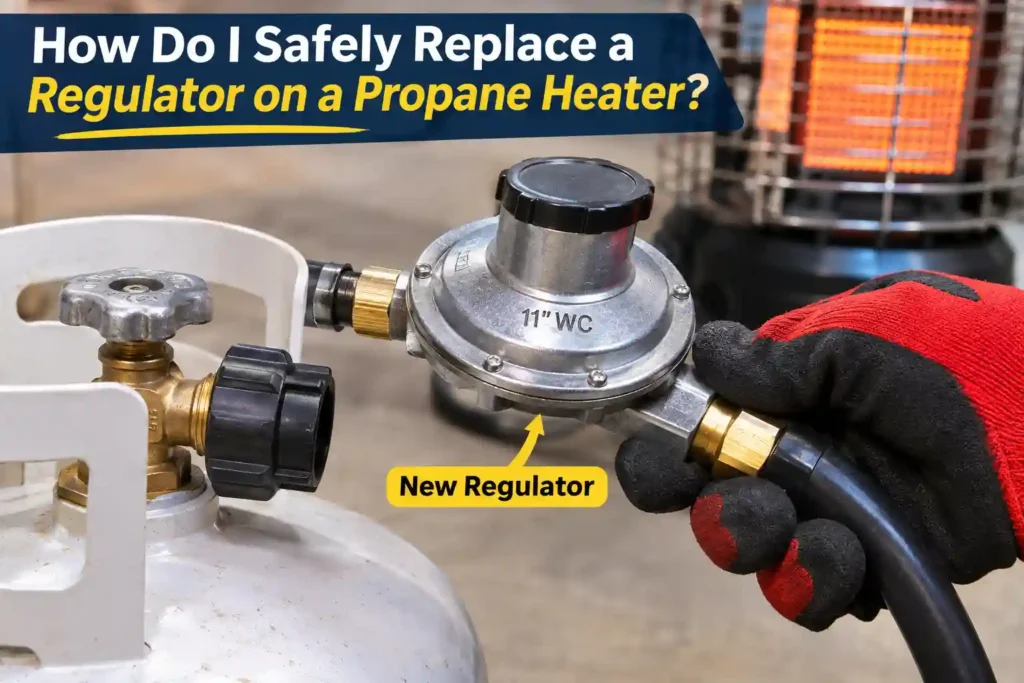
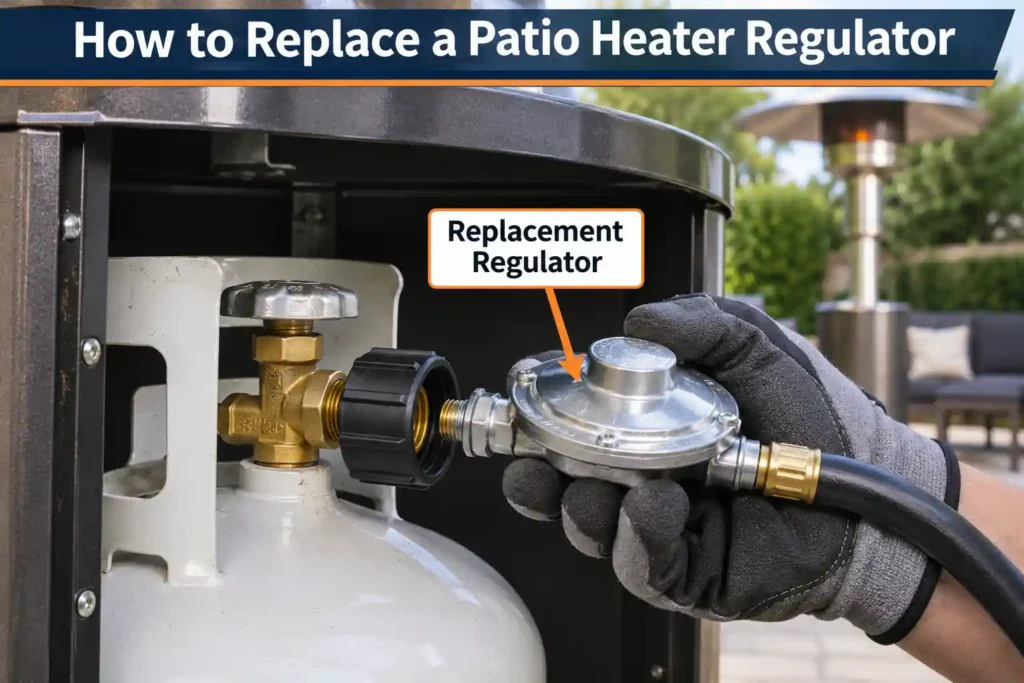
Replace a confirmed defective regulator with a manufacturer-approved assembly and have the equipment checked for safe operation before returning it to service.
How Much Does It Cost to Fix Common Regulator Issues?
The cost depends on whether the problem involves the regulator itself or another part of the propane delivery system.
The following figures are illustrative US budgeting estimates, not verified retail prices or contractor quotations.
| Repair or Replacement Item | Estimated Cost |
|---|---|
| Basic replacement regulator | $15–$35 |
| Replacement gas hose | $15–$50 |
| Heater regulator and hose assembly | $20–$60 |
| High-pressure regulator | $25–$80 |
| Two-stage regulator | $40–$120 |
| Professional diagnostic service | $75–$200 |
| Professional regulator replacement | $100–$300 |
Actual costs vary by equipment model, location, labor rates, and required replacement parts.
For a relatively inexpensive portable heater, replacing the approved regulator assembly may be more economical than attempting specialized repairs.
Residential and commercial heating systems generally require a more comprehensive evaluation before replacement.
How to Prevent Propane Heater Regulator Problems
Preventive maintenance can reduce the likelihood of fuel delivery interruptions and premature regulator deterioration.
I recommend protecting propane equipment from unnecessary weather exposure, following manufacturer-approved installation requirements, and inspecting external components periodically.
Make sure the regulator is correctly sized for the heater and that the propane supply can satisfy the maximum operating demand.
- Protect the regulator from unnecessary moisture exposure.
- Follow the manufacturer’s installation and storage instructions.
- Inspect accessible gas hoses for cracks and deterioration.
- Keep regulator vents free from external obstructions.
- Avoid dropping or striking regulator assemblies.
- Use the correct regulator pressure and flow capacity.
- Avoid unapproved adapters and replacement parts.
- Arrange periodic professional inspections.
- Follow manufacturer-recommended replacement intervals.
Never cover the regulator vent, modify the internal pressure settings, or use unapproved adapters and replacement components.
If you rely heavily on propane heating during winter, arrange an inspection before the heating season begins rather than waiting for equipment to malfunction during extremely cold weather.
Frequently Asked Questions
What Is the Most Common Problem With a Propane Heater Regulator?
Restricted fuel delivery and incorrect pressure are common operating complaints. However, these symptoms may also result from inadequate tank vaporization, damaged hoses, or incorrectly sized equipment.
Why Does My Propane Heater Regulator Work for a Few Minutes and Then Stop?
Possible causes include inadequate fuel supply, excessive icing, restricted gas flow, and heater safety systems interrupting operation. Professional testing may be necessary to identify the cause.
Can a Bad Regulator Cause a Propane Heater to Overheat?
Yes. Excessive gas pressure may cause a heater to operate above its intended fuel input. Stop using the equipment if overheating occurs.
Can Cold Weather Damage a Propane Regulator?
Cold weather can interfere with regulator operation when moisture freezes inside components or obstructs the vent. Low temperatures can also reduce propane vaporization capacity without necessarily damaging the regulator itself.
Can I Use a Universal Propane Heater Regulator?
Propane regulators are not universally interchangeable. The replacement must satisfy the heater’s pressure, capacity, connection, and manufacturer compatibility requirements.
Can a Faulty Regulator Increase Propane Consumption?
Under certain failure conditions, improper pressure regulation may contribute to abnormal fuel consumption. Leakage, colder weather, and changes in heating demand are also possible explanations.
Can a Propane Heater Regulator Cause Carbon Monoxide?
Incorrect gas pressure may contribute to incomplete combustion and carbon monoxide production.
Use heaters only in manufacturer-approved environments and install appropriate carbon monoxide alarms. If an alarm sounds, immediately move to fresh air and contact emergency services.
How Often Should I Inspect My Propane Heater Regulator?
Follow the manufacturer’s inspection schedule. Basic external visual inspections before seasonal use can help identify obvious deterioration, while professional inspections are appropriate when operating problems occur.
My Final Thoughts
The most common propane heater regulator issues involve incorrect pressure, restricted fuel flow, freezing, leakage, vent obstruction, and deteriorating internal components.
However, diagnosing these problems requires more than observing a weak flame or listening for unusual noises.
I recommend evaluating the entire propane delivery system, including the fuel cylinder, gas hoses, regulator capacity, and heater specifications.
Sometimes the regulator is functioning correctly, but the propane supply cannot satisfy the heater’s demand. In other situations, internal regulator damage makes replacement necessary.
Never ignore propane odors, abnormal combustion, or overheating. Addressing regulator problems early can help prevent equipment damage, unexpected heating interruptions, and potentially serious safety incidents.

Mike is an experienced propane technician with over 15 years of professional experience in the field. He has dedicated his career to helping customers with their propane needs, from installation to maintenance and repair. Together with Jeremy, he co-founded this website to provide useful information and guidance to customers seeking reliable propane services.