Quick Answer
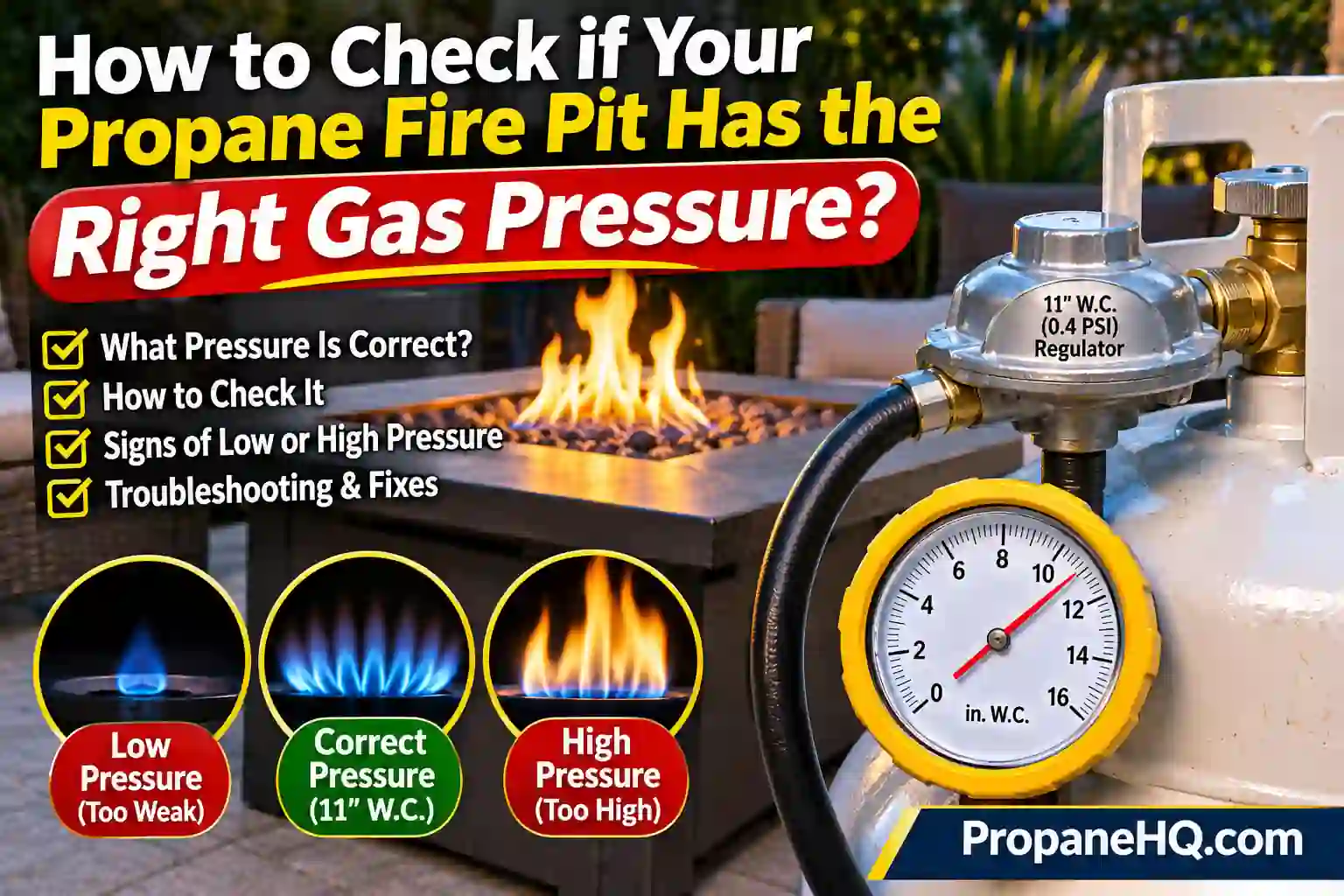
To check whether your propane fire pit has the right gas pressure, start with its rating plate and installation manual. Many residential low-pressure propane fire pits are designed around an 11-inch water-column supply, approximately 0.40 psi, but this is not a universal specification. Some portable fire pits use different regulator assemblies, and certain appliances require distinct inlet and manifold pressures. I would never assume that a regulator labeled 11 inches WC fits every fire pit.
You can safely compare the printed specifications, inspect the hose and regulator for visible damage, confirm that the tank valve is open according to the instructions, and look for unusual flame behavior. Actual pressure testing at a gas test port should be performed by a qualified gas technician with a suitable manometer, following the manufacturer’s procedure. Do not adjust, bypass, or replace a regulator simply to make flames taller.
If your fire pit produces a small flame, shuts down unexpectedly, or seems to consume more propane than expected, gas pressure is one possible cause. But I would not diagnose it by flame height alone. A nearly empty cylinder, cold weather, restricted hose, blocked burner ports, wind, or a safety-device issue can create similar symptoms.
In this guide I will show you how I compare pressure specifications, what the numbers mean, which checks are appropriate for an owner, and when to stop and call a professional. I also include original illustrative fuel-budget calculations and an interactive outdoor runtime estimator. These estimates are not a substitute for pressure testing.
What Is the Correct Gas Pressure for a Propane Fire Pit?
Pressure is the force pushing gas through the regulator, piping, valves, and burner orifices. Flow is the amount of fuel that actually moves through that system. These are related, but they are not interchangeable. A correctly rated pressure regulator can still fail to supply enough fuel if the hose, cylinder vaporization capacity, or regulator flow rating is inadequate.
Low-pressure gas appliance specifications commonly use inches of water column (in. WC), not pounds per square inch. An 11-inch WC rating is about 0.397 psi or 2.74 kPa. That is dramatically lower than the variable vapor pressure inside a propane cylinder.
| Pressure or component | Typical example | What I check |
|---|---|---|
| Common regulated propane supply | 11 in. WC ≈ 0.40 psi ≈ 2.74 kPa | Whether the appliance explicitly calls for this inlet pressure |
| Example inlet operating range | 10–13 in. WC on some appliances | The actual minimum and maximum printed in the manual; ranges vary |
| Example burner manifold pressure | Often near 10–11 in. WC on some propane appliances | The manufacturer’s specific value, not the regulator label alone |
| Two-stage residential LP regulator outlet | Often nominally 11 in. WC | Proper installation, load capacity, and appliance compatibility |
| High-pressure or specialty systems | May use substantially higher pressures | Only manufacturer-approved regulator and piping arrangements |
| Cylinder vapor pressure | Changes strongly with temperature | Never confuse cylinder pressure with burner supply pressure |
My rule: the rating plate beats any generic chart. Two appliances can both be described as “50,000 BTU propane fire pits” and still use different regulators, hose assemblies, valve arrangements, and permitted supply configurations.


Understanding the units
One psi is approximately 27.7 inches WC. Therefore 11 ÷ 27.7 gives approximately 0.397 psi. A homeowner seeing “0.4 psi” on a compatible regulator label may be looking at roughly the same nominal pressure as “11 in. WC.” However, matching one number does not prove that the regulator is approved for the appliance.
I also distinguish static pressure, measured without gas flowing, from operating pressure, measured under the load specified by the manufacturer. A system can look acceptable at rest but sag when the burner operates. This is one reason I do not recommend using a random consumer gauge on a cylinder connection.
Different Types of Propane Fire Pits and Their Gas Requirements
For shopping and troubleshooting, I group fire pits by how they receive fuel. The following BTU values describe illustrative products, not tested models or guaranteed specifications.
| Fire pit type | Illustrative rated input | Fuel arrangement | Pressure consideration |
|---|---|---|---|
| Compact tabletop model | 10,000–20,000 BTU/h | Approved small-cylinder or external-cylinder connection | Use exact supplied regulator and cylinder type |
| Portable camping fire bowl | 40,000–60,000 BTU/h | Portable cylinder and supplied hose/regulator | Confirm its own regulator outlet and minimum flow requirements |
| Residential fire pit table | 30,000–50,000 BTU/h | Often a 20-lb cylinder | Verify rating plate, supplied regulator, hose and ventilation requirements |
| Large outdoor fire table | 50,000–70,000 BTU/h | Manufacturer-approved cylinder or fixed supply | Check fuel flow capacity and cylinder vaporization in cold weather |
| Built-in outdoor fire feature | 60,000–100,000+ BTU/h | Professionally designed LP gas piping | Verify inlet/manifold specifications, pipe sizing and total connected load |
Higher BTU output generally means greater fuel demand, but it does not automatically mean higher operating pressure. A large burner may use more orifices or a larger approved flow path at a similar regulated pressure. Increasing pressure to compensate for an undersized system is not an acceptable shortcut. For fuel-conversion compatibility, see my propane fire pit orifice jet guide.
How I Check a Propane Fire Pit Before Calling a Technician
These are non-invasive checks. I do them with the appliance off and cool, and I never disconnect gas fittings or open sealed controls as part of a casual inspection.

- Find the rating plate. I look for LP or propane fuel designation, rated BTU input, required inlet pressure, maximum inlet pressure, model number, and any specific regulator instructions. I photograph the plate so the exact details are available when contacting support.
- Read the installation manual. I verify the approved regulator, cylinder size, hose length, connection type, and whether the product allows a fixed propane supply. A conversion from a portable cylinder to a house line is not automatically permitted.
- Inspect visible components. With the burner off and cool, I look for crushed hose sections, abrasion, cracking, corrosion, loose or missing protective parts, and damaged connections. If anything is questionable, I leave the system off.
- Review the fuel source. I confirm the cylinder is appropriate, upright, and installed as instructed. I consider whether the cylinder is nearly empty or exposed to conditions that reduce vaporization capacity.
- Observe only normal, permitted operation. If the appliance passes the manual’s preliminary checks, I note whether flames are steady, whether ignition works normally, and whether a fault appears only after several minutes. I do not use flame height as a pressure measurement.
- Record the conditions. I write down outdoor temperature, approximate remaining fuel, burner setting, how long the problem takes to appear, and any error indication. These observations help a technician narrow the cause.
For a connection that has been assembled according to the manual, follow its required leak-check procedure using an approved leak-detection solution. Never use a flame to search for leaks. If you smell propane, hear hissing, or suspect an active leak, stop immediately, avoid ignition sources and electrical switches nearby, leave the area, and contact your gas supplier or emergency services from a safe location.
Signs That Your Propane Fire Pit May Have a Pressure or Flow Problem
I separate symptoms from diagnoses. None of the observations below proves the pressure is too high or too low.
| Observation | Possible causes | My next action |
|---|---|---|
| Weak flame at maximum setting | Low supply pressure, restricted flow, low cylinder vaporization, obstruction | Check manual, cylinder conditions and visible hose; arrange qualified diagnosis |
| Flame shrinks as time passes | Cooling cylinder, falling vaporization capacity, regulator issue | Stop if abnormal; document temperature and runtime |
| Flame lifts, roars, or behaves violently | Incorrect pressure, burner fault, wind or air-mixing problem | Turn off safely and do not reuse until inspected |
| Heavy soot or unusually yellow flame | Combustion problem, misplaced media, blocked air supply, incorrect setup | Stop use and consult manufacturer or technician |
| Burner will not stay lit | Flame-sensing safety control, wind, pressure instability, component failure | Do not bypass safety controls; arrange service |
| Gas smell or hissing | Potential leak | Stop, leave area and follow emergency leak procedures |
Why a frozen-looking tank does not always mean a bad regulator
Propane absorbs heat from its surroundings as liquid fuel vaporizes. A high-output fire pit may demand vapor faster than a small or partly empty cylinder can comfortably provide in cold weather. Frost can appear on the cylinder surface. This is a fuel-delivery and vaporization issue, not automatic proof that the regulator is defective.
I would never heat a propane cylinder with a torch, heater, hot water, or another improvised method. Instead, stop using the appliance when abnormal operation occurs and follow the manufacturer’s cylinder and temperature requirements.


How a Qualified Technician Verifies Gas Pressure
A technician may use a calibrated low-pressure manometer to compare inlet and manifold readings against the manufacturer’s specifications. The appliance may need to be tested under a defined operating load. The exact test locations and sequence depend on its gas valve, regulator, and burner design.
I would ask the technician to document these items:
- The required inlet pressure range and measured inlet pressure under the prescribed load.
- The specified manifold pressure and measured manifold pressure, where a test point is provided.
- Whether the regulator model, capacity, orientation and venting arrangement meet the installation instructions.
- Whether cylinder capacity, hose size, gas piping and other connected appliances can meet the demand.
- Whether the system passes the required leak and combustion checks after any authorized repair.
Some portable fire pits have factory-set regulator assemblies and no owner-serviceable pressure adjustment. If a unit does not provide an approved test point, I would not improvise one. Opening gas fittings, modifying regulators, or drilling test holes introduces risks that outweigh any diagnostic benefit.
Why Pressure, BTU Rating, and Fuel Consumption Are Different
A common misunderstanding is that a higher-BTU fire pit needs more pressure. It usually needs more fuel flow. The regulator and burner are engineered as a system to deliver that flow at the specified pressure.
For fuel budgeting, I use propane’s approximate energy content of 91,500 BTU per US gallon. At a steady burner input, estimated gallons per hour equal the burner input in BTU per hour divided by 91,500. This assumes the rated input represents actual steady consumption. Adjustable burners may use less on low settings, but the reduction is model-specific.
| Burner input | Gallons/hour | Gallons for 3 hours | Hours from 4.7 usable gallons* |
|---|---|---|---|
| 10,000 BTU/h | 0.109 | 0.328 | 43.0 |
| 20,000 BTU/h | 0.219 | 0.656 | 21.5 |
| 30,000 BTU/h | 0.328 | 0.984 | 14.3 |
| 40,000 BTU/h | 0.437 | 1.311 | 10.8 |
| 50,000 BTU/h | 0.546 | 1.639 | 8.6 |
| 60,000 BTU/h | 0.656 | 1.967 | 7.2 |
| 80,000 BTU/h | 0.874 | 2.623 | 5.4 |
*Illustrative runtime assumes a nominally full 20-lb cylinder containing about 4.7 gallons and steady rated input. Real usable runtime can be lower because of cylinder fill variation, temperature, flow limitations, and residual fuel.
Worked example: a 50,000 BTU fire table
Suppose your fire table is rated 50,000 BTU/h. I divide 50,000 by 91,500 and get about 0.546 gallon per hour. For a three-hour evening, I multiply by three: approximately 1.64 gallons. If a refill costs $4 per gallon, that evening costs about $6.56 in propane. With 4.7 gallons available, the theoretical continuous full-output runtime is about 8.6 hours.
None of these calculations confirms pressure. A burner operating incorrectly may consume fuel at a different rate, and an unusually long or short runtime is not a safe diagnostic test. I would use the numbers for planning, not for approving an installation.
How Much Does It Cost to Run a Propane Fire Pit?
Price matters because owners sometimes try to turn pressure down to save money. I would not change a regulator setting to manage fuel cost. Instead, use the manufacturer’s approved flame control and compare actual refill prices.
| Burner input | $3/gal | $4/gal | $5/gal |
|---|---|---|---|
| 20,000 BTU/h | $0.66 | $0.87 | $1.09 |
| 30,000 BTU/h | $0.98 | $1.31 | $1.64 |
| 40,000 BTU/h | $1.31 | $1.75 | $2.19 |
| 50,000 BTU/h | $1.64 | $2.19 | $2.73 |
| 60,000 BTU/h | $1.97 | $2.62 | $3.28 |
| 80,000 BTU/h | $2.62 | $3.50 | $4.37 |
For a monthly estimate, I multiply hourly cost by hours of operation. A 50,000 BTU/h unit at $4 per gallon costs approximately $2.19 per hour at full rated input. Eight two-hour evenings per month mean 16 operating hours and roughly $34.97 in propane. A 20-lb cylinder would not cover all 16 hours at that rate, so I would plan for refilling or an approved replacement cylinder.
Interactive Propane Fire Pit Runtime and Cost Calculator
Enter your burner rating, estimated available gallons, planned flame setting, and local refill price. The flame-setting percentage is a budgeting assumption, not a measurement of actual gas flow. A knob set halfway does not necessarily use half the fuel. For conservative planning, choose 100% unless you have measured consumption data for the approved setting.
This calculator uses energy arithmetic only. It cannot determine regulator pressure, safe pipe size, carbon monoxide output, leak risk, or whether a cylinder can vaporize fuel quickly enough. Do not use it to justify indoor operation or a nonapproved fuel connection.
Does a Bigger Propane Tank Fix Low Gas Pressure?
Sometimes a larger manufacturer-approved supply arrangement can help with a vaporization limitation, especially in cold conditions, but a larger tank is not a universal pressure fix. If the appliance requires a specific portable cylinder and regulator, I would not substitute another supply without the manufacturer’s authorization.
Consider two scenarios. In the first, a high-output fire table runs normally in mild weather but weakens after prolonged operation on a cold evening. Vaporization capacity could be involved. In the second, the flame is weak immediately even with a full cylinder in warm weather. The cause might instead be a damaged hose, wrong regulator, blocked burner, or safety-control fault. The same visible symptom deserves different investigation.
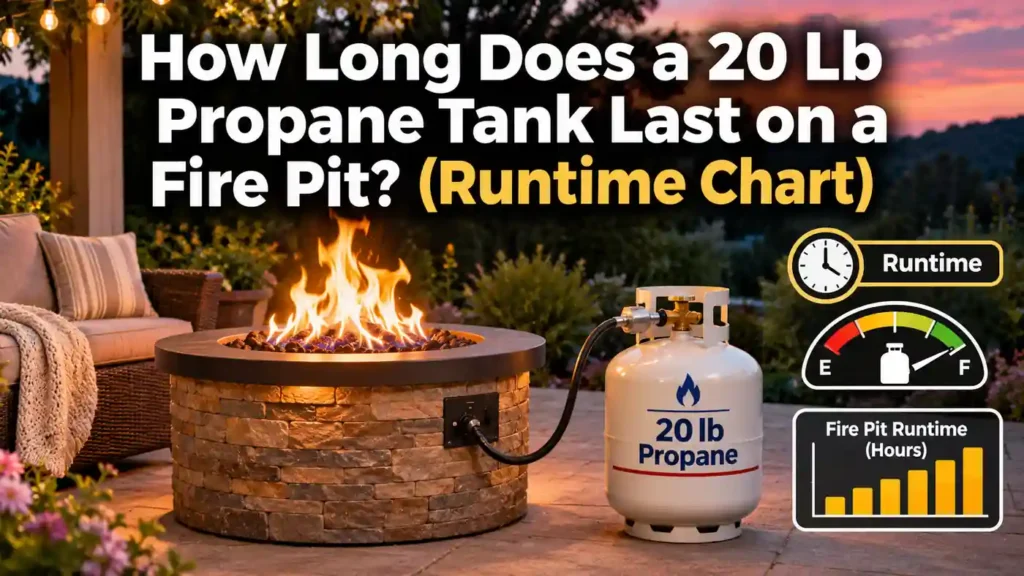
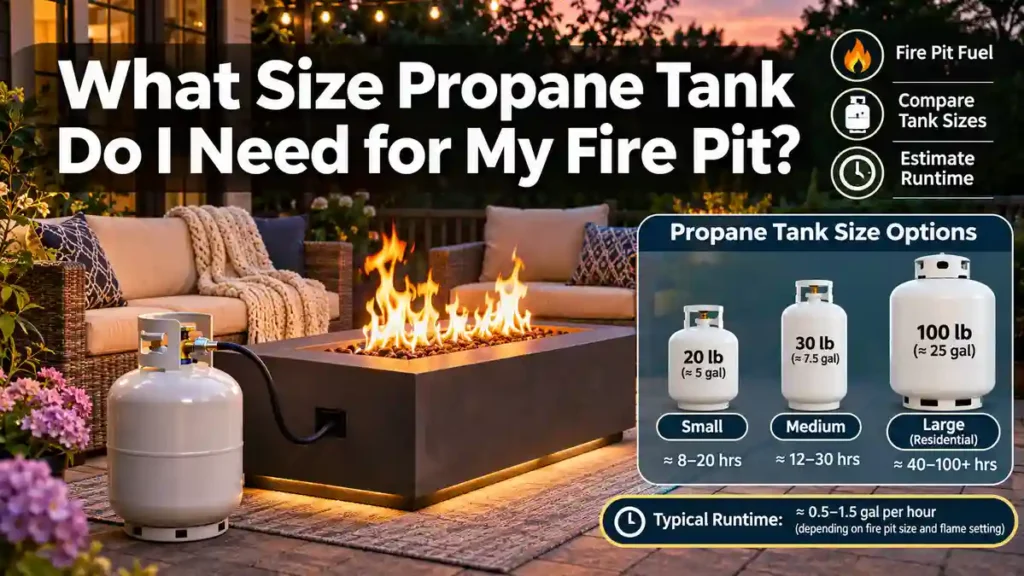
For more fuel-planning context, read What Size Propane Tank Do I Need for My Fire Pit? and How Long Does a 20 Lb Propane Tank Last on a Fire Pit?.
Can I Use a Different Regulator to Increase Flame Height?
My answer is no unless the manufacturer explicitly approves that replacement for the exact model. Regulators are not interchangeable simply because their threaded fittings appear to match. Besides outlet pressure, I would need to confirm flow capacity, inlet pressure rating, venting, connection configuration, and appliance certification requirements.
A regulator that delivers too much pressure can cause unsafe flame behavior and damage controls. A regulator that delivers too little flow can cause poor combustion or shutdown. Either problem can be compounded by modifications to burner orifices or safety devices. I would not recommend drilling an orifice, adding an adjustable high-pressure regulator, removing a flow-limiting safety device, or connecting a fire table directly to unregulated cylinder pressure.
Common Mistakes I Would Avoid
- Assuming 11 inches WC is always correct. I verify the specific model first.
- Confusing cylinder pressure with appliance pressure. The regulator exists because these are very different operating conditions.
- Using flame color as a manometer. Wind, air mixing and burner condition can affect appearance.
- Changing a regulator to solve a piping problem. Pressure and flow capacity must both be evaluated.
- Ignoring cold-weather fuel delivery. Cylinder vaporization can limit high-BTU burners.
- Reusing an old hose without checking compatibility. A visually similar connection may have different specifications.
- Bypassing a shutdown device. Safety controls must remain operational.
- Testing with open flame. I never use a match or lighter to locate a suspected leak.
My Decision Guide: Keep Using, Stop, or Request Service?
| Your situation | My decision | Next step |
|---|---|---|
| Manual, regulator and fuel source match; appliance operates normally | Use only as approved | Continue normal maintenance and supervision |
| Regulator rating or model compatibility is unclear | Wait | Confirm with manufacturer before operating |
| Weak flame, repeated shutdown, soot or abnormal sound | Stop and investigate | Arrange manufacturer guidance or qualified service |
| Visible hose damage or regulator corrosion | Do not operate | Have approved components inspected or replaced |
| Gas smell, hissing or suspected active leak | Emergency response | Leave area; contact supplier or emergency services from safety |
| Want to connect portable fire table to household propane piping | Do not improvise | Confirm product approval and use a qualified gas installer |
Questions I Would Ask Before Buying a Replacement Fire Pit
Pressure compatibility is easier to manage before purchase than after installation. I would ask whether the product includes its regulator and hose, what cylinder it accepts, whether its rated BTU input fits my fuel budget, and whether its manual gives clear installation and service requirements. For a permanent outdoor feature, I would ask an installer to assess the total gas load, pipe length, permitted fittings, and required pressure at the appliance.
That buying decision also depends on where the unit will be used. An outdoor fire pit is not an indoor heater. See Can You Use a Propane Fire Pit Table Indoors? for the important distinction. If you are comparing styles, my Propane Fire Pit Buying Guide covers types, features, and prices.
Frequently Asked Questions
Is 11 inches of water column the same as 11 psi?
No. Eleven inches WC is about 0.40 psi. Eleven psi is roughly 27.7 times greater pressure. Confusing these units is dangerous, so I always read the complete unit label.
Can I check gas pressure without a manometer?
You can compare specifications and identify visible problems without one, but you cannot accurately verify operating pressure from flame height or cylinder fullness. A qualified technician should perform actual pressure measurement where appropriate.
Why is my propane fire pit flame low even with a full tank?
Potential causes include an incompatible or faulty regulator, restricted hose, burner obstruction, cold-weather vaporization limits, and other appliance faults. I would not replace parts based on that symptom alone.
Does a 60,000 BTU fire pit require more pressure than a 30,000 BTU fire pit?
Not necessarily. It generally requires more fuel flow, but its correct operating pressure depends on its design. Both appliances might use similar nominal regulated pressures with different burner and flow arrangements.
Will turning down the flame reduce propane consumption?
Usually yes, if the manufacturer provides an adjustable flame control. The exact savings depend on actual burner input at that setting. I would use the control as instructed, not change regulator pressure.
Should I replace my regulator every year?
There is no universal annual replacement schedule for every fire pit regulator. I follow the manufacturer’s inspection and replacement requirements, and replace damaged or defective components with approved parts.
Can I run a propane fire pit from my home’s propane tank?
Only if the appliance is approved for that configuration and the supply system is professionally designed and installed. The existence of an 11-inch WC house line does not by itself make the connection acceptable.
Final Thoughts: Verify the Specifications, Not Just the Flame
If I wanted to know whether a propane fire pit had the right pressure, I would begin with the rating plate, verify the exact regulator and fuel arrangement, and look for visible damage or abnormal operation. I would then have a qualified technician measure the operating pressure when the symptoms or installation require it.
My main takeaway is simple: correct pressure, adequate flow, approved components, and safe combustion all matter together. A large flame is not proof of correct pressure, and a small flame is not proof of a failed regulator. Keep the system within its approved configuration and use the runtime and fuel-cost estimates for budgeting only.
For your next question, explore Are Propane Fire Pits Safe?, 20 Lb Tank Runtime Chart, and What to Look for When Buying a Propane Fire Pit.

Mike is an experienced propane technician with over 15 years of professional experience in the field. He has dedicated his career to helping customers with their propane needs, from installation to maintenance and repair. Together with Jeremy, he co-founded this website to provide useful information and guidance to customers seeking reliable propane services.