Quick Answer
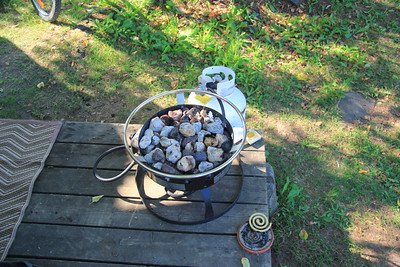
A propane fire pit typically costs $100–$300 for a portable fire bowl, $200–$700 for an everyday fire pit table, and roughly $700–$2,500 or more for a premium freestanding model. A custom permanent installation can run $2,000–$8,000+, with elaborate hardscapes costing substantially more. These are US planning ranges, not guaranteed store quotes.
For a typical 50,000-BTU/hour fire pit and propane costing $4 per gallon, my calculated fuel cost is about $2.19 per hour at maximum output. A nominal 20-pound fill lasts approximately 8.6 hours at that output under ideal steady conditions. My advice: budget for the unit, a compatible cylinder, accessories, and fuel—not just the price tag.
Updated: January 2027. Market: United States. All examples are in US dollars. I use illustrative prices and straightforward assumptions so you can substitute local quotes instead of mistaking one retailer’s sale price for a national average.
Propane Fire Pit Prices at a Glance
| Fire pit style | Typical purchase/project budget | Illustrative rated input | Best fit |
|---|---|---|---|
| Small tabletop unit | $60–$200 | 8,000–20,000 BTU/hr | Compact approved outdoor tabletop arrangements |
| Portable camping fire bowl | $100–$300 | 30,000–60,000 BTU/hr | Occasional backyard or campsite use |
| Basic gas fire pit table | $200–$700 | 40,000–55,000 BTU/hr | Everyday patio gatherings |
| Premium concrete/aluminum table | $700–$2,500+ | 40,000–70,000 BTU/hr | Permanent-looking outdoor furniture |
| Custom built-in propane installation | $2,000–$8,000+ | 50,000–150,000+ BTU/hr | Dedicated landscape project |
The ranges overlap because construction, furniture dimensions, material, branding and burner capacity all influence pricing. A 50,000-BTU unit is not automatically twice as expensive as a 25,000-BTU unit; the enclosure and finishing can account for most of the purchase price. For ongoing fuel expense rather than purchase price, see my separate guide: how much it costs to run a propane fire pit per hour and month.
What Actually Determines the Price?
When I compare fire pits, I divide the price into two jobs: producing a controlled flame and making the product suitable for where it will sit. The burner itself is often simpler than the cabinet, stone finish, weatherproof storage or ignition system around it. That is why a small portable bowl may generate more heat input than a luxurious, wide fire table costing several times as much.
- Materials: Thin painted steel can be inexpensive upfront, while aluminum, stainless components and glass-fiber-reinforced concrete generally command higher prices. Consider corrosion resistance in coastal or damp climates.
- Dimensions: An extra-wide table requires more structure and shipping space even when its burner rating does not change.
- Ignition: Manual-light and basic push-button systems tend to be cheaper than electronic ignition or sophisticated flame-sensing controls.
- Cylinder storage: A concealed, correctly ventilated tank compartment can cost more than a model with an external cylinder; check the manufacturer’s exact cylinder specifications.
- Included accessories: Burner media, lid, cover, approved hose and regulator may be included—or priced separately.
- Delivery and assembly: Heavy cast-concrete pieces can incur freight, lift-gate and placement expenses even without plumbing.
I would rather buy a well-documented, serviceable burner with readily available replacement parts than pay for a decorative finish while ignoring the warranty, flame controls or cylinder clearance requirements. An attractive fire pit you cannot use in your actual space is a particularly expensive mistake.


The Different Types of Propane Fire Pits: Technical Comparison
BTU/hour is the gas consumption rating at the specified setting, not a promise that all that energy reaches you as useful warmth. Wind, flame height, radiant surface and seating distance change how warm a fire feels. Treat the following as representative design specifications, not universal ratings or specific product claims.
| Type | Typical dimensions | Illustrative input | Tank arrangement | Common trade-off |
|---|---|---|---|---|
| Tabletop fire feature | 10–20 in. wide | 8k–20k BTU/hr | Small approved cylinder or remote supply, model-dependent | Lower fuel draw; modest flame |
| Portable steel bowl | 19–24 in. diameter | 30k–60k BTU/hr | Usually external 20-lb cylinder | Travel friendly; exposed hose/tank |
| Standard patio fire table | 28–45 in. across | 40k–55k BTU/hr | Often 20-lb cylinder concealed in base | Table function; less portable |
| Long rectangular table | 48–72 in. long | 40k–70k BTU/hr | Internal or adjacent enclosure, as approved | More seating coverage; bigger footprint |
| Heavy concrete bowl | 26–48 in. across | 40k–100k BTU/hr | Often external or separate approved housing | Durable appearance; difficult to move |
| Custom masonry gas feature | Project-specific | 50k–150k+ BTU/hr | Engineered propane piping/supply | Professional installation and site constraints |
Before buying, check the manufacturer’s maximum input, regulator pressure, hose routing, specified fuel type, permitted cylinder location, surface requirements, ventilation and clearances. Never improvise a regulator, place a cylinder inside an unapproved cavity, or connect a portable low-pressure appliance directly to an unregulated source.
What Does a Real First-Day Setup Cost?
Many buyers compare only the advertised appliance prices. I prefer a ready-to-use budget, because the first evening needs more than an empty burner. Here are three example baskets, not current retailer quotations. Delivery, tax and site preparation vary.
| Expense | Portable bowl example | Patio table example | Premium table example |
|---|---|---|---|
| Fire pit itself | $170 | $420 | $1,450 |
| Approved cylinder (empty) | $55 | $55 | $55 |
| First fuel fill or equivalent | $20 | $20 | $20 |
| Cover or protective accessories | $25 | $55 | $110 |
| Delivery/assembly allowance | $0 | $40 | $180 |
| Illustrative before-tax total | $270 | $590 | $1,965 |
My practical point: the $170 portable pit in this example is not a $170 first-night purchase. Adding a cylinder, propane and a cover raises it to $270, or nearly 59% more. You may spend less if you already own an approved cylinder, but verify that the cylinder is suitable and in serviceable condition. If the model includes a cover, remove that line rather than double-counting.
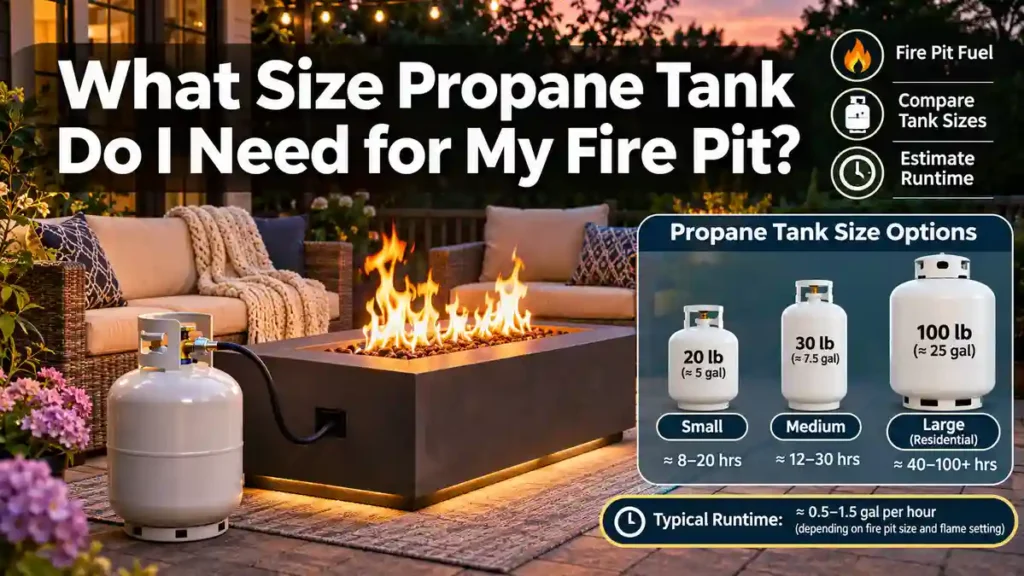
For fuel equipment decisions, my fire pit cylinder size guide explains why a bigger tank is not automatically the correct choice. A fire pit designed for a 20-pound cylinder should not be modified simply to accommodate a bigger one.

How Much Propane Does a Fire Pit Burn?
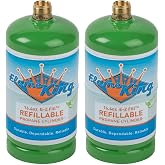
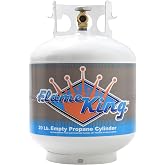
To estimate running costs, I start with a common energy conversion: one US gallon of liquid propane supplies about 91,500 BTU. A standard 20-pound propane fill contains roughly 4.7 gallons, depending on the conversion and fill weight. It is not a 20-gallon tank. The safety-related 80% filling limit applies to the cylinder’s internal liquid capacity; do not subtract another 20% from an already correctly filled, nominal 20-pound cylinder.
Gallons per hour = rated BTU per hour ÷ 91,500. Cost per hour = gallons per hour × propane price per gallon. Estimated runtime = available gallons ÷ gallons per hour. These figures assume a steady burner setting and ideal access to the stated fuel. They do not predict real vaporization capacity in cold conditions, the effect of wind or automatic shutdown.
| Burner input | Calculated gal/hour | 20-lb / 4.7-gal ideal runtime | Hourly fuel cost at $4/gal |
|---|---|---|---|
| 10,000 BTU/hr | 0.109 | 43.0 hr | $0.44 |
| 20,000 BTU/hr | 0.219 | 21.5 hr | $0.87 |
| 30,000 BTU/hr | 0.328 | 14.3 hr | $1.31 |
| 40,000 BTU/hr | 0.437 | 10.8 hr | $1.75 |
| 50,000 BTU/hr | 0.546 | 8.6 hr | $2.19 |
| 60,000 BTU/hr | 0.656 | 7.2 hr | $2.62 |
| 75,000 BTU/hr | 0.820 | 5.7 hr | $3.28 |
| 100,000 BTU/hr | 1.093 | 4.3 hr | $4.37 |
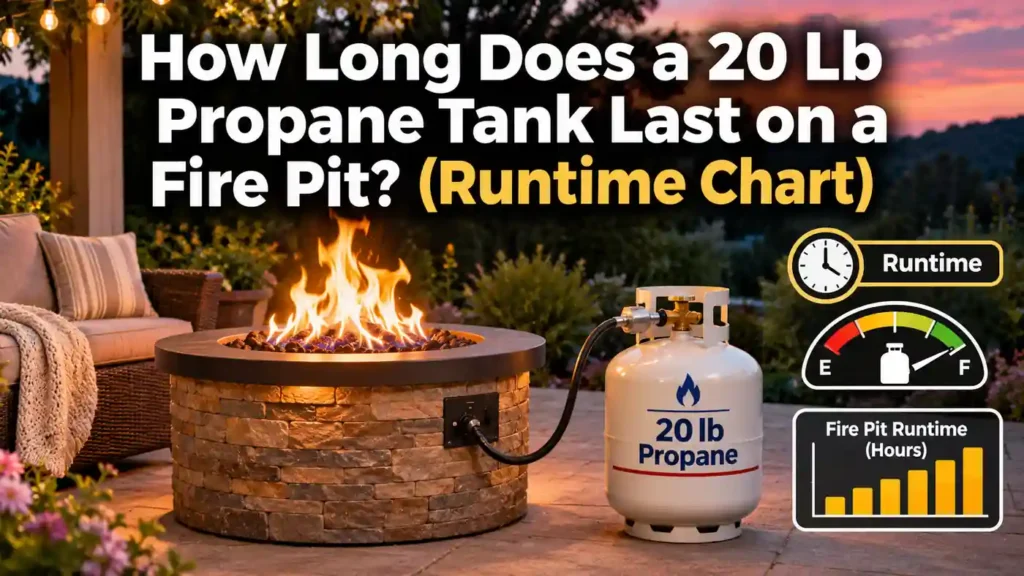
That table also clarifies a misconception: a high-output, low-cost portable bowl can cost more to operate each hour than a lower-input premium table. Purchase price and fuel draw are different variables. See how long a 20-lb tank lasts on a fire pit for a deeper runtime guide.
Interactive Propane Fire Pit Cost & Runtime Calculator
Change the BTU rating, local fuel price, cylinder fill and hours used. The estimates update as you type if your browser allows the calculator script. If a security plugin blocks scripts, use the formulas and chart above to calculate manually.


Assumptions: 91,500 BTU/gal; 52 weeks/12 months; no allowance for unusable fuel, varying burner output, weather or tank delivery charges. Do not use the estimate to override manufacturer safety guidance.
If your pit is rated at 50,000 BTU/hour but you consistently operate it below maximum, enter an estimated actual burn rate rather than blindly using the full-rated input. The knob position does not translate into an exact percentage of fuel flow unless the manufacturer provides a curve or you measure consumption. I would keep my estimate conservative until I have a few real refill cycles.
Worked Example: The Cost of a Saturday Fire Pit Gathering
Imagine I purchase a 50,000-BTU propane fire pit table for $420. I host two gatherings each week, using it for two hours per gathering. At $4 per gallon, I can calculate the expected bill before any party starts.
- Four hours of weekly use × 50,000 BTU/hour = 200,000 BTU each week.
- 200,000 ÷ 91,500 = 2.19 gallons per week.
- 2.19 gallons × $4 = $8.74 each week.
- $8.74 × 52 ÷ 12 = about $37.89 per average month.
- Annual fuel, on the same schedule, is approximately $454.64.
For a single two-hour gathering, the fuel is about 1.09 gallons and costs about $4.37. If I refill a full 4.7-gallon equivalent for $18.80, it supports roughly four two-hour gatherings at this assumed steady output—not four complete months. That is why I prefer to plan around fuel consumption rather than counting how many calendar days a tank has been sitting outside.
Actual monthly bills fluctuate with season, weather, flame setting and usage. The arithmetic is a scenario, not a meter reading. I would always compare calculated consumption against actual propane purchased and hours recorded.
Fuel Cost Scenarios at Different Propane Prices
Because refill rates vary dramatically by region and retailer, I test three gallon prices instead of declaring one nationwide number. A nominal 20-pound cylinder containing approximately 4.7 gallons would represent $14.10 of propane at $3 per gallon, $18.80 at $4, or $23.50 at $5; cylinder exchange prices can differ and exchange cages may provide a lower net propane weight.
| Fire pit output | At $3/gal | At $4/gal | At $5/gal | 4 hours/week at $4/gal, monthly |
|---|---|---|---|---|
| 20,000 BTU/hr | $0.66/hr | $0.87/hr | $1.09/hr | $15.15 |
| 30,000 BTU/hr | $0.98/hr | $1.31/hr | $1.64/hr | $22.73 |
| 40,000 BTU/hr | $1.31/hr | $1.75/hr | $2.19/hr | $30.31 |
| 50,000 BTU/hr | $1.64/hr | $2.19/hr | $2.73/hr | $37.89 |
| 60,000 BTU/hr | $1.97/hr | $2.62/hr | $3.28/hr | $45.46 |
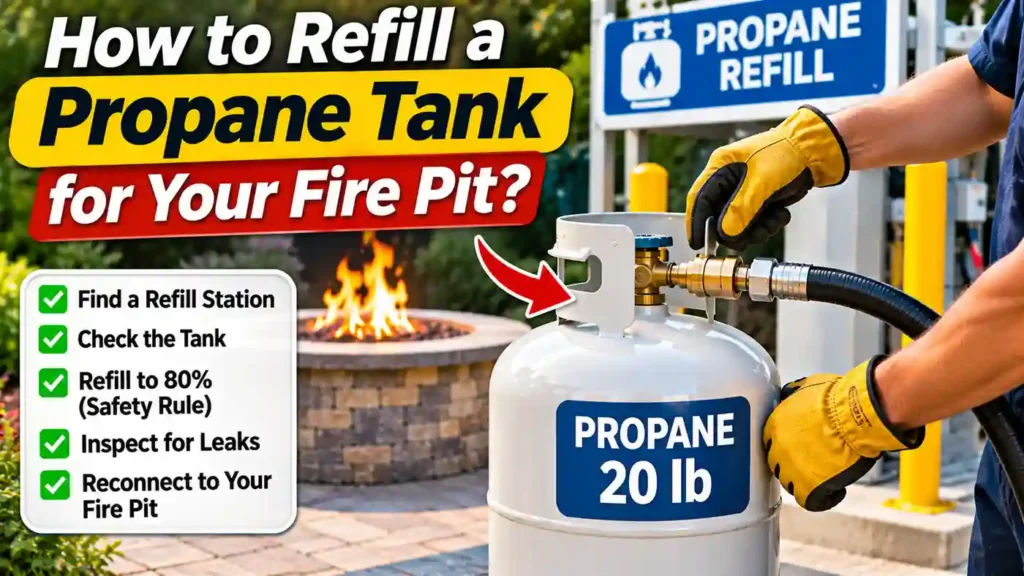
Look closely at the fuel-price spread: a 50,000-BTU fire pit costs roughly $1.64/hour at $3 per gallon versus $2.73/hour at $5. For frequent use, buying propane economically may save more money than haggling over a small difference in the appliance price. Read how to refill a propane tank for your fire pit before deciding between exchange and refill.
What Does a Propane Fire Pit Cost in the First Year?
My favorite purchasing comparison is first-year cost of ownership. This includes the appliance, initial accessories and fuel over the first 12 months. It does not include sales tax, unforeseen repairs or replacement of components. A bargain unit that burns far more fuel may not be the better bargain for someone who lights it regularly.
| Illustrative scenario | Upfront ready-to-use cost | BTU/hr | Use per week | Annual fuel at $4/gal | Estimated year-one total |
|---|---|---|---|---|---|
| Occasional portable bowl | $270 | 58,000 | 2 hr | $263.69 | $533.69 |
| Patio table for regular nights | $590 | 50,000 | 4 hr | $454.64 | $1,044.64 |
| Premium lower-input table | $1,965 | 40,000 | 4 hr | $363.72 | $2,328.72 |
Here is what I notice. The patio table in this example costs more upfront than the portable bowl, but the comparison would be unfair if I ignored the fact that the patio table is used twice as often. Match use patterns when you compare operating economy. Also, a $1,965 table is not automatically wasteful: it may serve as weather-resistant outdoor furniture, offer a desired layout and last longer when properly maintained. The right choice depends on use and the value you place on construction, not merely one year’s fuel total.
If the fire pit is used 10 months a year rather than all 52 weeks, adjust the annual hours. If you travel or experience frequent rain, a seasonal forecast is more informative than multiplying a busy summer weekend by 52.
Hidden Costs That Are Easy to Miss
Want to estimate how many years you can use a fire pit before replacement? Read my propane fire pit lifespan and maintenance guide for durability factors, replacement warning signs and long-run ownership math.
I would set aside a modest contingency even for portable fire pits. The most common surprise is not an exotic part; it is realizing that the box does not contain everything required for the intended setup. Check included components line by line before placing an order.
| Possible expense | Illustrative allowance | What I would verify |
|---|---|---|
| 20-lb cylinder purchase | $40–$80 | Compatible size and permitted placement |
| One full propane fill | $14–$25+ | Net delivered gallons and local fees |
| Weather cover | $20–$100 | Correct dimensions; use only after cooling |
| Wind guard | $40–$150 | Manufacturer-approved model |
| Decorative fire media | $20–$100+ | Approved lava rock or fire glass, correct fill depth |
| Delivery or assembly | $0–$300+ | Weight, access and service included |
| Custom pad/hardscape work | Project-specific | Surface stability and local code compliance |
I do not include a generic regulator replacement as an automatic add-on: a certified complete fire pit usually comes with its specified fuel-control components. Buy approved replacement parts only when the manufacturer requires them. An arbitrary aftermarket hose or regulator is not a sensible cost-saving trick.
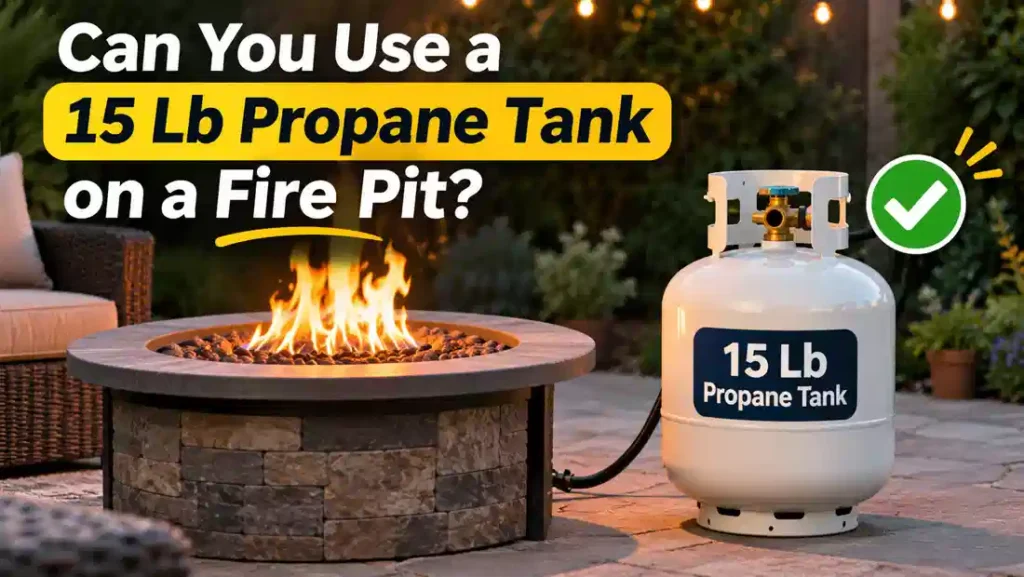
For small spaces, buying the wrong cylinder is another hidden cost. My guide to the smallest propane tank you can use for a fire pit covers trade-offs in capacity and fuel delivery. For nominal 15-pound exchange fills, see whether a 15-lb tank works on your fire pit.
How Much Does a Built-In Propane Fire Pit Cost?
A permanent installation is a project, not simply a larger consumer appliance. A contractor may need to build a noncombustible base, install a listed burner assembly, arrange suitable propane supply and permitted piping, test for leaks, and finish masonry. Those activities can cost more than the burner itself. Gas piping and cylinder placement must be handled according to the installation instructions and applicable local requirements.
For an example—not a bid—imagine $1,000 for the specified burner and pan, $900 for a masonry surround, $500 for labor and finishing, $400 for approved fuel-supply work, and $250 in site preparation and permits. That totals $3,050. Premium stonework, trenching, difficult access, plumbing, drainage and complex ignition controls can push a project much higher.
| Project component | Illustrative amount | Planning note |
|---|---|---|
| Approved gas burner/pan | $1,000 | Match output and fuel type to engineered supply |
| Enclosure and finish | $900 | Material and design-dependent |
| Qualified labor | $500 | Complexity, regional rates differ |
| Fuel supply/piping | $400 | Professional quote required |
| Preparation/permit allowance | $250 | Local requirements vary |
| Example project total | $3,050 | Not a contractor estimate |
A useful comparison is the total installed price against an off-the-shelf premium fire table with equal seating functionality. If you move frequently or may redesign the patio, portability has a value a fixed stone installation cannot provide. Conversely, a permanent installation can make sense if you have a stable layout and a specific architectural plan.
Should I Buy a 30,000, 50,000 or 60,000 BTU Fire Pit?
I would start with what kind of evening you want, not with a race to buy the largest BTU number. A small tabletop flame is mostly decorative; a bigger open bowl may supply more noticeable localized warmth, yet no outdoor fire pit heats a windy patio like an enclosed room. Product design and weather matter more than raw rating alone.
| Likely use | Illustrative input range | My buying priority |
|---|---|---|
| Decorative patio focal point | 10k–30k BTU/hr | Flame appearance and outdoor suitability |
| Regular evening conversations | 30k–50k BTU/hr | Seating layout and adjustable flame |
| Broad gathering circle | 50k–60k+ BTU/hr | Burner design and adequate vapor supply |
| Large commercial-style feature | 70k–150k+ BTU/hr | Engineered supply and professional design |
The smallest practical burner is not necessarily the one with the lowest purchase price. However, lowering the actual fuel burn can have a measurable effect on annual cost. If you cut an actual 50,000-BTU/hour consumption rate to 35,000 BTU/hour, that is 30% less propane per hour. At $4 per gallon and four hours a week, the theoretical annual saving is about $136.61. That is a useful reason to prioritize a well-designed adjustable flame—provided the model supports the setting safely.
Refilling Versus Exchanging a Cylinder: Which Costs Less?
The question is not simply the price on the exchange cage. It is the cost per pound or gallon of propane actually received. Some exchange programs supply a 15-pound net fill rather than the nominal 20-pound amount of a full standard cylinder. Read the stated net weight; do not assume an exchange contains the maximum fill.
For a comparison, a 20-pound refill at $20 costs $1.00 per pound; an exchange containing 15 pounds at $24 costs $1.60 per pound. That makes the exchange 60% higher per pound in this scenario, although availability, cylinder condition and convenience matter. A refill price is also a scenario: local retailers often charge by gallon, by fill or with a minimum.
| Fuel purchase | Propane received | Illustrative price | Cost per lb |
|---|---|---|---|
| Full 20-lb refill | 20 lb | $20 | $1.00 |
| 15-lb exchange | 15 lb | $24 | $1.60 |
| 20-lb refill at $5/gal | About 4.7 gal | $23.50 | About $1.18 |
Even if an exchange is more expensive per unit, it may be convenient when your cylinder is damaged or out of date. Verify whether the retailer’s exchange program will accept it; do not transport a leaking or otherwise unsafe cylinder. You can also read my step-by-step propane refill guide before your next fuel purchase.
Is a Cheap Propane Fire Pit Worth Buying?
Yes, sometimes. A basic portable fire pit is often the best financial choice for occasional gatherings because it gives you a controlled flame without permanent construction. But I would not judge value by sticker price alone. A bargain that rusts early, lacks replacement components or does not fit your allowed setup can have a poor effective cost per use.
I use a simple cost-per-evening check. Divide the appliance cost by the number of evenings you expect it to survive and use. A $200 portable model used for 30 evenings over several years costs $6.67 per evening in appliance depreciation, before fuel. A $900 table used for 180 evenings costs $5 per evening. These are hypothetical lifetimes—not durability guarantees—but they make the frequency of use visible.
Maintenance matters too. Keep burners free of debris according to the manual; avoid incompatible fire glass; use an approved cover only after full cooling; inspect hoses and connections as prescribed; and store the unit correctly. I do not recommend modifications that defeat a safety device to prolong a bargain purchase.
My Propane Fire Pit Buying Decision Guide
For a complete overview of fire pit formats, materials, purchase features and fuel planning, start with my Propane Fire Pit Buying Guide.
Still deciding between a bowl and a furniture-style model? Compare the designs in my propane fire pit vs fire table guide, including price, heat output, running costs and seating layout.
Considering a marketplace purchase? I also reviewed whether Wayfair propane fire pits are good quality, including materials, warranties, customer complaints and a buying checklist.
If I were choosing today, I would answer four questions: Where will I put it? How frequently will I use it? What is my all-in budget? Can I safely accommodate the required propane supply? Then I would match a product category rather than shop purely by BTU or advertising photos.
| Your situation | My likely choice | What to check next |
|---|---|---|
| Budget below $300, occasional camping | Portable propane bowl | Approved campsite use, transport, cylinder storage |
| Budget $300–$800, regular patio nights | Conventional fire pit table | Seating clearances, tank compartment, cover |
| Budget $1,000–$2,500, long-term patio design | Higher-end table/bowl | Build material, serviceability, delivery weight |
| Budget $3,000+, permanent hardscape | Professionally planned built-in | Permits, fuel design, contractor estimate |
| Apartment, rental or balcony | Only a specifically permitted setup | Written approval, lease, code, manufacturer limits |
| Propane cost is your main concern | Appropriately sized adjustable burner | Real BTU use and local fuel price |
For renters, a low purchase price does not override property restrictions. I would check the lease, landlord rules, local fire requirements and product manual before ordering. My guide to propane fire pits for renters walks through those decisions. Even for homeowners, see the propane fire pit safety guide before planning a location.
Safety Costs Less Than a Bad Installation
A fire pit must be used only outdoors in a location approved by its manufacturer and applicable authorities. Follow the stated distances from buildings, combustible furniture and overhead structures. There is no universal clearance figure I can promise for every fire pit: manuals, building rules and fire codes differ. Never run an outdoor propane fire pit inside a house, tent, garage, enclosed porch or other unventilated space.
- Keep cylinders upright and in approved, ventilated locations.
- Inspect hoses and connections; use the manufacturer’s prescribed leak-check method before operation.
- Turn off the appliance and cylinder according to the manual when finished.
- Keep children, pets and loose fabric away from the burner and hot surfaces.
- If you smell gas, stop using the equipment, avoid ignition sources, move away and contact the appropriate emergency or propane professional.
Outdoor fire pits are not automatically cooking appliances. For a specific question about food over the flames, read whether it is safe to roast marshmallows over a propane fire pit. Do not assume every fire glass, decorative stone or burner configuration is food-safe.
How I Would Save Money Without Sacrificing Safety
- Buy for real use: If you light the fire only a handful of weekends each year, consider a portable unit rather than a permanent masonry project.
- Get a ready-to-use quote: Include cylinder, first fill, cover, freight and any required professional work.
- Compare price per delivered pound: Refill and exchange labels do not always describe equal quantities of propane.
- Track actual burner hours: Estimate with the calculator, then revise the rate using two or three complete refill cycles.
- Choose controls and materials carefully: Adjustable flame, replacement parts and corrosion resistance can improve long-run value.
- Skip unnecessary upgrades: A costly decorative surround will not necessarily increase usable heat.
- Never save money through unsafe substitutions: No improvised gas fittings, unapproved cylinders, indoor use or bypassed safety controls.
I also recommend a small fuel log. Record the date, gallons added, price, approximate burner hours and whether the flame was low, medium or high. After three fill cycles, divide total gallons by recorded hours. The result may be more useful for your household budget than a manufacturer’s maximum BTU rating, because it reflects how you actually use your equipment.
Frequently Asked Questions
How much does a 50,000-BTU propane fire pit cost?
A 50,000-BTU unit can be a roughly $100–$300 portable bowl, a $200–$700 conventional fire table or a substantially more expensive premium model. The same burner rating appears in different furniture and construction categories, so BTU alone does not set purchase price.
How much propane does a fire pit use in two hours?
At a steady 50,000 BTU/hour, approximately 1.09 gallons over two hours. At $4 per gallon, that is about $4.37 in fuel. Actual use can differ with the operating setting, and cold conditions can affect fuel delivery.
Is a propane fire pit expensive to run every night?
It can be. At 50,000 BTU/hour, two hours nightly at $4/gallon is about $131.15 over 30 nights. If you only use it two evenings weekly, the monthly average is much lower. I would calculate based on your expected burner hours rather than treating the appliance as a fixed monthly utility cost.
How long does a 20-pound propane tank last?
With about 4.7 gallons available, a constant 50,000-BTU/hour burner has an ideal estimate of 8.6 hours. A 40,000-BTU/hour burner has an ideal estimate around 10.8 hours. For a detailed comparison, read my 20-lb propane tank runtime chart.
Does a fire pit table use more propane than a fire bowl?
Not necessarily. Compare actual BTU input at the setting you use. A 40,000-BTU table draws less propane per hour than a 58,000-BTU portable bowl operated at its rated maximum, regardless of which costs more to purchase.
Is it cheaper to build a propane fire pit or buy one?
For most ordinary backyard budgets, a certified off-the-shelf portable or freestanding unit is cheaper and simpler than a properly designed permanent gas feature. Custom installations make sense for specialized aesthetics or existing hardscape work, but include professional fuel-supply and code compliance costs.
Is the 80% fill rule already included in the runtime estimate?
Yes, indirectly. A nominal full 20-pound fill is approximately 4.7 gallons of propane; this is already the practical fill amount, not the cylinder’s water capacity. Do not reduce the 4.7 gallons by another 20%. To understand fill-limit terminology, follow your propane supplier’s guidance on approved fill limits; otherwise follow your propane supplier’s guidance.
What should I buy with a new propane fire pit?
Purchase only the compatible cylinder and approved items specified by the manufacturer. Depending on the package, that may include the correct burner media or a weather cover. Allow for the first fill and installation or delivery, and ensure the location is safe before buying decorative accessories.
Bottom Line: Budget for Ownership, Not Just the Price Tag
For most US households, I would budget roughly $250–$800 for a practical ready-to-use portable bowl or everyday table setup, depending on the model and included cylinder/accessories. Premium furniture designs and permanent installations cost much more. At 50,000 BTU/hour and $4 per gallon, the straightforward fuel allowance is around $2.19 per hour. Use that figure as a planning baseline, then adjust it for your own fuel price and actual use.
My final rule is simple: choose a safe product for the space, calculate the complete first-year expense, and buy enough quality for how often you will actually use it. If you want to keep exploring, move next to choosing the right tank size, calculating hourly and monthly fuel costs, and checking fire pit safety before setup.

Mike is an experienced propane technician with over 15 years of professional experience in the field. He has dedicated his career to helping customers with their propane needs, from installation to maintenance and repair. Together with Jeremy, he co-founded this website to provide useful information and guidance to customers seeking reliable propane services.